How Did This Corvette Escape Cops Twice
Corvette Leaves Arkansas Trooper Behind Twice During a High-Speed Pursuit
A Corvette Catches an Arkansas Trooper’s Attention
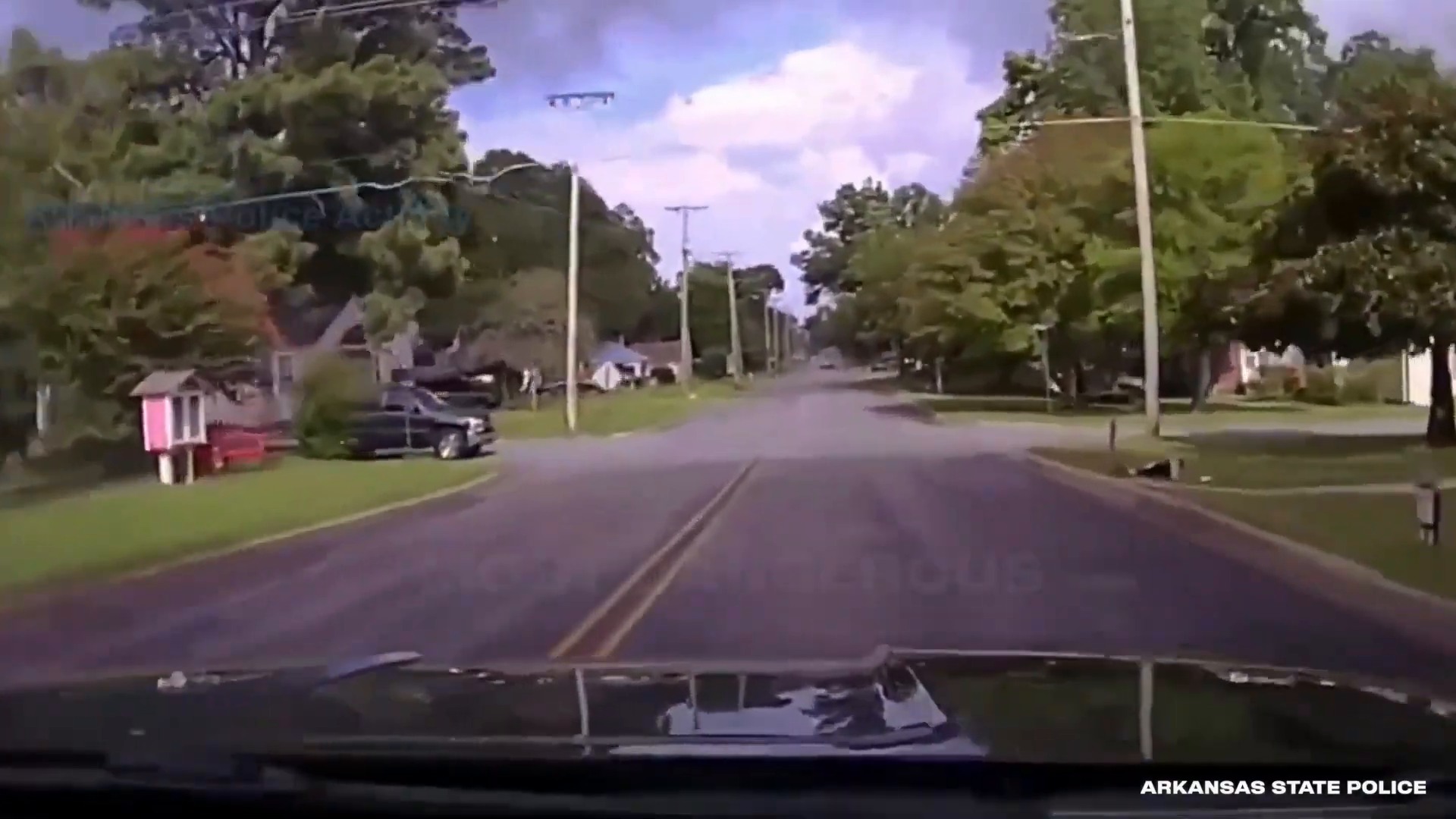
On December 16, 2023, an Arkansas State Police trooper encountered a gray C7 Chevrolet Corvette that would soon demonstrate just how quickly a routine attempt to stop a high-performance car can become a dangerous pursuit. The supplied video shows the encounter from the patrol car’s dash camera, with the Corvette initially traveling ahead of the trooper before the situation escalates.
Independent automotive reporting on the same footage identifies the trooper as Caleb Pevehouse and places the pursuit in Fort Smith, Arkansas. The Corvette was displaying a temporary Oklahoma tag. The available public accounts do not establish the driver’s identity or a later arrest, so this article does not invent a name, charge list, or court outcome.
That limitation matters because the most striking fact about this pursuit is also the simplest: the Corvette gets away. There is no final handcuff scene in the footage and no crash that conveniently ends the chase. Instead, the trooper is forced to confront the performance gap between a patrol vehicle and a sports car that can accelerate away with startling speed.
The Trooper Closes the Gap Before Attempting the Stop
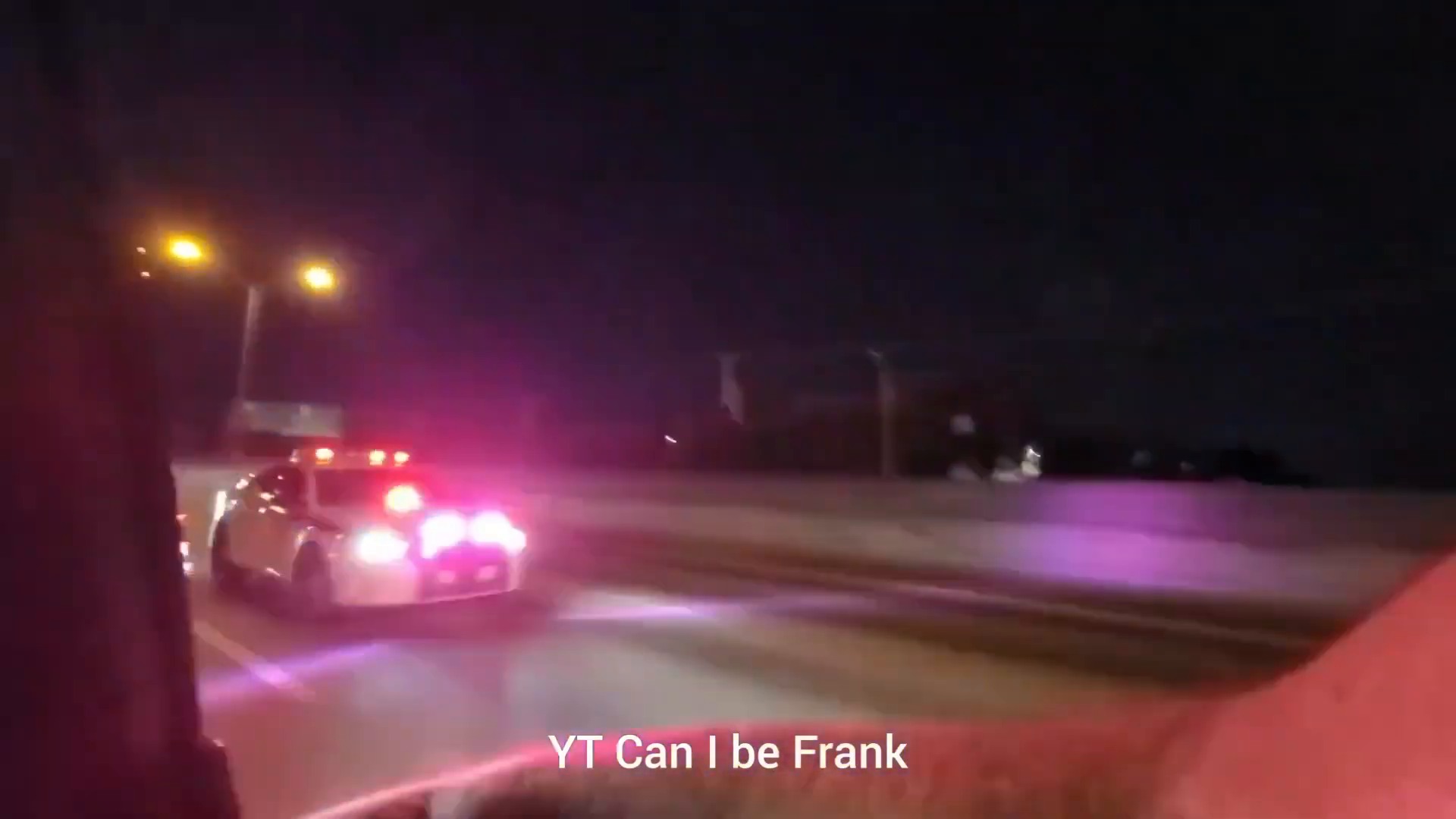
At first, the encounter looks controlled. The trooper follows the Corvette and gradually closes the distance. The sports car is visible directly ahead, and for a moment it appears that a conventional traffic stop may be about to unfold.
The Corvette moves toward an exit and slows with surrounding traffic. Its driver even uses a turn signal, behavior that can make the scene look less like the beginning of a pursuit and more like a driver preparing to comply.
That impression does not last. As the vehicles reach the end of the ramp and approach South Zero Street, the Corvette suddenly accelerates. The rear of the car squats under power and the gap opens almost immediately.
For the trooper, the problem changes in seconds. He is no longer simply following a vehicle to a safe stopping point. He is trying to keep a much faster car in sight while also navigating public roads, intersections, and other motorists.
The Corvette Explodes Away From the Patrol Car
The C7’s acceleration is the defining visual of the video. Once the driver commits to fleeing, the Corvette rapidly creates distance even though the patrol car is accelerating hard behind it.
Carscoops, which reviewed the same footage, reported that the trooper exceeded 120 mph while attempting to keep up. Corvette-focused coverage similarly noted that the patrol car reached roughly 125 mph on a straight section and still could not close the gap.
The trooper can be heard acknowledging the obvious mechanical disadvantage, remarking that the Corvette has more horsepower. It is an unusually candid moment because it captures the practical reality of a pursuit: police vehicles are built to balance durability, equipment, passenger space, braking, and patrol use. A Corvette is designed around performance.
That does not make fleeing safe or sensible. The very acceleration that allows the driver to open a gap also dramatically reduces reaction time for everyone on the road.
A Red-Light Intersection Nearly Turns the Escape Into a Disaster
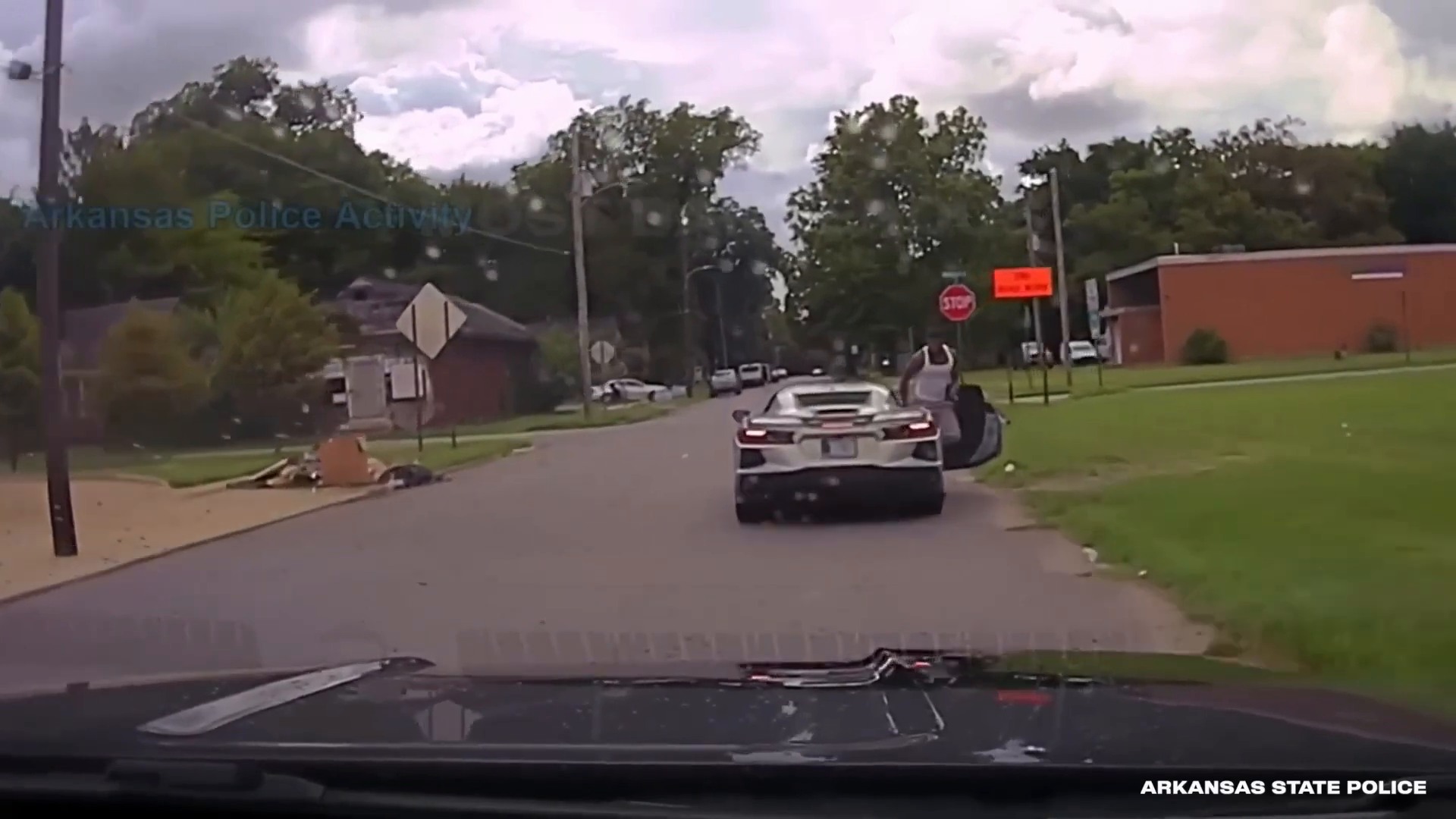
The most dangerous moment comes almost immediately after the Corvette accelerates away. The driver approaches an intersection controlled by a red light while cross traffic is moving through.
Rather than stop, the Corvette threads through the intersection. Video shows an SUV crossing its path, creating a near-collision that could have transformed the pursuit into a severe crash in an instant.
This moment is more important than the spectacle of the Corvette’s speed. The driver is not using a closed track or an empty runway. Other motorists have no reason to expect a sports car to enter against the light at extreme speed.
The Corvette makes it through, but that outcome depends on timing measured in fractions of a second. A slightly different position by the crossing vehicle could have produced a broadside impact involving people who had nothing to do with the pursuit.
The Trooper Pushes Past 120 MPH and Still Loses Ground
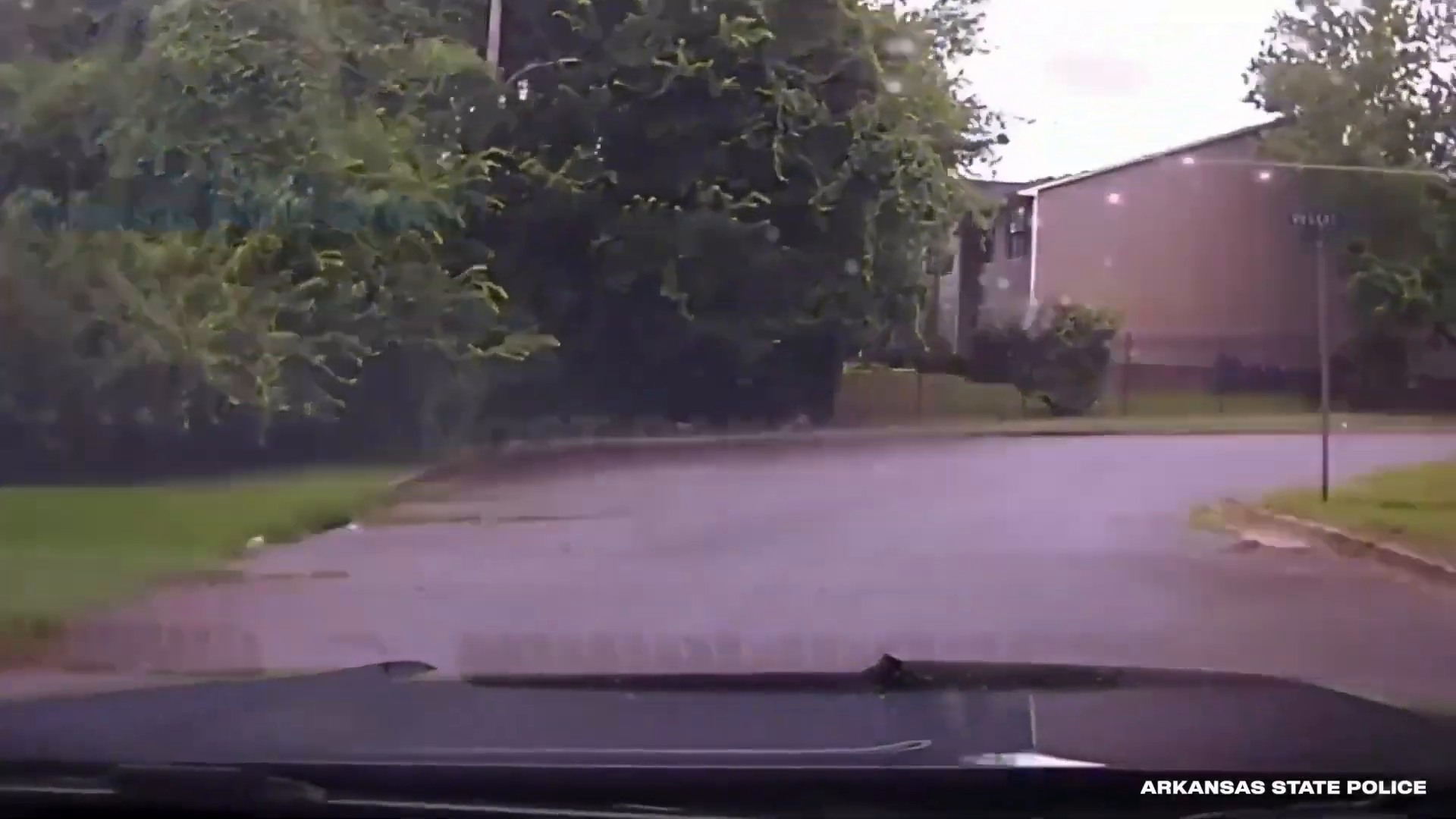
After the intersection, the patrol car continues accelerating. The Corvette remains visible ahead for a time, but the distance grows. Even at speeds that would normally be extraordinary on a public road, the trooper cannot simply match the Corvette’s acceleration.
This is where the video differs from many Arkansas State Police pursuits that end with a tactical vehicle intervention or a crash. A PIT maneuver requires the pursuing unit to get close enough to make controlled contact. Here, the trooper never gets the sustained proximity needed to attempt one.
The road also imposes its own limits. Hills and curves repeatedly interfere with the trooper’s view. A sports car can disappear over a crest in seconds, leaving the pursuing officer with no reliable visual reference for which direction it takes next.
Eventually, the Corvette goes over a rise and vanishes from sight. The trooper continues searching, but the immediate pursuit has effectively been broken.
Why the Corvette Appears to Escape Twice
The title’s “twice” framing comes from the way the encounter repeatedly seems to reset. The trooper initially catches up and appears positioned for a stop, only for the Corvette to launch away. Later, the trooper manages to keep the car within sight again, but the Corvette uses its speed and the road layout to open another gap and disappear.
In other words, the video is not showing two unrelated police chases. It shows a single encounter in which the trooper repeatedly gets close enough for the driver to appear within reach, only for the Corvette to pull away again.
That pattern is what gives the short video its tension. Each time the patrol car seems to have recovered enough ground to continue the pursuit, the Corvette’s acceleration changes the equation.
The footage ultimately ends without police physically stopping the vehicle.
The Temporary Oklahoma Tag Becomes an Important Clue
Although the trooper cannot catch the Corvette during the recorded pursuit, the encounter does not necessarily leave police with nothing to investigate. Early in the chase, the trooper communicates information about the vehicle’s temporary Oklahoma registration.
Automotive reporting on the incident noted that the tag was difficult to read but that the trooper was able to relay identifying information. A legitimate temporary tag can provide investigators with a path toward determining the registered owner or the transaction associated with the vehicle.
That does not prove who was driving at the time. Vehicle ownership and driver identity are separate questions, and a responsible account should not assume that the registered owner was necessarily behind the wheel.
Because no reliable public follow-up was located establishing the driver’s identity or a later prosecution tied conclusively to this footage, this article stops at what can be verified rather than creating a convenient ending.
High Performance Does Not Remove the Risks of Fleeing
It is easy to watch the footage as a demonstration of the Corvette’s performance. The sports car accelerates away from a police cruiser with an ease that is visually dramatic. But the red-light near miss shows why that interpretation is incomplete.
Speed multiplies risk. At more than 100 mph, a vehicle covers well over 140 feet every second. A driver has less time to recognize a hazard, less time to decide what to do, and far more energy to dissipate if a collision occurs.
The Corvette’s ability to accelerate faster than the patrol car may help the driver create distance, but it does nothing to make intersections safer or give other motorists more warning.
The fact that the video ends without a crash is therefore fortunate, not evidence that the driving was controlled or harmless.
Why Police Cannot Always Simply Catch a Faster Car
Police pursuits are often portrayed as though officers can continue accelerating until they eventually catch the fleeing vehicle. Real roads make that impossible. Traffic, intersections, visibility, vehicle capability, radio coordination, and public safety all constrain what an officer can do.
A patrol vehicle also carries substantial equipment and is optimized for police work rather than outright acceleration. Even powerful police packages cannot match every purpose-built performance car in a straight line.
More importantly, a trooper still has to drive with some awareness of what is beyond the next hill or intersection. A fleeing driver may choose to accept risks that the officer cannot responsibly duplicate.
That imbalance is visible throughout this encounter. The Corvette repeatedly uses bursts of speed to create separation, while the trooper has to react to the same traffic and roadway conditions from farther behind.
The Footage Ends With Questions Rather Than Handcuffs
The supplied video is only a little over two minutes long, but it captures the essential arc of the encounter. A gray C7 Corvette comes under the attention of Arkansas State Police. The trooper follows it toward an exit. The driver initially appears almost cooperative, then suddenly accelerates away.
The Corvette runs through a dangerous intersection, narrowly avoids cross traffic, and continues pulling away even as the patrol car reaches triple-digit speeds. The trooper briefly keeps the sports car in sight before losing it over the rolling roadway.
Officers then consider nearby streets and neighborhoods where the Corvette might have turned, but the immediate pursuit is over. There is no verified arrest shown or reliably documented in the sources reviewed for this article.
That unresolved ending is exactly what makes the video unusual. Most pursuit clips are built around the moment police finally catch the driver. This one is built around the opposite question: how did the Corvette manage to get away even after the trooper appeared to have caught back up?
A Short Chase That Demonstrates the Limits of Pursuit
The answer is a combination of acceleration, road layout, and the simple fact that the pursuing trooper could not safely manufacture speed the patrol car did not have. The Corvette’s driver repeatedly exploited those advantages, first by accelerating hard from the attempted stop and later by maintaining enough distance to disappear from view.
The driver’s success in escaping the immediate pursuit should not be confused with a safe or consequence-free decision. The near collision at the red light demonstrates how quickly the chase could have ended very differently.
The available reporting matches the supplied footage on the December 16, 2023 date, Arkansas State Police involvement, Fort Smith setting, gray C7 Corvette, Oklahoma temporary tag, and the trooper’s inability to keep the car in sight. No dependable public source reviewed for this article establishes a later arrest connected conclusively to this exact chase.
Comments (0)
Loading comments...
May You Like
Four Suspects Try Killing a Cop After Police Chase
Officer Stops to Help but the Situation Quickly Escalates