
Home Cameras Capture Mother’s Disturbing Act Before Police Arrive
Home Cameras Capture Mother’s Disturbing Act Before Police Arrive
Verified case: The footage matches the April 21, 2025 Palm Beach County case involving Roshawn S. Gatlin, 27. Authorities accused Gatlin of attacking her three-year-old daughter inside a Lake Park residence. The child survived. Gatlin was arrested on an attempted first-degree murder allegation. This article does not treat the charge as a conviction.
A 911 Call Leads Deputies to a Lake Park Home
On the afternoon of April 21, 2025, Palm Beach County Sheriff's Office deputies responded to a residence in Lake Park, Florida, after a deeply disturbing emergency call. The caller was 27-year-old Roshawn S. Gatlin. According to the arrest affidavit and subsequent local reporting, Gatlin told authorities that she had seriously injured her three-year-old daughter.
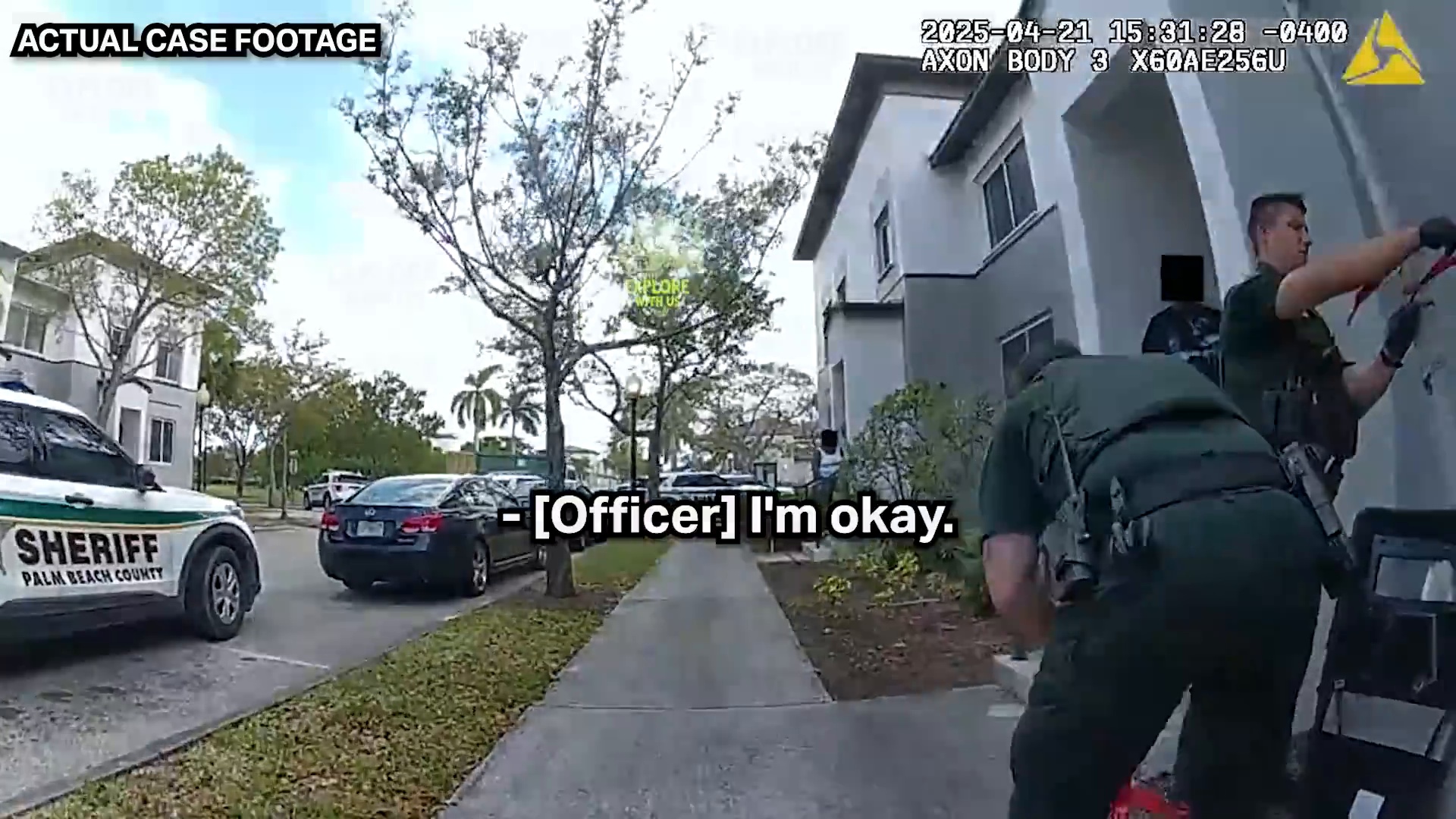
The supplied video matches this case closely. Body-camera footage carries an April 21, 2025 timestamp and shows Palm Beach County Sheriff's Office vehicles and deputies outside a residential complex. The video later follows Gatlin in custody and includes portions of the home's surveillance footage and the emergency call.
The original title, “Home Cameras Catch Mom's Horrifying Act,” is deliberately vague. The verified allegations are much more specific: investigators accused Gatlin of attacking her young daughter with a large kitchen knife. The child survived and was transported for emergency treatment. Because the case involves a very young victim, this article avoids unnecessary graphic detail and focuses on the police response, the surveillance evidence, the charging decision and the legal status that can be verified.
The distinction between allegation and conviction also matters. Gatlin was arrested and charged with attempted first-degree murder with a deadly weapon. Public reporting reviewed for this article establishes the charge and the early court proceedings, but it does not establish a final conviction or sentence. The story therefore remains framed as an allegation supported by the arrest investigation, not as a completed criminal judgment.
The Home Surveillance System Becomes Crucial Evidence
When deputies reached the residence, one of the most important pieces of evidence was already inside the home. The child's father told investigators that cameras had recorded portions of what happened.
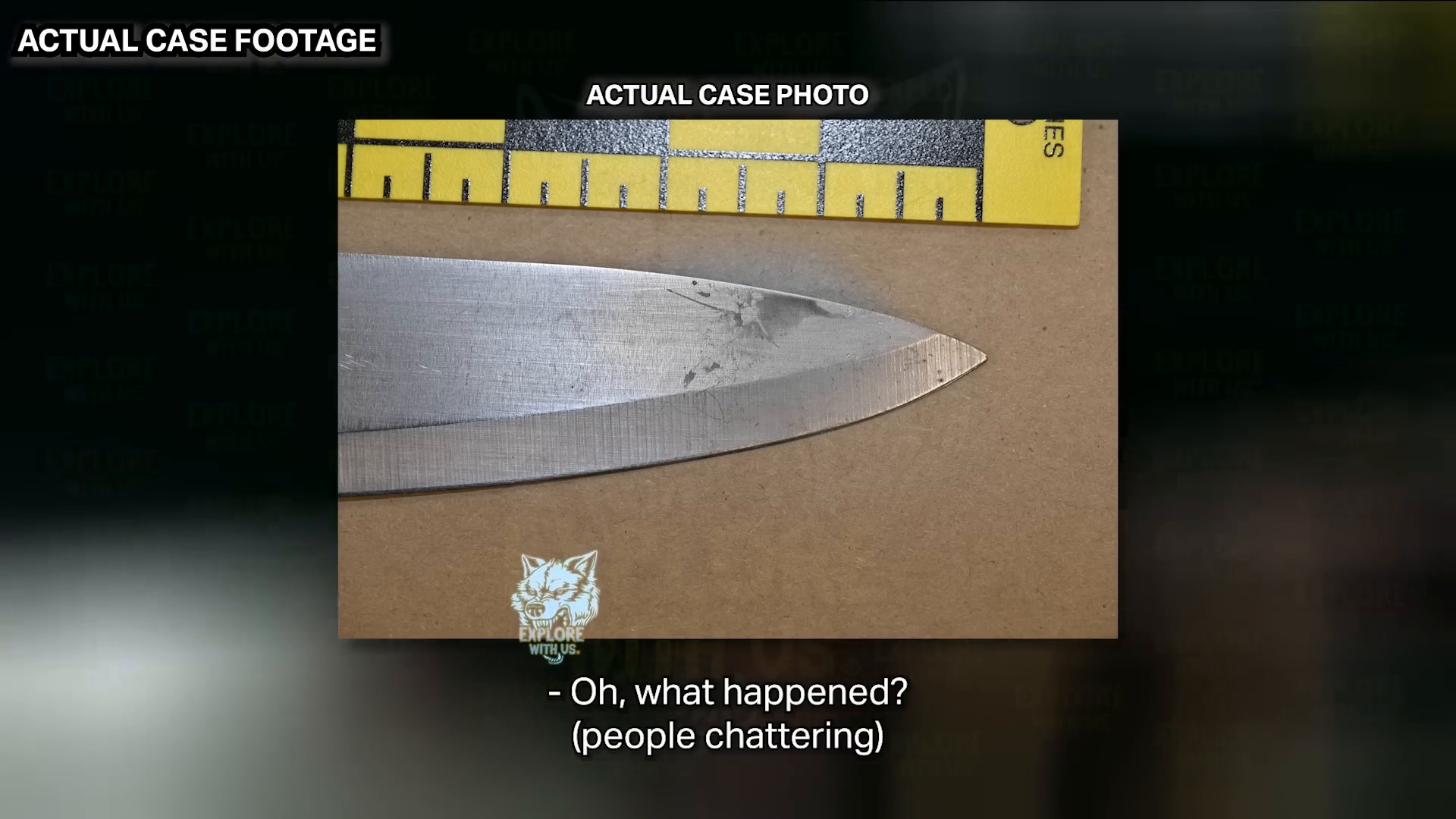
According to the arrest affidavit as summarized by multiple news organizations, the footage showed Gatlin going into the kitchen and emerging with a large kitchen knife. Investigators said another portion showed her taking the child's hand and leading her toward a nearby hallway.
The supplied program includes home-camera footage consistent with those descriptions. The most sensitive portions are obscured in the edited video, which is appropriate given the age of the victim and the nature of the allegations.
Home surveillance systems can fundamentally change an investigation. Instead of relying only on memories given after a traumatic event, detectives can compare witness statements with a timestamped visual record. Cameras may establish where people were, how they moved through a residence, what objects were carried and how much time passed between key events.
That does not mean a surveillance clip answers every legal question. Prosecutors still have to authenticate the recording, establish its continuity and prove the required mental state for the offense charged. But in this case, the home-camera footage gave investigators a direct visual timeline that supported the account they were assembling.
Deputies Arrive to a Scene Already in Motion
The body-camera portion begins after the emergency has already unfolded. Deputies are outside the residence, marked Palm Beach County Sheriff's Office vehicles are visible, and responders are trying to determine what has happened and where everyone is.
This is one of the challenges of interpreting police footage. The body camera does not always record the beginning of the underlying event. It records the moment law enforcement enters the story.
By the time deputies arrived, the child's medical needs were the immediate priority. Reporting on the arrest affidavit says the child was taken to St. Mary's Hospital. A deputy who went to the hospital was told that the child had sustained numerous wounds to the torso and another wound to an arm. Authorities later said the injuries were not expected to be life-threatening and that the child was expected to survive.
That outcome is an essential part of the story. The allegations are extremely serious, but this was not a homicide. The criminal charge reported by authorities was attempted first-degree murder.
The difference is more than terminology. Attempted murder requires prosecutors to prove an intent associated with the charged offense even though the alleged victim survived. The surveillance footage, statements and physical evidence therefore become central to the state's theory of what Gatlin intended when the incident occurred.
The Mother Who Called 911
One of the most unusual facts in the case is that authorities said Gatlin herself made the 911 call.
A self-report after an alleged violent act can become important evidence, but its legal meaning depends on exactly what was said, the caller's mental state and whether statements were made voluntarily. A 911 call is also different from a custodial interrogation because the caller is typically seeking emergency assistance rather than answering questions after an arrest.
The supplied video uses the actual emergency-call audio as part of its reconstruction of the case. It then transitions between that call, surveillance material and police footage.
The existence of the call does not eliminate the need for an investigation. Deputies still had to secure the scene, ensure the child received medical care, identify witnesses, preserve the home-camera recordings and determine whether a weapon or other physical evidence could be recovered.
Investigators also had to assess Gatlin's condition. Later court reporting shows that mental-health concerns became relevant almost immediately after the arrest. Those concerns do not automatically answer whether she was legally responsible for the alleged conduct, but they became part of the court's early response to the case.
What Investigators Said the Cameras Showed
According to the affidavit described by WFLA, WPBF and other outlets, the child's father showed deputies surveillance video from inside the residence. Investigators said Gatlin could be seen entering the kitchen and later coming out with a large knife. The footage then showed her taking the child by the hand toward a hallway.
The most disturbing part of the alleged attack was redacted or obscured in publicly circulated material. That protects the young victim while still allowing the evidentiary sequence to be understood.
For prosecutors, the movement captured before the alleged attack may matter because first-degree attempted murder involves a question of premeditation. Premeditation does not necessarily require a long period of planning, but the state must prove more than an accidental or impulsive injury under a different legal theory.
It would be inappropriate for an article to decide that question from a few seconds of edited footage. The charging decision tells us what prosecutors alleged. The court process determines whether the state can prove it.
The video is therefore best described as evidence that investigators relied upon, not as a substitute for a verdict.
The Child Is Taken to St. Mary’s Hospital
While deputies investigated the residence, medical personnel dealt with the most urgent consequence of the incident.
Public reporting says the three-year-old was transported to St. Mary's Hospital. Investigators were told that she had suffered more than twenty wounds to the torso and one to the right arm. Despite the severity of the injuries described in the affidavit, officials said they were not considered life-threatening and that the child was expected to survive.
Because the victim is a child, her identity is appropriately withheld from this article. There is no public-interest reason to identify her.
The child's survival also shapes the legal case. Gatlin was accused of attempted first-degree murder rather than a completed homicide. Florida law treats an attempt as a serious felony when prosecutors allege that a person acted with the intent to commit an underlying offense but the offense was not completed.
The medical records, doctors' observations and injury documentation would likely become significant evidence in any prosecution. Those materials are not reproduced here, and the article does not speculate about the child's long-term physical or psychological recovery.
Gatlin Is Taken Into Custody
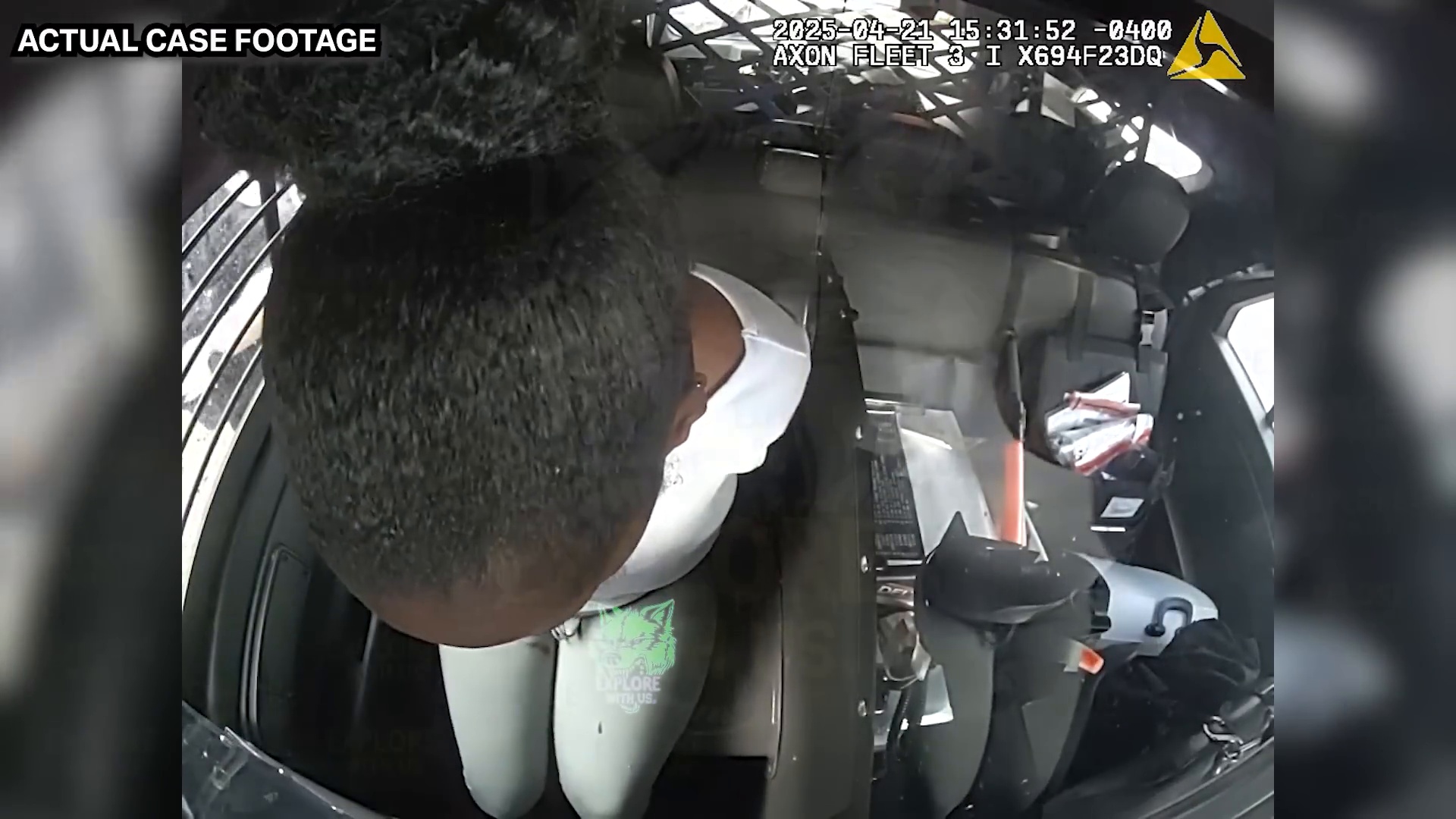
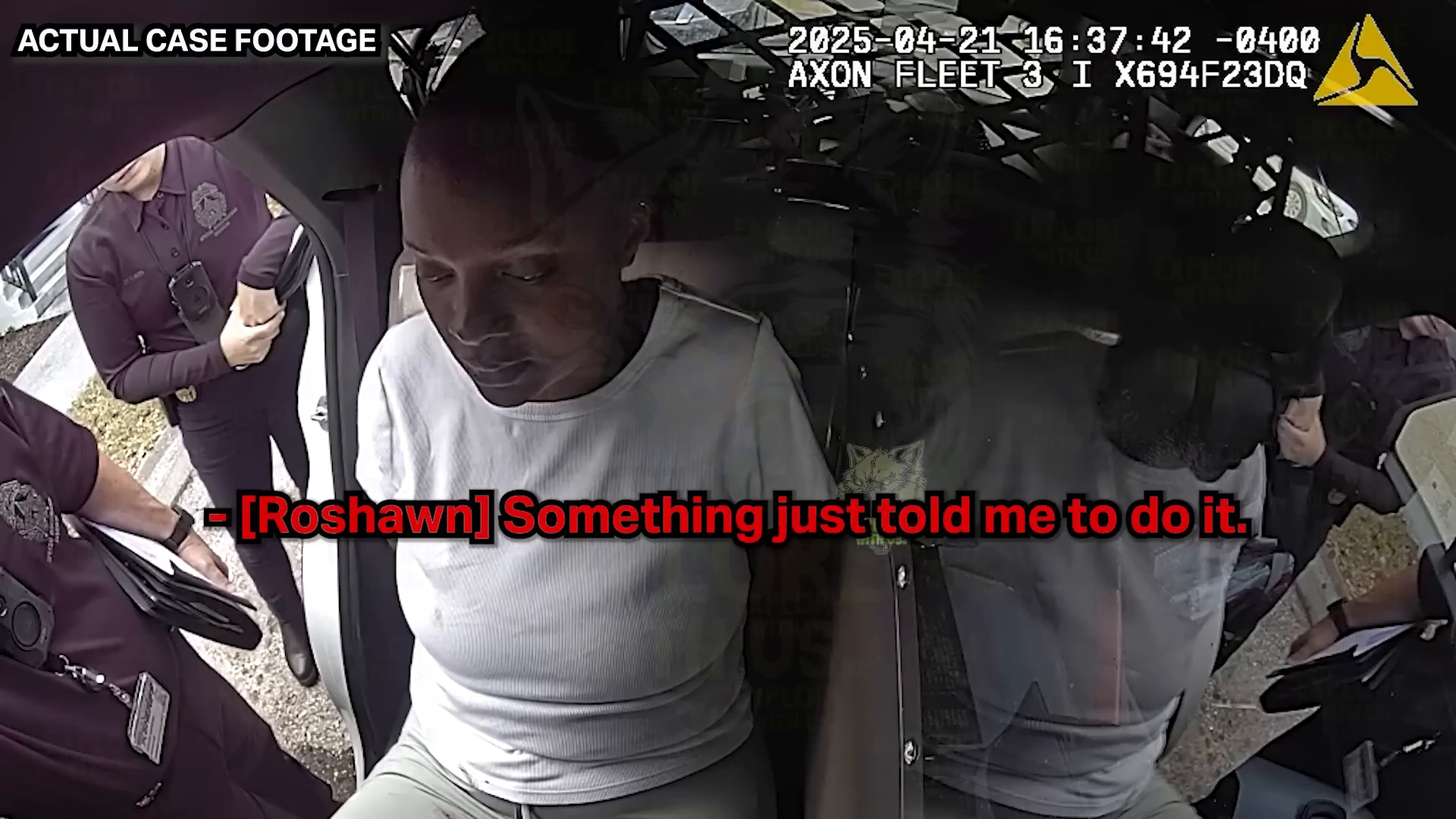
The later body-camera footage shows Gatlin in law-enforcement custody. She is seated in the rear compartment of a patrol vehicle while deputies continue speaking with her.
At one point in the supplied edit, Gatlin says that “something” told her to do it. The statement is presented as part of the recorded police interaction. It is important, but it should not be stretched into an unsupported psychiatric diagnosis.
A statement about hearing or responding to something can have many possible legal and clinical interpretations. Only qualified professionals evaluating the person and reviewing medical history can determine whether a psychiatric condition was present and how it affected behavior.
For criminal law, mental illness and legal insanity are also not the same concept. A defendant can have a serious mental-health condition and still be legally responsible for an offense. Conversely, competency to stand trial concerns whether a defendant can understand the proceedings and assist counsel, which is different again from the defendant's mental state at the time of the alleged offense.
The early court proceedings recognized that mental-health evaluation was warranted, but that does not allow an outside writer to diagnose Gatlin from body-camera footage.
A Baker Act Evaluation Enters the Case
At Gatlin's first appearance, reporting said the judge ordered that she be evaluated under Florida's Baker Act. The court also denied bond and imposed restrictions preventing contact with minors and witnesses.
The Baker Act is Florida's statutory framework for certain involuntary mental-health examinations. Being evaluated under that law is not a finding that someone was legally insane when an alleged crime occurred.
That distinction is especially important in this case because online discussions quickly began speculating about possible psychiatric explanations. Some later commentary went far beyond what the official early records established.
A responsible account should stay narrower. The verified fact is that the court ordered a mental-health evaluation under the Baker Act following the arrest. The deeper questions about diagnosis, competency or a possible insanity defense require actual court records and expert findings.
Without those records, the article does not claim that mental illness caused the alleged attack or that Gatlin lacked criminal responsibility.
Attempted First-Degree Murder Is the Central Allegation
Contemporary reporting identified the charge as attempted first-degree murder with a deadly weapon in a domestic context.
The “attempted” portion matters because the child survived. The “first-degree” allegation reflects the prosecution's assertion that the act was premeditated rather than merely negligent or accidental. The deadly-weapon component relates to the knife investigators said was used.
Florida's criminal process still requires the state to prove those elements. An arrest affidavit establishes probable cause for an arrest; it does not satisfy the much higher beyond-a-reasonable-doubt standard required for conviction at trial.
Some booking databases display abbreviated or inconsistent offense descriptions. One Palm Beach County arrest listing for Gatlin uses a homicide statute label that can look like a completed murder charge. Contemporary reporting based on the actual court proceedings consistently described the case as attempted first-degree murder because the child survived.
That is why news reporting and court context are more useful than relying on a booking-site label alone.
Why the Home Cameras Matter So Much
The title focuses on the home cameras for good reason.
In many domestic incidents, the most important moments occur before police arrive. Officers may find an injured person, a suspect and a chaotic scene, but they must reconstruct how the situation developed.
Here, investigators reportedly had footage from inside the residence. That gives them a sequence that can be compared with the 911 call, physical evidence and later statements.
Video can also reduce uncertainty about claims that would otherwise depend entirely on competing accounts. It may show whether a person retrieved an object, whether another person followed voluntarily, or how much time passed between actions.
Yet even clear video has limits. Cameras may not capture every room. Audio can be incomplete. Angles can obscure important details. Edited releases can remove material to protect privacy.
The supplied program itself demonstrates those limitations by obscuring the most sensitive content. The result still gives viewers the basic sequence without exposing a young victim to unnecessary public display.
The Father’s Role in Preserving the Evidence
Public reporting says the child's father was the person who showed deputies the surveillance recordings.
That action was significant. Digital evidence can be overwritten automatically, especially on consumer security systems that continuously record. Showing police the relevant material early gives investigators an opportunity to preserve it before it disappears.
Detectives can then seek the original files, document how they were obtained and establish a chain of custody. Those technical steps matter if the footage is later introduced in court.
The father also provided context about who was inside the residence and what the cameras had captured. His statements could be compared against the video rather than accepted in isolation.
The supplied footage does not justify publishing private details about the father or child. Their relevance is evidentiary, not sensational.
A Case That Immediately Raised Questions About Motive
The most obvious unanswered question is why.
The original program emphasizes that mystery, and public reporting from the first days after the arrest did not establish a clear conventional motive.
That gap should remain a gap unless reliable evidence fills it. It would be easy to speculate about family conflict, anger, medication or psychiatric symptoms, but speculation is not reporting.
Gatlin's recorded statement and the court-ordered Baker Act evaluation indicate that investigators and the court had reasons to examine her mental state. They do not provide a complete explanation.
Criminal cases involving possible mental-health issues often require extensive evaluation. Attorneys may obtain medical records, retain experts and litigate competency or responsibility questions. Those processes can take months or longer.
The absence of an immediate motive therefore does not make the case incomplete. It simply means that the public evidence answers what investigators alleged happened more clearly than it answers why.
No Verified Final Conviction Was Located
Research for this article found extensive reporting from April 2025 and later commentary about the case, but it did not produce a sufficiently authoritative final judgment establishing a conviction and sentence.
That matters because the present date is well after the arrest. A responsible update should look for later developments rather than freezing the case at the first headline.
The sources reviewed confirm the arrest, attempted first-degree murder allegation, no-bond status at the first appearance, restrictions on contact with minors and witnesses, and the Baker Act evaluation order.
They do not provide a reliable final disposition that can be stated confidently here.
Accordingly, the article continues to refer to Gatlin as accused or charged rather than convicted. If a later court judgment becomes available, the legal status should be updated to reflect it.
What the Bodycam Adds Beyond the News Reports
Written news reports summarize the incident efficiently. The body camera adds something different: the atmosphere of the response.
Deputies move around the residential complex, coordinate with one another and transport Gatlin. The camera timestamps anchor the police response to the afternoon of April 21, 2025. Palm Beach County Sheriff's Office markings visible in the footage match the agency identified in the reporting.
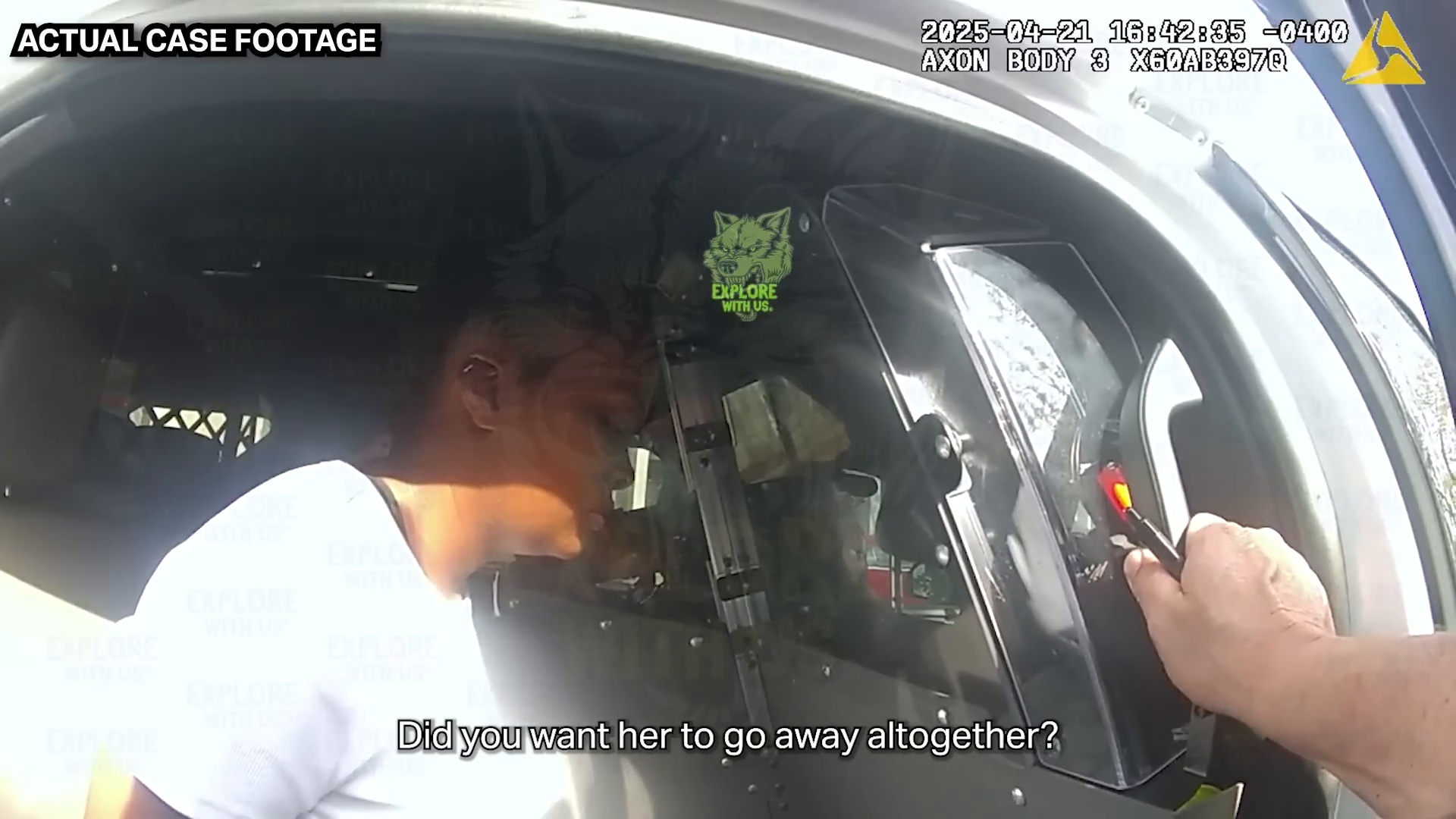
Later scenes show Gatlin seated in a patrol vehicle while deputies ask questions. The interaction is controlled, which contrasts sharply with the allegations that brought them to the residence.
That contrast is one reason the video is difficult to process. Nothing about the calm exterior of the later custody scene communicates the severity of what investigators say happened inside the home.
The body camera therefore should be used as context, not spectacle. Its value is in documenting police actions and statements after the emergency, while the home surveillance footage provides evidence about the earlier events.
The Case Is More Than a Viral Headline
“Home Cameras Catch Mom's Horrifying Act” is designed to create curiosity while withholding the central allegation. Once the case is identified, the facts require more careful language.
Roshawn Gatlin was 27 when Palm Beach County deputies arrested her on April 21, 2025. Authorities accused her of attacking her three-year-old daughter with a kitchen knife. Investigators said home surveillance footage captured the sequence leading into the alleged attack. The child survived.
Those facts are serious enough without embellishment.
The article also avoids turning the child's injuries into graphic entertainment. The number of wounds is included because it appears in the arrest affidavit and helps explain the severity of the attempted-murder charge, but the sensitive footage itself does not need to be reproduced in graphic form.
The young victim's survival is the most important outcome visible in the early reporting.
What Remains Established, and What Remains Unresolved
The verified timeline is comparatively clear.
On April 21, 2025, an emergency call brought Palm Beach County deputies to a Lake Park residence. Investigators reviewed home surveillance footage. They alleged that Gatlin retrieved a large kitchen knife and led her daughter toward a hallway before the attack. The child was transported to St. Mary's Hospital with numerous injuries and was expected to survive. Gatlin was arrested and accused of attempted first-degree murder with a deadly weapon.
At her first court appearance, she was held without bond, ordered to have no contact with minors or witnesses, and directed toward a Baker Act mental-health evaluation.
What remains unresolved in the reliable public material reviewed here is the final legal outcome and a definitive explanation for motive.
Those uncertainties should not be filled with rumor. They are part of the case as it currently can be verified.
The Cameras Preserve a Timeline Police Did Not Have to Guess
The most consequential feature of the case may be that the residence had cameras running before anyone called police.
Deputies did not have to reconstruct every movement from memory alone. The footage reportedly showed Gatlin moving into the kitchen, emerging with a knife and leading the child toward another area of the home. The 911 call then documented the emergency request, and the body cameras documented the police response.
Together, those recordings form layers of evidence from different moments.
For viewers, the result is a story that moves from a quiet domestic interior to an emergency call, a rapid police response and a criminal investigation. For prosecutors, the recordings potentially provide evidence of chronology, conduct and statements.
For the court, however, none of those recordings automatically substitutes for the legal process. The evidence must still be tested, and the defendant retains the presumption of innocence unless and until guilt is established.
A Child Survives an Incident That Could Have Ended Very Differently
The most important fact at the end of the early public record is that the child survived.
Authorities described extensive injuries, but reports said they were not expected to be life-threatening. That outcome is extraordinary given the severity of the allegations.
The case then moved away from the emergency scene and into two parallel systems: medical care for the child and criminal proceedings involving Gatlin.
The body-camera footage ends long before either process is complete. It captures the immediate aftermath, not the long recovery or final legal judgment.
That is why the complete video should be watched with care. It contains real people at the center of an unresolved and deeply traumatic case, including a very young victim whose privacy deserves protection.
What the footage does provide is a rare chronological record of how a private emergency becomes a major criminal investigation: a 911 call, deputies at the door, home-camera evidence, a hospital response, an arrest and difficult questions that remain after the patrol cars leave.
Watch the full footage to follow how the 911 call, home surveillance recordings and deputies’ body cameras came together to reveal what investigators say happened inside the Lake Park residence:
Comments (0)
Loading comments...
May You Like

🚔⚠️ 911 Call Comes Hours Later After a Troubling Bath Incident | Ohio, USA

Woman Refuses Repeated Orders to Exit Her Car Before Officers Move In

Four Suspects Try Killing a Cop After Police Chase














