Hero Bystander Steps In as Man Attacks Female Officer
Hero Bystander Steps In as Man Attacks Female Officer
A winter afternoon police encounter in Wisconsin changes in seconds when a routine-looking contact with a man on a bicycle becomes a physical struggle with an officer. The supplied body-worn-camera footage, dated January 23, 2025, captures the confrontation at close range. It also records the intervention of a bystander who moves toward the fight and helps the officer at the moment the encounter becomes hardest to control.
The video later displays a Wisconsin court-record screen showing how the criminal case was resolved. That record lists a felony count of battery or threat to a judge, prosecutor, or law-enforcement officer as guilty following a no-contest plea, along with a felony bail-jumping count resolved the same way. Other displayed counts, including another officer-battery count, disorderly conduct, retail theft, resisting or obstructing an officer, carrying a concealed knife and additional bail-jumping counts, are marked dismissed but read in. Because the supplied edit does not clearly display the defendant's name on the court screen, this article does not invent an identity or attach an unverified name to the footage.
A Cold Afternoon Contact Begins Beside a Bicycle
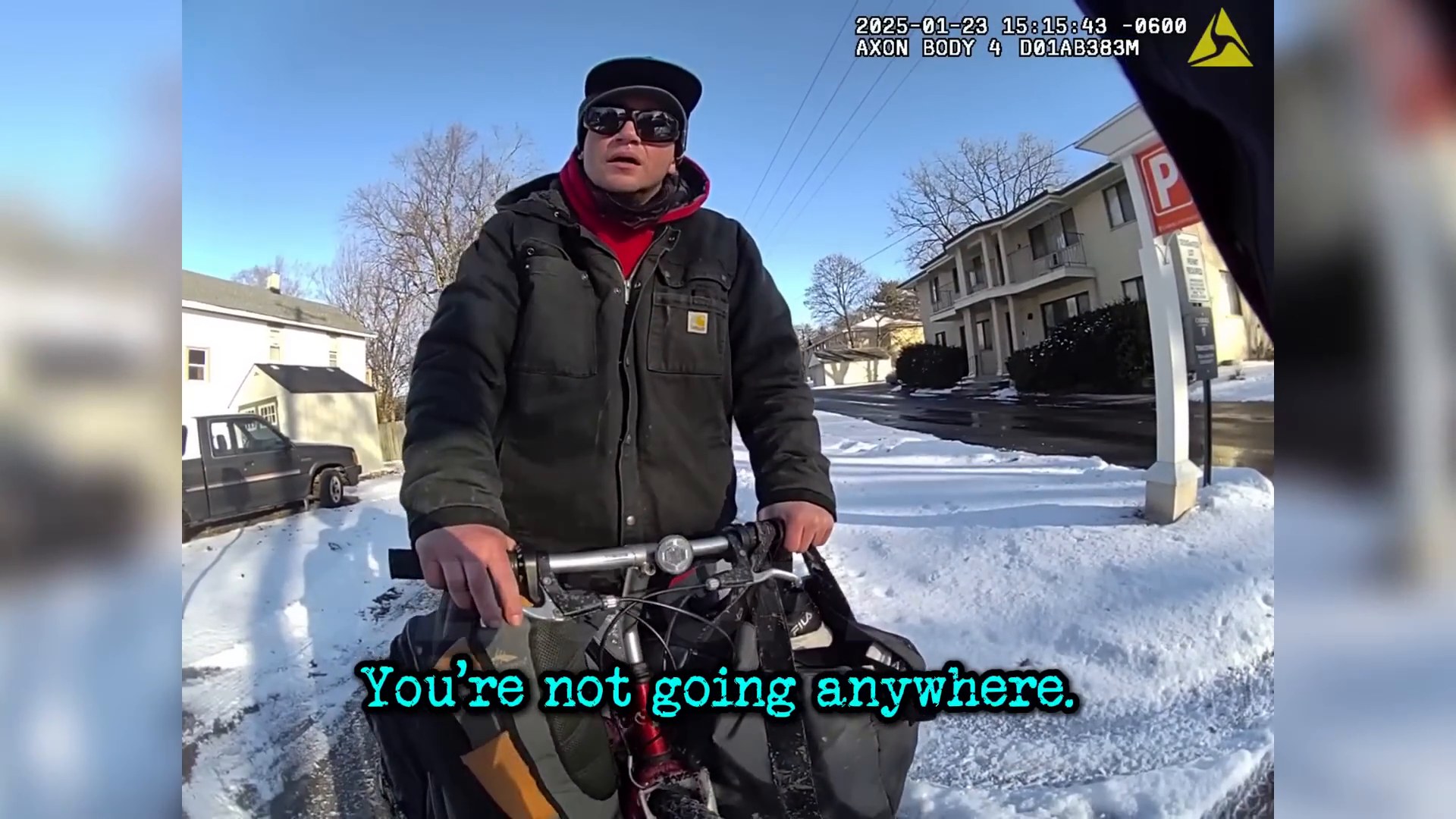
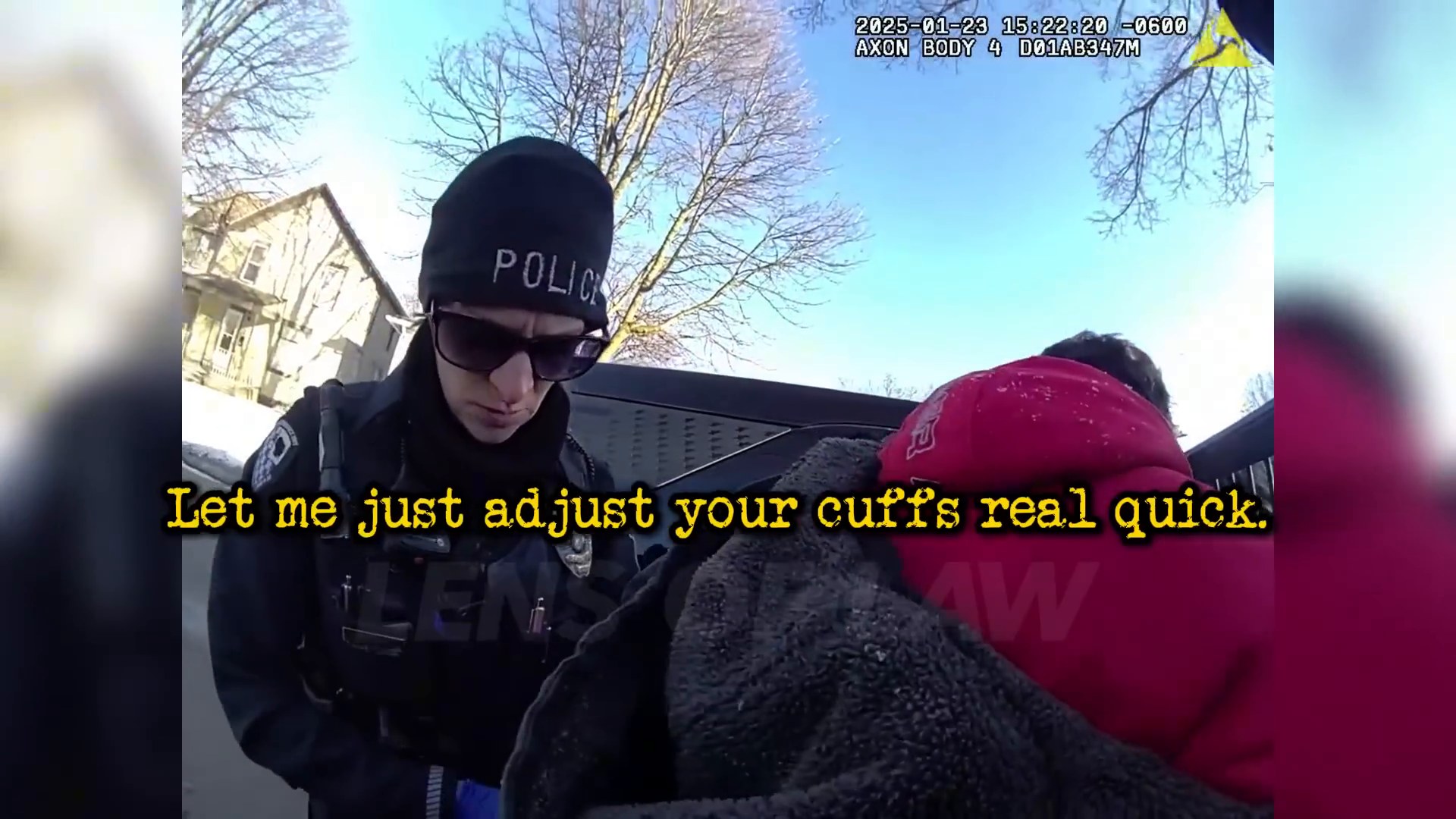
The footage opens on a snow-covered residential street. The AXON overlay shows January 23, 2025, shortly after 3:15 p.m. Central time. Snow is piled along the sidewalk and curb, while the roadway itself is mostly clear. Houses and small apartment buildings line the street. A parking sign stands nearby, and the man at the center of the encounter is beside a bicycle loaded with bags and personal belongings.
At first, the scene does not resemble an emergency. The man is upright and talking. The officer remains close enough to communicate directly with him. The camera records a conversation in which the officer attempts to keep the encounter controlled while the man becomes increasingly resistant to the direction he is receiving. His posture, hand movements and proximity to the officer become more important as the exchange continues.
The original upload calls the man “deranged.” That is an editorial description rather than a medical finding, so it is not treated here as a diagnosis. The footage shows agitated and confrontational behavior, but a body camera cannot establish a psychiatric condition. The distinction is important because unusual, angry or irrational behavior does not by itself prove a specific mental-health disorder.
The Distance Between Conversation and Struggle Disappears
Police encounters can turn on distance. While two people are several feet apart, an officer has time to watch hands, give instructions and decide what to do next. When that space closes, the available reaction time collapses. The supplied footage demonstrates that transition vividly.
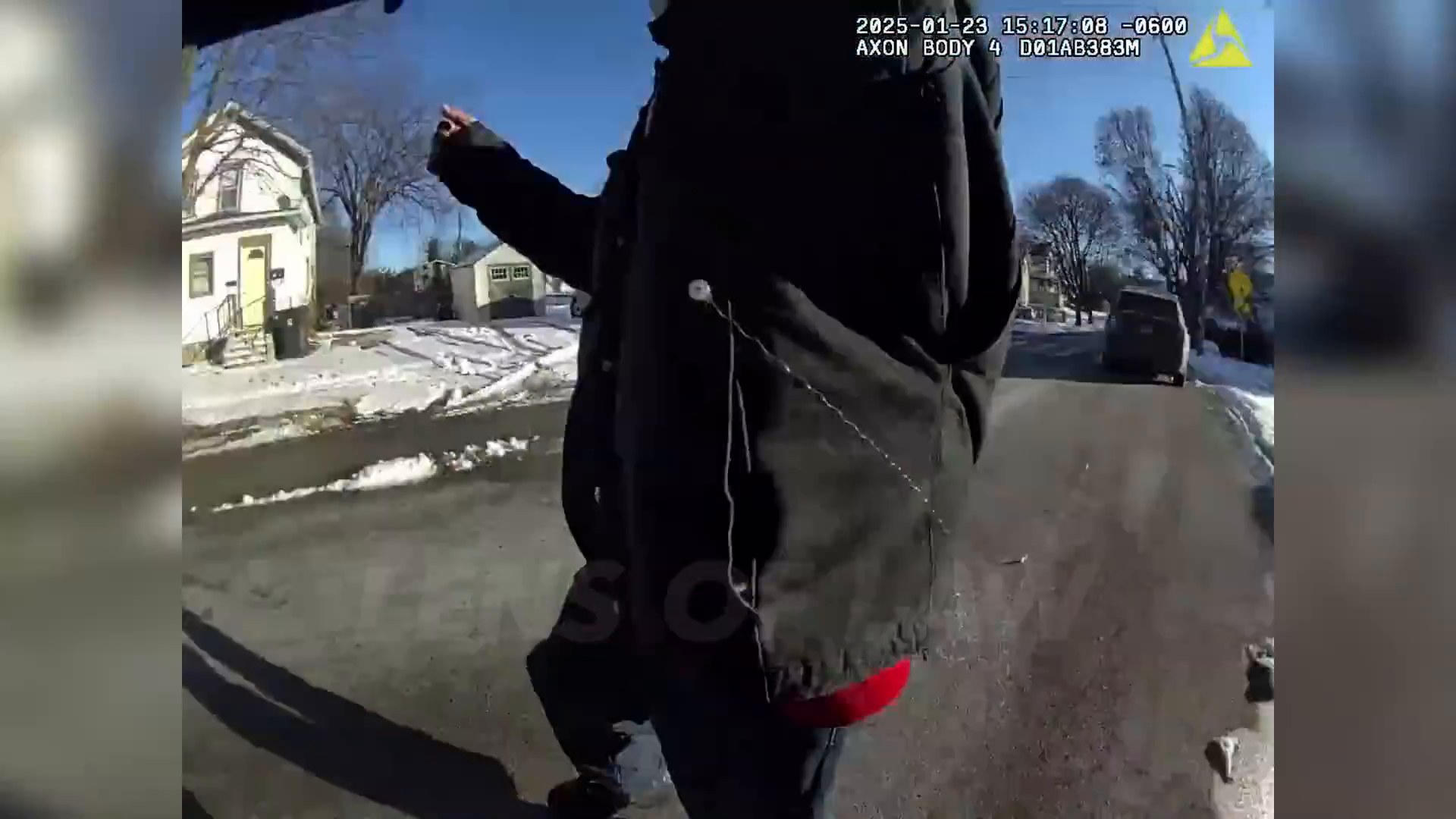
The man does not simply end the conversation and ride away. The officer continues trying to control the situation, and the disagreement becomes physical. The camera perspective suddenly changes as bodies move together. The stable view of a man standing beside a bicycle becomes a shaking, partially obstructed view of clothing, pavement, snow and hands. That visual disruption is itself evidence of how quickly the interaction changes.
Once the struggle begins, the officer has to solve several problems at once. She must remain on her feet if possible, keep control of her equipment, determine what the man is reaching for, communicate over the physical struggle and create enough leverage to restrain him. A body-worn camera mounted to an officer's torso naturally becomes difficult to interpret during such a fight because the lens is pressed close to the participants and swings with every movement.
What can be stated confidently is that the encounter has moved beyond verbal noncompliance. The man physically engages with the officer, and she attempts to restrain and control him. The camera captures the struggle from only inches away.
A Bystander Makes a Split-Second Decision
The most distinctive part of the video is not simply that an officer gets into a fight. It is that another person decides to intervene.
A civilian who is nearby moves toward the struggle rather than remaining at a distance. From the footage, his role is practical: he helps the officer gain control at a moment when the man continues fighting. This is the action behind the “hero bystander” framing in the original title. Unlike the word “deranged,” which implies a diagnosis the footage cannot establish, describing the bystander as helping is directly supported by what the camera shows.
Intervening in a police struggle carries obvious risks. A person approaching rapidly can initially be difficult for an officer to identify as a helper rather than another threat. The person being restrained may redirect aggression toward the civilian. Other responding officers arriving moments later may have only fragments of information. For those reasons, civilians should not assume that physically joining a police confrontation is always the safest response.
But this particular footage shows why the bystander's decision mattered. He does not appear to approach in order to interfere with the arrest or confront the officer. He assists while the officer is engaged in a close physical struggle. His presence changes the balance of the encounter and gives police another set of hands until additional officers can take control.
The intervention also demonstrates something body-camera videos often hide when they are reduced to short social-media clips: bystanders can become active participants in an emergency before backup arrives. Sometimes they call 911, provide medical aid, direct officers toward a fleeing person or simply provide witness information. Here, the assistance is immediate and physical.
Backup Arrives and the Scene Changes Again
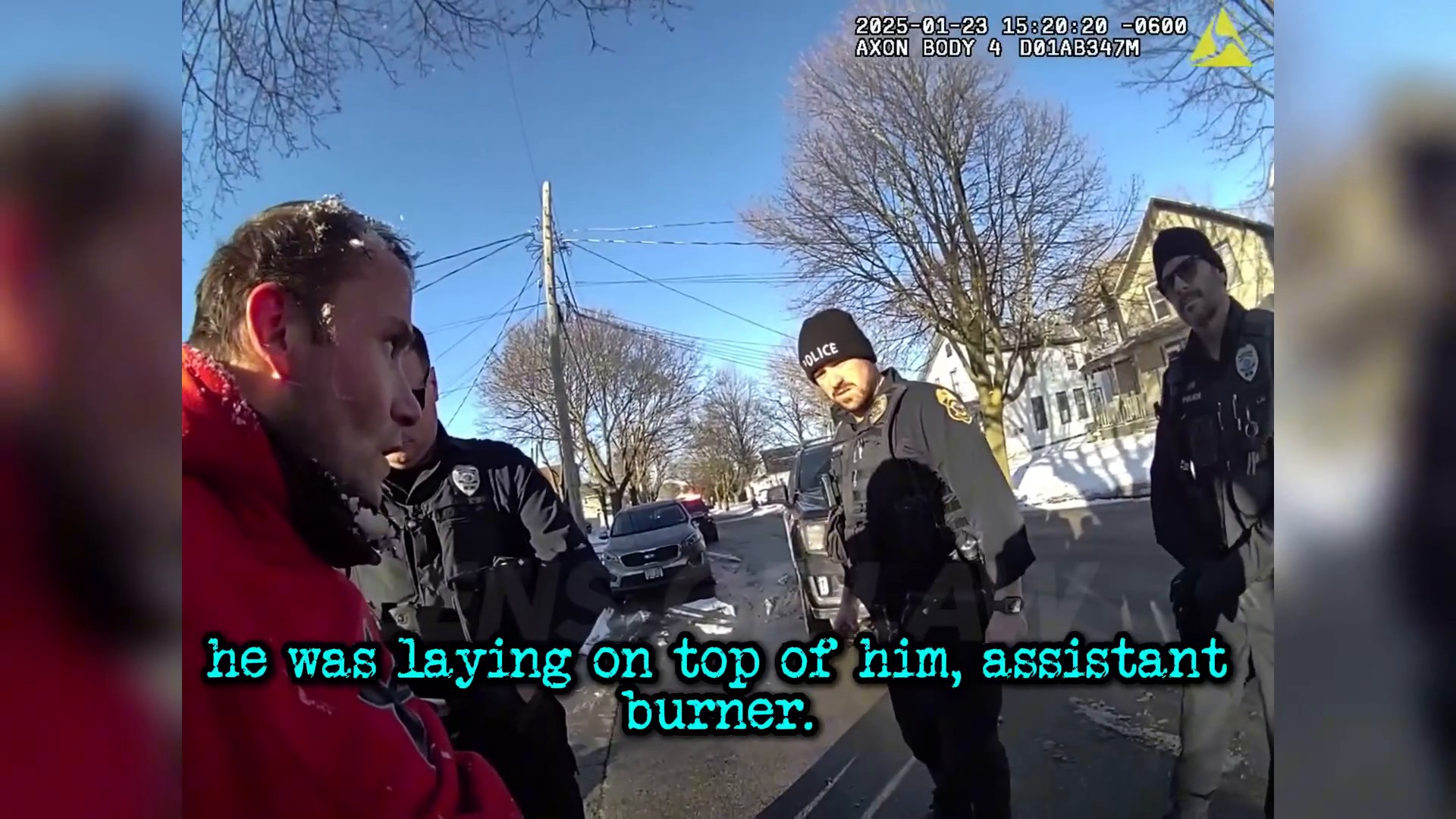
Additional officers soon appear. With more personnel present, the encounter becomes more controlled. The man is kept on the ground while officers work through the arrest process. The footage shows officers standing around him in the snow and communicating as the immediate struggle subsides.
This is an important transition. During the fight, the officer's priorities are immediate: stop the assaultive behavior, protect herself, maintain control of her equipment and restrain the man. After backup arrives, officers can divide tasks. One person can control the suspect's hands, another can check restraints, another can search for objects or weapons, and someone else can speak with witnesses or assess injuries.
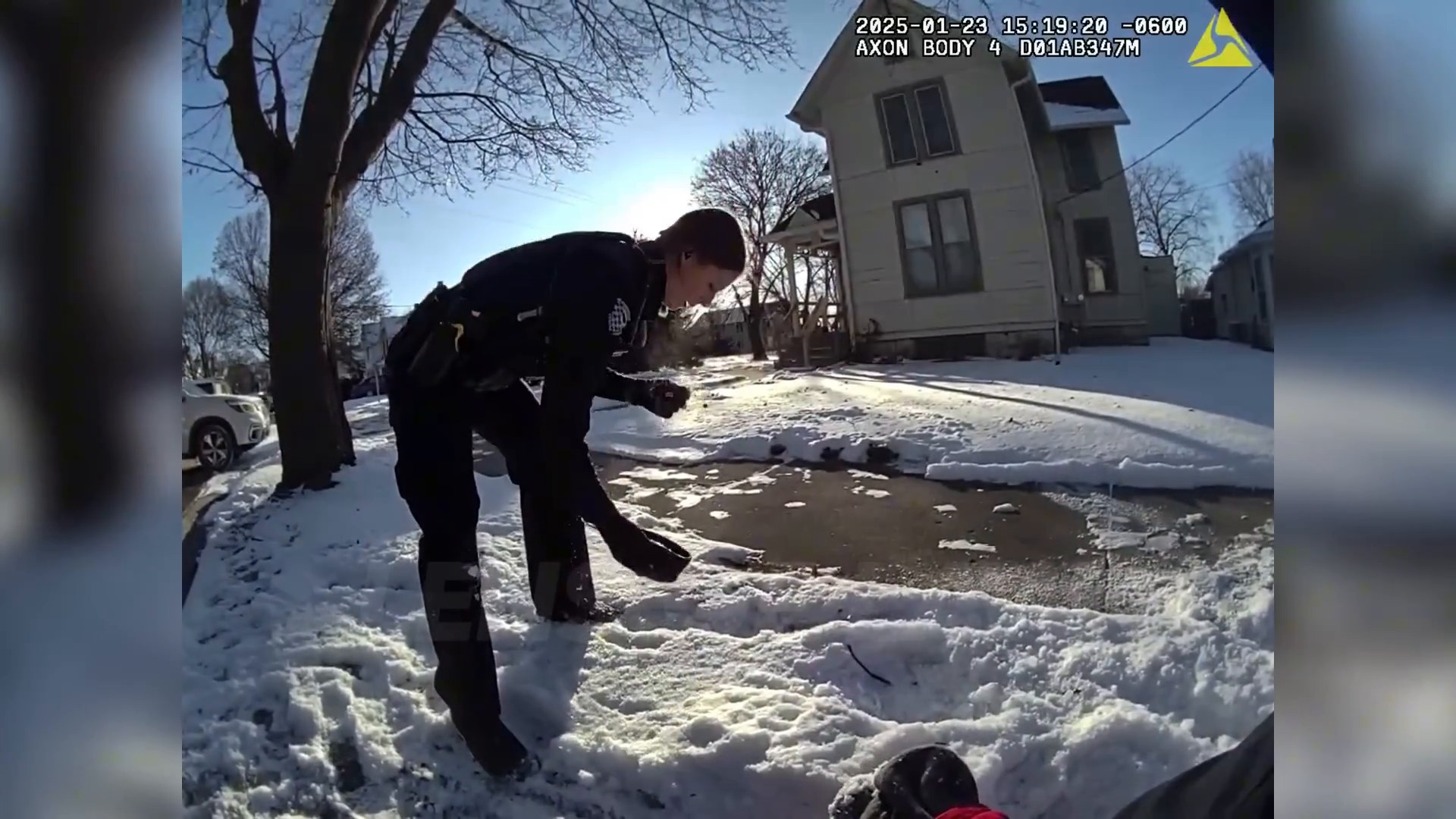
The video also shows the female officer after the struggle, bent forward and recovering while colleagues take over. That moment gives the confrontation a human scale that is easy to miss in a headline. Even when an officer remains standing and an arrest is completed, a close fight can be physically exhausting. Adrenaline, cold conditions, bulky winter clothing and uncertain footing on snow can make control techniques more difficult.
What the Camera Shows About the Man's Behavior
The video supports a straightforward description: the man is argumentative, resists the officer's attempt to control the encounter and becomes physically involved in a struggle with her. It does not require dramatic adjectives to make the sequence serious.
That precision matters because criminal cases are built around conduct and statutory elements, not viral labels. The court information later shown in the supplied video lists Wisconsin Statute 940.203(2), described on the record as battery or threat to a judge, prosecutor, or law-enforcement officer. One count is marked “Guilty Due to No Contest Plea.” A second count under the same statute is marked “Charge Dismissed but Read In.”
A no-contest plea has a specific legal function. It allows a court to find a defendant guilty and impose a sentence without requiring the defendant to make the same express admission of factual guilt associated with a guilty plea. The distinction is meaningful, but the practical court outcome displayed in the video is not an unresolved accusation: the relevant count is shown as guilty due to the plea.
The record screen also lists disorderly-conduct counts, a retail-theft count, resisting or obstructing an officer, carrying a concealed knife, and several bail-jumping counts. Most are marked dismissed but read in. In Wisconsin practice, a dismissed-and-read-in charge is not a conviction on that charge, but it may be considered at sentencing under the plea arrangement. It therefore would be misleading to say the defendant was convicted of every offense appearing on the screen.
The Court Record Adds an Ending the Body Camera Cannot
Body-camera footage usually ends long before the legal process does. The camera can show an arrest, but it cannot tell viewers whether prosecutors later file the same offenses officers initially considered, whether charges are amended, whether a defendant goes to trial, or whether the parties reach a plea agreement.
The supplied edit solves part of that problem by including a later Wisconsin Circuit Court record. The screen identifies retired Waukesha County Circuit Court Judge Michael O. Bohren as the responsible official and Mary Caitlin Brejcha as the prosecuting attorney. Public sources independently confirm Bohren's long service as a Waukesha County Circuit Court judge. The combination of the Wisconsin statutes, Waukesha County judicial official and prosecuting attorney provides strong support for placing the legal case in Waukesha County.
Still, the available evidence should not be pushed further than it goes. The body-camera frames used here do not provide a sufficiently clear department identifier to justify naming a specific municipal agency solely from appearance, and the edited court screenshot does not expose the defendant's name. Rather than guessing, the article leaves those details unstated.
The court screen does establish the most important outcome. Count one, felony battery or threat to a law-enforcement officer, is marked guilty due to a no-contest plea. Count eight, felony bail jumping, is also marked guilty due to a no-contest plea. The remaining visible counts are dismissed but read in. That means the case reached a negotiated legal resolution rather than remaining a collection of pending allegations.
Why the Bystander's Role Stands Out
There is a reason the intervention becomes the emotional center of the video. The bystander has no visible badge, radio or duty belt. He is not shown arriving as part of a coordinated police response. He simply sees an officer in a difficult physical confrontation and chooses to help.
That choice is easy to celebrate after the fact because the footage shows the outcome. In real time, however, a civilian does not know exactly what the officer knows. He may not know whether a weapon has been reported, whether another person is involved, or whether officers are seconds away from arriving. Physical intervention can expose a helper to injury and can complicate an already chaotic scene.
The safest form of assistance will depend on the circumstances. Calling emergency services, providing a clear location, describing what is happening and following an officer's directions are often the most useful things a witness can do. If an officer directly requests help or a situation presents an immediate threat of serious harm, circumstances may look very different. The supplied video is a record of one specific intervention, not a universal instruction for bystanders to enter every police struggle.
What can be said about this encounter is narrower and stronger: the civilian moved in while the officer was physically struggling with the man, helped her gain control, and remained part of the scene as other officers arrived. The footage supports calling that assistance consequential.
Winter Conditions Add Another Layer of Difficulty
The snow is more than background scenery. Footing matters in any physical confrontation. Snowbanks, packed snow, ice and wet pavement can reduce traction for everyone involved. An officer attempting to control another adult cannot assume that a planted foot will stay planted. Falling can expose equipment, create injuries or give the other person positional advantage.
Winter clothing changes the mechanics as well. Thick coats and layered clothing make it harder to see exactly where a person's hands are and can make grips less reliable. They can also conceal objects. None of that proves the man in this footage possessed a particular weapon during the struggle, and the article does not make that claim. It simply explains why a close fight in winter conditions can be unusually difficult to manage.
The later court screen lists a carrying-a-concealed-knife charge among the counts that were dismissed but read in. That court entry should be described exactly as the record presents it. It does not justify rewriting every moment of the body-camera struggle as though the camera visibly establishes the presence or use of a knife against the officer.
From an Online Headline to a Verifiable Account
Viral police-video titles often compress a complicated event into a handful of emotionally loaded words. “Hero” tells viewers whom to admire. “Deranged” tells them how to interpret the other person's behavior. “Attacks” identifies the turning point. The result is efficient internet storytelling, but it can blur the line between observation and characterization.
The footage does not need that blur to be compelling. The observable sequence is enough. An officer contacts a man beside a bicycle on a snowy street. The conversation becomes increasingly confrontational. A physical struggle develops. The officer fights to maintain control. A civilian steps in to help. Additional officers arrive and restrain the man. The original officer recovers nearby while the scene stabilizes.
Then the video moves beyond the arrest and displays the court record. That final addition is particularly valuable because it prevents the story from ending with speculation. At least two felony counts shown on the screen resulted in guilty findings following no-contest pleas, while multiple other counts were dismissed but read in.
Those distinctions make the account less sensational but more accurate. They also show why research matters when writing about police footage. An arrest is not a conviction. A charge is not a sentence. A dismissed-and-read-in offense is not the same as a guilty verdict. And behavior that looks erratic on video is not, by itself, a psychiatric diagnosis.
The Encounter's Most Important Seconds
The defining moment arrives when the officer is no longer simply talking to the man. Once the confrontation becomes physical, the margin for error shrinks dramatically. The camera shakes, the view is obstructed, and the officer is forced to manage the fight at arm's length.
Then another person enters the frame with a different purpose. Instead of escalating against police, he assists. That changes the encounter before the viewer has time to process what is happening. Backup officers arrive shortly afterward, but the bystander has already made his decision.
In many police videos, the public appears only at the edges: watching from a porch, recording with a phone or asking officers what happened. Here, a civilian becomes part of the central sequence. His intervention is why the footage stands apart from an ordinary resisting-arrest video.
The subsequent court outcome also prevents the event from being treated as nothing more than a dramatic clip. The legal record shown in the video indicates that the case continued through prosecution and ended with no-contest pleas on a law-enforcement-officer battery or threat count and a felony bail-jumping count. Other allegations were handled as dismissed-and-read-in counts rather than convictions.
What Is Confirmed and What Remains Unverified
Several details are directly supported by the supplied footage: the encounter occurred on January 23, 2025; it took place in Wisconsin; snow covered the surrounding residential area; the man was beside a bicycle; a female officer became involved in a physical struggle with him; a civilian assisted during that struggle; and additional officers arrived to secure the scene.
The court screen shown at the end provides another set of confirmed details. It displays Wisconsin criminal statutes, identifies Michael O. Bohren as the responsible judicial official and Mary Caitlin Brejcha as the prosecutor, and shows the dispositions of twelve counts. Public reporting independently places Bohren on the Waukesha County Circuit Court, supporting the connection to Waukesha County.
What remains unverified from the available material is the defendant's name, his age, the precise street address, and a complete sentencing breakdown. Those details are therefore intentionally omitted. The article also does not claim that the man had a diagnosed mental illness, even though the original upload uses the word “deranged.”
This approach may leave fewer dramatic details, but it preserves the difference between evidence and assumption. That is especially important when an article will remain online long after the original social-media upload has been forgotten.
A Roadside Struggle With an Unusual Ending
The footage begins with a scene that could easily have remained mundane: a man, a bicycle, an officer and a cold Wisconsin street. Within minutes, it becomes a close physical confrontation. The officer has little space to work, the camera loses its stable perspective, and the struggle pulls everyone toward the snow-covered edge of the roadway.
The intervention of the bystander gives the story its unexpected turn. He does not merely observe the officer's difficulty. He moves toward it and helps until police can take control. Whatever viewers think about the decisions that led to the confrontation, that assistance is plainly visible.
The later court record gives the story a legal ending as well. The defendant ultimately faced a case that included serious allegations involving law enforcement, and the record shown in the video indicates no-contest pleas resulting in guilty findings on two felony counts. Other counts were dismissed but read in, a distinction that should remain clear whenever the case is described.
Watching the complete footage is therefore more informative than seeing only the struggle. The opening establishes the man's behavior and the officer's attempts to manage the contact. The middle captures the sudden transition to physical resistance and the bystander's intervention. The final portion shows backup, the aftermath and the court information that explains what became of the case.
Comments (0)
Loading comments...
May You Like

West Virginia Man Laughs at Police Officer and Ends Up Arrested

UCF Student’s Pronoun Dispute With Campus Police Escalates Into an Arrest
Female Driver Destroys Three Lives in a Matter of Minutes