
He Taunted Police With a Beer in Hand—Then the Citation Came Out
He Taunted Police With a Beer in Hand—Then the Citation Came Out
A quiet Sunday morning in a Florida waterfront park turned into a tense lesson in how quickly a minor public-alcohol encounter can become a prolonged confrontation once attitude, police authority, and a crowd all enter the same frame.
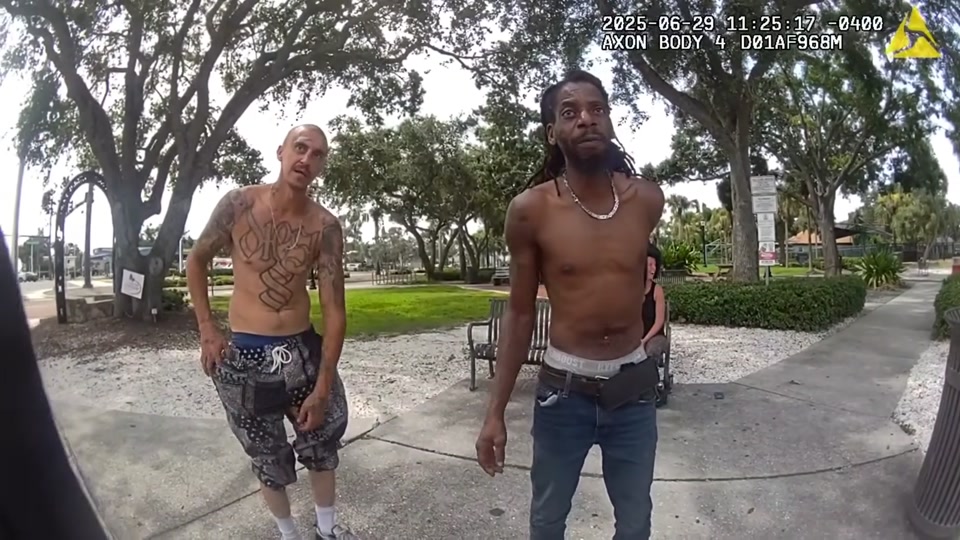
A Small Gesture Turns a Routine Contact Into Something Much Bigger
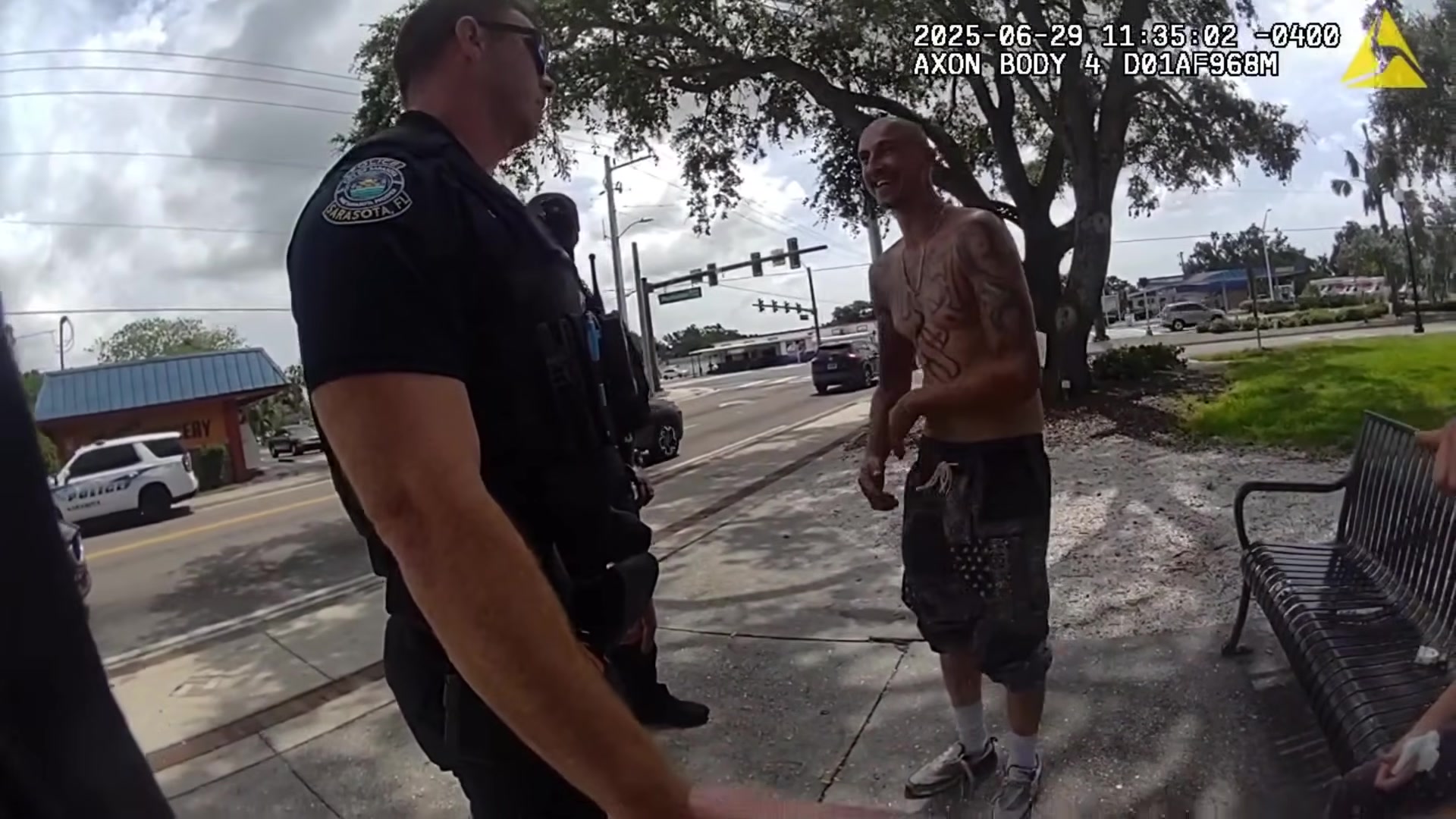
At first glance, almost nothing about the scene suggests that it is about to become memorable. It is daytime. The park is open. People are sitting on benches beneath mature trees, traffic moves nearby, and the encounter begins in the kind of public setting where police officers and residents cross paths every day. There is no dramatic pursuit, no wrecked vehicle, and no obvious emergency unfolding in front of the body camera.
Then attention centers on one man standing near the benches. The video’s premise is simple: he has a beer, he makes an openly disrespectful gesture toward police, and the interaction that follows lasts far longer than the gesture itself. What makes the footage compelling is not the gesture alone. It is the question that immediately follows it: what, exactly, can police lawfully act on when a person is rude to them while also apparently violating a rule involving alcohol in a public place?
That distinction matters. Insulting an officer and committing an ordinance violation are not the same thing. An offensive gesture may provoke a reaction, but the enforceable issue must stand on its own legal basis. In the footage, the officers’ attention repeatedly returns to the alcohol, identification, and the process of documenting the encounter. The man's attitude raises the temperature, but attitude alone does not tell us what citation can legally be written.
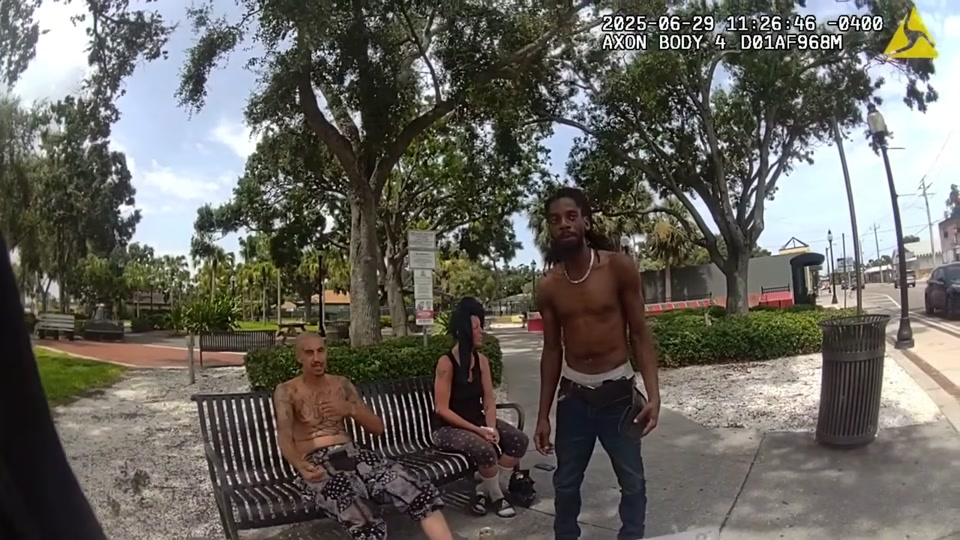
The Location Helps Explain Why the Beer Matters
Sanford’s Fort Mellon Park is a major public recreation space along Lake Monroe. The city describes it as a 17-acre waterfront park with walking areas, green space, playground facilities, pavilions, basketball courts, a splash pad and access to the RiverWalk. In other words, this is not a private backyard or a bar patio. It is the kind of shared public space where municipal rules are designed to balance individual use with families, children, recreation and general public access.
That context changes how a beer can becomes relevant. Open-container and public-consumption rules vary by jurisdiction and by location. A person may legally possess alcohol in one setting and violate a local ordinance by doing the same thing a few feet away in another. The important point in this incident is therefore not simply that a can appears in the scene. The question is whether possession or consumption in that particular public area supplied officers with an independent enforcement reason.
The footage also shows why these encounters can become confusing to viewers. The emotional trigger and the legal trigger can happen almost simultaneously. A person sees the middle finger and assumes police approached because they were offended. An officer sees an open alcoholic beverage and may view the contact as an ordinance matter. Both events can occur in the same few seconds, but they are not legally interchangeable.
This is one reason body-camera footage is so useful. It preserves the sequence. Sequence can reveal whether an officer was already addressing a suspected violation, whether the behavior changed after contact began, and what explanation was actually given. It also allows viewers to separate a provocative act from the conduct police say justified enforcement.
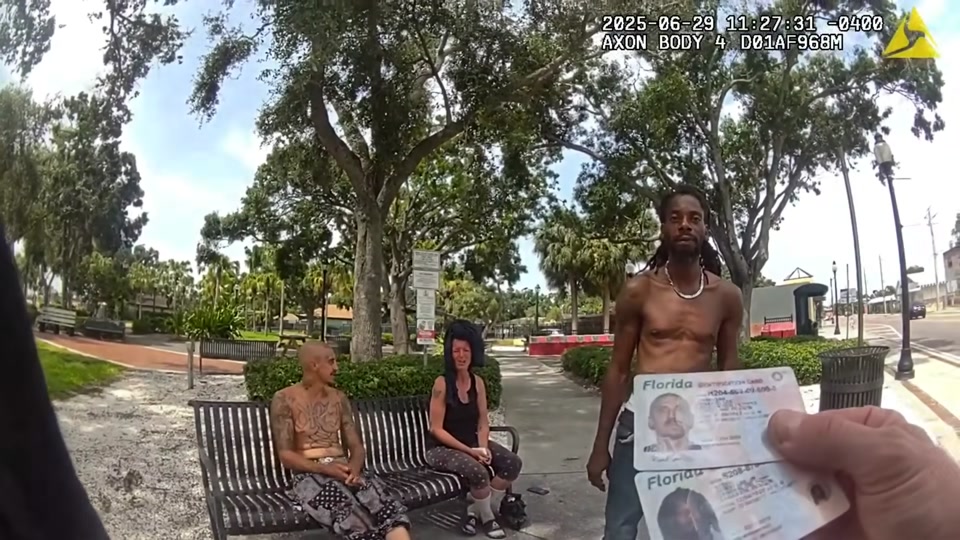
Identification Becomes the Center of the Encounter
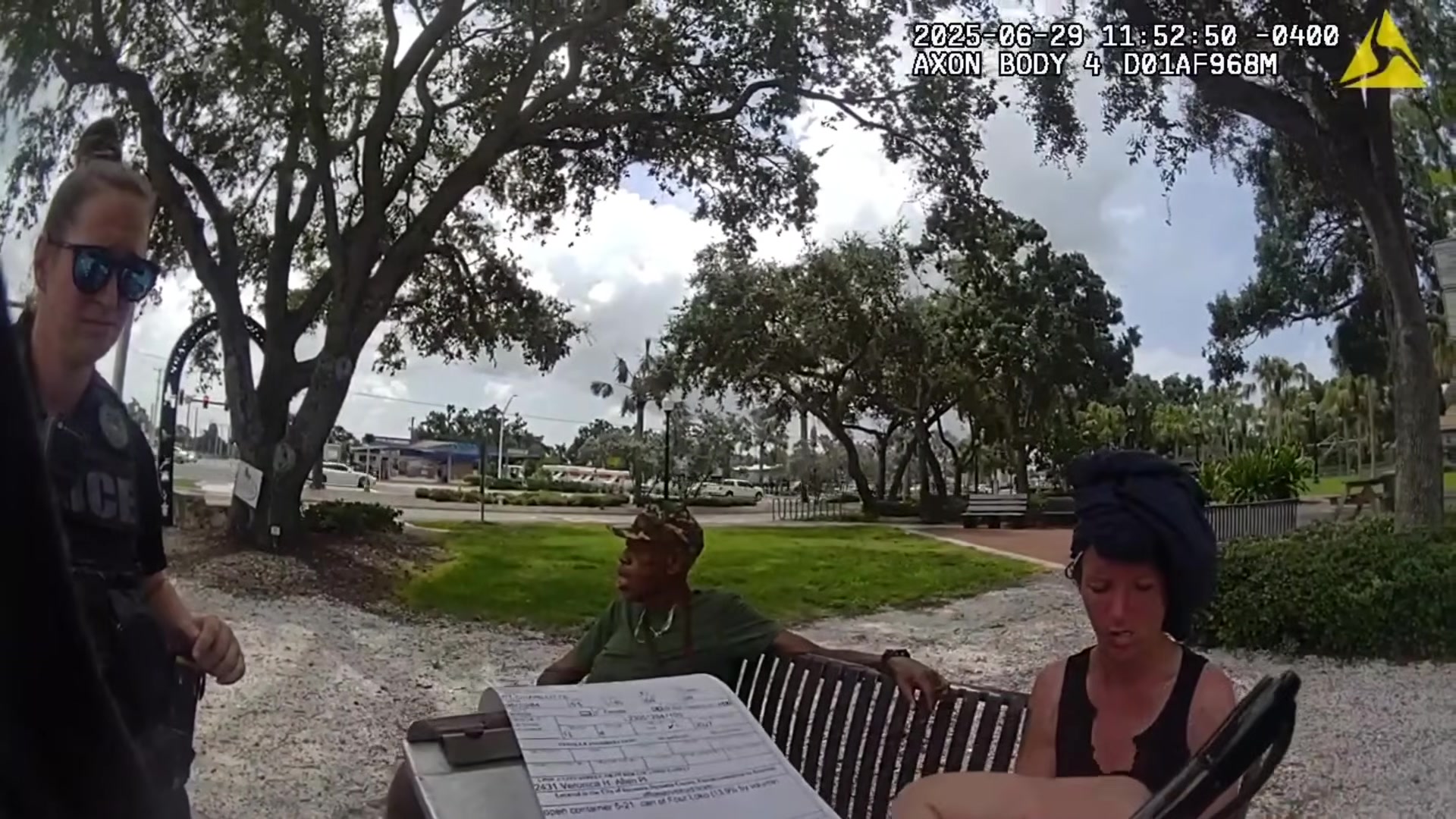
As the exchange develops, the interaction shifts away from the initial gesture and toward a more procedural phase. Identification is produced and examined. The officer is no longer merely reacting to a person standing nearby; the contact is becoming documented. That change is subtle on video, but it is important because it signals that the incident is moving toward some formal outcome rather than ending with a warning and a walk-away.
The people around the bench remain part of the scene. Their presence changes the dynamics. Police contacts in crowded public spaces rarely happen in isolation. Friends, bystanders and passersby can ask questions, challenge an officer’s interpretation, record the encounter, or simply create additional voices that the officer has to track. None of those actions automatically constitutes interference, but a growing group can make a routine citation more difficult to manage.
The video never needs a dramatic soundtrack to create tension. The uncertainty does the work. Will the man simply receive a citation? Will the disagreement escalate into handcuffs? Will another person become involved? The viewer keeps watching because the stakes remain unresolved.
That is also the strongest way to understand this footage without exaggerating it. The story is not that someone made a rude gesture and was instantly hauled away. The more interesting story is that a small act of defiance happened alongside a potentially enforceable alcohol issue, and the officers had to keep the two concepts separate while completing the contact.
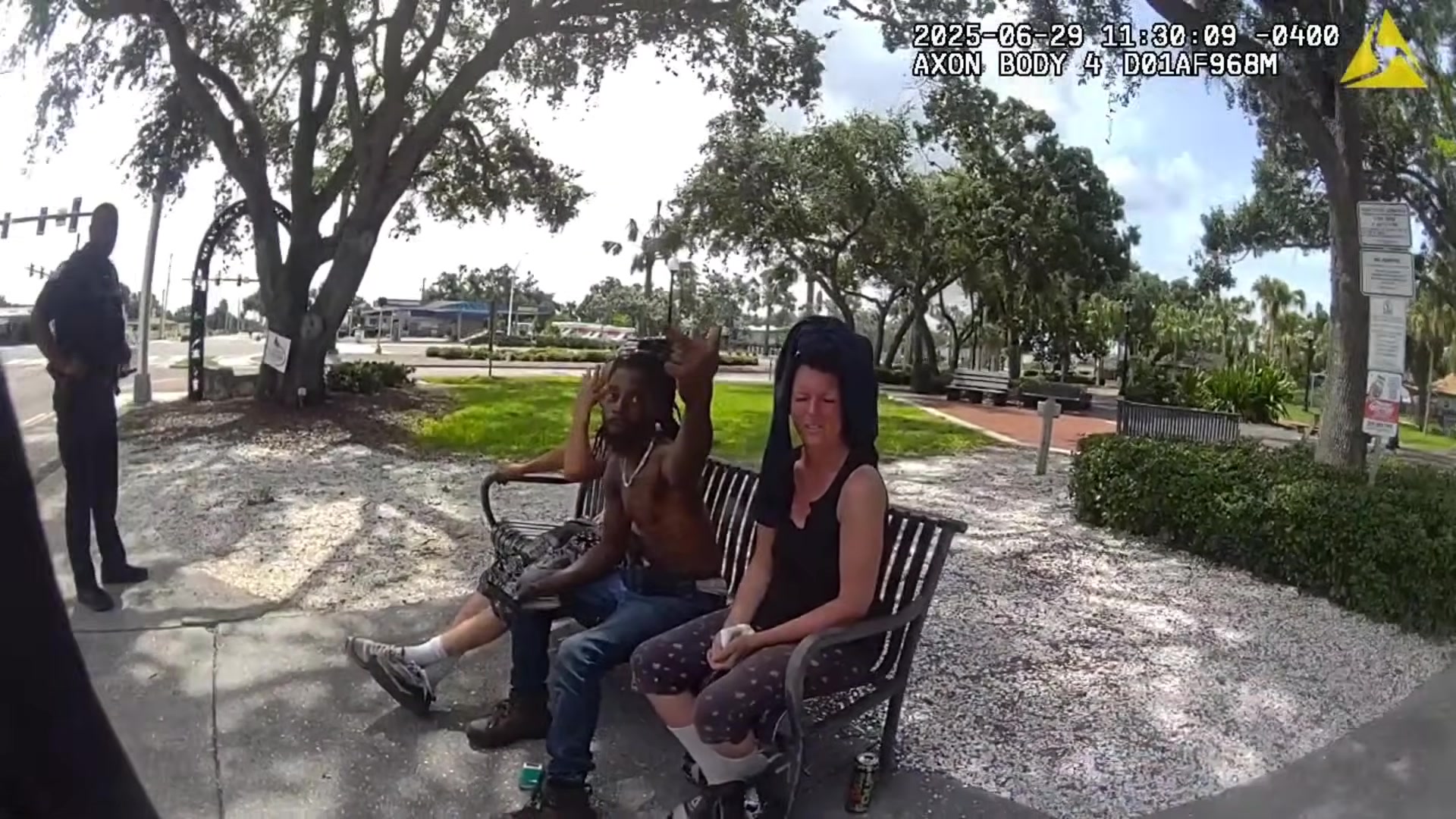
Why the Middle Finger Is Not the Whole Legal Story
American courts have repeatedly recognized that criticism of police receives substantial First Amendment protection, even when the expression is crude or insulting. That principle is essential background for understanding videos like this one. Police officers are government officials, and the Constitution generally does not permit an arrest simply because an officer dislikes a citizen’s words or gesture.
But constitutional protection for expression is not a universal shield against enforcement of unrelated laws. A person who insults an officer can still be cited for an independently observed traffic offense, open-container violation, trespass, or other lawful basis. The key question is causation: would the enforcement action have occurred because of the violation, or was the violation merely a pretext for punishing protected expression?
That distinction has generated real litigation. In other cases around the United States, people have challenged stops or arrests they alleged were retaliation for giving officers the middle finger. Those cases underline why officers should be able to articulate an objective reason for a detention or citation. They also explain why viewers should resist reducing every encounter to a single provocative moment.
In this footage, the beer is therefore more than a prop. It is the fact that potentially changes the legal analysis. The gesture may explain why the clip attracts attention online; the alcohol issue is what may explain why the contact continues.
There is another lesson here for anyone watching body-camera videos as entertainment: editing can distort causation. A short social-media clip might begin at the gesture and end at the citation, encouraging viewers to connect those two moments directly. The longer body-camera sequence provides the missing middle—conversation, identification, observation and documentation. That middle is often where the real explanation lives.
The Encounter Stays Verbal Instead of Becoming Physical
One of the most important features of the footage is what does not happen. Despite the attitude and repeated conversation, the scene does not immediately explode into a physical struggle. Officers maintain distance, communicate, check information and continue the process. The man remains animated, but the interaction stays largely verbal.
That matters because de-escalation is often misunderstood as officers being passive. In practice, de-escalation can simply mean not turning a solvable problem into a larger one. When the suspected offense is minor and the person does not present an immediate physical threat, time can be an asset. Allowing a person to talk while officers complete the administrative steps may be less dramatic than forcing instant compliance, but it can produce a safer outcome.
The same principle applies to bystanders. A public audience can make everyone more self-conscious. The subject may perform for friends. Officers may know that multiple phones and body cameras are recording. Bystanders may interpret every instruction as a challenge. Professional restraint becomes particularly important in that environment because unnecessary escalation can create a new problem that is more serious than the original violation.
The body camera also captures the ordinary mechanics that edited police videos often remove: waiting, checking documents, discussing what happened, writing information down, and repeating instructions. Those stretches may seem uneventful, but they show how enforcement actually works. Most police contacts are not continuous action scenes. They are decisions made in real time while incomplete information is being sorted out.
The Paperwork Signals the Real Ending
Late in the video, the encounter looks increasingly administrative. A document is visible, information is being handled, and the scene begins to lose the uncertainty that powered its opening minutes. The apparent resolution is not a cinematic takedown. It is paperwork.
That ending is important because the original title—“He Flipped Off the Cops While Holding a Beer… Then This Happened”—invites the audience to expect a dramatic consequence. The actual footage is more interesting when described accurately. The man’s defiance attracts attention, but the officers appear focused on processing the underlying issue rather than transforming disrespect into a separate offense.
This is precisely why a title such as “He Taunted Police With a Beer in Hand—Then the Citation Came Out” better matches the visible sequence. It preserves the curiosity of the original without promising an arrest or violent confrontation that the available footage does not establish.
What the Video Reveals About Public-Space Policing
Beyond the personalities involved, this encounter illustrates a recurring challenge for police departments: public parks are simultaneously recreational spaces, gathering places and enforcement environments. Sanford promotes Fort Mellon Park as a community destination, with waterfront views, playgrounds, green space and other amenities. The Sanford Police Department also conducts community events at the park, showing that police presence there is not limited to enforcement.
That dual role creates a delicate balance. A park works best when people feel free to gather, talk, relax and express themselves. At the same time, municipalities impose rules intended to keep shared spaces usable for everyone. Officers working those spaces have to enforce rules without treating ordinary disagreement as criminal behavior. Citizens, meanwhile, may challenge police verbally while still being responsible for complying with otherwise lawful restrictions.
The most useful takeaway is not “never argue with police,” nor is it “police cannot do anything if your speech is protected.” Both are oversimplifications. The better question is always: what specific conduct is the officer acting on? If the answer is a protected insult, that raises one set of constitutional concerns. If the answer is an independently observed ordinance violation, the analysis changes.
For viewers, that makes the body-camera timestamp, the order of statements, the physical evidence and the final paperwork more informative than the loudest moment. Those details are less likely to go viral, but they are more likely to explain what actually happened.
A Confrontation That Never Needed to Become a Fight
By the end of the footage, the central conflict has changed. What begins as a conspicuous challenge to police authority becomes a fairly ordinary enforcement process. The man’s behavior creates tension and gives the clip its hook, but the ending demonstrates the value of keeping a minor encounter minor.
There is also a broader lesson in the contrast between perception and documentation. A viewer who sees only a few seconds might believe the entire incident was about disrespecting police. A viewer who watches the full sequence sees officers checking identification, talking through the situation, involving another officer and dealing with paperwork. The longer record does not answer every legal question, but it provides enough context to avoid the simplest—and most sensational—interpretation.
Because no reliable public report of this exact encounter was located during research, it would be irresponsible to attach an unverified name, criminal charge, case disposition or arrest history to the people shown. The body-camera footage itself supports a narrower account: a public encounter involving officers, a man associated with an alcoholic beverage, a confrontational attitude, identification checks, extended discussion and an apparent citation process.
Sometimes that narrower account is the stronger story. Nobody needs invented charges or exaggerated danger to make the scene compelling. The tension comes from watching two things collide in real time: a citizen’s willingness to openly antagonize police and an officer’s responsibility to base enforcement on something more concrete than disrespect.
Why This Footage Is Worth Watching to the End
The first few seconds offer an easy viral hook, but the real value of the video is in everything that follows. It shows how an officer can be challenged publicly without the encounter automatically becoming physical. It shows how a seemingly trivial object—a beer—can become the factual basis around which an entire police contact revolves. And it shows why body-camera footage is most informative when viewers resist judging the outcome from a single gesture.
For anyone interested in police encounters, civil liberties, public-space rules or simply the unpredictable nature of body-camera footage, this clip is a useful example of how quickly context changes the story. The middle finger is what catches the eye. The sequence after it is what explains the incident.
The full footage provides the context that a short clip cannot: the initial contact, the argument, the identification check, the officers’ response and the paperwork that ultimately defines the encounter.
Click here to watch the full incident unfold from beginning to end:
Comments (0)
Loading comments...
May You Like
Everything Changed When Cops Asked About Weapons

UCF Student’s Pronoun Dispute With Campus Police Escalates Into an Arrest

Neighborhood Grocery Store Suddenly Erupts Into Chaos













