He Suddenly Emerged From the Brush..Then Reached for an Officer’s Gun
HE EMERGED FROM THE BRUSH — THEN THE ENCOUNTER TURNED INTO A FIGHT FOR AN OFFICER’S GUN
A call that began as a reported domestic disturbance in Northern Virginia quickly became something far more dangerous.
According to information displayed in the footage, Fairfax County police officers responded to a residence in Annandale, Virginia, on July 28, 2026, after receiving a report involving a man armed with knives.
But officers did not find a simple situation waiting for them.
The man had reportedly fled the residence on foot.
That meant police were no longer dealing with a contained call at a house. They were now searching for a potentially armed person somewhere outside—and the surrounding wooded terrain gave him countless places to disappear.
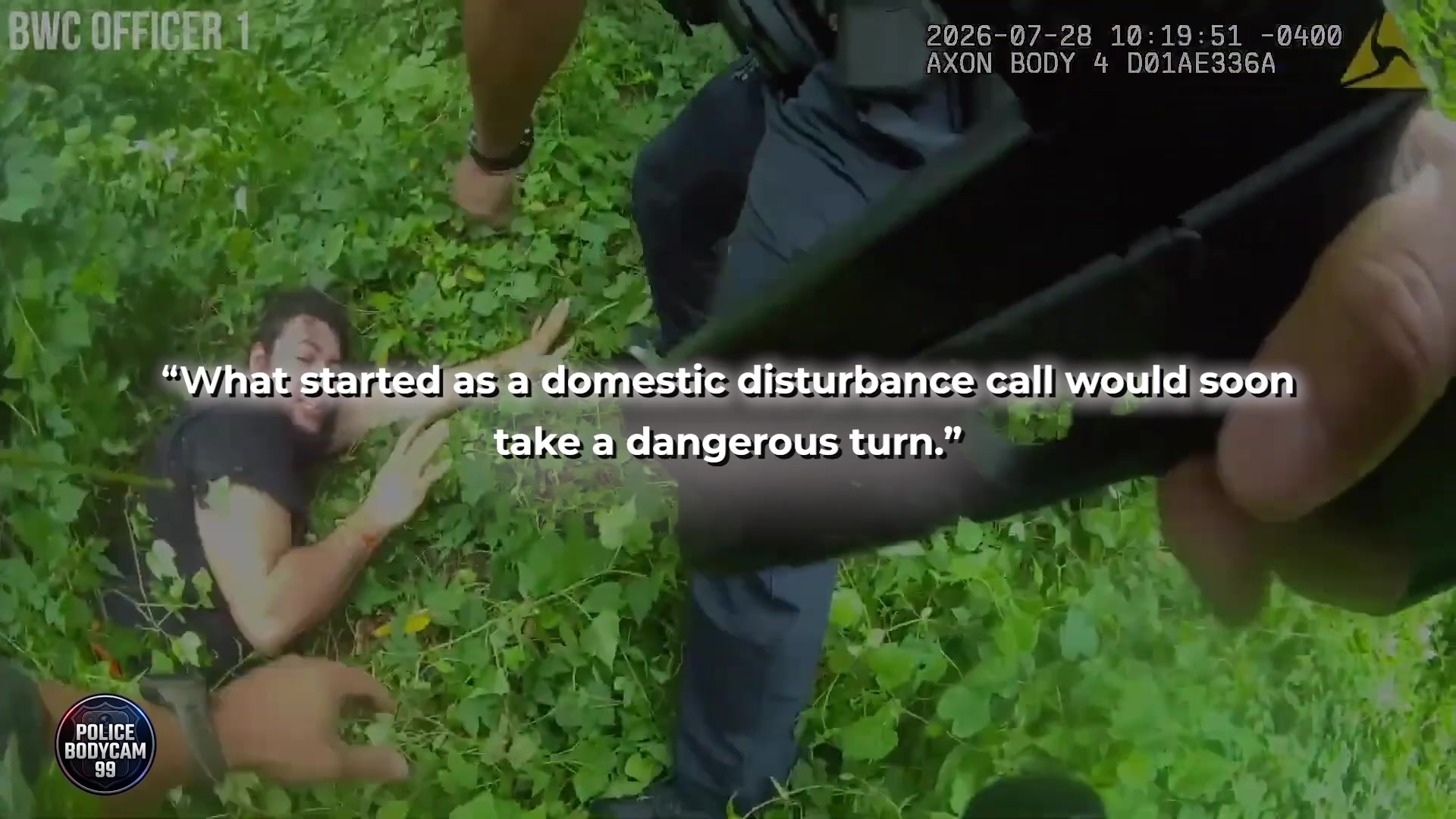
The person identified in the video is 26-year-old Nehemia Fuentes Banegas. The footage states that officers established a perimeter after learning he had left the residence on foot.
Additional resources were called in.
A police K9 joined the search.
A helicopter was brought overhead.
Officers entered the wooded area.
WHAT STARTED AT A HOUSE WAS NOW BECOMING A MANHUNT THROUGH DENSE BRUSH.
And police had another reason to move carefully: radio traffic indicates officers were trying to determine whether the man still had a knife with him.
OFFICERS ENTER THE WOODS KNOWING THE SUSPECT MAY STILL BE ARMED
Searching for someone in a wooded environment creates an entirely different problem from locating a suspect on an open street.
Visibility disappears.
Trees block sightlines.
Thick vegetation conceals movement.
An officer may be able to see dozens of yards ahead on a road. Inside dense woods, someone can remain almost invisible only a few yards away.
That becomes especially important when the person being searched for may have a weapon.
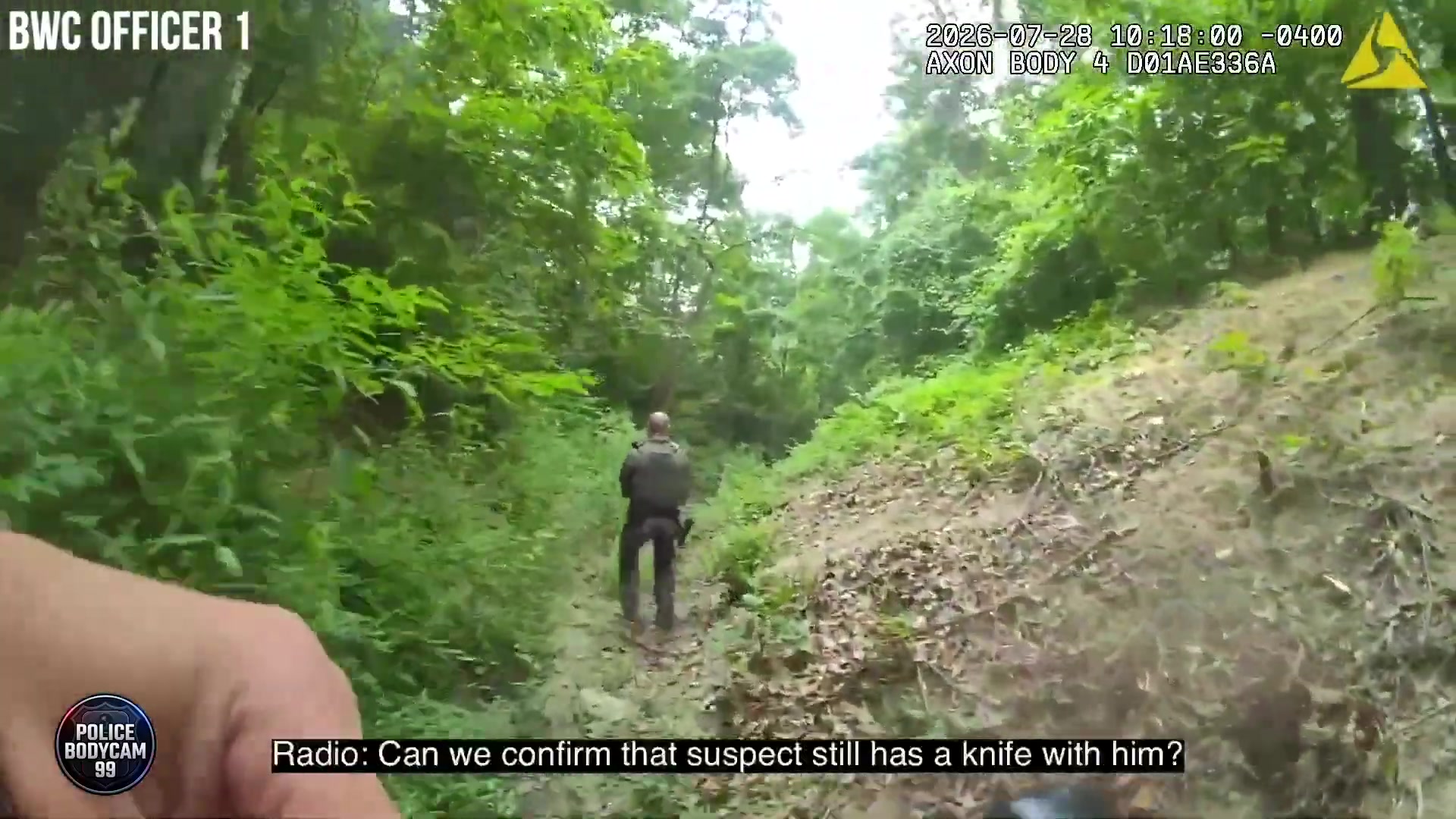
The bodycam makes the difficulty immediately obvious.
The officer is moving through uneven terrain while simultaneously listening to radio traffic, watching the vegetation, communicating with other officers and trying to locate someone who already has a significant advantage:
THE SUSPECT KNOWS WHERE HE IS. THE OFFICERS DON'T.
That imbalance creates tension even when nothing appears to be happening.
Every patch of brush could conceal someone.
Every movement deeper in the trees could matter.
And if the suspect suddenly appears at close range, officers may have almost no time to react.
THE SEARCH EXPANDS AS POLICE TRY TO CLOSE THE PERIMETER
As officers continue through the wooded area, the scale of the operation becomes clearer.
This is not one officer casually walking through a backyard.
Multiple resources are being used to locate the man.
The footage indicates that a perimeter was established, while K9 and helicopter units were among the additional resources assisting officers.
The strategy is straightforward in principle: restrict the suspect's ability to leave the area while systematically narrowing down where he might be.
Doing that in dense terrain is much harder.
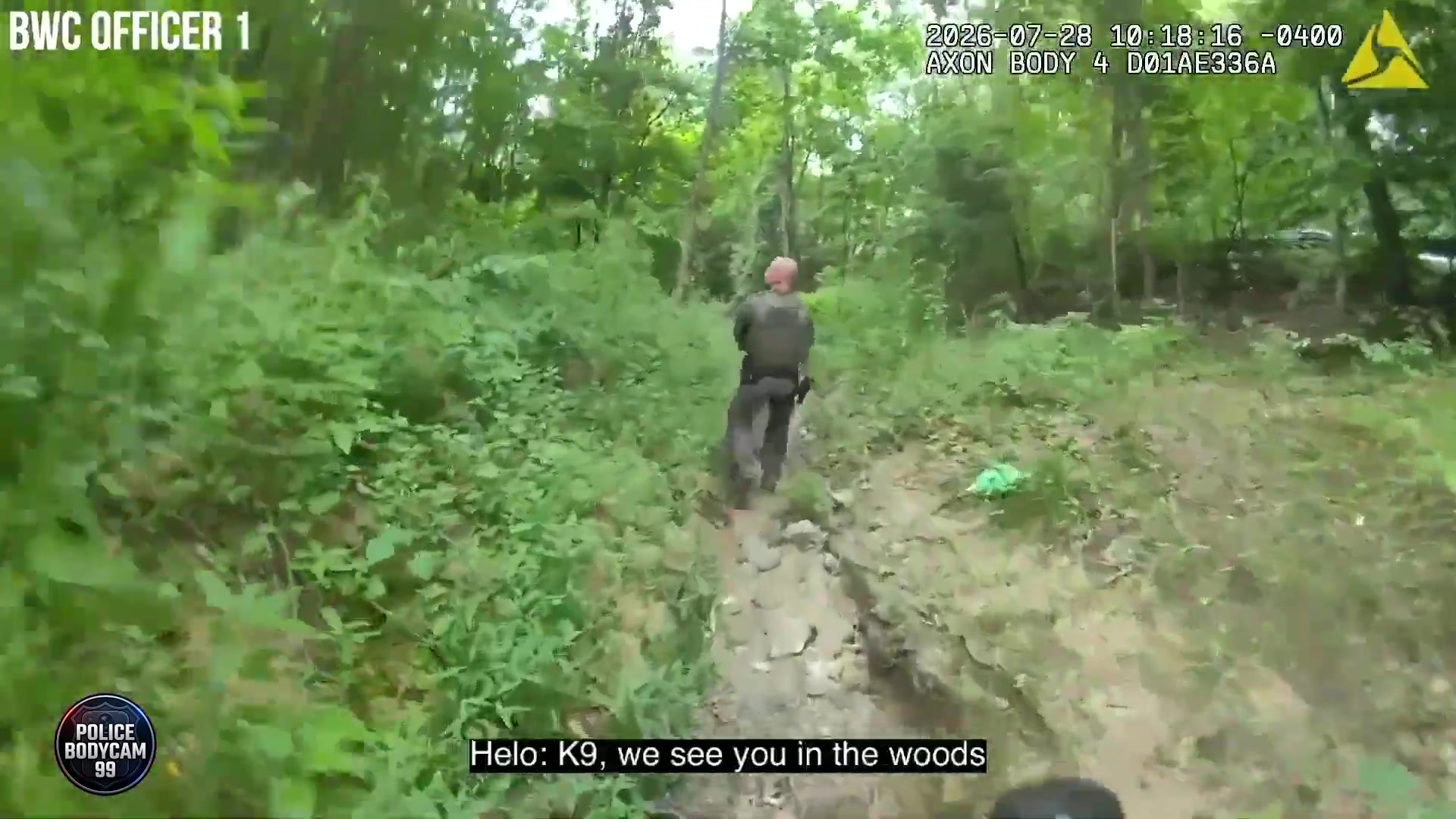
The bodycam repeatedly shows how quickly visibility changes.
One moment the officer has a relatively clear view ahead.
A few steps later, vegetation blocks much of the scene.
This means officers cannot simply focus on a distant target.
They have to scan constantly.
THE PERSON THEY ARE SEARCHING FOR COULD BE FAR AHEAD—OR ONLY FEET AWAY.
That uncertainty becomes the central source of tension.
Unlike a vehicle pursuit, where viewers can usually see the fleeing car, this search gives the audience almost nothing to track visually.
We know someone is somewhere ahead.
We just don't know where.
THE WOODS GIVE THE FLEEING MAN A MAJOR ADVANTAGE
At one point, officers continue moving deeper along the wooded path.
The environment itself becomes part of the confrontation.
Branches hang across the route.
The ground is uneven.
Visibility remains limited.
Officers must maintain awareness of one another while still watching for the man they are trying to locate.
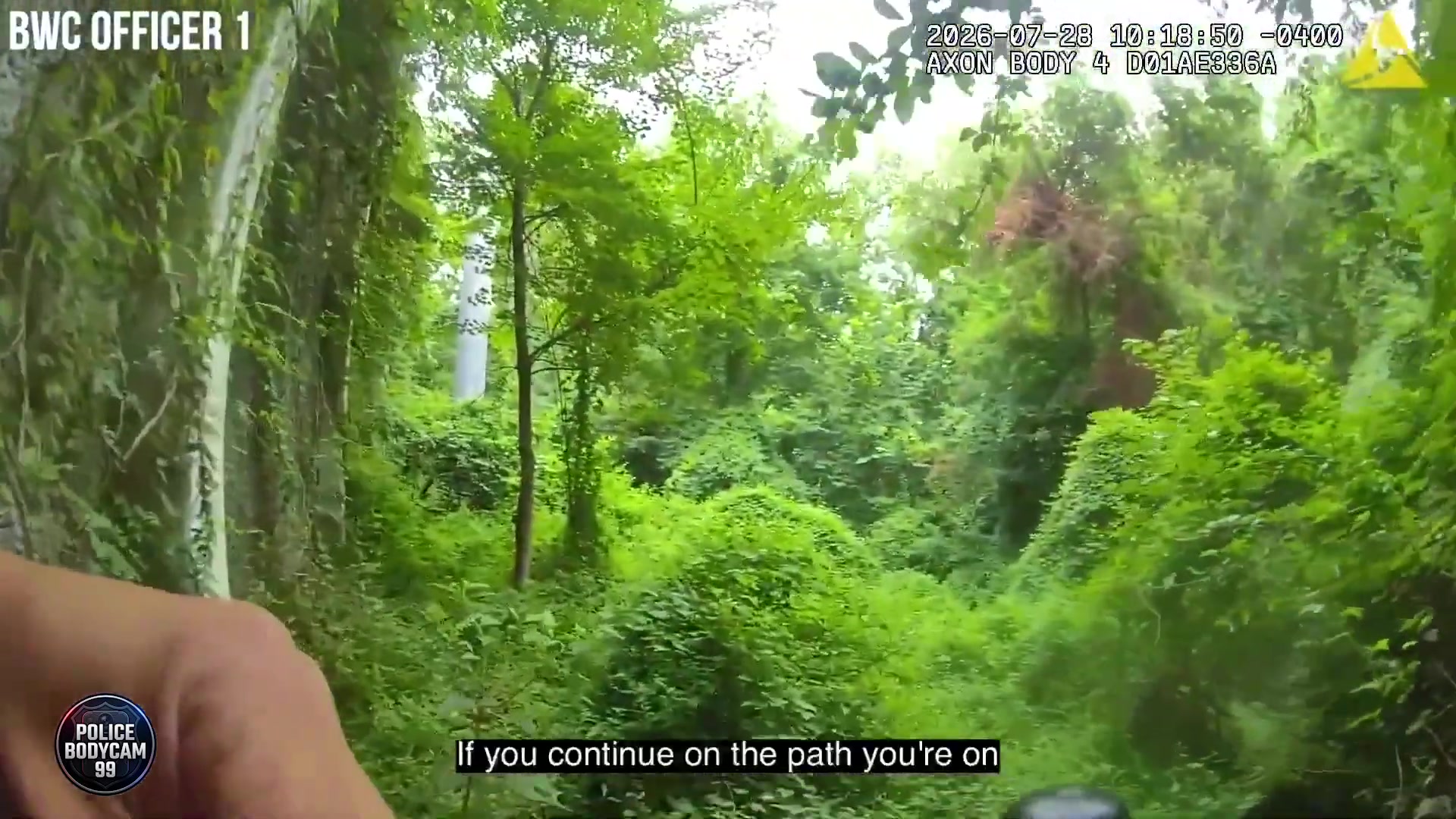
This is where the footage becomes particularly effective.
There is no dramatic soundtrack needed.
The tension comes from what viewers cannot see.
Imagine knowing that the person you are searching for may be armed while moving through vegetation dense enough to conceal someone until the final seconds.
Every step reduces the distance between officers and an unknown location.
Eventually, that distance has to disappear.
THE QUESTION IS NOT WHETHER POLICE WILL FIND HIM.
THE QUESTION IS WHAT HE WILL DO WHEN THEY DO.
THE SEARCH MOVES CLOSER TO ITS BREAKING POINT
Minutes into the operation, officers are still navigating thick vegetation.
The longer the search continues, the easier it would be for viewers to assume that the immediate danger is decreasing.
But the opposite can also be true.
Every minute spent searching potentially brings officers closer to the person they are looking for.
And because they cannot see exactly where he is, the final contact may happen with almost no warning.
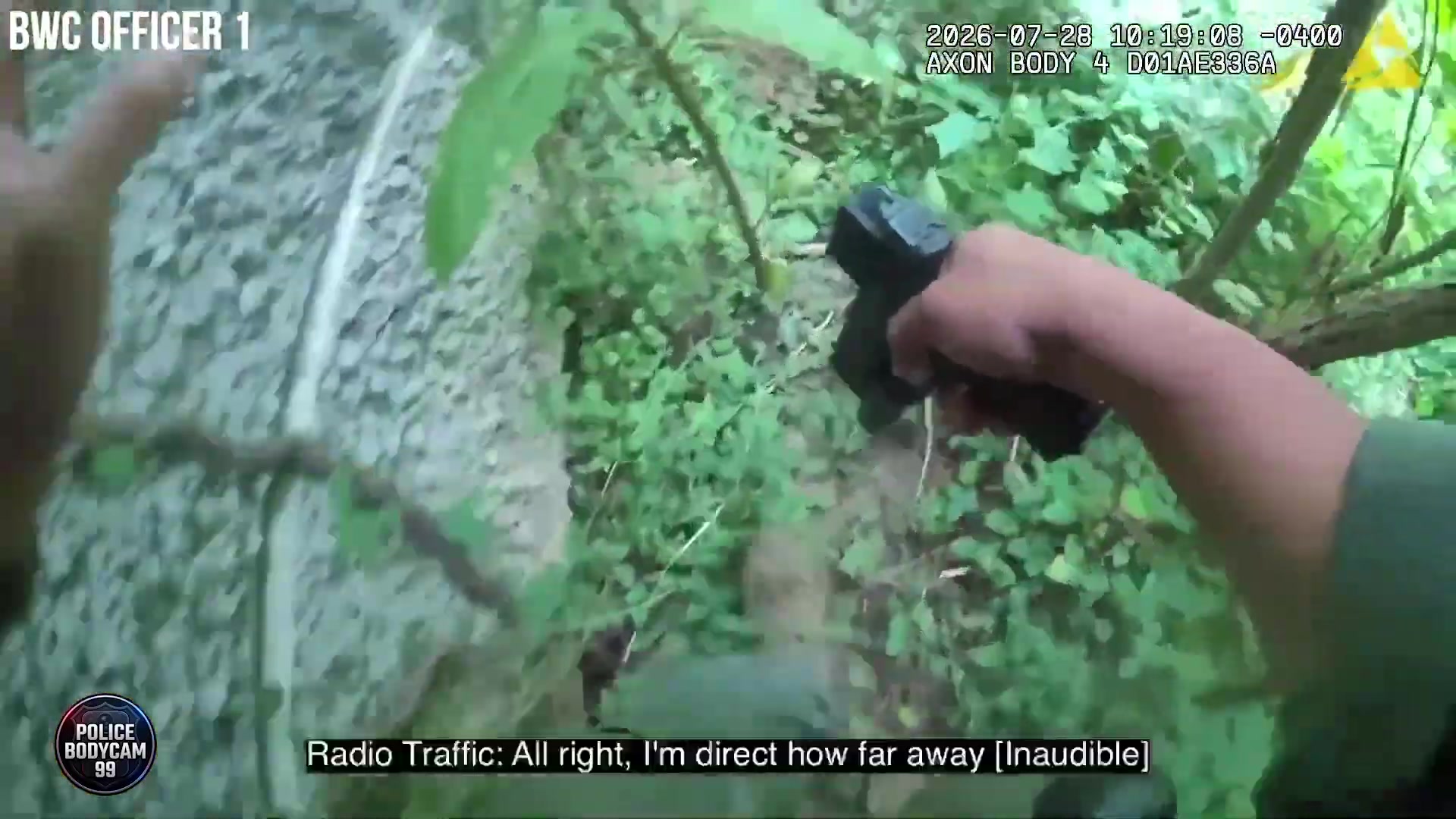
The officer's positioning tells much of the story.
This is no longer simply an investigation.
It is a tactical search.
Police have to be prepared for several possibilities at once.
The suspect could surrender.
He could continue running.
He could remain hidden.
Or he could suddenly confront officers.
THE BODYCAM DOESN'T TELL THE OFFICER WHICH POSSIBILITY IS COMING.
That is what makes the next portion so dangerous.
THEN THE MAN SUDDENLY EMERGES FROM THE BRUSH
After minutes of searching, the dynamic changes.
The distance officers have been trying to manage collapses.
The man is no longer simply an unseen person somewhere in the woods.
He is suddenly part of the immediate encounter.
This is precisely the kind of moment that makes wooded searches so unpredictable.
Police may have several minutes to prepare for contact but only seconds to react once contact actually occurs.
Everything now happens at much shorter range.
Commands become more urgent.
Movement becomes more important.
The physical separation that previously gave officers time to react is rapidly disappearing.
And then the encounter becomes even more serious.
THE CONFRONTATION MOVES FROM FINDING THE SUSPECT TO PREVENTING HIM FROM GAINING CONTROL OF AN OFFICER'S WEAPON.
At that point, the nature of the incident changes completely.
REACHING FOR AN OFFICER’S GUN CHANGES EVERYTHING
A struggle near an officer's holstered firearm presents an obvious danger.
Once someone attempts to gain control of that weapon, officers have to consider what could happen if the attempt succeeds.
The firearm would no longer be under police control.
The distance between the suspect and officer is already extremely short.
Other officers may also be nearby.
And there may be virtually no time available to respond if the weapon is removed from its holster.
That is why weapon-retention situations can become critical almost immediately.
A PHYSICAL STRUGGLE CAN TURN INTO AN ARMED CONFRONTATION IN SECONDS.
The video title focuses on this moment because it represents the sharpest escalation in the entire encounter.
For several minutes, officers were searching for a man.
Now they are dealing with him directly.
There is no longer a tree line separating the two sides.
No radio update can solve the immediate problem.
The confrontation has become physical.
THE SUSPECT IS BROUGHT UNDER CONTROL
Once officers gain control of the situation, the visual character of the footage changes again.
The frantic movement through dense woods stops.
The search is effectively over.
Police now have the person they had spent minutes trying to locate.
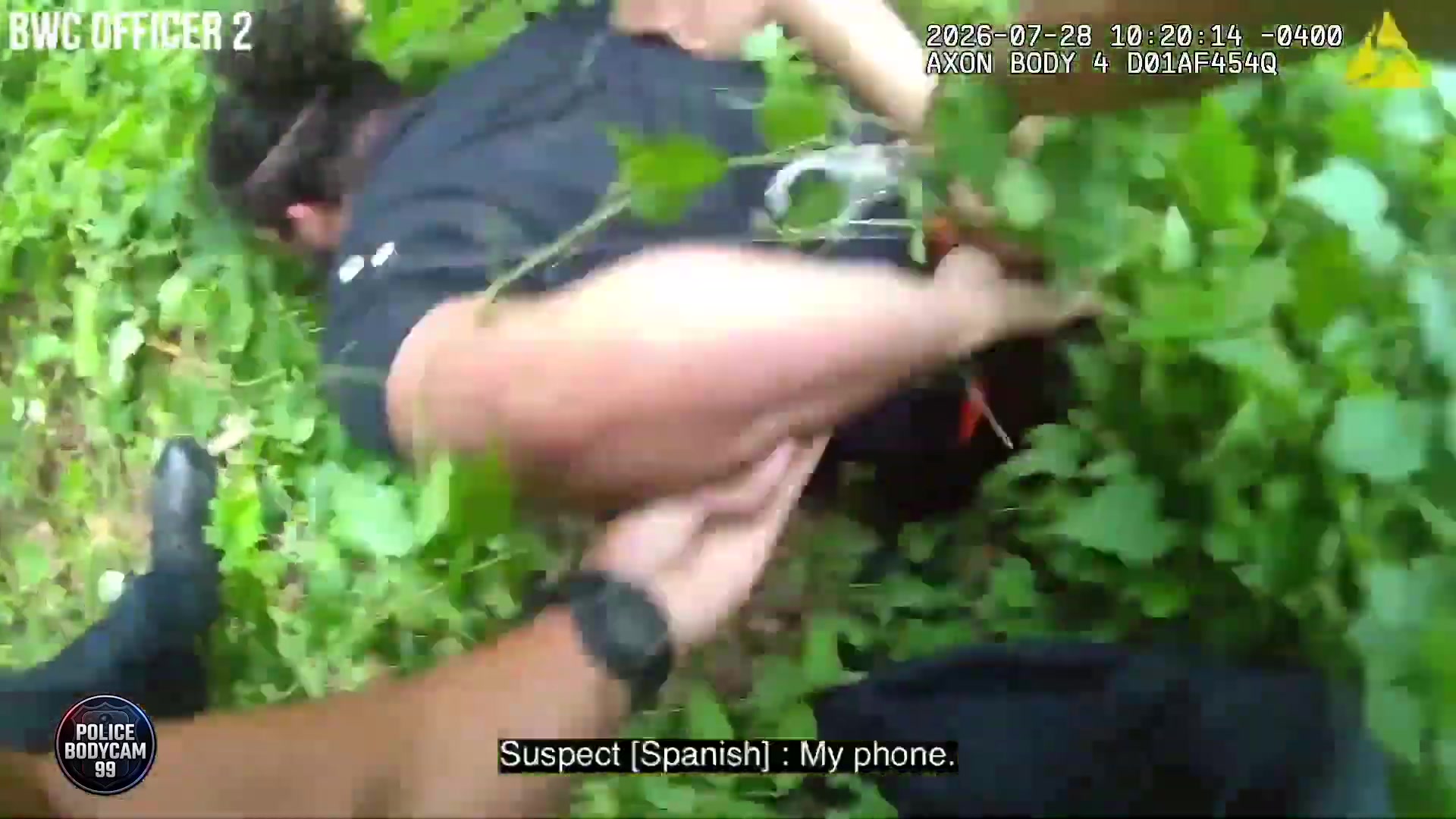
The footage states that Fuentes Banegas was transported to a local hospital following the incident with non-life-threatening injuries.
That ending provides a striking contrast with what could have happened.
Police entered the woods looking for someone reportedly connected to an armed domestic-disturbance call.
They searched terrain that severely limited visibility.
They eventually encountered him at close range.
The confrontation then escalated into a struggle involving an officer's firearm.
Yet the incident ultimately ended with officers establishing control and the man receiving medical attention.
THE ENTIRE SEARCH LASTED MINUTES. THE MOST DANGEROUS PART DEVELOPED IN SECONDS.
That contrast is what makes the footage so compelling.
THE BODYCAM SHOWS WHY THE MINUTES BEFORE THE STRUGGLE MATTER
If viewers saw only the final confrontation, they would miss most of what made the situation dangerous.
They would not see officers entering dense woods.
They would not hear the concern about whether the suspect remained armed.
They would not see how limited visibility became.
They would not experience the uncertainty of searching without knowing exactly where the man was.
And they would not understand how suddenly the distance between officer and suspect disappeared.
This is why longer bodycam footage matters.
THE FINAL STRUGGLE IS THE CLIMAX. THE SEARCH EXPLAINS WHY THAT CLIMAX WAS SO DANGEROUS.
The first minutes establish risk.
The wooded terrain increases uncertainty.
The perimeter gradually closes.
Then the man appears.
And suddenly officers are no longer searching.
They are fighting to maintain control.
A DOMESTIC-DISTURBANCE CALL BECOMES A DANGEROUS WOODED SEARCH
The most striking part of this incident is how dramatically the circumstances change.
Police respond to a residence.
The person they are looking for has already left.
The search moves into the woods.
Additional officers, a K9 and helicopter resources become involved.
For several minutes, there is no direct confrontation at all.
Then the entire incident reaches its breaking point almost instantly.
THAT IS THE UNPREDICTABILITY BODYCAM FOOTAGE CAPTURES BETTER THAN ALMOST ANY OTHER FORMAT.
Viewers know something is going to happen because the title tells them.
The officer moving through the woods does not know when.
He does not know exactly where the man will appear.
And he cannot know precisely how the suspect will react when contact finally occurs.
The footage places the audience inside that uncertainty.
By the end, the woods that initially appeared empty have become the setting for an extremely close confrontation.
And the gun an officer carried for protection nearly becomes another source of danger when the struggle reaches his weapon.
ONE MOMENT THE SUSPECT IS HIDDEN SOMEWHERE IN THE BRUSH. MOMENTS LATER, OFFICERS ARE FIGHTING TO KEEP CONTROL OF THE ENCOUNTER.
WATCH THE MOMENT THE QUIET SEARCH SUDDENLY CHANGES
For several minutes, officers can only search the woods and wait for contact. Then the suspect suddenly emerges and the encounter becomes physical at extremely close range.
→ WATCH THE FULL VIDEO HERE TO SEE HOW THE SEARCH THROUGH THE WOODS TURNS INTO A STRUGGLE OVER AN OFFICER'S GUN: https://www.youtube.com/watch?v=hoZPKaxA9yw
Comments (0)
Loading comments...
May You Like

🚨⛽ Man Caught in a Disturbing Incident at a Gas Station | Police Respond US
Police Pull Over Paralyzed Driver With Blind Passenger
🚨🚗 One Mistake Changes Everything During a DUI Arrest | Bodycam Footage US