
He Showed Up Looking Like a Cop—Then Real Officers Checked His Story
He Showed Up Looking Like a Cop—Then Real Officers Checked His Story
He had the badge, tactical vest, police markings and an SUV with emergency-style lights. He even walked into real police scenes claiming to be an off-duty detective. Then Bremerton officers began checking the details.
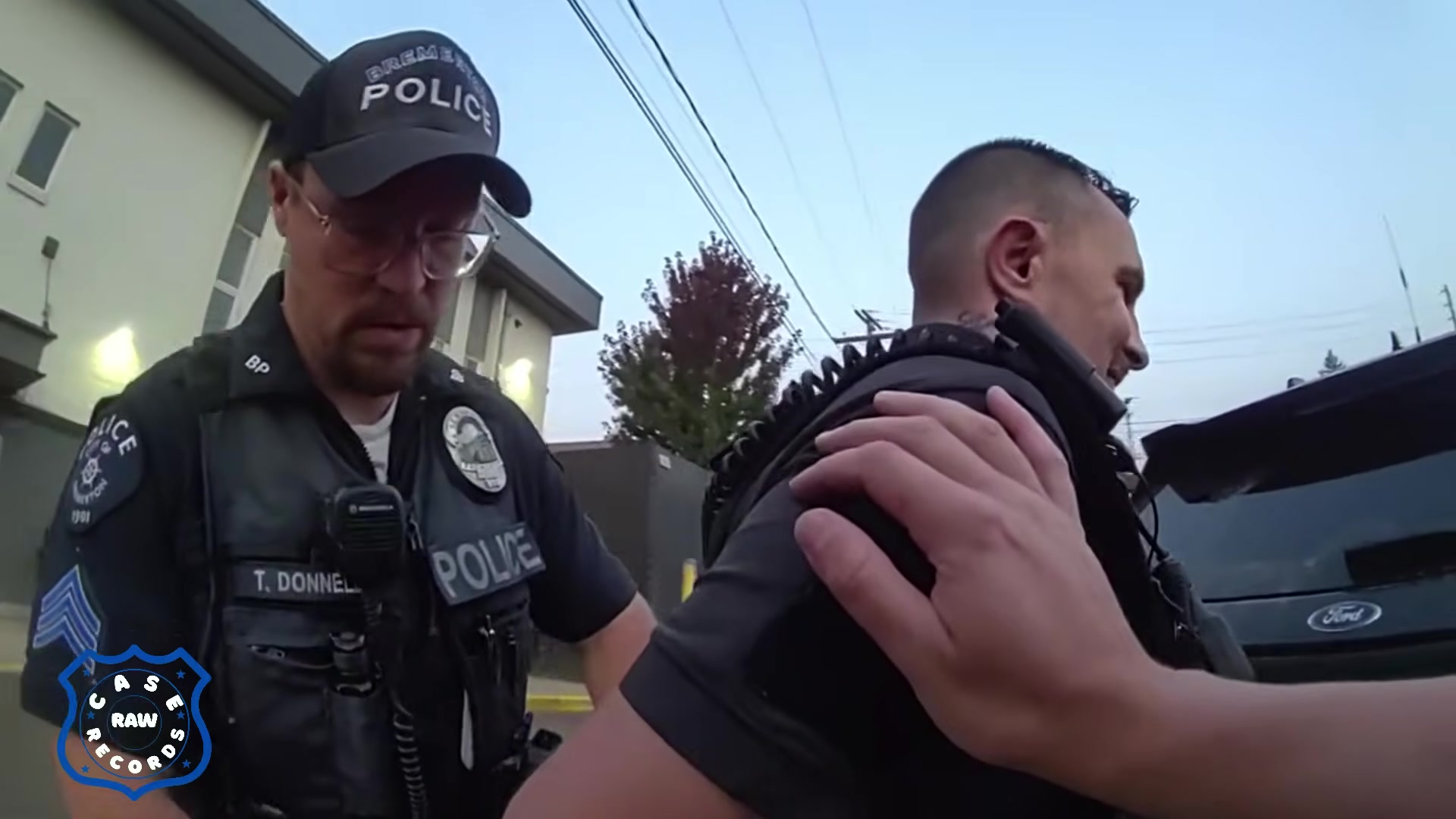
The “Detective” Who Walked Into a Real Police Scene
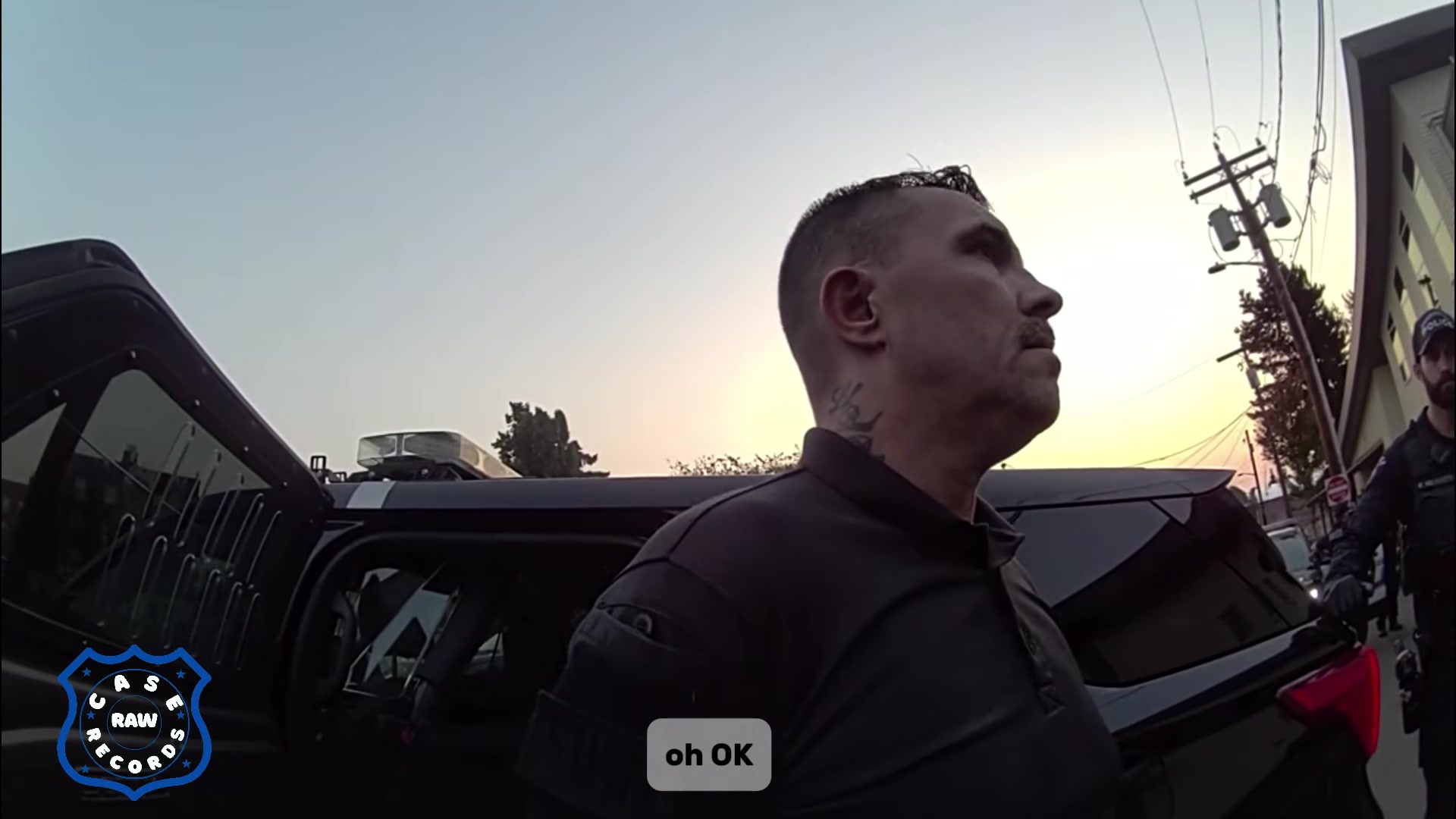
At first, there was little reason for a passerby to question the man’s appearance. He had the visual language of law enforcement: tactical gear, police markings, a badge, a body camera and a vehicle equipped to look official. More importantly, he did not merely look like an officer from a distance. According to Bremerton police and local reporting, he approached actual officers and identified himself as an off-duty detective with the Edmonds Police Department.
The encounter happened in Bremerton, Washington, in early September 2025. Police said the man arrived at an active scene in an unmarked Ford Explorer displaying emergency-style lights. His body armor carried “POLICE” and “SWAT” markings, and he wore a metallic badge associated with Edmonds police. The presentation was convincing enough that the situation did not instantly collapse.
That is what makes the body-camera footage so unusual. The central question is not whether a fake uniform could fool an ordinary civilian. It is how long a man allegedly impersonating a detective could maintain the story while speaking face-to-face with real officers.
The answer begins with details. Once officers started asking ordinary professional questions—where he worked, what unit he belonged to, how long he had been there and why he was at the scene—the image of legitimacy began to crack.
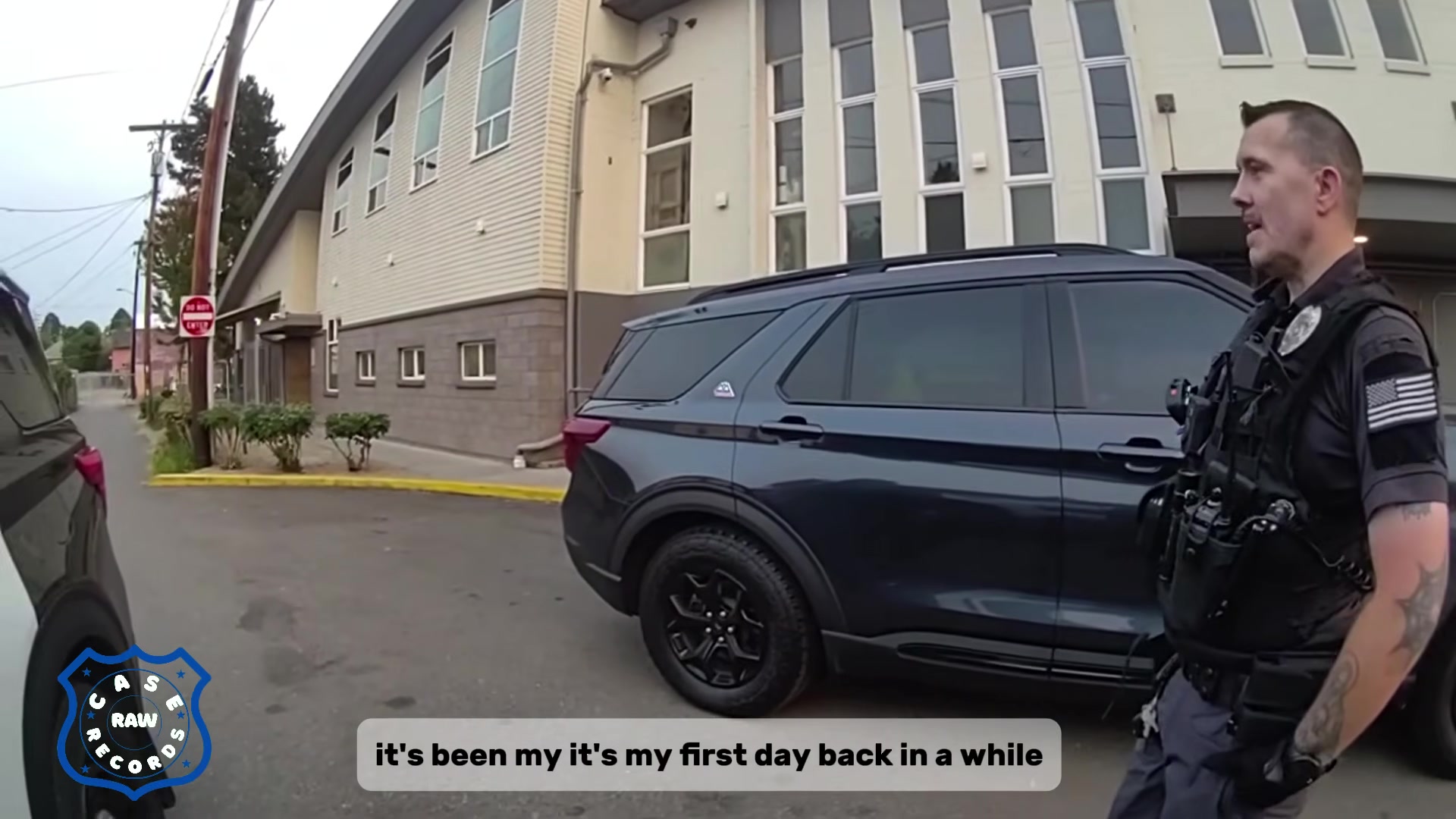
Small Details Begin to Undermine the Story
Experienced officers know that police work has its own vocabulary, routines and institutional details. Someone can buy equipment that resembles law-enforcement gear, but accurately reproducing an officer’s career history, agency structure and day-to-day knowledge is far more difficult.
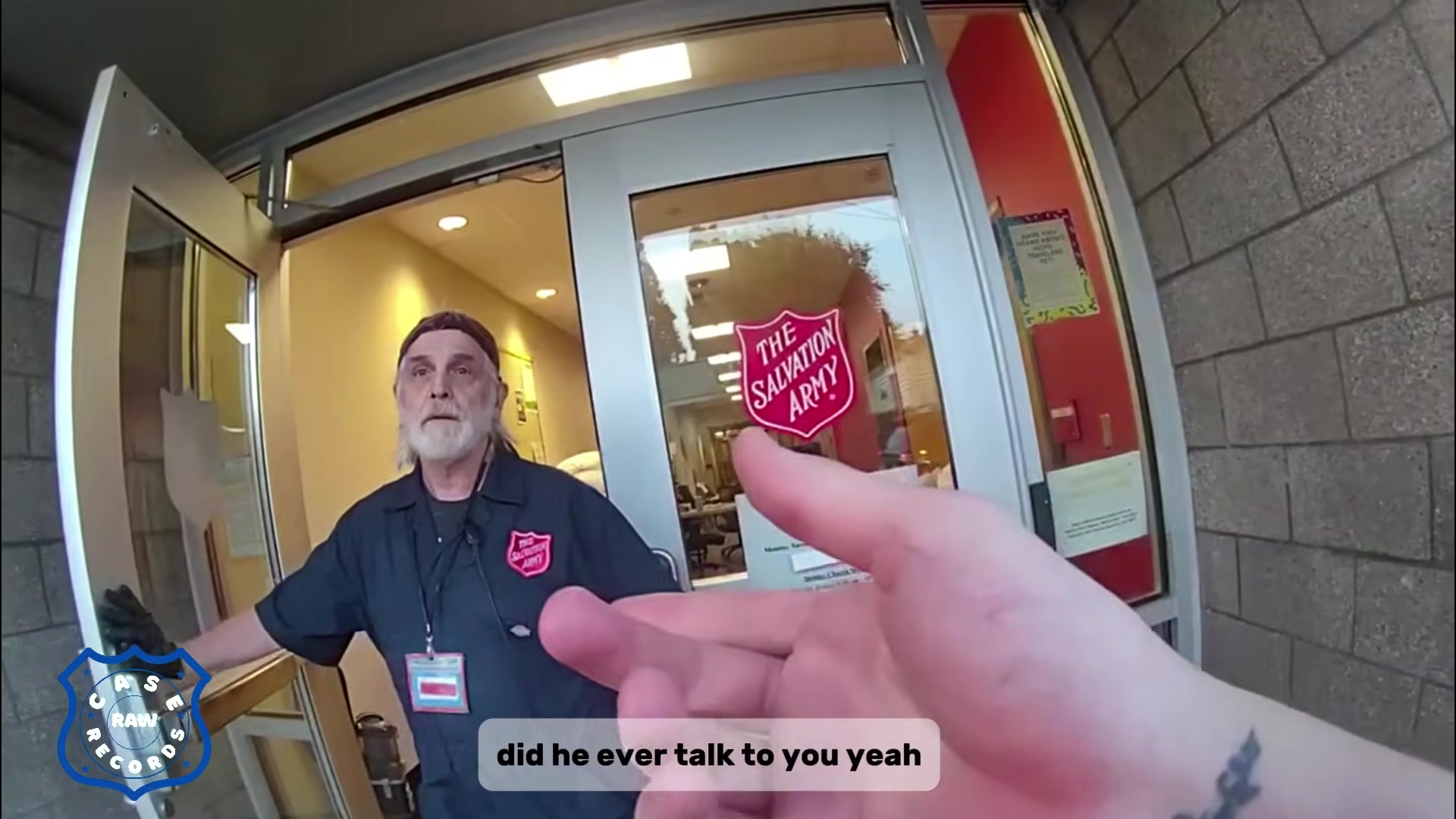
Reporting based on the police investigation says the man described himself as an Edmonds detective and made claims about assignments including robbery, gangs and intelligence. One Bremerton officer initially believed he might be legitimate, but the explanation reportedly began to sound wrong. Investigators also noticed equipment choices that did not fit what they expected from a working detective.
One particularly telling detail involved the badge. Reporting from My Edmonds News says the badge displayed a three-digit number, while Edmonds police use four-digit badge numbers. A tiny inconsistency became significant because it could be checked against the agency the man claimed to represent.
The body-camera sequence captures the gradual shift in tone. Officers are not confronting a random person wearing a costume. They are testing a claimed professional identity. Each question becomes a verification step, and every answer creates another fact that can be checked.
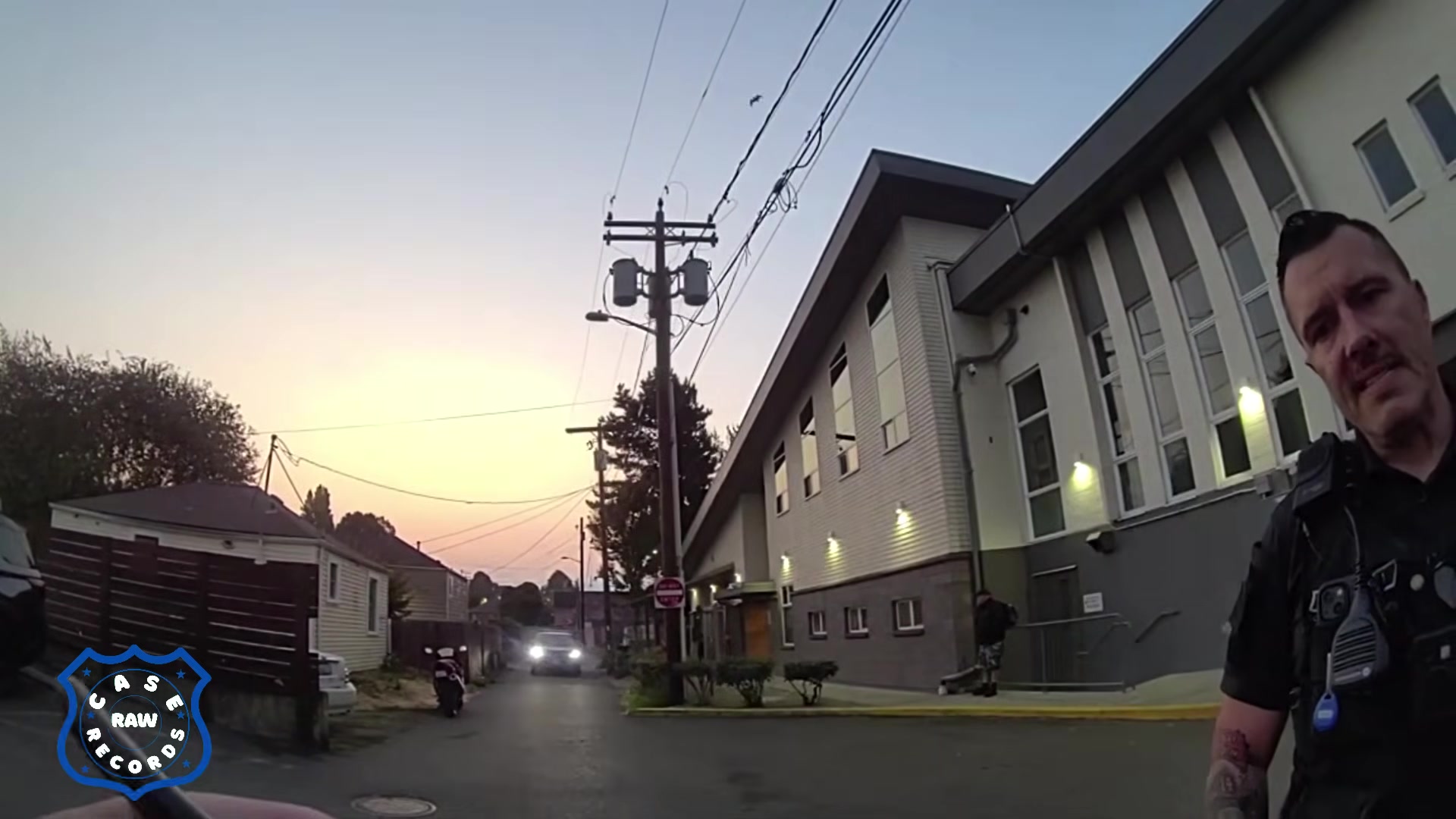
The Ford Explorer Made the Illusion More Convincing
The vehicle added another layer of credibility. Police said the man arrived in an unmarked Ford Explorer fitted with activated emergency-style lights. To many members of the public, an SUV with hidden lights, dark windows and a person in tactical police gear would look indistinguishable from an unmarked law-enforcement vehicle.
That resemblance is one reason police impersonation is treated seriously. The authority of a badge is not only symbolic. Drivers pull over. Residents open doors. People provide identification. Someone who successfully creates the appearance of lawful authority can obtain compliance before a victim has time to question what is happening.
Investigators said this was not merely a case of someone possessing police-themed equipment. Bremerton police alleged the man had been carrying out law-enforcement acts in the downtown corridor. Reports also described him as a security guard for a nearby business. That distinction matters: private security work does not automatically confer police powers, and equipment that creates the impression of being a sworn officer can radically change how members of the public respond.
The Explorer therefore becomes an important part of the story. It was not just transportation. Combined with the uniform, badge, lights and claimed detective status, it allegedly helped create a complete law-enforcement persona.
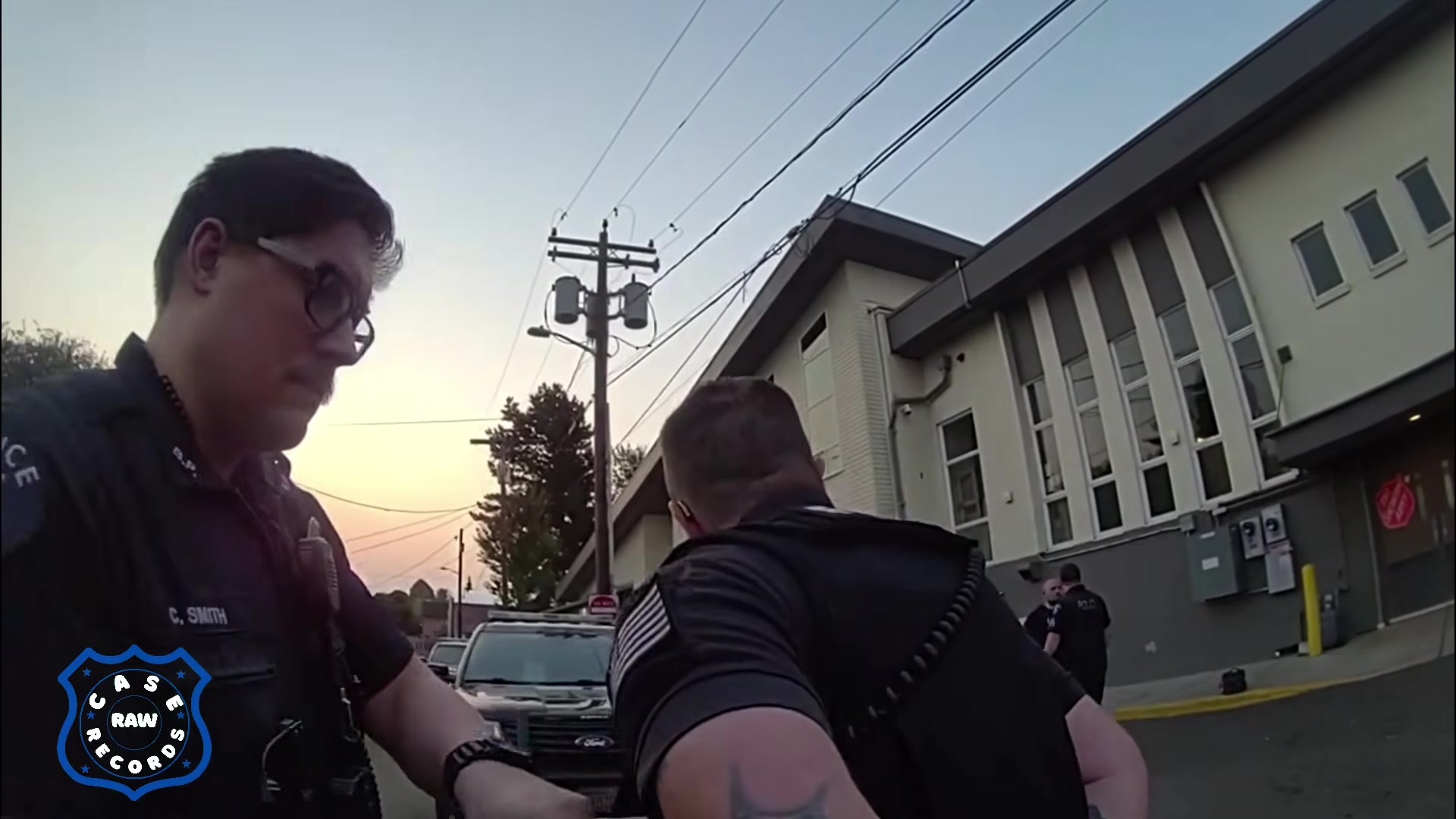
Real Officers Start Verifying the Man Behind the Badge
Suspicion is one thing; verification is another. The turning point came when officers checked whether the claimed detective actually belonged to Edmonds police.
According to multiple reports, he did not.
Authorities identified the man as Michael A. Scaletta-Teates, 49. Bremerton police said he was actually working as a security guard for a nearby business rather than as an Edmonds detective. Once that central claim failed, the rest of the encounter changed instantly. The officers were no longer speaking with a questionable colleague. They were investigating a man dressed and equipped to appear like one.
The footage is compelling because viewers can watch the power relationship reverse. At the beginning, the suspect’s gear gives him apparent authority. After verification, that same gear becomes evidence officers need to examine. The badge, body armor, markings, vehicle equipment and firearm no longer support his story; they become part of the reason the story is so serious.
This is also where body-camera footage adds something a written summary cannot. A police release can state that officers discovered an impersonator. Video shows the uncomfortable transition—the questions, pauses, repeated explanations and moment when a professional identity stops being accepted at face value.
A Firearm Raises the Stakes
The investigation did not end with the alleged impersonation. Police said officers learned that Scaletta-Teates was a convicted felon and that he was armed when taken into custody. Reports described a loaded firearm and a substantial amount of law-enforcement equipment.
That discovery elevated the case beyond an unusual uniform dispute. Bremerton police booked him on suspicion of first-degree criminal impersonation and second-degree unlawful possession of a firearm. Subsequent local reporting said prosecutors filed charges, and court coverage reported that he entered not-guilty pleas and that bail was set at $50,000.
It is important to preserve the legal distinction between allegations and a conviction in this case. An arrest and criminal charge are not themselves proof of guilt. The body-camera footage documents the police encounter, while the charging process determines what the government alleges can be proved in court.
Still, the combination alleged by police is striking: a person they say was not a sworn officer, dressed in police-style tactical equipment, operating a police-like SUV, presenting a badge, claiming detective status and carrying a firearm despite a prior felony record. Each fact would be noteworthy alone. Together, they explain why officers treated the discovery as far more than an embarrassing misunderstanding.
Why Police Impersonation Creates a Public-Safety Problem
Police impersonation exploits a form of trust that society depends on during emergencies. People are generally expected to respond to lawful police commands quickly. That expectation becomes dangerous when someone without legal authority can convincingly reproduce the appearance of an officer.
A fake officer can potentially gain access to people, vehicles, homes or private information simply because victims believe resistance could lead to arrest. The risk becomes even greater when the impersonator uses emergency lights or a realistic vehicle to initiate encounters.
That is why Bremerton police used the case to remind the public that officer credentials can be verified. If something about a traffic stop or encounter appears suspicious, a person can ask for the officer’s name and badge number and contact 911 to verify the officer’s identity. Police also advised that drivers who are uncertain about an attempted stop can reduce speed, signal their intention to comply and proceed to a safe, well-lit location while contacting emergency dispatch.
Those precautions should not be interpreted as permission to ignore legitimate police. Their purpose is to provide a safe verification path when circumstances genuinely seem wrong.
The Bodycam Shows How Authenticity Is Tested
One of the most revealing aspects of the footage is how ordinary the verification process looks. There is no special machine that instantly announces whether someone is a real detective. Officers listen, compare details, ask follow-up questions, observe equipment and contact the claimed agency.
That process demonstrates a larger point about impersonation. Visual authenticity is only one layer. Uniforms, patches, badges and tactical vests can be acquired or imitated. Institutional identity is harder to fake because it connects to records, supervisors, employee rosters, badge-number systems and people who can confirm whether an officer exists.
The suspect’s appearance may have passed the first visual test, but the story had to survive those deeper checks. According to reporting on the police report, it did not.
For viewers, this is the part of the incident worth remembering. The dramatic moment is the arrest of the “fake cop,” but the real investigative work occurs before the handcuffs: noticing inconsistencies and refusing to let an official-looking uniform substitute for verification.
From Apparent Colleague to Suspect
By the later portion of the recording, the transformation is complete. The man who approached police presenting himself as one of them is now being handled as the subject of their investigation. Officers remove or secure equipment and deal with the practical consequences of the arrest.
The reversal is almost cinematic, but it does not need exaggeration. The verified facts are already unusual enough. Bremerton police said a security guard arrived at an active scene and represented himself as an off-duty Edmonds detective. Officers determined he was not employed by that department. They further alleged that he had been engaging in law-enforcement activity around downtown Bremerton.
Local reports later identified him as Michael A. Scaletta-Teates and described additional evidence collected during the investigation. Edmonds police told local media they had no reason to believe the badge or equipment was genuine lost or stolen department property.
That detail closes an obvious question raised by the footage: if the badge looked convincing, where did it come from? Public reporting did not establish that it was authentic department property. Its appearance was part of the alleged impersonation, not proof that the wearer belonged to the agency.
The Case Leaves a Simple but Important Lesson
The most unsettling part of this story is how close the imitation allegedly came to the real thing. The man did not simply tell a stranger he was a police officer. Authorities say he presented himself to actual police at active scenes.
Yet the case also demonstrates why impersonation has limits. Real police agencies are networks of people, records, procedures and verifiable identities. A badge can be copied. A vest can display the right word. A vehicle can be equipped with flashing lights. But a claimed officer must still exist inside the institution he says employs him.
Once Bremerton officers checked that institution, the appearance of authority could no longer carry the story.
The footage therefore works on two levels. It is an unusual arrest video, but it is also a practical demonstration of verification. The suspect’s appearance created credibility; questions created doubt; records resolved it.
For the public, that sequence offers a useful rule: when a person claiming police authority behaves in a way that feels seriously inconsistent or suspicious, verification should come through official dispatch or the claimed agency—not through assumptions based solely on a uniform, badge or vehicle.
And for anyone watching only a short viral clip, the full body-camera sequence provides the most revealing detail of all: the “bust” was not one sudden discovery. It was a chain of small inconsistencies that eventually made the larger story impossible to maintain.
The short version is bizarre. The complete body-camera sequence is even more revealing because it shows exactly how a convincing police persona begins to fall apart once real officers start verifying the details.
Click here to watch the full incident unfold from beginning to end:
Comments (0)
Loading comments...
May You Like

Chrysler 300 Gapped Cops at 150+ MPH | Police Dashcam
Police vs Chevy Impala High-Speed Pursuit Ends in TVI
COP SLAMS INTO PULLED OVER TRUCK














