Handcuffed Suspect Suddenly Turns on Officers During Arrest
HANDCUFFED SUSPECT SUDDENLY TURNS ON OFFICERS DURING ARREST
A police encounter in El Dorado, Arkansas, began with something officers handle every day: a welfare check.
A man was reportedly lying in the roadway. Officers approached to determine whether he was injured, sick, intoxicated, or simply needed help.
Within minutes, however, the encounter had changed completely.
The man—identified in the police account as Jonathan Sandifer—was described as heavily intoxicated, struggling to maintain his balance and speaking with heavily slurred speech. When officers attempted to deal with the situation, police said he became increasingly angry.
Then came the confrontation.
Sandifer allegedly clenched his fists and moved aggressively toward officers. Police detained him, but putting him in handcuffs did not bring the encounter to an end. Authorities said he continued resisting, kicking, pulling away and using physical force while officers tried to secure him in a patrol vehicle.
The body-camera footage captures how quickly a seemingly simple call can become unpredictable—and how difficult it can be to control someone who continues physically resisting even after being restrained.
The incident occurred in El Dorado, Arkansas, on July 16, 2026, and a report accompanying the released police footage identifies the location as the area around 1201 North Mosby Street.
A MAN LYING IN THE MIDDLE OF THE ROAD
According to the incident account published alongside the El Dorado Police Department body-camera footage, an officer was patrolling near North Mosby Street when she noticed a man lying in the northbound lane.
It was approximately 11:39 p.m.
At that moment, officers could not simply assume criminal behavior.
A person lying in a roadway can represent a medical emergency. The person may have been struck by a vehicle, suffered a medical episode, become disoriented, or be impaired by alcohol or drugs.
That uncertainty is why the initial contact was treated as a welfare check.
The man was later identified as Jonathan Sandifer.
When police began speaking with him, however, officers reported immediately noticing signs that suggested alcohol impairment.
According to the account, there was a strong odor of an alcoholic beverage coming from Sandifer.
His balance was poor.
His speech was heavily slurred.
Officers reportedly asked whether he needed medical assistance.
Rather than calming the situation, however, the conversation allegedly became increasingly hostile.
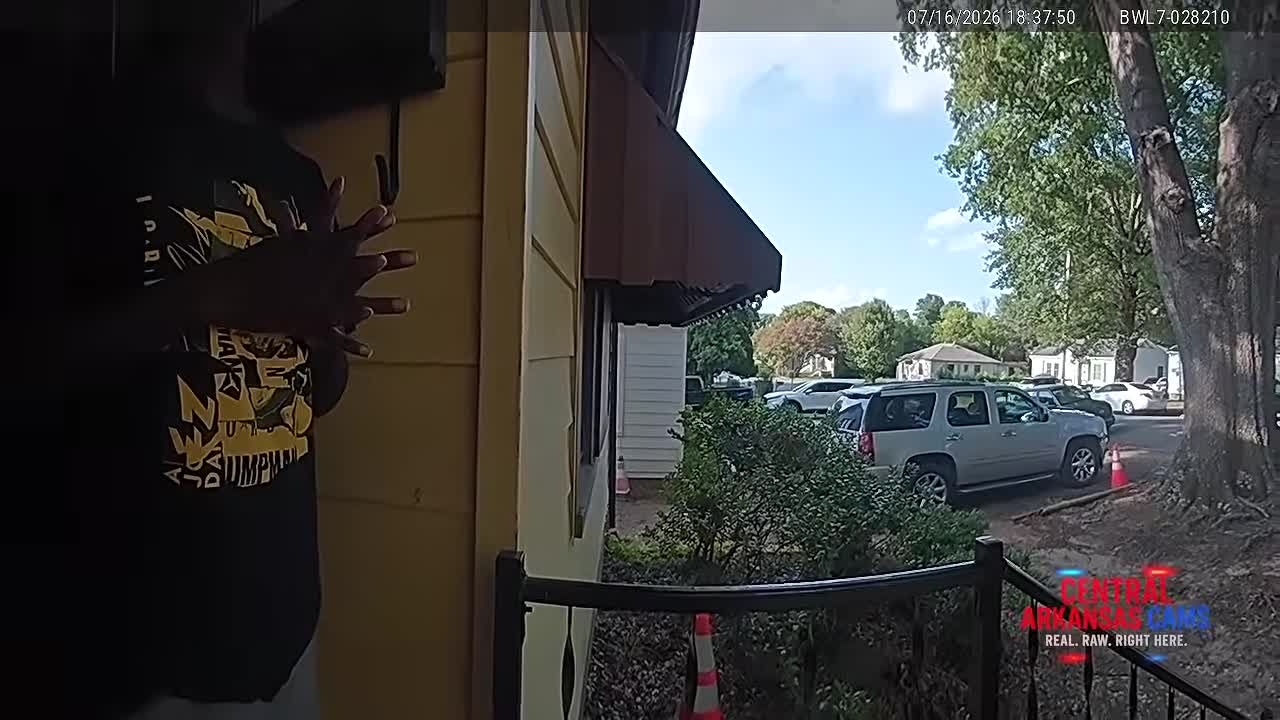
This is where the bodycam becomes particularly useful.
A written report can summarize the encounter in a few sentences. Video allows viewers to observe the physical distance between the people involved, hear the tone of the conversation and watch the suspect's movements as the interaction develops.
At first, there is room between Sandifer and the officers.
Police are speaking to him rather than immediately taking him to the ground.
But that distance begins to disappear.
THE WELFARE CHECK STARTS TO CHANGE
Police said Sandifer became extremely irate while officers were attempting to deal with him.
He allegedly began yelling loudly enough that nearby residents eventually came outside to see what was happening.
That alone did not necessarily require a physical confrontation.
Someone can be angry, argumentative or intoxicated without physically attacking an officer.
The more significant development, according to the police account, came when Sandifer clenched his fists and began walking toward the officers in what they interpreted as an aggressive manner.
At that point, the purpose of the interaction changed.
Police were no longer simply checking whether a man lying in the road needed assistance.
They were now dealing with someone they believed could become physically confrontational.
Officers moved to detain him.
The bodycam shows Sandifer standing near a police SUV as the interaction becomes increasingly tense.
Commands are repeated.
His hands remain visible at different points, but officers are watching his movements closely.
THE CALL HAD MOVED FROM A WELFARE CHECK TO AN OFFICER-SAFETY PROBLEM.
That distinction matters because officers approaching an apparently intoxicated person have to continually reassess what is happening.
Someone who initially appears barely capable of standing can still become physically aggressive.
Alcohol impairment can also make behavior less predictable. A person may cooperate with one instruction and resist the next.
That appears to be the pattern police encountered here.
OFFICERS DECIDE TO DETAIN HIM
Once Sandifer allegedly advanced toward officers with clenched fists, police moved in.
Handcuffs became necessary to control his hands and reduce the possibility of someone being struck.
But one of the most important lessons visible in police bodycam footage is that handcuffs do not automatically make a person harmless.
A restrained person can still kick.
They can throw their body weight into an officer.
They can head-butt someone.
They can attempt to run.
They can resist being placed into a vehicle.
And depending on the person's size, strength and level of agitation, controlling them can require several officers.
That is what happened next.
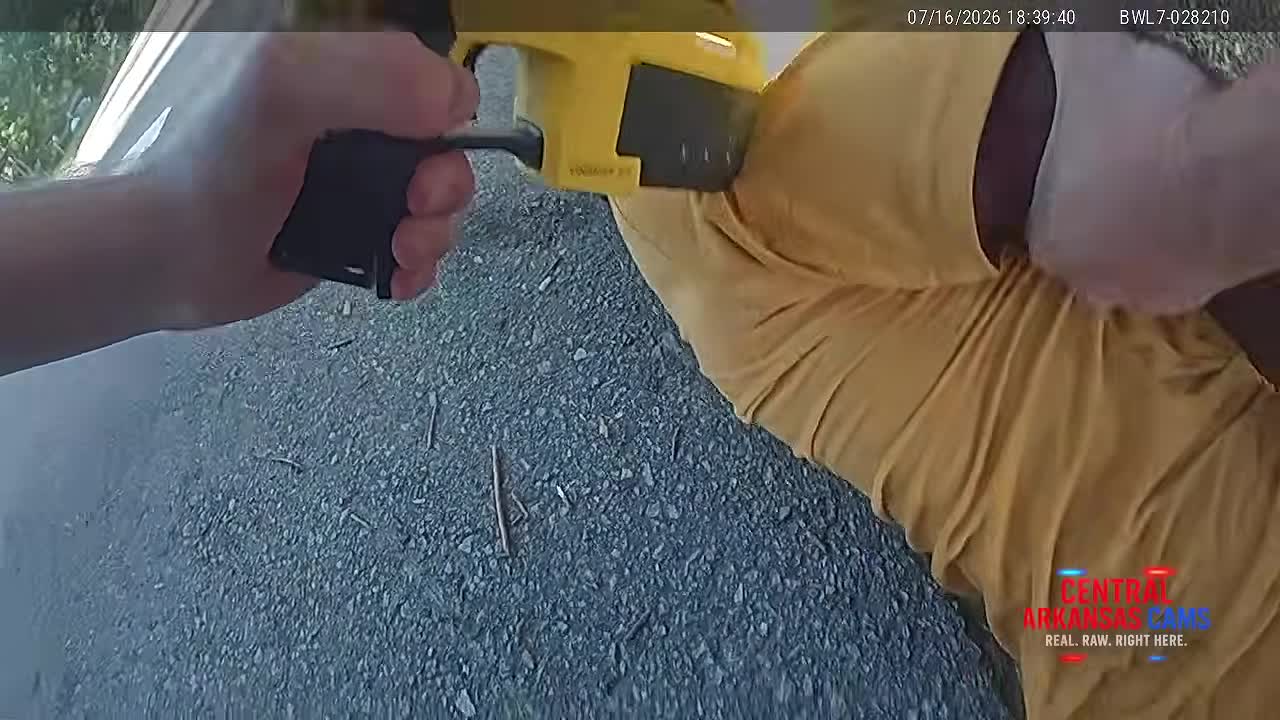
Police said Sandifer continued yelling profanities while officers attempted to restrain him.
The confrontation drew attention from people living nearby.
For officers, that adds another complication.
They have to maintain control of the person being detained while simultaneously remaining aware of bystanders gathering around the scene.
The more people who approach, the more difficult situational awareness becomes.
An officer focused entirely on the person resisting directly in front of them may not immediately notice someone approaching from behind.
Additional officers therefore become important not simply because of the physical struggle, but because the entire scene needs to be controlled.
HANDCUFFS DO NOT END THE RESISTANCE
Eventually, Sandifer was restrained.
But police said his resistance continued.
This is the point that makes the footage particularly unusual.
Viewers might reasonably expect that once a suspect's hands are secured behind his back, the physical confrontation is essentially finished.
Instead, the struggle shifts.
The officers now need to get Sandifer safely into a patrol vehicle.
According to the published incident account, he intentionally stiffened his body to prevent officers from seating him inside the vehicle.
That technique can make what looks like a simple movement surprisingly difficult.
A cooperative person can sit in a patrol car almost immediately.
A resisting person can brace their legs, arch their back, push against the door frame or use their entire body to prevent officers from moving them.
The confined dimensions of a patrol-car doorway make the problem even harder.
Officers cannot simply push from every direction.
They have to control the suspect while protecting his head from striking the vehicle and preventing themselves from being kicked or injured.
The footage captures several officers gathering around Sandifer as they try to accomplish exactly that.
THE STRUGGLE MOVES TO THE POLICE VEHICLE
This is where the encounter becomes physically exhausting.
The original objective was simply to check on someone lying in the roadway.
Now multiple officers are required to get one restrained man into the rear of a cruiser.
Police said Sandifer continued kicking, pulling away and using physical force to prevent officers from securing him.
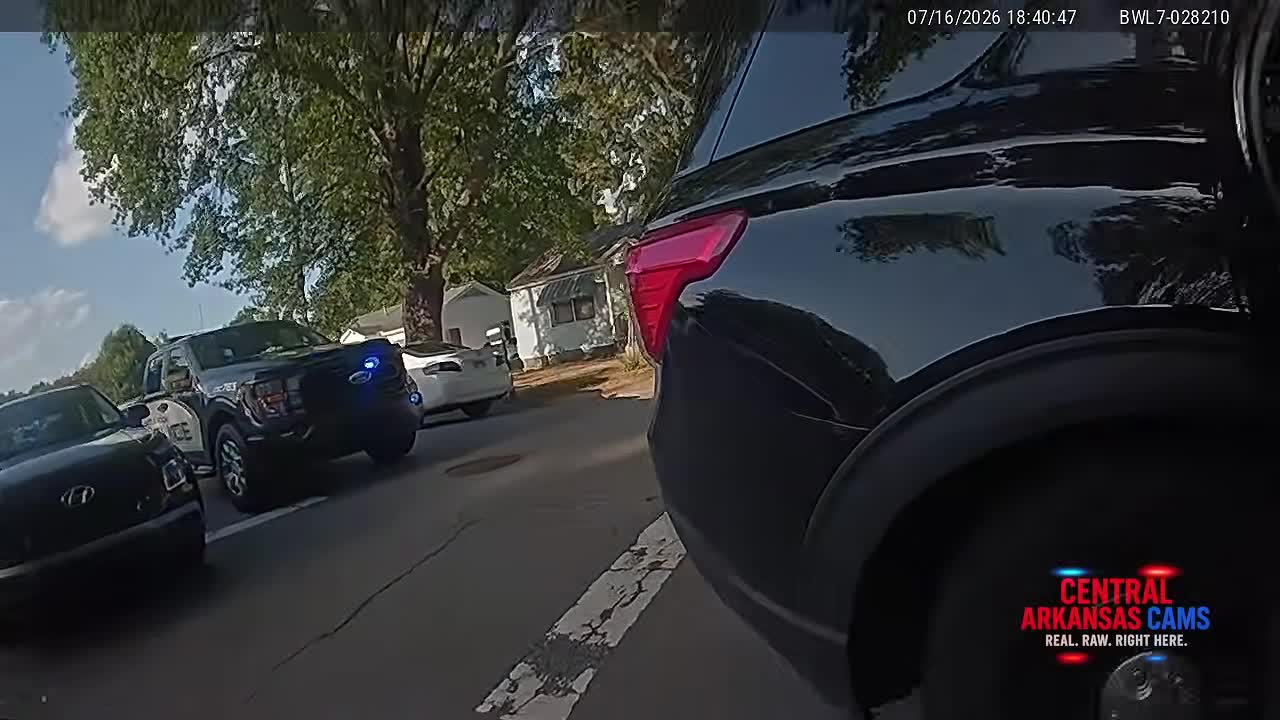
The confined space creates another danger.
An officer leaning into the back seat can be vulnerable.
Their movement is restricted by the door.
Their attention is focused on the suspect.
If the person suddenly kicks, twists or pushes backward, the officer may have little room to avoid the movement.
This explains why several officers can sometimes be seen controlling different parts of a resisting person's body.
One may control the upper torso.
Another may manage the legs.
Another may ensure the handcuffs remain properly positioned.
To someone watching only a few seconds of video, the number of officers can look excessive.
The longer footage provides the context: police are trying to move a person who is allegedly actively working against them.
THE HANDCUFFS LIMITED SANDIFER'S HANDS, BUT THEY DID NOT END HIS ABILITY TO RESIST.
WHY OFFICERS COULD NOT SIMPLY WALK AWAY
A natural question arises when watching an intoxication-related encounter: why not simply leave the person alone?
The location provides much of the answer.
Police said Sandifer had originally been found lying in an active lane of the roadway.
Leaving an apparently intoxicated person in that condition could create an obvious safety risk.
Even if the person moved onto the sidewalk while police were present, officers had already observed behavior that raised concerns about his ability to safely care for himself.
Someone severely impaired can wander back into traffic moments later.
There is also the alleged aggressive behavior.
Once officers say Sandifer clenched his fists and approached them aggressively, the encounter was no longer merely about intoxication.
Police now had to address the disturbance and the confrontation that had occurred in their presence.
That sequence helps explain why the situation progressed from conversation to detention.
NEIGHBORS BEGIN WATCHING THE SCENE
The incident did not happen in isolation.
The bodycam footage shows a residential environment, and the police account says Sandifer's yelling became loud enough to draw residents from nearby homes.
That can significantly change the dynamics of an arrest.
Officers now have multiple responsibilities at once.
They must control the person being arrested.
They must ensure the patrol vehicle remains secure.
They must monitor nearby people.
They must communicate with one another.
And they must do all of this while the suspect may be shouting, kicking or physically resisting.
This is one reason police encounters can appear chaotic on bodycam.
The camera follows the officer wearing it.
It does not provide an overhead view of the entire scene.
The viewer may see only the suspect and one officer while several other things are happening just outside the frame.
Body cameras are valuable precisely because they place viewers inside that limited perspective.
They show what the officer could see—but also demonstrate what the officer could not see.
MULTIPLE OFFICERS ARE NEEDED TO FINISH THE ARREST
As the struggle continues, additional officers assist.
Eventually, police manage to get Sandifer into the patrol vehicle.
That is the moment when the confrontation finally begins to stabilize.
Once the suspect is physically inside the rear compartment and the door is secured, the tactical problem changes again.
Officers now have a barrier between themselves and the detainee.
They can reassess the scene.
They can check whether anyone has been injured.
They can determine what charges or citations are appropriate.
And they can prepare for transport.
The police account says Sandifer was eventually transported to the Union County Criminal Justice Facility.
The same report stated that he was to be held on $1,100 bond and given a mandatory court date of August 10, 2026, at 9 a.m.
Those details come from the account accompanying the released footage; they describe the immediate post-arrest status rather than a final determination of guilt.
That distinction matters.
An arrest report records what officers allege happened.
The judicial process determines what ultimately happens with those allegations.
THE INCIDENT SHOWS HOW FAST A SIMPLE CALL CAN ESCALATE
Nothing about the beginning necessarily suggested that several officers would soon be involved in a physical struggle.
There was no vehicle pursuit.
No armed suspect was reported.
No burglary was underway.
No one had called police about a violent fight.
An officer simply encountered a man lying in the road.
That is what makes this footage a useful example of the unpredictability of routine police work.
Officers have to approach without knowing exactly what they will find.
The person could be unconscious.
They could be injured.
They could be experiencing a medical crisis.
They could be intoxicated.
They could become aggressive.
Sometimes several possibilities overlap.
In Sandifer's case, officers reported obvious signs of intoxication before the encounter became confrontational.
The escalation was gradual.
First came the welfare check.
Then the signs of impairment.
Then shouting.
Then the alleged clenched fists and aggressive approach.
Then detention.
Then resistance.
Then the struggle to get him into the patrol car.
Each step created the conditions for the next.
WHY THE BODYCAM MATTERS
Without the footage, this incident could be summarized in only a few sentences.
Officer finds intoxicated man in road.
Man becomes disorderly.
Police detain him.
He resists.
Officers take him to jail.
Technically, that captures the broad outline.
But it misses almost everything that makes the encounter worth examining.
Bodycam shows the distance between Sandifer and the officers.
It shows his posture.
It captures the repeated commands.
It shows how long officers spend attempting to control him.
It demonstrates how difficult placing a resisting person into a police vehicle can become.
Most importantly, it shows that the incident does not change from calm to chaotic in one instant.
There are warning signs.
The tension increases.
Officers react.
The suspect reacts to them.
The encounter becomes a cycle in which every action affects what happens next.
That context matters whenever short clips from police encounters circulate online.
A ten-second segment can show the most dramatic moment while completely removing the behavior that preceded it.
The full sequence provides a more useful picture.
THE MOST DANGEROUS MOMENT MAY NOT LOOK THE MOST DRAMATIC
The physical struggle naturally attracts attention.
But the opening scene may have contained the greatest immediate risk to Sandifer himself.
A person lying in a roadway at night can be struck by a vehicle before a driver realizes someone is there.
That is especially true on poorly lit residential streets.
The original welfare check therefore had a legitimate safety purpose regardless of what happened afterward.
Once officers encountered Sandifer, they also had to determine whether he needed medical assistance.
The report says officers offered or asked about medical help, but Sandifer became irate.
That moment represents the point where two possible paths diverged.
The encounter might have remained a medical or welfare issue.
Instead, police say the behavior escalated into a disturbance and physical resistance.
By the end, Sandifer was no longer simply the man officers had found in the road.
He was a detainee being transported to jail.
RESTRAINT IS A PROCESS, NOT A SINGLE MOMENT
One of the clearest lessons from the footage is that arresting someone does not necessarily end when the handcuffs click shut.
There are several stages.
The person has to be safely controlled.
They may need to be searched.
They have to be moved to a patrol vehicle.
They need to be placed inside.
A seat belt or other restraint may need to be applied according to agency procedure.
The doors need to be secured.
Then officers have to transport the person.
Resistance can occur during any of those stages.
A handcuffed person can still make transport extremely difficult.
That is exactly what police alleged Sandifer did by stiffening his body, kicking and pulling away.
The footage shows officers repeatedly adjusting their positions rather than simply performing one takedown and walking away.
This is not a cinematic fight with a clear beginning and ending.
It is an extended physical problem that officers have to solve while trying to avoid unnecessary injury.
THE ARREST FINALLY COMES UNDER CONTROL
Eventually, the officers succeed.
Sandifer is secured in the police vehicle.
The yelling and confrontation no longer dominate the scene in the same way.
Officers can finally transition from physical control to the administrative side of the arrest.
Reports have to be written.
The circumstances leading to detention must be documented.
Any use of force may need to be recorded and reviewed according to department procedure.
Transport must be completed.
Booking follows.
And the incident that began with an officer seeing someone lying in the street becomes part of the criminal-justice process.
The available report says Sandifer was taken to the Union County Criminal Justice Facility and provided the bond and court information noted above.
At the time of the published account, those were the immediate consequences of the arrest.
FROM WELFARE CHECK TO PHYSICAL STRUGGLE
The entire encounter lasts only a matter of minutes, but its progression is remarkable.
Police encounter a man in a dangerous position.
They check whether he needs help.
They observe signs of severe intoxication.
The conversation becomes heated.
The man allegedly approaches officers aggressively.
Police decide to detain him.
He is handcuffed.
But the resistance continues.
Several officers are eventually required to get him into a patrol vehicle.
Then, finally, the scene calms down.
That sequence is why the title "Police Under Attack" captures only part of what happened.
The more complete story is about escalation.
A WELFARE CHECK BECAME A DISTURBANCE.
THE DISTURBANCE BECAME A DETENTION.
THE DETENTION BECAME A PHYSICAL STRUGGLE.
And even after the handcuffs were on, police still had to finish the difficult job of getting the detainee safely into the cruiser.
The incident is a reminder that some of the most unpredictable police encounters begin with calls that sound completely routine.
There was no high-speed chase leading into this footage.
There was no SWAT standoff.
There was simply a man lying in a roadway and an officer stopping to find out why.
A few minutes later, multiple officers were physically struggling to complete an arrest.
That transformation is what makes the body-camera footage compelling.
WATCH THE ENTIRE ENCOUNTER
The most dramatic moments happen after the handcuffs appear, but the beginning provides the context needed to understand why the arrest happened at all.
Watching the complete sequence shows the transition from concern, to confrontation, to detention, and finally to the prolonged struggle around the patrol vehicle.
It also demonstrates why judging an encounter from its most dramatic few seconds can leave out much of what officers and the detained person experienced before that moment.
Click here to watch the full incident unfold from the initial welfare check to the final arrest:
Comments (0)
Loading comments...
May You Like

West Virginia Man Laughs at Police Officer and Ends Up Arrested

🚨⛽ Man Caught in a Disturbing Incident at a Gas Station | Police Respond US

Cops Arrive for a Medical Emergency and Walk Into Drunken Chaos