
FHP 112 MPH Chase Ends With a PIT
WHEN A ROUTINE POLICE ENCOUNTER SUDDENLY BECOMES UNPREDICTABLE
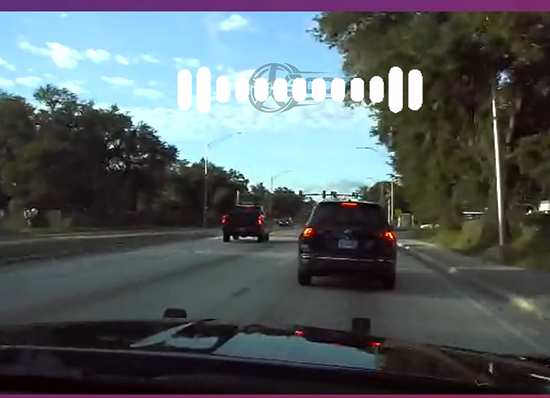
A black SUV moves along a quiet residential street while a police vehicle follows close behind. At first glance, there is nothing extraordinary about the scene. No crowded highway, no dramatic roadblock, and no obvious sign of what might happen next.
But police encounters involving vehicles can change in seconds.
For officers, what begins as an attempt to identify a driver, investigate suspicious activity, or conduct a traffic stop can quickly develop into something much more complicated. A driver may cooperate immediately—or continue moving, refuse commands, attempt to leave, or force officers to make rapid decisions.
Footage like this provides an unusually direct look at that uncertainty.
BEFORE AN OFFICER EVEN STEPS OUT OF THE PATROL VEHICLE, THE SITUATION CAN ALREADY BE CHANGING.
THE FIRST MOMENTS CAN DETERMINE EVERYTHING
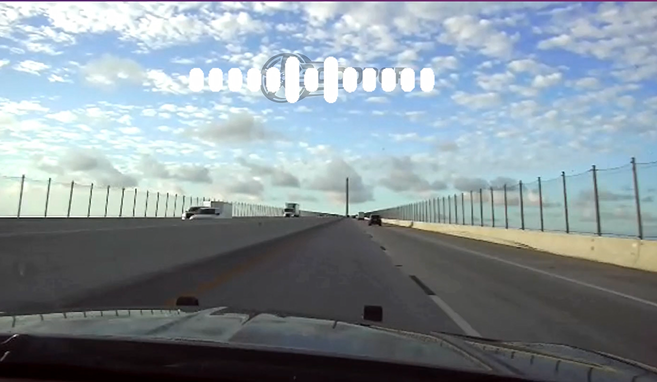
The opening moments of a vehicle-related police encounter often appear surprisingly ordinary.
An officer observes a vehicle ahead and begins evaluating what is happening. Depending on the circumstances, officers may check the vehicle's registration information, observe how it is being driven, communicate with dispatch, or wait for a safe location before initiating contact.
For the driver, the situation may feel completely different.
Once emergency lights appear behind a vehicle, the driver's next actions immediately become important.
Does the vehicle slow down?
Does it pull over?
Does the driver continue traveling?
Does the vehicle suddenly accelerate or turn onto another street?
Those seemingly small decisions can determine whether the encounter remains a routine stop or develops into something far more serious.
The National Institute of Justice has noted that traffic stops are among the most common interactions between police and members of the public, making these encounters an important part of everyday policing.
Most stops never become dramatic.
But officers cannot know that in advance.
EVERY TRAFFIC ENCOUNTER BEGINS WITH A PERIOD OF UNCERTAINTY.
WHY OFFICERS WATCH THE VEHICLE SO CLOSELY
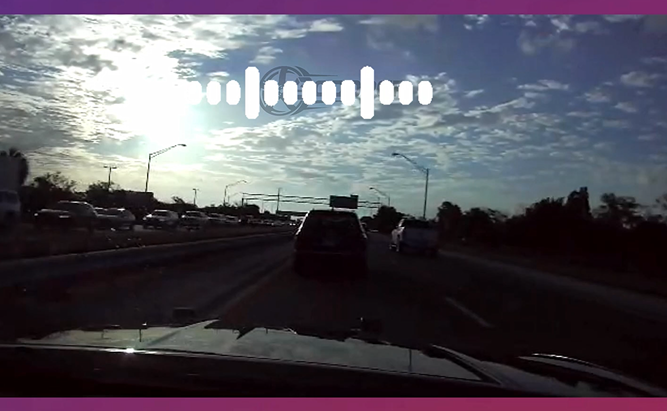
Before approaching a stopped vehicle, officers are often gathering information from what they can see.
The location of the vehicle matters.
The driver's movements matter.
The number of occupants may matter.
Even where the vehicle finally stops can influence how officers approach it.
That explains why police footage sometimes appears slow or uneventful during the first several moments. The officer may be doing far more than simply waiting behind another vehicle.
From inside the patrol car, the officer can communicate with dispatch, evaluate traffic conditions and watch what is happening inside or around the vehicle.
Once the officer exits the patrol vehicle, the dynamics change dramatically.
Distance decreases.
Reaction time becomes shorter.
And communication between the officer and occupants becomes central to determining what happens next.
Dash-mounted and body-worn cameras have also changed how the public understands these encounters. Instead of seeing only a written summary afterward, viewers can observe the sequence in which events actually developed.
Research supported by the U.S. Department of Justice has examined body-worn cameras extensively, including their effects on evidence collection, complaints, officer behavior and public perceptions of police encounters.
THE VALUE OF THE FOOTAGE IS NOT JUST WHAT IT SHOWS—BUT THE ORDER IN WHICH IT SHOWS IT.
A decision that appears obvious after watching an entire incident may have been far less obvious to the officer experiencing it moment by moment.
WHEN A TRAFFIC STOP STOPS BEING ROUTINE
One of the most important turning points in any police vehicle encounter occurs when the driver does something officers did not expect.
Sometimes that means refusing to exit.
Sometimes it means driving away.
In other situations, officers may see movement inside the vehicle that causes them to become concerned.
This is where communication becomes critical.
Officers frequently use short, direct commands because they need instructions to be understood quickly. A driver who follows those directions can dramatically reduce uncertainty.
But when instructions are ignored, officers have to determine why.
Is the person confused?
Are they frightened?
Are they intentionally resisting?
Are they preparing to escape?
Or is something happening inside the vehicle that officers cannot clearly see?
From footage alone, viewers often know the answer only after the incident is over.
The officer does not have that advantage.
POLICE MUST MAKE DECISIONS WHILE THE EVENT IS STILL UNFOLDING.
That difference between hindsight and real-time decision-making is one of the most important things to remember when watching police footage.
THE MOMENT EVERYTHING CAN CHANGE
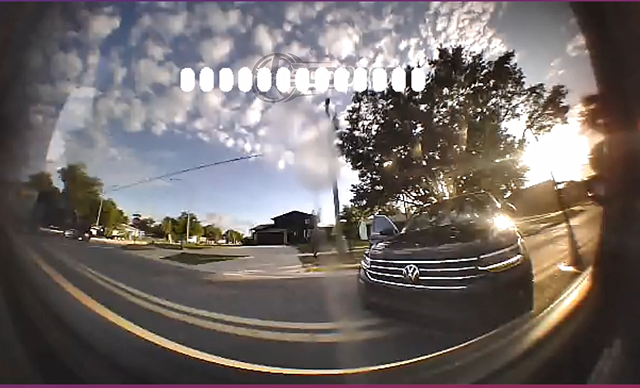
Vehicle encounters are particularly unpredictable because a car can instantly change the physical dynamics of a scene.
A stationary vehicle can suddenly accelerate.
A driver can reverse.
A vehicle can turn toward an officer, another patrol car, pedestrians, or traffic.
If a driver flees, officers then face another difficult decision: whether a pursuit is justified.
Police pursuit policies across the United States vary significantly between agencies, but the central problem is largely the same—officers must weigh the importance of apprehending a fleeing driver against the danger a pursuit could create for officers, suspects and bystanders.
Research summarized by the National Institute of Justice has long identified police pursuits as situations involving substantial risk, particularly when speeds increase or pursuits move through populated areas.
That is why pursuit decisions are rarely as simple as "follow the car."
Officers may have to consider traffic density, weather, road conditions, the seriousness of the suspected offense, pedestrian activity and whether the suspect can potentially be identified and arrested later.
Modern agencies may also have access to additional tools.
Helicopters, license-plate information, surveillance cameras and coordination with neighboring agencies can sometimes allow officers to track a vehicle without remaining directly behind it at extremely high speed.
THE GOAL IS NOT SIMPLY TO CATCH A DRIVER—IT IS TO END THE INCIDENT WITHOUT CREATING AN EVEN GREATER DANGER.
WHY POLICE CAMERA FOOTAGE MATTERS
Perhaps the most valuable part of footage like this is the ability to reconstruct events.
A written police report may describe an encounter in several paragraphs.
Camera footage can reveal hundreds of individual details.
Viewers can hear commands.
They can see where vehicles were positioned.
They can observe how quickly events occurred.
They can see when an officer moved, when a driver reacted and how much time existed between one decision and the next.
Those details can become important during investigations, administrative reviews, court proceedings and public discussions.
But footage also has limitations.
A camera records only what is inside its field of view.
A dashcam pointed forward cannot necessarily show everything occurring beside or behind the patrol vehicle. A body camera may move rapidly during a physical confrontation. Objects can be blocked by people, doors or vehicles.
Audio can also be incomplete or difficult to interpret.
For that reason, ONE CAMERA ANGLE SHOULD NOT AUTOMATICALLY BE TREATED AS THE COMPLETE STORY.
Investigators may combine footage with radio communications, witness statements, physical evidence, vehicle data and recordings from additional officers.
Together, those pieces can provide a much clearer understanding of what actually occurred.
THE HUMAN FACTOR BEHIND EVERY POLICE ENCOUNTER
It is easy to watch police footage after the fact and identify the moment when something went wrong.
In real time, however, neither side necessarily knows what will happen next.
The officer does not know exactly what the driver intends to do.
The driver may not understand why officers are approaching in a particular way.
Passengers may react differently from the driver.
Additional officers arriving at the scene may have only partial information.
That uncertainty explains why communication and compliance can have such an enormous effect on how an encounter develops.
A driver who safely stops, keeps their hands visible and follows lawful instructions gives officers more information and more time to evaluate the situation.
Conversely, sudden movements or attempts to flee can dramatically increase uncertainty.
Once that happens, the encounter can escalate extremely quickly.
SECONDS OF CONFUSION CAN CREATE CONSEQUENCES THAT LAST FAR LONGER THAN THE ORIGINAL TRAFFIC STOP.
FROM A QUIET STREET TO A HIGH-STAKES DECISION
The most striking element of police vehicle footage is often the contrast between the beginning and what follows.
Look again at the opening image.
A residential street.
Daylight.
A black SUV.
A patrol vehicle behind it.
Nothing about that single frame necessarily suggests a major police incident.
That is precisely why these recordings are compelling.
Police officers routinely enter situations without knowing whether they will remain ordinary.
A traffic violation may end with a warning.
A suspicious vehicle investigation may reveal nothing illegal.
A driver may simply provide documentation and leave.
But occasionally, one unexpected decision changes everything.
The driver refuses to stop.
Someone suddenly exits the vehicle.
The vehicle accelerates.
An officer discovers evidence of another alleged offense.
A pursuit begins.
Backup arrives.
What looked like a minor encounter minutes earlier becomes a much larger police response.
THE TRANSITION FROM ROUTINE TO CRITICAL CAN HAPPEN ALMOST INSTANTLY.
WHAT VIEWERS SHOULD REMEMBER
Police footage can be dramatic, but the most useful way to watch it is to pay attention to the sequence.
What happened first?
What information did officers appear to have?
What commands were given?
How did the driver respond?
What changed immediately before the situation escalated?
And what happened afterward?
Those questions provide more context than watching only the most dramatic few seconds.
They also demonstrate why full-length footage can tell a very different story from a short viral clip.
A 20-second segment might show an officer running toward a vehicle.
The minutes before it may explain why.
Another short clip might show a driver being detained.
The earlier footage may reveal the sequence of decisions that led to that moment.
CONTEXT DOES NOT AUTOMATICALLY PROVE THAT EVERY DECISION WAS RIGHT OR WRONG. IT ALLOWS VIEWERS TO UNDERSTAND WHAT ACTUALLY LED TO THAT DECISION.
That is one of the central reasons police camera footage continues to attract public attention.
It provides something that previous generations rarely had: an opportunity to observe a police encounter almost as it happened.
And sometimes the most important part of the footage is not the dramatic ending.
It is the seemingly ordinary moment at the beginning—when nobody watching yet knows what is about to happen.
https://www.youtube.com/watch?v=nWdg0M1jhYw
What happened after police closed in on the black SUV? The opening moments only tell part of the story. Watch the full encounter to see how the situation unfolded and what happened next — CLICK THE LINK BELOW TO CONTINUE WATCHING.
Comments (0)
Loading comments...
May You Like

Woman Tries to Stop Police From Arresting “Brother” — He Denies Knowing Her

What Happens when you get Caught Shoplifter Stealing Local Store

[DASHCAM] Drunk Driver Leads Trooper on High-Speed Pursuit Through City Streets













