
Fake Target Worker Steals Xbox Consoles Before Barricading Himself at a Police Substation
Fake Target Worker Steals Xbox Consoles Before Barricading Himself at a Police Substation
A Red Shirt and Khaki Pants Help Sell the Disguise
On March 10, 2024, Albuquerque Police Department officers responded to the Target at 9371 Coors Boulevard NW after store personnel reported suspicious activity involving a man dressed like an employee. The man was later identified in court records and local reporting as Curtis Vann, 22.
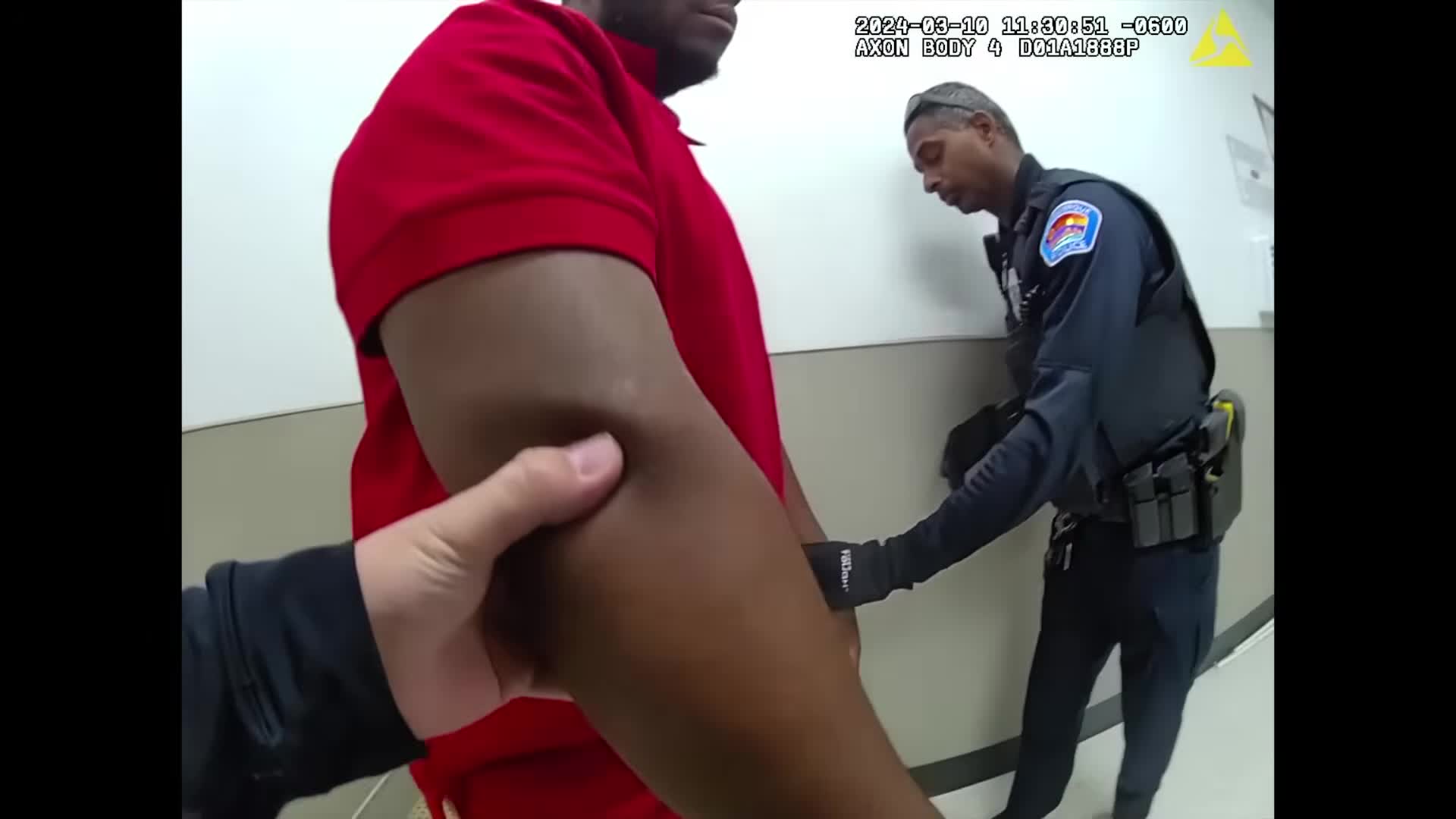
The supplied body-camera footage matches this incident directly. The AXON overlay shows March 10, 2024, the officers wear Albuquerque Police Department patches, and Vann is dressed in the familiar red-shirt-and-khaki combination associated with Target employees. Those details line up with the criminal-complaint reporting from Albuquerque outlets.
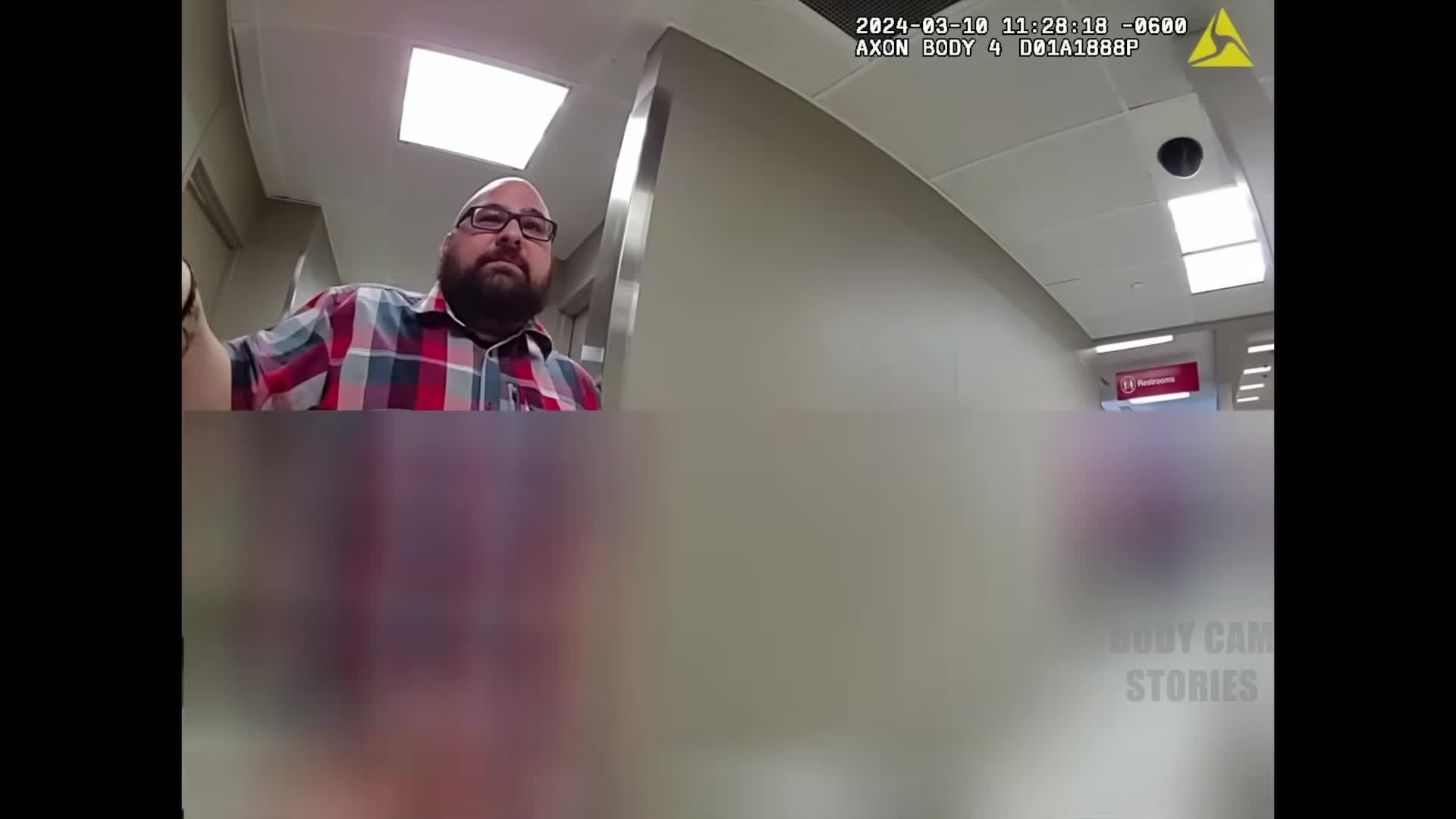
According to investigators, Vann was not simply wandering through the sales floor wearing similar colors. Store loss-prevention personnel said he was posing as an employee and trying to obtain keys that would give him access to secured merchandise. His target was the electronics inventory.
The plan depended less on force than on appearing as though he belonged. In a busy retail environment, a person wearing the expected uniform and moving confidently through employee areas can sometimes avoid immediate scrutiny. That appearance of legitimacy allegedly allowed Vann to get much farther than an ordinary grab-and-run shoplifter.
Investigators Say Five Xbox Consoles Were Taken
According to the criminal complaint summarized by ABQ RAW and KRQE, Vann was able to obtain employee keys, access a storage area and take five Xbox One consoles. He then left the store with the merchandise.
The theft was not treated as an isolated misunderstanding. Loss-prevention employees reportedly told police that Vann had previously worked for Target at another location before being terminated. Investigators also connected him to similar behavior at Target stores in the Albuquerque area.
Police said another theft had occurred only two days earlier, on March 8. That earlier incident and the March 10 case formed the basis for two felony shoplifting allegations reported at the time of his arrest.
Local reporting placed the broader value of merchandise connected to the Target cases at more than $6,000. Because the case involved multiple incidents, that figure should not be interpreted as the value of the five consoles alone. The important point is that police believed the March 10 encounter was part of a repeated method rather than a one-time impulse theft.
A Stolen U-Haul Adds Another Layer to the Investigation
The Target allegations were not the only issue confronting Vann. KRQE reported that police also accused him of keeping a rented U-Haul rather than returning it and that the vehicle was later associated with the Target theft activity.
That detail expanded the investigation beyond retail theft. What might otherwise have been processed as a store-based shoplifting case now involved a vehicle alleged to have been stolen or unlawfully retained, multiple theft incidents and questions about how Vann had been moving merchandise.
The supplied footage focuses heavily on the arrest and what happens afterward, so it does not independently establish every detail of the U-Haul allegation. For that reason, the vehicle information in this article comes from the criminal-complaint reporting rather than being inferred from body-camera images.
This separation between what the camera shows and what court documents allege is important. Body-camera footage can document police contact extremely well, but it does not automatically reveal the investigative history that brought officers to the scene.
The Arrest at Target Is Only the Beginning
Officers take Vann into custody at the store without the kind of major physical confrontation that later defines the case. The body-camera footage shows him being controlled by APD officers while still wearing the red shirt that helped make the alleged employee impersonation convincing.
At that stage, the situation appears largely contained. Vann is in police custody, officers have control of his movements, and the retail investigation can move toward booking and documentation.
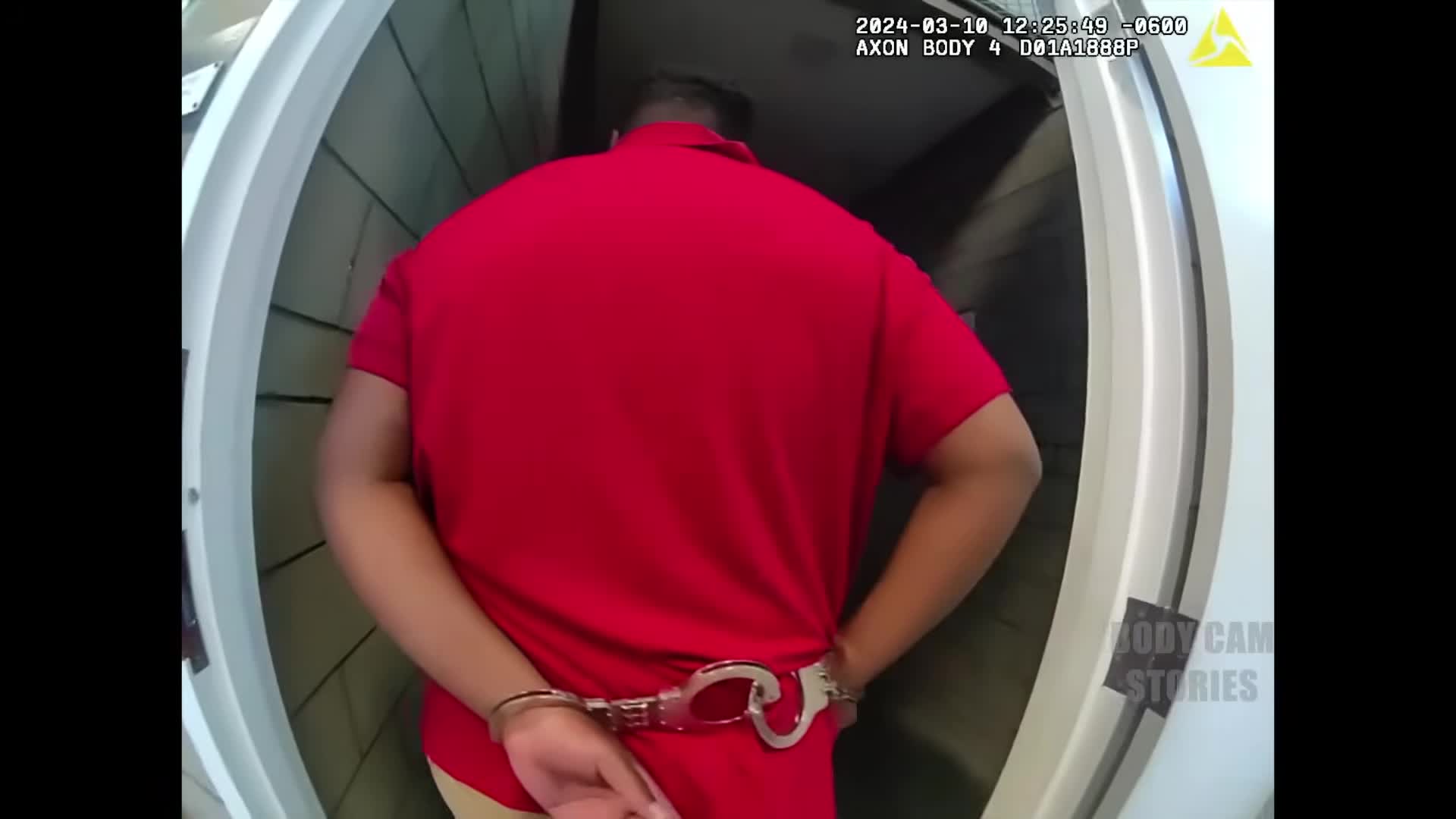
Police transported him to APD's Northwest Area Command substation for processing. Moving an arrestee to a police facility normally reduces the uncertainty of a street encounter: exterior doors are controlled, officers are nearby, and the detainee is already separated from the public.
In this case, however, the most chaotic portion of the incident occurred after Vann had already reached the police station.
A Bathroom Request Turns Into an Escape Attempt
According to the criminal complaint, Vann told officers he needed to use the restroom. Officers escorted him, but during that movement he suddenly tried to run.
The escape attempt immediately ran into a practical obstacle: the substation's doors were locked. Instead of getting outside, Vann remained trapped within a secure police building as officers moved to regain control.
That makes this case unusually different from a conventional foot pursuit. Vann was not running through a neighborhood with officers chasing behind him. He was attempting to evade custody inside the very facility designed to prevent unauthorized entry and exit.
The failed dash did not cause him to surrender. Reporting says he pushed past officers and moved into an evidence room, turning a brief escape attempt into a barricade situation.
The Evidence Room Becomes an Improvised Barricade
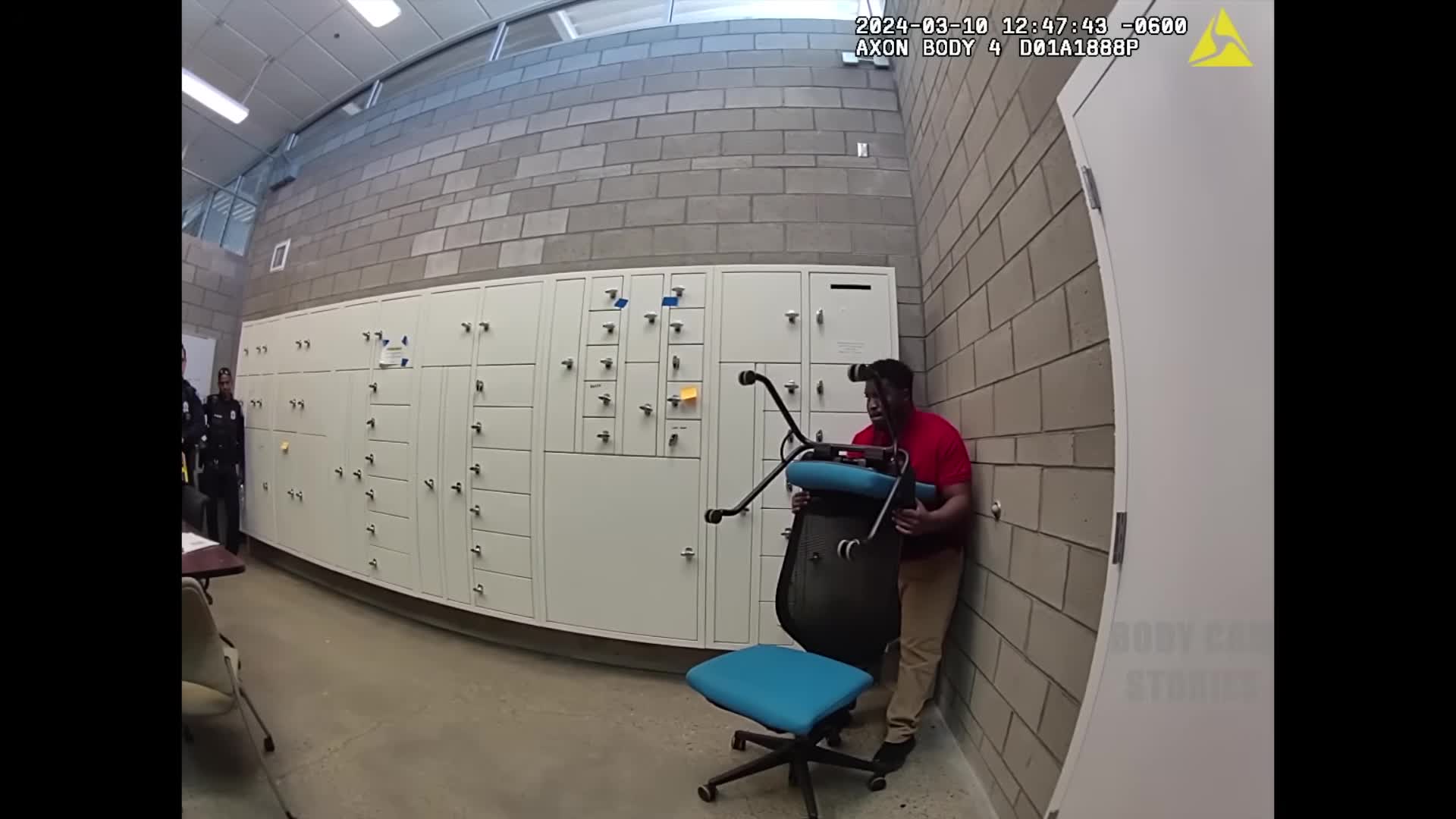
Once inside the evidence room, Vann began using the contents around him to make it harder for officers to enter. The criminal complaint says he stacked chairs in the doorway in an attempt to barricade himself inside.
Officers did not immediately rush the room. Reporting indicates that police spent roughly 15 minutes attempting to persuade him to come out. That period gave officers time to contain the situation and avoid turning a confined room into an uncontrolled pileup of officers, furniture and equipment.
The footage later shows why the room presented a problem. An evidence-processing area contains objects that can be picked up, swung or thrown. Even items that are not designed as weapons can become dangerous at close range.
What had started hours earlier as an alleged impersonation scheme at a retail store had now become a standoff inside an APD facility.
Police Say Chairs and Evidence Equipment Were Used Against Officers
When officers eventually moved to take control, the confrontation became physical. KRQE's account of the complaint says Vann grabbed a chair and pointed its legs toward officers. He also allegedly pushed officers and grabbed a heat sealer used for evidence bags.
The complaint described him swinging the device while throwing punches during the struggle. Multiple officers were needed to contain him in the confined space.
Those allegations explain why the final charge picture extended well beyond shoplifting. Police were no longer dealing only with merchandise taken from Target. They were documenting alleged physical attacks on officers during an attempted escape from custody.
An officer eventually deployed a Taser, after which police were able to regain control and return Vann to a cell. The body-camera footage captures the disorder of that effort from extremely close range, where officers, chairs and equipment repeatedly fill the frame.
Six Battery Counts Are Added to the Case
Contemporary reporting said Vann faced six counts of battery on a peace officer in connection with the substation confrontation. Those counts were added to the theft-related allegations already under investigation.
ABQ RAW reported additional allegations including felony shoplifting, resisting arrest and a stolen-motor-vehicle matter. KRQE likewise described charges stemming from the Target theft, the U-Haul and the fight with officers.
It is important to describe these as charges or allegations rather than automatically treating every count as a final conviction. Criminal complaints establish what prosecutors and police allege at the beginning of a case. Pleas, competency proceedings, dismissals and trial rulings can later change the final legal outcome.
That distinction is particularly relevant here because later reporting concerning Vann referenced competency issues in his criminal cases.
A Judge Initially Orders Vann Held Until Trial
Only days after the arrest, KRQE reported that Judge Emeterio Rudolfo ordered Vann to remain in detention pending trial. The ruling followed the allegations that he had tried to escape and fought officers inside the substation.
Pretrial detention is not a criminal sentence. A judge considering detention evaluates factors such as public safety, risk of flight and the circumstances alleged in the case. The defendant is still entitled to the normal criminal process.
The court history did not end quickly. Current New Mexico court calendars show a case styled State of New Mexico v. Curtis Jerome Vann II, docket D-202-CR-2024-00737, still appearing before the Second Judicial District Court in September 2026.
That current docket activity is one reason this article does not invent a final conviction or sentence for the March 2024 case. The publicly available court calendar demonstrates continuing proceedings, not a simple closed case with a final outcome that can safely be summarized in one line.
Later Police Contact Shows the Legal Story Continued
Vann returned to local news later in 2024 after another Albuquerque police encounter. KRQE reported that in October he allegedly threw rocks toward an officer and repeatedly said that he wanted to be arrested.
During that later encounter, Vann himself referred to the earlier case, telling an officer that his previous arrest had started with shoplifting and then involved battery. The later report also noted competency questions surrounding his cases.
That information provides context but should not be used to retroactively diagnose or explain his behavior during the Target incident. A competency evaluation is a legal process focused on whether a defendant can understand proceedings and assist in a defense; it is not a license to speculate about a person's medical condition from body-camera footage.
For the March 2024 story, the strongest account remains the documented sequence: alleged employee impersonation, electronics theft, arrest, attempted escape inside the substation, barricade and physical struggle with officers.
Why the Scheme Was More Sophisticated Than a Grab-and-Run Theft
The unusual feature of the Target incident is the alleged use of employee knowledge. Police did not describe Vann as simply picking up a console from an open shelf and running through an exit. The allegation was that he presented himself as a worker, obtained access and used store procedures to reach secured electronics.
Retailers place high-value electronics behind locks and in restricted rooms precisely because they are frequent theft targets. Those controls rely partly on employees recognizing who should have access. Someone who knows the workflow and can convincingly imitate an employee may be able to exploit the human side of that security system.
Investigators said Vann had previously worked for Target, which could help explain his familiarity with the environment. That claim comes from loss-prevention information reported in the criminal complaint and should be understood as part of the investigation rather than something visible on camera.
The red shirt and khaki pants therefore matter because they were allegedly part of a broader impersonation method, not merely a coincidence in clothing.
The Police Station Twist Makes the Case Stand Out
Many shoplifting body-camera videos end once the suspect is handcuffed and transported. This one effectively begins a second incident after the arrest appears complete.
Inside the Northwest substation, Vann allegedly turns a bathroom trip into an attempted escape. When the doors prevent him from getting outside, he moves into an evidence room. Chairs become barricade material. Evidence-processing equipment allegedly becomes an improvised weapon. Officers who expected to complete paperwork instead face a physical struggle inside their own building.
That reversal is what makes the original title so effective. The phrase “barricades himself at police station” sounds almost contradictory because a police station is the last place most people would choose for a barricade. Yet the secure environment that prevents escape also leaves Vann with nowhere else to go.
The resulting footage shows officers solving a containment problem in a cramped environment rather than chasing someone across an open area.
From Five Consoles to a Much Bigger Criminal Case
The story begins with an alleged retail deception. Investigators say Curtis Vann dressed like a Target employee, obtained access to secured merchandise and removed five Xbox One consoles from the Coors Boulevard store. Police linked him to another Target incident two days earlier and to a U-Haul allegation.
The arrest itself does not end the story. At APD's Northwest substation, Vann allegedly tries to flee during a restroom trip, discovers the exits are locked and barricades himself inside an evidence room. Police say he uses chairs and equipment during the confrontation and fights with officers until a Taser helps them regain control.
The case consequently grows from felony shoplifting allegations into multiple battery-on-a-peace-officer counts and other charges. A judge initially orders him detained pending trial.
Current court material also provides an important caution about declaring a final outcome. New Mexico's Second Judicial District calendar still listed Curtis Jerome Vann II in September 2026 in case D-202-CR-2024-00737. That means the responsible approach is to report the verified arrest, allegations and known court activity without inventing a final sentence.
The full body-camera sequence makes clear why this incident attracted attention far beyond an ordinary retail-theft report. The alleged scheme is unusual, but the aftermath is even more unexpected: a suspect already inside police custody turns a processing trip into a barricade and a struggle inside the station itself.
Comments (0)
Loading comments...
May You Like

Cops Arrive for a Medical Emergency and Walk Into Drunken Chaos

Woman Refuses Repeated Orders to Exit Her Car Before Officers Move In

💨 High-Speed Police Pursuits Caught on Dashcam | Intense Moments Across the USA 🇺🇸














