
Entitled Driver Cuts in Line Then Gets Instant Karma
Driver Tries to Bypass a Closed Road and Turns a Short Wait Into an Arrest
One Shortcut Was About to Turn Into a Much Bigger Problem
October 13, 2022 began with deputies dealing with something they had probably expected to consume most of their attention: a major traffic crash.
The wreck had created enough disruption that officers temporarily shut down the roadway while tow trucks and emergency personnel worked around the damaged vehicles.
For motorists caught behind the closure, the instructions were simple.
Wait.
The inconvenience might last a few minutes, but controlling traffic around a crash scene is about more than keeping cars organized. Tow trucks may need to maneuver across lanes. Deputies may be standing in the roadway. Damaged vehicles can create hazards that approaching drivers cannot immediately see.
Most motorists appeared willing to follow those instructions.
One driver, however, apparently decided the wait did not apply to her.
What followed transformed what could have been a brief delay into a police stop, an increasingly tense confrontation and, ultimately, an arrest.
The bodycam footage is compelling because almost every major consequence appears avoidable.
There was no original criminal investigation targeting the driver. No deputy had arrived looking for her. She seemingly entered the story for one reason: she did not want to wait behind the road closure.
And within minutes, that decision had changed everything.
Deputies Were Trying to Clear a Major Crash
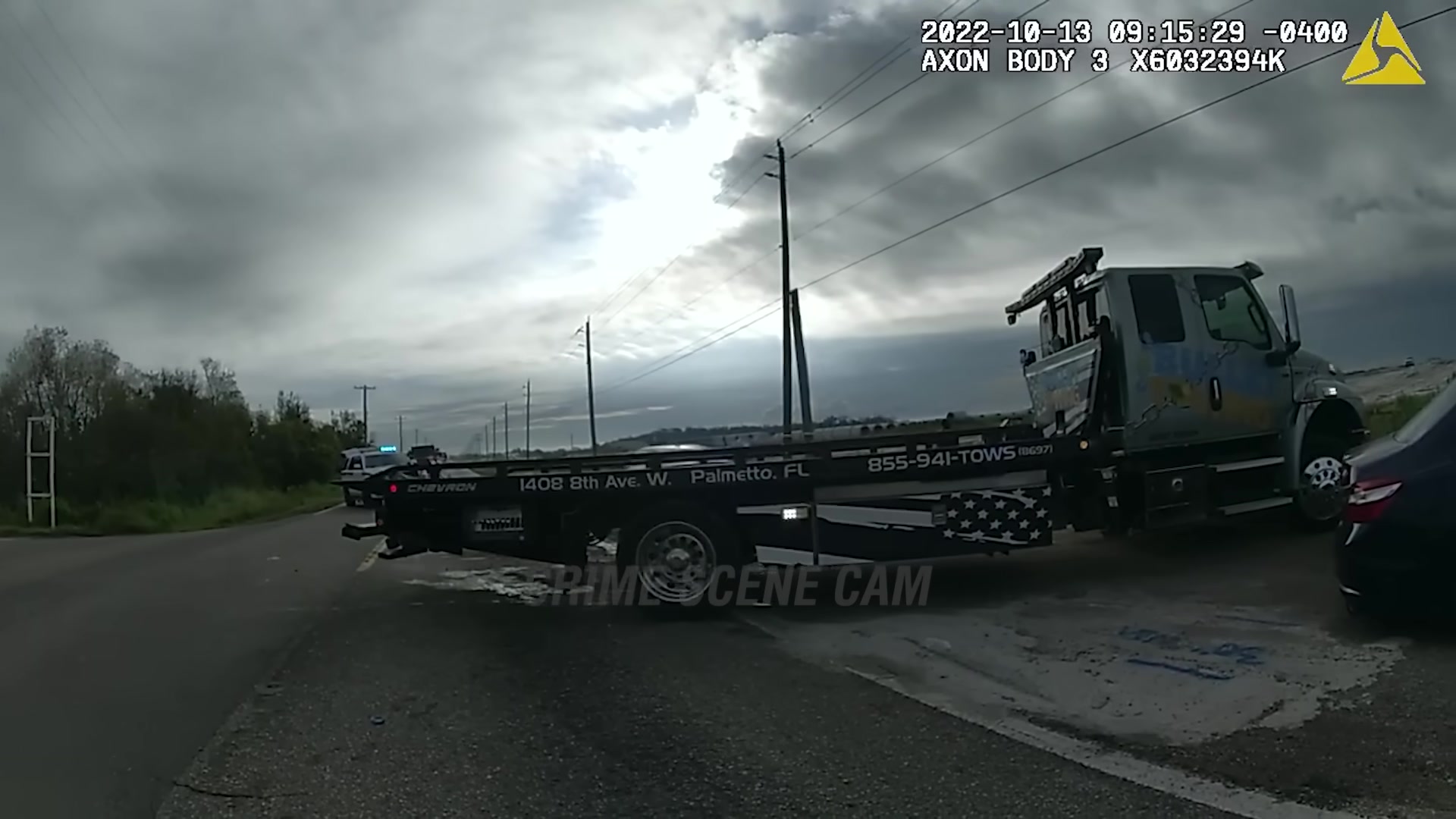
The background of the incident is essential.
According to the description accompanying the publicly available video, deputies were finishing their work at a large multi-vehicle crash. Both lanes had been closed while the scene was being managed, requiring approaching motorists to wait until authorities could safely reopen the road.
That context explains why deputies react so strongly when a vehicle attempts to bypass their traffic control.
From a driver's perspective, a partially empty road may look usable.
From an officer's perspective, that same road can be an active work zone.
A tow truck might be about to reverse.
Emergency personnel could step into the lane.
A damaged vehicle could be moved without warning.
Debris may still be scattered across the pavement.
And deputies themselves may be standing where vehicles normally travel.
This difference in perspective becomes central to what happens next.
The woman apparently believed there was enough room for her to continue.
The deputies believed the roadway was closed and that their instructions had been ignored.
Those two interpretations collide almost immediately.
She Drives Around the Traffic Control
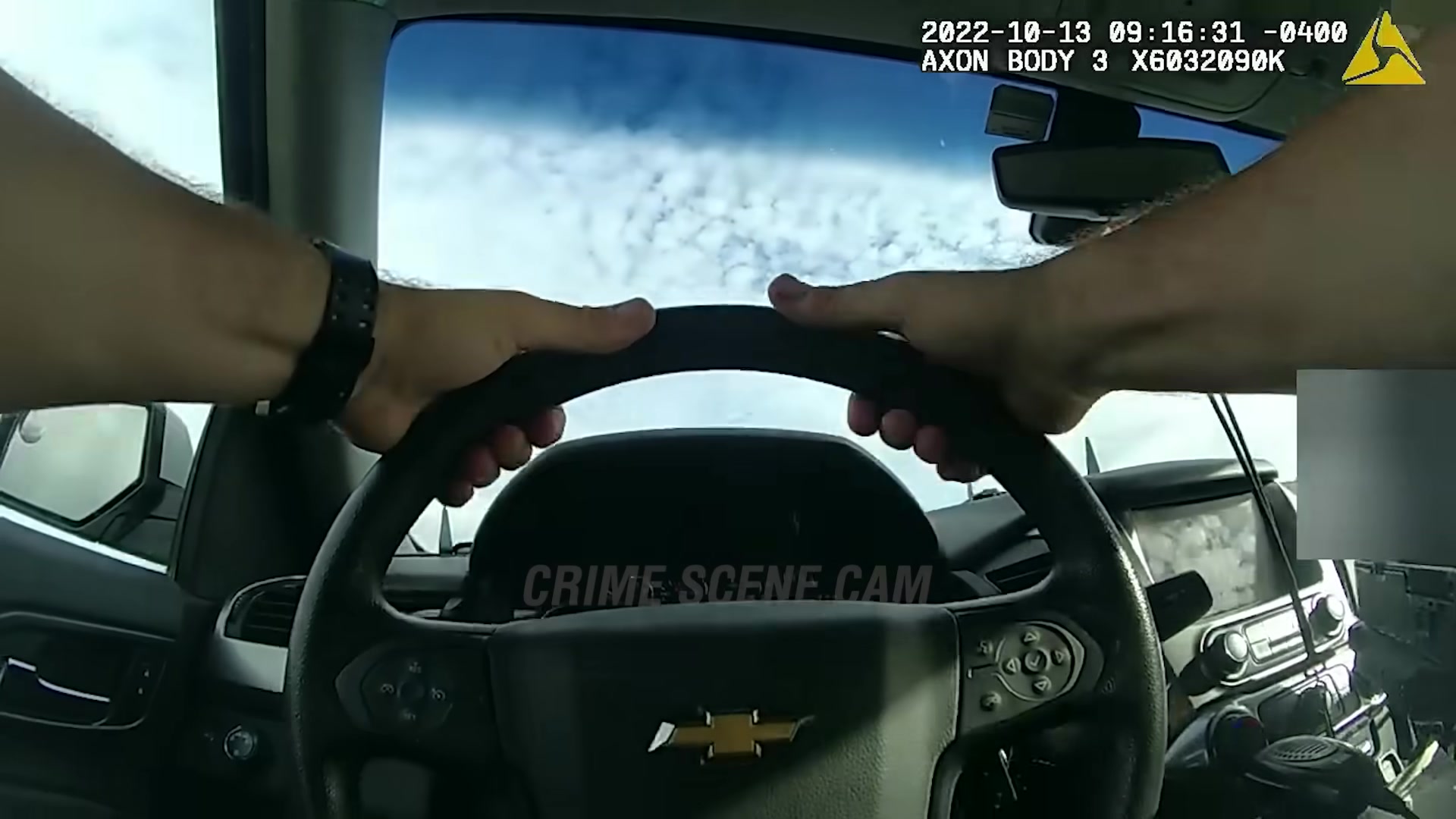
The bodycam soon captures the gray SUV associated with the confrontation.
What might initially look like an ordinary disagreement about traffic direction quickly becomes more serious because the officers say the woman did not simply misunderstand where she was supposed to go.
They describe her as driving around the closure and continuing despite attempts to stop her.
Later in the footage, one deputy explains that she had gone into the opposite lane rather than remaining with the traffic being held behind the crash scene. Another officer says he had to move to avoid the vehicle as she drove away.
The driver repeatedly offers an explanation for why she was in a hurry:
she was trying to reach her daughter.
That fact becomes the emotional center of her defense.
From her perspective, she had a reason to get through.
But having an urgent personal reason does not automatically cancel traffic control at an emergency scene.
That becomes increasingly clear as deputies attempt to explain why the road was blocked.
What makes the footage so effective from a storytelling perspective is that the original decision appears so small.
She did not begin the encounter by confronting an officer.
She was not initially being investigated for a serious crime.
She simply wanted to get past traffic.
But each decision after that increases the stakes.
The Deputy Finally Gets Her Stopped
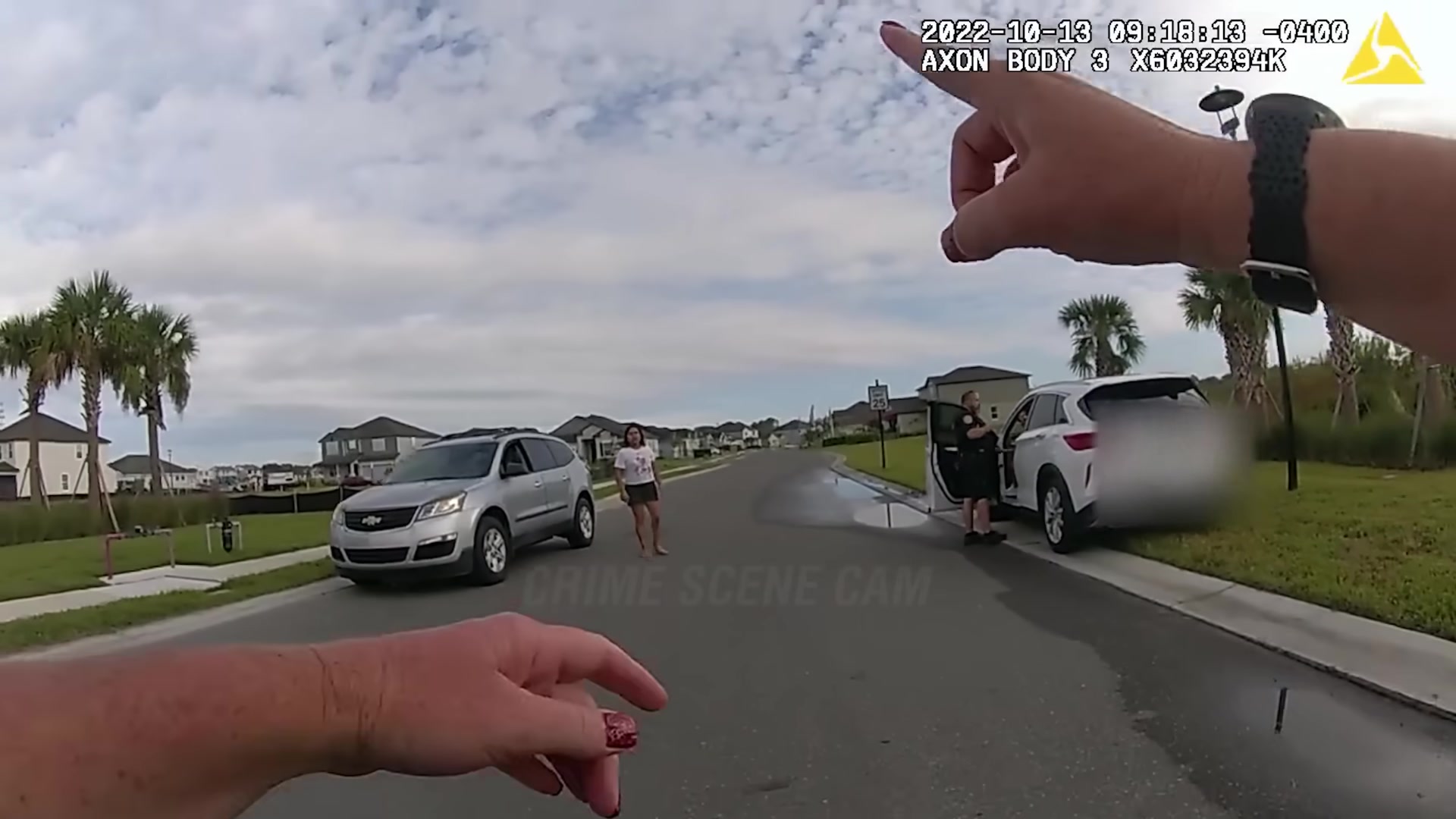
Eventually, deputies catch up with the SUV.
The interaction now shifts from traffic management into a traffic stop.
The officer instructs the woman to remain seated and requests the documents ordinarily associated with such a stop: driver's license, registration and proof of insurance.
Instead of immediately producing them, she continues arguing about the road closure.
She insists she was trying to reach her daughter.
She disputes whether the lane was actually blocked.
She points out that other vehicles were moving.
She speaks on the phone.
The deputy repeatedly redirects the conversation toward the stop itself.
This is the point where the encounter could still potentially have remained relatively limited.
Whatever dispute existed about the earlier traffic maneuver, officers were now attempting to identify the driver and investigate what had happened.
But the conversation does not move in that direction.
When asked for her driver's license, the woman says it is at home.
When asked for her name, she refuses to provide it.
That changes the encounter again.
According to the footage, the deputies tell her that once she has been lawfully stopped, refusing to provide required identifying information creates another legal problem.
The original road closure is rapidly becoming only one part of a larger confrontation.
A Traffic Dispute Becomes an Arrest
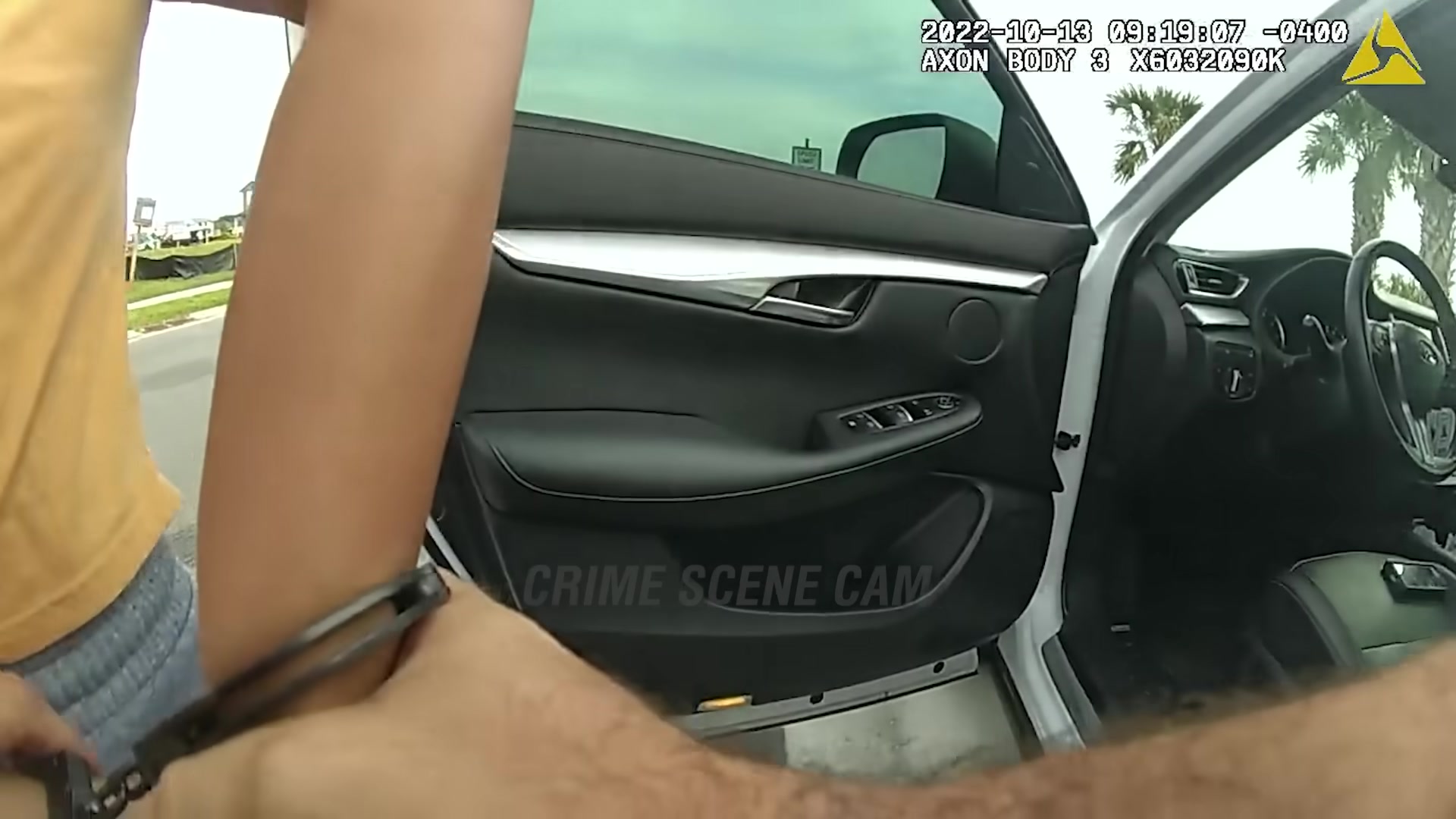
The most striking aspect of the encounter is how many opportunities appear to exist for it to end differently.
Wait behind the closure.
Stop when directed.
Remain with the vehicle.
Provide identification.
Follow the deputy's instructions.
At nearly every stage, the situation appears capable of becoming simpler.
Instead, the opposite happens.
After repeated requests for information, an officer tells the woman to step out.
The tone changes immediately.
She realizes that what began as an argument about bypassing traffic is moving toward an arrest.
Her earlier confidence gives way to concern.
The officers place her in custody.
The woman continues explaining that she had only been trying to reach her daughter, but deputies now have a much longer sequence of conduct to consider than the initial traffic maneuver.
That sequence is crucial.
The arrest is not portrayed in the footage as punishment for merely being impatient.
The officers discuss the road closure, the attempt to stop her, the vehicle's proximity to an officer, her continued driving and her subsequent refusal to provide information during the stop.
The distinction matters because a viral title such as “driver skips the line” compresses several minutes of events into a single phrase.
The bodycam shows the escalation.
Deputies Explain What They Say Happened
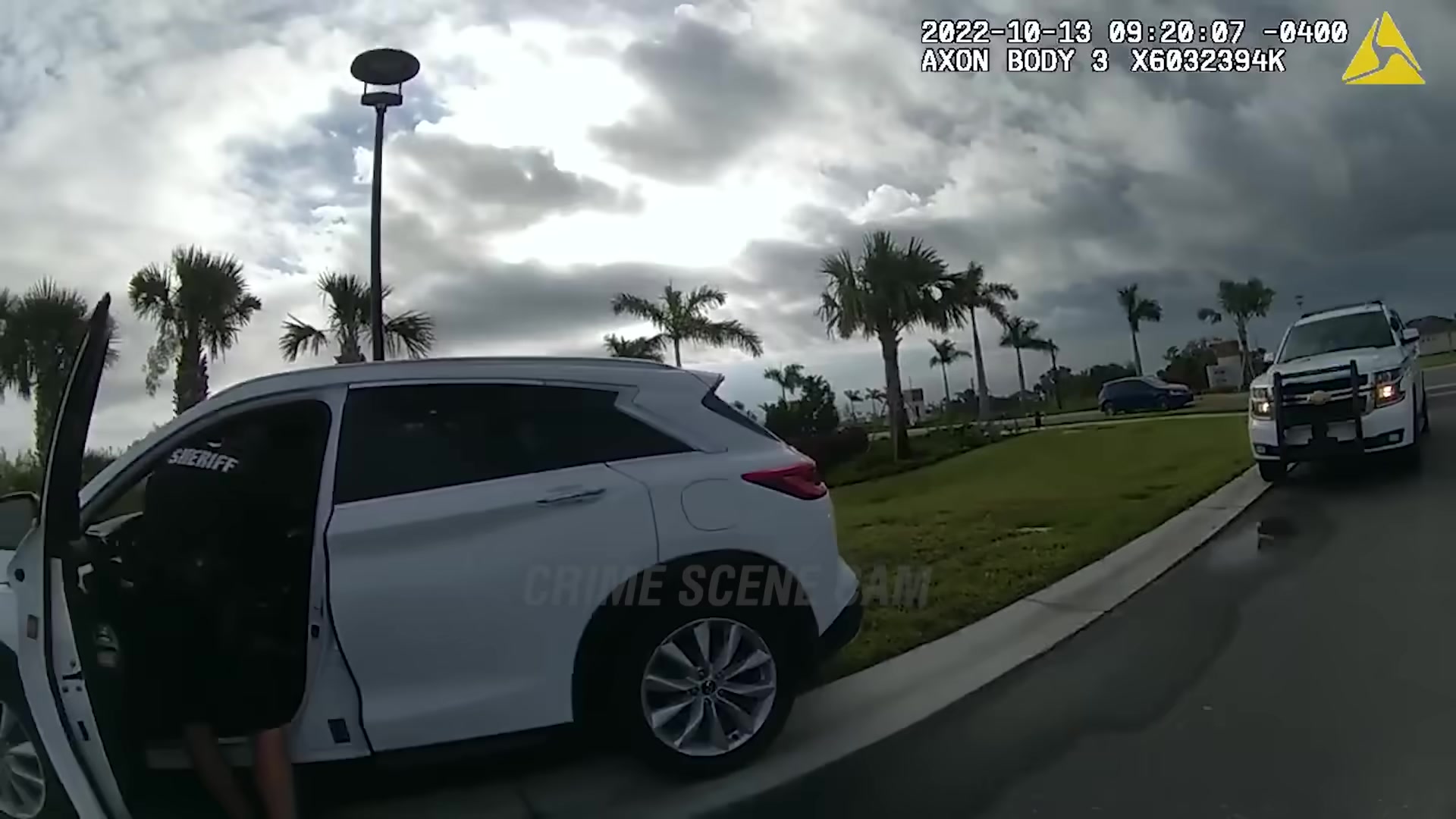
One of the most useful portions of the video occurs after the woman has been detained.
Rather than leaving viewers to guess why officers took action, deputies begin reconstructing the sequence for other people at the scene.
Their explanation provides important context.
According to one deputy, authorities had been directing traffic for more than an hour while dealing with the crash. They had shut down the roadway so tow trucks could access the wrecked vehicles and clear the scene.
The deputy says the woman decided not to wait for the road to reopen.
He says she traveled into the opposing lane and continued after being told to stop.
Another officer describes having to move away from her vehicle.
The officers also say they had to catch up with her after she continued down Carter Road.
Then, once she was stopped, the confrontation shifted again when she would not provide the information they requested.
Taken together, those details show why viewing the entire encounter matters.
If someone watched only the arrest, the police response might appear abrupt.
If someone watched only the initial traffic maneuver, the later consequences might seem disproportionate.
The full sequence connects the two.
A series of separate decisions compounds into a much larger problem.
“I Was Trying to Get My Daughter”
That explanation appears repeatedly.
The woman says she was attempting to reach her daughter.
From a human perspective, the explanation is understandable. Parents can react strongly when they believe a child is waiting for them.
But the footage demonstrates the difference between having a reason and having legal authorization.
An urgent personal objective does not necessarily allow a driver to override police traffic control.
The location clues in the footage also fit the area where the encounter occurred. Moonsail Drive connects through the Isles at BayView development near Barrier Coast Trail and Carter Road in Manatee County. Public property records describe access to Moonsail Drive by traveling from Interstate 75 toward Moccasin Wallow Road, then Carter Road and Barrier Coast Trail.
That geographical match strengthens the identification of the scene shown in the footage.
It also helps explain references officers make during the encounter to the surrounding roads and nearby Interstate 75.
Another Person Wants to Know Why She Is Being Arrested
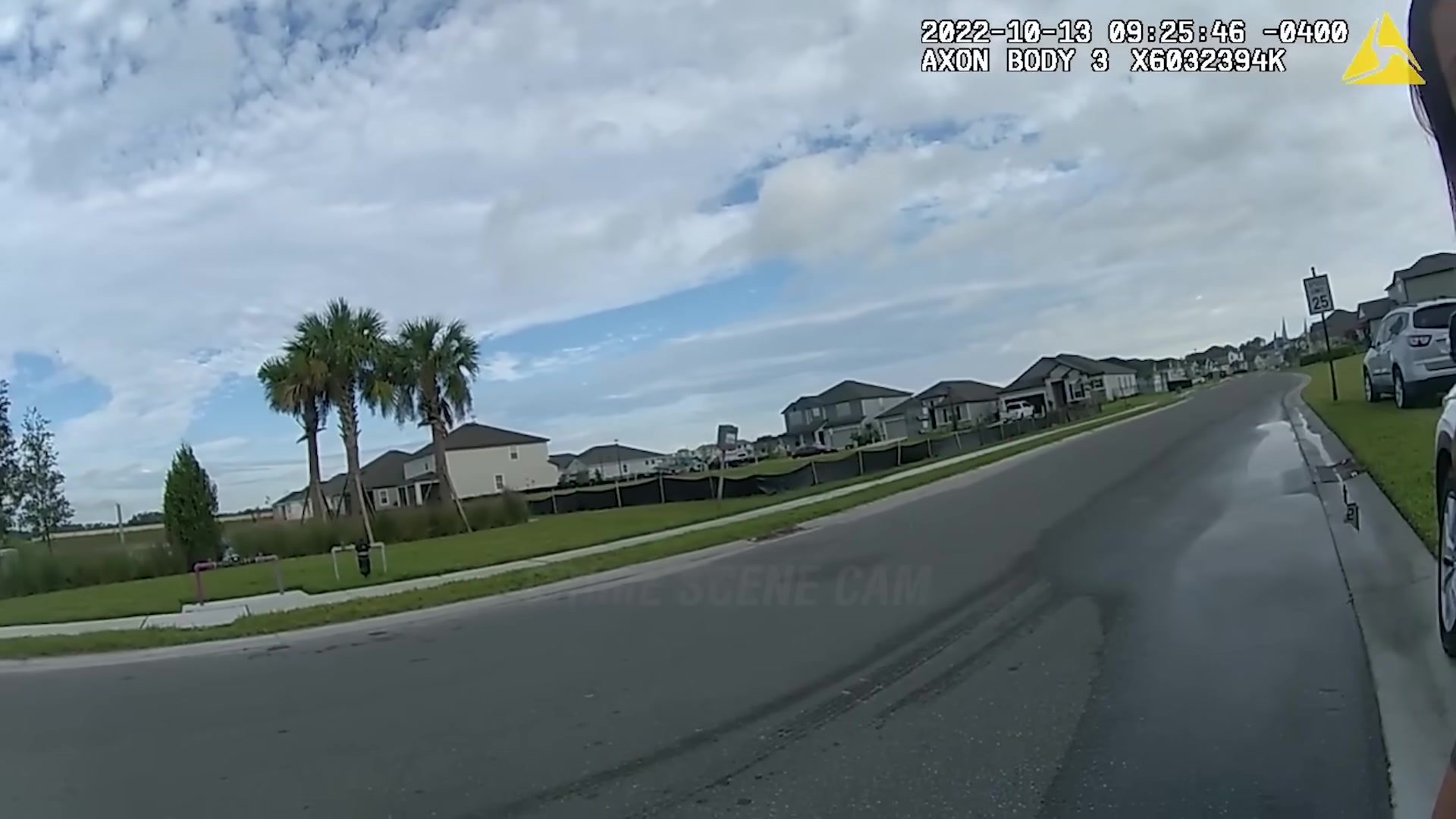
As the encounter continues, another person at the scene questions the deputies about what has happened.
This produces perhaps the clearest explanation in the entire video.
An officer walks through the events step by step.
There had been a major crash.
The road was closed.
Tow trucks needed access.
Traffic was being held temporarily.
According to the deputy, the woman chose to bypass the line rather than waiting for the roadway to reopen.
When an officer attempted to stop her, he says she drove away and came dangerously close to him.
Another deputy then stopped her farther down the road.
Once stopped, officers say she refused to provide the requested information.
The explanation is important because it turns an apparently chaotic encounter into a chronological chain.
Road closure → attempted bypass → police direction → continued driving → traffic stop → refusal to cooperate → arrest.
That chain is the real story.
The title may focus on “instant karma,” but the footage itself is more useful as an illustration of escalation.
One poor decision rarely exists in isolation.
It creates the circumstances for the next decision.
And if each response increases rather than decreases the conflict, a minor incident can become serious surprisingly quickly.
What Florida Law Adds to the Story
The footage itself displays two Florida statutes in its concluding case summary.
One is Florida Statute 843.02, concerning resisting, obstructing or opposing an officer without violence.
The other is Florida Statute 316.072(3), relating to obeying lawful orders or directions of police officers in the enforcement of traffic laws.
That matches the ending presented in the published version of the video, which states that the suspect was charged with resisting and cited for disobeying an officer.
This is also why it is important not to describe every allegation discussed during an active scene as a final charge.
During the footage, officers discuss the vehicle's proximity to one deputy and use stronger potential-charge language while assessing what happened.
But the video's final disposition specifically identifies resisting/obstructing and disobeying an officer.
Those are the claims that should be used when summarizing the outcome rather than converting every on-scene discussion into a final prosecution result.
That distinction improves both accuracy and credibility.
The Ending Is Far Quieter Than the Beginning
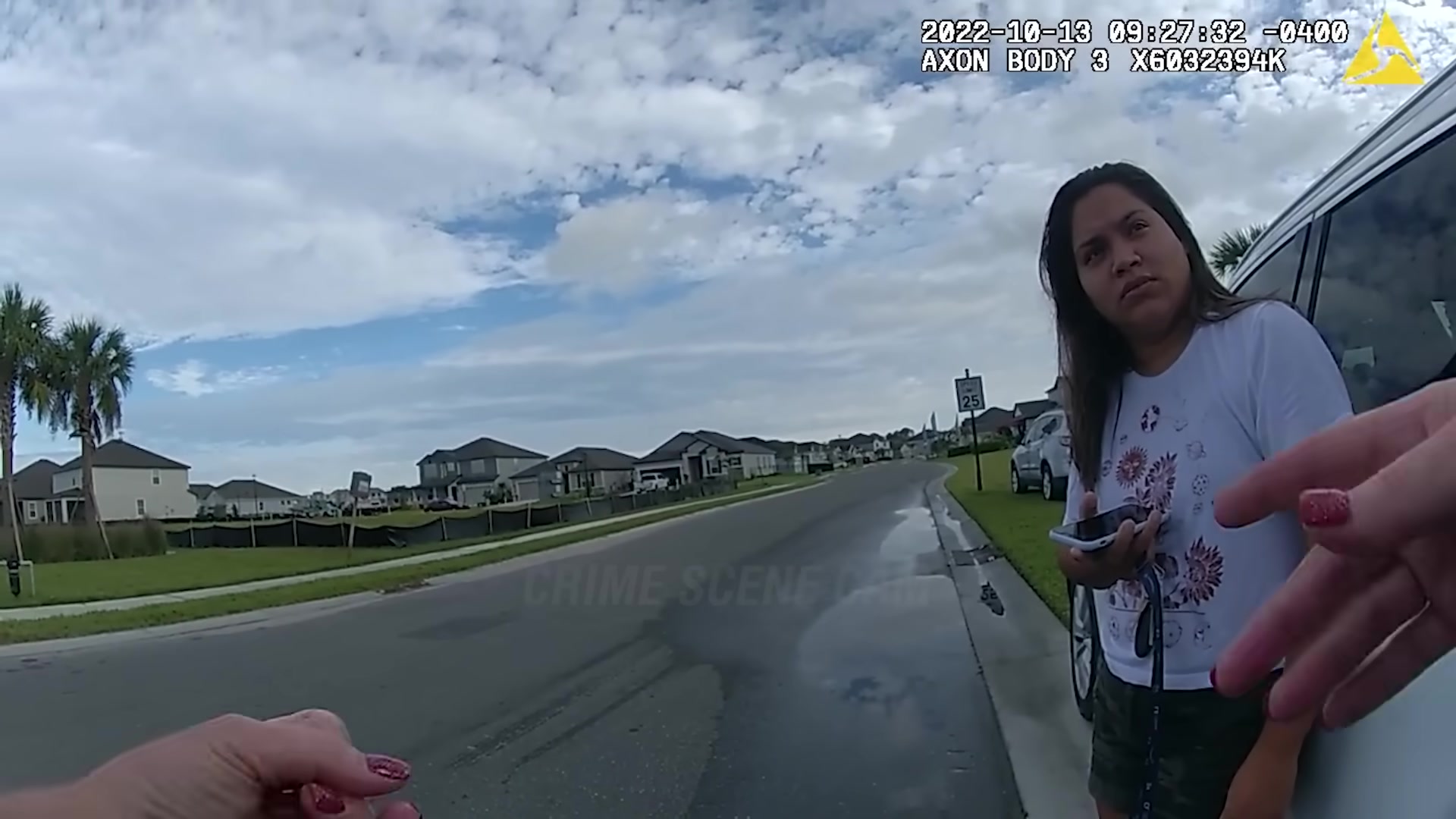
Eventually the roadside argument ends.
The SUV is no longer the center of an escalating confrontation.
Officers have gathered information.
The driver has been taken into custody.
The remaining conversation concerns what happens to the vehicle and how the people left at the scene will get home.
It is an unusually mundane ending considering how avoidable the entire chain of events appears.
The publicly circulated video states that the woman ultimately pleaded no contest and received six months of probation.
That ending gives the story a consequence beyond the few minutes captured on bodycam.
The original problem was waiting in traffic.
The eventual outcome involved an arrest, a criminal case and probation.
Whatever amount of time the driver hoped to save by bypassing the closure was insignificant compared with what followed.
Why This Video Holds Attention So Well
There is a useful storytelling lesson hidden inside this footage.
The video does not need a high-speed chase or dramatic physical fight to keep viewers watching.
Its retention comes from progressive escalation.
First, the audience sees something recognizable: frustration with traffic.
Then comes the rule-breaking decision.
Then police intervene.
Then the driver argues.
Then she refuses information.
Then officers arrest her.
Finally, viewers learn the legal outcome.
Every stage answers one question while creating another.
Will the deputy let her go?
Will she provide her information?
Why did she drive around the closure?
Why are officers arresting her?
What will she ultimately be charged with?
What happened afterward?
That is an effective structure for long-form police storytelling because it does not reveal everything in the opening paragraph.
Instead, the article provides enough information to establish the conflict and then allows the consequences to unfold chronologically.
It also avoids unnecessary exaggeration.
The facts themselves create the tension.
A Few Minutes of Patience Could Have Changed Everything
Perhaps the clearest takeaway from this encounter is also the simplest.
Traffic control around a crash scene can be frustrating.
Drivers may not understand why an apparently usable lane is closed.
They may see an empty stretch of pavement and assume there is no reason they cannot continue.
But officers managing an accident scene can see hazards that approaching motorists cannot.
Their priority is not determining which driver has the most urgent personal schedule.
It is keeping vehicles away from a controlled scene until it is safe to reopen the road.
In this case, deputies said the closure was temporary and necessary to allow tow trucks to clear the wreckage.
The driver apparently believed reaching her daughter justified bypassing the delay.
That disagreement became the first domino.
What followed demonstrates how rapidly an avoidable traffic conflict can grow.
A shortcut becomes a police encounter.
The encounter becomes a traffic stop.
The traffic stop becomes an argument.
The argument becomes a refusal.
And the refusal ends with handcuffs.
The irony is that the original inconvenience was measured in minutes, while the consequences lasted far longer.
That is what makes this bodycam footage memorable.
It is not simply a video about someone cutting a traffic line.
It is a real-time demonstration of how quickly a minor act of impatience can create consequences that were never part of the original plan.
WATCH WHAT HAPPENS NEXT
At the beginning, this looks like little more than a driver who refuses to wait behind a road closure. But the situation changes dramatically once deputies catch up with the SUV and begin asking for identification.
The full footage shows every stage of the escalation, including the driver's explanation, the deputies' reconstruction of what happened near the crash scene, the arrest and the discussion that follows.
Watch the complete encounter and see how an attempt to save a few minutes turned into a situation that followed the driver far beyond that afternoon.
Click here to watch the full incident unfold from the road closure to the final outcome: https://www.youtube.com/watch?v=fOIguY1PbnA
Comments (0)
Loading comments...
May You Like

Her Dad Is a Lawyer — Then He Shows Up After Her Arrest | Bodycam US
After Dad’s Arrest, One Emotional Moment With an Officer Stands Out

High-Speed CHP Chase Ends When Spike Strips Stop Suspect















