DUI Suspect Stumbles Out of Car, Claims 'It's Fine' After Driving Wrong Way
Wrong-Way Mercedes Driver Keeps Going Until Deputies Reach the Hospital
A Near Head-On Collision Triggers an Emergency Call
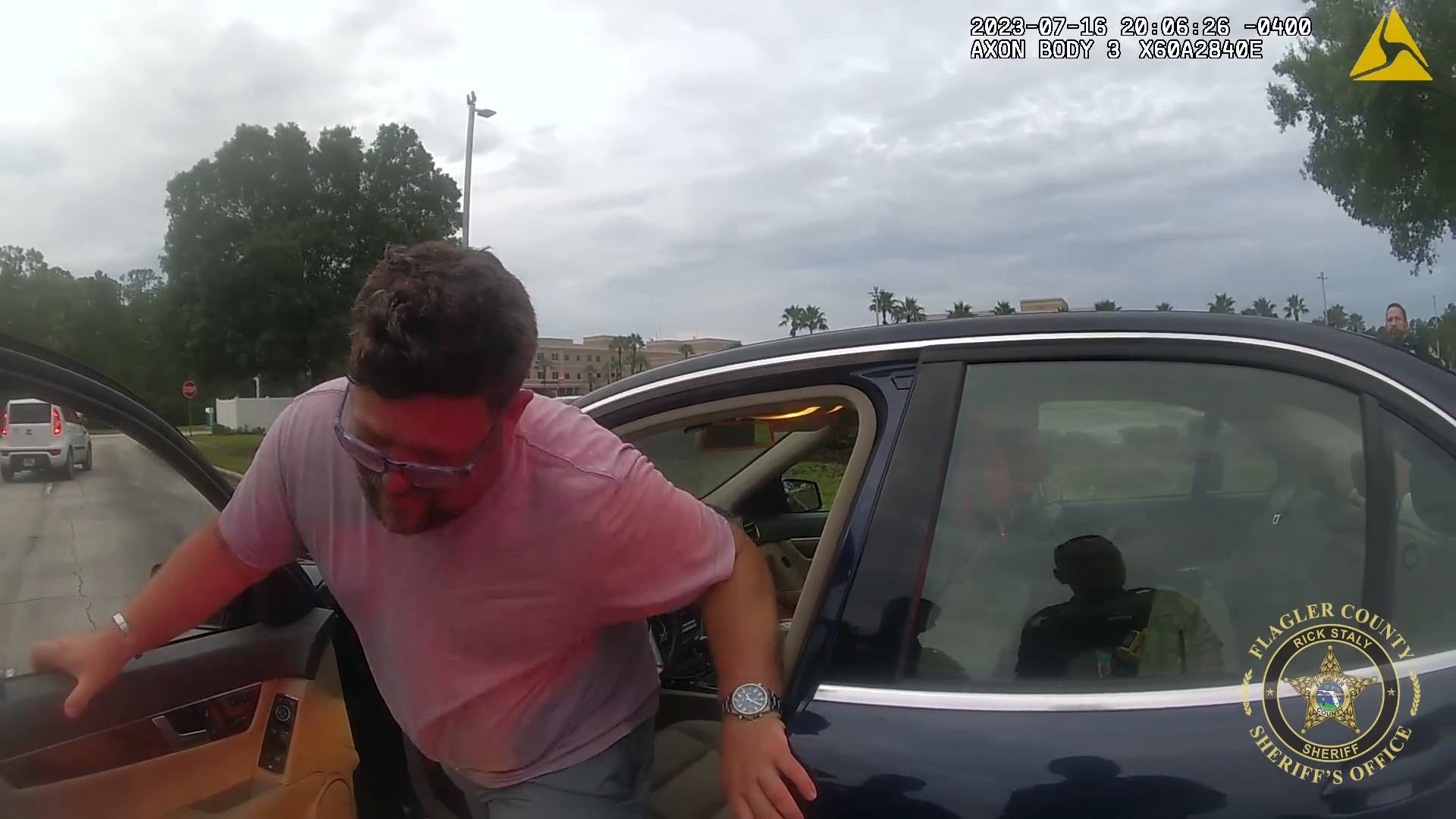
On Sunday night in Flagler County, Florida, a report reached the Flagler County Sheriff’s Office about a black Mercedes that had briefly entered the wrong lane and nearly caused a head-on collision. What followed was not described as a routine roadside warning. Deputies located the vehicle near Old Kings Road and State Road 100 and attempted to stop it, but the Mercedes continued moving.
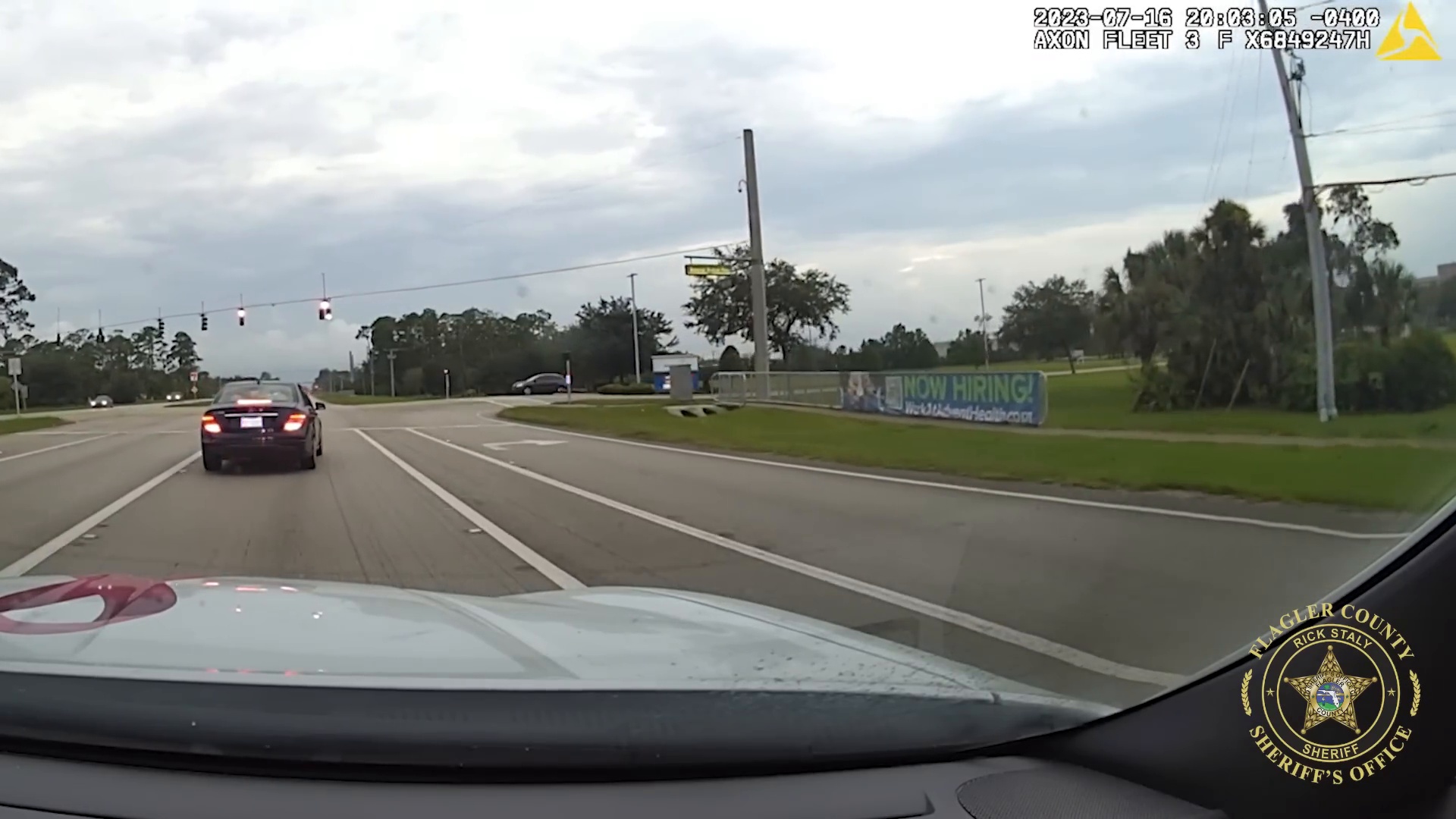
The supplied body-camera footage captures the later stages of that encounter. It shows the uncertainty officers faced as they tried to deal with a driver who did not immediately stop and whose condition became a central concern. The incident is especially notable because the initial report involved wrong-lane travel, one of the most dangerous situations motorists can encounter at night.
FCSO’s official July 2023 weekend roundup identifies the driver as Michael Alfonso, 48. The agency described him as a habitual drunk driver. That characterization is supported in the same release by the charge ultimately filed: felony DUI, identified by FCSO as his fourth DUI with three prior convictions.
The official account and the footage together provide a clearer chronology than the headline alone. Deputies were responding to a reported driving hazard first. The DUI investigation developed as officers encountered Alfonso and assessed his condition.
The Mercedes Does Not Stop Where Deputies Expect
According to FCSO, deputies attempted a traffic stop after locating the Mercedes, but the vehicle did not come to a stop until it reached AdventHealth Palm Coast and parked near the emergency room. That destination would become important moments later.
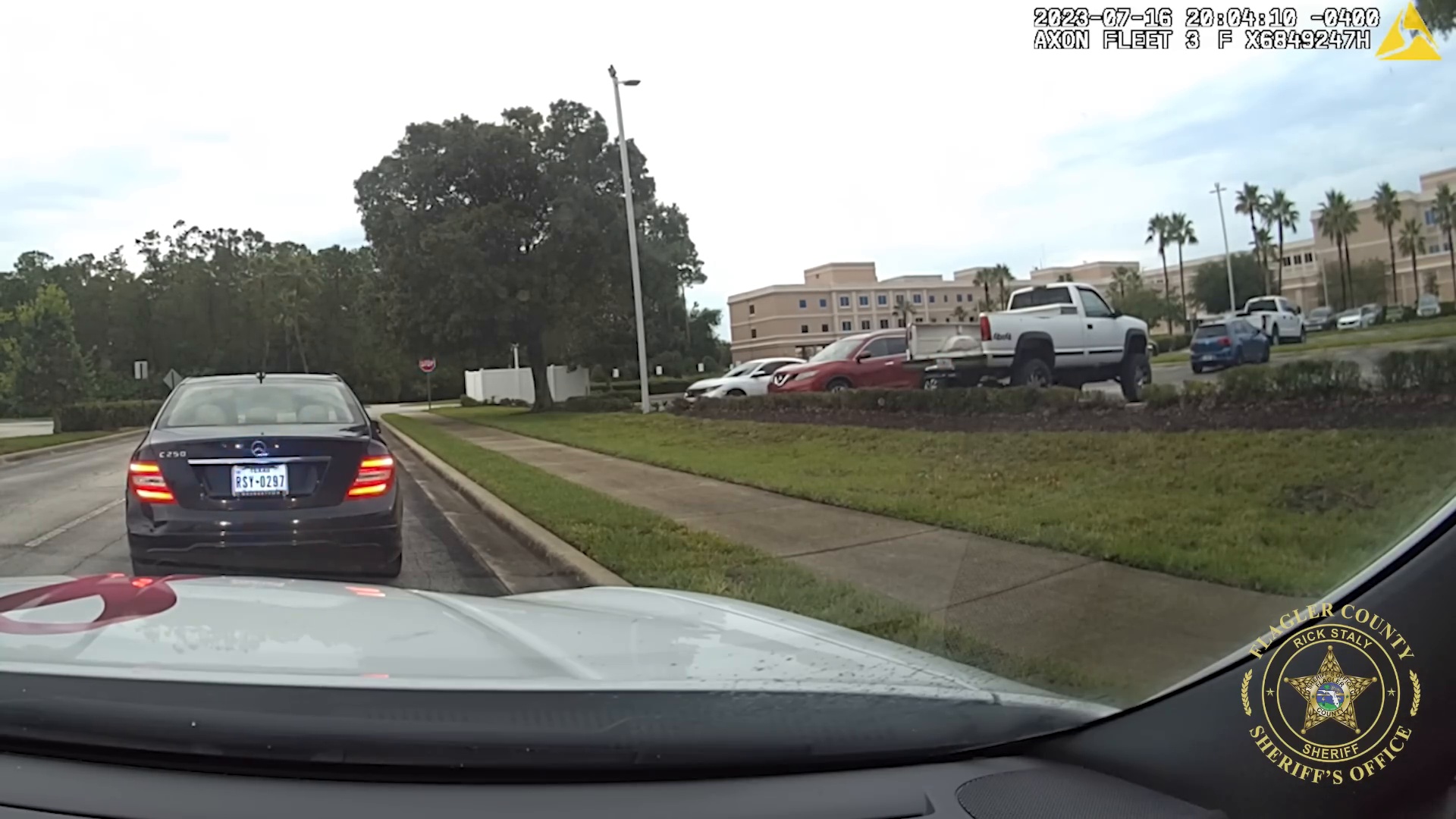
Failure to stop immediately for emergency lights can raise officer-safety and enforcement concerns, but the precise reason a driver continues moving is not always obvious in real time. Officers have to evaluate the vehicle’s speed, movements, traffic conditions and the driver’s behavior once contact is made.
The video shows the encounter moving from vehicle enforcement toward concern about Alfonso’s physical state. Rather than treating every unusual behavior as proof of intoxication, deputies still had to consider whether a medical issue could explain what they were seeing.
That is one reason the hospital setting mattered. FCSO said Alfonso appeared extremely intoxicated and was uncooperative, but deputies nevertheless took him into the emergency room in a wheelchair so medical personnel could check for possible medical conditions. This step illustrates an important practical reality: apparent impairment can overlap with symptoms of medical emergencies, and officers sometimes need medical professionals to help rule out other explanations.
Officers Confront Apparent Impairment
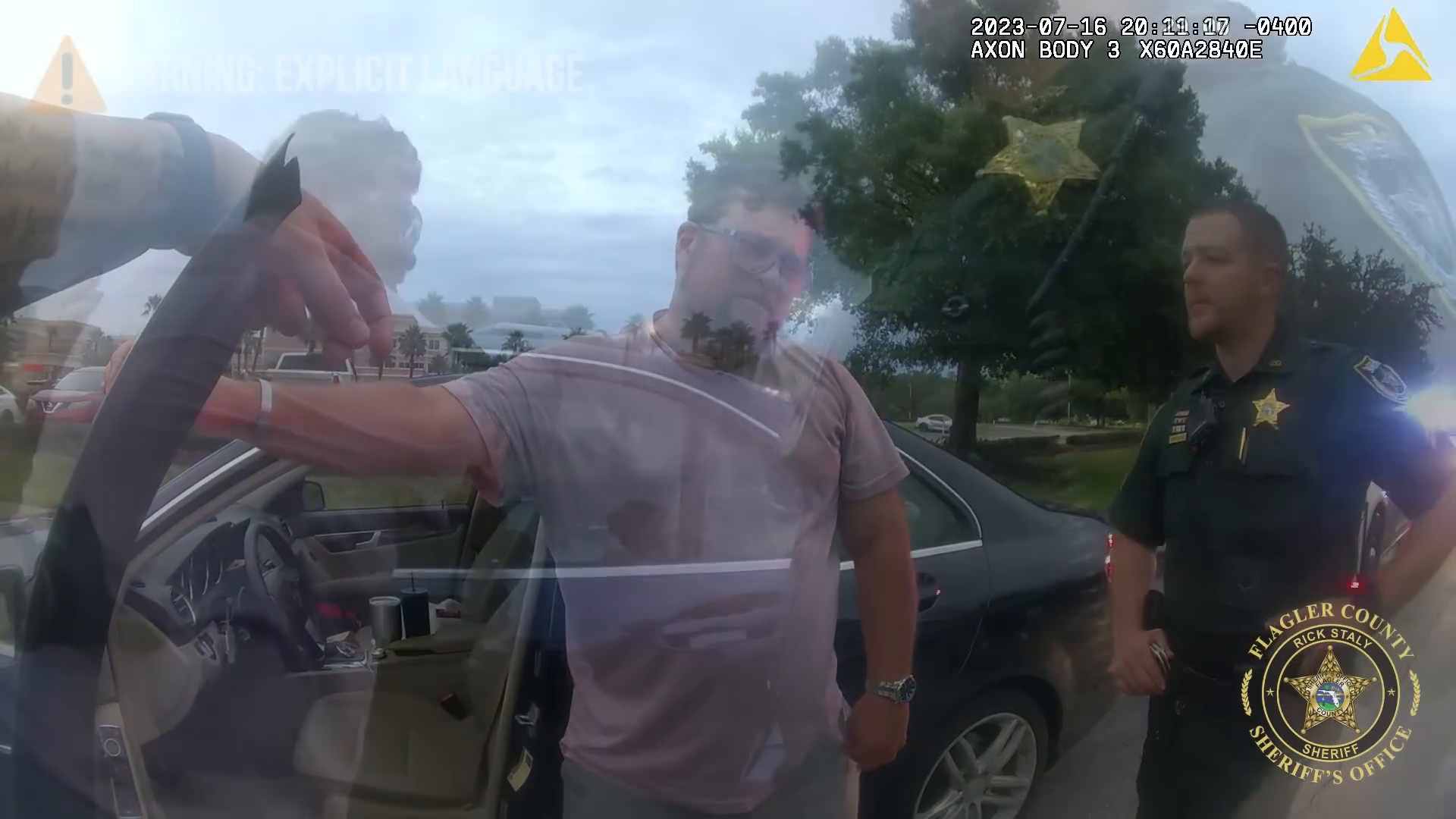
The footage presents a driver whose interaction with deputies is difficult and increasingly consequential. FCSO’s written release states that Alfonso appeared extremely intoxicated. Because the agency had already received a report of wrong-lane driving and deputies had followed the Mercedes to the hospital, the investigation now involved both the reported driving behavior and what officers observed after contact.
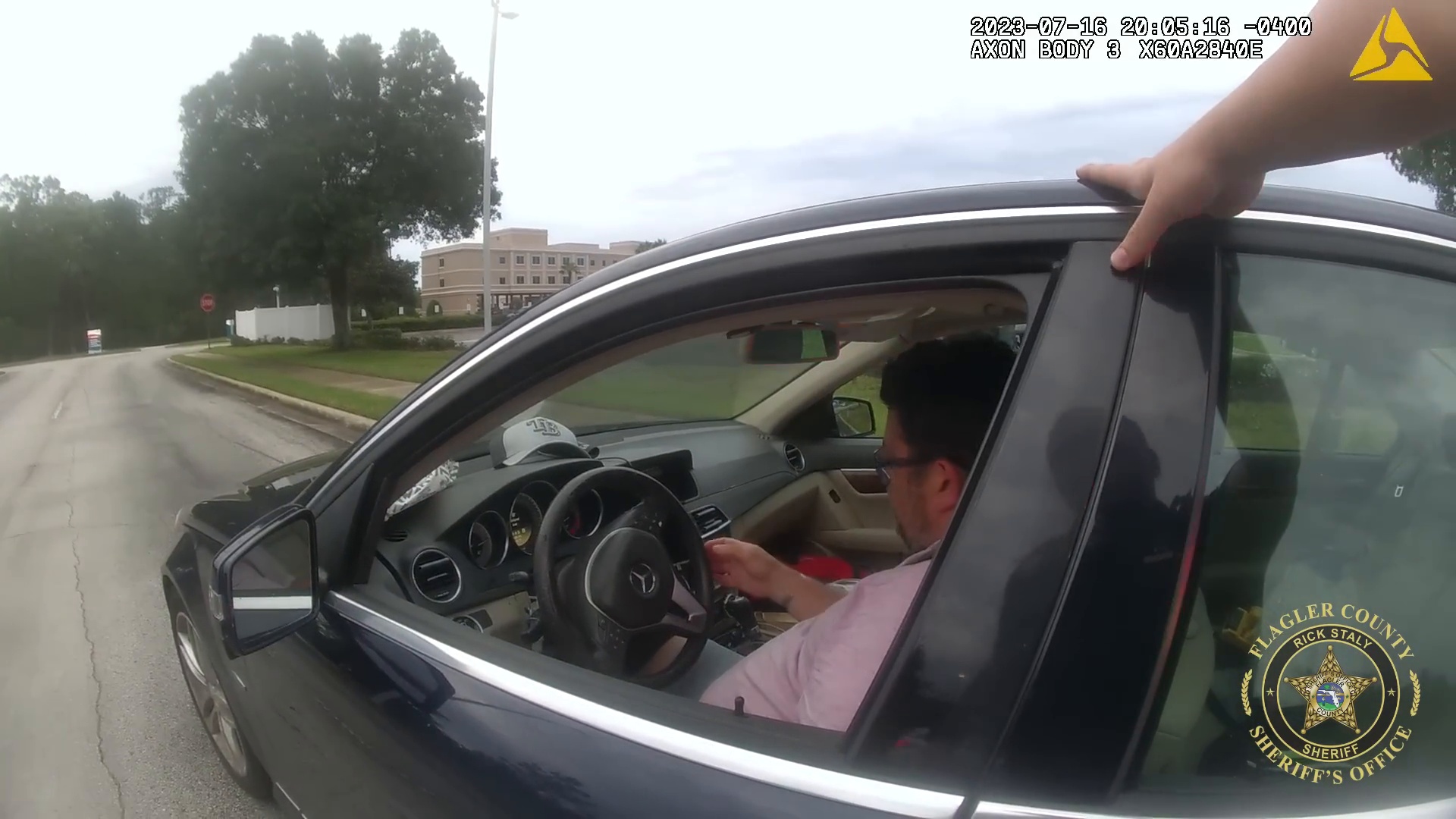
A DUI case does not rest solely on whether someone looks unusual in a body-camera clip. Officers may consider driving pattern, speech, balance, odor, admissions, field observations and other evidence. The exact evidence used in any prosecution is ultimately evaluated through the court process.
The video is therefore most useful as a visual record of the encounter rather than a substitute for the entire evidentiary file. It shows officers interacting with Alfonso, attempting to manage the scene and responding to his condition. The official release supplies the verified identity, prior-DUI context, charges and bond information.
Keeping those sources separate avoids overclaiming. Viewers can see behavior for themselves, but details such as prior convictions are not visible on camera and should come from records or official reporting.
Why a Fourth DUI Changes the Legal Stakes
FCSO reported that Alfonso was arrested for felony DUI, specifically describing the case as a fourth DUI following three prior convictions. He was also arrested on two counts of failure to obey law enforcement.
Repeat DUI cases carry different legal stakes from a first-time allegation. Florida law provides for felony treatment in certain repeat-offense circumstances. The significance of prior convictions is therefore not simply rhetorical; they can affect how a new DUI allegation is charged and punished.
At the same time, an arrest announcement is not a conviction in the new case. Alfonso was accused and arrested based on the investigation described by FCSO. The final disposition of those allegations belongs to the judicial process.
FCSO reported that Alfonso was held at the Sheriff Perry Hall Inmate Detention Facility on a $26,000 bond at the time of the agency’s release. This article does not assume a later plea, conviction, dismissal or sentence without a verified court record establishing it.
The Head-On Risk Behind the Initial Call
The most serious part of the opening report is easy to lose once the body-camera interaction begins: another motorist reportedly faced a vehicle moving into the wrong lane. Head-on crashes can combine the closing speeds of two vehicles and leave little time for evasive action.
In this incident, no head-on crash was reported in FCSO’s account. That absence is significant. The event became an arrest story rather than a fatal-crash story because the reported near collision did not become an actual impact.
For deputies, however, the lack of a crash did not eliminate the need to locate the Mercedes. A report of a vehicle crossing into opposing traffic can indicate impairment, distraction, fatigue, a medical emergency or another problem requiring intervention.
The footage that follows shows what happens after that public-safety concern reaches law enforcement. Deputies find the vehicle, attempt to stop it, follow it to the hospital and then work through the driver’s condition before making the arrest described in the official release.
A Dangerous Drive Ends at the Emergency Room
By the end of the encounter, the black Mercedes is no longer moving and Alfonso is no longer behind the wheel. The case has moved from a citizen report about a near head-on collision to a felony DUI arrest involving a driver FCSO says had three prior DUI convictions.
The hospital stop adds an unusual dimension. Deputies were close enough to emergency care to have Alfonso evaluated when his condition raised concerns, and FCSO specifically noted that he was taken into the emergency room in a wheelchair to be checked for medical conditions.
That detail is important because responsible policing requires officers to respond not only to suspected criminal conduct but also to immediate medical needs. A person can be under investigation and still require medical assessment. The two responsibilities are not mutually exclusive.
The incident also shows why body-camera footage should be paired with verified reporting. The video provides immediacy: the voices, movements, confusion and decisions occurring in real time. The FCSO release provides facts the camera cannot reveal by itself, including Alfonso’s identity, prior DUI history as described by the agency, the specific charges and the reported bond.
Most importantly, the story begins before the camera’s most dramatic moments. It begins with another driver reportedly facing a Mercedes in the wrong lane and narrowly avoiding a head-on collision. Everything that follows stems from deputies trying to locate and stop that danger before the situation became irreversible.
For viewers who want to understand the full sequence, the complete footage shows how the encounter progressed from the attempted stop to the hospital and ultimately to Alfonso’s arrest.
Follow the full encounter to see how deputies handled the driver from the attempted traffic stop through the final arrest at the hospital.
Comments (0)
Loading comments...
May You Like
🚔⚠️ 911 Call Comes Hours Later After a Troubling Bath Incident | Ohio, USA
Entitled Driver Skips the Line and Gets Instant Karma3

Neighborhood Grocery Store Suddenly Erupts Into Chaos