Drunk Off-Duty Cop Gets Arrested
He Escaped the First PIT Then Stole the Police Cruiser
On a snowy February afternoon in Southfield, Michigan, police appeared to have brought a dangerous vehicle pursuit to an end.
The fleeing car had been stopped.
An officer was out of his cruiser.
The suspect appeared to have nowhere left to go.
Then everything changed.
Instead of surrendering, the driver allegedly found another way to escape: he got into the police cruiser that had just been chasing him and drove away.
Within seconds, a pursuit that seemed finished had restarted under far more unusual circumstances. Police were no longer simply pursuing a suspected stolen vehicle. They were trying to recover one of their own patrol cars, with the suspect now behind the wheel.
And officers would eventually have to use another PIT maneuver to stop it.
The extraordinary February 19, 2022 incident was captured from several angles, including police dashcam and body-worn camera footage. Local news outlets later reported that the man arrested was a 27-year-old Detroit resident identified in coverage as Charles Duanne Williams or Charleston Williams.
What makes the footage compelling isn't merely the speed of the chase.
It is the way the entire situation changes again and again.
Every time it appears to be ending, another problem begins.
A STOLEN VEHICLE SPOTTED IN SOUTHFIELD
According to FOX 2 Detroit, the incident began at approximately 4:29 p.m. on February 19, 2022, when a Southfield police officer located a stolen vehicle around Twelve Mile Road and Telegraph Road.
The officer activated emergency equipment and attempted to stop the vehicle.
The driver did not comply.
Instead, according to police, the vehicle headed east on Twelve Mile Road before turning south onto Lahser Road.
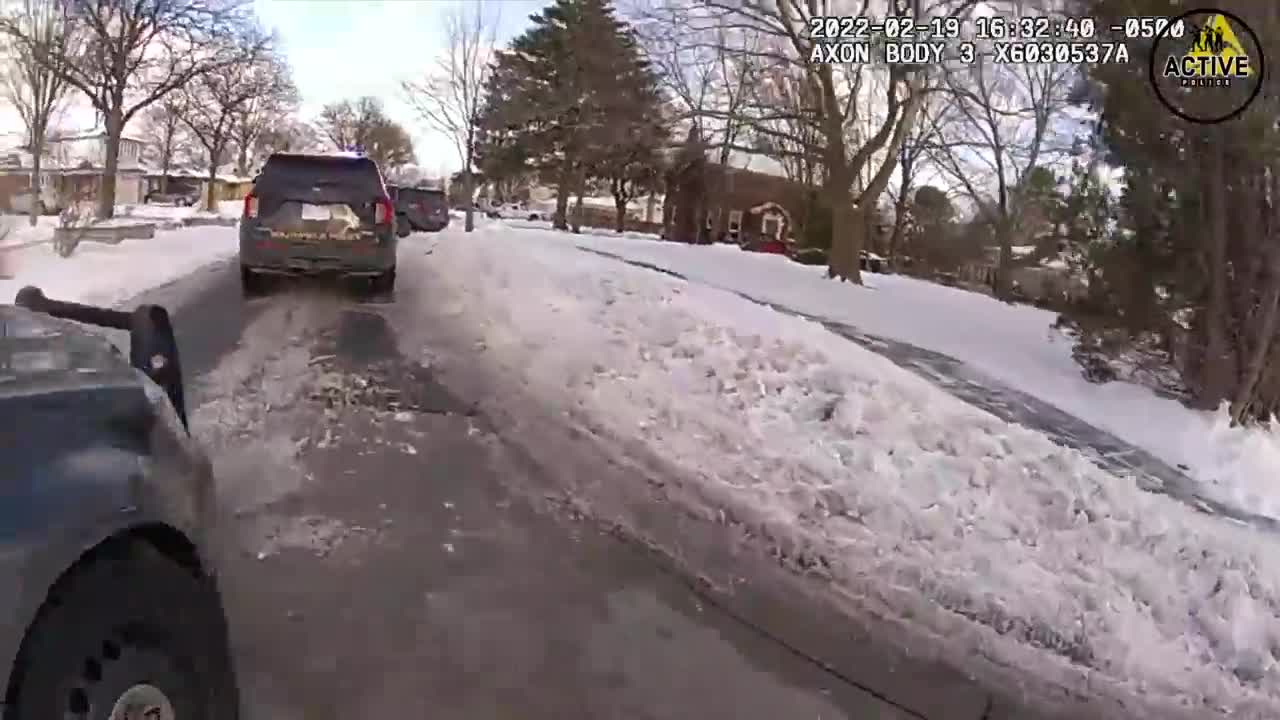
The winter setting made the pursuit particularly unforgiving. Snow covered yards, sidewalks and road edges throughout the neighborhood.
Footage from the incident shows the pursuit moving through an environment filled with houses, driveways, intersections and parked vehicles.
This matters because every police pursuit creates a difficult calculation.
Officers want to apprehend a fleeing suspect, but every additional minute on the road creates opportunities for collisions involving people who have nothing to do with the original crime.
Eventually, Southfield officers made the decision to use a Precision Immobilization Technique, better known as a PIT maneuver.
Police used the maneuver around Lahser Road and Winchester Street, according to contemporary reports.
It worked.
At least initially.
The fleeing vehicle was stopped.
For most pursuits, this would be the transition from chase to arrest.
In this case, it became the beginning of something even more chaotic.
THE FIRST PIT LOOKED LIKE THE END
Once the vehicle was immobilized, the officers' task changed immediately.
A moving pursuit had become a high-risk vehicle stop.
WXYZ's later report provided an important detail: police said tinted windows had made it difficult for the pursuing officer to determine how many people were inside the car.
That uncertainty mattered.
People began emerging from the vehicle, forcing the officer to divide his attention between multiple potential threats and escape routes.
Then Williams allegedly saw an opportunity.
The patrol vehicle was nearby.
And he moved toward it.
That single decision transformed the incident.
The police officer who moments earlier had been driving the cruiser was now trying to stop the suspect from taking it.
WXYZ reported that Williams got into the front seat and that the officer struggled with him over the steering wheel. The confrontation lasted roughly 30 seconds before Williams managed to drive away in the patrol vehicle.
Suddenly, the first PIT maneuver no longer mattered.
THE CHASE HAD STARTED AGAIN.
Only this time, the suspect was driving a police car.
THE POLICE CRUISER BECOMES THE GETAWAY CAR
This is the point at which the footage becomes particularly unusual.
Police dashcams normally give viewers the perspective of the pursuer.
Now one of those cameras was traveling with the fleeing vehicle.
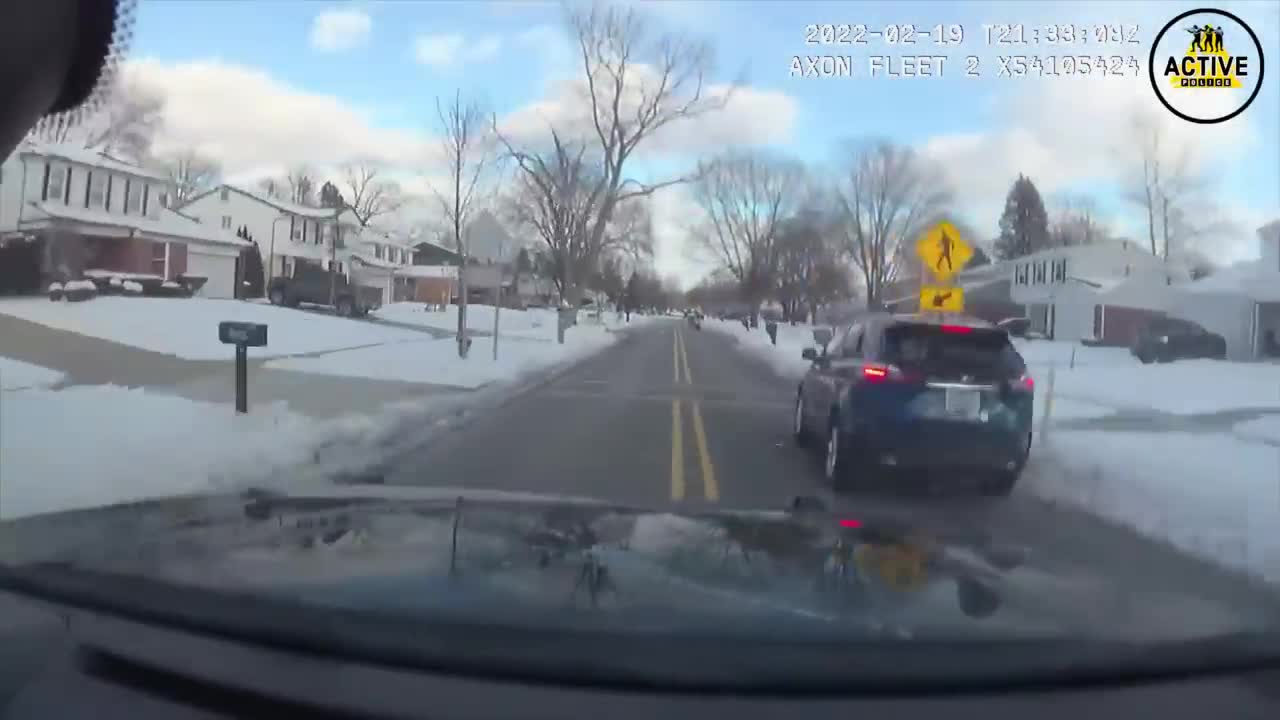
The patrol vehicle moves through snow-lined residential streets as other units attempt to close the distance.
From inside the cruiser, the situation almost looks normal for a moment.
There is a road ahead.
There are houses on either side.
There is the familiar dashboard at the bottom of the image.
Except the person controlling the vehicle isn't the officer.
WXYZ reported that Williams traveled roughly one mile in the stolen cruiser before police managed to stop him.
And there was another reason officers needed to bring the second pursuit to a conclusion quickly.
According to Police Chief Elvin Barren, Williams had access to a police rifle located in the front of the cruiser.
That detail dramatically changes the tactical situation.
Police were not simply trying to recover an expensive government vehicle.
They had to consider what equipment was inside it and what the fleeing driver might be able to access.
Every additional second mattered.
OFFICERS CLOSE THE DISTANCE
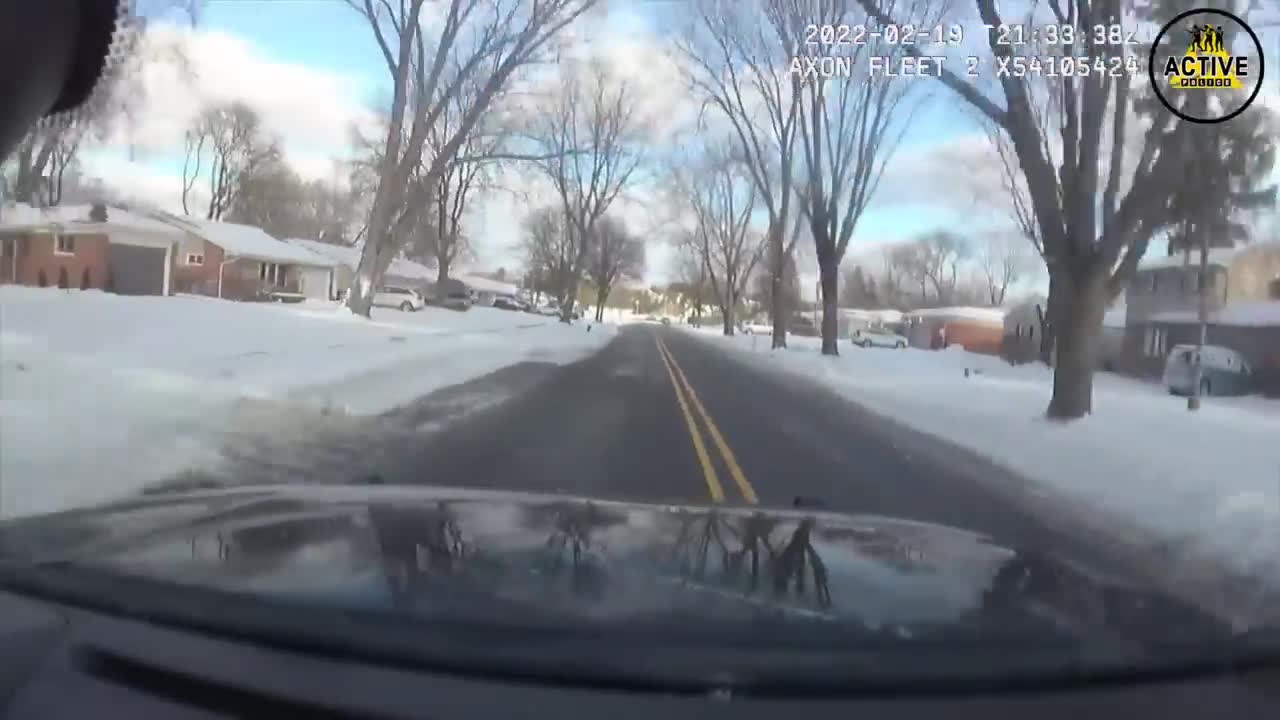
The footage shows police attempting to position themselves around the stolen cruiser.
The snow-covered suburban roads provided little room for error.
For the responding officers, the situation contained an unusual recognition problem as well.
The vehicle they needed to stop looked exactly like a legitimate police cruiser because it was one.
Chief Barren later said a senior officer responding to the incident recognized the department's vehicle with the suspect inside and performed another PIT maneuver.
Think about how unusual that sequence is.
A police officer performs a PIT maneuver on a fleeing vehicle.
The suspect escapes from that vehicle and steals the officer's cruiser.
Another police officer then has to perform a PIT maneuver on the stolen police cruiser.
The same tactical solution effectively had to end the pursuit twice.
And this time, officers could not afford another escape.
THE SECOND PIT
The second intervention finally brought the cruiser to a stop.
FOX 2 reported that another patrol vehicle stopped the stolen police car around Winchester Street near Evergreen Road. WXYZ's later footage report described the chase ending around Winchester Street and Larkmoor.
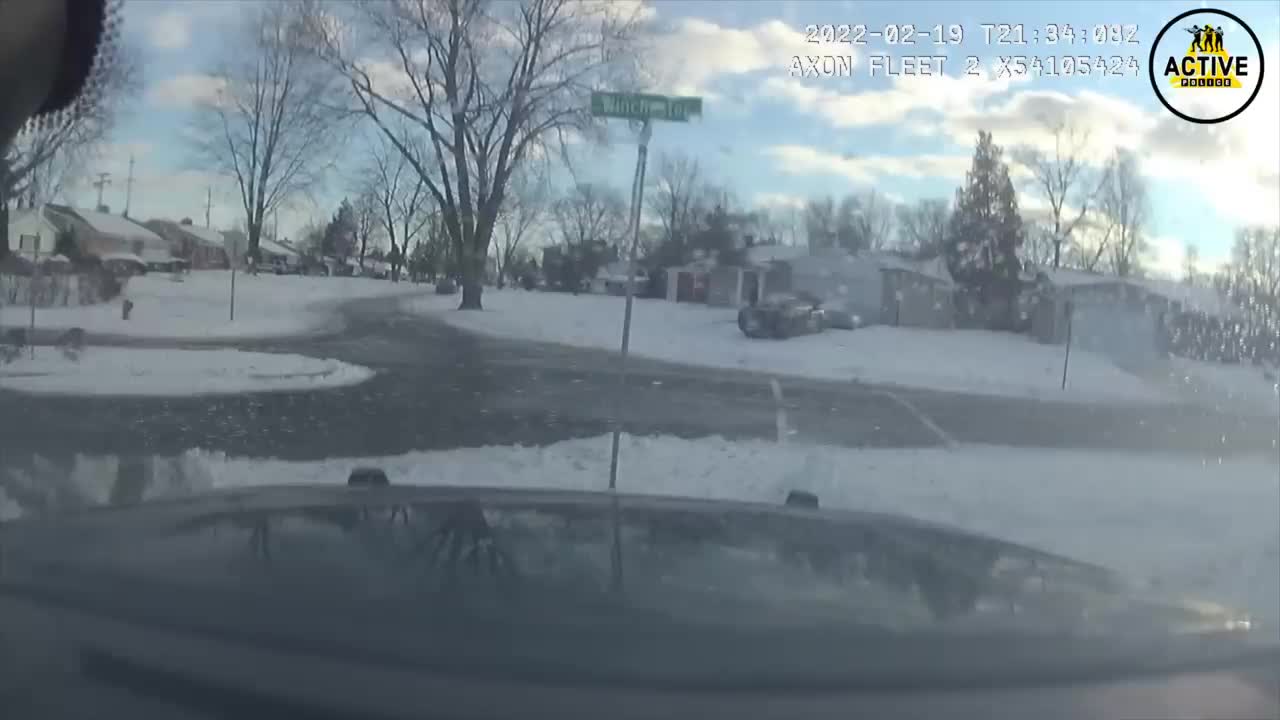
Once the vehicle was disabled, officers rapidly converged on it.
There was little hesitation.
From their perspective, the driver had already allegedly escaped once after officers thought they had stopped him.
He had then gained control of a police vehicle.
Police also knew that equipment, including a rifle, was accessible inside.
That helps explain the intensity of what happened next.
The pursuit was technically finished.
The confrontation was not.
GETTING THE SUSPECT OUT BECOMES ANOTHER STRUGGLE
Stopping the cruiser did not immediately produce a peaceful surrender.
Police footage shows officers surrounding the vehicle and attempting to gain control of the driver.
WXYZ reported that multiple officers were involved in restraining Williams and that a stun gun was used during the struggle to get him into handcuffs.
FOX 2's initial account likewise reported that the suspect physically resisted officers before ultimately being taken into custody.
It is one of the reasons the complete footage is more revealing than any isolated ten-second clip.
Viewed without context, the final arrest appears to be a sudden eruption of activity.
Viewed as part of the entire sequence, it comes after a suspect allegedly fled in one stolen vehicle, escaped after the first PIT, obtained a police cruiser, struggled with an officer for control of it and then drove away again.
The officers reaching the second crash were therefore confronting someone they had reason to believe might continue attempting to escape.
They moved quickly to prevent that possibility.
Finally, officers gained control.
Williams was handcuffed.
For the first time since the initial traffic stop, the chase was genuinely over.
MULTIPLE PEOPLE WERE TAKEN TO THE HOSPITAL
Despite the two pursuits, vehicle impacts and physical struggle, no fatality was reported.
FOX 2 initially reported that both the suspect and an officer were transported to a hospital for evaluation, with no serious injuries reported at the time.
Later WXYZ reporting said Williams and three officers were taken to a local hospital, treated and released. The station reported that Williams suffered injuries associated with the airbag deployment but was not seriously injured.
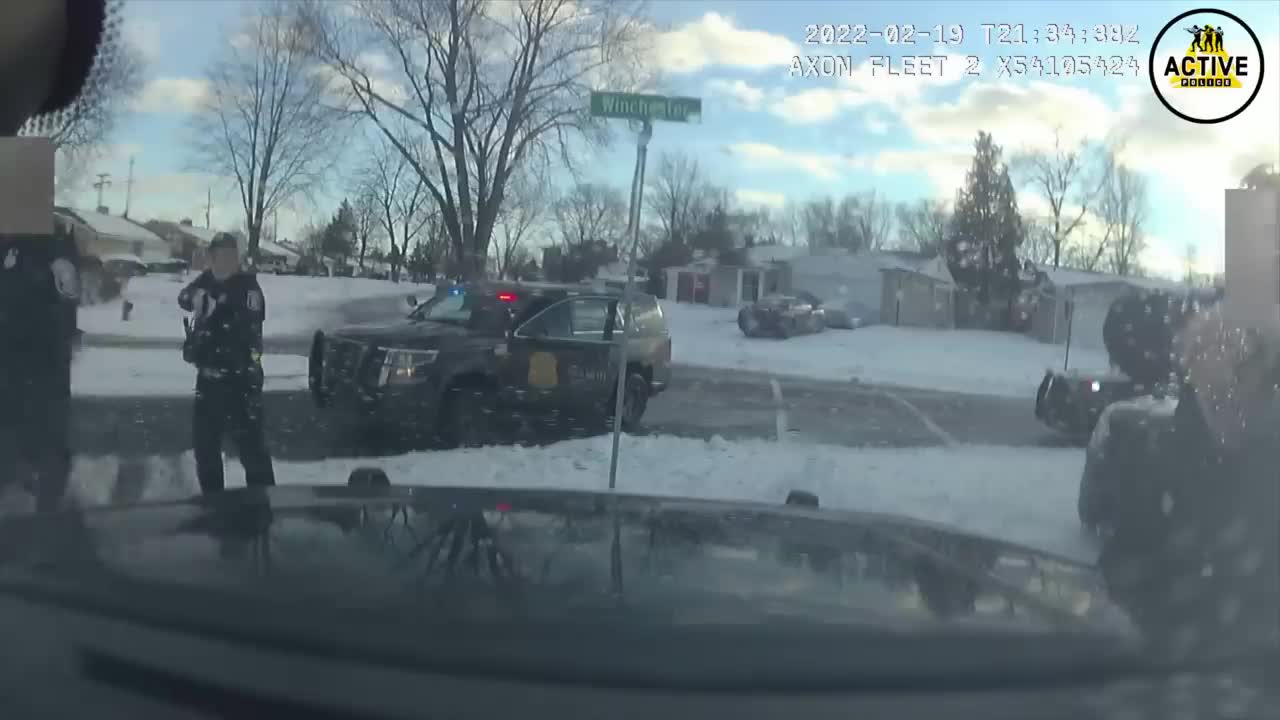
That outcome is significant when considering where the pursuit occurred.
These were not empty roads.
FOX 2 interviewed nearby resident Steven Tranchida, whose home surveillance system captured part of the final sequence. He described the cruiser spinning out near his front yard and expressed relief that his children had not been outside playing in the snow.
His reaction highlights a part of police pursuits that dashcam footage can sometimes obscure.
The camera follows the suspect.
Viewers naturally focus on the police vehicle directly ahead.
But every house represents people who had no role in the incident.
Every driveway can contain someone pulling into traffic.
Every intersection creates another opportunity for an unexpected collision.
The absence of a fatal outcome therefore should not disguise how dangerous the situation had become.
THE CHARGES AFTER THE PURSUIT
The arrest produced serious criminal allegations.
WXYZ reported that Williams was jailed facing nine felony counts and one misdemeanor, with a judge setting his bond at $1 million following arraignment.
WWJ Newsradio reported the defendant as Charles Williams and said he faced ten felony counts, including allegations involving receiving and concealing a stolen motor vehicle, assault with a dangerous weapon and fleeing police. The slight differences in contemporaneous reports are why it is important not to collapse every early news count into a single unsupported list.
What is undisputed across the principal reports is the central sequence:
Police encountered a stolen vehicle.
The driver fled.
Officers used a PIT maneuver.
The suspect got access to a Southfield patrol cruiser.
He drove away.
Another officer used a second PIT maneuver.
Police then arrested him after a struggle.
That sequence alone explains why the footage attracted considerable local attention.
WHY THIS FOOTAGE HOLDS ATTENTION SO WELL
From a storytelling perspective, this incident contains an unusually effective series of escalating reversals.
The audience first sees a conventional police pursuit.
That establishes the conflict immediately.
Then comes the first payoff: the PIT maneuver.
At this point viewers naturally expect the story to resolve.
Instead, the opposite happens.
The apparent ending becomes the beginning of a second chase.
That is the strongest retention point in the story.
A useful principle for writing about police footage is that suspense doesn't necessarily come from withholding facts. It often comes from establishing an expectation and then showing how reality violates it.
Here the expectation is simple:
The PIT worked, so the chase is finished.
Then the suspect steals the cruiser.
The viewer immediately has a new question:
How are police going to stop their own vehicle?
That question carries the audience naturally into the second half.
The second PIT provides another payoff, but even that doesn't immediately end the tension because officers still have to remove and restrain the suspect.
The incident therefore has several natural peaks rather than one.
Pursuit → first PIT → apparent ending → cruiser theft → second pursuit → second PIT → struggle → arrest.
That structure is why the footage can hold attention without artificial exaggeration.
The events themselves provide the escalation.
ONE CHASE THAT HAD TO BE ENDED TWICE
The February 19 pursuit is memorable because officers appeared to solve the problem once.
Then, within moments, they had another, potentially more dangerous problem.
A stolen vehicle had been stopped.
But the person police were trying to arrest was not.
The distinction proved crucial.
When the suspect allegedly reached the patrol cruiser, the officers' priorities changed immediately. They now had to recover police property, consider the equipment inside the cruiser and stop a driver who had already demonstrated a willingness to continue fleeing.
The snow-covered residential setting increased the potential consequences of every additional mile.
Eventually, a senior officer managed to perform the second successful PIT maneuver.
Williams was removed from the cruiser and taken into custody after a struggle. Williams and three officers were subsequently treated at a hospital and released, according to WXYZ.
The entire sequence serves as a reminder that the most unpredictable moment of a pursuit can come after the fleeing car has already stopped.
Officers have to transition almost instantly from driving tactics to controlling occupants, assessing threats and making an arrest.
Here, that transition briefly failed.
The result was something rarely captured so completely on police video:
a suspect escaping a stopped stolen vehicle by stealing the police car that had just stopped him.
And that meant the officers had to catch him all over again.
Sources
Want to see the moment the chase appears to be over, only for the suspect to jump into the police cruiser and start it all over again? Click the link below to watch the full sequence unfold.
Comments (0)
Loading comments...
May You Like
Officer Stops to Help but the Situation Quickly Escalates

Entitled Teen REFUSES To Exit Vehicle, Takes Off On Police Instead
Four Suspects Try Killing a Cop After Police Chase