
Driver Turns a Routine Traffic Stop Into a Much Bigger Confrontation
Driver Turns a Routine Traffic Stop Into a Much Bigger Confrontation
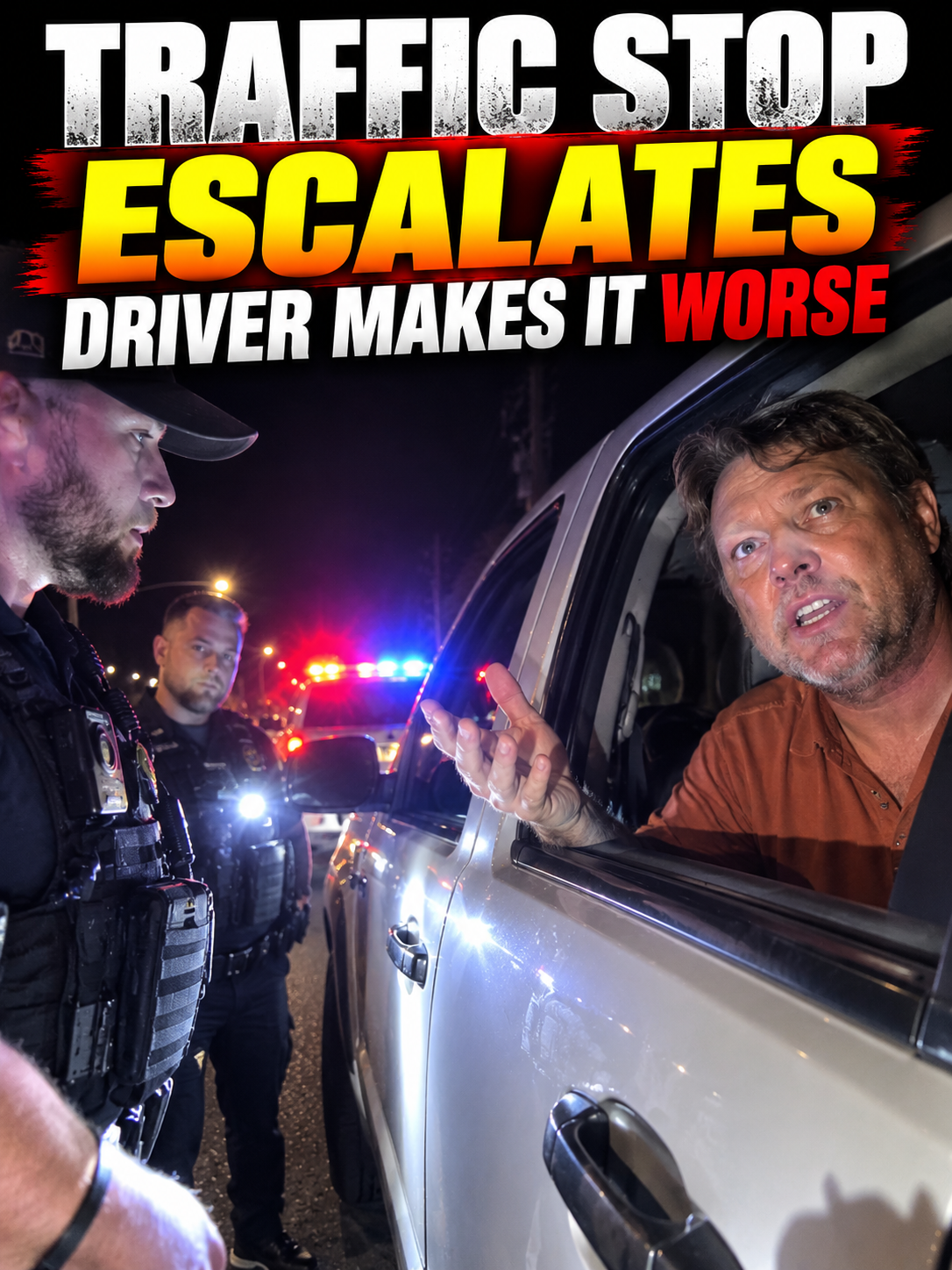
A Nighttime Stop Begins With Questions
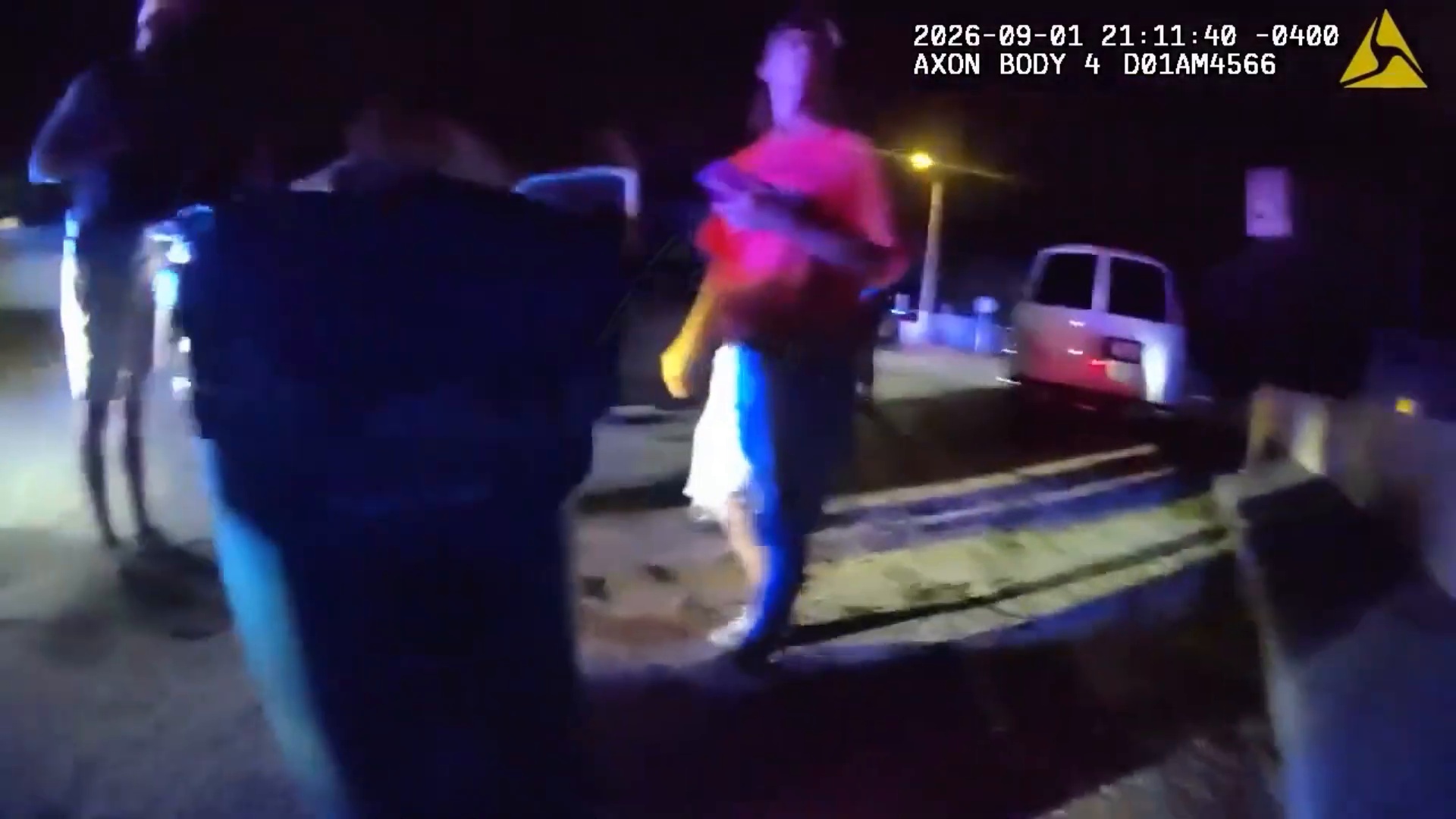
The encounter begins on a dark roadway with an officer approaching a stopped vehicle under the harsh glare of headlights and emergency lighting. The body-camera overlay places the footage on January 21, 2026. From the opening minutes, the stop has the familiar structure of a roadside investigation: an officer makes contact, speaks with the occupants and attempts to establish what happened before deciding how to proceed. What makes the footage compelling is not an immediate chase or crash. It is the way the atmosphere changes. The driver’s responses become increasingly confrontational, officers repeat directions, and what might otherwise have remained a short traffic encounter develops into a prolonged police interaction. The available public-source research did not produce a sufficiently reliable official report or local news account that could be matched to this footage by department, vehicle, people, location and sequence of events. For that reason, this article does not assign a name to the driver, identify a department, invent charges or claim a court outcome. The account below stays anchored to what can actually be observed in the supplied video.
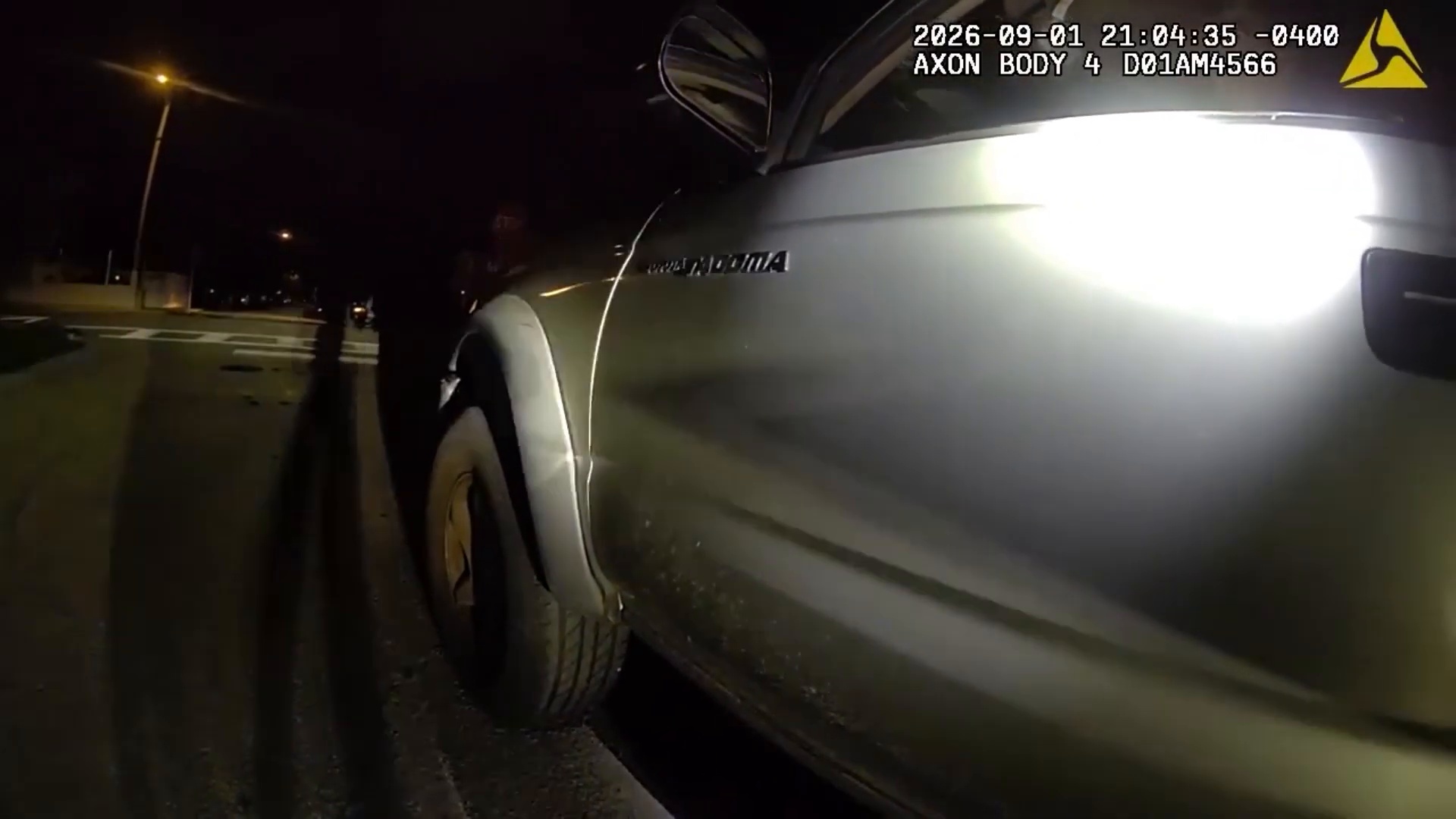
The Conversation Starts to Break Down
Traffic stops depend heavily on communication. Officers generally need enough information to identify the driver, understand the reason for the stop and determine whether the vehicle and occupants can safely leave. Drivers, meanwhile, may question why they were stopped or disagree with an officer’s interpretation of events. Disagreement alone does not automatically turn a traffic stop into a crime. A motorist can be frustrated, confused or verbally critical without that necessarily creating lawful grounds for arrest. The practical problem begins when communication deteriorates to the point that officers cannot complete tasks they are legally entitled to perform or when behavior creates a safety concern. That tension is visible here. The footage shows officers remaining close to the vehicle while the driver continues engaging them. Voices and gestures become part of the encounter, and additional attention is focused on controlling the scene rather than simply completing paperwork. Because body cameras capture only the wearer’s perspective, viewers should also be cautious about treating a single angle as a complete record. The camera can show words, movements and officer commands, but it may not capture everything happening on the opposite side of a vehicle or every conversation among officers.
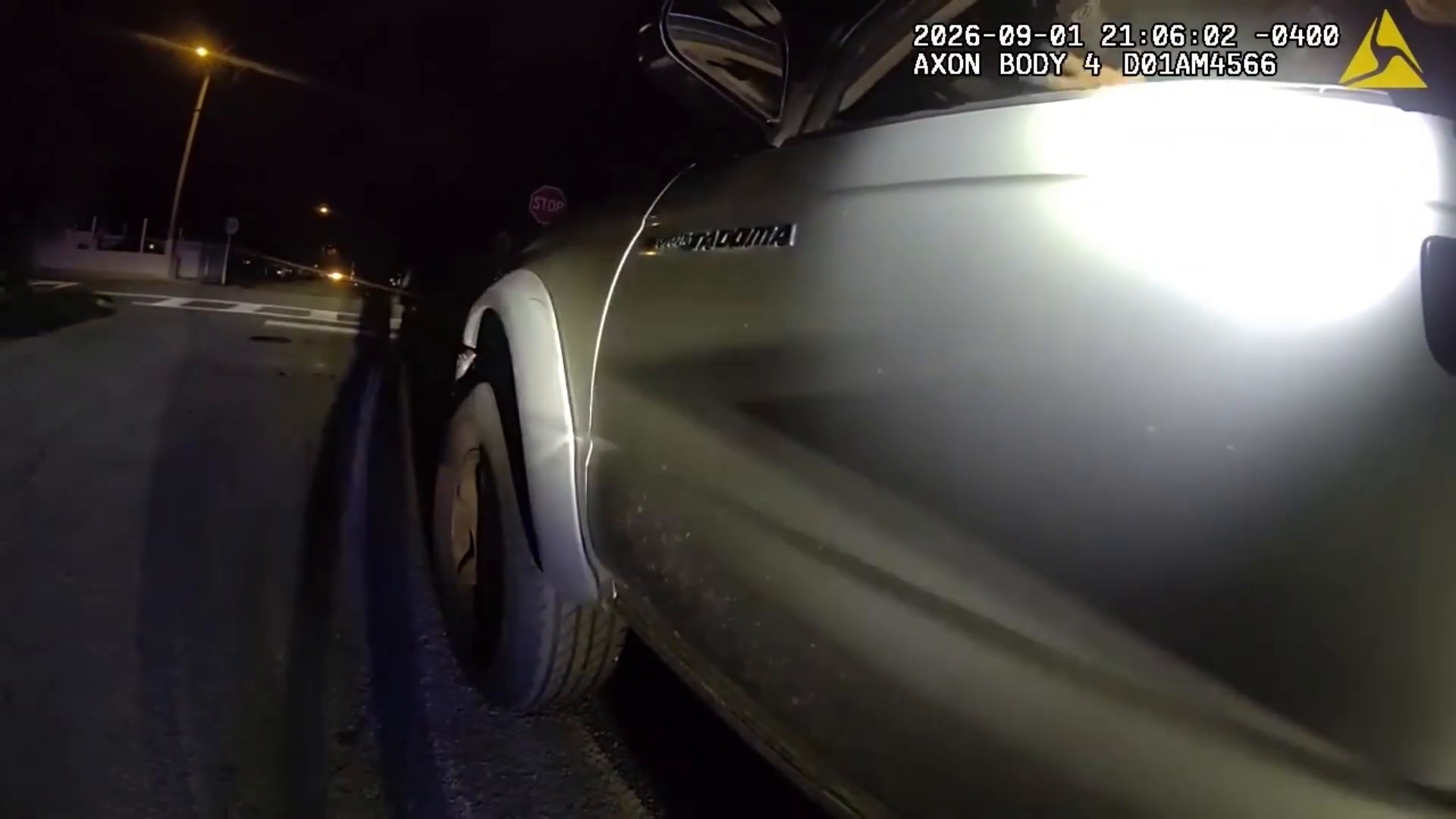
Officers Shift From Conversation to Control
As the encounter continues, the physical arrangement of the scene changes. The driver is no longer simply seated behind the wheel while one officer conducts a brief conversation. Multiple officers become involved, the driver is outside the vehicle, and the stop takes on the character of a detention. This is one of the most important transitions in any body-camera video. The legal significance of a police encounter can change depending on whether a person is voluntarily speaking with officers, temporarily detained, ordered out of a vehicle or placed under arrest. The footage itself can document that the level of control increased, but it does not by itself establish every legal justification behind each decision. Those questions normally depend on the initiating traffic violation, information available to officers through dispatch, statements made at the scene and any conduct that occurred outside the camera’s field of view. Rather than filling those gaps with assumptions, the safest conclusion is narrower: the officers perceived the situation as requiring progressively greater control, and the driver’s continued confrontation did not de-escalate the encounter.
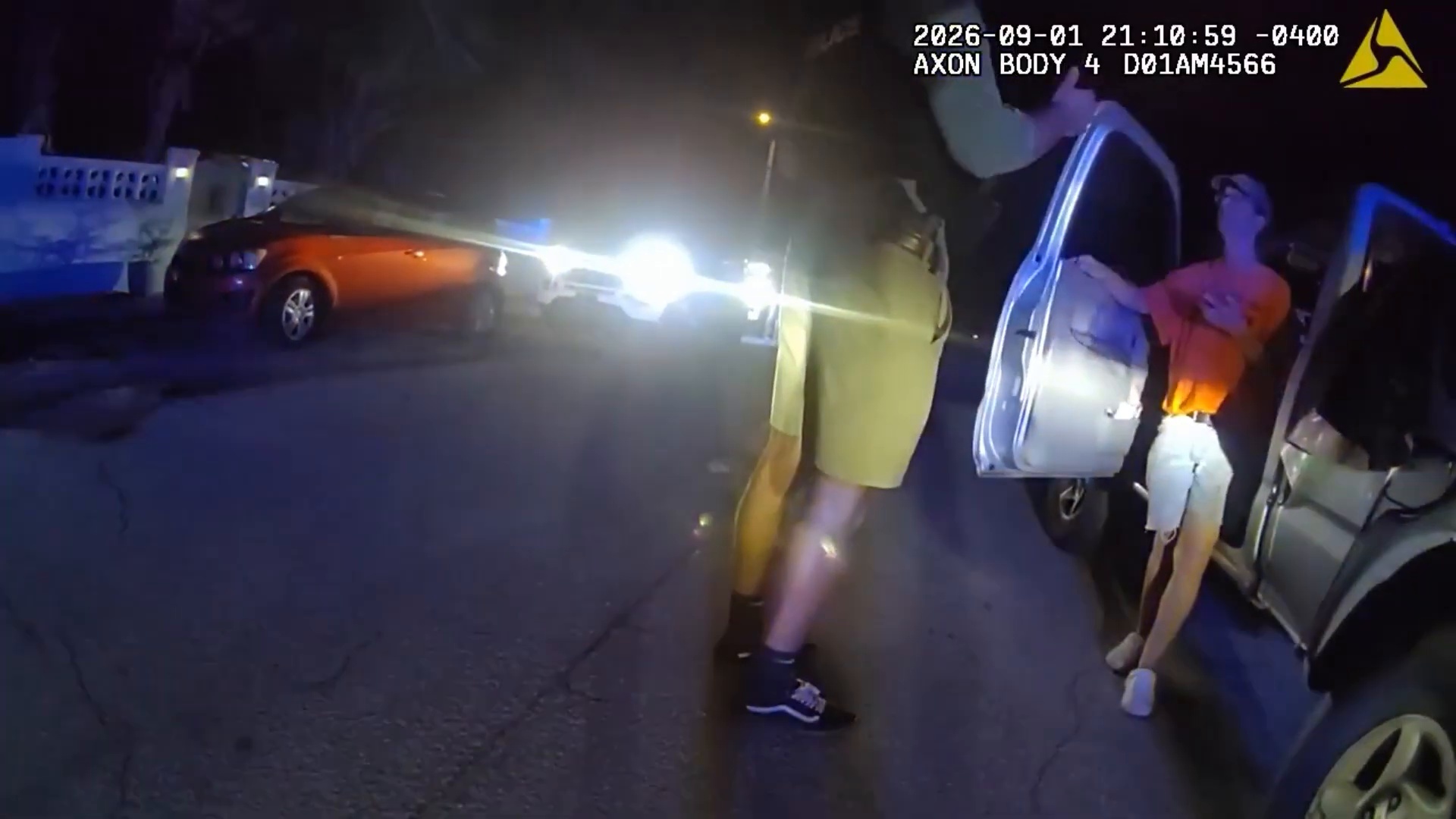
The Roadside Encounter Reaches Its Most Tense Point
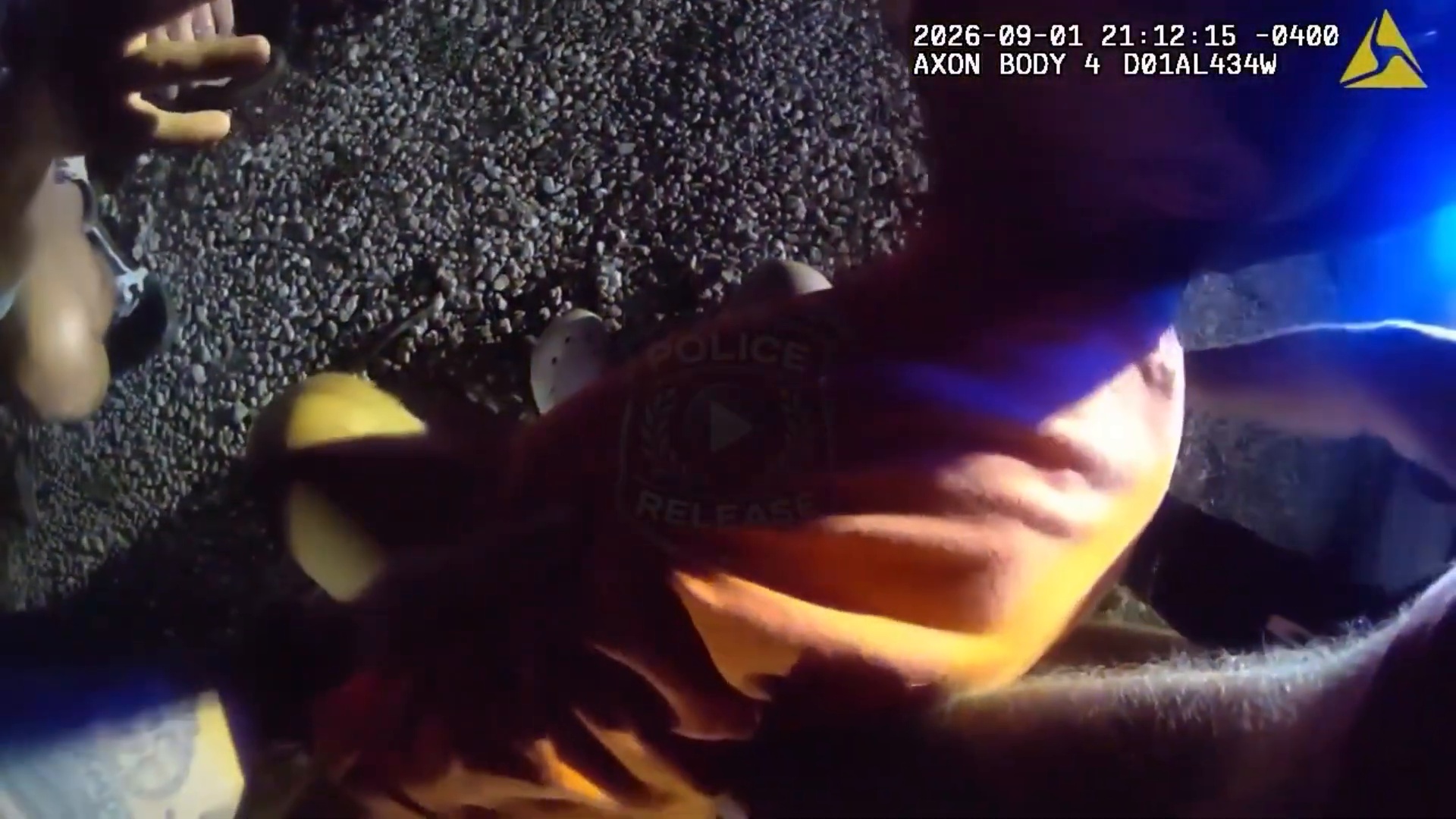
The later portion of the video contains the strongest confrontation. The driver is physically close to officers, commands are being given and the interaction has moved well beyond the calm exchange that typically ends with a citation or warning. Body-camera footage often feels more chaotic at close range because the lens moves with the officer’s body. Hands, clothing and faces can suddenly fill the frame, while emergency lights create rapid changes in exposure. That visual intensity can make it difficult to determine precisely who moved first or what occurred just outside the camera. For that reason, individual frames should not be used to invent actions that the continuous footage does not support. The value of the video is in the sequence: repeated communication, growing resistance to the officers’ direction, increased police presence and eventual physical control of the driver. The footage also demonstrates why officers frequently focus on hands during tense roadside encounters. A traffic stop occurs beside a vehicle containing spaces that officers cannot fully see. Commands concerning hand placement and movement are commonly intended to reduce uncertainty while officers decide how to proceed.
What Can and Cannot Be Concluded From the Footage
The video clearly supports several limited observations. It is a nighttime traffic stop. The encounter lasts several minutes. The driver repeatedly challenges or argues with officers. More than one officer becomes involved. The driver eventually ends up outside the vehicle and under much closer physical control. What the available evidence does not safely establish is equally important. Without a matched official report, this article cannot responsibly provide the driver’s name, exact location, department, initial traffic violation, arrest charges, bond amount or later court disposition. This distinction is especially important for police-video content. Titles posted online are often written for attention and may omit context. A responsible article should not convert a descriptive upload title into supposed factual details unless independent evidence confirms them. The body-camera timestamp is useful, but a date alone is not enough to identify an incident. Police agencies across the United States conduct thousands of traffic stops every day. Exact verification requires a combination of clues such as agency markings, location, vehicle description, names spoken on camera, case numbers and a matching sequence of events.
A Routine Stop Becomes Something Much Larger
The central lesson of this footage is how quickly the character of a traffic stop can change when communication fails. At the beginning, an officer is dealing with a vehicle on a dark roadway. By the later stages, several officers are managing a tense confrontation at close range. For viewers, it can be tempting to judge the entire encounter from the most dramatic thirty seconds. Watching the sequence from the beginning provides a different perspective. Escalation is usually cumulative. Tone, repeated instructions, movement, officer positioning and the driver’s responses build on one another until the scene looks very different from where it started. That does not mean every police action should automatically be treated as justified, nor does it mean every argumentative driver has committed a crime. Those are legal conclusions that require facts beyond a dramatic clip. What the video does show is a stop becoming progressively harder to resolve through ordinary conversation. Until a matching police report or reliable local report can be verified, the most accurate way to describe this incident is to stay with the visible sequence rather than attach unsupported identities or allegations to the people involved. The footage ultimately leaves viewers with a clear progression: initial roadside contact, a deteriorating conversation, greater officer involvement, physical control and the final stages of the investigation. The tension comes not from a manufactured narrative but from watching that progression unfold in real time.
Watch the complete footage to see exactly how the roadside conversation develops into a far more serious confrontation.
Comments (0)
Loading comments...
May You Like
Police Pull Over Paralyzed Driver With Blind Passenger
Entitled Driver Skips the Line and Gets Instant Karma3

Woman Refuses Repeated Orders to Exit Her Car Before Officers Move In














