Driver Pushes Back at Every Turn as Officers Continue Their Investigation
Driver Pushes Back at Every Turn as Officers Continue Their Investigation
A roadside investigation can change tone in seconds. In this footage, what begins as officers trying to sort out a nighttime situation becomes a prolonged argument over instructions, authority, and what happens next. The driver repeatedly challenges what officers are telling him, while the officers keep returning to the immediate task: control the scene, determine what happened, and keep the encounter from becoming more chaotic.
The video is compelling precisely because the tension is mostly verbal before it becomes physical. There is no need to invent a dramatic backstory. The footage itself shows a driver who is visibly frustrated and argumentative, officers attempting to manage the encounter, multiple people near a stopped vehicle, and a later moment in which the driver is on the ground as officers restrain him. That progression turns an ordinary-looking roadside scene into a useful example of how quickly communication can break down when neither side believes the other is listening.
What can be verified from the supplied footage is narrower than the commentary surrounding it. The body-worn-camera overlay visible in the video shows the date October 6, 2025, with the encounter unfolding late at night. The edited upload also contains commentary and subtitles added by the publishing channel. I could not independently match the supplied clip with sufficient confidence to a department release, arrest affidavit, or local news report that establishes the driver's identity, exact location, charges, or final court outcome. Those details therefore should not be treated as established facts in this article.
A Nighttime Stop Becomes an Argument
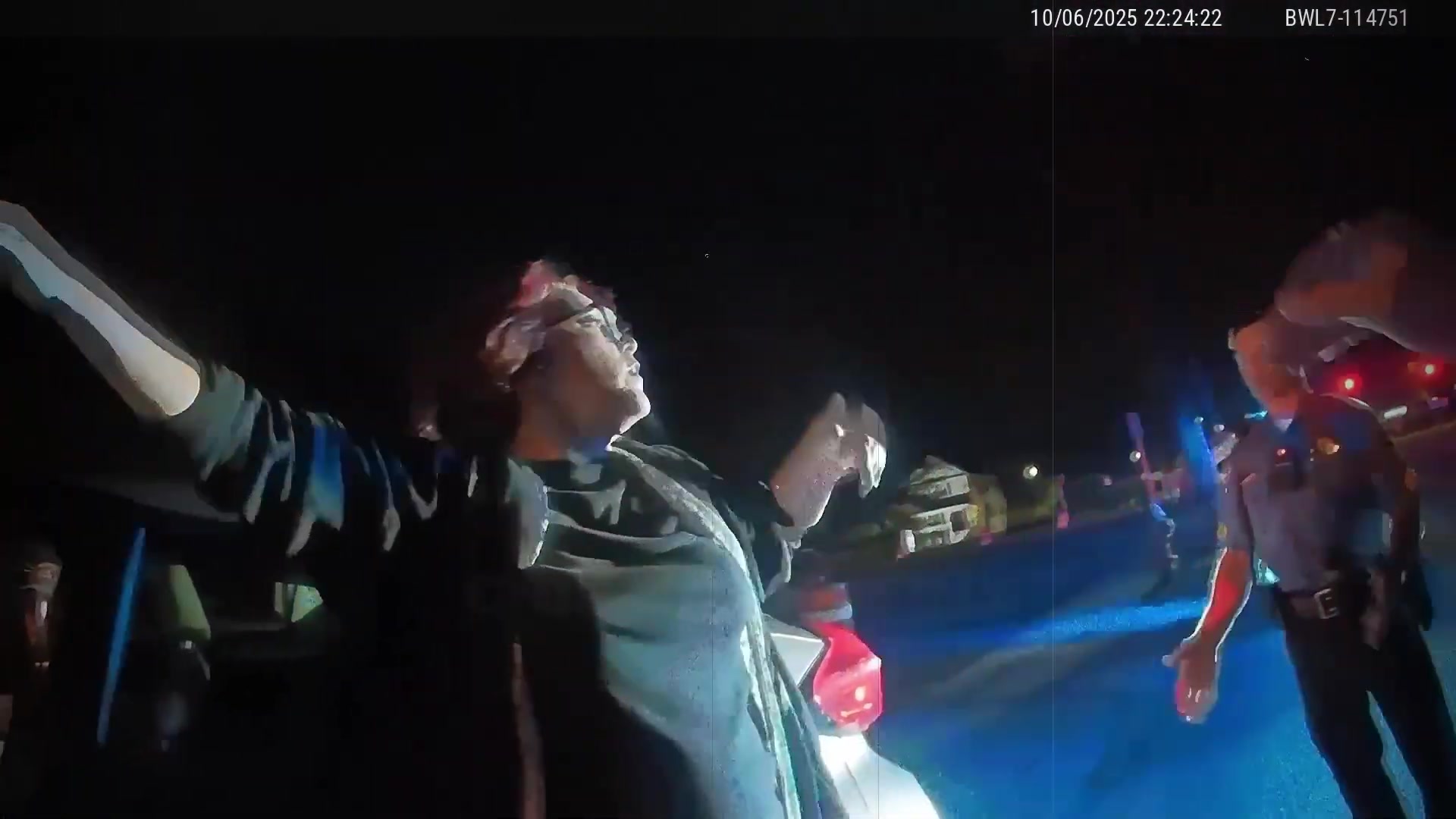
The scene is already active when the viewer is brought into it. A vehicle is stopped on a dark roadway, emergency lights illuminate the area, and more than one officer is present. The driver is outside the vehicle for significant portions of the encounter. Rather than remaining a simple exchange of information, the conversation repeatedly circles back to what the driver believes officers can or cannot require him to do.
That distinction matters. During many traffic-related investigations, officers are not merely deciding whether to issue a citation. They may be trying to identify the driver, determine whether an offense occurred, check for impairment, clarify conflicting statements, or make sure everyone on the roadside remains in a safe position. The legal authority available to police depends heavily on the circumstances, and the footage alone does not provide enough verified background to say exactly what investigative basis existed here.
What the video does show is a familiar escalation pattern. The driver wants answers and pushes back. Officers give instructions and become increasingly focused on compliance. Each new challenge lengthens the interaction. The longer the exchange continues, the more attention shifts away from whatever originally brought police to the vehicle and toward the driver's conduct during the investigation itself.
That shift is important because roadside encounters are unusually risky environments. Darkness, passing traffic, multiple occupants, limited visibility, and uncertainty about what may be inside a vehicle all influence how officers position people and how quickly they expect instructions to be followed. A command that sounds abrupt when heard in isolation may be connected to scene safety rather than the ultimate question of guilt or innocence.
At the same time, a person's disagreement with an officer is not automatically a crime. People can ask questions, express frustration, and challenge police decisions. The key issue is that verbal disagreement and physical noncompliance are not the same thing. The line between them can become critical when an officer gives a lawful instruction connected to a detention or investigation.
The Conversation Keeps Resetting
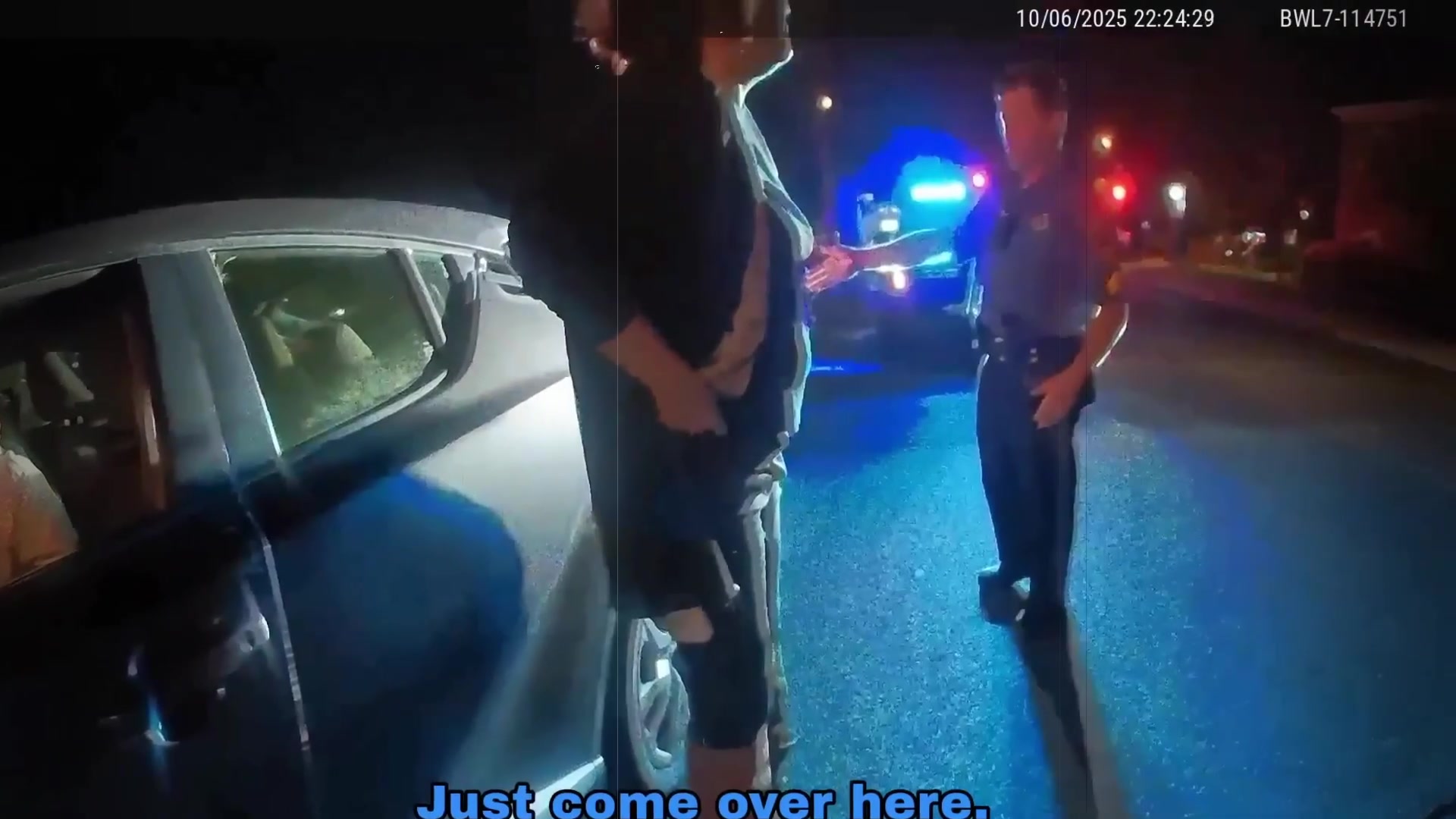
One of the most noticeable features of the footage is repetition. Instead of moving steadily from initial contact to a clear resolution, the encounter repeatedly resets. The driver speaks, officers respond, and the same dispute returns in slightly different form. That makes the video feel longer and more tense than a routine stop because no one appears to be moving toward a shared understanding.
From an officer-safety perspective, repetition can be interpreted as resistance to direction even when the person speaking believes he is simply asserting his position. From the driver's perspective, repeated questions may reflect a belief that officers have not explained themselves adequately. Those two interpretations can exist at the same time. The problem is that the roadside is a poor place to resolve a complicated legal argument in real time.
Courts have long recognized that traffic stops and investigative detentions can involve temporary restrictions on a person's freedom of movement. But the exact scope of police authority depends on why the person was stopped, what officers reasonably observed, how long the detention lasts, and what additional facts develop. A short edited video rarely contains every fact that would be necessary for a complete legal judgment.
That is why the safest way to analyze this footage is to separate what can be seen from what cannot. We can see the driver's gestures, hear portions of the argument, observe officers surrounding the scene, and watch the physical intervention later in the encounter. We cannot verify from the clip alone the complete dispatch history, the officer reports, whether field sobriety testing was contemplated, what database checks were performed, or what prosecutors ultimately alleged.
This distinction also protects against one of the biggest problems with viral police footage: captions often become substitutes for evidence. A dramatic title can imply intoxication, criminal intent, or a specific charge even when the underlying records have not been produced. Here, the better approach is to let the observable sequence carry the story.
Why Roadside Instructions Matter
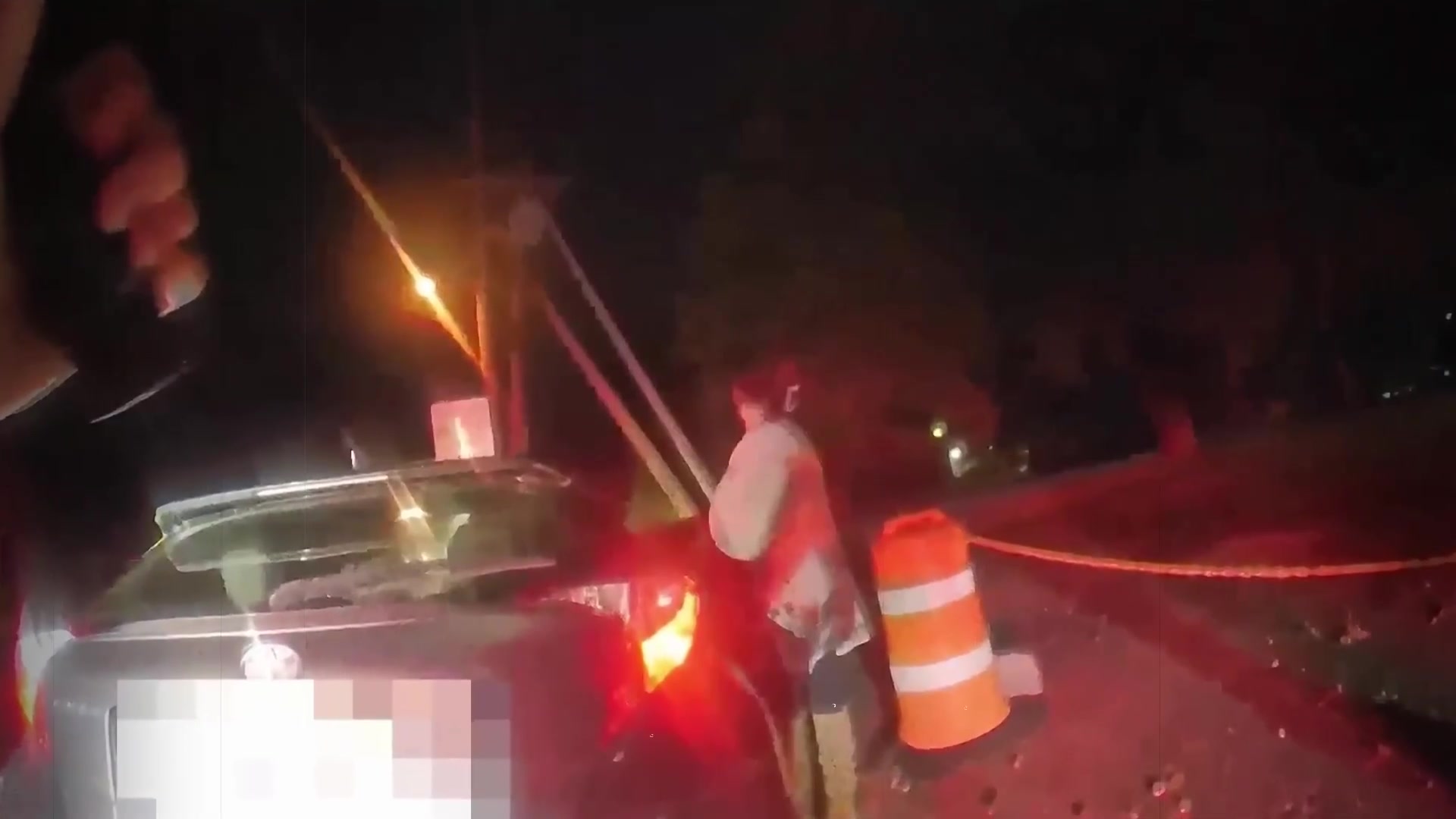
The encounter becomes more understandable when viewed through the practical realities of roadside policing. Officers often try to reduce uncertainty by controlling where people stand, whether they remain in or outside a vehicle, and when they may reach into pockets or the passenger compartment. These instructions can feel intrusive, especially to a person who does not believe he has done anything wrong, but officers are trained to treat uncontrolled movement around a vehicle as a potential safety issue.
The driver in this footage repeatedly uses his hands while speaking and appears intent on continuing the argument. That does not by itself establish a threat. It does, however, create a scene in which officers must continuously divide attention between listening, watching the driver's movements, monitoring the vehicle, and coordinating with one another.
The presence of several officers can also change how viewers interpret the encounter. To someone watching later, multiple officers surrounding one driver may look overwhelming. To the officers on scene, additional personnel can reduce risk by allowing one person to communicate while others observe. Whether that staffing level was necessary cannot be determined from the clip alone, but the visual effect is significant: the driver is clearly outnumbered, yet he continues to challenge the officers verbally.
The most productive behavior during a lawful detention is generally to comply with immediate safety instructions and preserve legal objections for later. That does not mean surrendering one's rights. A person can state that he does not consent to a search, ask whether he is free to leave, request clarification, and document the encounter where lawful. But attempting to litigate every command in the middle of a tense roadside investigation can increase the chance that the situation deteriorates.
Officers have responsibilities as well. Clear instructions, calm explanations when circumstances allow, and avoiding unnecessary provocation can reduce confusion. The strongest police communication is usually specific: what the officer wants the person to do, where the person should stand, and what will happen if the instruction is ignored. Ambiguous or rapidly changing commands can make compliance harder, particularly when several officers speak at once.
The Moment the Encounter Changes
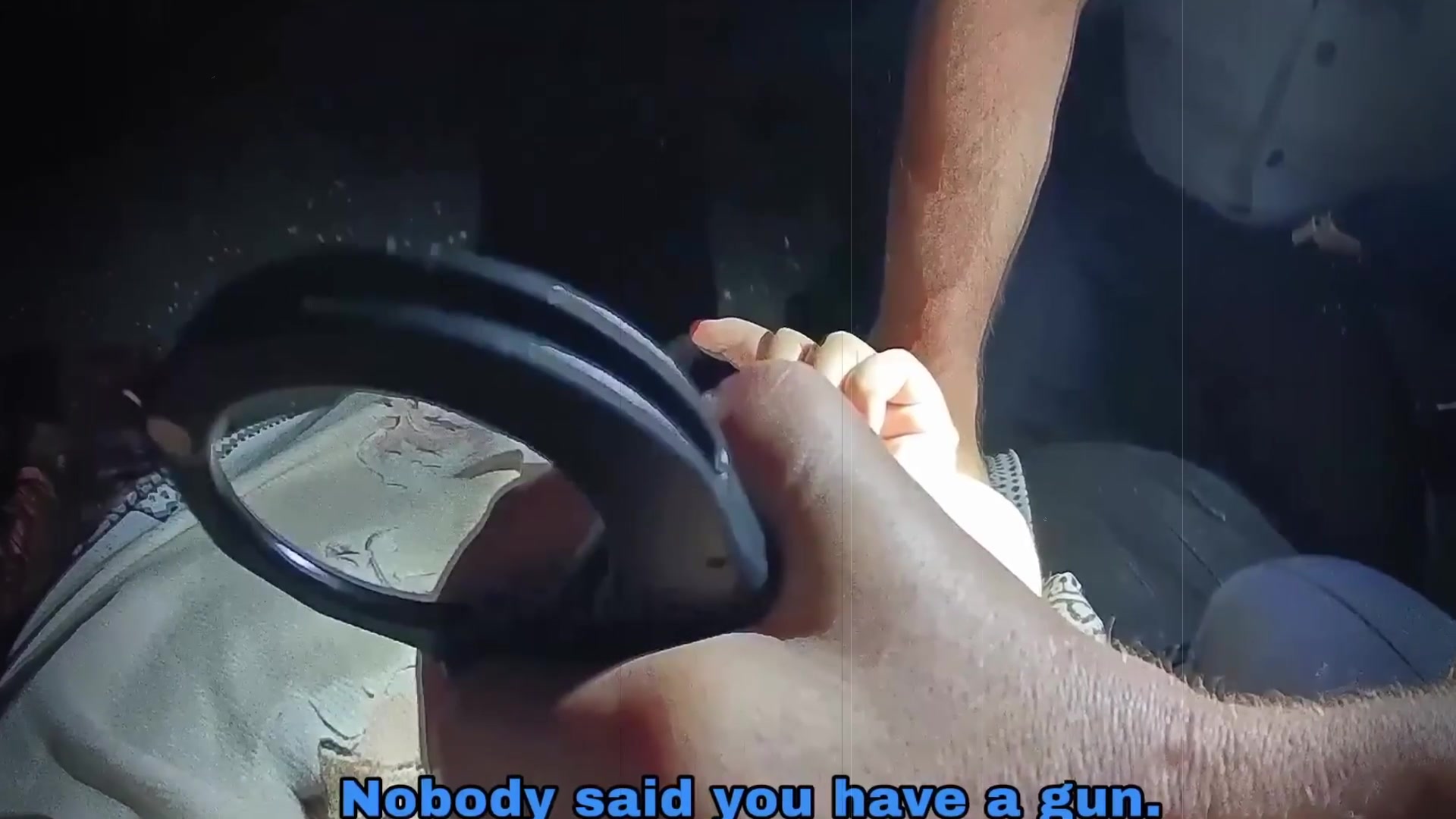
The most consequential portion of the video comes when the dispute stops being purely verbal. The driver is eventually brought to the ground and restrained. The camera angle becomes tighter and more chaotic, which is common in body-worn-camera footage during physical contact. The viewer no longer has a clean, wide view of every officer's hands or every movement by the driver.
That limitation is important. Body cameras are valuable evidence, but they are not perfect representations of what every person at a scene saw. A camera mounted on an officer's chest may be blocked by arms, clothing, another officer, or the person being restrained. Rapid movement also makes individual actions difficult to interpret frame by frame.
In the supplied footage, the physical restraint appears to follow a prolonged period of verbal conflict. Once the driver is on the ground, the interaction becomes focused on gaining control and securing his hands. The edited subtitles suggest continued argument during this stage, but viewers should remember that subtitles are an editorial layer and not an official transcript.
This is the point where online discussions often jump immediately to conclusions: either that the driver "caused" everything that happened or that officers "had no reason" to act. Neither conclusion can be responsibly reached without the underlying reports and full legal context. Use of force is evaluated under the totality of circumstances, including what officers reasonably perceived at the time. The existence of force alone does not prove it was justified or unjustified.
What the footage can support is a narrower observation: the encounter became harder to control as communication failed, and the transition from argument to restraint happened after officers and the driver had spent considerable time in conflict over the investigation.
What the Video Does and Does Not Prove
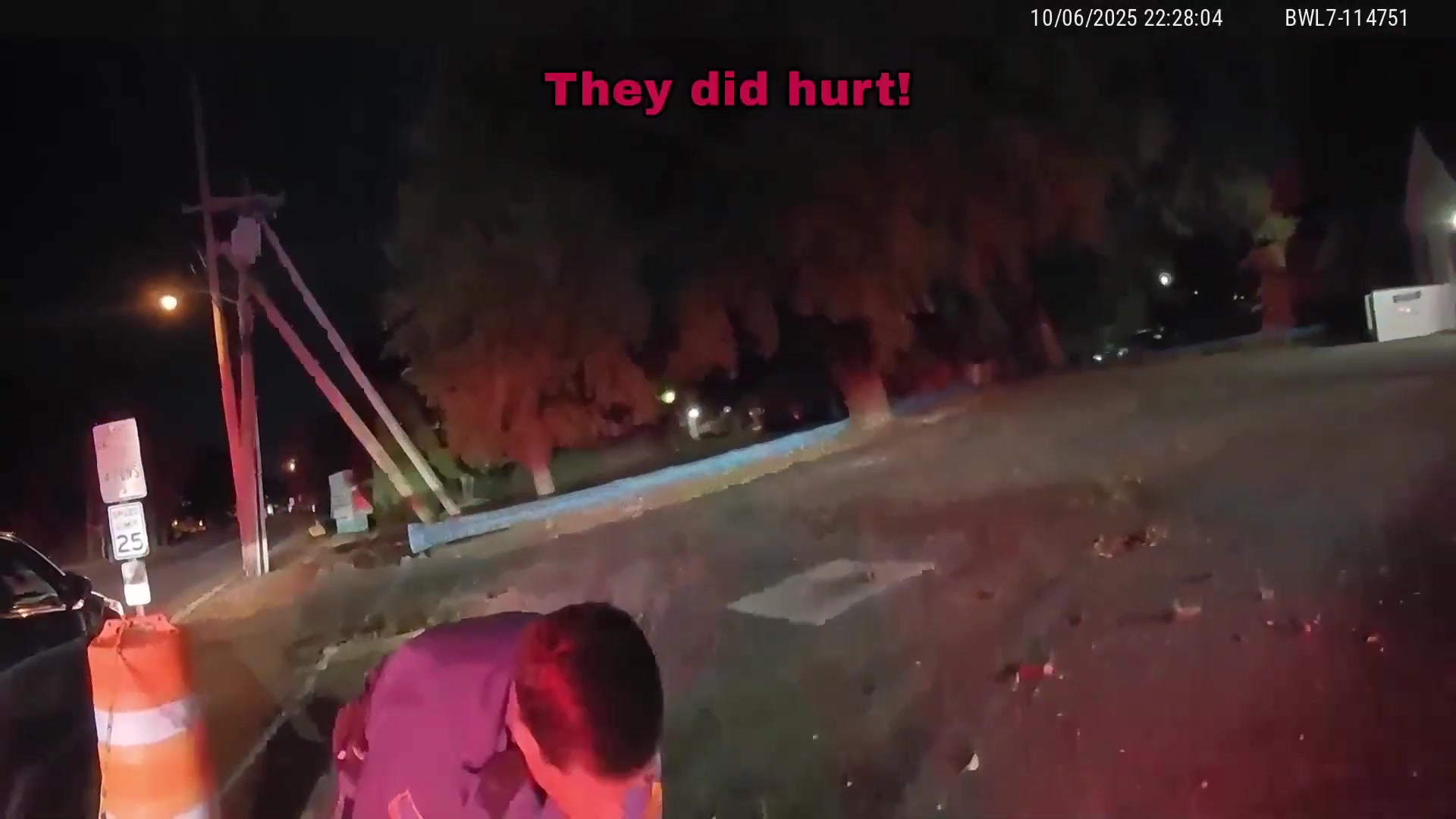
Police videos are often consumed as if they are complete case files. They are not. A five-minute clip can show behavior vividly while leaving major legal facts unresolved. That is especially true when the footage has been edited by a commentary channel.
The visible timestamp gives us a useful anchor: October 6, 2025, late at night. The footage also clearly shows a roadside police interaction involving a driver and multiple officers. Beyond that, identification becomes uncertain. No department name visible in the sampled frames was clear enough to establish jurisdiction with confidence, and broad searches did not produce a reliable official record that could be matched to the clip using the full combination of date, location, vehicle, dialogue, and outcome.
Because of that, this article does not assign the driver a name, does not claim a specific charge, and does not state that he was intoxicated or impaired. It also does not claim that the officers belonged to a particular agency. Those details may exist in records elsewhere, but they should not be filled in from guesswork.
This restraint is more than a technicality. Misidentifying a police encounter can attach accusations to the wrong person or department. Two bodycam videos can look remarkably similar: nighttime lighting, reflective uniforms, dark sedans, red and blue emergency lights, and roadside arguments are common visual features. Verification requires more than a resemblance.
The same caution applies to the word "arrest." The footage shows officers physically restraining the driver, but the precise legal status and ultimate disposition are not independently verified here. Detention, handcuffing, arrest, citation, release, booking, and prosecution are separate stages. Without records, collapsing them into one definitive outcome would go beyond the evidence available.
Why These Encounters Escalate So Quickly
The deeper lesson in the footage is not that asking questions is wrong. It is that timing, tone, and physical behavior matter enormously during police encounters. A person can believe an officer is mistaken and still choose to comply with an immediate instruction. An officer can believe a person is being difficult and still communicate in a way designed to lower the temperature.
Escalation often happens through accumulation rather than one spectacular act. A raised voice leads to a sharper command. A sharper command produces another challenge. Someone steps closer. Another officer moves in. Hands begin moving. Instructions become shorter. The person feels surrounded. Officers feel that control is slipping. By the time physical contact occurs, both sides may be reacting to several minutes of tension rather than to one isolated moment.
The footage illustrates that accumulation well. Early in the encounter, the driver has room to speak and gesture. As the dispute continues, the officers' attention becomes increasingly concentrated on his compliance. Later, physical control becomes the dominant issue. The original investigation almost disappears from the viewer's perspective.
For viewers, that progression is a reminder to watch police footage chronologically. Viral clips are often cut to begin at the moment of force because that is the most dramatic image. But the minutes before physical contact can be essential for understanding why officers made certain decisions and why the person being detained reacted as he did. Context does not automatically justify anyone's conduct, but it is necessary for fair analysis.
A Useful Reminder About Rights and Compliance
People do not lose constitutional rights simply because they are stopped by police. They may have the right to remain silent in many circumstances, to refuse consent to certain searches, and to challenge unlawful police conduct through courts or complaint procedures. The details vary by jurisdiction and circumstance, and nothing in this article should be treated as individualized legal advice.
At the same time, a roadside confrontation is rarely the safest or most effective venue for testing those rights through physical resistance. If an officer gives an instruction that a person believes is unlawful, the legal system generally provides mechanisms to challenge the stop, suppress unlawfully obtained evidence, contest charges, or pursue a civil claim where appropriate. Those remedies are imperfect and can take time, but they are different from physically resisting an officer at the scene.
For officers, the footage is also a reminder that procedural legitimacy matters. People are more likely to cooperate when they understand what is happening and believe they are being treated consistently. A brief explanation can sometimes prevent minutes of argument. When safety allows, identifying the purpose of an instruction and giving one clear command at a time can reduce the chance of confusion.
None of those principles provide a complete verdict on this encounter. They simply explain why a seemingly ordinary investigation can become a confrontation even without a chase, crash, or weapon. The central conflict here is communication and control.
The Lasting Question After the Cameras Stop
By the end of the supplied footage, the viewer has watched a driver move from openly challenging officers to being physically restrained. What remains unanswered is what happened in the official case afterward. Without a verified arrest report, department release, or court record tied conclusively to this footage, the responsible conclusion is limited to what the camera shows.
That uncertainty does not make the video meaningless. In some ways, it makes it more instructive. It forces viewers to distinguish between evidence and assumption. We know the encounter became contentious. We know officers repeatedly interacted with the driver at close range. We know the dispute eventually became physical. We do not know, from verified records available for this article, the full reason for the investigation or the final legal outcome.
That is also why careful sourcing matters when police footage is republished online. A dramatic caption may attract attention, but accuracy is what gives the story lasting value. The best analysis does not need to invent a charge or label a person before the records support it. The tension visible in the footage is already enough to tell a compelling story.
For anyone watching, the most revealing question may be simple: at what point did this encounter stop being about the original investigation and become primarily about the struggle for control? The answer appears gradually, one argument and one instruction at a time.
Watch the complete footage before deciding who handled each stage well or poorly. The full sequence provides the context that short clips and isolated screenshots cannot.
Comments (0)
Loading comments...
May You Like
Police Pull Over Paralyzed Driver With Blind Passenger
Entitled Driver Skips the Line and Gets Instant Karma3
🚨🚗 One Mistake Changes Everything During a DUI Arrest | Bodycam Footage US