
Driver Crashes Into Police Cruiser Because He Says He “Hates Cops”
Driver Deliberately Rams Police Cruiser During Traffic Stop
A Routine Traffic Stop Is Interrupted by a Violent Impact
At about 9 a.m. on September 24, 2025, a Fairview Heights, Illinois police officer was conducting an ordinary traffic stop when the situation changed without warning. The officer had pulled over another vehicle for an expired license plate sticker and was outside his patrol cruiser when a Chevrolet Camaro approached from behind and slammed into the police vehicle.
The supplied body-camera footage matches the publicly reported Fairview Heights incident. Its AXON overlay shows September 24, 2025 at approximately 9:00 a.m., exactly matching the date and time described in reports based on the Fairview Heights Police Department's release. The crash forced the patrol vehicle forward into the car that had originally been stopped.
That detail makes the event especially dangerous. The officer was outside his cruiser when the impact occurred, while two people were reportedly inside the vehicle involved in the original stop. A collision powerful enough to push one vehicle into another could easily have injured the officer, the stopped motorists or the approaching driver. Authorities later said none of them were injured.
The man driving the Camaro was identified by police as 28-year-old Keajion L. Jennings. What initially might have appeared to be an impaired-driving crash became considerably more unusual once Jennings stepped out and began talking to the officer.
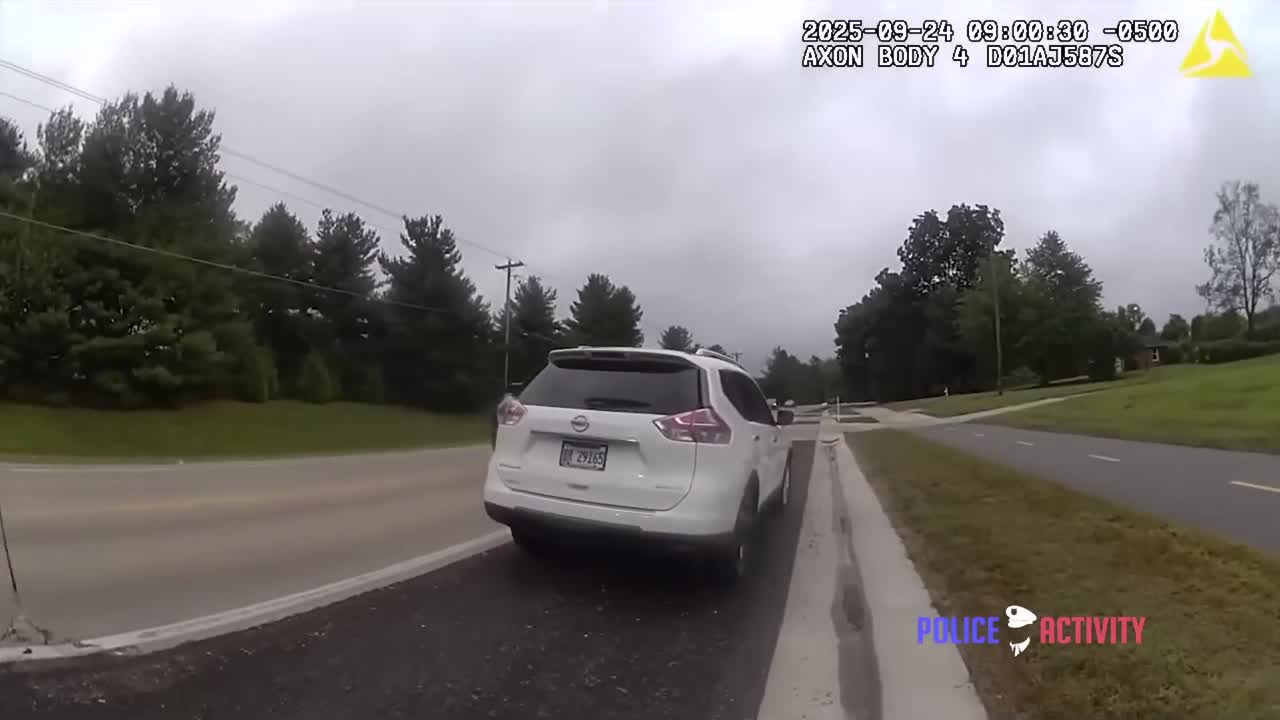
The Officer Immediately Checks Everyone for Injuries
The body-camera footage captures the officer's first reaction after the impact. Rather than beginning with accusations, he calls the collision over the radio and checks on the people around him. The scene is disorganized: three vehicles are now involved, traffic continues nearby and the officer has to determine whether anyone needs immediate medical attention.
This response is important because police officers involved in crashes have two simultaneous responsibilities. They are participants in the incident, but they are also emergency responders. The officer must assess injuries, secure the roadway and determine what caused the collision while waiting for additional units and medical personnel.
Jennings appears able to walk after leaving the Camaro. The officer directs him away from traffic and begins asking basic questions. The conversation is remarkably calm considering what has just happened. That calm tone becomes one of the most striking aspects of the footage because Jennings soon makes statements that transform the apparent accident into an alleged intentional act.
The officer's measured response also prevents the scene from escalating unnecessarily. At this point, he does not yet know whether the crash resulted from distraction, mechanical failure, impairment or deliberate action. Asking questions gives him information while backup and medical help are on the way.
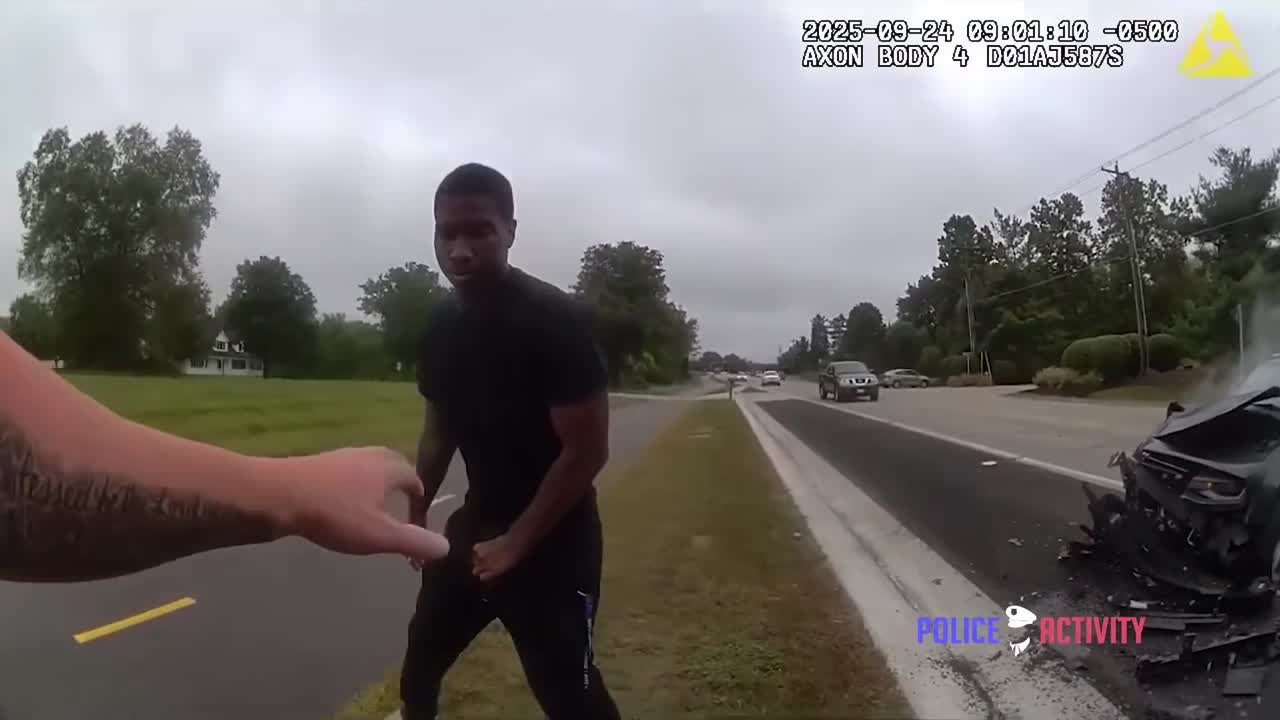
Jennings Says He Had Been Drinking
When the officer asks what happened, Jennings initially says he does not know. Moments later, however, he says he has been drinking. He also tells the officer that he took what he describes as “weed pills.” Those statements immediately raise concerns about possible impairment.
An admission of alcohol or drug consumption is not by itself a complete impairment investigation. Officers typically consider driving behavior, physical observations, statements, field sobriety testing where appropriate and chemical evidence. But in this case, the crash had already occurred, and Jennings' own comments gave investigators a reason to examine whether substances played a role.
The officer continues speaking with him rather than turning the exchange into a confrontation. Jennings answers questions and remains near the scene. The interaction is unusual because the driver appears relatively casual despite having just struck a marked police vehicle with enough force to push it into another car.
The footage is valuable here because it preserves the conversation as it happens. Later reports can summarize Jennings' statements, but the body camera allows viewers to hear the progression: first the discussion of drinking and the pills, then a much more consequential admission.
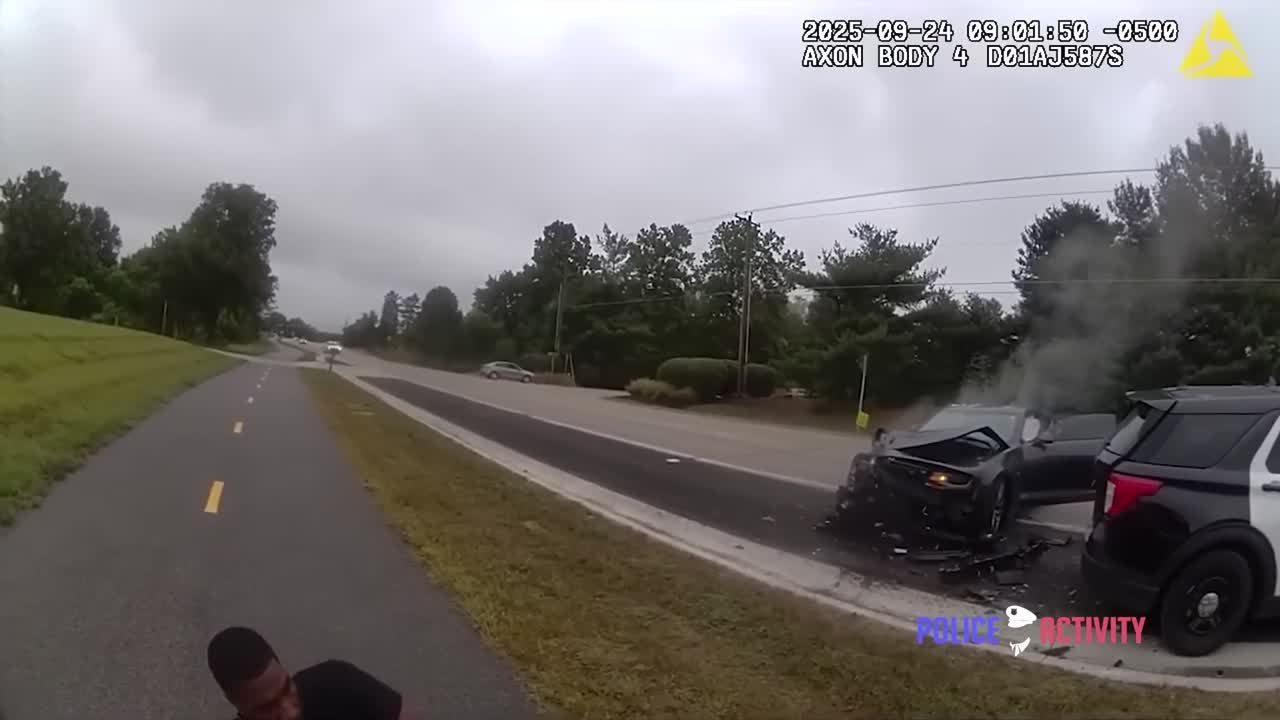
The Crash Is No Longer Described as an Accident
Jennings then tells the officer that he hit the cruiser intentionally. The officer, apparently surprised, asks him to confirm what he means. Jennings repeats that he did it on purpose.
That admission changes the legal and investigative character of the event. A traffic collision caused by negligence or impairment is very different from deliberately driving a vehicle into an occupied or recently occupied police cruiser. Investigators now have to consider not only how the crash happened but why the driver chose to cause it.
According to reports from the Fairview Heights Police Department, Jennings said he had acted because he was bored. He then offered another explanation, telling the officer that he hated police. The statement behind the original viral title therefore is not an interpretation created by an uploader; it is part of the conversation captured on body camera and reported by multiple news outlets.
Even so, the careful way to describe the case is to distinguish the statement from the legal conclusion. Jennings' recorded admission and comments are evidence, while the charges filed afterward represent the prosecution's allegations. Whether each criminal element is ultimately proven is a matter for the court.
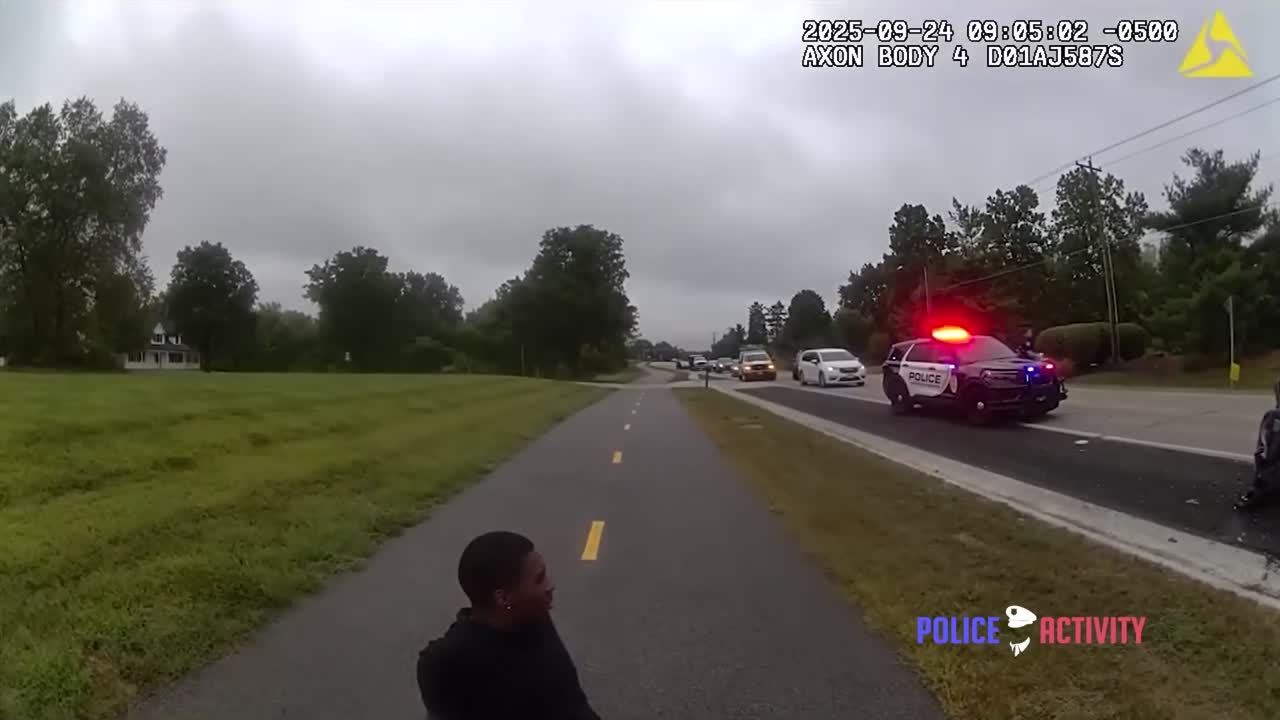
A Calm Conversation Follows an Extraordinary Admission
One of the strangest features of the footage is the contrast between the seriousness of the alleged act and the tone of the conversation afterward. Jennings does not immediately run or physically attack the officer after getting out of the Camaro. Instead, he remains at the scene and answers questions.
The officer likewise keeps his voice controlled. After hearing Jennings say that the collision was intentional, he continues managing the scene and waiting for assistance. The result is a body-camera sequence that feels almost understated despite the seriousness of what police say occurred.
That restraint matters operationally. An officer who has just learned that someone intentionally struck his cruiser could understandably perceive a continuing threat. But police still have to respond to the behavior occurring in front of them. Once Jennings is outside the vehicle, cooperative and apparently unarmed, the immediate circumstances differ from the moment the Camaro was moving toward the patrol car.
The footage therefore shows a rapid shift in threat assessment. The vehicle created the primary danger during the collision. Once it is disabled and the driver is standing outside, officers can move toward detention and investigation rather than treating the car as an ongoing moving threat.
Police Arrest Jennings and the Case Moves to Prosecutors
Fairview Heights police arrested Jennings and booked him into the St. Clair County Jail. Public reporting says prosecutors charged him with criminal damage to government property, two counts of aggravated battery with a deadly weapon and one count of aggravated battery with a motor vehicle.
Those charges reflect the fact that a motor vehicle can be treated as a dangerous instrument depending on how it is allegedly used. The case was no longer being treated simply as a rear-end collision. Authorities alleged that the Camaro had been intentionally used to strike the police cruiser.
Reports also said the patrol vehicle sustained more than $10,000 in damage. The officer and the two occupants of the car from the original traffic stop were reported uninjured, an outcome that could easily have been different given the force of the collision.
Because a police vehicle and officer were directly involved, the Illinois State Police took responsibility for investigating the incident. That outside investigation provides an additional layer of review beyond the initial Fairview Heights response.
The charges should still be described as allegations unless and until a final court disposition establishes otherwise. The available reporting documents Jennings' arrest and charging decision, but this article does not invent a later conviction or sentence that has not been verified.
Why the Original Traffic Stop Matters
The officer whom Jennings allegedly targeted was not waiting for him or engaged in a confrontation with him. According to the department's account, the officer was already conducting an unrelated traffic stop for an expired license plate sticker when the Camaro arrived.
That fact gives the collision a different context from a pursuit or confrontation where a driver might be trying to escape arrest. Jennings was not simply fleeing from this officer when the impact happened. The police cruiser was stationary as part of an unrelated stop.
The collision also endangered people who had nothing to do with Jennings. The cruiser was pushed into the vehicle that had originally been pulled over, meaning the two occupants of that car became part of the incident without warning. Their lack of reported injuries was fortunate.
From a traffic-safety perspective, this demonstrates why intentional vehicle impacts are treated seriously even when everyone walks away. A vehicle carries enormous kinetic energy, and the occupants of a stationary car have little ability to protect themselves from a sudden rear impact. The absence of injury does not mean the event lacked the potential for severe harm.
The Body Camera Makes Verification Unusually Strong
This incident can be identified with much greater confidence than many reposted police videos because several independent details align. The AXON timestamp in the supplied footage shows September 24, 2025 at approximately 9 a.m. Public reporting places the Fairview Heights crash at about 9 a.m. on the same date. The video shows the immediate aftermath of a police-cruiser collision and the driver's conversation with the officer.
News reports identify the driver as Keajion L. Jennings, age 28, and quote the same unusual explanations heard in the footage: alcohol consumption, “weed pills,” boredom and hostility toward police. Those matching details make it highly unlikely that the video depicts a different incident.
This kind of cross-checking is important for police-footage research. A title alone is never enough. Exact identification should come from combinations of timestamp, department, location, vehicle, dialogue and outcome. Here, those elements line up across the recording and multiple reports.
The verification also allows the story to be written without exaggeration. There is no need to speculate about motive because Jennings' own reported statements supply it. There is no need to invent injuries because police said none were reported. And there is no need to guess at charges because prosecutors publicly filed them.
A Crash That Could Have Had a Far Worse Ending
The most remarkable part of the case is how ordinary the scene looks immediately before the collision. One officer is handling an expired-registration stop on a weekday morning. Within seconds, his cruiser has been struck from behind and shoved into the vehicle in front of it.
The aftermath is equally unusual. Instead of denying involvement or immediately trying to escape, Jennings talks with the officer and eventually says the collision was deliberate. His explanation that he was bored, followed by his statement expressing hatred toward police, turns an already serious crash into a bizarre criminal investigation.
The officer's response remains controlled throughout the recorded conversation. He checks on people at the scene, calls for medical assistance and gathers information while additional responders arrive. That calm approach gives the body-camera footage an almost surreal quality: the dialogue is quiet even though the alleged conduct was potentially lethal.
The legal process following the crash is separate from the footage. Jennings was arrested and prosecutors filed multiple felony charges, while Illinois State Police investigated. Those facts can be verified. A final court outcome should only be added when reliable records establish it.
For viewers, the complete recording is more informative than the headline alone. It shows the original traffic stop, the sudden impact, the officer's immediate response, Jennings' statements and the transition from crash scene to criminal investigation.
Most importantly, it demonstrates how quickly a routine police interaction can expose uninvolved people to danger. The officer and the motorists he had stopped were all placed in harm's way by a vehicle that police allege was deliberately driven into the cruiser. That no one was seriously hurt was an outcome, not an indication that the danger was minor.
Follow the link to watch the complete encounter and hear how the driver explains the crash to the officer moments after the police cruiser is struck.
Comments (0)
Loading comments...
May You Like

Traffic Stop Turns Deadly After Man Steps Out of Stolen Car

Cop thinks sandwich is phone

[DASHCAM] Drunk Driver Leads Trooper on High-Speed Pursuit Through City Streets













