
Driver Caught Going 105 MPH in a 50 MPH Zone Faces Arrest
Officer Gelsey Joins a Traffic Wolfpack for a Day of Targeted Enforcement
A Different Kind of Police Video
Not every police body-camera video begins with a chase, a dangerous arrest or a confrontation. This ride-along style episode follows Jacksonville Sheriff's Office Officer Gelsey during what is presented as a traffic “wolfpack,” giving viewers a closer look at a coordinated enforcement operation built around traffic stops rather than a single major incident.
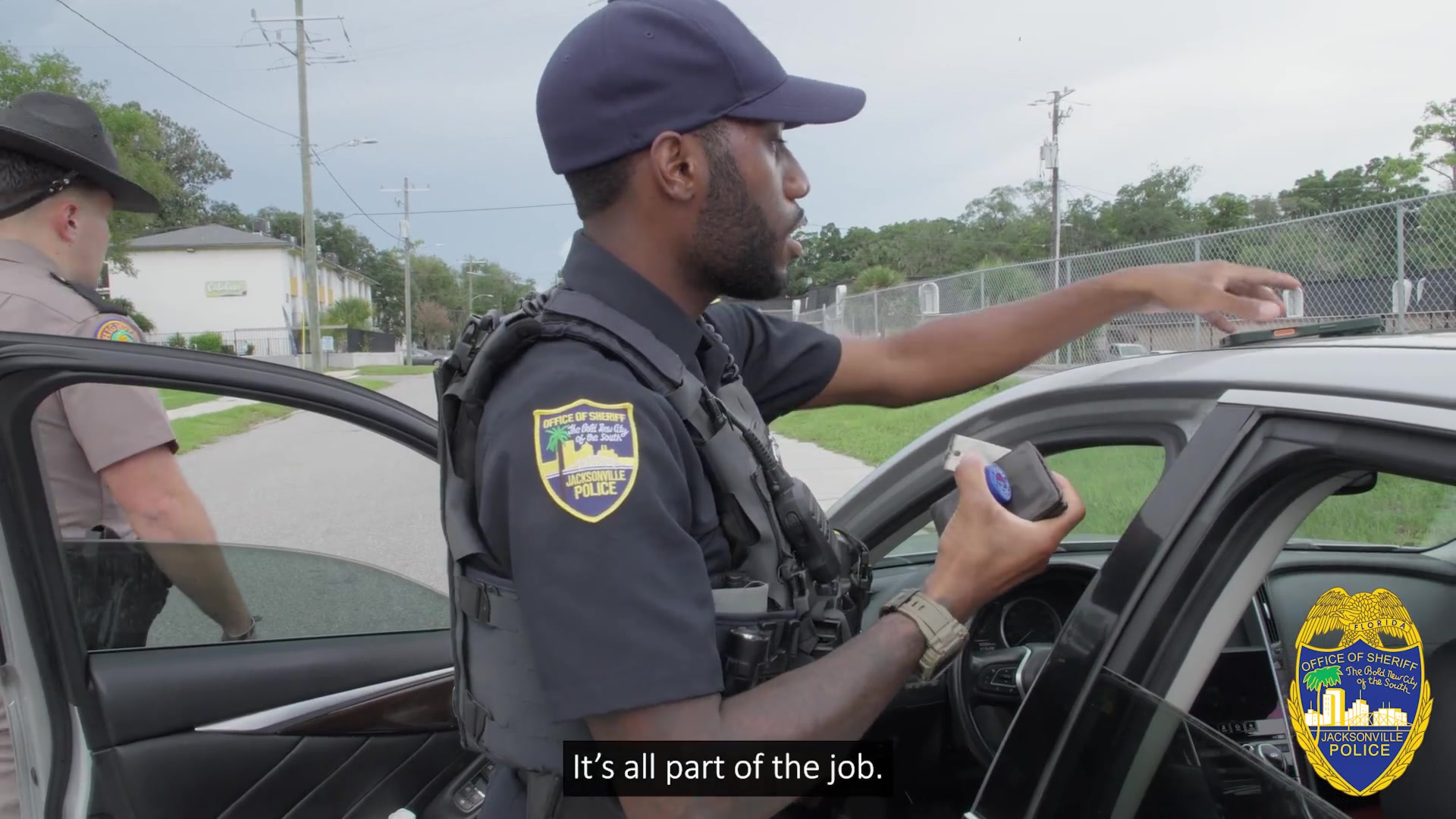
The supplied footage is clearly associated with the Jacksonville Sheriff's Office. A Jacksonville Police/Office of Sheriff graphic is visible on screen, and the officer's uniform patch and equipment are consistent with that agency. The video takes place in daylight on urban streets, with marked and unmarked traffic activity unfolding around ordinary motorists.
Unlike the previous critical incidents in this series, there is no single arrest or criminal case that can responsibly be identified from the title alone. Web research did not produce an official incident report or department release that could be conclusively matched to this exact video. For that reason, this article does not invent a date, driver identity, citation number, charge or court result. It focuses on what the supplied footage actually shows and on the broader purpose of coordinated traffic enforcement.
The phrase “traffic wolfpack” generally describes a concentrated enforcement effort in which multiple officers work the same area during a limited period. Rather than one patrol officer independently waiting for violations, a group can focus on speeding, dangerous driving, impaired driving, equipment issues or other traffic problems. The exact priorities depend on the operation and agency policy, so the footage itself remains the best guide to what Officer Gelsey is doing here.
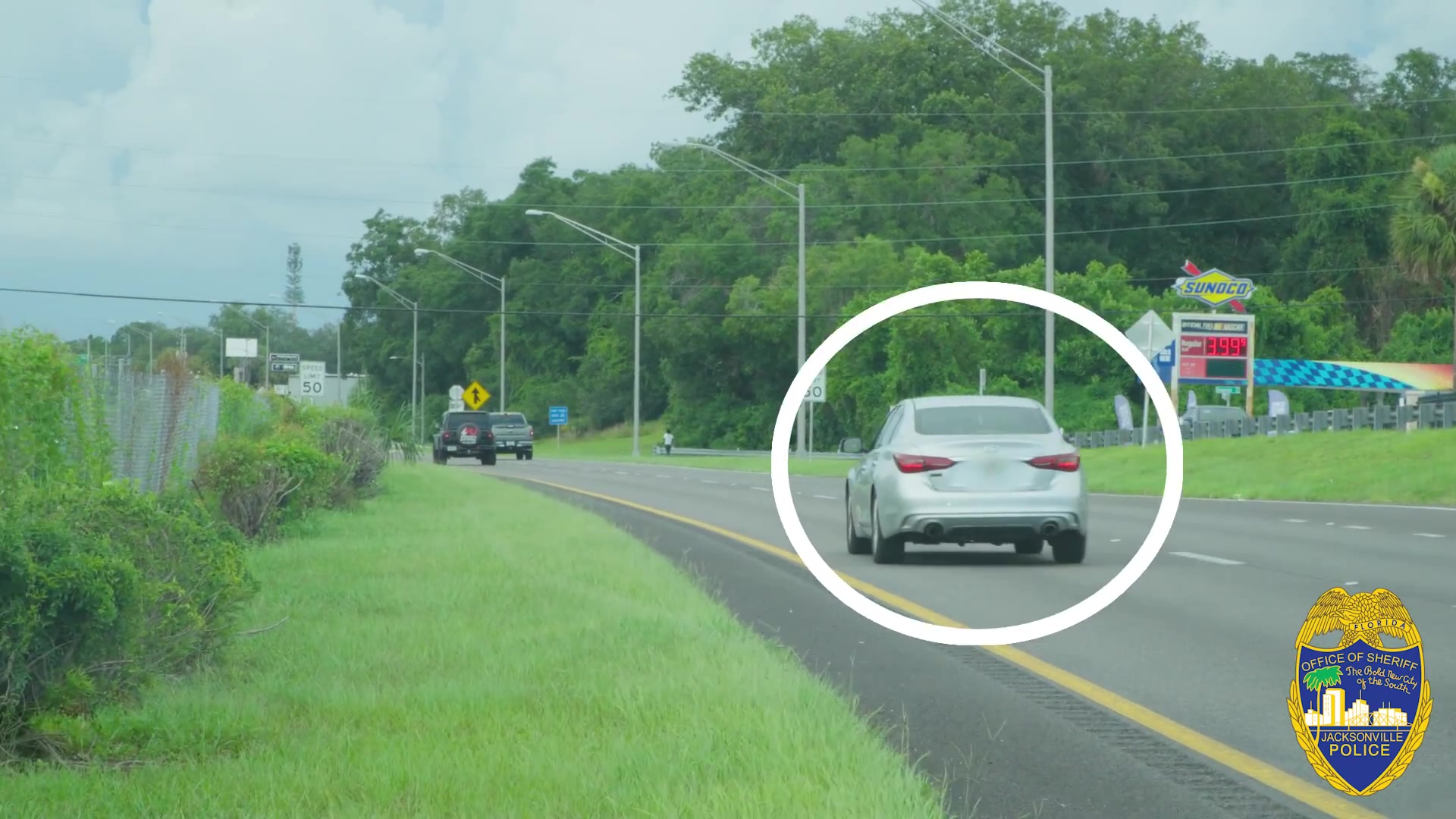
The Roadside Contact Begins With Observation
A traffic stop often looks simple from outside: lights come on, a car pulls over and an officer walks to the window. The video shows how much information an officer is processing before and during that short walk. Vehicle position, traffic around the stop, the driver's movements and the physical environment all influence how the officer approaches.
Officer Gelsey is shown speaking with motorists from the driver's side of stopped vehicles. His posture remains controlled, and the interactions shown in the sampled portions of the video are conversational rather than confrontational. That distinction matters because traffic enforcement is overwhelmingly built on communication. The officer has to explain why the vehicle was stopped, obtain necessary documents and decide what enforcement action is appropriate.
The footage also shows why positioning matters. An officer standing beside a vehicle is exposed to passing traffic and has limited visibility into portions of the passenger compartment. Even on a quiet street, officers tend to approach at an angle and remain attentive to hands and movement inside the car. Those habits are not proof that a driver is dangerous; they are routine safety measures developed because an officer cannot know in advance which stop will remain ordinary.
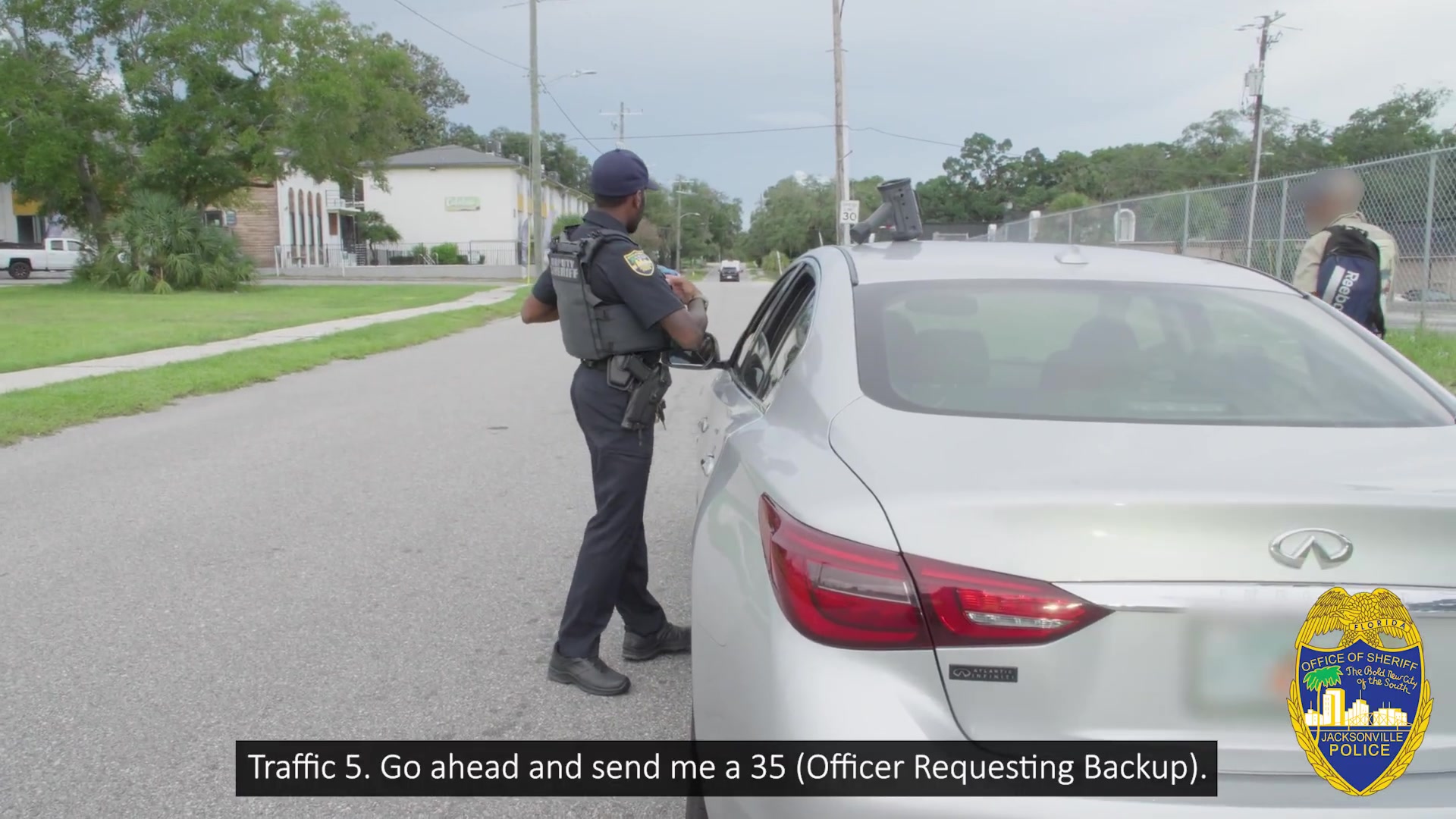
One frame shows Gelsey beside a silver Infiniti while speaking through the driver's window. A 30 mph speed-limit sign is visible farther down the street. The scene is calm, but it captures the central purpose of this kind of operation: officers are positioned where they can identify traffic behavior, stop vehicles and address violations before those violations contribute to a collision.
Why Agencies Use Concentrated Traffic Enforcement
Traffic wolfpacks are designed around visibility and concentration. When several officers work a defined corridor or neighborhood, they can make more contacts in a shorter period and create a noticeable enforcement presence. That visibility can itself influence driver behavior. Motorists who see repeated police activity may slow down, put phones away, use seat belts or become more attentive to intersections.
The strategy can also allow officers to divide responsibilities. One officer may observe a violation while another is in a safer position to initiate the stop. Motorcycle officers, marked cruisers and other traffic units can be deployed according to the road layout. The exact tactics are agency-specific, and this video should not be used to claim that Jacksonville uses one universal wolfpack procedure for every operation.
What the footage does demonstrate is repetition. Officer Gelsey moves from one traffic contact to another rather than becoming absorbed in a single major event. That rhythm is characteristic of proactive traffic work. Each stop may last only a few minutes, but the cumulative goal is broader than one citation. The operation is meant to change behavior across an area.
Traffic enforcement is often discussed only when a stop becomes controversial or dramatic. Videos like this provide a more ordinary perspective. Officers spend substantial time talking, checking information, returning to vehicles and documenting their actions. The process can feel slow compared with pursuit footage, but those routine steps are where most roadside policing actually happens.
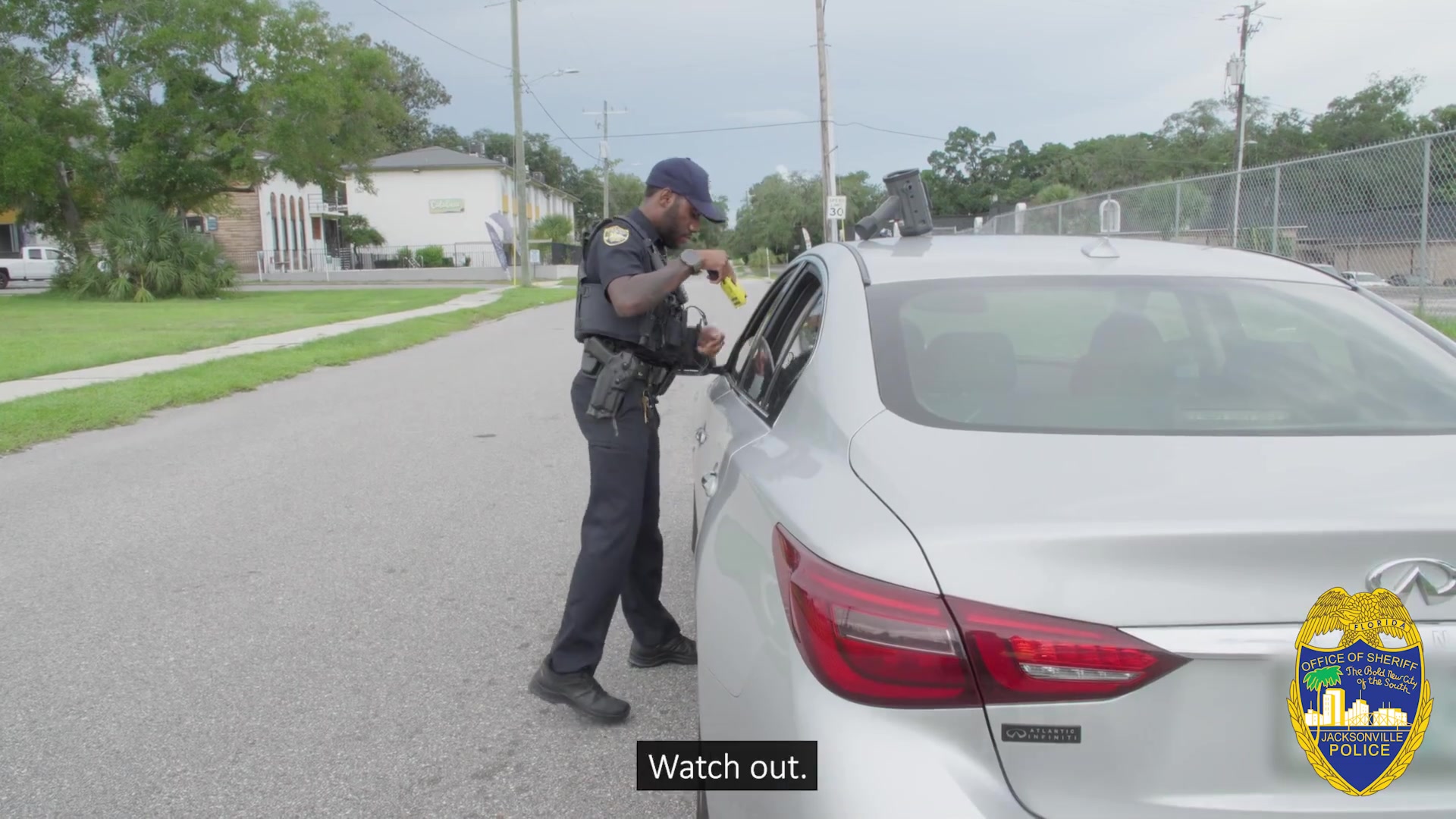
Communication Can Determine the Tone of a Stop
The most noticeable feature of the interactions shown here is the officer's conversational style. Gelsey speaks directly to motorists and maintains a relatively relaxed tone. That does not eliminate the authority behind a traffic stop, but it can reduce unnecessary tension.
A driver may be nervous even when the alleged violation is minor. Police lights, uniforms and the uncertainty of whether a warning or citation is coming can make a routine encounter stressful. Clear explanations help both sides understand what is happening. When an officer identifies the reason for the stop and gives straightforward instructions, the driver has fewer reasons to guess about what will happen next.
The same principle works in reverse. Drivers who keep their hands visible, provide requested documents and communicate before making unexpected movements make it easier for an officer to interpret their actions. None of this guarantees that every stop will be uncomplicated, but predictable communication reduces ambiguity.
Body-camera footage is especially useful for showing this dynamic because it records the interaction from near the officer's perspective. Viewers can hear the timing of questions, see when documents are exchanged and observe how quickly an ordinary roadside conversation can progress. In this video, much of the interest comes precisely from the absence of a major confrontation.
The Details Officers Notice During a Stop
A traffic officer is not limited to the original reason a vehicle was stopped. Once contact begins, additional observations may become relevant. Registration status, driver's-license issues, visible equipment defects or signs of impairment can change what happens next. At the same time, officers cannot simply invent reasons to prolong a stop; traffic enforcement is governed by constitutional and state-law limits.
The footage shows Gelsey repeatedly looking into vehicles, listening to drivers and handling information associated with the stop. Those ordinary movements are part of building a factual picture. The officer must distinguish between something that merely looks unusual and something that actually provides a lawful basis for additional action.
For viewers, it is tempting to judge a stop entirely from the first few seconds. Body-camera footage encourages a more patient approach. A driver may offer an explanation. An officer may verify information. A warning may be possible. Another violation may become apparent. The outcome depends on facts that develop during the contact rather than on the visual appearance of the vehicle or driver.
Because no matching official case file could be verified for this exact episode, this article intentionally avoids claiming that any particular motorist shown was arrested, charged or convicted. The video should be treated as documentation of traffic enforcement, not as proof of a criminal case unless the footage itself clearly establishes one.
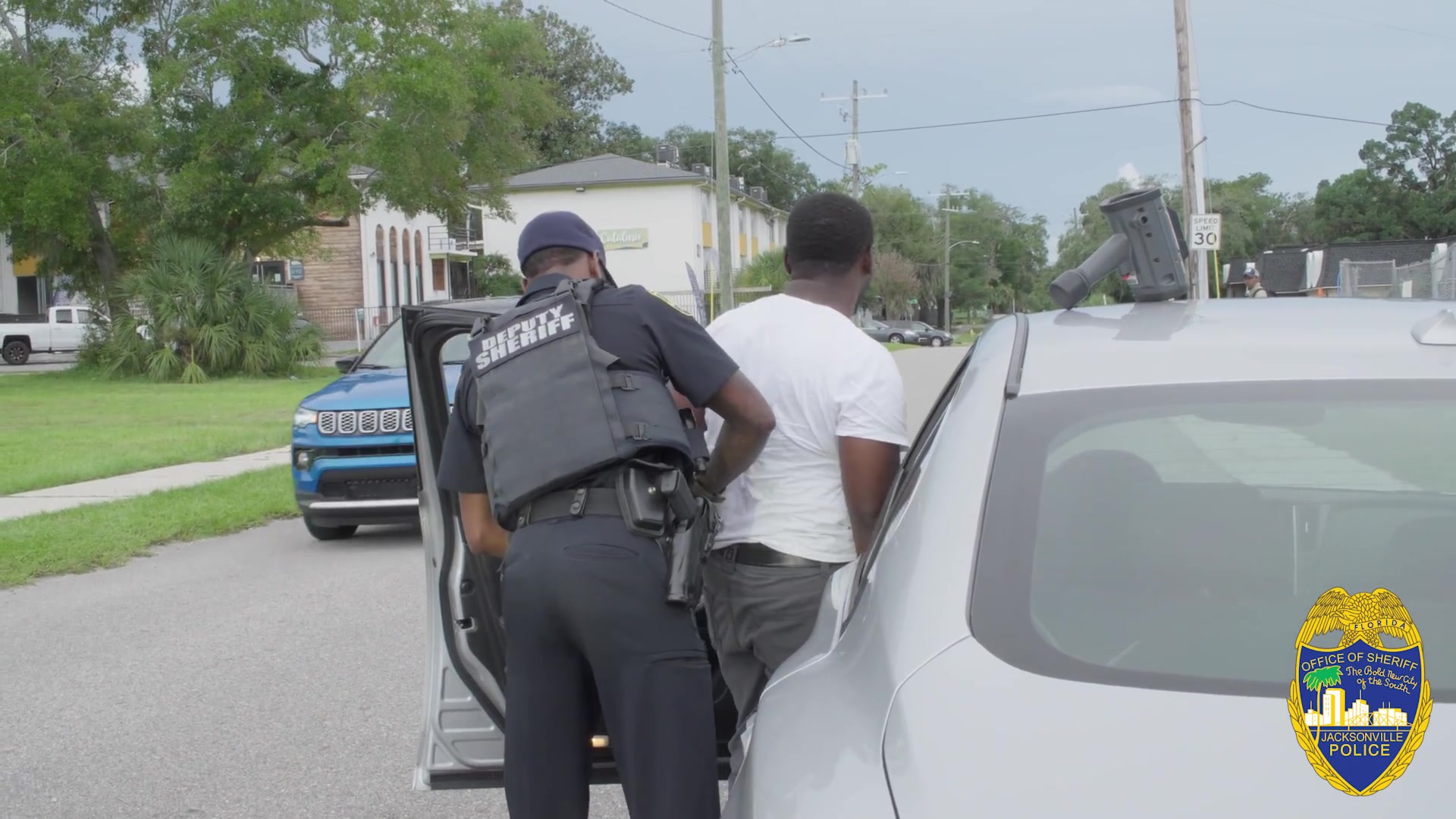
A Wolfpack Is About the Pattern, Not One Driver
The structure of the video becomes clearer when the individual stops are viewed together. The story is not one driver's mistake. It is the pattern of enforcement across a shift. Officer Gelsey returns to the road, identifies another traffic issue and begins another contact. That repetition is the operation.
This also explains why the title “Traffic Wolfpack with Officer Gelsey” is more descriptive than sensational. The footage is built around a working officer rather than a suspect. Viewers see the process from stop to stop and get a sense of how traffic enforcement occupies time that might otherwise be invisible to the public.
Coordinated operations can be controversial when people believe they are designed mainly to generate citations or target certain neighborhoods. Supporters emphasize deterrence and collision reduction. The footage by itself cannot settle that policy debate. What it can do is show the actual interactions that occur once an officer decides to make a stop.
That distinction is useful. Debates about enforcement strategy happen at the policy level, while the body camera records individual contacts. Evaluating one requires broader data about crashes, citations, locations and outcomes. Evaluating the other requires attention to what the officer and driver actually say and do.
What the Video Can and Cannot Establish
There are several things the supplied footage supports with confidence. The officer featured is presented as Officer Gelsey. Jacksonville Sheriff's Office branding is visible. The video follows traffic-enforcement activity in daylight, and multiple motorists are stopped and spoken with. The interactions sampled from the video are primarily controlled roadside contacts.
There are also important things the video title does not establish. It does not provide a reliable incident number, exact operation date, list of citations, enforcement statistics or final legal outcome for every driver. Public web research did not uncover a police release that could be confidently tied to this exact episode. Therefore those details should not be filled in from unrelated Jacksonville traffic operations.
This is an important research principle for police-footage content. A similar uniform, neighborhood or traffic stop is not enough to identify an incident. Exact verification normally requires multiple matching clues such as date, location, department, officer, vehicle, dialogue and outcome. When those pieces are missing, the responsible choice is to stay with the footage.
That limitation does not make the video less useful. In some ways it makes it more representative of everyday policing. Most traffic contacts never become press releases. They are documented through body cameras and internal records but do not generate a news article. A routine wolfpack operation can therefore offer context that dramatic critical-incident videos cannot.
The Value of Seeing Routine Police Work
Police video online is heavily weighted toward unusual events. Pursuits, fights, armed encounters and arrests naturally attract attention. A traffic-enforcement episode provides a counterweight. It shows how much of an officer's job consists of brief conversations, observation and decision-making that never reaches a dramatic climax.
For Officer Gelsey, the shift shown here appears to be about consistency. Approach the vehicle. Explain the contact. Gather information. Decide how to handle the violation. Clear the stop. Return to enforcement. The repetition is the point.
For motorists, the footage also offers a practical view of what officers are paying attention to. Safe positioning, predictable movements and clear communication help keep a stop uncomplicated. The same is true for the officer: a professional tone and clear explanation can keep a minor violation from becoming unnecessarily tense.
The broader question of whether concentrated traffic enforcement improves safety requires statistics beyond this video. Crash trends, speeding data, citation patterns and community feedback would all matter. None of those should be invented from a body-camera episode. But the footage does provide one piece of that larger picture: what coordinated enforcement actually looks like at street level.
A Shift Built Around Prevention Rather Than a Major Arrest
There is no need to manufacture a dramatic ending for this episode. Its value comes from seeing traffic enforcement before something goes seriously wrong. Speed limits, vehicle rules and roadside stops exist largely as preventive measures. The objective is ideally to change risky behavior before it becomes a crash, injury or emergency response.
That makes this video different from footage where police arrive after a violent crime or chase a fleeing suspect. Here, the officer is working upstream of those events. The contacts are smaller, but they are part of the everyday system used to regulate road behavior.
The absence of a major verified case also reinforces why careful sourcing matters. A headline can easily turn a routine stop into something it was not. By staying with observable facts, viewers get a more accurate account of Officer Gelsey's traffic shift without invented charges, identities or outcomes.
For people accustomed to watching only the most intense police footage, the complete video offers a different perspective: enforcement as a series of ordinary decisions rather than one explosive moment. It is a look at the repetition, communication and situational awareness that fill the space between emergency calls.
Comments (0)
Loading comments...
May You Like

Police Chase Ends as Driver Hits Stoplight, Crashes Into West Towne Mall

Stolen Charger Flees Police During Highway Traffic Stop

The Truth Behind the Suspicious Vehicle and the Standoff with Police













