
Deputy Mistakes a Blind Man’s Walking Cane for a Weapon
Deputy Mistakes a Blind Man’s Walking Cane for a Weapon
A Morning Walk Turns Into a Police Stop
On October 31, 2022, 61-year-old James Hodges was walking in Lake City, Florida, when Columbia County Sheriff’s Deputy Jayme Gohde noticed an object protruding from his back pocket. According to the arrest report and later reporting, Gohde believed the silver object with a light-colored grip might be a handgun.
The object was not a gun. Hodges, who is legally blind, was carrying a folded walking cane. Body-camera footage shows Gohde approach him and ask what is in his pocket. Hodges describes it as a navigational aid and, after questioning why he has been stopped, removes the folded cane so the deputy can see exactly what it is.
The supplied video matches this well-documented incident. The dialogue, the appearance of Hodges, the folded cane, Deputy Gohde and the later arrival of Sergeant Randy Harrison correspond with the footage and with contemporary reporting. The Columbia County Sheriff’s Office itself publicly acknowledged the October 31 arrest and opened an administrative investigation after the video drew widespread attention.
What makes the encounter notable is that the original suspicion is resolved quickly. Once Hodges displays the cane, the officer can see that he is not carrying the firearm she initially suspected. Yet instead of ending there, the interaction shifts into a dispute over identification, detention and police authority.
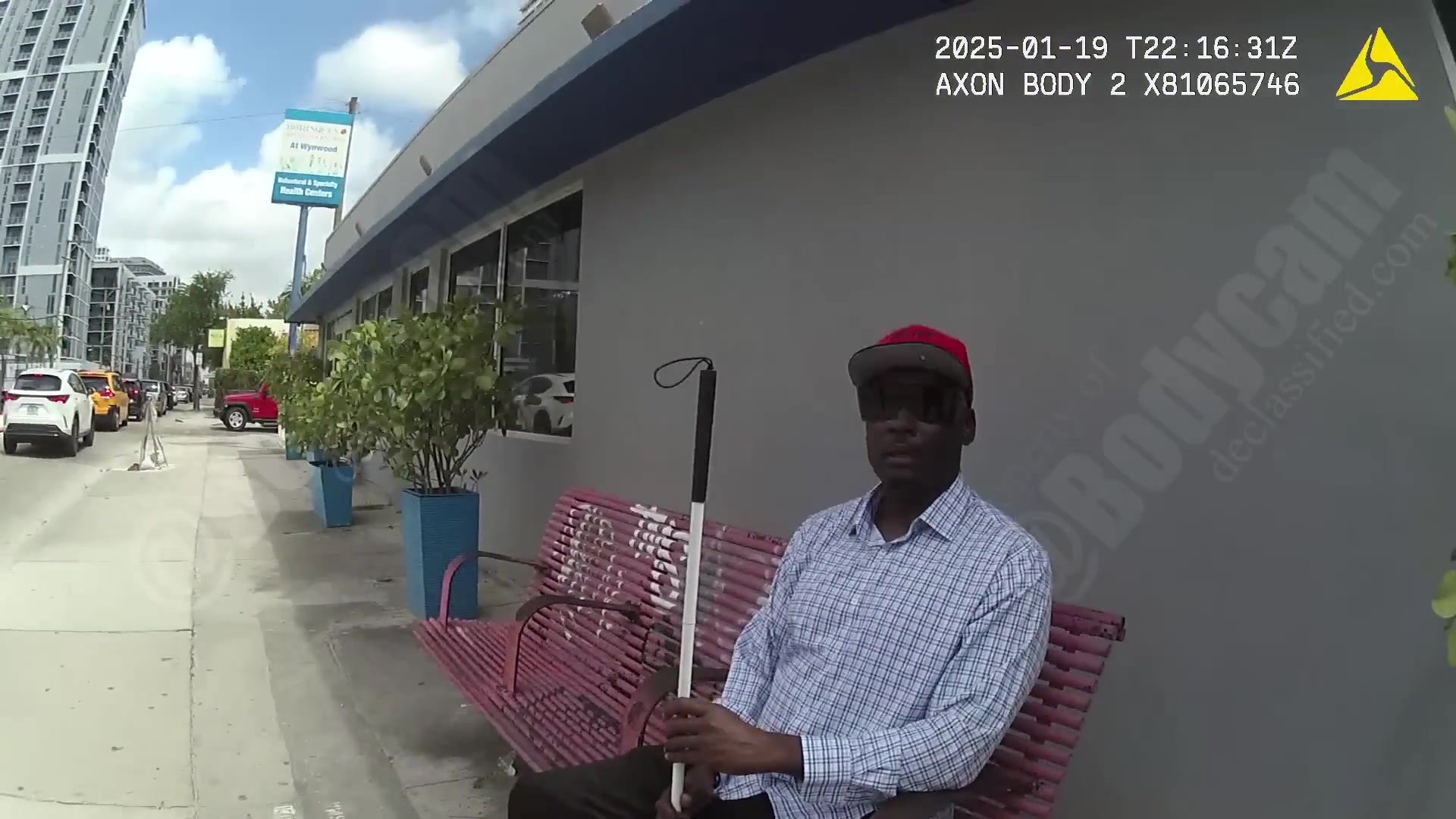
The Cane Is Identified but the Encounter Continues
After Hodges shows the folded cane, he asks whether he is being detained. The conversation becomes increasingly tense as Gohde requests his identifying information and Hodges challenges the legal basis for continuing to hold him.
Hodges’ position is straightforward: the deputy suspected a gun, he has shown her that the object is a walking cane, and therefore he believes the reason for the stop has ended. Gohde continues requesting his name and date of birth.
This distinction later became central to the Sheriff’s Office review. An officer can investigate circumstances that reasonably suggest criminal activity or a safety concern, but once the factual basis changes, the continued detention must still have a lawful justification. The internal review would later conclude that the arrest was made without sufficient probable cause.
The body-camera footage is particularly valuable because it captures the sequence rather than only the final arrest. Viewers can see that the cane is displayed before the dispute over identification becomes the dominant issue.
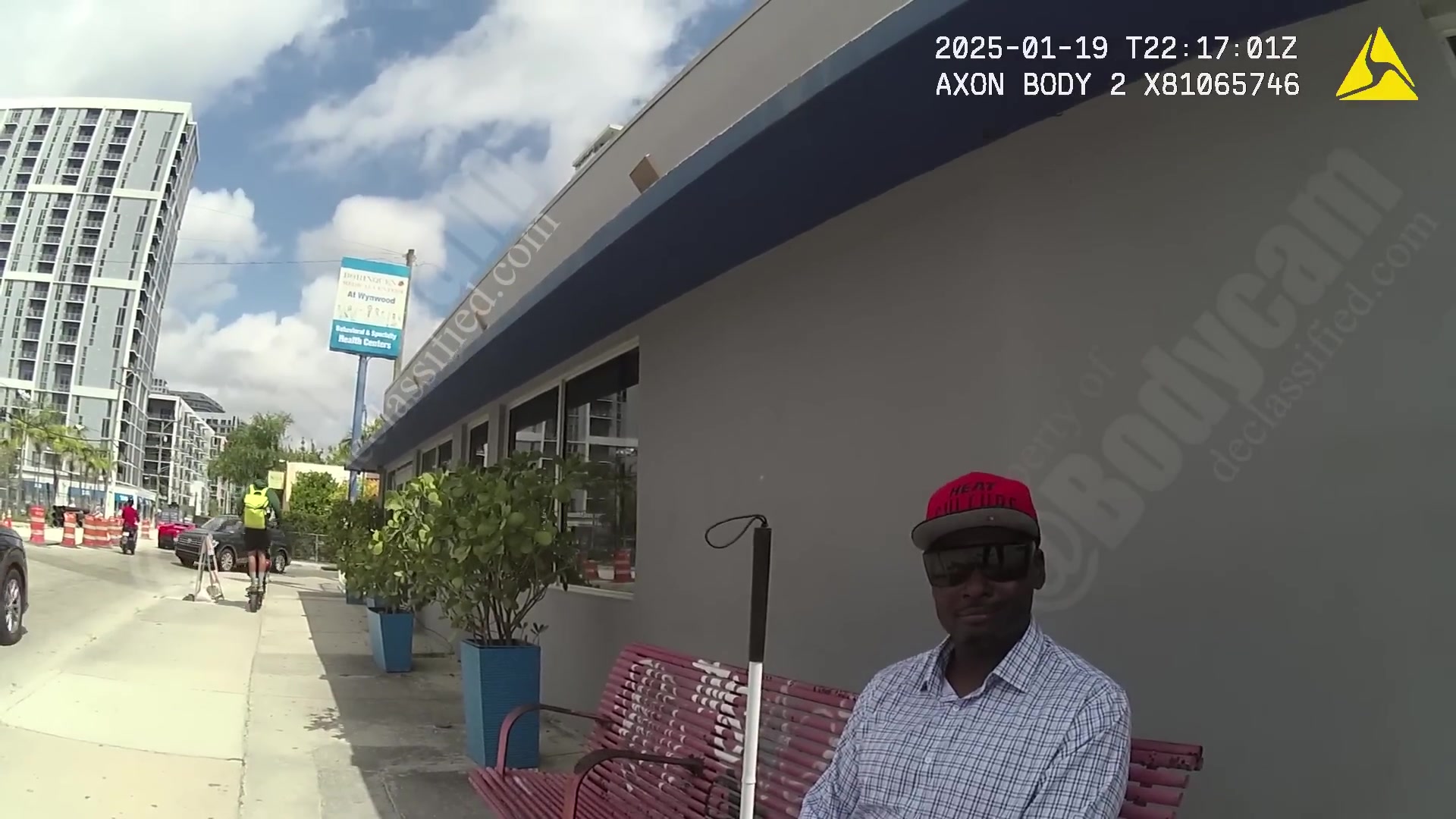
A Supervisor Arrives and the Disagreement Deepens
Sergeant Randy Harrison joins the encounter after Hodges asks for a supervisor. Hodges again explains that the object is a walking stick. Harrison acknowledges the deputy’s initial suspicion that Hodges might have been armed, while Hodges emphasizes that the suspicion has now been resolved.
At this stage, the interaction could still end without an arrest. Hodges is not accused in the footage of threatening either deputy with the cane, and the original suspected weapon has already been identified as a mobility aid. The dispute instead centers on whether Hodges must identify himself.
The officers eventually place Hodges in handcuffs and search his pockets for identification. During the interaction, Harrison asks whether Hodges is legally blind. Hodges says that he is.
That exchange gives the cane additional context. It is not merely an unusual object Hodges happens to possess; it is an assistive device used by a person with a visual impairment. Hodges explains that he does not necessarily need to have the cane extended at every moment.
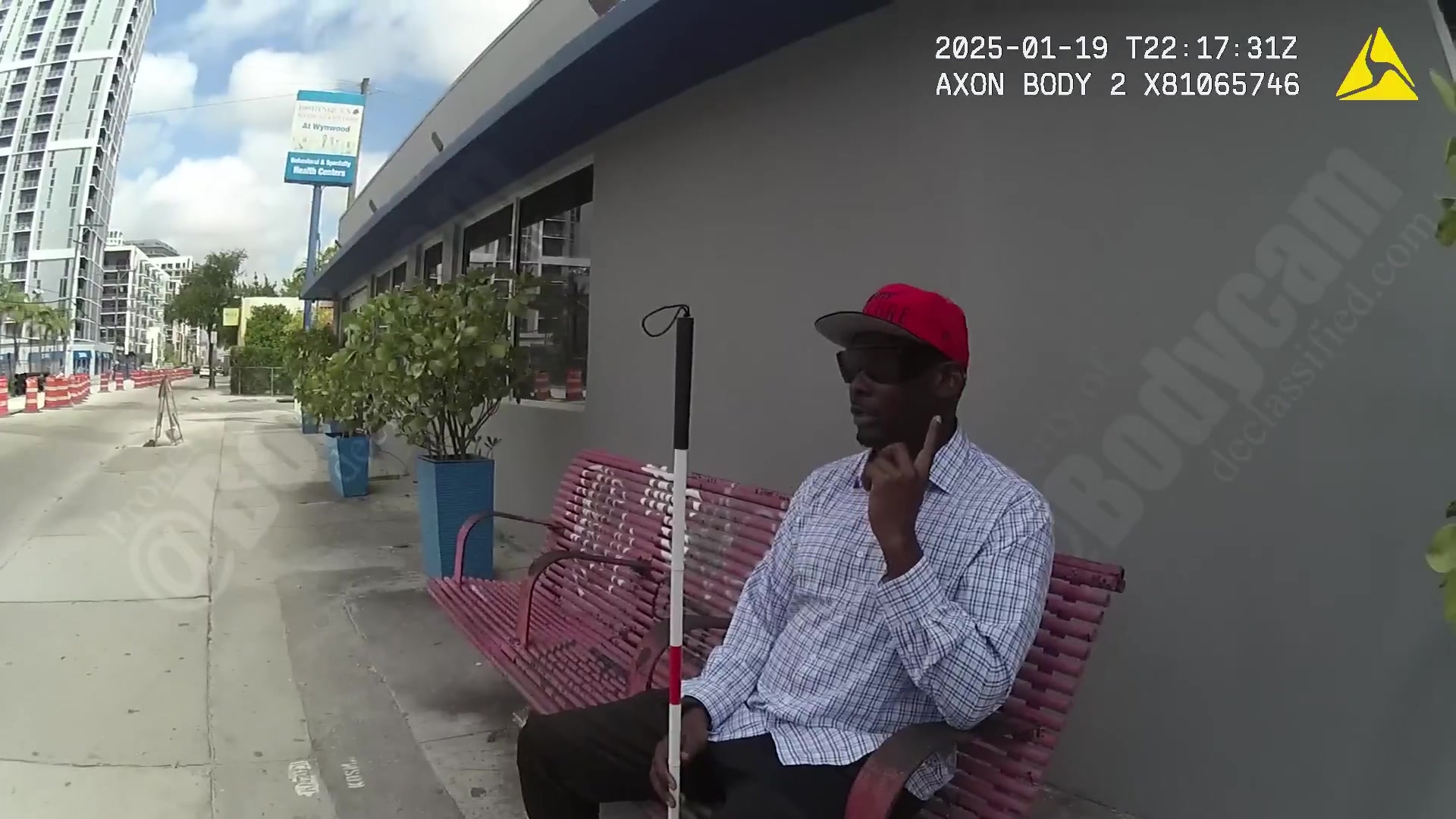
The Decision to Arrest Becomes the Key Controversy
After Hodges’ information is checked, the encounter still does not end. Body-camera footage captures Hodges asking for the deputies’ names and badge numbers. Harrison then directs that Hodges be taken to jail for resisting.
Hodges was arrested on a charge of resisting an officer without violence. The charge would not survive. Contemporary reporting says prosecutors dismissed the case, while the Sheriff’s Office internal review found significant problems with the deputies’ actions.
The review reportedly concluded that there was insufficient probable cause for the arrest and that Harrison gave an unlawful order to arrest Hodges after probable cause did not exist. That finding is crucial because it moves the story beyond public disagreement over a viral clip. The law-enforcement agency itself determined that policy violations had occurred.
Sheriff Mark Hunter later publicly apologized to Hodges. He said he did not believe the deputies had acted with malicious intent, but described their conduct as unacceptable and attributed the incident to frustration and a failure to rely on training.
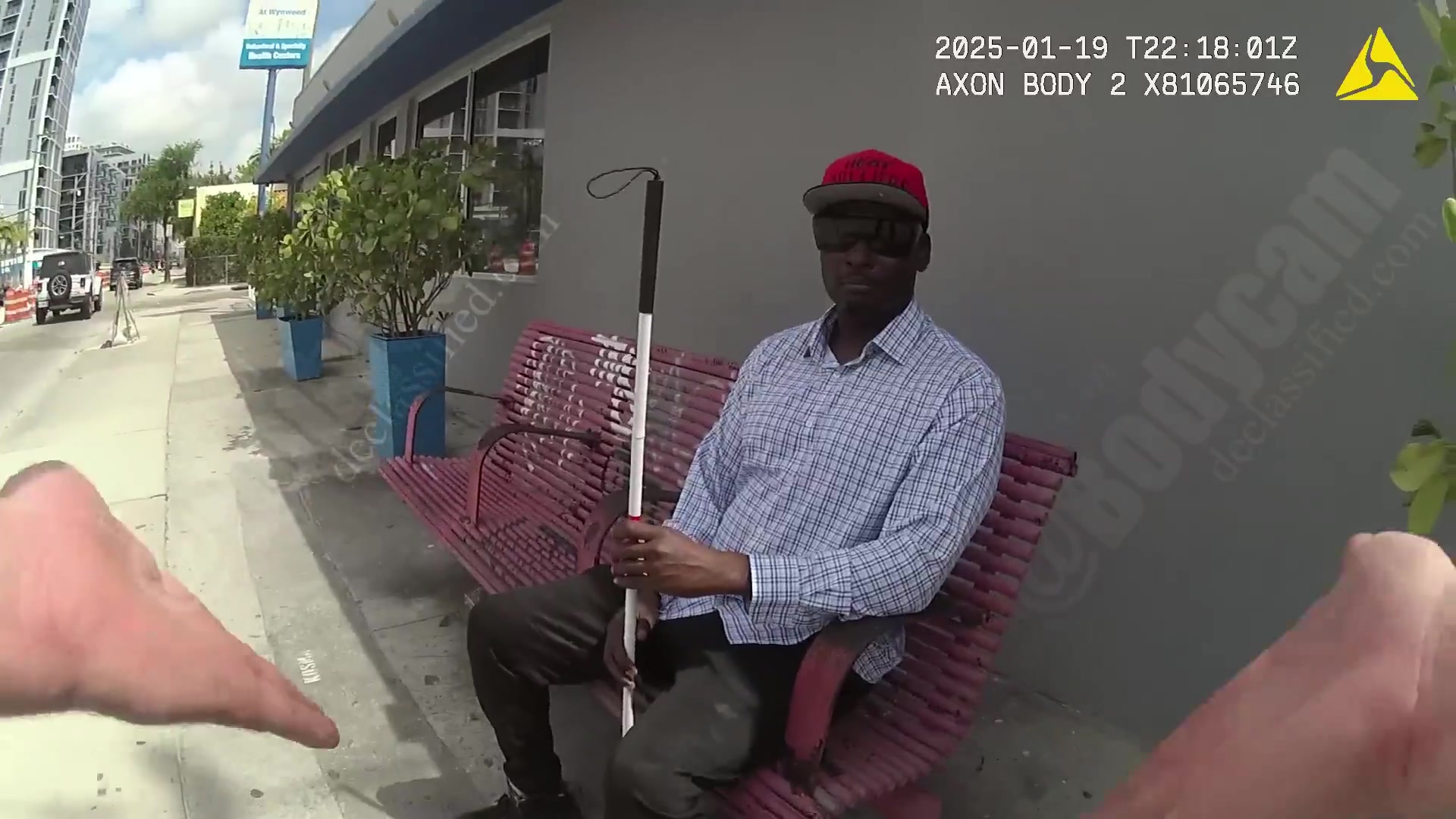
The Sheriff’s Office Disciplines Both Deputies
The Columbia County Sheriff’s Office placed both officers on administrative leave while the incident was reviewed. After the investigation, disciplinary action followed.
Harrison was demoted and suspended without pay for seven days. Gohde received a two-day unpaid suspension. Both were required to undergo remedial civil-rights training. Reports also said Harrison faced restrictions on raises or promotions for a period following the incident.
Those consequences are important because viral police footage often circulates without viewers ever learning whether an agency reviewed the conduct. Here, there was a documented administrative response, and the sheriff publicly accepted responsibility for what happened.
The agency’s official statement initially said Sheriff Hunter was troubled by what he had seen in the body-camera video and that an administrative investigation had begun on November 3, only days after the October 31 encounter.
Why the Initial Gun Suspicion and the Later Arrest Are Separate Questions
It is possible to evaluate the beginning of the encounter separately from what followed. An officer seeing an unfamiliar object protruding from a pocket may have legitimate safety questions. The controversy is not simply that Gohde looked at the folded cane and initially wondered whether it could be a firearm.
The more consequential question is what should happen once the object is identified. Hodges physically shows the deputy the cane. At that point, the original weapon concern is substantially different from what it was seconds earlier.
The subsequent demand for identification, handcuffing and arrest therefore require their own legal justification. The Sheriff’s Office investigation concluded that the arrest did not have sufficient probable cause, which is why the later stages of the encounter became the focus of discipline.
This is also why the most accurate title should not imply that Hodges was arrested merely because the cane looked like a weapon. The mistaken identification begins the contact, but the arrest occurs after a separate argument about identification and compliance.
The Video Becomes a National Story
Once the body-camera footage circulated online, the incident attracted national attention. News organizations across the United States reported on the arrest, and the unusual visual detail of a folded mobility cane being mistaken for a pistol became the defining image of the story.
The public reaction was intensified by the fact that Hodges repeatedly explains what the object is and later confirms that he is legally blind. The footage also preserves the officers’ own words, allowing viewers to evaluate the tone and timing of the interaction rather than relying solely on competing written accounts.
Columbia County Sheriff Mark Hunter responded publicly as criticism grew. His apology acknowledged the damage the incident had caused both Hodges and the agency. The disciplinary decisions demonstrated that the department did not simply defend the arrest after reviewing it.
The case also illustrates why body-camera transparency can matter. Without the recording, the encounter might have been reduced to an arrest report describing resistance. The video provided a much richer record of what prompted the stop, when the cane was identified and how the dispute developed afterward.
Hodges Pursues Legal Action After the Arrest
The consequences did not end with dismissal of the criminal charge and internal discipline. Later in November 2022, an attorney representing Hodges sent notice of an intent to pursue damages against the Columbia County Sheriff’s Office and other government entities connected to the incident.
The notice alleged violations of Hodges’ civil and constitutional rights and sought compensation for harms associated with the arrest and detention. Reporting said Hodges spent more than 24 hours in custody following the incident.
A notice of intent to pursue damages is not the same as a final civil judgment. It represents a legal claim that may later be negotiated, litigated or otherwise resolved. Any eventual settlement or judgment should therefore be verified separately before being described as a final outcome.
What was already established by the time of that notice was substantial: the resisting charge had been dismissed, the Sheriff’s Office had investigated the arrest, both deputies had been disciplined and the sheriff had apologized.
A Walking Cane Should Have Ended the Weapon Question
The most striking moment in the footage occurs early, when Hodges simply pulls the folded cane from his pocket. The mystery that prompted the deputy to approach him is resolved in seconds. The object can be seen clearly, and Hodges explains its purpose.
Everything that follows is therefore about a different issue. The encounter stops being an investigation into a possible firearm and becomes a conflict over identification and authority. That transition is what ultimately made the arrest difficult for the department to defend.
The incident is also a reminder that disability can affect how ordinary behavior is interpreted. An assistive device may not always look familiar when folded or stored. A visually impaired person may use a cane differently depending on lighting, familiarity with an area or the degree of usable vision they retain.
None of those facts mean officers must ignore genuine safety concerns. They do mean that new information should change the assessment. Once an object is demonstrated to be a cane, the officer’s next decisions must be based on the facts that remain rather than the suspicion that has already been disproven.
The Full Footage Tells a More Precise Story Than the Viral Headline
The original title describes an officer who thinks a Black blind man’s cane is a dangerous weapon. That captures the initial mistake, but the complete incident is more complicated and more revealing. Deputy Gohde sees something she believes could be a firearm. Hodges shows her that it is a folded cane. The weapon question is resolved. A dispute over identification continues. A supervisor becomes involved. Hodges is handcuffed and ultimately jailed for resisting without violence.
The criminal charge is later dismissed. The Sheriff’s Office reviews the incident and concludes that the arrest lacked sufficient probable cause. Both deputies are disciplined, and Sheriff Hunter apologizes publicly to Hodges.
Those verified outcomes are why the case remains significant years after the original video went viral. It is not simply a story about an officer making an incorrect visual identification. It is a story about what happened after that mistake had already been corrected.
Body-camera footage allows viewers to see each stage unfold in real time. It also provides a useful reminder that the legality of a police encounter can change as officers learn new facts. An initial suspicion may justify a question, but it does not automatically justify everything that follows.
In this case, the agency’s own investigation ultimately drew that distinction. The first observation led to a brief weapon inquiry. The continued detention and arrest became the problem.
Comments (0)
Loading comments...
May You Like
Police Pull Over Paralyzed Driver With Blind Passenger
Everything Changed When Cops Asked About Weapons
🚨🚗 One Mistake Changes Everything During a DUI Arrest | Bodycam Footage US















