
Defiant Woman Gets Harsh Reality Check After Refusing to Get Out of Her Car
ROUTINE TRAFFIC STOP CAUGHT ON BODYCAM: A SIMPLE LICENSE CHECK BECOMES A POLICE ENCOUNTER
A ROUTINE TRAFFIC STOP CAN LOOK SIMPLE FROM THE OUTSIDE, BUT BODYCAM FOOTAGE OFTEN REVEALS HOW MUCH CAN HAPPEN DURING JUST A FEW MINUTES BETWEEN AN OFFICER AND A DRIVER.
Footage dated May 10, 2025 captures an officer standing beside a red vehicle during a daytime traffic stop. Inside is a woman wearing glasses who appears to be going through documents while communicating with the officer.
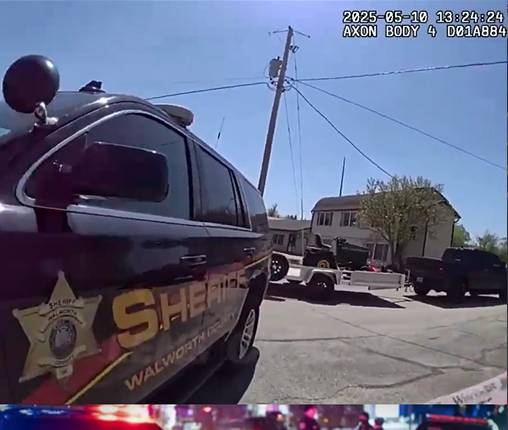
The encounter initially appears calm. There is no obvious chase or dramatic confrontation in the opening moment shown.
Instead, the footage captures one of the most common interactions in American policing: AN OFFICER REQUESTING AND CHECKING A DRIVER'S DOCUMENTS.
THE OFFICER APPROACHES THE RED VEHICLE
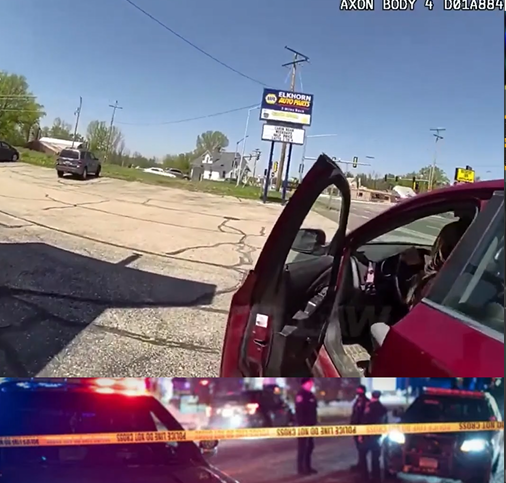
The body-worn camera provides a close first-person perspective as the officer stands at the driver's window.
The driver can be seen holding paperwork and apparently attempting to identify which document contains the information the officer needs.
At one point, the subtitle displayed over the footage reads:
“THIS ONE IS ON MY DRIVER'S LICENSE.”
That small exchange becomes important because document checks are often central to a traffic stop.
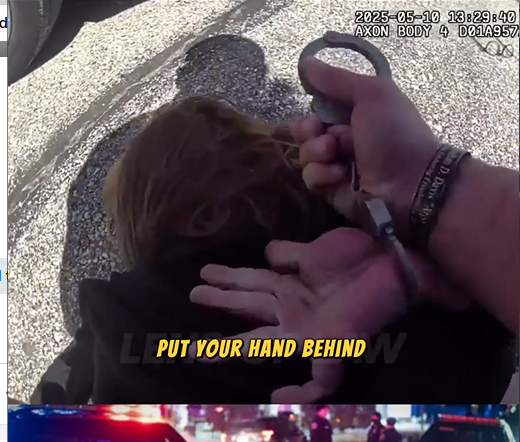
An officer may need to verify a driver's identity, license status, vehicle registration or other information depending on the reason for the stop.
WHAT LOOKS LIKE A SIMPLE PIECE OF PAPER CAN BECOME AN IMPORTANT PART OF THE ENTIRE ENCOUNTER.
BODYCAM RECORDS THE CONVERSATION UP CLOSE
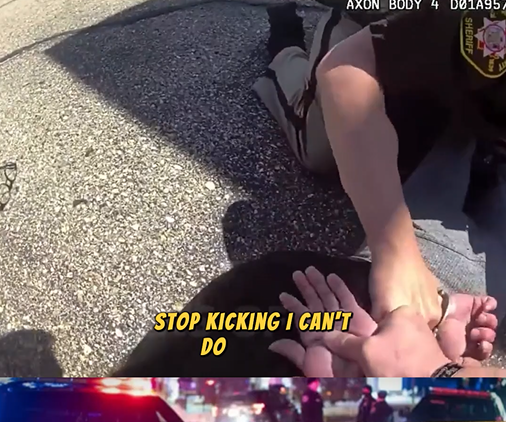
One reason footage like this attracts attention is the perspective.
Instead of watching the encounter from across the street, viewers effectively see what the officer sees.
The camera captures the vehicle, the driver's movements and much of the conversation taking place beside the window.
Body-worn cameras have become an important source of evidence and public documentation in American policing, particularly during traffic stops and arrests.
THE CAMERA CAN PRESERVE DETAILS THAT MIGHT OTHERWISE BE REMEMBERED VERY DIFFERENTLY BY THE PEOPLE INVOLVED.
A TRAFFIC STOP IS MORE THAN THE MOMENT A CAR PULLS OVER
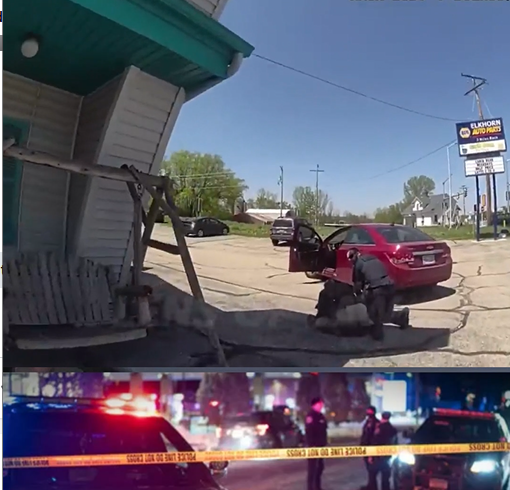
Most traffic stops follow several basic stages.
An officer observes a suspected violation, signals the vehicle to stop and approaches the driver. The officer may then request identification and vehicle documents before checking available records.
What happens next depends entirely on what officers discover and how the encounter develops.
Sometimes a warning is issued.
Sometimes there is a citation.
In other cases, officers discover additional issues that can extend the stop.
THAT UNCERTAINTY IS WHY EVEN AN ORDINARY TRAFFIC STOP CAN BECOME INTERESTING BODYCAM FOOTAGE.
THE DRIVER BEGINS SEARCHING THROUGH HER DOCUMENTS
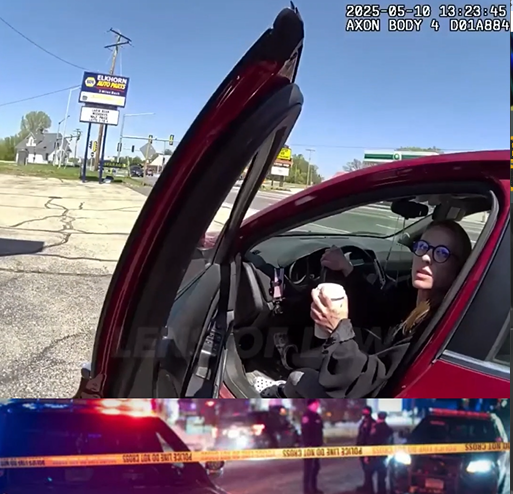
The footage shows the woman handling paperwork while seated behind the wheel.
For viewers, this might seem like a minor detail.
For an officer conducting a stop, however, determining whether the information being presented matches official records can be an essential part of deciding what happens next.
The bodycam allows viewers to follow that process almost in real time.
EVERY DOCUMENT, QUESTION AND RESPONSE CAN ADD ANOTHER PIECE TO THE STORY.
WHY BODYCAM CHANGES HOW WE VIEW TRAFFIC STOPS
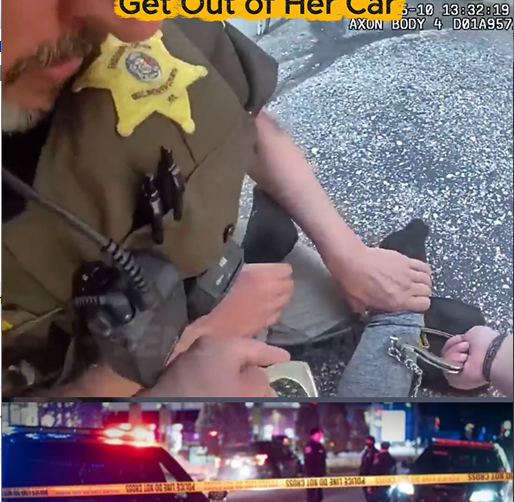
The footage contains an AXON BODY 4 overlay and timestamp.
That perspective can be particularly valuable because a short social-media clip may begin in the middle of an encounter.
Without the earlier footage, viewers might not know why the vehicle was stopped or what officers had already learned.
Without the later footage, they may not know whether the driver received a warning, citation, was detained, or simply drove away.
THE MOST VIRAL MOMENT IS NOT ALWAYS THE MOST IMPORTANT MOMENT.
SMALL DETAILS CAN CHANGE AN ENTIRE ENCOUNTER
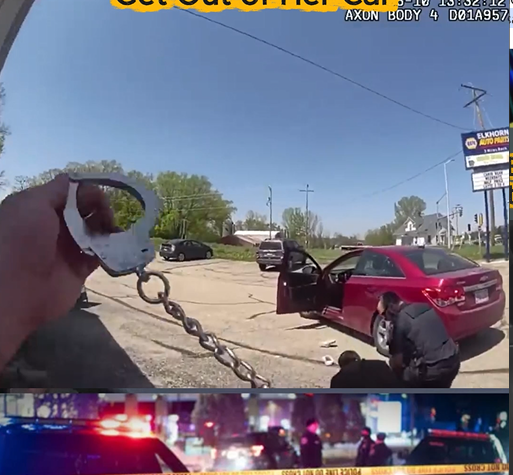
Traffic-stop footage demonstrates how quickly an officer must process information.
The driver's statements, identification, registration information and behavior may all contribute to what happens next.
At the same time, drivers are reacting to questions and instructions while trying to understand why they were stopped.
That interaction can remain completely calm—or change unexpectedly.
THERE IS NO GUARANTEE THAT A STOP WILL END THE WAY IT BEGAN.
WHY THE FULL VIDEO MATTERS
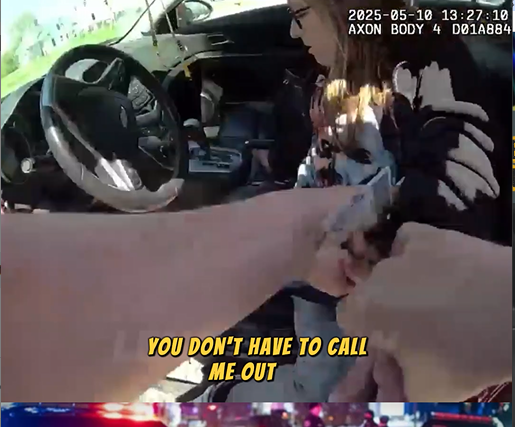
A screenshot captures only a fraction of a second.
It cannot tell us what happened five minutes earlier or five minutes later.
That is especially important when police footage circulates online.
A dramatic title or short edit can remove the context surrounding an encounter. Watching a longer sequence allows viewers to hear more of the conversation and understand how events developed.
CONTEXT CAN COMPLETELY CHANGE HOW A POLICE ENCOUNTER IS UNDERSTOOD.
FROM A SIMPLE DOCUMENT CHECK TO THE FINAL OUTCOME
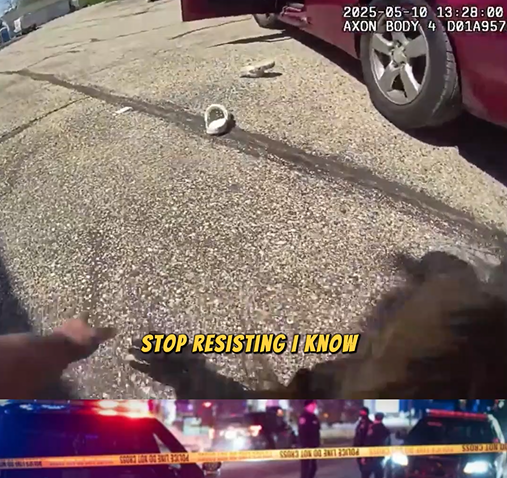
The image of a woman sitting behind the wheel of a red vehicle may initially look like an ordinary traffic stop.
But that is exactly what makes footage like this interesting.
The viewer begins at the same point as the officer—with limited information.
What was the reason for the stop?
What information is on the documents?
What will the officer discover?
And most importantly:
HOW WILL THE ENCOUNTER END?
The answers only become clear as the footage continues.
A ROUTINE STOP CAN REMAIN ROUTINE—OR ONE SMALL DISCOVERY CAN COMPLETELY CHANGE WHAT HAPPENS NEXT.
WATCH THE FULL ENCOUNTER https://www.youtube.com/watch?v=vVLfKVWlaB8
Comments (0)
Loading comments...
May You Like

A Suspicious Vehicle Leads Officers Into an Unexpected Chase
COP SLAMS INTO PULLED OVER TRUCK

Cop thinks sandwich is phone













