Crash Investigation Escalates When Driver Confronts Officers
Crash Investigation Escalates When Driver Confronts Officers
A Routine Crash Investigation Starts to Change
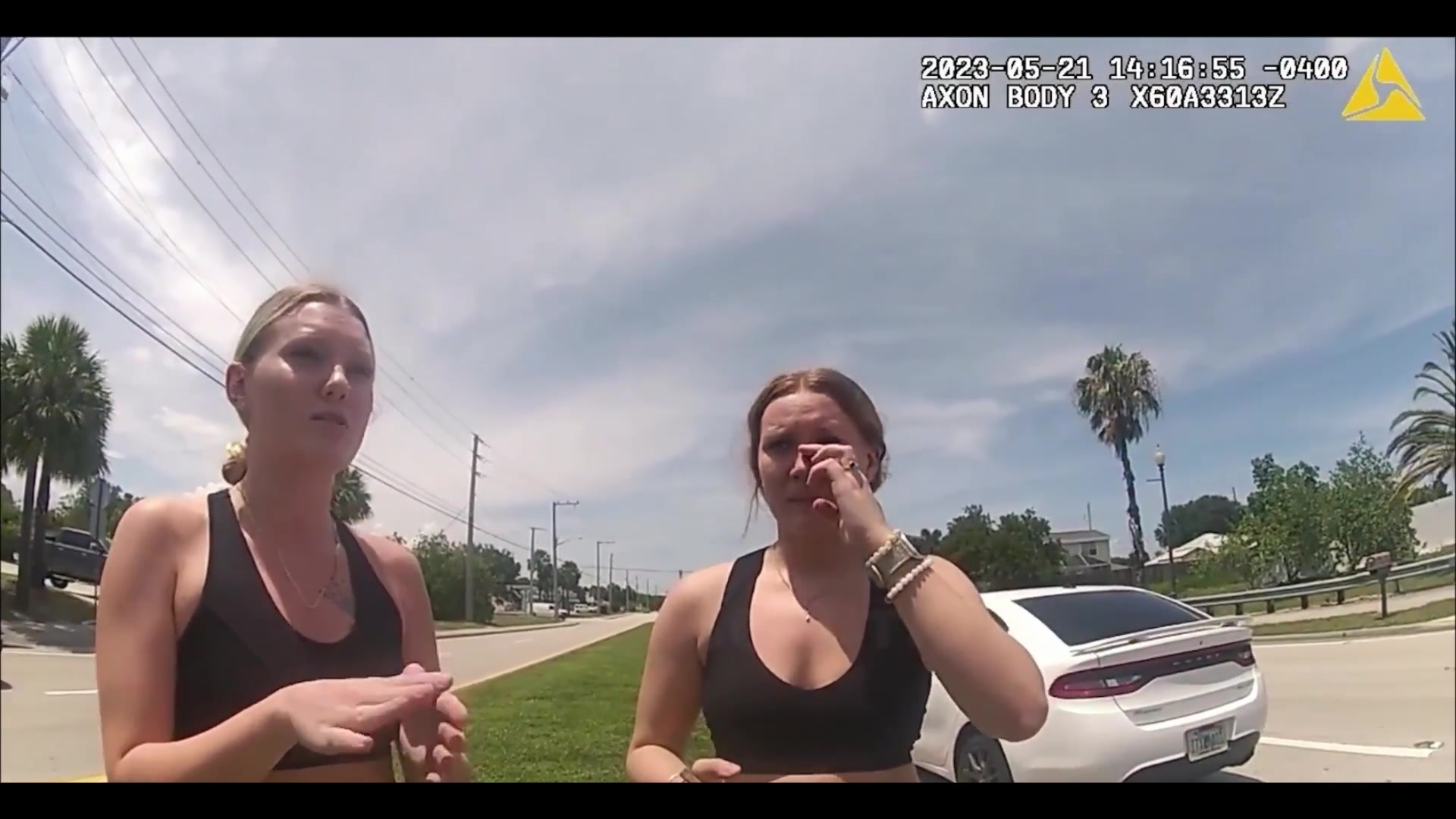
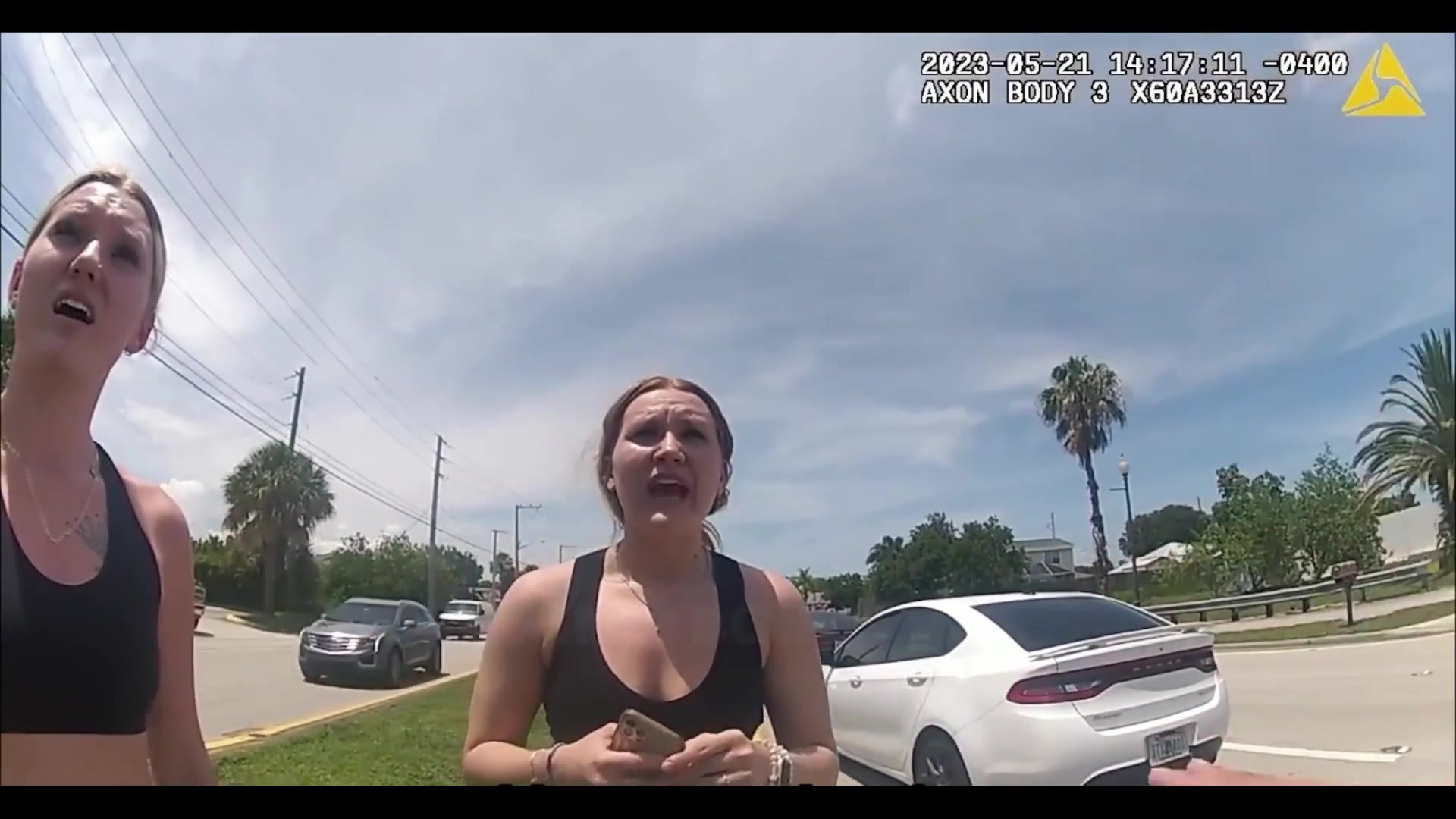
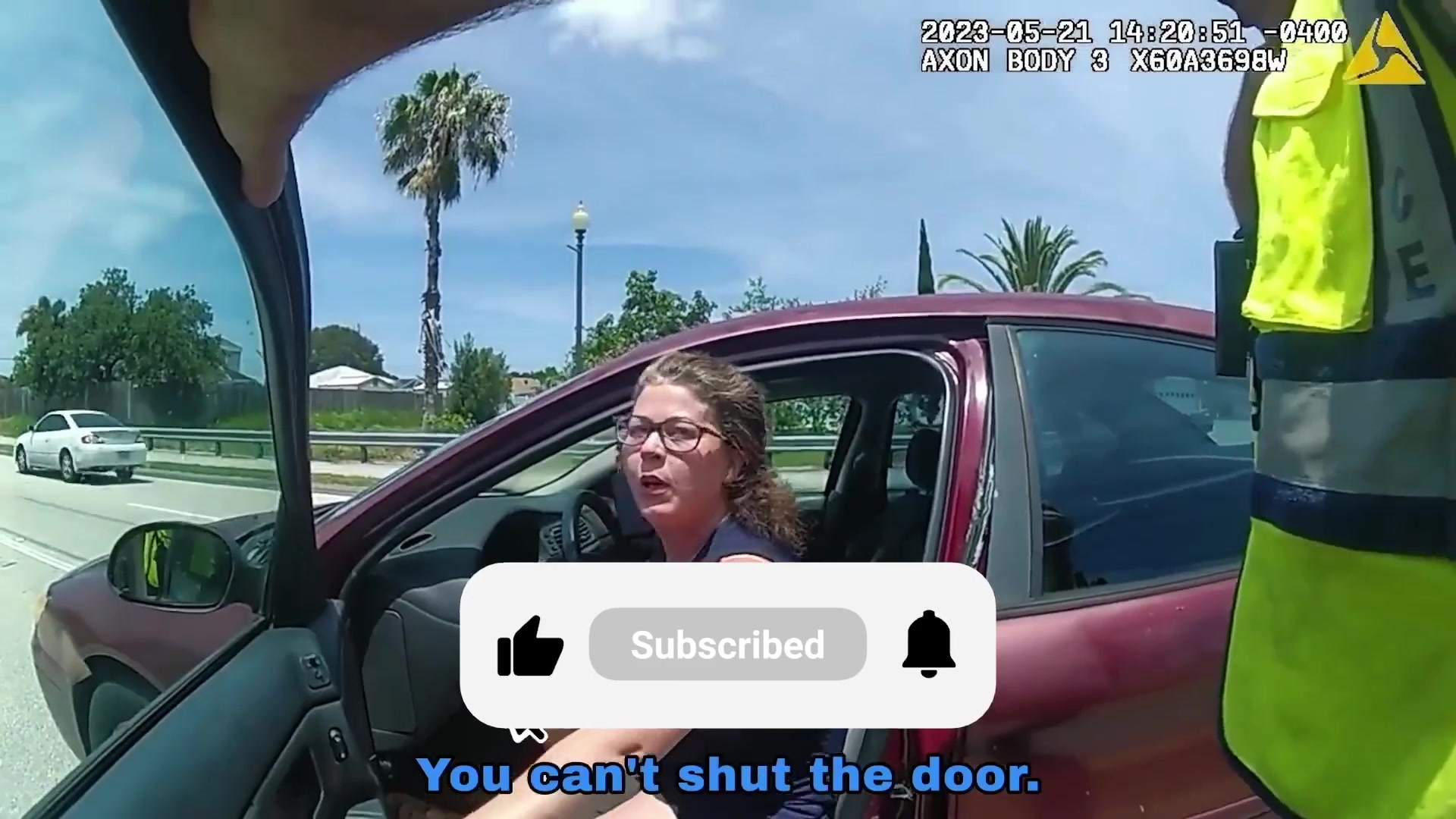
The supplied body-camera footage is timestamped May 21, 2023 and shows officers working a daytime traffic-crash investigation. A maroon vehicle is stopped along the roadway while officers in high-visibility traffic vests speak with a woman seated in the driver’s position. Palm trees, bright sunlight and moving traffic frame what initially looks like an ordinary post-crash roadside investigation.
The tension grows through conversation rather than through an immediate chase or dramatic arrest. The woman challenges officers, questions what they are doing and becomes increasingly resistant to the way they are trying to manage the scene. At one point she tells an officer, “You can’t shut the door,” illustrating how even small procedural actions have become points of conflict.
The body-camera overlay provides a firm date, but research did not produce a police report or reliable local-news story that could be matched to this exact woman, vehicle and sequence with enough confidence to publish her identity, the department, precise crash location, charges or court outcome. Similar crashes from the same date were excluded when the vehicle and circumstances did not match.
That means the most responsible account is built from what the footage itself establishes: a crash investigation, a roadside disagreement, escalating resistance and officers eventually moving from conversation toward physical control.
Why Officers Need Control of a Crash Scene
A traffic crash can look static after the vehicles have stopped, but the scene remains dangerous. Officers may be standing only feet from active traffic while drivers, passengers, witnesses and tow operators move around damaged vehicles. Their first priorities commonly include preventing a second collision, checking for injuries, identifying the drivers and preserving enough information to determine what happened.
That requires a degree of scene control. Officers may direct people to remain in a vehicle, step to a safer location, provide identification or stop interfering while measurements, statements or other investigative tasks are completed.
The footage shows that process becoming difficult. Instead of a simple exchange of information, the officer repeatedly has to address the woman’s behavior and explain or reinforce instructions. Her objections increasingly dominate the interaction.
Disagreement with an officer is not automatically a crime. People involved in crashes can be upset, confused or angry, especially when they believe another driver caused the collision. But when a person’s actions interfere with an investigation or create a safety concern, officers may respond with progressively firmer directions.
The important question is not whether the woman sounds angry. It is how the encounter develops over time and what officers reasonably perceive as they attempt to complete their work.
The Driver Refuses to Let the Encounter Settle
As the video continues, the woman remains focused on challenging the officers’ actions. Her tone and body language make it increasingly difficult for the encounter to return to a routine exchange.
Body cameras are particularly useful in situations like this because they preserve the buildup. A short clip showing only the moment officers put hands on someone can remove minutes of instructions, warnings and arguments that came before it. Conversely, the existence of an argument does not automatically justify every later police action. The entire sequence matters.
Here, officers repeatedly communicate with the woman while maintaining their positions around the vehicle. The maroon car remains central to the scene, and the roadside environment means officers also have to pay attention to passing traffic and other people nearby.
The woman’s continued resistance to instructions eventually changes the officers’ tactical posture. They move closer, limit her movement and prepare to physically control the situation.
Without the exact incident report, it would be inappropriate to assign a legal label to every act visible on camera. The video can show resistance and confrontation, but the precise statutory basis for any arrest would require the agency’s records.
Conversation Gives Way to Physical Control
The most significant transition occurs when verbal management is no longer enough to keep the encounter moving. Officers physically engage with the woman and the crash investigation becomes a detention scene.
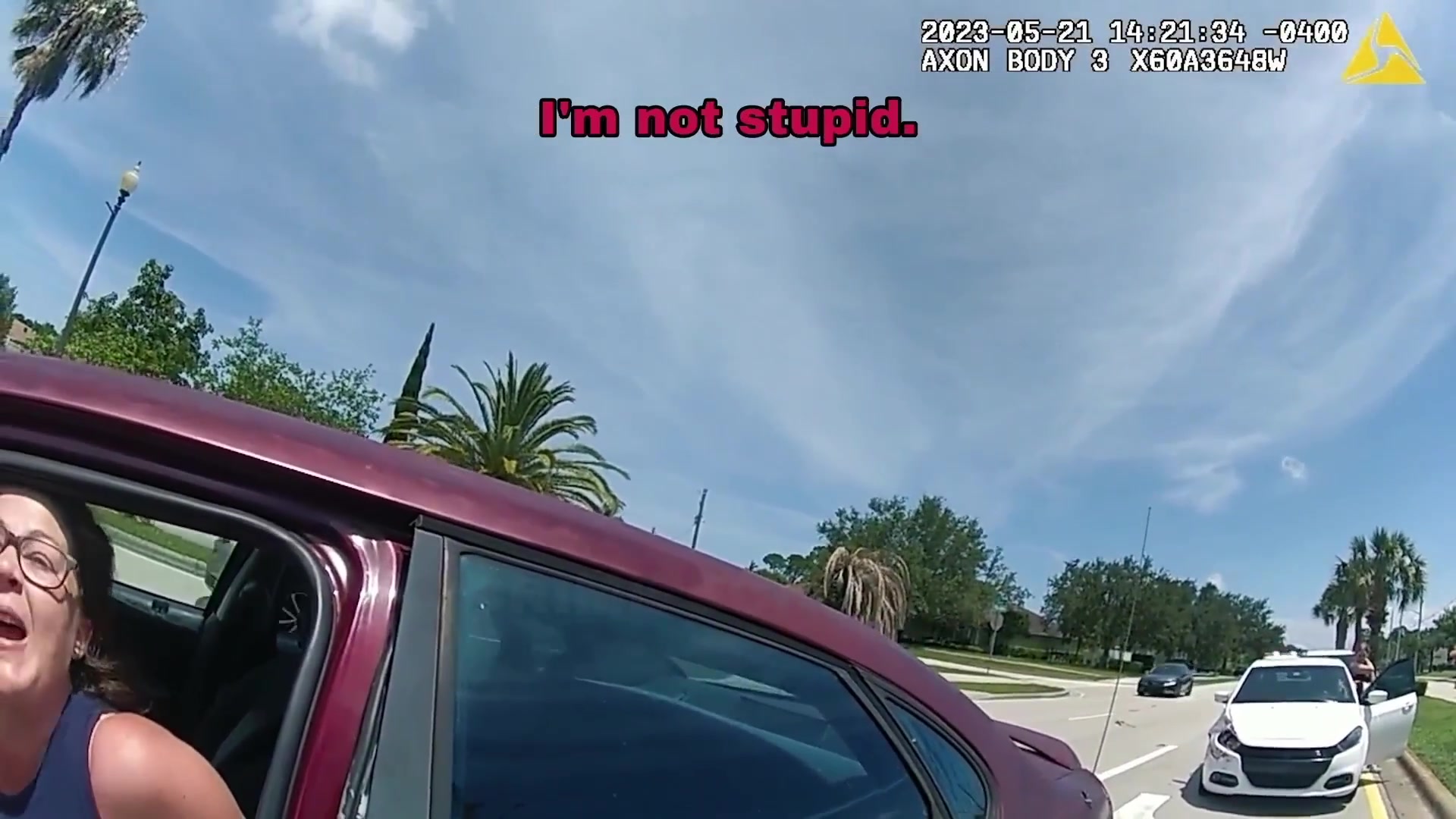
Physical police encounters can look especially chaotic through a body camera. The lens moves with the officer’s torso, arms frequently block the view, and a struggle can shift outside the camera’s field of vision within seconds. Individual screenshots therefore provide only fragments of what happened.
The continuous footage is more informative. It shows the interaction before officers move in, the repeated communication and the escalation that precedes hands-on control.
Use of force is governed by the circumstances officers face at the time, including resistance, attempts to flee, threats, the seriousness of the suspected offense and immediate safety concerns. A body-camera recording can help evaluate those factors, but a complete legal assessment normally also requires reports, statements and department policy.
Because those materials could not be reliably matched to this footage, this article does not declare whether a particular force action was legally justified or identify charges that cannot be verified. It describes the visible progression instead.
What the Video Can Actually Establish
Several details are directly supported by the supplied recording. The encounter takes place during daylight on May 21, 2023. Officers appear to be handling a traffic-crash investigation. The woman is associated with a maroon vehicle and repeatedly argues with officers. The interaction becomes more confrontational and eventually involves physical police control.
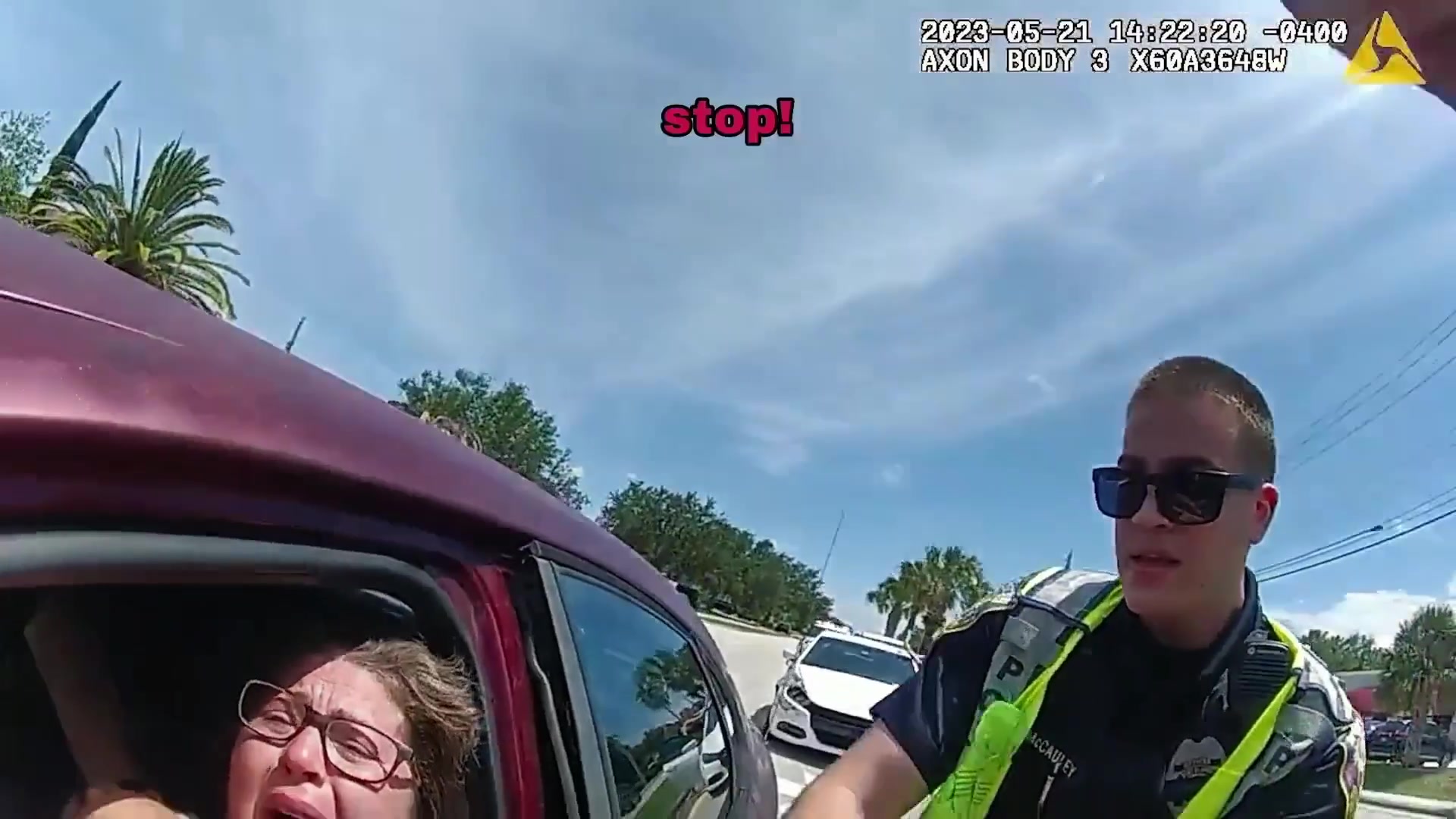
Other details remain uncertain. The footage available here does not safely establish the woman’s name, exact jurisdiction, the cause of the original collision, whether citations were issued, what criminal charges followed or how any case was resolved in court.
That distinction is important because body-camera videos are frequently reposted under attention-grabbing titles. A title can accurately summarize the uploader’s interpretation while still omitting legal context or using words such as “aggressive” more broadly than an official report would.
Responsible reporting should therefore use the title as a lead for research, not as proof. When independent verification fails, the article should narrow its claims rather than attach information from a similar but unrelated incident.
The video remains compelling without invented details. It documents the transformation of a crash investigation into a physical confrontation in roughly five minutes of footage.
A Crash Scene Becomes a Police Confrontation
The strongest lesson from the recording is how rapidly a roadside investigation can become dominated by behavior rather than by the original crash.
Officers arrive or remain at the scene to determine what happened between vehicles. They need statements, identification and enough control of the roadway to work safely. But as the conversation deteriorates, attention shifts away from the collision itself and toward managing the driver.
That shift consumes time and increases risk. Officers who might otherwise be documenting damage or clearing traffic are instead concentrating on one person’s movements and reactions. The driver, meanwhile, becomes increasingly focused on challenging the officers rather than resolving the crash investigation.
The footage also illustrates why context matters when viewing police videos online. The physical portion is visually dramatic, but it is the product of an interaction that has been building for minutes. Watching only the final struggle creates a different impression from watching the conversation that leads to it.
At the same time, context should not be used to invent facts. Until an exact police report or court record can be verified, the identities, charges and final legal outcome remain unknown. The body camera provides a direct record of behavior, not a complete case file.
What can be said with confidence is that an ordinary crash investigation became significantly more difficult as the driver’s confrontation with officers intensified. Verbal disagreement turned into a struggle for control, and the original purpose of the roadside contact became secondary to resolving the escalating encounter.
Watch the full footage to see how a straightforward crash investigation develops minute by minute into a physical confrontation with officers.
Comments (0)
Loading comments...
May You Like

🚨⛽ Man Caught in a Disturbing Incident at a Gas Station | Police Respond US

Neighborhood Grocery Store Suddenly Erupts Into Chaos
Police Pull Over Paralyzed Driver With Blind Passenger