
Cop Begs for Her Life After Fugitive Pulls Out Gun
Routine Check Turns Into a Fight for Survival When Fugitive Pulls a Gun on Illinois Officer
Just after 5 a.m. on July 26, 2018, Lakemoor Police Officer Brianna Tedesco noticed something that did not look right. A silver Kia Sorento with Pennsylvania plates was backed onto a secluded gravel access road near Four Seasons Boulevard and Sullivan Lake Road in the small northern Illinois community. The vehicle was far from Pennsylvania, parked in an unusual place, and apparently occupied by a man who had been sleeping behind the wheel.
Tedesco could not have known who she had found.
The driver was Kenneth Martell, 36, a fugitive from Pennsylvania. Authorities there had obtained a murder warrant after investigators accused Martell of killing an elderly man, Theodore Garver, during a violent robbery only days earlier. Martell had traveled hundreds of miles west while police searched for him.
None of that information was available to Tedesco when she first walked toward the SUV. To her, it was a suspicious vehicle check in the predawn darkness.
Within minutes, the driver gave her a false name. Dispatch could not find a matching driver's-license record. Tedesco returned to the window and asked whether he had anything in the vehicle bearing his real name.
Then she saw the gun.
The encounter changed instantly from a quiet roadside investigation into a close-range struggle for control of a firearm. Tedesco screamed and fought to keep the weapon from being turned on her. As the struggle continued, she pleaded with the armed man not to shoot. Backup Officer Anthony Loiacono arrived in the middle of the fight and confronted a situation that investigators would later describe as an ambush. Martell reached toward another weapon, and Loiacono opened fire.
Martell died at the scene.
The Lake County State's Attorney later concluded that the officers acted in self-defense. Months afterward, officials released body-camera and dash-camera footage that showed just how quickly the encounter escalated. Years later, the case returned to the news for another reason: Tedesco said the experience left her with post-traumatic stress, and she sued after the Lakemoor Police Department terminated her employment in 2019.
The supplied video matches this incident precisely. It contains the Inside Edition report about Tedesco and Martell, including footage of the vehicle, the confrontation and the isolated road where the shooting occurred. The complete story, however, reaches far beyond the frightening seconds shown in the viral clip.
A Silver SUV on a Quiet Gravel Road
Lakemoor is a small community northwest of Chicago. In the early morning hours, the area around Four Seasons Boulevard was quiet enough that an unfamiliar vehicle parked on a gravel access road stood out.
Contemporary reporting from the Daily Herald said the Kia was backed into the road and did not have a front license plate. Officer Tedesco approached to investigate.
The man inside appeared to have been sleeping.
At first, the interaction was relatively calm. Tedesco asked questions about why he was there. The driver said he was resting. He did not present a driver's license and instead identified himself as “James Dunkin.”
Tedesco had no reason yet to know that the name was false.
That is one of the details that makes the footage so unsettling in retrospect. The officer's tone is conversational because the information available to her does not yet indicate that she is standing beside a man wanted for a killing in another state.
She tells him she needs to make sure he does not have warrants.
Unknown to her, he had an extremely serious one.
The Man Behind the Wheel Was Kenneth Martell
Authorities identified the driver as Kenneth Martell, 36, of Pennsylvania.
Only days earlier, Pennsylvania investigators had begun searching for him in connection with the death of Theodore Garver in Crawford County.
The Lake County State's Attorney's later investigative summary said Martell had tied, robbed, beaten and stabbed Garver during the July 23 attack at Garver's Beaver Township home. Investigators said Martell then forced other people at gunpoint to help dispose of the body, which was left in a lake near the residence.
A murder warrant was issued.
Pennsylvania State Police publicly warned that Martell should be considered armed and dangerous. They were looking for the same Kia Sorento that Tedesco eventually encountered roughly 500 miles away in Illinois.
But interstate information does not magically appear in an officer's mind when a vehicle is spotted. Until the plate and identity were checked, Tedesco was working from what she could see directly in front of her.
The False Name Begins to Unravel
After Martell said he was “James Dunkin,” Tedesco attempted to verify the information.
Dispatch could not locate a driver's-license record under that name.
The body-camera sequence then reaches its most consequential moment. Tedesco returns to the driver's window and asks whether there is anything inside the SUV showing his name.
The man looks downward into the vehicle.
Within seconds, Tedesco realizes he has a gun.
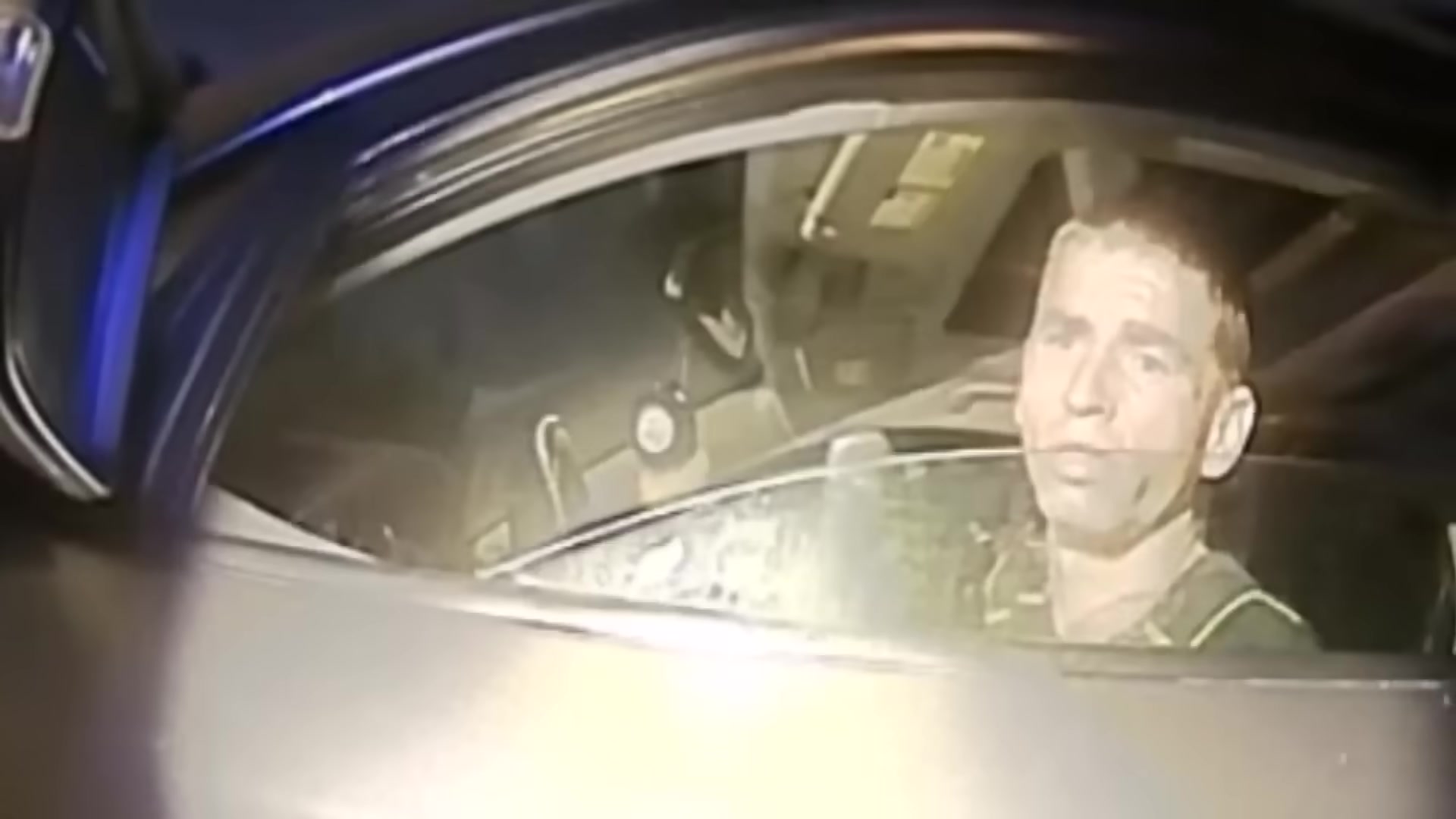
The calm questioning ends immediately.
There is no gradual argument and no lengthy warning period. The officer's voice changes as she recognizes the threat and grabs for the weapon.
A Close-Range Fight Over the Gun
The struggle lasted only seconds, but video makes those seconds feel much longer.
Tedesco was positioned beside the driver's door, close enough that retreat was not simple once the gun appeared. She grabbed the weapon and fought to control its direction.
Martell repeatedly tried to maintain control of it.
Tedesco screamed for help.
At one point, she pleaded with him not to shoot her.
Inside Edition later highlighted that plea when the footage was released publicly in January 2019. The line became the headline because it captured the vulnerability of an officer who, only moments earlier, had been conducting what appeared to be a routine investigation.
But focusing only on the words risks missing what she was doing physically at the same time.
She did not simply freeze. She continued fighting for the gun.
That mattered because losing control of the weapon could have given Martell an unobstructed shot at extremely close range.
Backup Arrives in the Middle of the Struggle
Officer Anthony Loiacono arrived while the fight was still underway.
From his perspective, the scene was already at its most dangerous point. He did not witness the calm beginning. He arrived to see another officer engaged in a physical struggle with an armed man.
Investigators later determined that Martell had access to two handguns.
As the confrontation continued, Martell attempted to reach another firearm, according to the official review and subsequent reporting.
Loiacono fired.
Martell was struck and died at the scene.
The shooting ended the immediate threat, but it opened a much larger investigation into who Martell was, why he had been in Illinois, what was inside the vehicle and whether the officers' use of deadly force was legally justified.
The Quiet Road Becomes a Major Crime Scene
By daylight, the secluded area where Tedesco had stopped to check an unusual vehicle was filled with investigators.
The Lake County Major Crimes Task Force assumed responsibility for investigating the officer-involved shooting.
Investigators interviewed witnesses, photographed the location, collected physical evidence, reviewed video and examined the autopsy findings.
The supplied report footage shows the isolated nature of the road where the SUV had been parked.
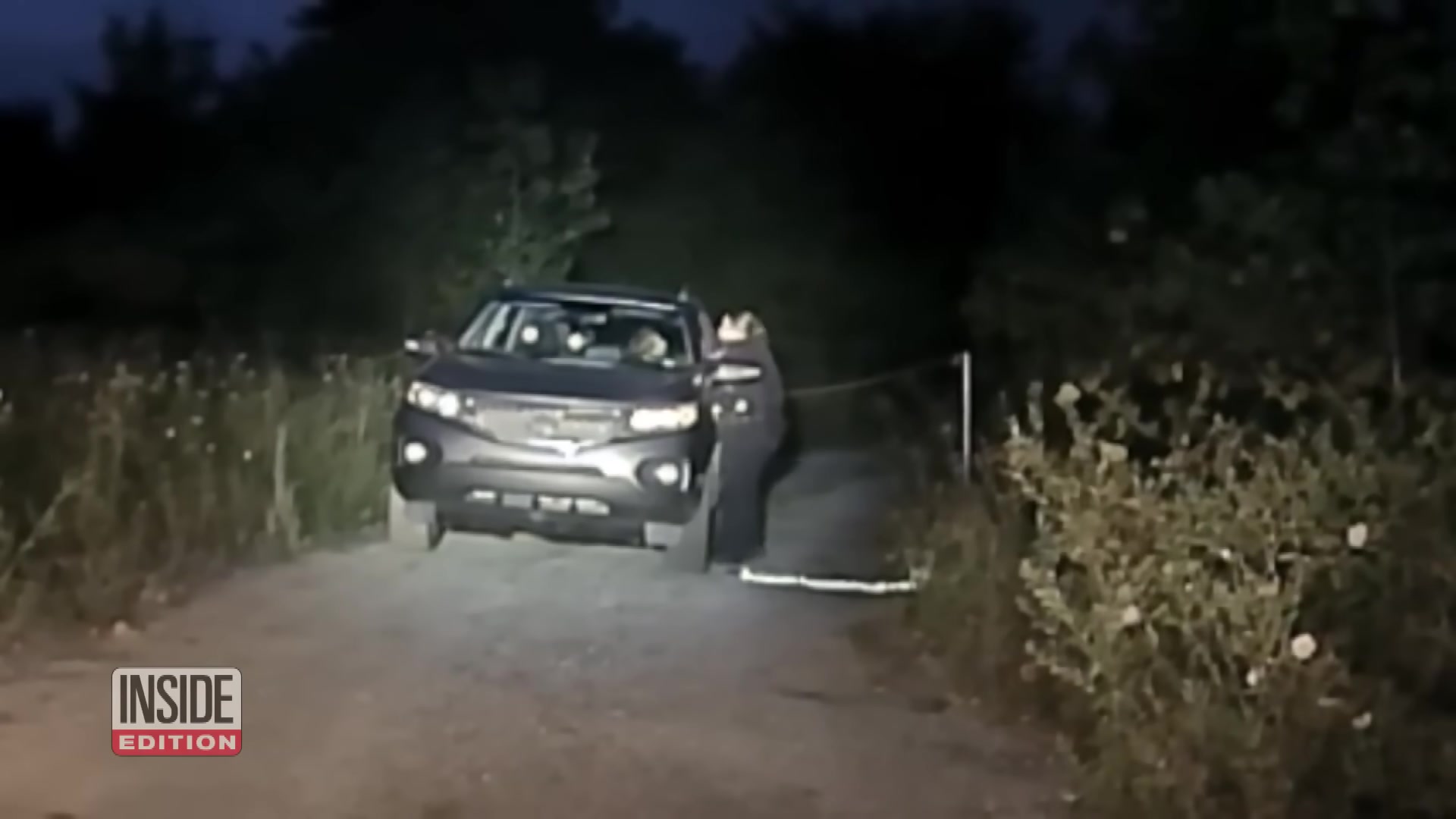
The location helps explain why Tedesco noticed the Kia in the first place. It was not sitting in a busy parking lot or along a normal travel lane. It was positioned on a gravel access route where a vehicle with out-of-state plates attracted attention.
For Martell, the location may have appeared secluded enough to sleep without attracting notice.
Instead, it brought a patrol officer directly to him.
Investigators Discover the Pennsylvania Connection
Once Martell's identity became known, the encounter suddenly connected to a homicide investigation hundreds of miles away.
Pennsylvania State Police had already been looking for him.
Theodore Garver's body had been found in a pond, and authorities had warned that Martell might leave the Crawford County area.
The vehicle description was unusually specific. Police identified a 2011 Kia Sorento with Pennsylvania registration and even noted distinctive Pittsburgh Steelers items inside the SUV.
That vehicle ultimately surfaced in Lakemoor.
Investigators in Illinois now had to coordinate with Pennsylvania authorities and determine whether evidence from the SUV was connected to Garver's killing.
More Weapons Are Found Nearby
The encounter was already dangerous with the handguns at the vehicle. The later search made the situation look even more serious.
Reporting from ABC7 Chicago said investigators searching nearby woods recovered additional weapons, including rifles, shotguns and crossbows.
The official Lake County review also documented the broader evidence collected after the shooting.
The discovery reinforced why officers and prosecutors viewed the roadside confrontation as a lethal threat rather than a misunderstanding that had escalated unnecessarily.
Martell was not simply a motorist who panicked during a document check. Authorities said he was a murder fugitive who had armed himself and had previously made statements suggesting he would resist police.
Statements Before the Encounter Take on New Meaning
The State's Attorney's investigative summary said Martell's relatives later described his illegal drug use, including methamphetamine.
They also reported that he had made statements indicating he believed police would eventually kill him and that he would not surrender without a fight.
Those statements were not known to Tedesco during the vehicle check.
That distinction is critical.
They help investigators understand Martell's possible state of mind after the event, but they cannot be used to pretend the officer had advance knowledge of his intentions.
From Tedesco's perspective, the warning signs developed in real time: no license, a false identity that could not be verified, unusual movements inside the vehicle and then the firearm.
The State's Attorney Reviews the Shooting
The Lake County State's Attorney's Office reviewed the Major Crimes Task Force investigation to determine whether the use of deadly force was justified.
In December 2018, State's Attorney Michael Nerheim concluded that the officers acted lawfully in self-defense.
The report described the situation as an ambush and emphasized that both officers were only feet away from a man armed with handguns.
The conclusion was important because an officer-involved death does not become legally justified merely because the person killed was wanted for another crime.
The analysis had to focus on the threat present during the Lakemoor encounter itself.
The video, witness statements and physical evidence supported the conclusion that Martell presented an immediate deadly threat.
The Footage Is Released to the Public
In January 2019, the Lake County State's Attorney released body-camera and dash-camera video from the incident.
That release transformed a case previously described through police statements into something the public could see and hear.
The footage shows the mundane beginning of the contact, the identity questions and the sudden appearance of the gun.
It also records Tedesco's fear in a way no written summary could reproduce.
The video spread quickly through local and national media. Inside Edition produced the segment contained in the supplied file. ABC stations and other outlets also published portions of the encounter.
For viewers, the strongest impression was how little warning separated the routine conversation from the fight.
Why This Was Not Really a Conventional Traffic Stop
Many headlines called the encounter a traffic stop, but the circumstances were slightly different.
Tedesco did not initially stop Martell for speeding, a broken light or another moving violation.
She encountered the Kia already parked on the gravel access road.
She approached because the vehicle looked out of place.
That difference matters because officers conducting suspicious-vehicle checks often have less information than officers making planned stops. There may be no obvious offense and no prior identification of the driver.
The officer must develop the situation through conversation and database checks.
Here, the database problem was the first major clue that the driver's story did not add up.
The False Identity Bought Martell Only a Few Minutes
Giving a false name can create temporary uncertainty, but modern police checks make it difficult to sustain a fabricated identity when an officer asks for documentation.
Martell reportedly had no driver's license to hand over.
When dispatch could not find “James Dunkin,” Tedesco asked for another document carrying his name.
That request appears to have pushed the encounter toward its decisive moment.
If Martell believed the false identity was collapsing, he faced the possibility that a further check would reveal the Pennsylvania warrant.
Instead of surrendering, he produced a firearm.
Twenty Seconds Can Be an Entire Use-of-Force Event
News reports generally described the physical struggle as lasting about 20 to 26 seconds.
That sounds brief until the footage is watched in real time.
In a close-range firearm struggle, every second contains multiple decisions.
Tedesco has to keep the muzzle away from herself.
She has to remain on her feet.
She has to communicate that she needs help.
She has to evaluate whether releasing the gun would allow Martell to shoot her.
Loiacono, arriving later, has to understand the scene almost instantly and decide whether firing can stop the threat without striking Tedesco.
This compression of time is one reason body-camera footage is so valuable when reviewing police use of force. A written report naturally organizes events into sentences. Video shows how many of those events overlap.
The Officer Survives, but the Incident Does Not End for Her
The most important later chapter emerged years after the shooting.
Tedesco said she developed post-traumatic stress following the confrontation.
In interviews with CBS Chicago and ABC7 in 2022, she described becoming fearful and feeling as though someone might be waiting to kill her.
She returned to patrol after the incident but said she struggled with triggers including loud noises, screaming and working alone.
According to her federal lawsuit, a doctor sought workplace accommodations, including light-duty assignments.
Tedesco was ultimately fired from the Lakemoor Police Department in July 2019, approximately a year after the Martell encounter.
She later sued the village and police chief, alleging disability discrimination and retaliation.
From Being Hailed as a Hero to Fighting for Her Job
The contrast was striking.
Immediately after the 2018 encounter, Tedesco was praised for surviving the armed struggle and preventing Martell from gaining control of the situation.
Later, she said the psychological effects of the same incident contributed to the end of her police career in Lakemoor.
The lawsuit turned the case into a broader discussion about how police departments respond when officers experience trauma from violent encounters.
Law-enforcement culture often emphasizes composure and resilience. But body-camera footage can document events capable of affecting officers long after physical injuries heal.
Tedesco's case highlighted that tension publicly.
Theodore Garver Remains Central to the Story
The dramatic police footage can easily make the Illinois encounter seem like the entire case.
It was not.
Three days earlier, Theodore Garver had been killed in Pennsylvania.
Garver was a retired attorney living in Crawford County. Authorities alleged that Martell entered his home, robbed him and killed him before disposing of his body.
Because Martell died in Illinois, he never stood trial for Garver's killing.
That means descriptions of Martell as Garver's killer in contemporary reporting reflect the investigators' allegations and the outstanding murder warrant, not a criminal conviction obtained after trial.
The distinction is important even in a case where investigators publicly expressed strong confidence in the evidence.
The Roadside Encounter Ended a Multi-State Manhunt
Pennsylvania authorities had warned that Martell might leave the area.
He did.
By the morning of July 26, he had traveled roughly 500 miles west into northern Illinois.
There was no publicly identified connection drawing him specifically to Lakemoor. Investigators considered the possibility that he was simply passing through and had chosen the secluded access road as a place to sleep.
That randomness is one of the most remarkable aspects of the case.
A small-town officer on routine patrol happened to notice a vehicle carrying a man wanted in another state for an extremely serious crime.
The encounter was not the result of a planned fugitive operation.
It began with observation.
The Video Demonstrates the Limits of What Officers Know
Viewers watch the footage with knowledge Tedesco did not have.
We know the man is Kenneth Martell.
We know Pennsylvania police were searching for him.
We know the false name will not check out.
We know a gun is about to appear.
That creates hindsight bias.
Every movement can look like an obvious warning because the outcome is already known.
For the officer in the moment, however, each piece of information arrived sequentially.
This is one reason responsible analysis should distinguish between what investigators learned later and what an officer reasonably knew at a particular second.
The Second Gun Changed the Backup Officer's Decision
According to the official review, Martell had access to two handguns.
The first weapon was already part of the physical struggle.
When Martell moved toward another firearm, the danger expanded further.
Loiacono had to consider not only the gun being contested but the possibility that Martell could arm himself with another weapon while Tedesco remained within feet of him.
The State's Attorney concluded that deadly force was justified under those circumstances.
The ruling did not depend on Martell's reputation or his fugitive status. It focused on the immediate armed threat facing the officers.
Why the Footage Remains Powerful Years Later
There are police videos with more vehicles, longer pursuits and larger scenes.
This one is memorable because it is so confined.
Almost everything important happens within a few feet of one car.
The officer asks for identification.
The driver looks down.
A gun appears.
The officer screams.
Backup arrives.
The entire encounter turns on seconds and inches.
That intimacy makes the video difficult to watch because there is no physical distance between the officer and the threat.
The Case Is Also a Reminder About Routine
Police work contains many repeated tasks: checking parked cars, running plates, verifying names and asking why someone is in a particular place.
Most of those encounters do not become violent.
That normality can make the rare sudden escalation even more dangerous.
Tedesco's interaction demonstrates why officers often treat uncertainty cautiously even when a person initially appears cooperative.
A routine check can remain routine for several minutes and then change almost instantly.
What the Sources Establish
The central facts are well documented by the Lake County State's Attorney's review and contemporaneous reporting.
Shortly after 5 a.m. on July 26, 2018, Officer Brianna Tedesco investigated a suspicious Kia Sorento parked near Four Seasons Boulevard and Sullivan Lake Road in Lakemoor.
The driver was Kenneth Martell, 36, who gave the false name “James Dunkin.”
Dispatch could not find a matching driver's-license record.
When Tedesco returned to the vehicle and asked for identifying documentation, Martell produced a handgun.
Tedesco struggled with him over the weapon and called for help.
Officer Anthony Loiacono arrived as the confrontation continued.
Martell had access to another gun, and Loiacono fired, killing him.
Martell was wanted in Pennsylvania under a murder warrant related to Theodore Garver's death.
The Lake County State's Attorney later determined that the officers' use of force was justified.
Body-camera and dash-camera footage was publicly released in January 2019.
Tedesco later said she developed PTSD from the encounter and filed a federal lawsuit after being terminated by the Lakemoor Police Department.
A Routine Question With an Answer the Officer Never Expected
The encounter began with an officer trying to learn who was sleeping in an oddly parked SUV.
It ended with the discovery that the driver was the subject of a multi-state murder manhunt.
Between those two points was a false name, a failed records check and one final question asking for proof of identity.
That question brought the hidden danger into the open.
The video is compelling not because viewers need exaggerated narration, but because they can watch the information change in real time. The officer begins with uncertainty. Suspicion increases. Then the firearm appears and there is no time left for investigation, only survival.
The Aftermath Lasted Much Longer Than the Struggle
The physical fight lasted less than half a minute.
The consequences lasted years.
Martell's death ended the Pennsylvania manhunt but prevented a trial on the murder allegation.
Garver's family was left with a killing that would never proceed through a conventional prosecution of the accused man.
Tedesco survived physically but later described significant psychological trauma.
Loiacono's shooting was subjected to a formal use-of-force investigation before prosecutors declared it justified.
The footage was released months later and became national news.
Then, four years after the incident, Tedesco's employment lawsuit brought the encounter back into public attention.
That timeline is a reminder that a police video may capture only seconds of an event whose effects extend far beyond the camera recording.
Watch the Full Encounter
The complete footage provides the context that a short viral clip cannot: the calm beginning, the false identity, the failed records check, the sudden appearance of the gun and the desperate struggle that follows.
Comments (0)
Loading comments...
May You Like

A Late-Night Escape Attempt Ends With Officers Making an Arrest

What Happens when you get Caught Shoplifter Stealing Local Store

Police Chase Ends as Driver Hits Stoplight, Crashes Into West Towne Mall












