
Cocky Driver Disrespects Police, Fails Miserably
When a Routine Traffic Stop Turns Into a Lesson in Roadside Decisions
A traffic stop can begin with something as ordinary as a speed-limit sign and still become an encounter that lasts far longer than anyone expected. The supplied police footage, recorded on the evening of June 26, 2025, follows exactly that kind of escalation. An officer stops a gray Acura sedan on a tree-lined urban road where the posted speed limit is 35 mph. The driver remains behind the wheel, but almost immediately the conversation becomes more difficult than a routine exchange of license, registration, and explanation.
The most compelling part of the footage is not a spectacular pursuit or a sudden act of violence. It is the slow change in the balance of the encounter. The driver repeatedly challenges the officers, questions what they are doing, and appears confident that the stop will proceed on his terms. The officers, meanwhile, continue gathering information and trying to keep the interaction controlled. As additional police vehicles become involved, the atmosphere changes from a simple roadside stop into a much more structured police response.
That progression makes the footage useful for understanding why traffic stops sometimes escalate even when the original reason for police contact appears relatively minor. The initial violation and the behavior that follows are two different things. A driver can disagree with a stop, ask questions, and preserve legal objections. But the choices made after an officer initiates a lawful detention can create entirely new issues.
Research for this article did not produce a reliable local-news story or official incident release that could be conclusively matched to this exact recording. The footage itself provides several useful clues, including the June 26, 2025 timestamp, the Acura sedan, the 35-mph roadway, and police markings visible later in the encounter. Because those clues were not enough to establish a complete official case record, this article does not invent the driver's identity, specific criminal charges, or a court outcome. Instead, it separates what the camera actually documents from the broader legal and practical context surrounding traffic stops.
A Stop on a 35-MPH Road Begins Calmly
The opening view is deceptively ordinary. The Acura is stopped along the right side of the roadway. A speed-limit sign reading 35 mph stands only a short distance ahead. Evening traffic continues to pass. Trees and residential properties line the road, and there is nothing about the environment itself that suggests the encounter is about to become complicated.
An officer approaches the driver's side. From the perspective of the police vehicle, the scene looks like countless other traffic stops conducted every day across the United States. The officer has positioned the patrol vehicle behind the Acura, creating a visible police presence while still leaving the roadway active.
Traffic stops follow a basic investigative sequence. The officer identifies the reason for the stop, makes contact with the driver, requests necessary documents, checks driving and vehicle information, and determines what enforcement action is appropriate. That process can end with a warning, a citation, an arrest, or another lawful disposition depending on what the officer learns.
The key to keeping that process brief is predictability. Officers generally want the driver to remain in a known position, avoid sudden movements, and provide information needed to complete the investigation. Drivers, in turn, benefit from knowing why they were stopped and what is expected of them.
In this footage, that ordinary sequence quickly becomes strained because the driver does not behave like someone interested in simply getting through the stop. His posture, tone, and responses communicate resistance to the officer's authority even while he remains seated in the car.
The Driver Turns the Stop Into an Argument
The camera soon moves closer to the Acura, giving viewers a clear look at the driver. He is wearing dark sunglasses and a cap and appears relaxed enough to continue debating the officers. His demeanor is one of the most noticeable features of the footage. He does not appear frightened or confused. Instead, he seems convinced that his interpretation of the situation should control what happens next.
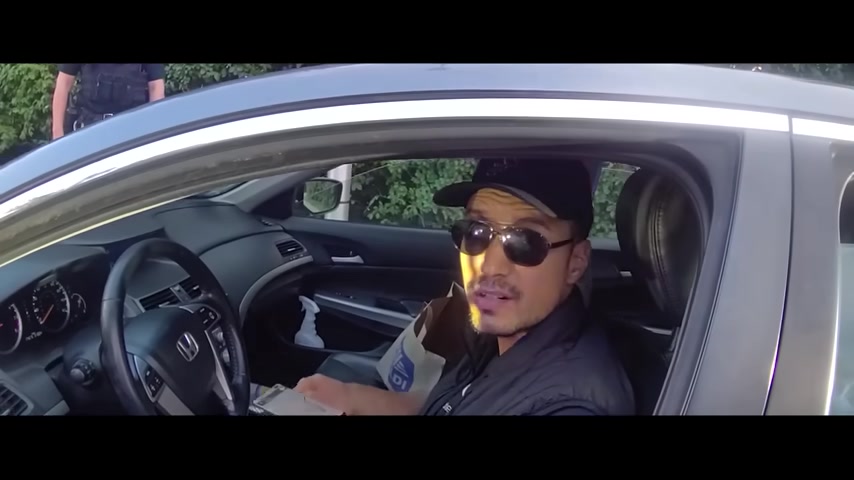
That confidence is important because it shapes the entire interaction. A traffic stop is not a negotiation in the ordinary sense. An officer does not need a driver's agreement before completing a lawful investigation. Likewise, a driver does not lose the right to question police merely because emergency lights are activated. The tension arises when questioning becomes a substitute for following lawful instructions.
There is a meaningful difference between saying, “Why did you stop me?” and behaving as though the answer must be accepted before the officer can proceed. The first is a reasonable request for information. The second can create an endless loop in which the officer is repeatedly forced to explain the same issue while the investigation goes nowhere.
The footage shows that loop developing. The driver continues engaging the officers verbally while police maintain their positions around the vehicle. What might have been a short interaction stretches into several minutes.
For viewers, this is the first major turning point. The story is no longer only about whatever driving behavior attracted police attention. It becomes about whether the driver will allow the officers to complete the stop without forcing every step into a confrontation.
Why Verbal Disrespect Is Not the Same as a Crime
The title attached to the video characterizes the driver's behavior as disrespectful. That may describe how the conversation feels, but it is not a legal conclusion. In the United States, people have broad constitutional protection to criticize police officers. Being sarcastic, argumentative, insulting, or unpleasant does not automatically create probable cause for arrest.
This distinction is essential when analyzing police footage. An officer cannot lawfully arrest someone merely because the person damaged the officer's pride. Police are expected to tolerate a significant amount of verbal criticism because they are exercising government authority.
But speech and conduct are not always the same thing. A person may verbally criticize an officer while still complying with lawful commands. The legal situation can change if the person begins physically interfering, attempts to leave a lawful detention, refuses a legally required action, or engages in conduct that obstructs the officer's duties.
That is why responsible analysis should avoid treating “bad attitude” as the reason for police action. The relevant questions are more specific: What was the officer trying to accomplish? What instruction was given? Was the instruction lawful? What did the driver do in response? Did that response materially change the encounter?
The supplied footage becomes more interesting when viewed through that framework. The driver's confidence and confrontational style create tension, but the important developments are the actions that follow, not simply whether he speaks politely.
Additional Officers Change the Atmosphere
As the stop continues, more police resources become visible. Additional marked vehicles arrive and take positions around the Acura. Their flashing lights transform the appearance of the street. What began with one officer behind one car now looks like a coordinated detention.
This visual change can be misleading when seen without the earlier footage. A viewer who enters the video at this point might wonder why several officers are surrounding a single sedan. But police backup often reflects what happened after the first officer made contact rather than the seriousness of the original traffic violation.
An officer who encounters a cooperative driver may never need assistance. An officer dealing with someone who repeatedly challenges instructions, behaves unpredictably, or creates uncertainty may request another unit even if the original stop was minor. Backup provides additional eyes, creates safer physical positioning, and allows one officer to concentrate on records or paperwork while another watches the occupants.
The arrival of more officers can also intensify the driver's emotional response. Someone who already believes the stop is unnecessary may interpret backup as intimidation. That reaction can produce more arguing, which in turn reinforces the officers' concern that the encounter is not stabilizing.
This feedback loop is common in police videos. Each side interprets the other side's behavior as evidence that its own response is justified. The driver sees more police and becomes more defiant. Officers see more defiance and become more cautious. Unless someone changes the pattern, the encounter continues moving toward greater control rather than resolution.
The Stop Becomes About Control of the Scene
Traffic enforcement is often described as paperwork, but officer safety is built into nearly every step. Officers approaching a vehicle cannot know whether a driver is simply irritated, hiding contraband, wanted on a warrant, armed, impaired, or experiencing a crisis. Most drivers present no serious threat, but officers make decisions without knowing the outcome in advance.
That uncertainty explains why seemingly small instructions can matter. Where the driver keeps his hands, whether the vehicle remains stationary, whether the person stays inside or steps out, and whether identification is provided all affect how predictable the scene is.
The driver in this footage repeatedly attempts to influence the pace and direction of the encounter. Police respond by becoming more structured. Officers position themselves around the vehicle, communicate with one another, and continue trying to establish clear boundaries.
At this point, the original reason for the stop begins fading into the background. The viewer's attention shifts toward a different question: How will this confrontation end?
That shift is one of the strongest retention mechanisms in the footage. The audience understands the basic conflict but does not yet know the consequence. Every additional minute creates uncertainty. Will the driver eventually cooperate? Will police issue paperwork and leave? Will officers order him out? Will the encounter produce an arrest?
The video does not need exaggerated narration because the unanswered question already keeps the viewer engaged.
A Driver Can Disagree Without Trying to Win on the Roadside
One of the broader lessons from the encounter is the difference between immediate compliance and legal surrender. Many motorists mistakenly believe that following an officer's lawful direction means admitting the officer is correct. It does not.
A driver can comply with a direction and later challenge the traffic stop in court. A person can accept a citation without admitting guilt. A motorist can ask whether they are free to leave, document the encounter where legally permitted, request identifying information, consult an attorney, and challenge police conduct afterward.
Roadside resistance is often a poor substitute for those remedies because the officer conducting the stop usually does not have the authority or incentive to hold a miniature trial beside the road. Once an officer has decided there is a lawful basis to investigate or issue a citation, repeated argument rarely changes that decision.
Instead, prolonged resistance can create a record that did not exist at the beginning. Additional commands are captured on camera. Additional officers become witnesses. Statements are recorded. The driver's actions become part of the incident report.
The practical result can be exactly the opposite of what the driver wanted. An attempt to avoid or defeat a relatively small traffic matter can produce a much larger police encounter.
The Encounter Moves Away From the Main Road
Later in the footage, the visual environment changes. Police vehicles and the Acura are shown in a residential area away from the original roadside position. Houses, lawns, and parked vehicles replace the busier road seen at the beginning.
The movement of the scene adds another layer to the incident. It shows that the encounter has continued well beyond the initial contact and that officers remain actively involved with the driver and vehicle.
Without an official incident report conclusively matched to the footage, it would be irresponsible to invent the precise reason for every movement visible in the recording. What can be said is that police continue treating the interaction as an active enforcement matter. The driver has not simply received a warning and driven away.
The later setting also makes the police presence more visually striking. Multiple marked vehicles with emergency lights occupy a quiet residential street. Officers move between vehicles while the Acura remains surrounded.
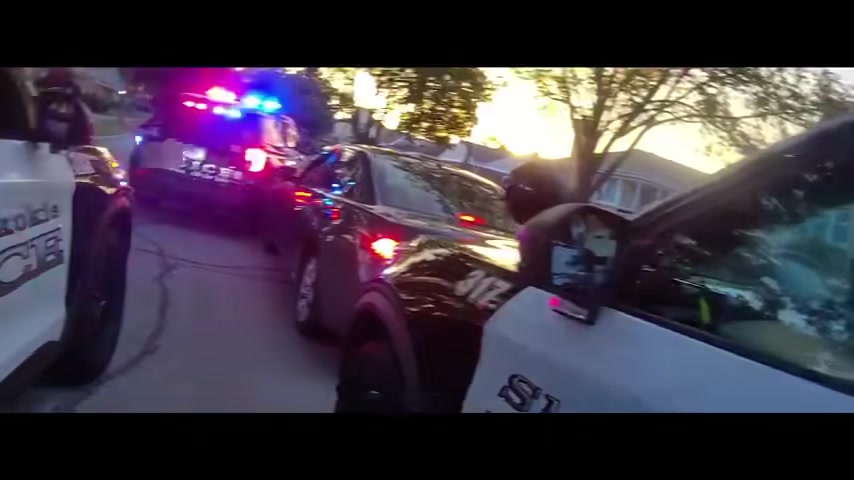
This is the kind of image that can easily become a viral thumbnail, but the earlier footage is necessary to understand it. The police response seen here is the result of an encounter that has already been unfolding for several minutes.
Why Full-Length Footage Matters
Police videos are especially vulnerable to selective editing. A thirty-second clip can make a person appear calm if it excludes the minutes of argument that came before. The same clip can make an officer appear aggressive if it begins immediately before a forceful command. Conversely, an edited police-channel video can emphasize a driver's worst moments while removing legitimate questions the person asked earlier.
Full-length footage does not eliminate bias, but it gives viewers more information with which to evaluate claims. The sequence of events becomes visible. The number of warnings can be counted. The tone of the conversation can be heard. The arrival of backup can be placed in context.
The footage supplied for this article is particularly useful because the encounter develops gradually. There is no single opening moment that explains everything. Understanding the later police response requires watching the earlier conversation.
That is also why a responsible article should resist assigning motives that the camera cannot prove. A driver may appear arrogant without actually believing he is above the law. An officer may appear irritated without acting unlawfully. Video shows behavior; motives often require additional evidence.
What the Camera Can Confirm
Several facts are visible without relying on outside reporting. The encounter is recorded on June 26, 2025, beginning shortly before 8 p.m. according to the AXON overlay. A gray Acura sedan is stopped on a roadway posted at 35 mph. The driver is an adult man wearing sunglasses and a dark cap. Officers speak with him for an extended period. Additional marked police vehicles become involved, and the encounter later continues in a residential setting.
The footage also clearly documents a confrontational conversational dynamic. The driver repeatedly engages police rather than allowing the encounter to proceed silently. Officers maintain control of the scene and continue the investigation despite the driver's objections.
What the footage alone does not establish with sufficient certainty is equally important. It does not provide a complete, independently verified court record. Research did not uncover a reliable news report or official police release that could be matched beyond reasonable doubt to this exact stop. Search results for the visible date produced unrelated law-enforcement events, including a major Milwaukee police shooting later that night, but nothing that reliably identified this Acura stop.
For that reason, this article does not attach an unverified name or criminal history to the driver. It does not claim a specific charge unless that charge can be independently supported. It does not convert a YouTube-style title into evidence.
That restraint protects the accuracy of the story. A compelling narrative does not require invented details.
Why Traffic Stops Escalate Over Small Decisions
The broader lesson is that escalation is usually cumulative. People often imagine a police encounter changing because of one dramatic act. In reality, many confrontations become serious through a series of small decisions.
A driver decides to keep arguing. An officer repeats an instruction. The driver tests the boundary. Another officer arrives. The driver becomes more irritated. Police become more cautious. A simple exchange becomes a prolonged detention.
None of those individual moments may look dramatic on its own. Together, they change the entire character of the stop.
This is why communication matters so much. Officers who clearly explain the reason for a stop and give specific instructions reduce ambiguity. Drivers who listen long enough to understand what is being requested reduce the chance that disagreement will be mistaken for physical resistance or interference.
Neither side has to like the other. A traffic stop does not require mutual respect in the emotional sense. It requires enough functional cooperation for the legal process to occur safely.
The Camera Records Both Sides
Body-worn cameras are sometimes discussed as if their purpose were simply to collect evidence against suspects. Their role is broader. The camera records the officer's conduct too.
If an officer gives contradictory instructions, uses unnecessary force, makes an unsupported accusation, or inaccurately describes an encounter afterward, video can become evidence of that conduct. If a driver later claims to have been completely cooperative when the footage shows repeated refusal, the same recording can challenge that account.
This two-way accountability is one of the most important features of modern police video. It replaces some disputes about memory with a record that investigators, attorneys, courts, journalists, and the public can examine.
The footage in this case is valuable precisely because the driver and officers are both visible participants in the escalation. The viewer does not need to rely entirely on either side's characterization.
A Simple Stop Becomes a Much Bigger Encounter
By the end of the recording, the scene looks very different from the opening frame. The Acura is no longer simply a car pulled over beside a 35-mph road. Multiple police vehicles are involved. Officers are managing the situation in a residential area. The driver's initial confidence has not made the police encounter disappear.
That transformation explains why the footage resonates with viewers. It presents a familiar temptation: the belief that arguing forcefully enough can make authority retreat. Sometimes questioning authority is necessary. But effective legal resistance and impulsive roadside confrontation are not the same thing.
A driver who believes an officer is wrong has options. Remember the details. Record where lawful. Ask clear questions. Avoid consenting to searches when consent is optional and unwanted. Request legal counsel when appropriate. Challenge citations and police conduct through courts and formal review systems.
Those options preserve rights without turning every instruction into a contest of personalities.
For officers, the lesson is equally important. Professionalism matters most when the person on the other side is irritating. Police authority is strongest when commands are clear, force is proportionate, and decisions can later be explained with reference to objective facts rather than emotion.
The best police footage therefore does more than produce a winner and loser. It shows how decisions interact. One person's behavior changes the other person's response, which creates another decision, and the cycle continues until the encounter finally resolves.
What This Encounter Leaves Behind
The original traffic issue may have been the reason the emergency lights came on, but it is not the reason viewers continue watching. The real story is the escalation after contact.
A gray Acura, an officer beside the driver's window, and a 35-mph sign create an ordinary opening. The driver's combative confidence introduces conflict. Additional officers raise the stakes. The continuing police response creates uncertainty about the outcome.
That sequence offers a useful reminder about how quickly roadside interactions can grow. The difference between a short traffic stop and a prolonged police encounter is sometimes only a handful of decisions made in the first few minutes.
The footage also demonstrates why accuracy matters when writing about police encounters. A dramatic title can attract attention, but it should never substitute for verification. When names, charges, and court outcomes cannot be reliably established, the correct approach is to say so and focus on what the evidence actually shows.
Here, the camera provides plenty to examine without inventing anything. It captures a driver who repeatedly challenges police, officers who continue trying to control the stop, and a scene that becomes larger and more complicated as the evening progresses.
Watch the Full Encounter
The later police response makes much more sense when viewed alongside the opening minutes of the stop. The complete footage shows how an ordinary roadside contact gradually develops into a prolonged encounter involving multiple officers and a much more controlled scene.
Comments (0)
Loading comments...
May You Like

Cops Arrive for a Medical Emergency and Walk Into Drunken Chaos

UCF Student’s Pronoun Dispute With Campus Police Escalates Into an Arrest
Everything Changed When Cops Asked About Weapons















