
Chaotic Scene Unfolds After Car Collision in San Diego
A NIGHT OUT ENDS IN HANDCUFFS: WHEN A HEATED ENCOUNTER TURNS INTO AN ARREST
A night out can change in seconds. Music, crowds, alcohol and heightened emotions can turn a disagreement into an incident requiring police intervention before anyone fully understands how the situation reached that point.
The image captures the aftermath of exactly that kind of confrontation: a woman is on the ground with her hands restrained behind her back while officers take control of the scene. Her appearance and the nighttime lighting suggest the encounter happened during or after a night out, but a single frame does not reliably establish her identity, location, charges or what happened immediately beforehand.
That distinction matters because THE MOST DRAMATIC MOMENT OF AN ARREST IS OFTEN ONLY THE END OF A MUCH LONGER STORY.
THE NIGHT BEGINS VERY DIFFERENTLY
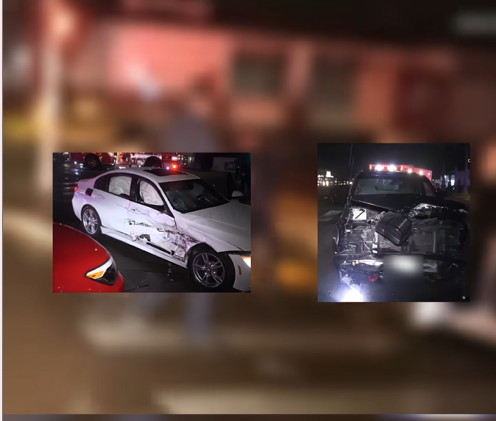
Nightlife districts create a challenging environment for police.
Large groups move between bars and clubs, traffic remains active late into the night, and arguments can develop quickly. Alcohol can further complicate communication and decision-making.
Most nights end without police involvement. But when employees, security personnel or members of the public report a disturbance, officers may arrive with very little information.
Their first task is normally to determine what happened.
Who was involved?
Was anyone injured?
Is there an immediate threat?
Does anyone have a weapon?
Are the people involved willing to separate?
Those questions can determine whether officers simply mediate a disagreement or begin a criminal investigation.
WHAT LOOKS LIKE A SIMPLE ARGUMENT TO A BYSTANDER MAY ALREADY HAVE A MUCH LONGER HISTORY BY THE TIME POLICE ARRIVE.
POLICE TRY TO UNDERSTAND WHAT HAPPENED

The first minutes of a police response are frequently less dramatic than the arrest that eventually appears online.
Officers talk.
Witnesses provide competing stories.
Security employees explain what they observed.
The people involved may accuse each other of starting the confrontation.
This stage is critical because officers did not necessarily witness the original incident themselves.
They must reconstruct it.
Video can become particularly important here. Bars, clubs and surrounding businesses frequently have surveillance systems, while witnesses may have recorded portions of an altercation on their phones.
Body-worn cameras provide another perspective once officers arrive.
The U.S. Department of Justice's National Institute of Justice notes that body-worn cameras can provide evidence and help document interactions between officers and members of the public.
But footage should still be interpreted carefully.
A body camera shows the officer's perspective—not necessarily everything happening around them.
THE CAMERA CAN RECORD AN ARREST PERFECTLY WHILE NEVER RECORDING THE INCIDENT THAT CAUSED POLICE TO BE CALLED.
VERBAL RESISTANCE CAN QUICKLY BECOME PHYSICAL

One of the biggest turning points occurs when officers decide someone needs to be detained.
Until that moment, a person may believe they can simply argue their side of the story and leave.
Detention changes the dynamic.
An officer may tell someone to turn around, place their hands behind their back or stop walking away.
The person's response becomes extremely important.
Someone who believes they have done nothing wrong may instinctively pull away or protest.
But physically resisting an officer can transform the situation within seconds.
Officers may move closer.
Additional officers may assist.
Someone who was standing moments earlier can end up on the ground.
A real 2019 Alabama case illustrates how quickly this transition can occur. ABC News reported that bodycam footage showed officers attempting to handcuff a woman during a traffic encounter; she turned away during the attempt and subsequently went to the ground.
That is a separate case from the image here, but it demonstrates why THE MOMENT HANDCUFFS COME OUT OFTEN BECOMES THE MOST CRITICAL PART OF AN ENCOUNTER.
SECONDS LATER, EVERYTHING HAS CHANGED
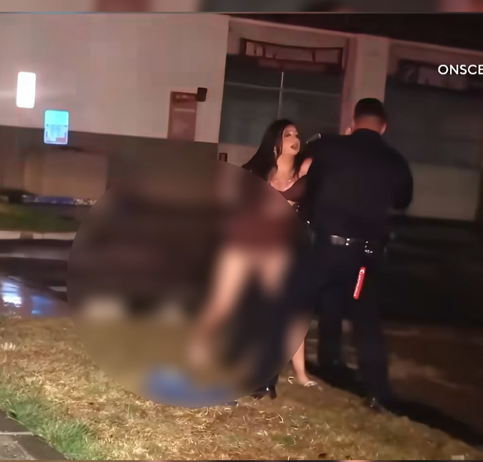
The supplied frame captures the most intense stage.
The woman is down.
Her arms are positioned behind her.
Handcuffs are visible.
At this point, the original disagreement is no longer the only issue.
Officers now have to complete the detention safely, determine whether anyone requires medical assistance and continue investigating whatever brought them to the scene.
For viewers, this is also where context becomes essential.
Seeing someone restrained on the ground naturally creates questions about how much force was necessary.
Those questions cannot reliably be answered from one still image.
Investigators examining use-of-force incidents normally consider the entire sequence: what officers knew, what instructions were given, what the individual did, whether there was resistance and how officers responded.
Real bodycam cases demonstrate why that sequence matters.
In a Miami-Dade case, for example, footage became important after a woman alleged that an officer mistreated her during an encounter. The video showed the interactions leading up to officers taking her into custody and contributed to public scrutiny of the officer's actions.
Bodycam footage does not automatically vindicate either side.
ITS VALUE COMES FROM ALLOWING THE ACTIONS OF EVERYONE INVOLVED TO BE EXAMINED IN SEQUENCE.
HANDCUFFS DON'T ALWAYS END THE STRUGGLE
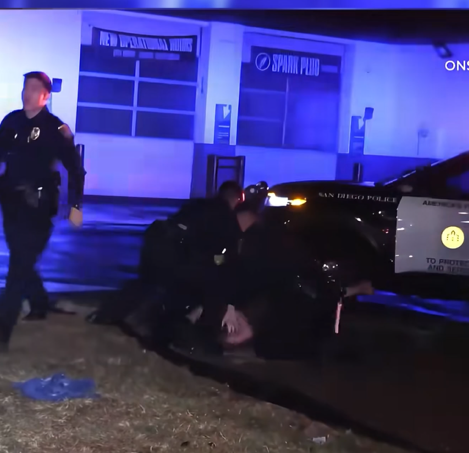
A common misconception is that an incident is effectively over once someone is handcuffed.
Sometimes it is.
Sometimes it isn't.
A restrained person can continue kicking, attempting to stand, pulling away or refusing to enter a patrol vehicle. Officers may therefore continue giving commands even after the cuffs have been applied.
The person must also be checked for injuries and searched according to applicable procedures.
If officers believe the individual is intoxicated or experiencing a medical emergency, additional assessment may become necessary.
All of this explains why the period immediately following handcuffing can remain tense.
The officer's responsibility does not end simply because the person can no longer freely use their hands.
Police still have to move the individual safely, maintain control of the surrounding scene and determine what happens next.
AN ARREST IS A PROCESS, NOT A SINGLE MOMENT.
WHY SHORT VIRAL CLIPS CAN CHANGE THE STORY
Police encounters are increasingly viewed first through social media.
Someone uploads 20 seconds.
A dramatic thumbnail appears.
Millions of viewers may form an opinion before seeing anything that happened beforehand.
That creates an obvious problem.
Imagine a ten-minute police encounter.
If someone uploads only seconds eight minutes through eight minutes and twenty seconds, the footage may genuinely show what happened during those twenty seconds.
But it says almost nothing about the previous eight minutes.
The reverse problem can also occur.
An official summary may describe an arrest in neutral language while bodycam footage reveals a far more complicated encounter.
Neither a viral clip nor a written summary should automatically replace the full evidentiary picture.
CONTEXT CAN SUPPORT AN OFFICER'S ACTIONS—OR RAISE MORE QUESTIONS ABOUT THEM.
The important point is that context needs to be examined.
NIGHTLIFE ARRESTS PRESENT UNIQUE CHALLENGES
Bars and clubs create circumstances police do not necessarily encounter during ordinary daytime calls.
Music makes communication difficult.
Crowds gather around officers.
Friends may attempt to intervene.
People record the interaction.
Alcohol can influence behavior.
Security personnel may already have physically removed someone before police arrive.
And officers may be dealing with several people simultaneously.
A 2015 Orlando case provides an example of how body cameras can become important during nightlife-related arrests. WFTV reported that an incident stemming from a melee at Pulse Nightclub resulted in two women being convicted after an encounter with an officer. Police said body-camera footage contradicted allegations subsequently made about the arrest.
That case is unrelated to the woman pictured here, but it demonstrates the evidentiary role cameras can play after chaotic nightclub encounters.
Everyone involved may remember the night differently.
The camera provides another record.
THE ARREST IS NOT THE VERDICT
Another important distinction is frequently lost when arrest footage goes viral.
Being handcuffed does not establish guilt.
Being booked into jail does not establish guilt.
Criminal allegations must still move through the legal system.
Evidence may be reviewed.
Prosecutors may alter or decline charges.
Defense attorneys may challenge the evidence.
Cases can be dismissed.
Defendants can be acquitted.
One recent Georgia case illustrates that difference particularly clearly. Former Douglas County Probate Judge Christina Peterson was arrested after a confrontation outside an Atlanta nightclub in June 2024. Police initially accused her of interfering with an officer during another dispute. The case continued long after the dramatic bodycam footage circulated online; two charges were ultimately dropped and a jury acquitted Peterson of the remaining charge in February 2026.
The circumstances are different from the image supplied here, but the principle is universal:
AN ARREST VIDEO SHOWS WHAT POLICE DID AT ONE POINT IN TIME. IT DOES NOT REPLACE THE COURT PROCESS.
WHAT HAPPENED BEFORE THIS FRAME?
That is ultimately the most important question raised by the image.
The viewer sees a woman restrained on the ground.
But what happened 30 seconds earlier?
What happened five minutes earlier?
Why were police called?
What did witnesses report?
What instructions were given?
Did officers initially attempt to resolve the encounter verbally?
Was the woman told she was being detained?
Did she comply?
Did she attempt to walk away?
Was there a physical confrontation?
And what happened after she was placed in handcuffs?
Without those answers, the screenshot represents a moment—not an entire case.
That is exactly why complete police footage can be so compelling.
It allows viewers to move backward from the dramatic image and discover how everyone reached that point.
Sometimes the preceding footage confirms what people assumed.
Sometimes it completely changes the interpretation.
THE HANDCUFFS MAY BE THE MOMENT EVERYONE REMEMBERS, BUT THE DECISIONS MADE BEFORE THEY APPEAR ARE OFTEN THE REAL STORY.
A night that likely began like countless others has now ended with flashing emergency lights, officers surrounding the scene and a woman restrained on the ground.
Whatever led to that moment, one thing is clear from the image:
The night did not end the way anyone expected.
https://www.youtube.com/watch?v=fFEqRDNx3fc
The handcuffs show how the confrontation ended—but they don't explain how it started. Click the link below to watch the full encounter and see what happened before this intense moment unfolded.
Comments (0)
Loading comments...
May You Like

Police vs Chevy Impala High-Speed Pursuit Ends in TVI

MERIDEN POLICE OFFICER SHOOTS MAN BEATING FATHER WITH A BASEBALL BAT

Cop thinks sandwich is phone













