
Call for Help Escalates Into a Physical Confrontation With Police
Call for Help Escalates Into a Physical Confrontation With Police
A request for police assistance begins with a conversation outside a home, but the interaction steadily deteriorates until several officers become involved in a physical struggle.
A Request for Help Starts With a Conversation
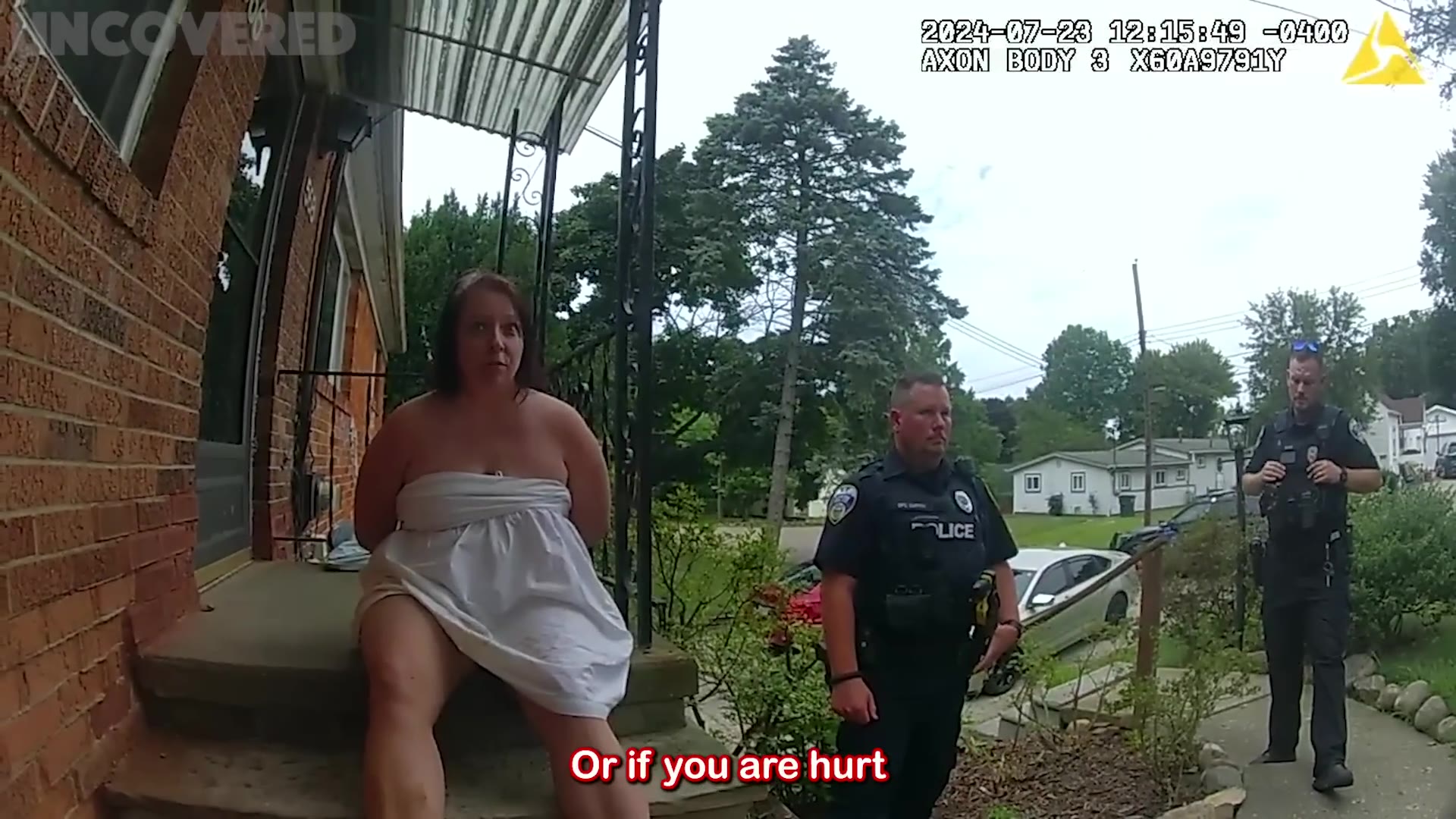
The encounter begins outside a residence, where a woman speaks with a responding officer after police have been called to the property. At first, the scene is relatively controlled. The officer stands near the front of the home and tries to understand what the woman wants police to do.
The body-camera footage is useful because it shows the interaction before the most dramatic moments. The woman is not initially being chased or physically restrained. She is talking directly with the officer, questioning the response and expressing frustration about the situation.
As the conversation continues, the tone becomes more difficult. The officer repeatedly attempts to clarify the problem while the woman challenges what police are doing. Neither the exact history behind the call nor every event that happened before officers arrived can be established from the supplied video alone, so this account stays with what the cameras actually show.
That approach changes the way the incident should be described. The central story is not simply that someone called police and was immediately arrested. It is the gradual transformation of a request for assistance into an increasingly confrontational interaction.
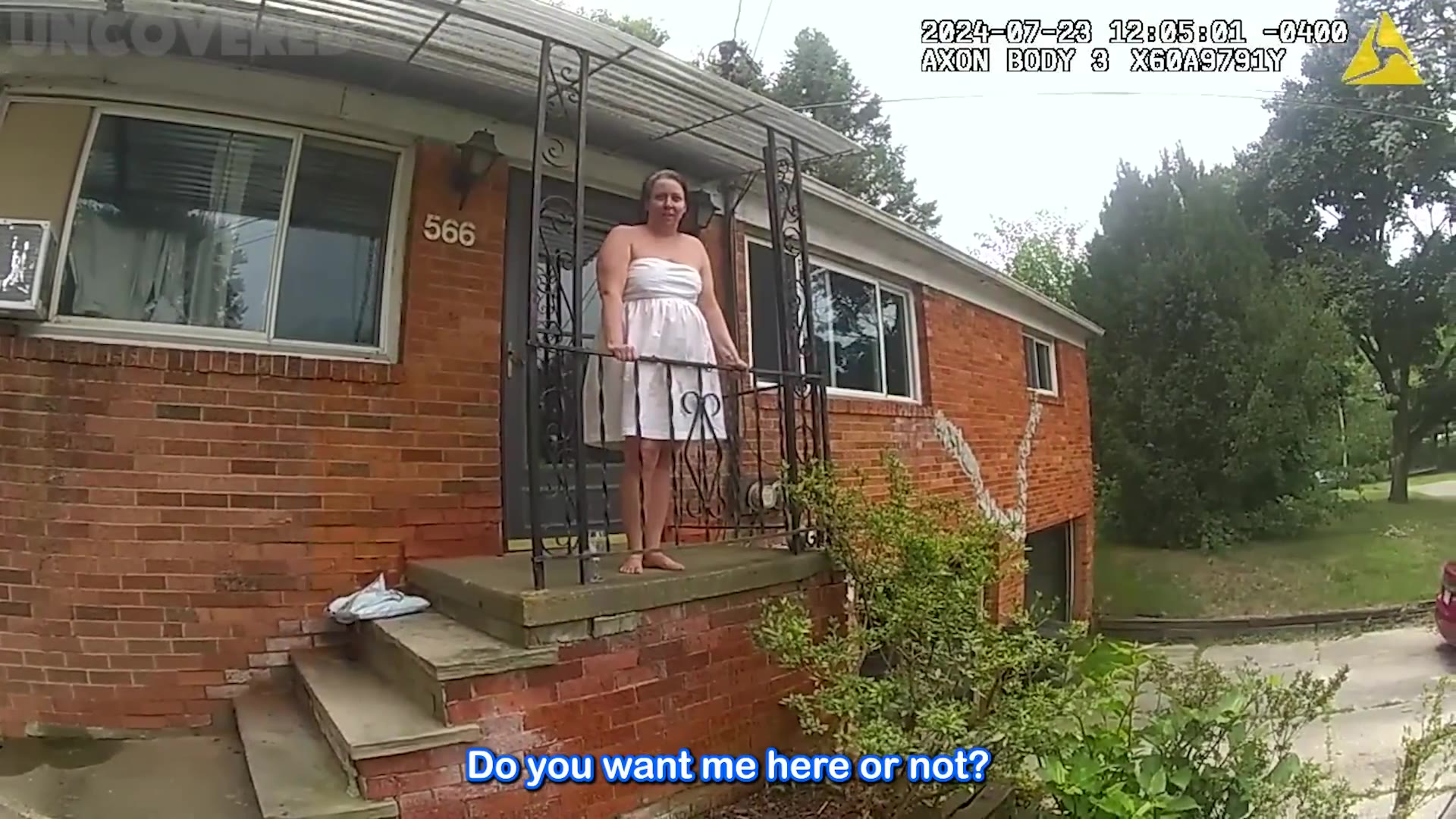
Tension Builds at the Front of the Home
For several minutes, the encounter remains centered around the porch and front entrance. The woman continues talking with officers, sometimes raising her voice and questioning their actions.
The responding officer does not immediately move to restrain her. Much of this portion of the video consists of conversation, explanations and attempts to determine what should happen next. That slower buildup is important because a short clip beginning with the physical struggle would remove the context that came before it.
Additional officers eventually become involved. Their arrival changes the dynamics of the scene. There are now several officers near a relatively confined porch and stairway, while the woman remains close to the doorway.
The footage also demonstrates why it is risky to diagnose a person's condition from a police video. The woman appears upset and increasingly agitated, but the recording alone does not establish whether alcohol, drugs, a medical issue or any other specific factor is responsible. No such explanation is necessary to describe what happens.
What the camera clearly records is a communication problem that continues getting worse rather than resolving.
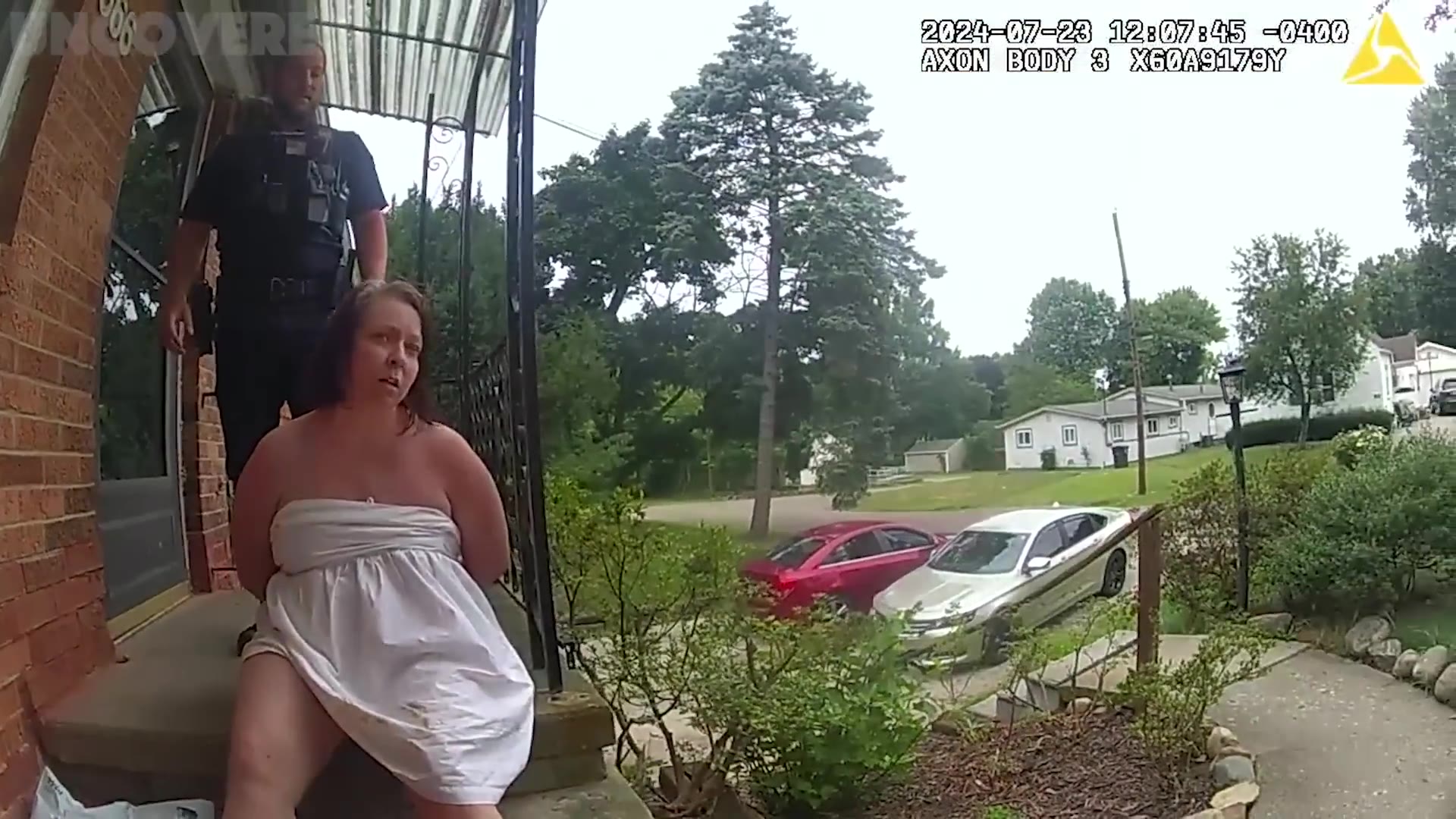
The Argument Becomes a Physical Encounter
The turning point arrives when the interaction moves from words to physical contact. Officers attempt to control the woman's movements near the front steps, and she resists their efforts.
Once the struggle begins, the body-camera perspective becomes much harder to follow. Arms, bodies and the porch railing repeatedly obstruct the lens. The camera shakes as officers reposition themselves, and individual movements occur too quickly to confidently assign meaning to every frame.
The safest description is therefore the most direct one: the woman and officers become involved in a physical confrontation, she resists attempts to restrain her, and multiple officers assist in bringing the situation under control.
This is also why the rewritten title avoids treating a dramatic phrase from the original upload as a legal conclusion. A video can show physical resistance and contact without independently establishing the exact criminal charge that might later be filed.
The footage itself is already compelling. A conversation that began with officers responding to a request for help has now become an arrest-like struggle on a narrow residential porch.
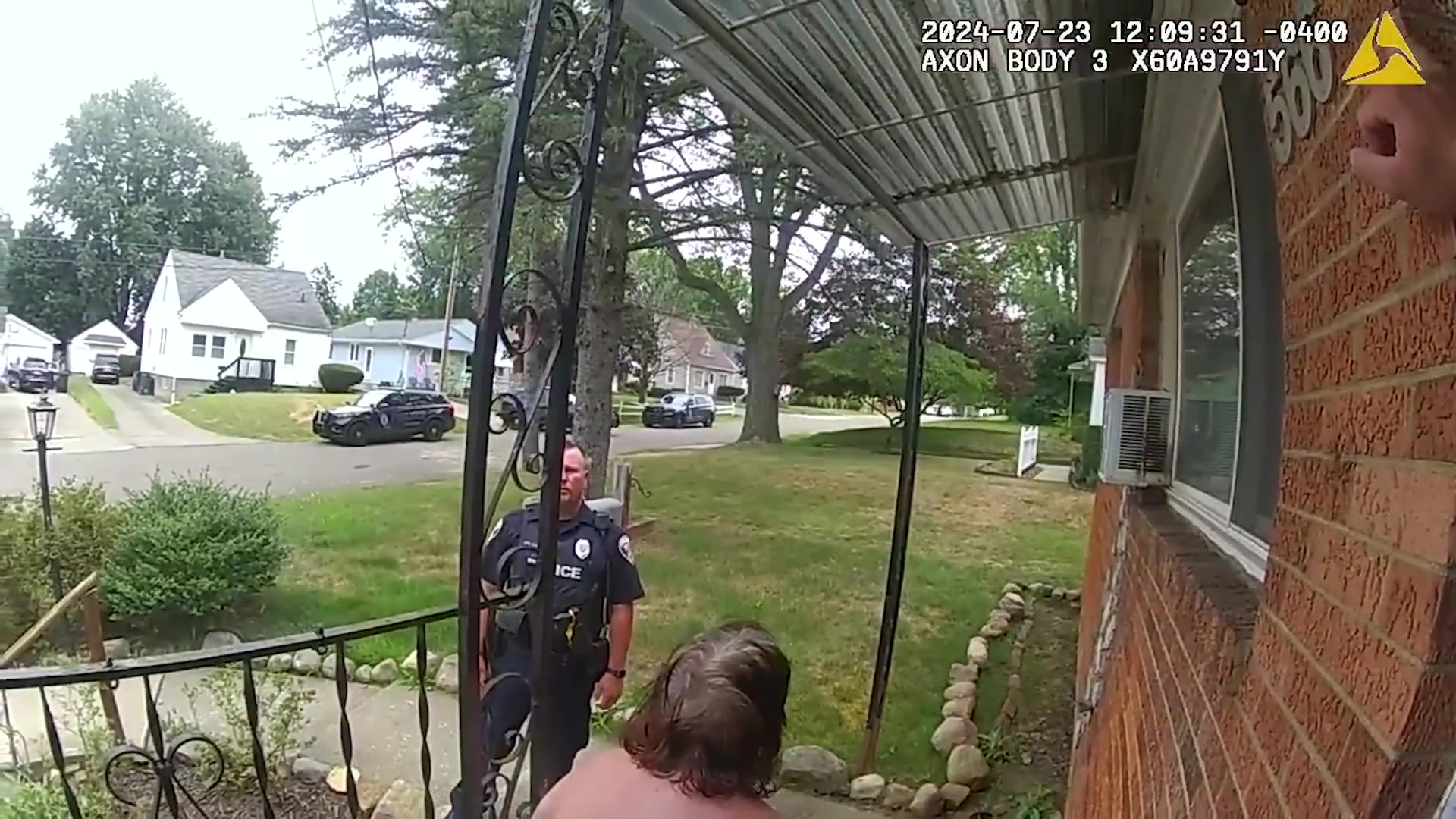
A Difficult Struggle on the Porch
The physical layout of the scene adds another layer of difficulty. The officers are not working in a large open area. They are positioned around steps, a railing and the entrance to the house.
That gives everyone less room to move. During the struggle, officers have to maintain their own balance while attempting to control the woman's arms and prevent the encounter from moving unpredictably toward the stairs.
The footage shows several officers assisting. Commands continue as they try to secure her. The woman's resistance does not immediately stop, so the encounter takes time to stabilize.
This section of the video is particularly different from the opening minutes. Earlier, distance existed between the officer and the woman. Now that distance has disappeared completely.
Eventually officers are able to gain greater control and secure her hands. The pace then begins to slow. The immediate struggle is largely over, and the focus moves toward managing the aftermath rather than continuing the physical confrontation.
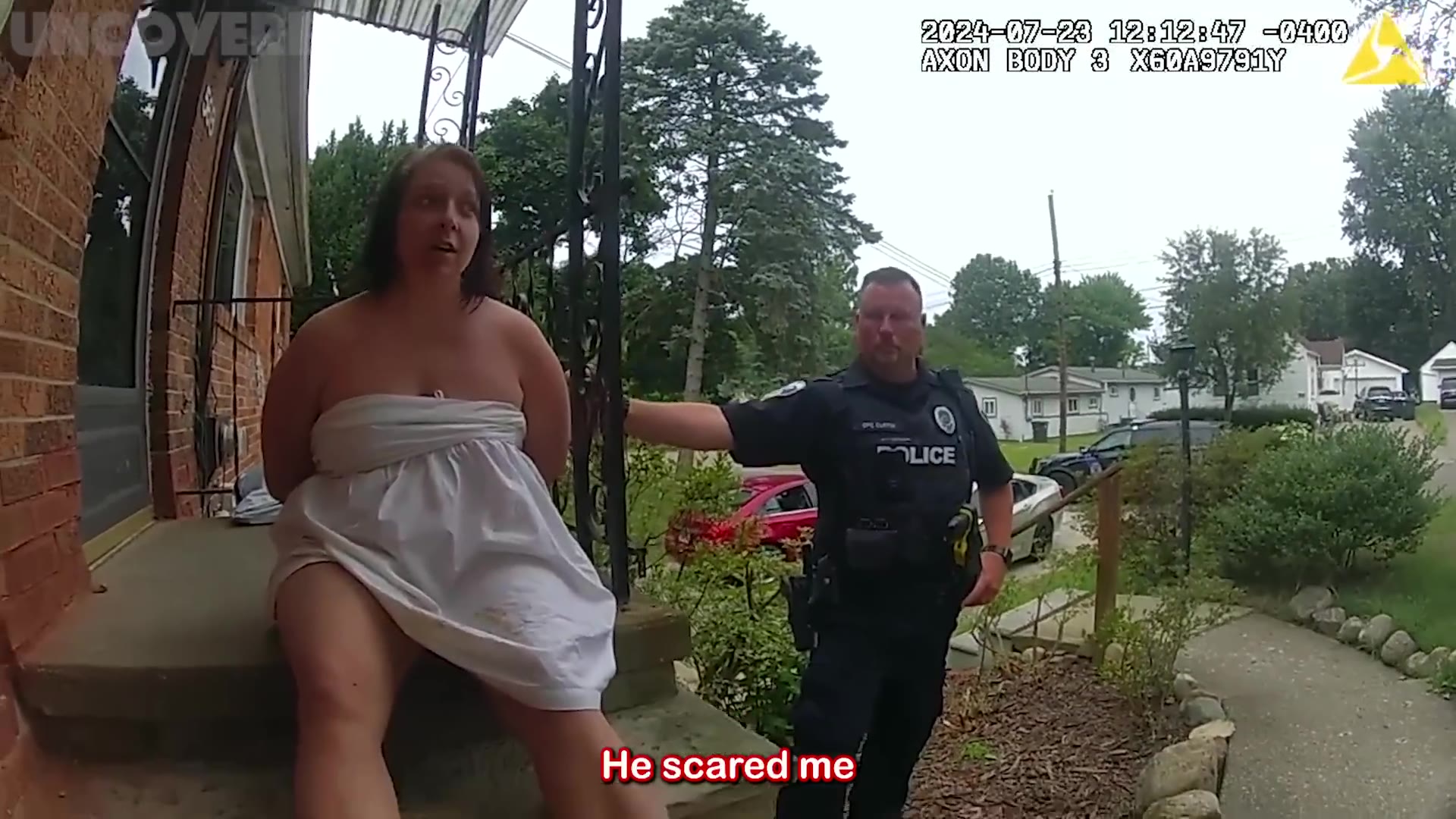
The Scene Calms After Officers Gain Control
Once the woman is restrained, officers continue speaking with her. The body cameras remain active, allowing the viewer to see that the incident does not simply end at the moment force is used.
The woman remains vocal and continues questioning what has happened. Officers monitor her and discuss the situation around the porch.
This aftermath is important because it shows the complete arc of the encounter: conversation, rising frustration, physical resistance, restraint and then a return to verbal interaction.
The footage does not provide enough independently verified information to responsibly state what charges were ultimately filed, whether prosecutors pursued a case or what happened in court. Because this article is intentionally based only on the supplied video, it does not attempt to fill those gaps.
Instead, the focus remains on the observable sequence and how rapidly the character of a police call can change.
Why the Full Video Matters
A title can summarize an incident in a few words, but body-camera footage often tells a much more gradual story.
Here, the most dramatic portion lasts only a fraction of the complete encounter. Before the struggle, officers spend significant time talking with the woman. The disagreement grows through repeated exchanges rather than appearing without warning.
Watching that buildup makes the physical confrontation easier to place in context. It does not require viewers to automatically agree with every action taken by either side. It simply provides more information than an isolated clip.
The body camera also exposes its own limitations. During calm conversation, the recording provides relatively clear audio and stable images. During the struggle, the lens is repeatedly blocked and the footage becomes chaotic. That means some moments can be described confidently while others should not be overstated.
This is why the article avoids inventing a detailed backstory or assigning legal labels that the video itself cannot prove.
A Call Can Change Once Police Arrive
One of the most striking aspects of the footage is the contrast between why officers appear to be at the residence and how the encounter eventually unfolds.
Calling police for assistance does not guarantee that the caller and responding officers will agree about what should happen next. Officers still have to evaluate the circumstances they encounter, while the person who called may have expectations that differ from what police believe they can or should do.
That tension is visible throughout the recording. The woman repeatedly challenges the response. Officers continue attempting to communicate. More officers arrive. The interaction becomes increasingly difficult until conversation gives way to physical control.
The transformation is gradual enough that watching the complete sequence matters. Starting at the struggle would create a very different impression from watching the preceding minutes.
At the same time, the footage should not be stretched beyond what it establishes. It does not reveal every event before police arrived, and it does not provide a verified final legal outcome.
From Conversation to Confrontation
By the end of the recording, the scene bears little resemblance to its opening moments.
What began as officers standing outside a home and speaking with a woman has developed into a confrontation requiring several officers to restrain her. Once control is established, the intensity falls again and the interaction returns largely to conversation.
That progression is the central story preserved by the cameras.
There is no need to invent a name, diagnosis, motive or court result to make the incident more dramatic. The observable sequence already provides a clear narrative: police arrive in response to a request for assistance, communication deteriorates, the woman physically resists officers, several officers become involved and the encounter eventually settles after she is restrained.
The full video also demonstrates why context matters in police footage. The final struggle makes more sense when viewers have seen the conversation that preceded it, while the earlier conversation takes on a different meaning once viewers know how the encounter ultimately develops.
For that reason, the most useful way to understand this incident is to watch it as a complete progression rather than reducing it to the moment of physical contact.
Comments (0)
Loading comments...
May You Like
Entitled Driver Skips the Line and Gets Instant Karma3

Cops Arrive for a Medical Emergency and Walk Into Drunken Chaos

Woman Refuses Repeated Orders to Exit Her Car Before Officers Move In














