
Brother Shows Up to Traffic Stop and Both End Up in Jail
Brother Shows Up During a Late-Night Traffic Stop and Ends Up in Handcuffs Too
HOOK: One Traffic Stop, Two Brothers, Two Arrests
At first, there is nothing especially unusual about the scene.
It is after 2 a.m. on February 27, 2022. Police lights illuminate a vehicle stopped along the roadway. An officer approaches the driver's window while an Axon body camera records every movement.
The driver remains inside.
The officer begins handling what appears to be an ordinary late-night traffic investigation.
But within minutes, the encounter becomes something very different.
A second man enters the situation.
He isn't simply another motorist passing through.
He is connected to the driver.
He is the driver's brother.
And instead of helping bring the encounter to a quiet conclusion, his arrival creates an entirely new problem for officers.
Before the night is over, both brothers will be detained and taken into custody.
What makes the footage compelling isn't a high-speed pursuit or a dramatic police takedown. It is the gradual escalation of an encounter that repeatedly appears as though it could end peacefully.
Every new decision pushes it in the opposite direction.
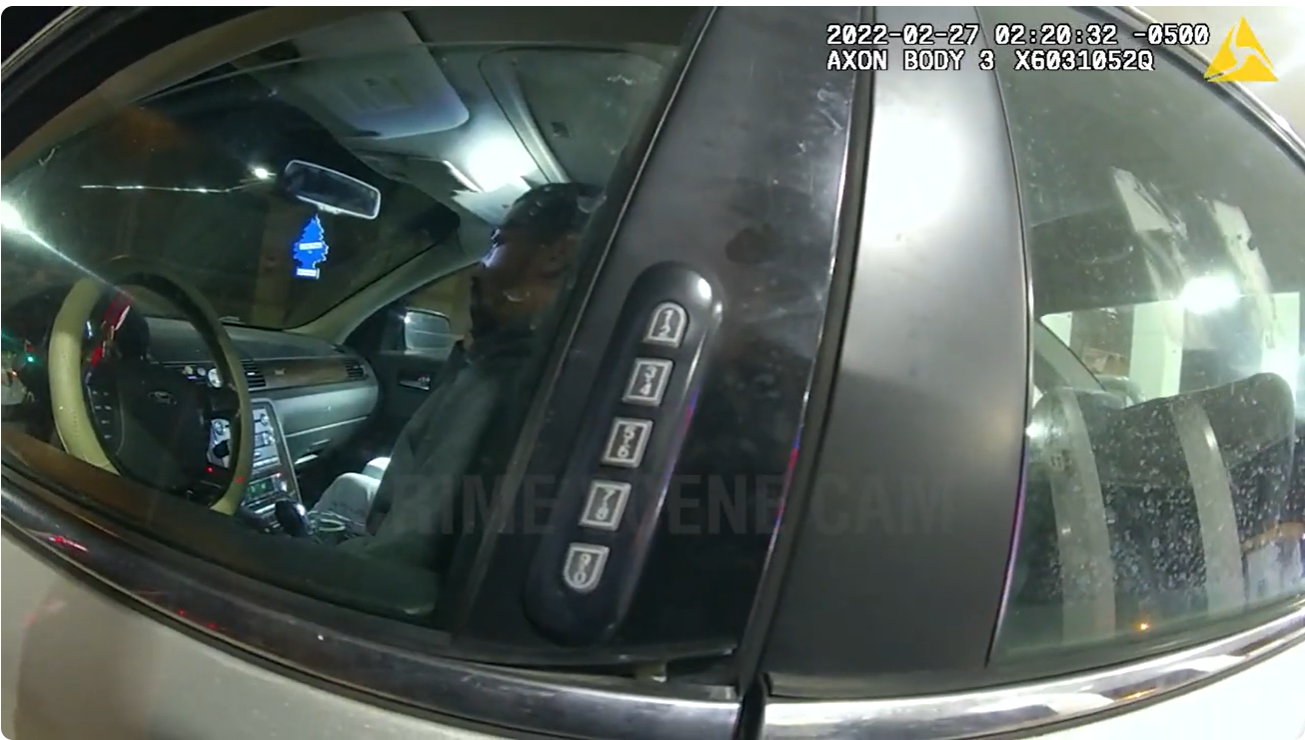
OPENING: A Stop in the Middle of the Night
The body-camera timestamp provides the clearest verified starting point.
The footage is dated February 27, 2022, shortly after 2:20 a.m.
An officer approaches the stopped vehicle and speaks with the driver through the window.
It is the familiar beginning of thousands of traffic stops: emergency lights flashing behind a stationary vehicle, the officer positioned outside the driver's window and the driver sitting behind the wheel.
But nighttime stops create their own challenges.
Visibility is limited.
Officers cannot always see clearly into every part of a vehicle.
They also have to monitor surrounding traffic while watching the movements of the occupants.
For the driver, flashing lights, multiple officers and repeated commands can make even a routine stop stressful.
That dynamic becomes increasingly important as this encounter develops.
The driver can be seen sitting inside the vehicle while officers continue their investigation.
For a time, the situation remains contained.
There is no visible vehicle pursuit in the supplied footage.
There is no gunfire.
There is no immediate large-scale confrontation.
Instead, tension builds through conversation and compliance issues.
Then another person becomes involved.
And that's when a traffic stop involving one driver begins moving toward two separate arrests.
DEVELOPMENT: The Driver's Brother Arrives
Police encounters can change dramatically when additional people arrive.
Officers who had been concentrating on one driver suddenly have another person to monitor.
The newcomer may have no idea what officers have already learned.
He may not know what commands have been given.
And officers don't necessarily know why he has arrived or what he intends to do.
That uncertainty is visible throughout this footage.
The second man is connected to the driver as his brother.
His arrival introduces another personality into an already active police encounter.
Instead of the original officer focusing exclusively on the driver, officers now have to divide their attention.
The critical issue is no longer simply whatever caused the initial traffic stop.
It becomes control of the scene itself.
This distinction is important.
People sometimes assume that arriving at a relative's traffic stop automatically gives them a role in the encounter.
It doesn't.
A roadside stop is an active police scene. Officers may establish boundaries and issue lawful instructions intended to keep people away from vehicles, traffic lanes or detained individuals while an investigation is underway.
Ignoring those boundaries can create an entirely separate confrontation.
That is essentially what makes this footage interesting.
The brother has not simply appeared in the background.
His actions become part of the incident.
The Situation Starts Moving in the Wrong Direction
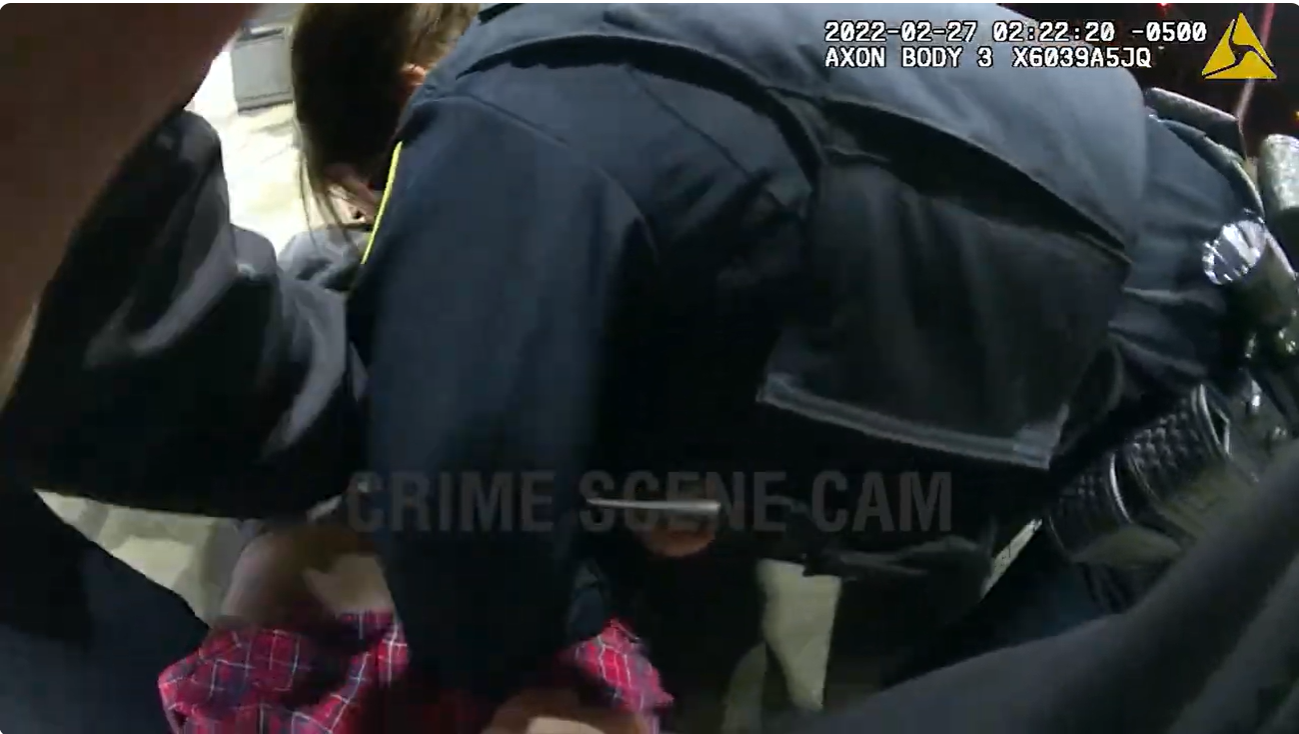
The bodycam becomes increasingly chaotic as officers deal with the men.
At approximately 2:22 a.m. according to the camera timestamp, officers can be seen physically controlling one of them.
The calm roadside conversation visible earlier has disappeared.
Multiple officers are now involved.
Hands have to be controlled.
The person is brought down and restrained.
The footage illustrates one of the biggest differences between watching a police encounter and experiencing one from the officer's body camera.
From a fixed security camera, the entire scene might remain visible.
From a body camera, a physical struggle can become a confusing collection of arms, clothing, pavement, voices and commands.
The camera moves because the officer wearing it moves.
When the officer bends down, the camera points toward the ground.
When officers struggle to control someone's arms, much of the relevant action may occur inches below the lens.
That limitation is worth remembering.
Bodycam is evidence, but it is not an overhead camera.
Nevertheless, the broader progression is clear.
What began as a roadside traffic investigation has become an arrest.
And the involvement of the driver's brother means officers are no longer dealing with only one potential detainee.
One Brother's Arrest Doesn't End the Encounter
There is a point in encounters like this where the outcome can still change.
Once officers begin arresting one person, everyone else at the scene effectively faces a choice.
They can step back and allow officers to complete the arrest.
Or they can continue involving themselves.
The second option can create new legal problems independent of whatever caused the original stop.
That distinction is critical because being related to the person being arrested does not automatically make someone part of the original alleged offense.
But conduct during the arrest can create an entirely separate basis for police action.
The footage shows officers continuing to manage the scene while the men argue, move around the vehicle and respond to commands.
Eventually the brother is no longer simply a concerned relative watching an arrest.
He becomes another person officers take into custody.
Now there are two detainees.
The transformation is complete.
One police stop has produced two arrests.
Why These Encounters Escalate So Easily
The incident demonstrates a problem that appears repeatedly in body-camera footage.
Police encounters often escalate incrementally rather than through one enormous decision.
A person doesn't follow an instruction.
An officer repeats it.
Someone moves closer.
An officer attempts physical control.
Another person intervenes.
More officers become involved.
Voices rise.
Physical resistance increases.
Handcuffs come out.
Looking only at the final ten seconds can make the outcome seem sudden.
Watching from the beginning shows the accumulation of smaller decisions that produced it.
That doesn't mean every police decision must automatically be considered correct.
Nor does it establish that every person arrested ultimately committed the offense alleged by officers.
An arrest is not a conviction.
But chronology matters.
And in this footage, chronology is the difference between seeing “two men arrested” and understanding how an encounter involving one stopped driver eventually expanded to include his brother.
A Brother Arriving Can Complicate a Traffic Stop
There is an understandable human instinct behind showing up when a family member calls for help.
A brother hears that his sibling has been stopped by police.
He comes to the location.
Perhaps he wants to know what's happening.
Perhaps he wants to help with the vehicle.
Perhaps he wants to make sure his brother is safe.
Those motives are not inherently criminal.
The problem begins when concern turns into interference with an active detention or arrest.
From the officers' perspective, they cannot assume that someone approaching is harmless simply because he identifies himself as a relative.
They have to evaluate his behavior.
Does he follow instructions?
Does he maintain distance?
Does he approach the detained person?
Does he reach toward anyone?
Does he attempt to interfere physically?
Those questions become even more important at night when visibility is reduced.
For someone arriving at the scene, the safest practical approach is usually simple: remain away from the immediate stop, follow directions concerning where to stand and ask officers how the vehicle or detained person's property will be handled once the scene is stable.
The roadside is generally the worst place to argue the merits of an arrest.
Those questions can be addressed later through the legal process.
The Bodycam Shows How Quickly Officers' Priorities Change
At the beginning of the video, the officer's priorities are centered on the driver and vehicle.
Who is driving?
Why was the vehicle stopped?
What information does the driver provide?
Does the driver comply with instructions?
Once the brother arrives and the confrontation intensifies, those priorities change.
Now officers have to consider:
Where is each person?
Are their hands visible?
Is anyone moving toward the vehicle?
Can one officer safely control a detainee while another person is moving nearby?
Does another unit need to respond?
That shift explains why scenes that appear relatively minor can suddenly draw multiple officers.
One officer can comfortably conduct many routine traffic stops.
One officer attempting to physically arrest someone while simultaneously monitoring another agitated person is a very different situation.
Additional officers provide the ability to divide responsibilities.
One can maintain control of a detainee.
Another can monitor the second individual.
Another can watch the vehicle or surrounding roadway.
The objective is to prevent the scene from becoming even less predictable.
Two Arrests, but Important Questions Remain
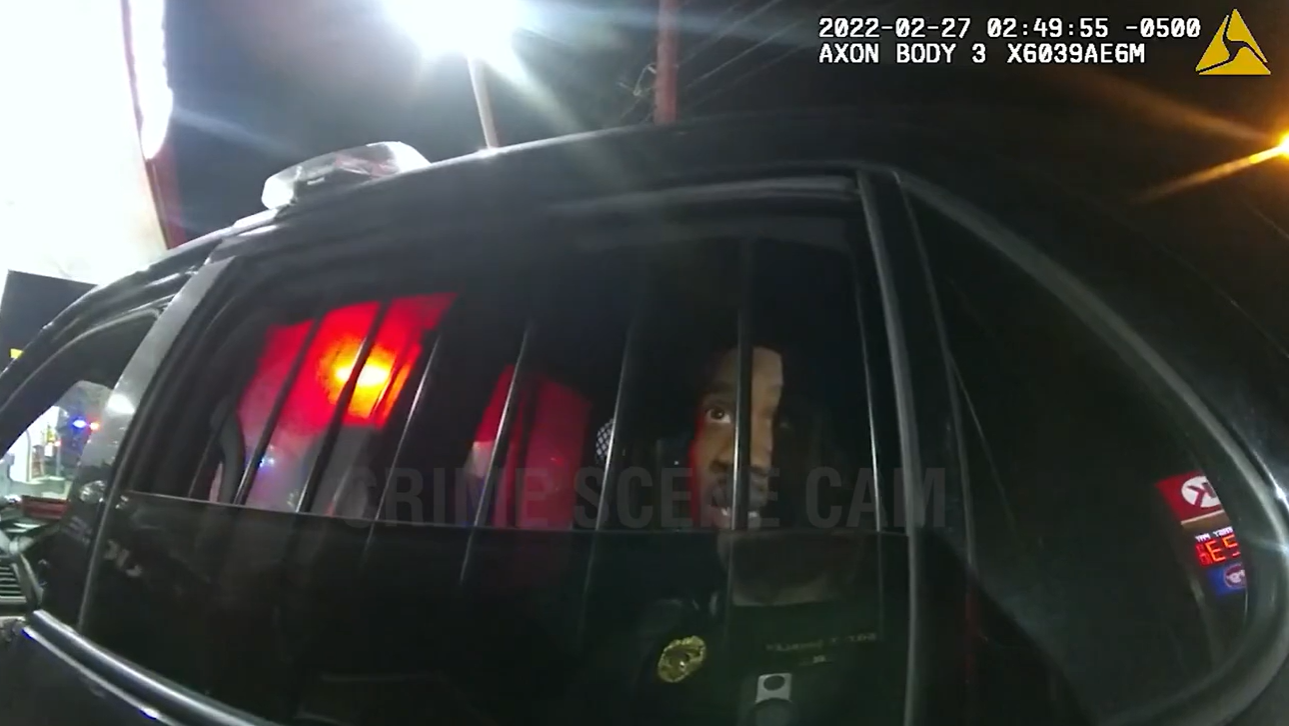
This is where responsible reporting becomes important.
The supplied video provides strong visual evidence of the encounter itself, including its date and approximate time.
But I could not independently locate sufficient reliable public reporting to establish the men's names, the precise department, the original reason for the traffic stop, every charge ultimately filed, or the final disposition of those charges.
Those details therefore should not be invented simply to make the story more complete.
What can be established from the footage is already enough to explain why the encounter attracts attention.
It begins as a late-night traffic stop.
The driver interacts with police.
His brother subsequently becomes involved.
The encounter escalates.
Officers physically restrain the men.
And ultimately both are taken into custody.
That alone creates an unusual narrative.
The brother appears to have arrived because of an existing police encounter.
Instead of resolving it, the encounter expands to include him.
The irony is difficult to miss.
A family member comes to a traffic stop involving his brother.
By the end of the encounter, he needs police transportation too.
ENDING: The Best Opportunity to Walk Away Was Earlier
The most compelling police videos are not always the ones containing spectacular pursuits or dangerous crashes.
Sometimes they are encounters in which the viewer can repeatedly see opportunities for a different outcome.
This is one of those videos.
The original stop didn't have to become a confrontation involving multiple officers.
The arrival of a relative didn't necessarily have to produce a second arrest.
Yet every stage narrowed the available options.
Once officers decided to physically detain one of the men, resistance made the encounter more difficult.
Once another person became actively involved, officers had another potential safety problem.
By the time both men were being restrained, the quiet traffic stop visible at the beginning had effectively disappeared.
There is also a broader lesson in the footage.
When a friend or relative is being detained, showing up does not transfer control of the encounter to the family.
Questions can be asked.
Information can be exchanged when officers permit it.
Legal decisions can later be challenged.
But physically interfering, ignoring commands or entering the immediate arrest area can transform someone who was never part of the original stop into a participant in an entirely separate incident.
That appears to be the central reason this video has such a memorable ending.
The driver was already dealing with police.
His brother arrived.
Minutes later, officers were dealing with both of them.
Whatever intention brought the brother to the roadside, the outcome was the opposite of helping his sibling leave.
Both men ended the encounter in police custody.
CTA: WATCH HOW ONE TRAFFIC STOP BECOMES TWO ARRESTS
The final arrests make much more sense when the encounter is watched from the first conversation at the driver's window.
Watch the full bodycam footage to see exactly how the driver's brother enters the situation, how the tension builds and how one late-night traffic stop ultimately leaves both brothers in handcuffs. https://www.youtube.com/watch?v=qUtl6UZ9aik
Comments (0)
Loading comments...
May You Like

Couple Arrested for leaving 10 Dogs and Cats in Hot car in Florida

Cop thinks sandwich is phone

MERIDEN POLICE OFFICER SHOOTS MAN BEATING FATHER WITH A BASEBALL BAT












