
Bodycam: Suspect Confronts Police in Park
Austin Officers Respond to a Gun Call, but the Object in a Teen's Waistband Was a Water Bottle
A 911 Call Before Dawn
At 3:51 on the morning of July 24, 2026, Austin's emergency dispatch center received a call that immediately demanded police attention.
The caller reported seeing a young person near a neighborhood park who appeared to have a firearm.
The person was reportedly moving his hands around his waistband.
There was uncertainty about exactly what he possessed, but the possibility of a gun was enough to send Austin Police Department officers toward the 10100 block of Baden Lane in northeast Austin.
Minutes later, three officers would encounter 17-year-old Anthoneil Williams II near the playground.
And before the sun came up, Williams would be dead.
The officers were Jake Pitcher, Alexis Cruz and Avery Zucchi.
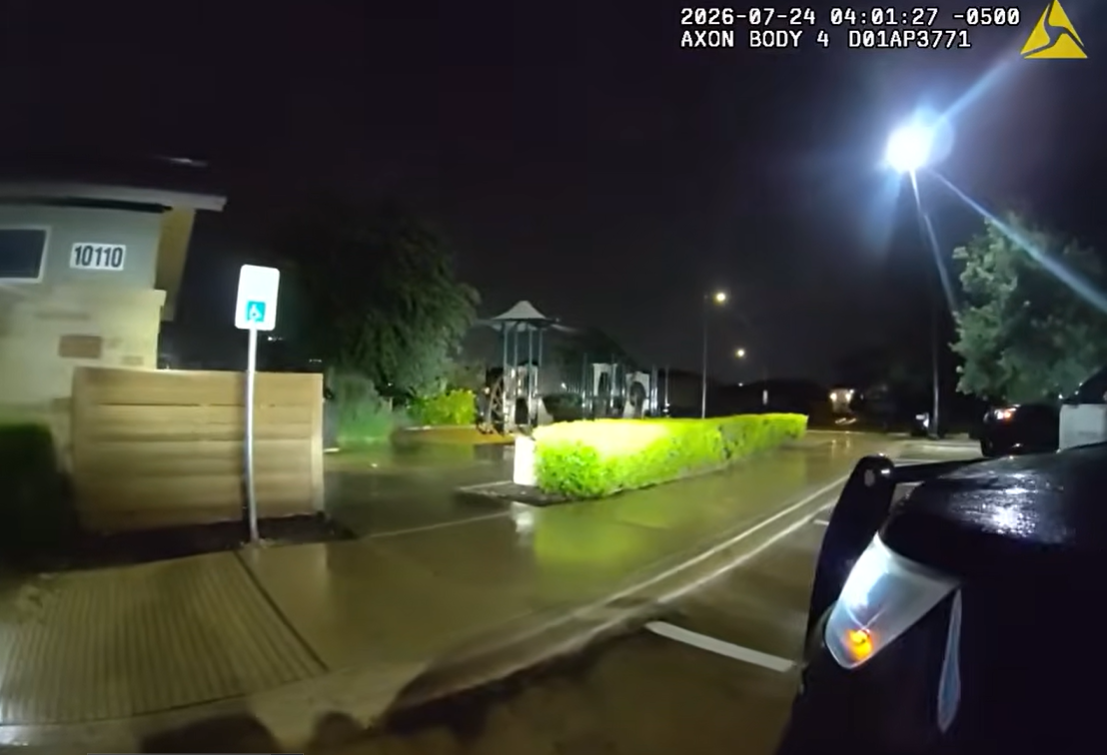
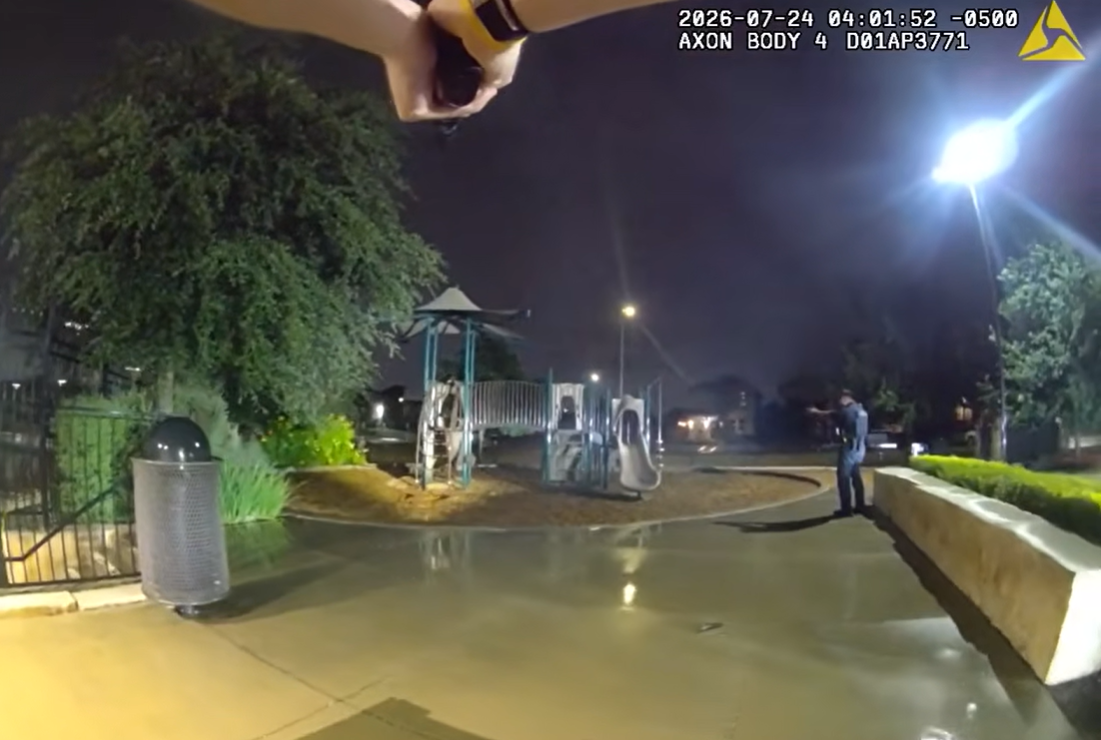
Body-worn camera footage released by Austin police shows the officers approaching Williams while giving commands concerning his hands.
The encounter lasts only seconds once police reach him.
Williams initially raises his hands.
Then he lifts his shirt.
His right hand moves toward his waistband.
The officers fire.
Multiple gunshots rip through the darkness.
Williams falls near the playground.
Only afterward does police discover the fact that would transform this shooting from another armed-person response into one of Austin's most controversial police incidents of 2026.
There is no handgun.
The object tucked into Williams' waistband is a water bottle.
And investigators soon discover something else.
The 17-year-old officers have just shot is believed to have been the person who made the original 911 call.
Those two revelations changed everything.
What began as a report of an armed person quickly became a debate over perception, police tactics, crisis intervention, the meaning of body-camera footage and how quickly authorities should assign a motive to someone who can no longer explain his own actions.
Officers Arrive Expecting Someone With a Gun
Understanding the officers' initial information is essential.
They were not dispatched for a noise complaint.
They were not looking for a teenager who had simply stayed in a park after hours.
The call involved a possible firearm.
That matters because dispatch information influences how officers approach a scene before they see anything themselves.
Police responding to a potential gun call have to consider the possibility that the weapon is real.
The caller reportedly described someone near the park who appeared to be armed and repeatedly reaching toward his waistband.
At approximately 4:02 a.m., officers located Williams.
The park is dark.
Williams is near the playground.
Bodycam footage records officers immediately focusing on his hands.
Commands begin.
Keep your hands up.
Do not reach.
From the officers' perspective, the waistband has particular significance because that is where dispatch information suggested a weapon might be located.
Williams initially appears to comply.
Then he lifts his shirt.
His hand moves downward.
What happens next unfolds extraordinarily quickly.
Officers Pitcher, Cruz and Zucchi open fire.
The footage is chaotic.
Gunshots overlap.
Officers move.
Williams falls.
The entire encounter between visual contact and gunfire occupies only a small portion of the video.
That speed would later become one of the central points of public debate.
Could officers have waited longer?
Could they have created more distance?
Could they have recognized the object?
Or, given what dispatch had told them and the movement toward the waistband, did they reasonably believe Williams was reaching for a firearm?
Those are different questions.
And bodycam footage alone does not automatically settle all of them.
The Gun Officers Expected to Find Wasn't There
After a shooting involving a suspected weapon, recovering that weapon becomes an obvious investigative priority.
Here, the expected discovery never happened.
Police found no firearm.
Instead, Williams had a water bottle tucked into his waistband.
That fact fundamentally altered public understanding of the footage.
Before the shooting, officers were responding to information about a possible gun.
During the shooting, they reacted to Williams moving toward the exact area where they believed that gun might be.
Afterward, investigators learned the object was harmless.
All three statements can simultaneously be true.
And that is precisely what makes the case difficult.
Police use-of-force investigations generally cannot judge an officer solely with facts learned afterward.
Investigators have to examine what officers knew and reasonably perceived at the moment force was used.
But the fact that Williams was actually unarmed remains enormously important when evaluating the tactics that brought officers to that moment.
Could the encounter have been handled differently?
Was there enough time and distance for additional communication?
Did the officers approach in a way that unnecessarily compressed the time available for decision-making?
Those questions became central to the controversy that followed.
The Austin Human Rights Commission later specifically called for attention to de-escalation, use-of-force tactics and public accountability rather than allowing the discussion to end with speculation about Williams' intentions.
That is an important distinction.
Even if investigators ultimately conclude that an officer reasonably perceived an immediate threat at the precise moment of the shooting, there can still be legitimate questions about decisions made before that moment.
Police encounters are sequences.
The final second does not exist in isolation.
Then Investigators Trace the 911 Call Back to Williams
The discovery of the water bottle was not the only unexpected development.
Police determined that the original 911 call had come from Williams' own phone.
That revelation introduced an entirely new possibility.
According to reporting on the call, a male caller described seeing a teenager who might have a gun near the park. He expressed uncertainty about whether the object actually was a firearm but described the person manipulating his waistband.
The caller requested police.
Then the communication ended.
When officers arrived, Williams was the person they encountered.
Austin Police Chief Lisa Davis later said investigators believed the circumstances potentially pointed toward what is commonly called “suicide by police” or “suicide by cop.”
The theory is that an individual intentionally behaves in a way designed to make officers believe deadly force is necessary.
But in this case, that characterization quickly became controversial.
There was evidence that Williams himself apparently initiated the police response.
There was evidence concerning his behavior after officers arrived.
But Williams was dead.
His intentions could not simply be assumed.
That distinction became particularly important in the days following the shooting.
Community activists accused APD of using the label too quickly.
The city's Human Rights Commission later formally criticized premature use of the terminology, arguing that assigning such a motive before a complete investigation could shift attention away from examining police tactics and de-escalation.
The commission emphasized something fundamental:
Possible evidence concerning Williams' mental or emotional state is one question.
Whether the officers' tactics and use of deadly force were appropriate is another.
One should not automatically answer the other.
A Few Seconds of Footage Produce Weeks of Questions
Body cameras are often described as objective witnesses.
They are valuable.
But they are not perfect.
Officer Pitcher's camera records his physical perspective, not a floating overhead view of the scene.
Movement changes the angle.
Arms and equipment can obscure parts of the frame.
Low light affects visibility.
Most importantly, a camera does not reproduce human perception exactly.
An officer may notice something outside the camera's field of view.
Conversely, viewers can freeze a recording and examine a frame for minutes even though an officer originally saw that moment for a fraction of a second.
That makes this footage simultaneously important and incomplete.
The video establishes certain facts very clearly.
Williams raises his hands.
Officers give commands.
He lifts his shirt.
He reaches toward the waistband area.
The officers fire.
But video does not independently establish what each officer believed Williams was reaching for.
That question requires interviews and investigation.
Nor can the video alone establish Williams' intent.
That requires examination of the 911 call, his behavior before police arrived, witness accounts and other evidence.
And even all of that may never provide a definitive answer.
Williams cannot explain why he called 911.
He cannot explain why the water bottle was positioned where it was.
He cannot explain what he intended when his hand moved downward.
That uncertainty is one reason the language used publicly after a police shooting matters so much.
Calling the event a possible intentional attempt to provoke police may be an investigative hypothesis.
Presenting that hypothesis as settled fact is something different.
Austin's Human Rights Commission eventually urged the city to use neutral, evidence-based language when discussing police-involved deaths.
The Shooting Immediately Draws Public Anger
Within days, Williams' name moved beyond the police report.
Protesters gathered in Austin.
Some carried photographs of the teenager.
Others held signs demanding prosecution of the officers.
On July 28, more than two dozen demonstrators gathered at Wooldridge Park before moving toward the Travis County District Attorney's Office.
Their message was clear.
They did not believe the discovery of a water bottle should be treated as a minor detail in the shooting.
They wanted accountability.
The demonstrations also focused on the speed of the encounter.
Critics argued officers should have used more time and distance before shooting.
Others emphasized that police were responding to a report involving a possible firearm and saw Williams reach toward the area where they believed the weapon might be located.
Those competing interpretations illustrate why bodycam footage can intensify debate rather than resolve it.
Everyone can watch the same seconds.
People can still disagree profoundly about what those seconds mean.
Community anger intensified as more information emerged.
Activists also criticized Chief Davis' early “suicide by police” characterization.
One organizer quoted by KUT described the language as irresponsible and argued that it shaped the narrative before investigations were complete.
The family was simultaneously dealing with something far more personal than a political argument.
They had lost a 17-year-old.
Williams, also known as Ajay, was born January 17, 2009. His obituary later remembered him as compassionate, loving, reliable and spirited.
That human detail matters.
Police footage compresses people into moments.
A person becomes “the subject.”
A name appears in a press release.
A few seconds of their life replay thousands of times online.
But Williams had seventeen years before the bodycam began recording him.
The shooting was the end of his life, not the definition of it.
Officer Jake Pitcher Had Previously Been Involved in a Shooting
The name attached to the uploaded video also has relevant history.
Jake Pitcher had been with Austin Police for roughly three and a half years by the time of the Williams shooting, according to KUT.
This was not his first officer-involved shooting.
Pitcher and Officer Ryne Kirchberg had previously fired during a May 7, 2025 traffic stop involving Branson Berreles.
Police said Berreles resisted officers, attempted to flee and reached toward his waistband. A firearm and magazines were subsequently recovered near the area.
A Travis County grand jury later reviewed that earlier shooting and declined to indict Pitcher or Kirchberg. Austin Police Oversight subsequently recommended exoneration for both officers.
Pitcher had also received a one-day suspension in February 2026 over an unrelated November 2025 traffic collision in which his patrol vehicle rear-ended another vehicle stopped for an animal in the roadway.
None of those previous events automatically determines whether his actions in the Williams shooting were lawful.
Each use-of-force incident must be evaluated on its own facts.
But the history became part of public reporting once Pitcher was identified as one of the three officers who fired.
Officers Cruz, Pitcher and Zucchi were placed on administrative leave while the July shooting was investigated.
That is not itself a finding of wrongdoing.
Administrative leave is a common procedural response after critical police shootings.
The substantive question remained unresolved:
Were the officers' actions legally and administratively justified under the circumstances?
The Water Bottle Becomes the Symbol of the Case
Almost every controversial police shooting develops one detail that comes to represent the larger debate.
In this case, it is the water bottle.
The reason is obvious.
Police were called about a gun.
Officers approached expecting the possibility of a gun.
Williams moved toward his waistband.
Police fired.
Then they discovered that the object was not a gun.
It was a water bottle.
That sequence creates a powerful hindsight effect.
Once viewers know the truth, it becomes difficult to watch the footage without seeing the bottle as harmless.
But officers did not have that certainty beforehand.
That does not automatically justify the shooting.
It simply identifies the central question investigators must answer.
Was the officers' perception reasonable given the information they had, the lighting, Williams' movements, their distance from him and the amount of time available?
Then comes a second question.
Even if the final perception was reasonable, could different tactics have prevented officers from reaching a moment where a split-second interpretation of a waistband movement determined whether a teenager lived or died?
That second question drove much of the public criticism.
It also explains why discussions about de-escalation are relevant here.
De-escalation is not merely about speaking calmly.
It can involve creating distance, using cover, slowing an encounter when circumstances permit and avoiding tactical positions that unnecessarily force immediate decisions.
Whether those options were realistically available in this particular incident is part of what investigations must assess.
Austin's Human Rights Commission Pushes Back on the Early Narrative
By August, the debate had moved beyond street protests.
Austin's Human Rights Commission formally considered the Williams shooting.
Its August 24 recommendation acknowledged that Williams was unarmed and that the object in his waistband was a water bottle.
It also directly criticized the use of “suicide by police” terminology before the investigation had established Williams' intent.
The commission argued that prematurely assigning such a motive risks making the person who died appear responsible for causing his own death.
Instead, it called for separate evaluation of two issues:
Williams' possible behavioral or mental-health crisis.
And the officers' tactics, de-escalation efforts and use of force.
That separation is important because even if Williams deliberately created the 911 call, it would not automatically resolve every question about the police response.
Likewise, questioning police tactics does not require pretending officers knew the object was a water bottle.
A careful investigation has to hold both realities at once.
The officers had been dispatched to a possible armed-person call.
Williams was actually unarmed.
The officers saw movement toward his waistband.
The object there was harmless.
Williams appears to have initiated the call.
His precise intention remains disputed.
Those facts do not fit neatly into a slogan.
That complexity is precisely why the case attracted so much attention.
The Investigation Continues After the Cameras Stop Recording
The bodycam ends.
The investigation does not.
APD's Special Investigations Unit began a criminal investigation into the shooting.
The Travis County District Attorney's Office would independently review the evidence.
APD Internal Affairs also had an administrative role in examining whether departmental policies were followed.
Meanwhile, the public continued examining the footage frame by frame.
Activists called for prosecution.
Police officials defended the need for officers to respond to what they believed could be an armed threat.
Civil-rights advocates questioned the tactics.
City commissions debated accountability and crisis response.
All of those discussions originate from an encounter that lasted only seconds.
That imbalance is striking.
A few seconds produce months of investigation.
A single movement toward a waistband generates hours of legal analysis.
A decision made under darkness at approximately four in the morning becomes something lawyers, investigators, journalists and residents can examine repeatedly in daylight.
That is how officer-involved shootings should be scrutinized.
Deadly force is irreversible.
It deserves more analysis afterward than the time available beforehand.
But scrutiny also requires resisting easy conclusions before the evidence is complete.
Williams was unarmed.
That is established.
The object was a water bottle.
That is established.
The officers had been told someone might possess a firearm.
That is also established.
What those officers reasonably perceived at the precise moment they fired is the legal and investigative question.
What tactical options they had before reaching that moment is the broader policy question.
And what Williams intended when he made the 911 call may remain the most difficult question of all.
A 17-Year-Old Life Reduced to a Few Seconds
The strongest reason this case continues to resonate is not complicated.
Anthoneil Williams II was seventeen.
Police arrived believing they might encounter an armed person.
Within minutes, they had encountered him.
Within seconds of direct confrontation, shots were fired.
And after the gunfire stopped, the weapon everyone expected to find did not exist.
There was only the water bottle.
The aftermath demonstrates how much can grow from those few seconds.
Protests.
Public hearings.
Calls for prosecution.
Questions about crisis response.
Debates over “suicide by police.”
Demands for more transparency.
And a grieving family.
It also shows why body-camera footage should be treated as evidence rather than entertainment.
The video is dramatic.
But the purpose of watching it should not simply be to decide instantly who was right or wrong.
The footage allows the public to ask better questions.
What did officers know?
What could they see?
How much time did they have?
Why did Williams call 911?
Why did he reach toward his waistband?
Could officers have created more time?
Were commands sufficient?
Were alternative tactics realistically available?
And why was a water bottle positioned in a way that officers interpreted as potentially connected to the reported firearm?
Some questions may eventually have clear answers.
Others may never receive one.
Williams cannot explain his intentions.
That uncertainty is permanent.
What is not uncertain is the outcome.
On July 24, 2026, three Austin police officers responded to a call about someone who might have a gun.
They encountered 17-year-old Anthoneil Williams II near a playground.
They ordered him to keep his hands visible.
He moved toward his waistband.
The officers fired.
Williams died.
And the object they believed might be connected to the reported weapon turned out to be something millions of people carry every day.
A bottle of water.
That final fact does not answer every legal question surrounding the shooting.
But it guarantees that the questions will not disappear.
Watch the complete body-worn camera footage and examine the seconds that turned a pre-dawn 911 response into one of Austin's most debated police shootings of 2026 here: https://www.youtube.com/watch?v=k0KJSznlHnw
Comments (0)
Loading comments...
May You Like

I CAN’T WALK! — BODYCAM PROVES OTHERWISE DURING ARREST

Woman Tries to Stop Police From Arresting “Brother” — He Denies Knowing Her

Police vs Chevy Impala High-Speed Pursuit Ends in TVI













