Bodycam Simple Trespass Incident Takes a Horrifying Turn
Trespass Dispute at Portland Lowe’s Ends in Fatal Shooting and a Murder Conviction
A Parking-Lot Dispute That Became a Murder Case
On the evening of May 29, 2021, a confrontation in the parking lot of a Lowe’s Home Improvement store in North Portland began as a dispute over whether a man was allowed to remain on private property. Within minutes, Freddy Nelson Jr., 49, was dead inside his pickup truck, shot by private security guard Logan Conrad Gimbel.
The incident would eventually become far more than another argument over trespassing. It raised questions about private security, firearms certification, de-escalation, the limits of a guard’s authority and the responsibility of companies that hire security contractors. Two years later, a Multnomah County jury convicted Gimbel of second-degree murder. He received a life sentence with the possibility of parole after 25 years. Years after that, the civil litigation continued to examine responsibility for the conditions surrounding the shooting.
The YouTube video supplied for this article, “Simple Trespass Incident Takes a Fatal Turn,” captures the confrontation that sits at the center of those later court proceedings. Unlike many viral security videos whose participants and outcomes remain difficult to verify, this case has an unusually substantial documentary trail. The Multnomah County District Attorney’s Office, Oregon Public Broadcasting, federal court records and local news coverage all independently establish key parts of what happened.
That record makes it possible to separate three layers of the story: what the footage shows, what investigators and prosecutors alleged, and what juries later determined.
The result is a disturbing example of how quickly a relatively ordinary property dispute can become irreversible when authority, force and poor de-escalation collide.
Freddy Nelson Was a Familiar Face at Delta Park
Freddy Nelson Jr. was not simply an anonymous driver who happened to enter the shopping center that evening.
OPB’s investigation reported that Nelson worked as a handyman and supplemented his income through side jobs, including collecting recyclables and discarded wooden pallets. Lowe’s employees knew him and, according to his family, had allowed him to collect pallets from behind the store and sell them.
That history matters because it complicates the simple word “trespass.”
Nelson was familiar with the property, while private security personnel also knew who he was. OPB reported that Cornerstone guards believed he had been trespassed from Delta Park Center, although the outlet said it could not independently confirm some of the claims guards made about why he had been banned.
The conflict was therefore not created from nothing on May 29. There was already tension between Nelson and the security operation patrolling the shopping center.
On that evening, Nelson and his wife, Kari, went to Lowe’s to buy materials for a bus they were remodeling. Instead of an ordinary shopping trip, the visit ended with an armed confrontation in the parking lot.

The Guard Who Approached the Truck
Logan Gimbel was 28 at the time of the shooting and worked for Cornerstone Security Group, the private company providing security at Delta Park Center.
OPB’s investigation uncovered a crucial detail: records indicated Gimbel was not certified to carry a firearm while working as a security guard.
That fact would become especially significant after the shooting.
Private security guards can occupy a confusing space in the public imagination. Uniforms, body armor, marked vehicles and tactical equipment can make a guard appear similar to a police officer. But private security authority is not identical to police authority, and licensing requirements matter.
The confrontation captured on video shows why that distinction is not academic.
Gimbel approached Nelson in the Lowe’s parking lot and attempted to exercise control over the situation. Court records later described him blocking the Nelsons’ truck with a Cornerstone vehicle and approaching the driver’s side.
From that point forward, every decision narrowed the possibilities for a peaceful ending.
From Trespass Warning to Pepper Spray
Federal court records summarizing the underlying evidence state that Gimbel approached the truck after positioning the Cornerstone vehicle perpendicular to it.
Nelson closed and locked the driver’s door.
Gimbel then discharged pepper spray into the truck through an open rear window.
Both Freddy and Kari Nelson were inside.
The use of pepper spray is an important turning point because the encounter was no longer merely verbal. Force had entered the confrontation.
At trial and in later civil proceedings, the sequence mattered. The question was not simply whether Nelson had been told to leave. It was how Gimbel chose to enforce that demand and whether his escalating actions were justified.
Pepper spray can temporarily impair vision and breathing, creating confusion inside a vehicle. Once it was deployed into the enclosed cab, the situation became more volatile, not less.
The Seconds Before the Gunfire
After using pepper spray, Gimbel moved toward the front of the Nelsons’ truck.
Accounts differed early in the investigation about how much the truck moved and whether Gimbel reasonably believed it posed an imminent threat.
Gimbel’s side maintained that he acted in self-defense because he believed Nelson was going to run him over.
But OPB interviewed witnesses who questioned that account. One Lowe’s employee said the vehicle had not left the parking space when the shots were fired. Another witness described only slight movement.
Years later, a federal court reviewing related insurance litigation summarized video evidence from three sources: Gimbel’s body camera, dashboard-camera footage and Lowe’s surveillance video. The court said those recordings showed substantially the same sequence of undisputed events.
As the Nelsons began to drive away, Gimbel drew his pistol and fired several shots.
Freddy Nelson was struck and killed.
Four Shots Through the Windshield
The Multnomah County District Attorney later described Nelson as sitting in his truck when Gimbel fatally shot him.
OPB reported that four rounds were fired through the windshield.
Nelson was 49.
The encounter that began over access to private property had now become a homicide investigation.
Portland police responded, and the medical examiner determined that Nelson died from gunshot wounds.
For viewers watching the footage with knowledge of the eventual outcome, this is the moment that changes the meaning of everything that came before it.
Arguments about pallets, trespass status and security authority suddenly become secondary to a much larger question: was deadly force legally justified?
Investigators Examine the Guard’s Authority
The shooting brought scrutiny not only to Gimbel’s decision to fire but also to the security system surrounding him.
OPB reported that Gimbel was among multiple Cornerstone employees who lacked authorization to carry firearms while working.
The outlet’s investigation also examined earlier concerns involving the security company.
These details transformed the case from a single split-second shooting into a broader story about training, licensing and oversight.
A security company may be hired to deter theft, manage disorder and protect property. But when its employees carry weapons and exercise coercive authority, inadequate training or certification can have consequences far beyond a lost piece of merchandise or an unwanted visitor.
Nelson’s death became a case study in those risks.
The Family Turns to Civil Court
In October 2021, Nelson’s family filed a wrongful-death lawsuit seeking $25 million.
The lawsuit targeted not only Gimbel but also Cornerstone Security Group, property-related entities and others alleged to bear responsibility for the circumstances surrounding the shooting.
According to OPB, the complaint alleged that security personnel had been instructed to watch for Nelson and harass or intimidate him.
Those were civil allegations, not criminal convictions, and they would later be tested through litigation.
But the lawsuit broadened the central question.
Was the shooting solely the result of one guard’s actions, or had management decisions and security policies helped create an environment in which such an escalation became more likely?
A Grand Jury Indicts Logan Gimbel
On December 2, 2021, the Multnomah County District Attorney’s Office announced that a grand jury had indicted Gimbel.
The charges included second-degree murder with a firearm, unlawful use of a weapon with a firearm, recklessly endangering another person and two counts involving unlawful use of mace.
Gimbel surrendered to Portland police.
At this stage, the charges remained allegations.
That distinction is important in any accurate account. An indictment means prosecutors have obtained authorization to pursue criminal charges; it is not itself proof of guilt.
The case would take more than a year to reach trial.
When it did, jurors would have access to evidence far beyond the short clips circulating online.
The Criminal Trial
Gimbel’s criminal trial took place from April 25 through May 8, 2023 before Multnomah County Circuit Court Judge Christopher Marshall.
Prosecutors presented the case that the shooting was not legally justified.
The defense maintained Gimbel acted because he believed he was in danger from the vehicle.
The jury’s task was to evaluate that self-defense claim against the physical evidence, video and testimony.
On May 8, the jury reached its verdict.
Gimbel was found guilty of second-degree murder with a firearm, unlawful use of a weapon with a firearm and two counts of unlawful use of mace in the second degree.
The jury acquitted him of one count of recklessly endangering another person.
That mixed verdict is worth preserving accurately. It demonstrates why articles should not simply repeat every original charge as though every count resulted in conviction.
The Sentence: Life With Parole Eligibility After 25 Years
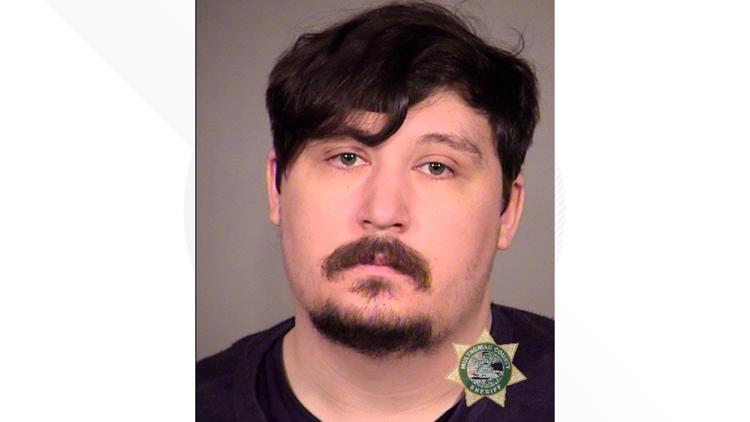
On May 23, 2023, Judge Marshall sentenced Gimbel to life in prison with the possibility of parole after 25 years.
The sentence gave the case a definitive criminal outcome.
What began as a private security encounter had ended with the guard convicted of murder.
The distinction between allegation and established fact was now clear.
Gimbel had initially claimed self-defense.
A jury heard the evidence and rejected that defense as a basis for avoiding criminal liability on the murder charge.
The sentence also ensured that the case would remain significant in debates about armed private security and the consequences of escalation.
Why Certification Became Such an Important Part of the Story
The fact that Gimbel was not properly authorized to carry a gun on duty did not, by itself, answer every question about the shooting.
But it raised an obvious systemic issue.
How did an employee working an armed security assignment end up carrying a firearm without the required certification?
OPB’s reporting suggested the problem was not limited to a single guard.
That shifted attention toward Cornerstone’s practices and the businesses that relied on the company.
Licensing systems exist because armed security work involves extraordinary responsibility. Guards may confront trespassers, suspected shoplifters, people experiencing crises and members of the public who do not understand or accept the guard’s authority.
Adding a firearm to those encounters dramatically raises the stakes.
Security Is Not Policing
One of the most important lessons from the Nelson case is the danger of blurring the line between private security and law enforcement.
A uniform does not create police powers.
A marked security vehicle does not transform a shopping-center employee into a sworn officer.
And the presence of a firearm does not expand legal authority.
Security personnel may have legitimate roles in protecting property and reporting criminal activity, but their powers depend on state law and the circumstances.
The video is compelling because Gimbel appears to approach the dispute with a high degree of authority.
The eventual murder conviction demonstrates how serious the consequences can become when force exceeds what the law permits.
The Self-Defense Claim and the Position of the Truck
The position and movement of Nelson’s truck became central to understanding the shooting.
Gimbel claimed he feared being struck.
Witnesses questioned whether the vehicle presented that kind of immediate danger.
The later federal court record is particularly useful because it references multiple video sources rather than relying solely on memory.
According to the court’s factual summary, after Gimbel sprayed the Nelsons and moved in front of the truck, the couple began driving away. Gimbel then drew his pistol and fired.
That sequence does not require an online commentator to guess about what happened.
It is reflected in a court record that reviewed bodycam, dashcam and store-surveillance footage.
Why Video Evidence Matters
Video can radically change a case involving disputed uses of force.
Witnesses may remember angles differently.
Stress can distort perceptions of distance and timing.
Written reports necessarily compress events.
Video preserves movement and sequence.
In this case, the record eventually included Gimbel’s body camera, dashboard footage and Lowe’s surveillance video.
No single camera captures every perspective perfectly, but several recordings can be compared against one another.
That is far more reliable than judging the shooting from a single still frame or a viral caption.
A Civil Jury Later Examines Broader Responsibility
The criminal conviction answered whether Gimbel was personally guilty of murder.
Civil litigation asked a broader question about responsibility.
In 2024, the Nelson family’s wrongful-death case went to trial. The case examined the roles of Cornerstone Security Group, TMT Development and other entities connected to the property and security operation.
Courtroom View Network’s summary describes the family’s argument that Gimbel unnecessarily escalated the confrontation and that Cornerstone provided inadequate training. The plaintiffs also argued that an aggressive approach toward trespassers contributed to the environment in which the shooting occurred.
The defendants disputed how responsibility should be allocated.
The civil jury ultimately awarded substantial damages to Nelson’s family, extending the consequences of the 2021 shooting beyond Gimbel’s criminal sentence.
The $21.25 Million Civil Verdict
Reporting on the civil case states that an Oregon jury awarded approximately $21.25 million, including punitive damages, to Nelson’s family.
The verdict reflected the jury’s assessment of negligence and responsibility among the parties involved.
It also demonstrated that a fatal security encounter can expose not only the individual guard but also employers, contractors and property managers to enormous legal consequences.
Policies written in offices can influence what happens in parking lots.
Hiring decisions matter.
Training matters.
Certification matters.
Instructions about trespass enforcement matter.
The Nelson case ultimately forced juries to examine all of those layers.
The Story Continued in Federal Court
The legal consequences did not stop with the criminal conviction and wrongful-death verdict.
Insurance litigation later reached federal court over obligations connected to the underlying civil cases.
A 2025 federal opinion again summarized the shooting and referenced the bodycam, dashcam and Lowe’s surveillance recordings.
That later litigation is useful for researchers because it provides a judicial description of the sequence years after the original news cycle ended.
It also shows how one brief confrontation can generate years of litigation across criminal, civil and insurance courts.
What Was Actually in Dispute
At the beginning, the dispute concerned whether Freddy Nelson should be on the property.
But the final legal cases were not really about whether a private shopping center could exclude someone.
They were about what happened when security attempted to enforce that exclusion.
Even if a person is trespassing, that fact does not automatically justify every level of force.
Force must be evaluated separately.
Deadly force receives the highest scrutiny because the consequences cannot be undone.
The jury’s murder verdict ultimately established that Gimbel’s actions crossed the criminal line.
The Role of De-Escalation
This case is difficult to study without repeatedly returning to one question: how many opportunities existed for the encounter to end differently?
A security guard could maintain distance.
Police could be called.
The vehicle could be allowed to leave.
The alleged trespass could be documented.
The parties could disengage.
Instead, pepper spray entered the truck, the guard moved in front of the vehicle and a gun was drawn.
Each step reduced the available margin for error.
Effective de-escalation is not simply about being polite. It is about creating time, distance and alternatives so that a manageable dispute does not become a lethal one.
Why the Viral Title Only Tells Part of the Story
“Simple Trespass Incident Takes a Fatal Turn” is an effective video title because it emphasizes the dramatic contrast between the beginning and the ending.
But the verified story is deeper.
This was not merely a random argument in a parking lot.
There was history between Nelson and security personnel.
There were questions about the guard’s firearm certification.
There was a disputed self-defense claim.
There was a murder prosecution.
There was a life sentence.
There was major wrongful-death litigation.
A short title can attract the viewer. Responsible reporting has to supply everything the title leaves out.
The Most Important Reporting Distinction
At different points in the timeline, the same statements carried different legal weight.
In 2021, prosecutors alleged that Gimbel committed murder.
In 2023, a jury convicted him.
The civil complaint alleged negligence and other wrongdoing by multiple parties.
In 2024, a civil jury returned a substantial verdict.
Keeping those stages separate prevents a common problem in crime writing: treating an accusation as though it was always an established fact.
Here, the existence of completed trials means the final article can be unusually precise about what was alleged and what was ultimately decided.
A Human Life Behind the Legal Record
Court documents necessarily reduce people to roles: victim, defendant, plaintiff, witness.
The reporting about Freddy Nelson provides a fuller picture.
His family described a man who worked as a handyman and pursued small side businesses. Collecting pallets was one of those activities.
He was a husband and father.
The District Attorney’s Office noted that he left behind his wife and three children.
Those details matter because the event is easy to reduce to a debate about security tactics.
For Nelson’s family, it was not an abstract policy failure.
It was a permanent loss.
The Consequences for Gimbel
Gimbel’s decision in the parking lot also permanently altered his own life.
At 28, he was working private security.
Two years later, he stood convicted of second-degree murder.
At sentencing, he received life imprisonment with parole eligibility only after 25 years.
The contrast illustrates why armed security work demands restraint.
A decision made in seconds can be examined for years by investigators, prosecutors, juries, judges, lawyers and the public.
The uniform comes off.
The video remains.
What Businesses Can Learn From the Case
Companies often hire private security because they want a visible response to theft, disorder or repeated trespassing.
But outsourcing security does not eliminate risk.
A poorly trained or improperly certified guard can create greater liability than the problem the company hoped to solve.
Businesses should know who is carrying weapons on their property.
They should understand the contractor’s training standards.
They should establish clear expectations about de-escalation.
And they should be wary of policies that reward confrontation rather than safe disengagement.
The civil verdict in the Nelson case demonstrates how expensive failures in those areas can become.
What Viewers Should Notice in the Footage
When watching the full encounter, the most useful approach is not to begin at the gunfire.
Watch the positioning.
Listen to the commands.
Notice the vehicle blocking the truck.
Observe when pepper spray is introduced.
Watch where Gimbel moves.
Then consider the later evidence and verdict.
The power of the video lies in sequence.
The fatal shots are the endpoint of a series of decisions.
Understanding those decisions is more informative than replaying only the final seconds.
A Verified Timeline of the Case
On May 29, 2021, Freddy Nelson Jr. and his wife were at the Delta Park Center Lowe’s in North Portland.
Private security guard Logan Gimbel confronted Nelson.
The encounter escalated. Gimbel used pepper spray and later fired multiple rounds through the windshield of Nelson’s truck, killing him.
OPB subsequently reported that Gimbel lacked the required certification to carry a firearm while working.
Nelson’s family filed a wrongful-death lawsuit in October 2021.
A Multnomah County grand jury indicted Gimbel in December.
His criminal trial took place in spring 2023.
A jury found him guilty of second-degree murder with a firearm, unlawful use of a weapon and two mace-related counts while acquitting him of recklessly endangering another person.
On May 23, 2023, he was sentenced to life with the possibility of parole after 25 years.
Civil litigation later produced a multimillion-dollar verdict for Nelson’s family, while related insurance litigation continued into 2025.
Why This Case Still Matters
The incident remains relevant because private security has become increasingly visible in American commercial spaces.
Guards patrol stores, parking lots, apartment complexes and transit facilities.
Many perform difficult work responsibly.
But when private guards are armed, poorly supervised or encouraged to treat ordinary property disputes as confrontations, the consequences can be severe.
The Nelson case offers a documented example in which the worst possible outcome occurred.
It also provides something many viral incidents do not: completed criminal proceedings and extensive civil records.
That makes it possible to learn from the event rather than merely react to it.
The Final Lesson Is About Proportionality
A disagreement over access to private property should not ordinarily end with a person dead and another person serving a life sentence.
That contrast is what makes this case so haunting.
Security work is fundamentally about reducing risk.
When enforcement choices instead increase risk at every stage, the purpose of security has been lost.
The murder conviction, life sentence and civil verdict do not erase what happened in the Lowe’s parking lot.
But they establish that the fatal escalation carried consequences far beyond the original trespass dispute.
Watch the Full Incident
The complete video provides the visual sequence behind a case that later moved through criminal court, wrongful-death litigation and years of additional legal proceedings.
Watching the full encounter alongside the verified court record makes one fact impossible to ignore: the fatal ending was preceded by a chain of decisions, each of which narrowed the opportunity for a peaceful resolution.
Comments (0)
Loading comments...
May You Like
911 Call Leads Police to a Disturbing Family Situation
Four Suspects Try Killing a Cop After Police Chase
Entitled Driver Skips the Line and Gets Instant Karma3