Bodycam Shows Police Shoot Suicidal Man Holding Shotgun
SUICIDAL MAN WITH A SHOTGUN CONFRONTS POLICE AFTER A WINTER PURSUIT IN MINNESOTA
A CALL FOR HELP BECOMES AN ARMED CONFRONTATION
It was a bitter winter morning in Little Falls, Minnesota.
Snow covered the ground. Residential streets were quiet. From a distance, there was little to suggest that officers were about to enter a confrontation that would end with a man dead and four law-enforcement officers under investigation.
But this was never an ordinary traffic stop.
Police had received information about a man who was reportedly suicidal and had access to a firearm.
The man was Patrick Glenn Jeske, 37.
According to contemporary reporting based on information from the Minnesota Bureau of Criminal Apprehension, Morrison County sheriff's deputies were called early on December 30, 2010, regarding a man with a gun who was believed to be suicidal. Officers subsequently followed Jeske's vehicle.
The situation eventually moved to a driveway.
Then everything changed.
Jeske allegedly emerged from the vehicle carrying a shotgun.
Officers ordered him to put it down.
Authorities said he did not.
What happened next unfolded in seconds, but the questions surrounding the encounter would continue long after the gunfire stopped.
THIS WAS A POLICE RESPONSE TO A PERSON IN CRISIS THAT BECAME A DEADLY ARMED CONFRONTATION.
Real frame from the supplied footage
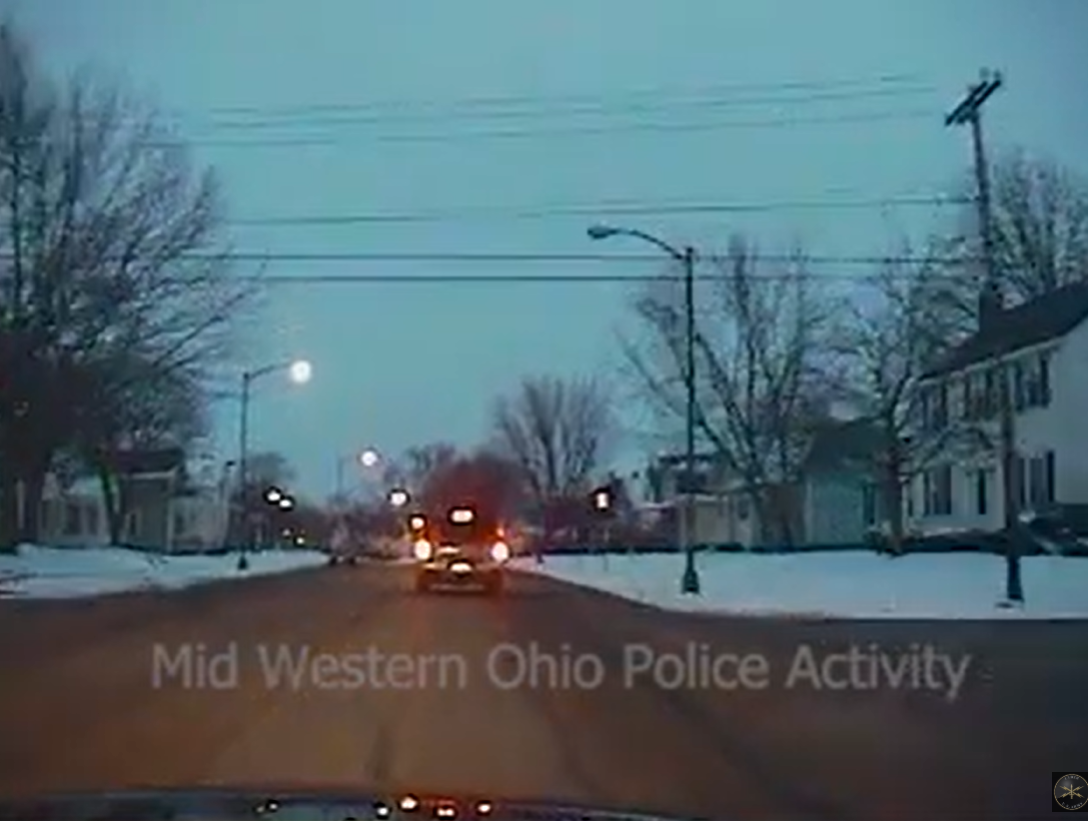
WHO WAS PATRICK JESKE?
Jeske was 37 and lived in Little Falls, although obituary information also described him as formerly being from Buffalo, Minnesota. His death occurred on December 30, 2010.
Those basic facts matter because police footage can easily reduce a person to the final minutes of his life.
The camera records the confrontation.
It does not record everything that led to it.
According to the later prosecutorial review, Jeske was depressed and suicidal. The review said he had told others that night that he intended to kill himself.
That makes the opening of this incident fundamentally different from a conventional pursuit involving someone suspected of robbery, burglary or another crime against a stranger.
Officers were confronting an armed person believed to be experiencing a mental-health crisis.
But the presence of a firearm created an immediate problem.
Police could not treat the encounter solely as a welfare check once they believed a shotgun was involved.
The need to help someone in crisis now existed alongside the need to protect officers and anyone else nearby.
Those goals can coexist until a weapon enters the confrontation.
Then officers may have only seconds to determine whether the person poses an immediate threat.
Real frame from the original video
THE VEHICLE LEADS OFFICERS TO A DRIVEWAY
Authorities said officers attempted to stop Jeske's vehicle.
Instead of ending immediately on the road, the encounter continued until the vehicle entered a driveway.
The footage is a reminder of how different older police video looks compared with today's high-definition bodycams.
The image is grainy.
Night and winter conditions reduce visibility.
The camera remains fixed from a police vehicle rather than following an officer's head and body.
Yet those limitations arguably make the tension more apparent.
The viewer cannot see everything.
Neither could every officer on scene.
Police vehicles converge around the area.
Officers position themselves while trying to determine what Jeske will do next.
At this point, the situation still has more than one possible ending.
A person experiencing a crisis can surrender.
A weapon can be placed on the ground.
Officers can potentially take the individual into custody and connect him with emergency mental-health care.
But that requires the armed person to cooperate sufficiently for police to safely close the distance.
According to authorities, that did not happen here.
THE SHOTGUN CHANGES EVERYTHING
Authorities said Jeske exited armed with a shotgun.
Police repeatedly face a difficult distinction in these situations.
A person holding a firearm is not automatically firing it.
But officers cannot safely assume that someone who refuses to disarm will never use it.
Distance becomes critical.
Cover becomes critical.
The direction of the firearm becomes critical.
And every movement can suddenly become consequential.
According to the initial BCA account reported by the Star Tribune, officers opened fire after Jeske refused commands to put the shotgun down.
Later information went further.
A prosecutorial review reported that Jeske had fired at least one shot at officers during the confrontation.
That finding became central to the subsequent legal evaluation of the officers' actions.
Real frame from the confrontation
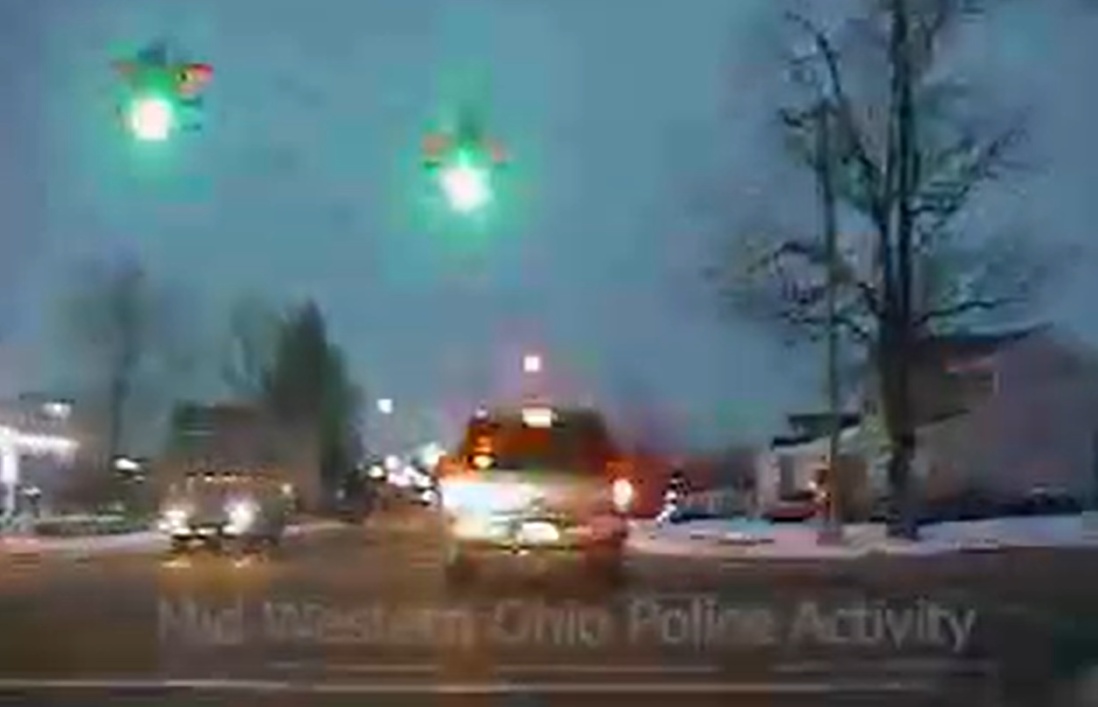
The crucial point is that the confrontation did not develop in a vacuum.
Police had been told they were dealing with a suicidal person.
They believed he was armed.
They followed his vehicle.
The encounter moved into a residential area.
Then the person officers were trying to contain allegedly emerged with a shotgun.
Each development narrowed the range of safe options available.
SECONDS OF GUNFIRE END THE STANDOFF
The final confrontation happens much faster than the buildup.
That is common in police shootings.
Minutes can be spent establishing containment, issuing commands and attempting to determine what someone intends to do.
The decisive moment may last only seconds.
Authorities said four law-enforcement officers fired their weapons.
They were identified in contemporary reporting as Little Falls police officers Jon West and Joshua Burgardt, Morrison County sheriff's deputy James Paschelke, and sheriff's Sgt. Shawn Larson.
Jeske was struck multiple times.
The later prosecutorial review stated that he was hit six times and died at the scene.
Real frame from immediately around the critical encounter
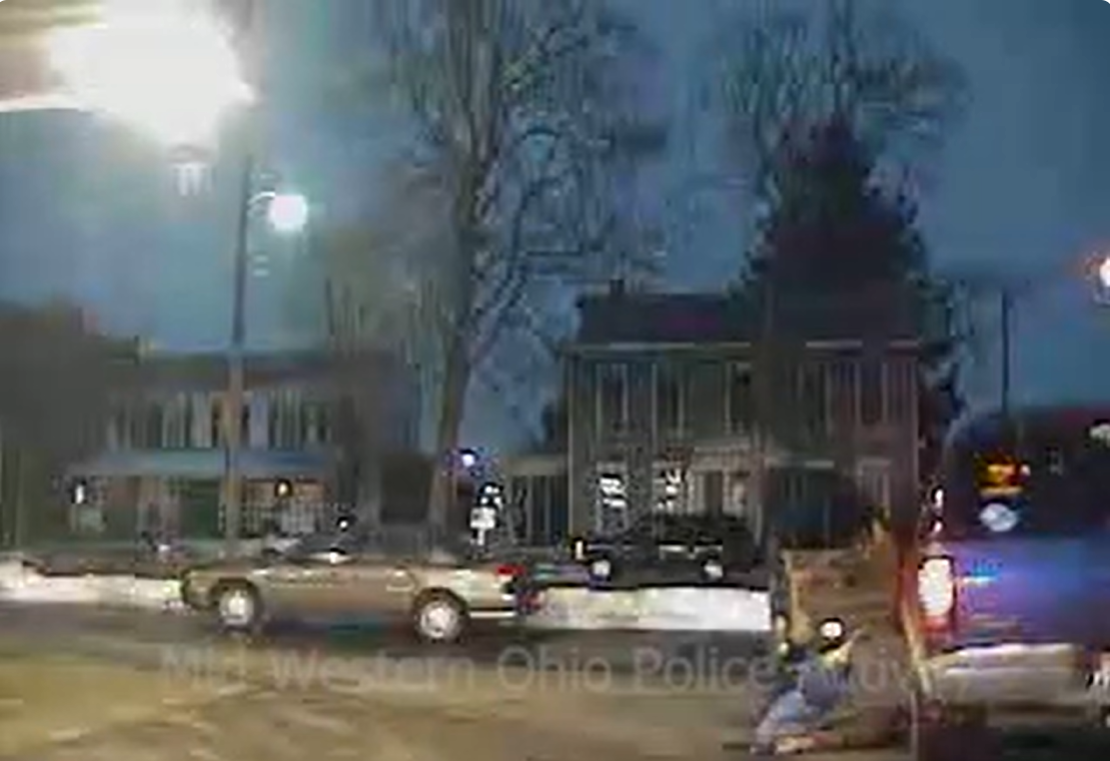
The moment after gunfire creates another dramatic change in police behavior.
Before shots are fired, officers are dealing with an active armed threat.
Afterward, they have to determine whether that threat still exists.
Is the weapon still accessible?
Can the person still fire?
Is anyone else present?
Does someone need emergency medical treatment?
Only once officers believe they can safely approach does the encounter move into its next stage.
The dashcam footage records that transition.
OFFICERS MOVE TOWARD JESKE
After the shooting, multiple officers converge.
The image captured from the patrol vehicle shows how quickly a standoff becomes a rescue-and-control operation once the immediate threat appears to have ended.
Officers approach the area where Jeske has fallen.
The shotgun has to be secured.
The scene has to be controlled.
Emergency medical response has to be considered.
And officers involved in the shooting immediately become participants in an investigation.
Real frame from the immediate aftermath
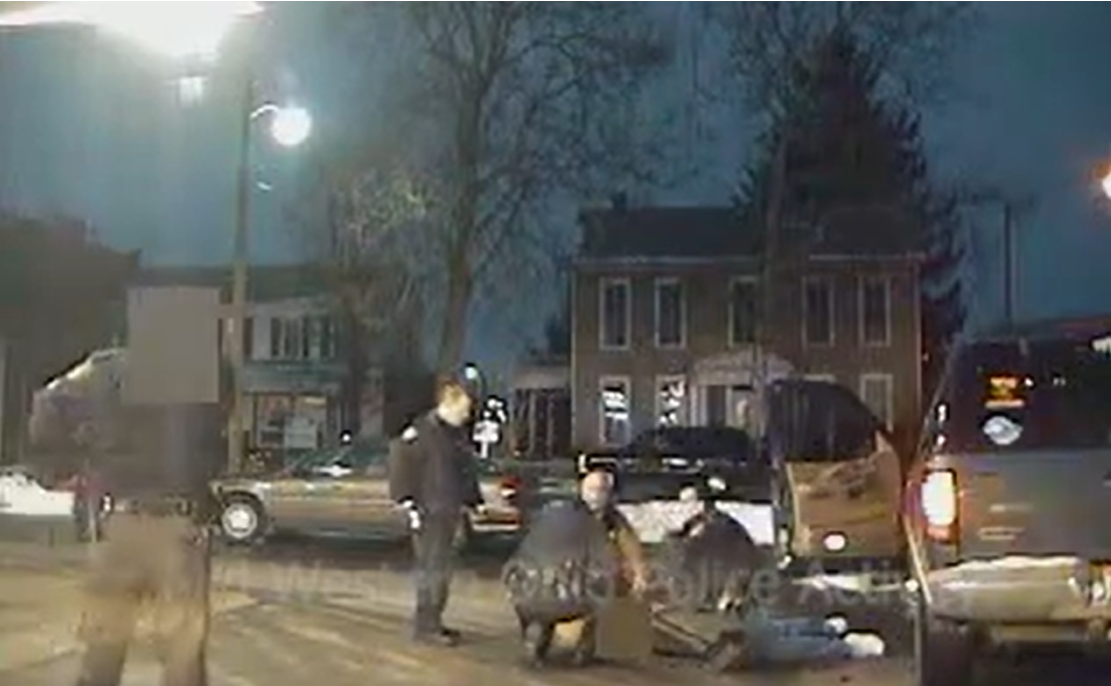
This part of the footage may appear less dramatic than the confrontation itself.
But legally and procedurally, it is extremely important.
An officer-involved shooting creates a crime-scene-like environment even when police believe the shooting was legally justified.
Weapons may become evidence.
Shell casings matter.
Vehicle positions matter.
Witness accounts matter.
Camera footage matters.
The location of the shotgun matters.
And each officer's perception of what occurred can later be compared against physical evidence and recorded video.
That process would eventually determine whether the four officers' actions were legally justified.
THE INVESTIGATION DID NOT END WHEN THE GUNFIRE STOPPED
Four officers were initially placed on paid administrative leave while authorities investigated the shooting.
That step should not automatically be interpreted as punishment.
Administrative leave following a fatal officer-involved shooting is commonly used to separate the involved personnel from active duties while investigators reconstruct what happened.
The Minnesota Bureau of Criminal Apprehension identified Jeske and investigated the circumstances surrounding his death.
An autopsy determined that he had been shot more than once.
Months later, the case received another major review.
Crow Wing County Attorney Don Ryan examined the shooting.
His conclusion was significant:
THE OFFICERS' USE OF DEADLY FORCE WAS FOUND TO BE JUSTIFIED.
The April 2011 review concluded that officers had acted in defense of themselves during the confrontation.
Real frame showing police controlling the scene
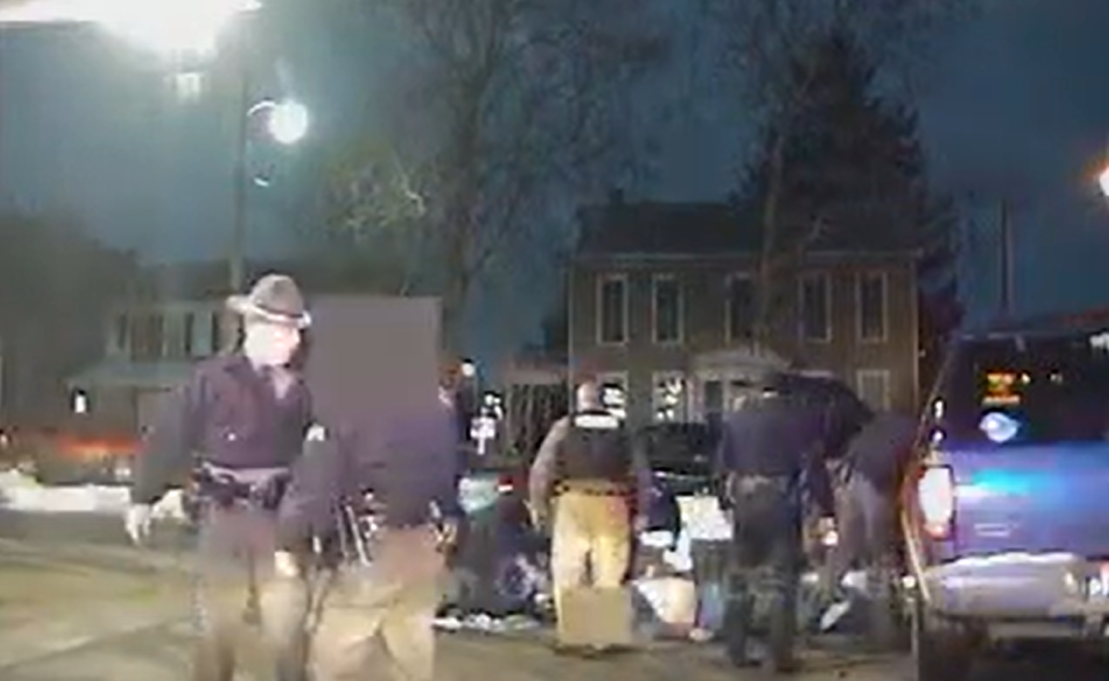
According to that review, Jeske had been depressed and suicidal, had told others he planned to kill himself, and fired at least one shot toward officers.
Those findings provided crucial context that the grainy dashcam footage alone cannot completely establish.
This illustrates why police videos should rarely be interpreted without accompanying investigative records.
A camera provides evidence.
It does not necessarily provide every fact.
A MENTAL-HEALTH CALL WITH AN ARMED COMPONENT
This case sits at the intersection of two extremely difficult areas of policing:
mental-health crisis intervention and armed-threat response.
If a person is suicidal but unarmed, officers may have considerably more freedom to create distance, communicate, wait and involve specialized mental-health personnel.
A firearm changes that calculation.
A shotgun changes it dramatically.
Police still have an interest in preventing the person from harming himself.
But officers also have to prevent that person from harming someone else.
The distinction becomes even more difficult when the suicidal person directs the weapon toward law enforcement.
A situation that began as an attempt to protect a person from himself can suddenly require officers to protect themselves.
This is why describing the incident simply as "police shoot suicidal man" leaves out important context.
Jeske's reported mental-health crisis is essential.
So is the reported shotgun.
So are the commands to put it down.
And so is the prosecutorial finding that he fired at least one shot at officers.
All of those facts belong in the same account.
WHY THE OLD DASHCAM FOOTAGE STILL MATTERS
The video is more than fifteen years old.
Its resolution is poor by modern standards.
There is no crisp 4K bodycam.
No multiple-angle presentation.
No cinematic overhead footage.
Yet it remains valuable.
The fixed dashcam captures something modern edited videos sometimes obscure: the physical distance between officers, vehicles and the person they are confronting.
Real frame from later in the police response
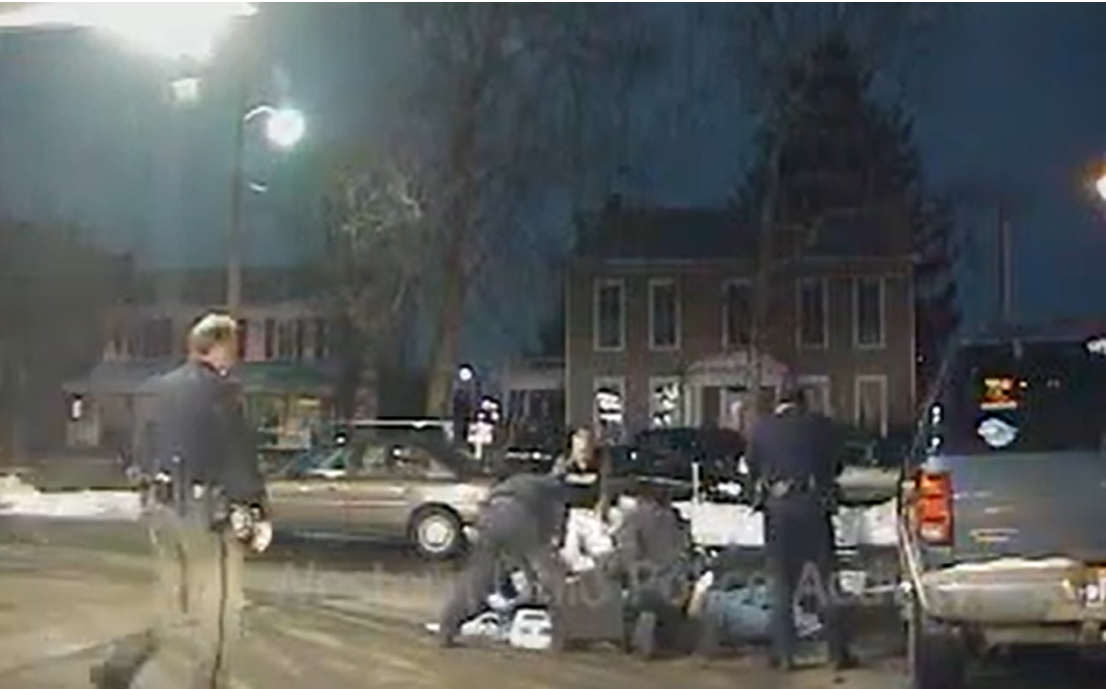
It also preserves the chronology.
Officers follow.
They establish positions.
The confrontation develops.
Gunfire occurs.
Police move forward.
The scene transitions from active danger to investigation.
Because the camera does not cut between multiple angles, viewers experience much of that sequence from one continuous perspective.
That can make the video visually less dramatic.
But evidentially, continuity has value.
THE HUMAN STORY CANNOT BE REDUCED TO THE FINAL SECONDS
There is another reason to approach this incident carefully.
Patrick Jeske was not merely "the armed man" visible in a police video.
He was a 37-year-old person whose life ended during what authorities described as a severe mental-health crisis.
His obituary confirms his death on December 30, 2010 and his connection to Little Falls and Buffalo.
At the same time, acknowledging his humanity does not require ignoring the danger officers said they faced.
Both facts can exist simultaneously.
A person can desperately need help while also creating an immediate lethal threat.
That is precisely what makes these encounters so difficult.
If the subsequent investigation is correct, officers did not arrive looking for a confrontation.
They were responding to information about a suicidal armed person.
Nor does the evidence described by investigators suggest that officers could simply ignore the weapon once the confrontation developed.
The tragedy is that a situation originating in a mental-health crisis ultimately reached a point where the available choices became extraordinarily limited.
WHAT THE LATER REVIEW DETERMINED
The April 2011 prosecutorial review is essential to understanding how the case was ultimately evaluated.
According to the Associated Press report carried by WJON, the review found that Jeske was depressed and suicidal, that he had communicated an intention to kill himself, and that he fired at least one shot at officers.
Jeske was shot six times.
Two Little Falls police officers and two Morrison County sheriff's personnel fired their weapons.
The county attorney concluded that the officers had no choice but to defend themselves and found their use of deadly force justified.
That does not make the outcome less tragic.
It explains the legal conclusion reached after investigators had access to more evidence than a viewer watching a compressed internet video.
And that distinction matters.
THE VIDEO SHOWS THE CONFRONTATION. THE INVESTIGATION EXPLAINS HOW AUTHORITIES DETERMINED WHAT HAPPENED.
A WINTER MORNING THAT ENDED WITH FOUR OFFICERS FIRING
The final timeline is stark.
On December 30, 2010, law enforcement received a report involving an armed man believed to be suicidal.
Officers located and followed Patrick Jeske.
The encounter ended at a driveway in Little Falls.
Authorities said Jeske emerged with a shotgun.
Officers ordered him to put it down.
The subsequent review found that he fired at least one shot toward police.
Four officers returned fire.
Jeske, 37, was struck multiple times and died.
The officers were placed on administrative leave while the shooting was investigated.
Months later, a prosecutor concluded that the deadly force was justified.
Behind that sequence, however, is a more complicated story.
It is the story of a person reportedly experiencing a severe crisis.
It is the story of officers responding to a call where helping that person meant approaching someone believed to possess a firearm.
And it is the story of how rapidly a welfare-oriented response can transform when a weapon is introduced into the encounter.
The snow-covered streets and grainy police footage make the incident appear distant.
The underlying dilemma is not.
Police departments continue to confront armed mental-health calls today, and the same fundamental challenge remains:
How long can officers attempt de-escalation when the person they are trying to help also presents an immediate threat to the people around him?
There is rarely an easy answer.
In Little Falls, the answer that morning ended with gunfire.
WATCH THE FULL ENCOUNTER
The written record explains why officers were there and what investigators later concluded, but the original dashcam footage shows something text cannot fully reproduce: how a seemingly quiet winter police response develops into an armed confrontation within minutes.
Watch the complete footage to follow the officers from the initial response and vehicle movement through the driveway standoff, the critical confrontation and the immediate aftermath.
The most important details are not limited to the moment shots are fired — they are in the decisions and movements that lead up to those final seconds.
Click here to watch the full incident unfold from the initial police response through the final confrontation: https://www.youtube.com/watch?v=5n46WzArD4s
Comments (0)
Loading comments...
May You Like

911 Call Leads Police to a Disturbing Family Situation
Everything Changed When Cops Asked About Weapons
🚨🚗 One Mistake Changes Everything During a DUI Arrest | Bodycam Footage US