
Bodycam Reveals the Full Sequence Behind a Controversial Tempe Arrest
Bodycam Reveals the Full Sequence Behind a Controversial Tempe Arrest
A viral clip of a Tempe officer striking a 21-year-old woman sparked outrage. Surveillance footage and multiple body cameras reveal the chaotic street fight and escalating confrontation that came before it.
A Short Viral Clip Creates a Much Bigger Question
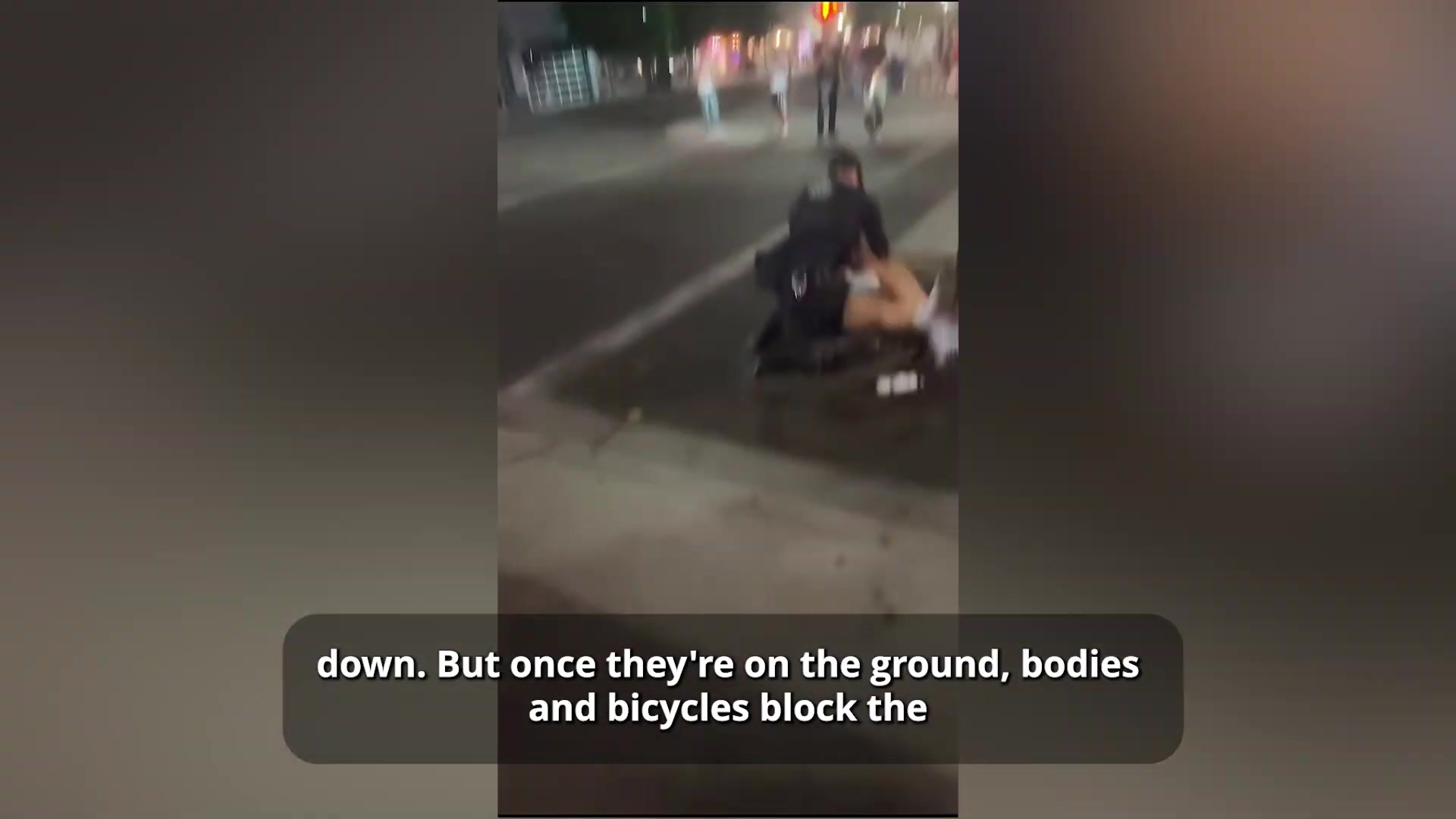
In the early morning hours of July 19, 2026, downtown Tempe's Mill Avenue entertainment district was still busy when a street fight drew the attention of officers assigned to the Tempe Police Department's bike squad. Within minutes, several people were on the ground, officers were trying to make arrests, and a confrontation involving 21-year-old Eryn Kelise Bonner had produced the image that would dominate the public discussion: an officer taking Bonner down near a police bicycle and striking her during the struggle.
The bystander recording spread rapidly online. Viewed by itself, the clip was disturbing and easy to interpret as a self-contained event. It showed the use of force but offered little of the confrontation that preceded it. Tempe Police responded by releasing additional surveillance and body-worn-camera footage, arguing that the viral clip captured only part of what they described as a rapidly evolving encounter.
The supplied video brings those different angles together. It opens with surveillance footage labeled “CCTV – Mill Avenue,” dated July 19, 2026, and then moves among body-camera recordings from multiple officers. The chronology and location match reporting from Arizona's Family, ABC15, FOX 10 Phoenix and other local outlets.
The additional footage does not make the controversy disappear. It does something more useful: it shows why the event cannot responsibly be judged from a few seconds alone. It captures the fight that brought officers into the scene, Bonner's repeated proximity to officers making arrests, commands for her to move back, the physical struggle, the disputed punch and the interviews that followed.
It also reveals why two different people can watch the complete sequence and still disagree about whether the officer's response was proportionate. Context can explain how an encounter developed without automatically settling whether every use of force was appropriate.
The Incident Begins With a Fight, Not With Bonner
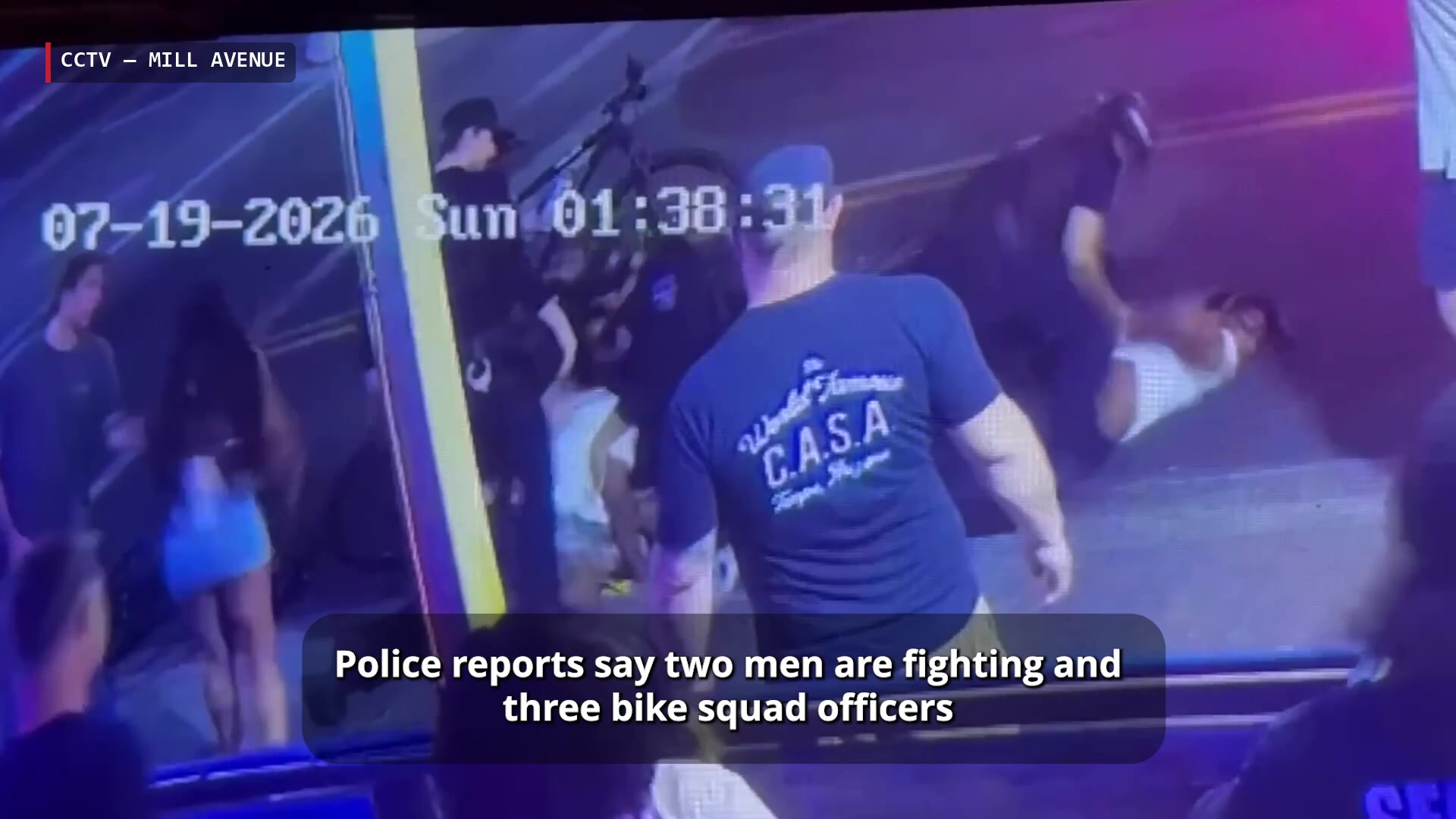
Surveillance footage places the beginning of the police response outside businesses near Sixth Street and Mill Avenue at roughly 1:40 to 1:45 a.m. Local reporting describes officers encountering two men involved in an active physical altercation.
The supplied CCTV footage shows the crowded nighttime environment. People stand near the businesses while the confrontation develops, and bike officers move rapidly into the group. The setting matters. Mill Avenue is a nightlife district, and officers are working in close proximity to bystanders who may not immediately understand who is being detained or why.
According to court documents summarized by ABC15 and FOX 10, three Tempe bike officers were attempting to arrest two men when Bonner moved close to the officers and the people they were restraining. Police records alleged that she attempted to pull one of the detained men away. Bonner's defense and critics of the police response have disputed the department's characterization of her actions and the proportionality of the force that followed.
The body-camera footage shows officers trying to gain control of people on the ground while voices overlap from multiple directions. It is noisy, physical and difficult to follow from a single camera. That is precisely why the surveillance angle matters: it provides a wider view while the body cameras provide the officers' closer perspectives.
At several points, Bonner is near the officers as they are attempting to restrain the men. Commands to get back can be heard. Police records say an officer moved or pushed her away more than once. The video then shows her returning toward the group.
None of that means the later punch should be treated as automatically justified. But it establishes a sequence that the short viral clip did not show. The confrontation between Bonner and the officer grew out of an already chaotic arrest scene rather than beginning with an officer unexpectedly approaching an uninvolved person on an otherwise calm sidewalk.
Repeated Commands and a Scene That Never Fully Settles
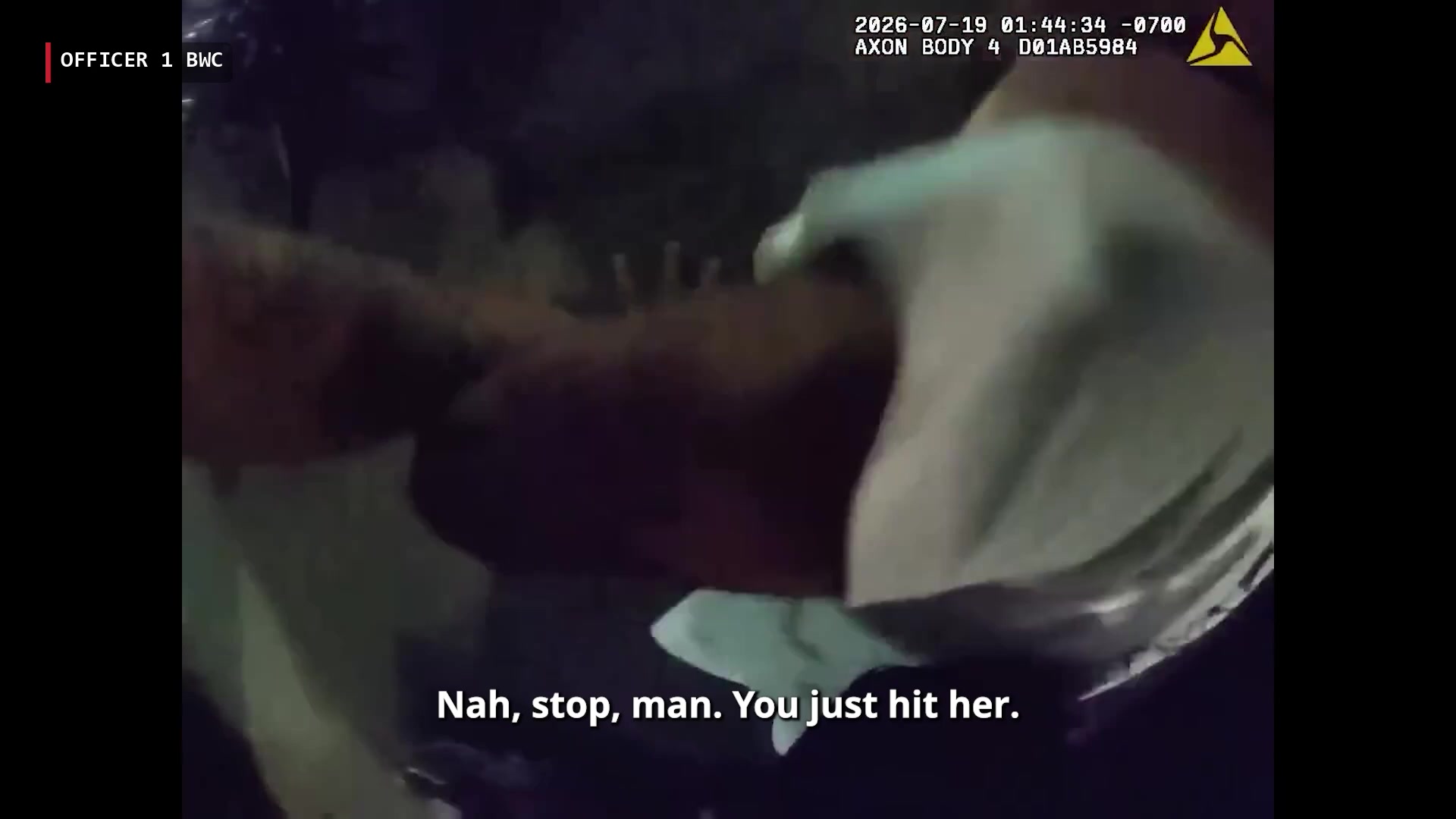
Body-worn cameras are particularly valuable during this portion because they capture the proximity between Bonner and the officers. From the officers' perspective, they are trying to control multiple people while another person repeatedly enters the immediate arrest area. From Bonner's perspective, as reflected in her later statements and her attorney's public account, officers escalated the situation rather than communicating and de-escalating it.
Those competing interpretations became central to the controversy.
Police reports alleged that after Bonner was told to back away, she again moved into the officers' working space. An officer pushed her away. The footage shows Bonner falling and then getting back up. She is visibly angry and continues confronting the officer.
The next moments happen quickly. Bonner approaches again, the officer moves to arrest or restrain her, and both become entangled near the police bicycles. The encounter goes to the ground.
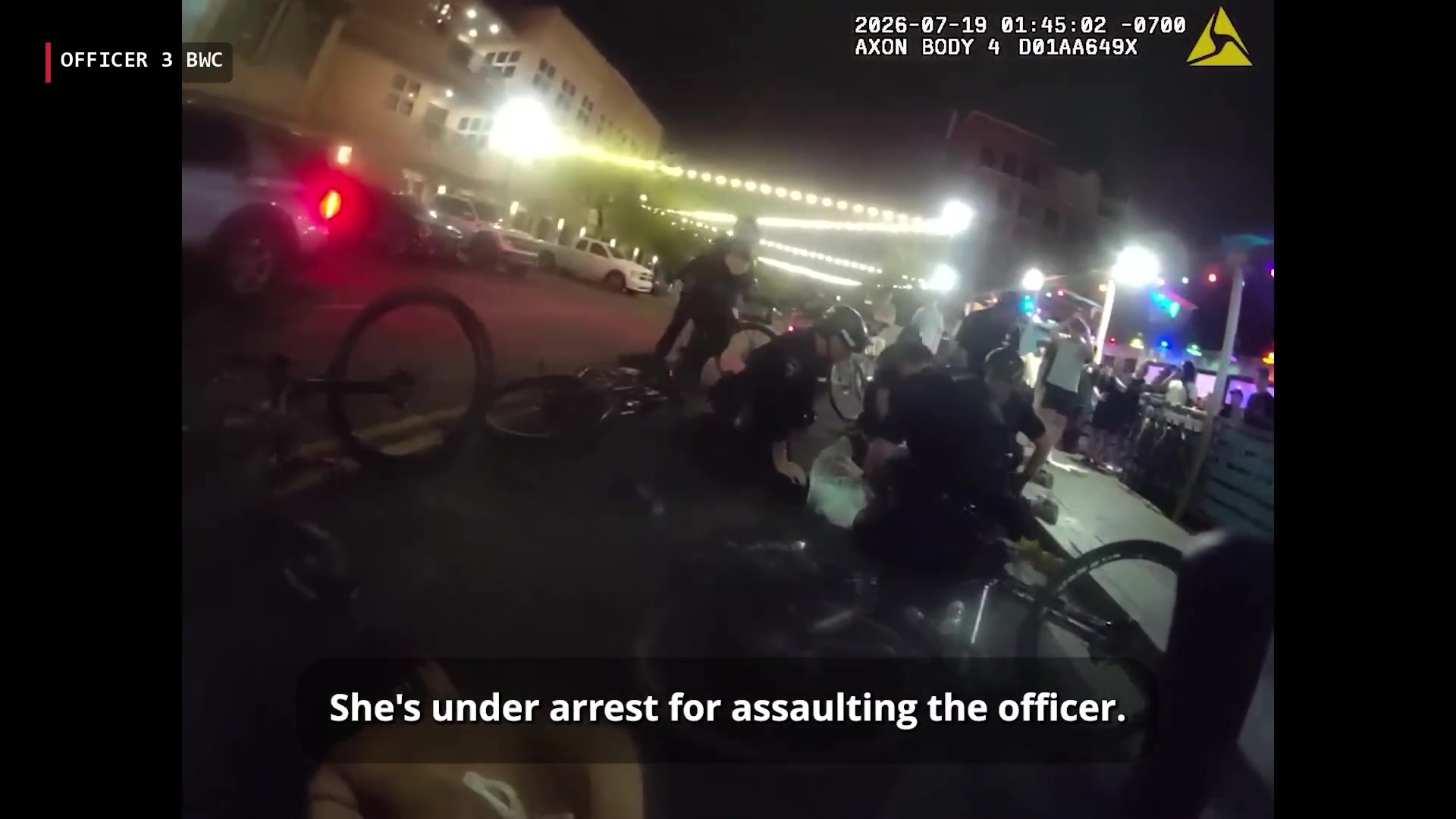
Court records alleged that Bonner struck the officer in the face five or six times during the struggle. Arizona's Family noted that the body-camera angle does not clearly show every alleged strike, while business surveillance footage provides a wider view of the physical exchange. The arrest report said the officer then struck Bonner once in the face while attempting to gain control.
This difference between what a report says and what one camera clearly depicts is important. A responsible account should not claim that the body camera unmistakably proves every alleged strike when the relevant movements are partly obscured. Nor should it ignore the surveillance footage and court allegations simply because the most widely circulated clip begins later.
Multiple cameras do not always produce perfect certainty. They can instead reveal how incomplete any single angle is.
The Punch Becomes the Image Everyone Sees
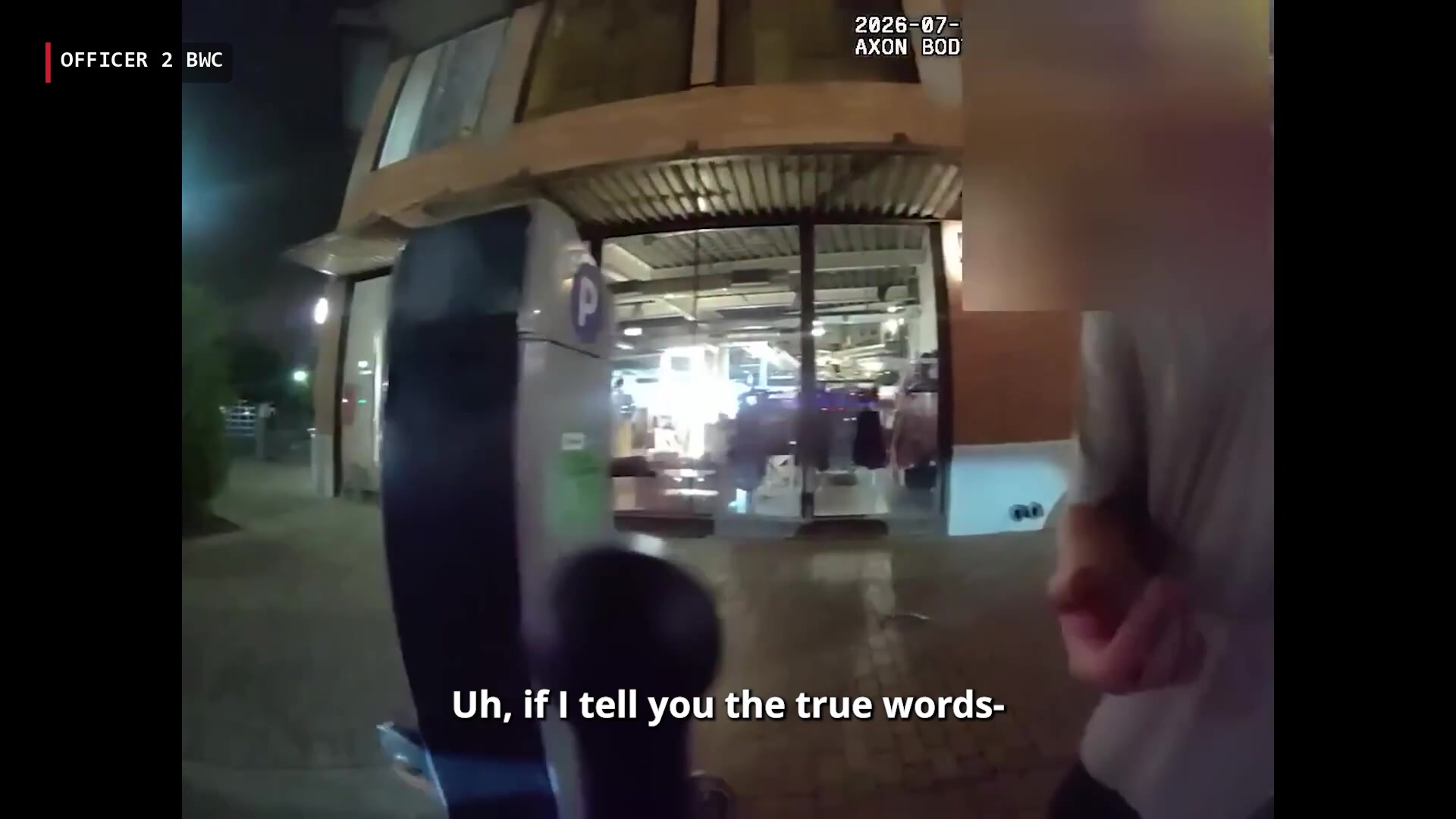
The most controversial moment is the one that traveled farthest online. The officer and Bonner are on the ground around a police bicycle. During the struggle, the officer delivers a strike toward her face.
Bonner can later be heard angrily telling officers that she was punched and pushed. The video preserves her immediate reaction, not merely a later statement made after the controversy had spread online.
The Tempe Police Department acknowledged that the footage raised concerns and announced an administrative investigation into whether the officer's actions complied with department policy. That distinction matters. Police releasing additional context was not the same as the department announcing that every action had already been cleared.
Public criticism followed quickly. Tempe councilmembers Bobby Nichols and Brooke St. George publicly criticized the police response after reviewing available footage, saying they were concerned about the level of force and the apparent lack of de-escalation. Civil-rights advocates also raised concerns.
The Tempe Officers Association defended the officers. Its president argued publicly that the complete video showed Bonner repeatedly ignoring commands, interfering with an active arrest and striking an officer during the struggle. Bonner's attorney, Benjamin Taylor, took the opposite position, describing the police response as unnecessarily violent and alleging additional misconduct during the arrest. The officers' association denied those allegations.
Those positions should not be blended into a single claim of fact. They represent opposing interpretations of the same event. What is directly visible is that Bonner repeatedly approaches the arrest scene, is pushed away, returns, becomes involved in a physical confrontation, goes to the ground near a bicycle and is struck during the struggle.
What Happened After the Cameras Stopped Being Viral
The legal story developed differently from the first arrest allegations. Bonner was initially arrested on felony allegations that included aggravated assault on a first responder and resisting arrest.
The Maricopa County Attorney's Office later declined to prosecute the felony case. Arizona's Family reported that prosecutors concluded there was no reasonable likelihood of conviction. That decision is significant, but it is not the same thing as a court finding that every allegation in the police report was false or that the officer's use of force was unlawful.
Tempe Police subsequently submitted misdemeanor allegations to Tempe City Court. Local reporting in August identified the submitted offenses as assault, resisting arrest, disorderly conduct and obstruction. Whether those allegations ultimately result in convictions is a separate legal question, and they should not be described as established guilt.
Bonner's attorney continued challenging the police response and called for greater scrutiny of the investigation. Her family publicly described the emotional and physical effects of the arrest. The Tempe Officers Association continued to defend the officers and argued that the complete footage supported their account.
By September, the incident had also become part of a broader local conversation about police accountability and civilian oversight. Tempe formed a public-safety oversight subcommittee whose work includes reviewing de-escalation, use-of-force policies and community accountability. Reporting on the new effort cited Bonner's arrest among the recent events contributing to public concern.
As of the latest reliable reporting reviewed for this article, the controversy therefore cannot be reduced to a simple ending in which one side was officially proven right. The felony prosecution was declined, misdemeanor allegations were submitted, and scrutiny of the police response continued.
Why Different Camera Angles Change the Story
The strongest lesson from the footage is not that body cameras automatically vindicate police or that bystander videos are inherently misleading. It is that camera position determines what a viewer can see.
The viral bystander angle captured the most visually dramatic portion of the arrest. That made it valuable evidence. It also meant viewers who saw only that clip had little information about the fight officers were already handling or the interactions between Bonner and police immediately beforehand.
The body cameras provide proximity and audio. They capture commands, movement and portions of the struggle from the officers' positions. But when bodies collide and an officer falls near a bicycle, the camera's view becomes unstable and partially blocked.
The surveillance camera is farther away but provides a broader scene. It helps establish where people were positioned and how they moved relative to one another. Its weakness is the opposite of the body camera's: distance can make fine details difficult to resolve.
Investigators therefore have to synchronize these sources rather than selecting whichever angle best supports a preferred narrative. They also compare the recordings with witness statements, officer reports, injuries and other evidence.
This is particularly important when evaluating the allegation that Bonner struck the officer repeatedly before the officer's punch. The body camera alone is not a perfect view of every movement. Wider surveillance footage and other evidence become relevant to reconstructing what happened. At the same time, the officer's visible strike remains part of the evidence and must be evaluated under department policy and applicable law.
Context Explains the Build-Up, but It Does Not End the Debate
The phrase “full context” is often used as though context automatically resolves a controversial police video. This case demonstrates why that is too simple.
The longer footage materially changes the viewer's understanding of the encounter. It shows an active fight, officers making arrests, Bonner repeatedly moving close to the officers, commands to back away, pushes that create further confrontation, and a physical struggle before the punch.
But additional context also creates new questions. Could officers have created more distance or used a different approach? Did Bonner's conduct create a threat requiring the level of force used? At what exact point did an attempt to control the arrest scene become an arrest of Bonner herself? Was the strike consistent with policy given what the officer reasonably perceived during the ground struggle?
Those questions are precisely why administrative use-of-force reviews exist. They cannot be answered responsibly by counting social-media likes or by treating a police statement as the final word.
Arizona law, department policy and constitutional use-of-force standards involve facts that a viral clip cannot fully resolve. The seriousness of the underlying fight, the resistance officers encountered, the immediacy of any perceived threat and the proportionality of the response all matter.
The prosecutor's decision not to pursue the original felony allegations against Bonner is also part of the context. It demonstrates that an arrest report and an initial booking do not guarantee prosecution. Prosecutors independently assess whether available evidence creates a reasonable likelihood of conviction.
At the same time, declining felony charges does not itself decide the administrative question of whether an officer violated department policy. Those are separate processes with different standards.
A Six-Minute Video Can Tell More Than a Six-Second Clip
The supplied compilation runs only a few minutes, yet it contains substantially more information than the segment that initially drove the controversy. It shows the fight, the arrests, the repeated interactions, the physical confrontation, the immediate aftermath and witness interviews.
One witness tells an officer that men had run at him while he was waiting for an Uber. The officer discusses what he observed, including the witness dropping pizzas during the confrontation. These details may seem minor compared with the punch, but they help reconstruct why officers became involved in the first place.
The video also shows Bonner after she has been detained, loudly challenging the officers' actions and insisting she had been pushed and punched. Her reaction is part of the record and should not be erased simply because police later released additional footage.
The result is a story with more than one uncomfortable fact. Officers were responding to a real disturbance. Bonner did not remain distant from the arrests despite repeated commands. A physical struggle followed. An officer struck her. Prosecutors later declined the original felony case. Police sought misdemeanor charges. Critics continued questioning the level of force, while the police union defended it.
That complexity is exactly what short-form viral video tends to remove. Social media rewards a decisive interpretation delivered immediately. Evidence often does the opposite: it adds chronology, competing perspectives and uncertainty.
For viewers trying to understand the Mill Avenue encounter rather than simply react to its most dramatic second, the full sequence is therefore essential. It does not require accepting the police department's interpretation, nor does it invalidate the concerns raised by the bystander footage. It provides the material needed to evaluate both.
The public debate began with a punch. The fuller record begins several minutes earlier, with a fight on a crowded street and officers trying to control a scene that continued escalating.
Comments (0)
Loading comments...
May You Like

A Suspicious Vehicle Leads Officers Into an Unexpected Chase

Traffic Stop Turns Deadly After Man Steps Out of Stolen Car

A Late-Night Escape Attempt Ends With Officers Making an Arrest












