
BODYCAM: Moses Alik Shooting Full Bodycam
TASER FAILS, THEN THE KNIFE COMES UP: INSIDE THE FATAL POLICE ENCOUNTER WITH MOSES ALIK
HOOK — A 3 A.M. CALL AT A GAS STATION BECOMES A DEADLY CONFRONTATION
It was the final morning of 2024.
Most of Celina, Ohio, was still asleep.
At approximately 3:03 a.m. on December 31, police activity suddenly converged on the Dockside Marathon gas station at 303 S. Main Street.
The original call involved a man reportedly armed with a knife.
Within minutes, officers would encounter 22-year-old Moses Alik, attempt to stop him with a Taser, and ultimately confront him at extremely close range.
The body-camera footage captures how little time separated those stages.
Police commands fill the darkness.
Officers try to control the situation.
A Taser is deployed.
It doesn't stop Alik.
Then the knife comes up.
SECONDS LATER, A MERCER COUNTY SHERIFF'S DEPUTY FIRES HIS HANDGUN.
Alik falls to the pavement.
The confrontation is over almost immediately.
But the police response isn't.
Officers transition from using force to attempting to save the same man's life. They call for emergency medical assistance, provide first aid and remain with him until EMS arrives.
Alik would later be pronounced dead at Mercer County Community Hospital.
The shooting triggered an independent investigation by the Ohio Bureau of Criminal Investigation, and months later a grand jury would be asked to review whether criminal charges should follow.
The answer eventually came back:
NO INDICTMENT.
But understanding how the case reached that outcome requires returning to the gas station—and to the seconds captured by the officers' cameras.
THE CALL THAT BROUGHT POLICE TO DOCKSIDE MARATHON
The confrontation did not begin with a traffic stop or police pursuit.
Authorities were responding to a report involving a man with a knife.
Deputy Spencer Heinl of the Mercer County Sheriff's Office happened to be in Celina and responded to assist Celina Police officers at Dockside Marathon at about 3:03 a.m., according to the sheriff's account reported by The Daily Standard and WHIO.
REAL BODYCAM FRAME — OFFICERS AT THE GAS STATION
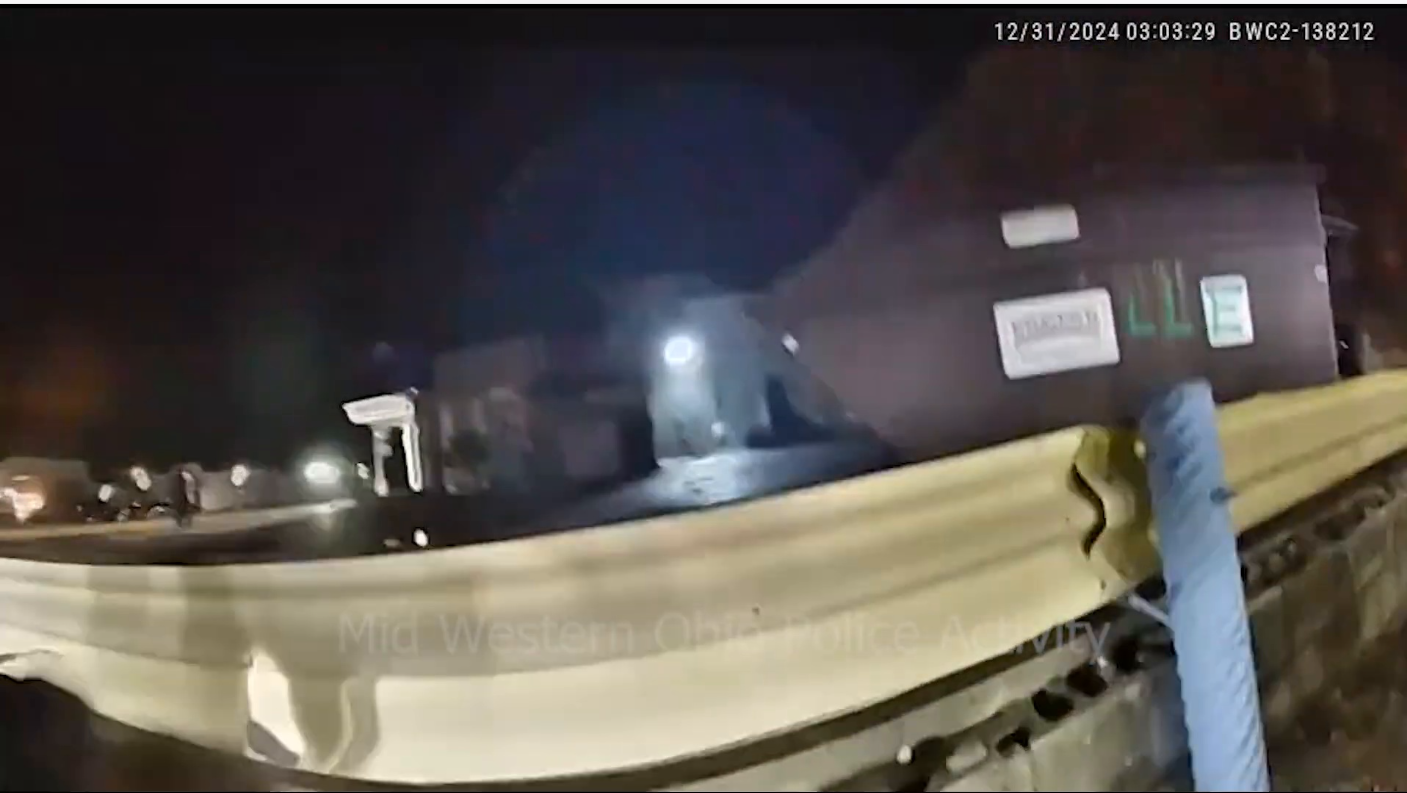
The location is important.
A convenience store and gas station provide an unusually complicated environment for police.
There are vehicles.
There are customers.
There is a public roadway immediately nearby.
There are structures and obstacles limiting officers' movement.
And in the darkness of the early morning, visibility becomes another problem.
The Daily Standard later spoke with a store worker who provided additional context about what happened before the final confrontation.
The worker said the man later identified as Alik had attempted to get into another person's vehicle, first struggling with the driver's side before gaining access through the passenger side. The witness believed he was trying to take the vehicle.
The man subsequently entered the store briefly.
According to the witness, he appeared stressed and moved quickly before leaving again.
Police arrived soon afterward.
That background matters because officers were not simply encountering a random pedestrian standing behind a gas station.
They had been called into a rapidly developing situation involving reports of a weapon and unusual behavior.
POLICE FIND MOSES ALIK
The man officers encountered was Moses Alik, 22, of Celina.
Authorities said he had a knife.
Bodycam and cruiser footage released in connection with the case shows officers surrounding the area and attempting to control the encounter.
REAL FRAME — OFFICERS CONFRONT ALIK
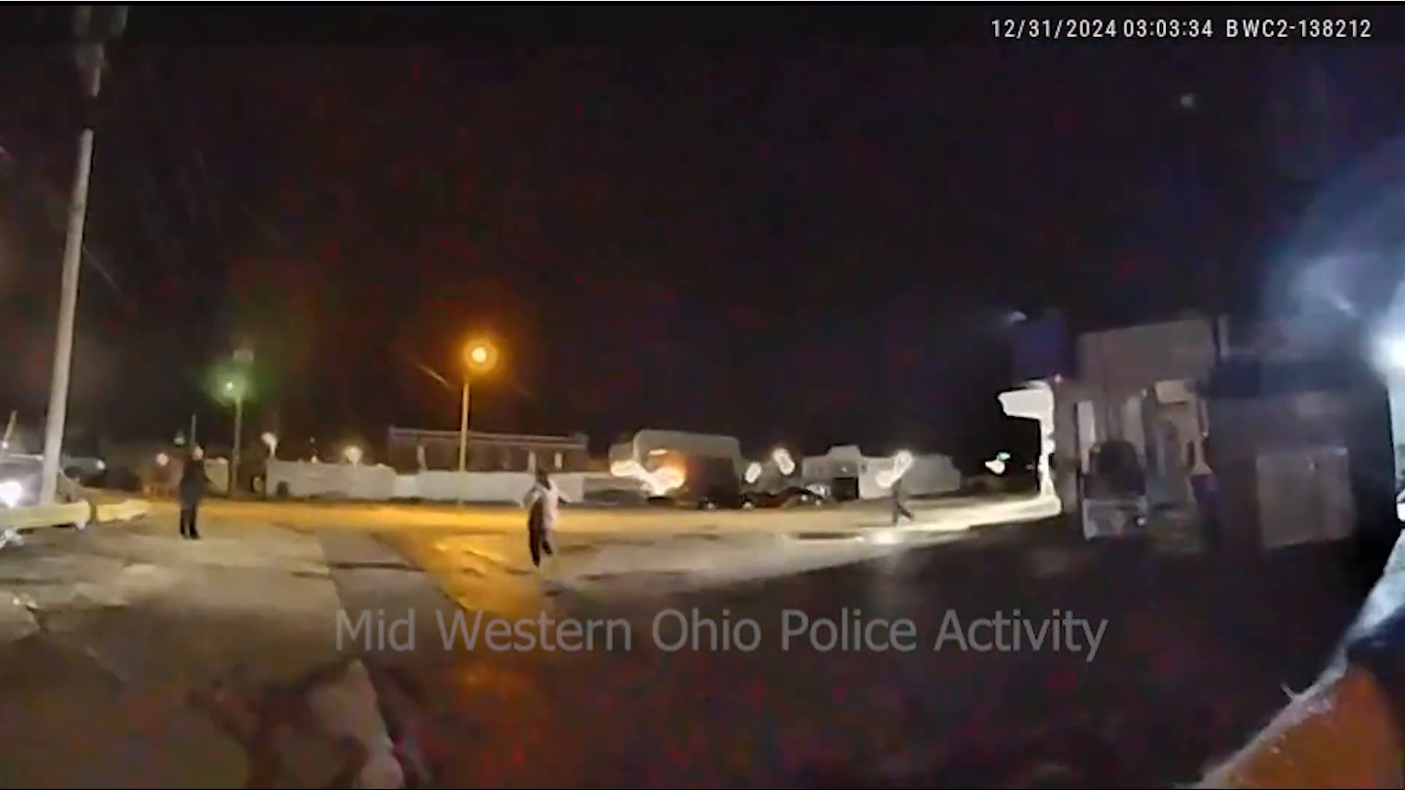
Police encounters involving edged weapons present a particularly difficult distance problem.
Unlike a firearm, a knife cannot normally injure someone across a parking lot.
But once the distance closes, circumstances can change extraordinarily quickly.
An officer therefore has to evaluate not simply whether someone possesses a knife, but where that person is standing, how the weapon is being held, whether commands are being followed and whether the person is moving toward officers.
In this case, police said Alik brandished the knife.
Officers issued commands.
Then a Celina Police officer attempted to stop him using a less-lethal option.
A TASER WAS DEPLOYED.
According to the sheriff's account, it did not incapacitate Alik.
That failure created the decisive moment of the encounter.
THE TASER DOESN'T STOP HIM
Tasers are often misunderstood as devices guaranteed to immediately incapacitate anyone they strike.
They aren't.
Their effectiveness can depend on whether both probes establish an adequate connection, probe spacing, clothing and other circumstances.
In this incident, the official account is straightforward:
THE TASER DID NOT DISABLE ALIK.
REAL BODYCAM FRAME — THE CRITICAL CONFRONTATION
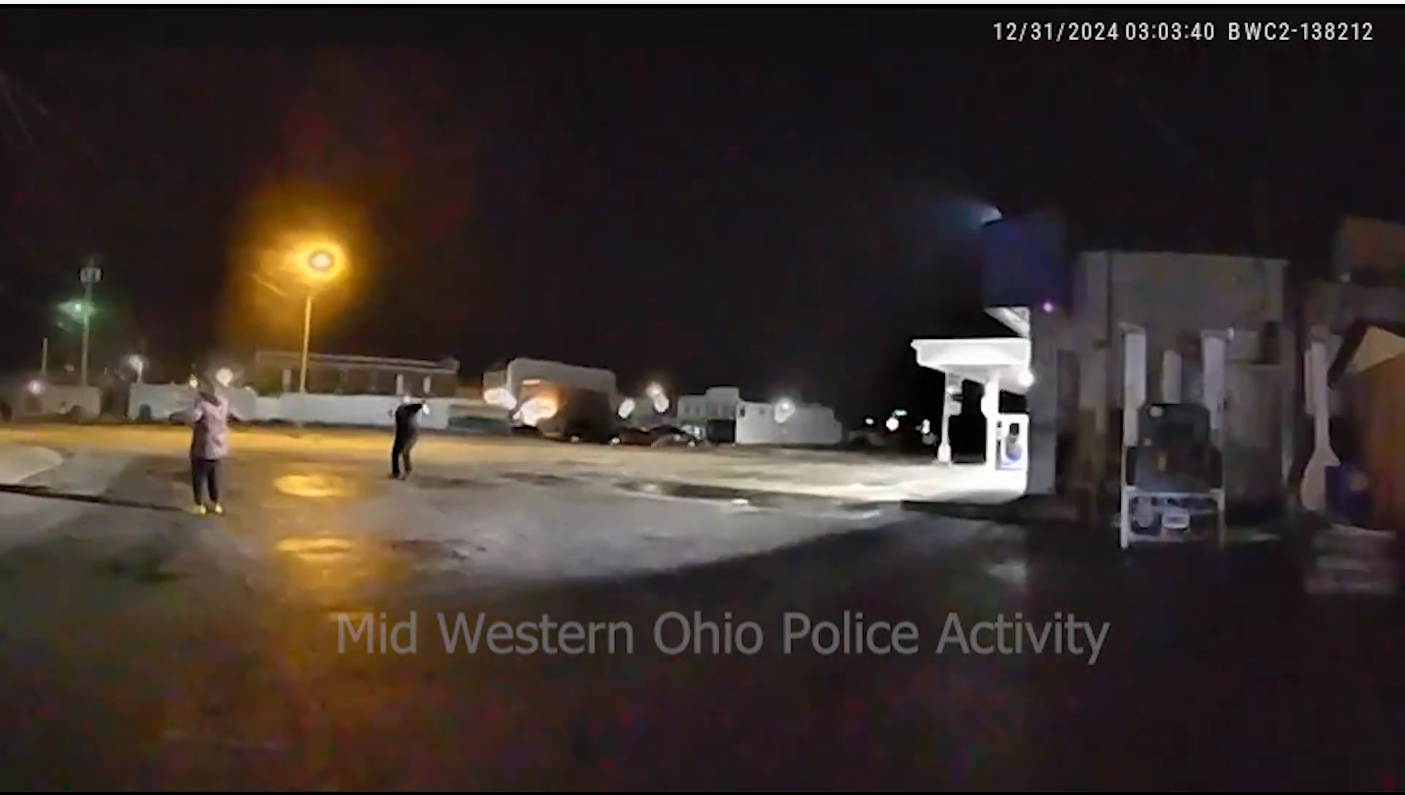
At this point, the bodycam becomes extremely important.
A written report can summarize the sequence in a few sentences.
Video shows how quickly those sentences happen.
Officers do not receive a pause after the Taser fails.
The confrontation continues in real time.
According to Mercer County Sheriff Jeff Grey's initial account, Alik then raised the knife above his head and charged toward Deputy Heinl.
The available video and still images from the investigation show the officers and Alik at relatively close distance.
Heinl responds by drawing and firing his handgun.
Alik is struck.
He falls.
THE DEADLY PORTION OF THE ENCOUNTER IS OVER WITHIN SECONDS.
GUNFIRE ENDS THE CONFRONTATION
The moment a firearm is discharged naturally becomes the focus of almost every officer-involved-shooting story.
But evaluating such an event requires understanding what happened immediately before the trigger was pulled.
Here, the official sequence contained several elements:
Police had responded to a report of a man with a knife.
Officers encountered Alik.
He allegedly brandished the weapon.
Police attempted less-lethal force.
The Taser was ineffective.
Authorities said Alik then raised the knife and charged toward Heinl.
Heinl fired.
REAL FRAME — IMMEDIATE AFTERMATH
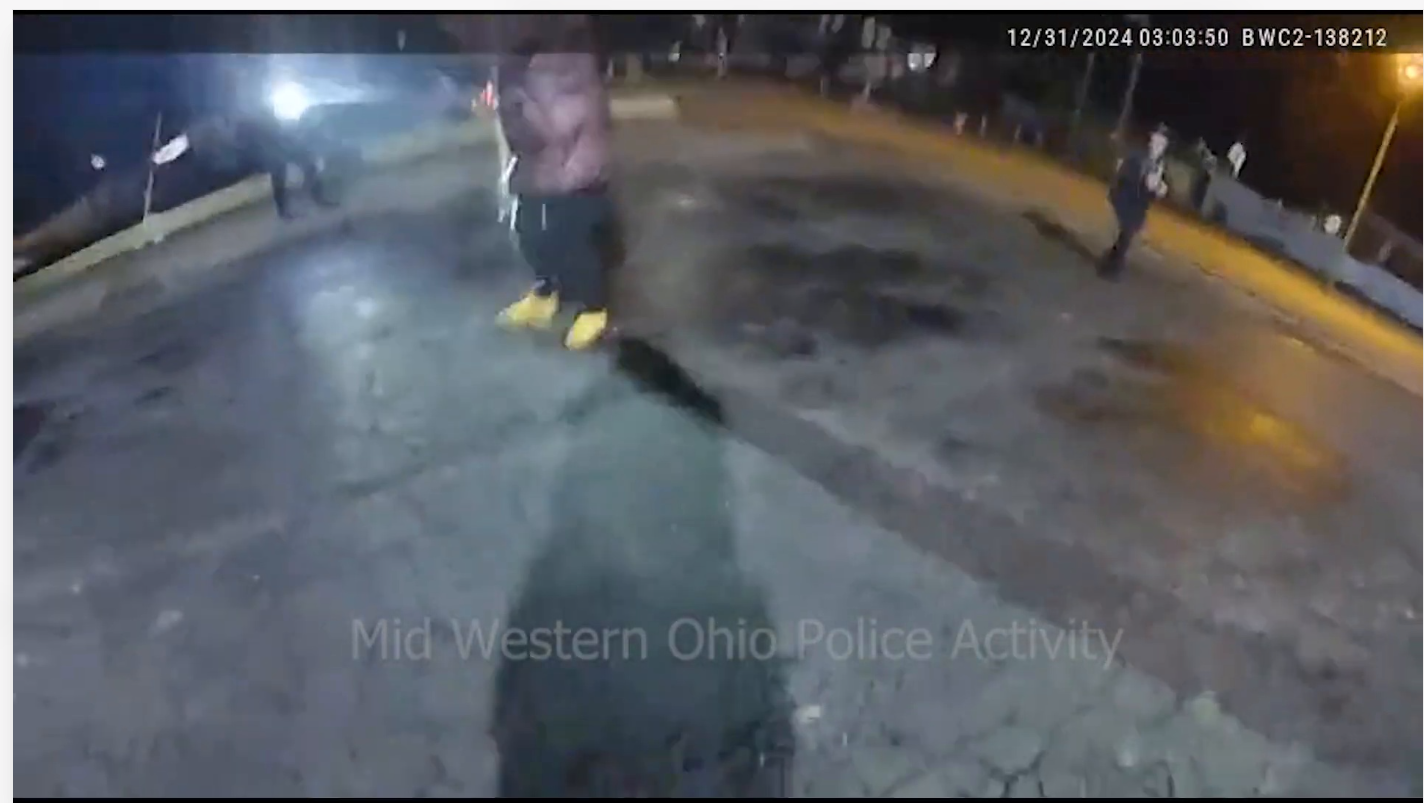
Once Alik went down, officers' behavior changed immediately.
The threat response transitioned into a medical response.
Officers called for EMS and began life-saving measures.
That transition is one of the most important parts of bodycam footage because it is often absent from short viral clips.
A social-media excerpt may stop at the gunfire.
The complete incident doesn't.
Police still have to secure the weapon.
They have to determine whether another threat exists.
Then they have to provide or facilitate medical aid.
In Alik's case, Celina EMS transported him to Mercer County Community Hospital in Coldwater.
He was pronounced dead there.
He was 22 years old.
WHAT HAPPENED BEFORE POLICE ARRIVED?
The later investigation provided considerably more information than was available in the first hours after the shooting.
The Daily Standard interviewed a worker at Dockside Marathon who described the man's behavior before officers arrived.
According to the employee, Alik had attempted to enter another person's vehicle.
The worker said the vehicle's owner emerged from the store and realized someone was trying to take his car.
Alik subsequently entered the store briefly before leaving through the rear area.
The worker described him as appearing stressed.
Police then arrived and reviewed surveillance footage.
According to the witness, Alik eventually returned while officers were still in the area.
That brought police and Alik into direct contact.
REAL FRAME — SCENE AFTER THE SHOOTING
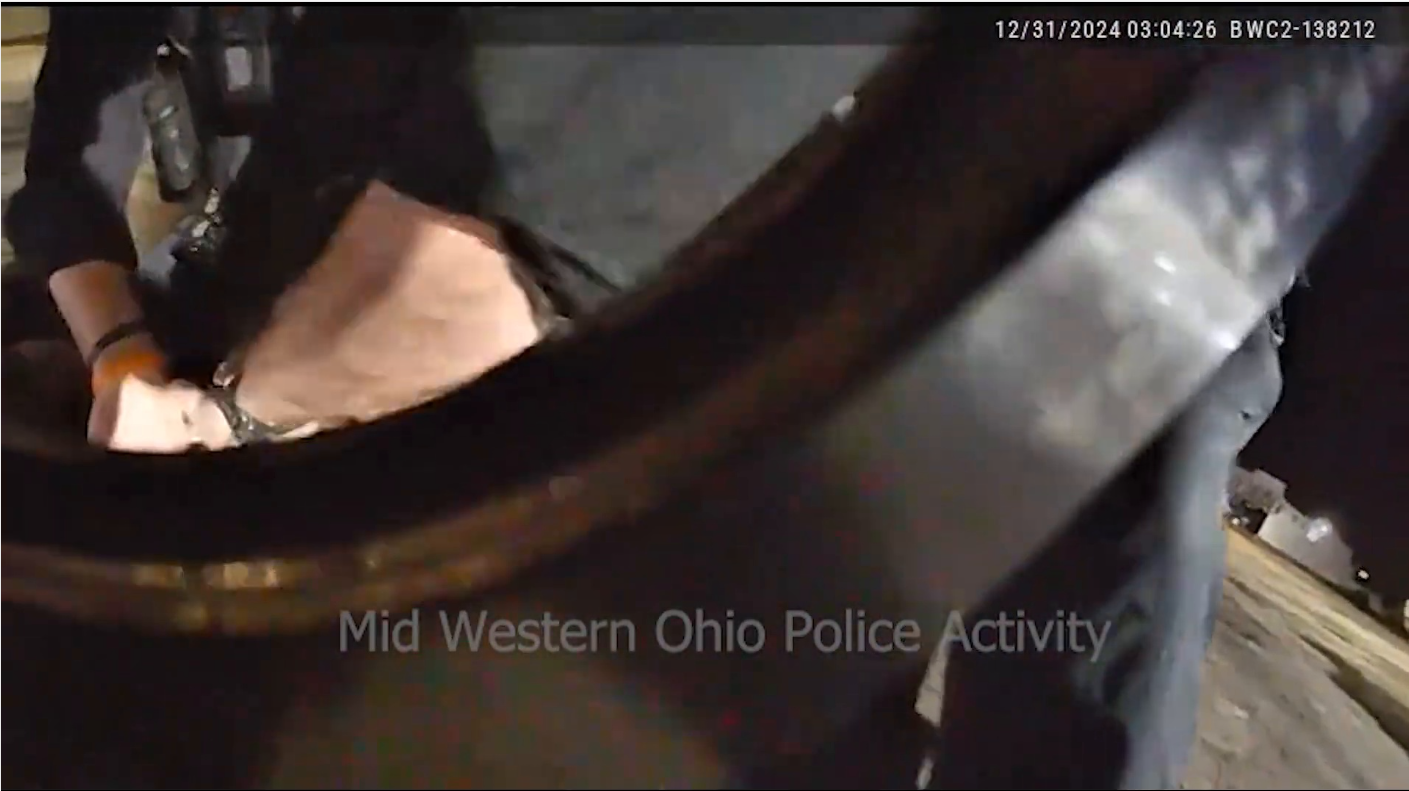
This additional context helps explain why multiple officers were positioned around the gas station when the confrontation occurred.
It also illustrates one of the limitations of bodycam video.
A body camera begins recording one officer's experience at a particular moment.
It does not automatically show everything that happened before police arrived.
Security cameras, witnesses, dispatch recordings and later interviews are therefore essential for reconstructing the broader sequence.
That is exactly what the subsequent BCI investigation was intended to do.
BCI TAKES OVER THE INVESTIGATION
Because a Mercer County Sheriff's deputy had fired the fatal shots, the sheriff's office requested an outside investigation.
The Ohio Bureau of Criminal Investigation and Identification was asked to handle the case.
BCI agents responded to the scene and began gathering evidence.
Deputy Heinl was placed on paid administrative leave while that process took place.
Sheriff Grey specifically emphasized that the leave was routine rather than disciplinary.
REAL FRAME — MULTIPLE AGENCIES WORK THE SCENE
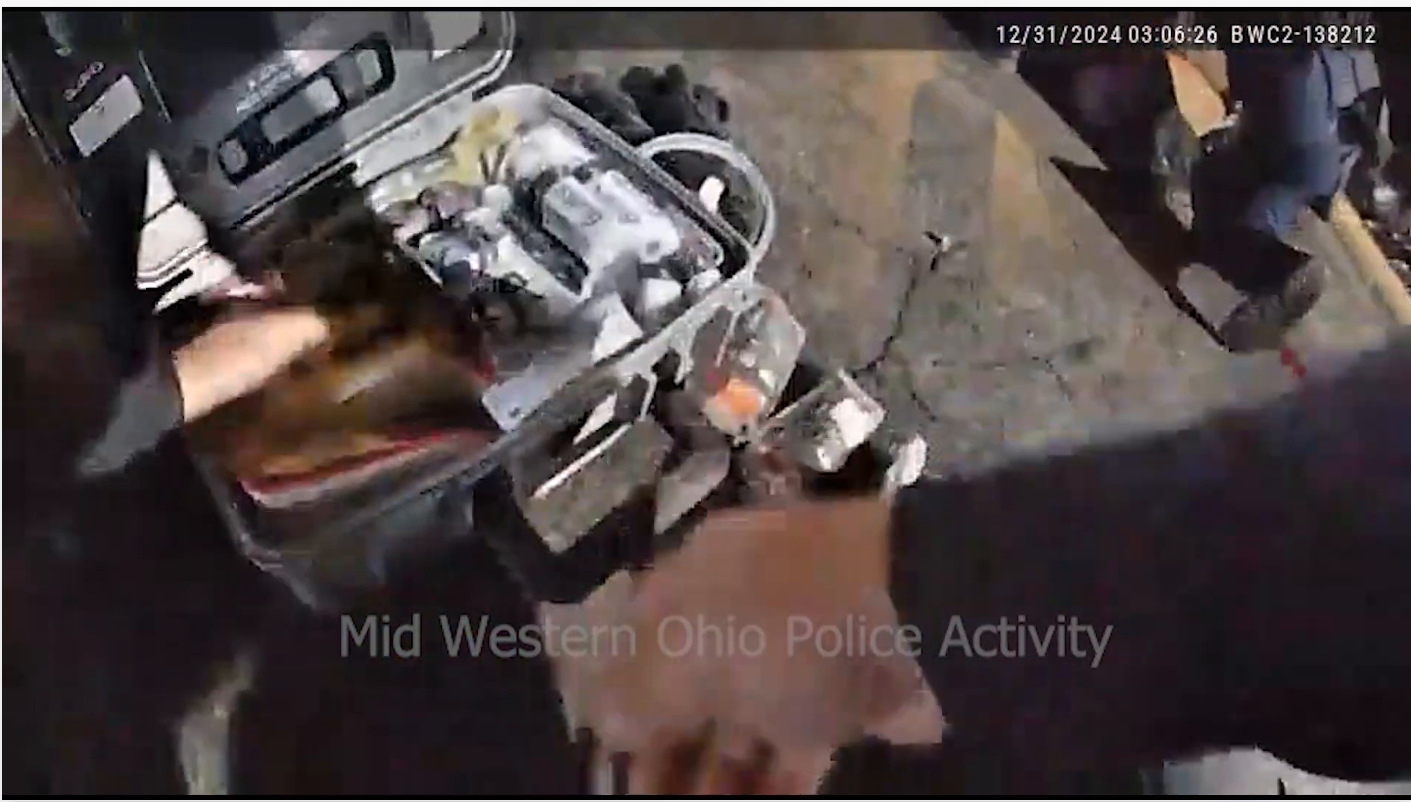
An independent officer-involved-shooting investigation can involve much more than reviewing the bodycam.
Investigators can examine the weapon recovered at the scene, cartridge cases, distances and positions, autopsy evidence, dispatch communications, surveillance footage, witness accounts and statements from officers.
The bodycam is important evidence.
IT IS NOT THE ONLY EVIDENCE.
That distinction became particularly important in this case because the investigation eventually went before a grand jury.
THE INVESTIGATION REVEALS A MORE COMPLICATED HUMAN STORY
Publicly released BCI investigative material later added context about Alik's behavior and state before the confrontation.
One investigative report describes information from a relative who said Alik had appeared at a cousin's residence shortly before the shooting and was “not making sense and hallucinating.”
Separate investigative records documented prior interactions involving behavioral-health concerns.
Those details provide context, but they do not automatically determine whether the deputy's actions at the gas station were legally justified.
The critical legal question remained centered on what officers reasonably perceived during the confrontation itself.
That distinction is essential.
Someone experiencing a behavioral crisis may need help.
At the same time, officers confronting an armed person at close distance may still face an immediate physical threat.
Both facts can exist at once.
Reducing the story entirely to either side would erase important parts of what happened.
OFFICERS TRY TO SAVE ALIK AFTER THE SHOOTING
Later BCI material also describes the medical response after Alik was shot.
An EMT interviewed during the investigation recalled arriving to find officers already providing first aid.
The report states that Alik resisted some of the attempts to treat him and repeatedly made statements indicating that he wanted to die.
REAL FRAME — EMERGENCY RESPONSE CONTINUES
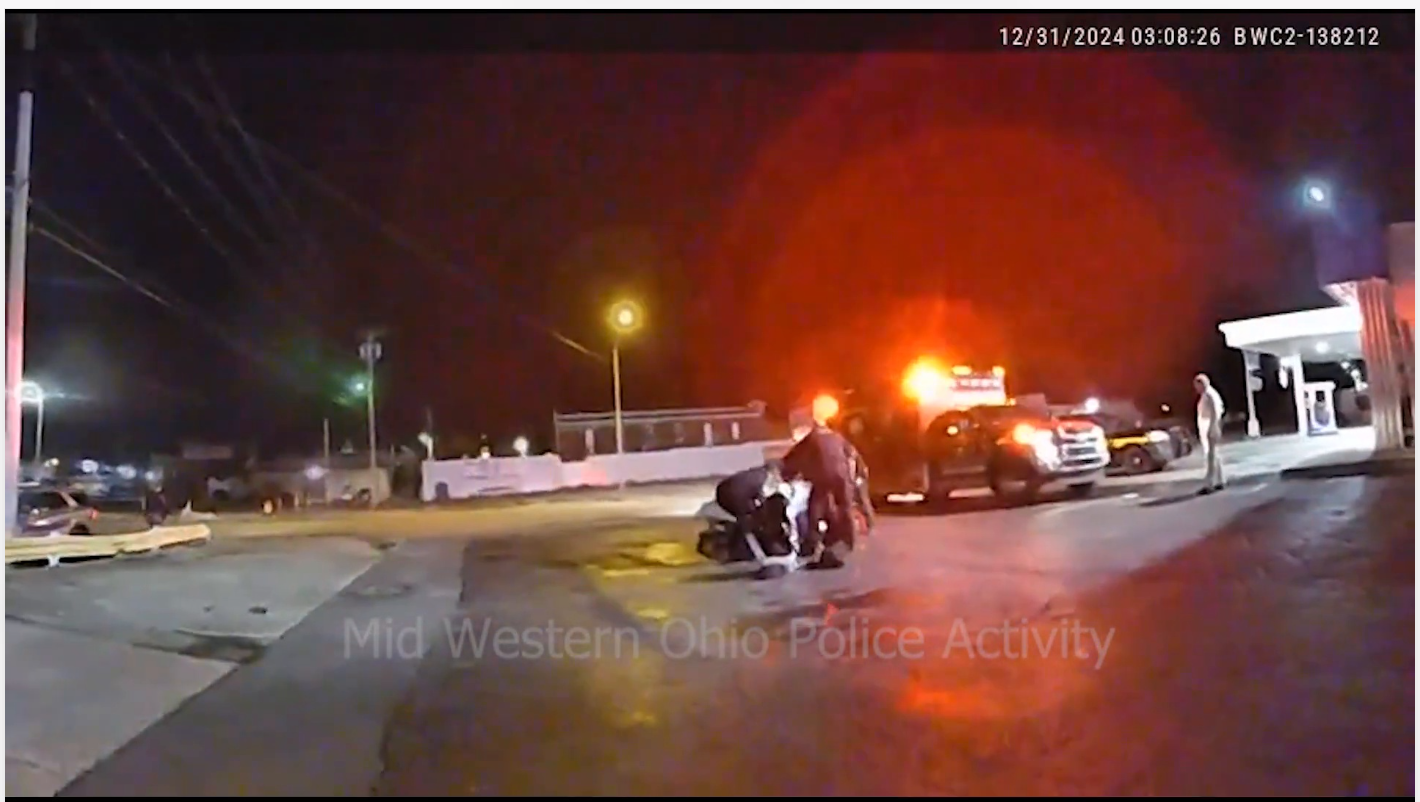
Those statements came after the shooting and should not be retroactively used to assume what Alik intended during every earlier stage of the encounter.
But they provide additional insight into the chaotic medical scene officers and EMS personnel faced after the gunfire.
Police were trying to control bleeding.
EMS needed access to the patient.
Officers also had to secure the scene for investigators.
The confrontation itself lasted seconds.
Its aftermath lasted far longer.
WHY THE FAILED TASER MATTERS
One of the defining facts of the case is the unsuccessful Taser deployment.
That matters for more than dramatic effect.
It demonstrates that police attempted a less-lethal method before the fatal shooting.
But it does not, by itself, decide whether the later use of deadly force was lawful.
The key question remained what happened afterward.
Authorities said Alik raised the knife above his head and charged Heinl.
The bodycam and cruiser video became critical evidence because they helped investigators examine the distance, timing and movements during that moment.
This is also why slowing police footage frame by frame can sometimes create a misleading sense that participants had more time than they actually did.
A viewer can pause.
Rewind.
Zoom.
Watch again.
An officer in the parking lot cannot.
THE REAL EVENT HAPPENS ONLY ONCE AND AT FULL SPEED.
That doesn't mean video shouldn't be scrutinized.
It means the real-time sequence must remain part of that scrutiny.
THE CASE GOES BEFORE A GRAND JURY
The BCI investigation continued through 2025.
Mercer County Prosecutor Erin Minor eventually turned the completed investigation over to Van Wert County Prosecutor Eva Yarger, who served as special prosecutor.
The decision was intended to avoid the appearance of a conflict because the local prosecutor's office works closely with local law enforcement.
On September 18, 2025, Yarger presented the results of the investigation to a Mercer County grand jury.
The grand jurors were asked to determine whether the shooting justified criminal charges.
THE GRAND JURY DECLINED TO ISSUE ANY INDICTMENTS.
Minor later said she believed the grand jurors had reviewed the evidence and reached the correct conclusion.
That outcome is significant because it provides the later legal context missing from reports published immediately after the shooting.
The investigation did not simply disappear after the bodycam was released.
It proceeded through BCI review, an outside special prosecutor and grand-jury consideration.
Ultimately, no criminal indictment resulted from Deputy Heinl's shooting of Alik.
WHAT THE VIDEO CAN — AND CANNOT — TELL US
The bodycam provides extraordinary access to the confrontation.
But it still has limitations.
A body-worn camera is attached to a moving person.
It may point away from exactly what the officer is looking at.
Motion blur can hide details.
Low-light conditions can make distances difficult to judge.
Objects can disappear behind hands or bodies.
And the camera cannot record what an officer is thinking.
This is why a responsible account should combine footage with independent reporting and investigative records.
Here, those sources establish several important facts with considerable consistency:
Alik was 22.
The incident happened at Dockside Marathon in Celina shortly after 3 a.m. on December 31, 2024.
Police had responded to a report involving a man with a knife.
Alik had a knife when officers confronted him.
A Taser was deployed and did not stop him.
Authorities said he raised the knife and charged toward Deputy Heinl.
Heinl fired.
Alik later died at the hospital.
BCI investigated.
And a grand jury ultimately returned no indictment.
That verified timeline is already compelling enough.
It doesn't need invented dialogue, exaggerated motives or assumptions unsupported by the evidence.
ENDING — SECONDS OF GUNFIRE, MONTHS OF INVESTIGATION
The encounter began in darkness behind an ordinary Ohio gas station.
A call came in about a man with a knife.
Celina officers responded.
Mercer County Deputy Spencer Heinl arrived as backup.
The man was identified as 22-year-old Moses Alik.
Police confronted him.
A TASER WAS FIRED.
It failed to disable him.
According to authorities, Alik raised the knife above his head.
Then he moved toward Heinl.
THE DEPUTY FIRED.
Alik fell.
And almost immediately, the same officers involved in the confrontation began trying to keep him alive.
EMS arrived.
Alik was transported to the hospital.
He died there.
BCI agents descended on the gas station.
Bodycam and cruiser footage became evidence.
Witnesses were interviewed.
The circumstances before police arrived were reconstructed.
The shooting was analyzed.
Then, nearly nine months later, the evidence reached a grand jury.
There would be no indictment.
The contrast between those timelines is striking.
THE CRITICAL ENCOUNTER TOOK ONLY SECONDS.
Determining what those seconds meant took months.
That is why this footage is more than a dramatic police video.
It captures the precise point where officers' attempt to use less-lethal force failed and the situation immediately became one involving deadly force.
It also shows what comes afterward—the medical response, the secured scene, the investigators and the much slower process of determining whether a crime occurred.
Moses Alik entered the final morning of 2024 alive.
Before sunrise, he was dead.
The officer who shot him entered months of outside investigation.
And the final legal decision would not arrive until September 2025.
One dark parking lot.
One knife.
One failed Taser.
A few seconds of movement.
And a case that would take almost nine months to reach its grand-jury conclusion.
CTA — WATCH HOW QUICKLY THE ENCOUNTER CHANGES
Officers first try a Taser—but it doesn't stop the confrontation. What happens in the next few seconds becomes the central question in a fatal police shooting investigation that would eventually go before a grand jury.
WATCH THE FULL BODYCAM BELOW TO SEE THE COMPLETE SEQUENCE — FROM THE FIRST POLICE CONTACT TO THE FAILED TASER, THE FINAL CONFRONTATION AND THE IMMEDIATE EFFORT TO SAVE MOSES ALIK'S LIFE: https://www.youtube.com/watch?v=4AZpXBHR9b4
Comments (0)
Loading comments...
May You Like

Cop thinks sandwich is phone

Stolen Charger Flees Police During Highway Traffic Stop

A Suspicious Vehicle Leads Officers Into an Unexpected Chase












