
Bodycam: Milwaukee Police Confront Armed Suspect Inside Building
ACTIVE SHOOTER CALL SENDS MILWAUKEE OFFICERS INTO AN APARTMENT STAIRWELL — THEN EVERYTHING CHANGES IN SECONDS
A call about an armed man inside an apartment building is already one of the most dangerous assignments a patrol officer can receive.
On the night of June 16, 2026, Milwaukee police were dispatched to exactly that situation.
Multiple 911 callers reported what they believed was an active shooter inside a second-floor apartment in the 6400 block of West Sheridan Avenue. The description given to officers was specific: a man wearing a black ski mask, blue jacket and black pants.
Officers arrived around 9:07 p.m.
Their body-worn cameras show them gathering outside, preparing their weapons and moving toward the entrance.
Once inside, the environment becomes dramatically tighter.
Hallways replace open space.
Corners block sight lines.
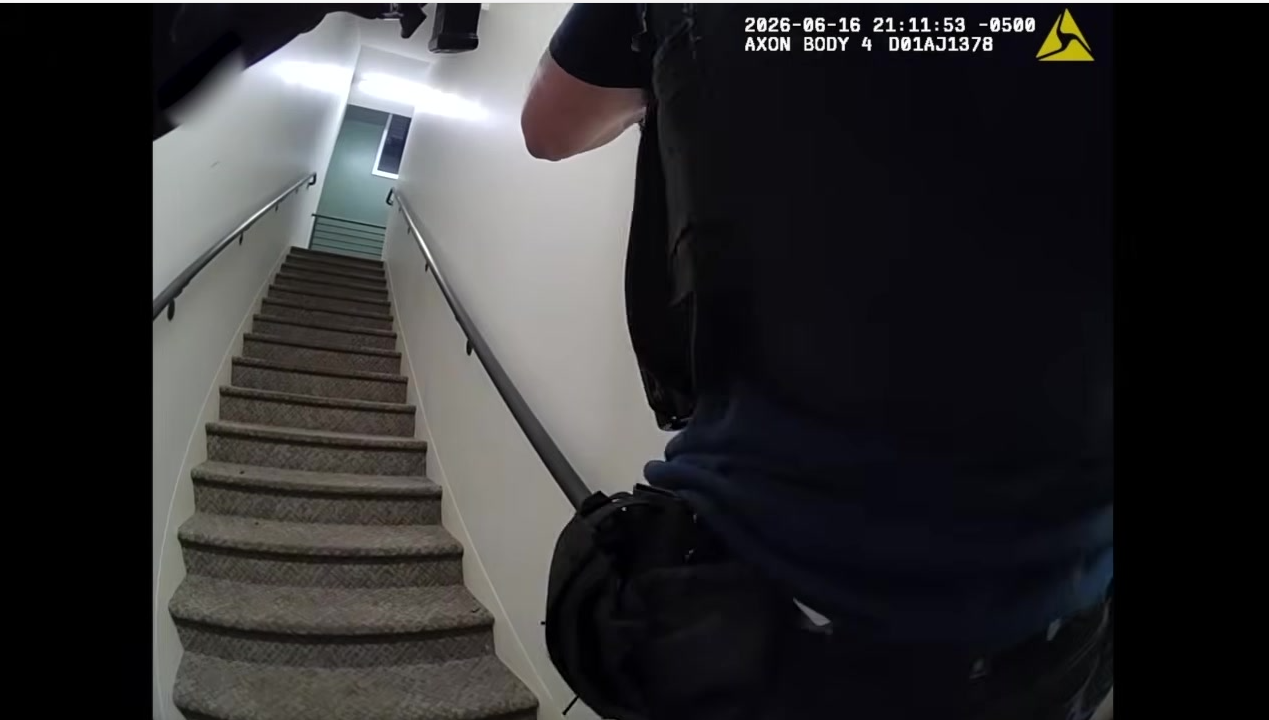
A narrow staircase leads toward the second floor.
And officers believe more gunfire may be occurring somewhere above them.
Within minutes, two Milwaukee officers would fire their weapons in that stairwell.
A 20-year-old man would be wounded but survive.
Police would recover what they described as an AR-style pistol from inside the building.
And later court records would add an important layer of context to what officers believed they were hearing as they moved upstairs.
THE VIDEO IS STRIKING NOT BECAUSE THE ENCOUNTER LASTS A LONG TIME, BUT BECAUSE THE CRITICAL DECISION ARRIVES SO QUICKLY AFTER OFFICERS ENTER THE BUILDING.
THE CALL THAT BROUGHT POLICE TO WEST SHERIDAN AVENUE
Milwaukee Police said officers were dispatched at approximately 9:07 p.m.
Multiple people had called about an active shooter.
The reported location was a second-floor apartment.
For responding officers, that information changes the nature of the call before they even reach the building.
An ordinary disturbance gives police time to establish what is happening.
An active-shooter report creates urgency.
The possibility that someone may still be firing means officers have to balance caution against the danger of waiting too long.
MPD said callers provided a description of the suspected gunman, including a black ski mask, blue jacket and black pants.
That description would soon become crucial.
Real frame from the supplied MPD bodycam
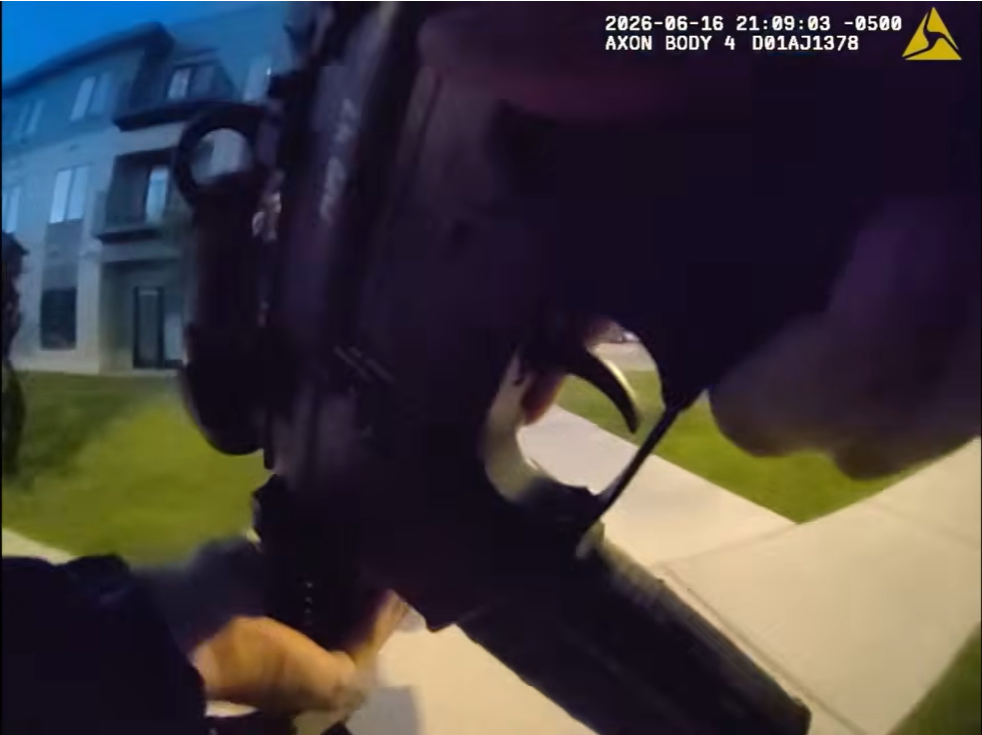
The bodycam footage shows officers approaching the building at night with long guns ready.
There is no open parking lot where police can observe a suspect from a distance.
They have to go inside.
That means giving up visibility and entering an environment where someone upstairs potentially knows the layout much better than they do.
Every doorway becomes significant.
Every hallway has to be checked.
Every staircase creates a blind angle.
And officers are moving toward the reported threat rather than waiting for it to come outside.
THE SEARCH MOVES INSIDE
The bodycam timestamp places the footage only minutes after the original dispatch.
Officers gather near the entrance.
Their movements are deliberate.
Weapons are held ready as they begin transitioning from the exterior into the apartment building.
Real frame from the approach
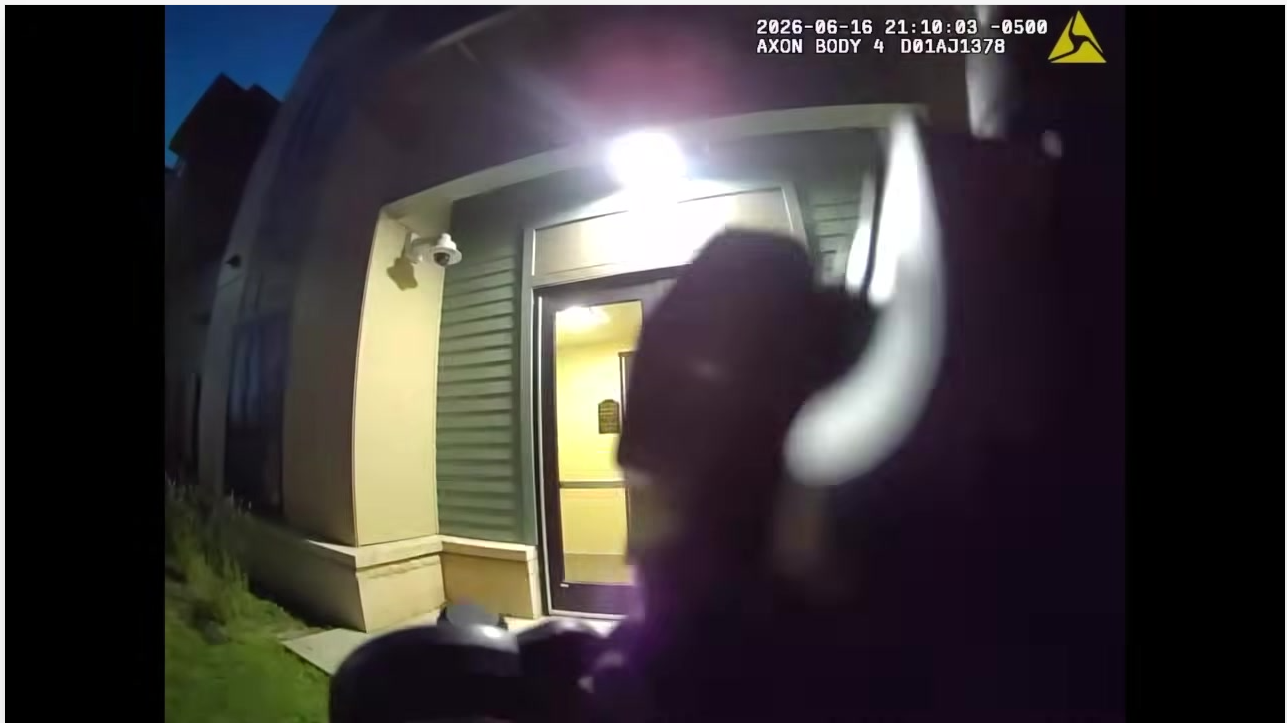
The visual contrast is immediate.
Outside, officers have space.
Inside, almost everything becomes compressed.
Walls limit movement.
Doors conceal rooms.
The staircase creates a vertical problem: officers below may have to expose themselves while moving toward someone positioned above them.
The official MPD account says officers heard what they believed were gunshots and moved in that direction.
That detail is essential to understanding their behavior.
The officers in the video are not moving through the building with the benefit of knowing what investigators will discover later.
They are responding to information available at that moment.
Multiple callers have reported an active shooter.
Police believe they are hearing additional shots.
The suspect description has already been broadcast.
The officers therefore advance.
Real frame from inside the building
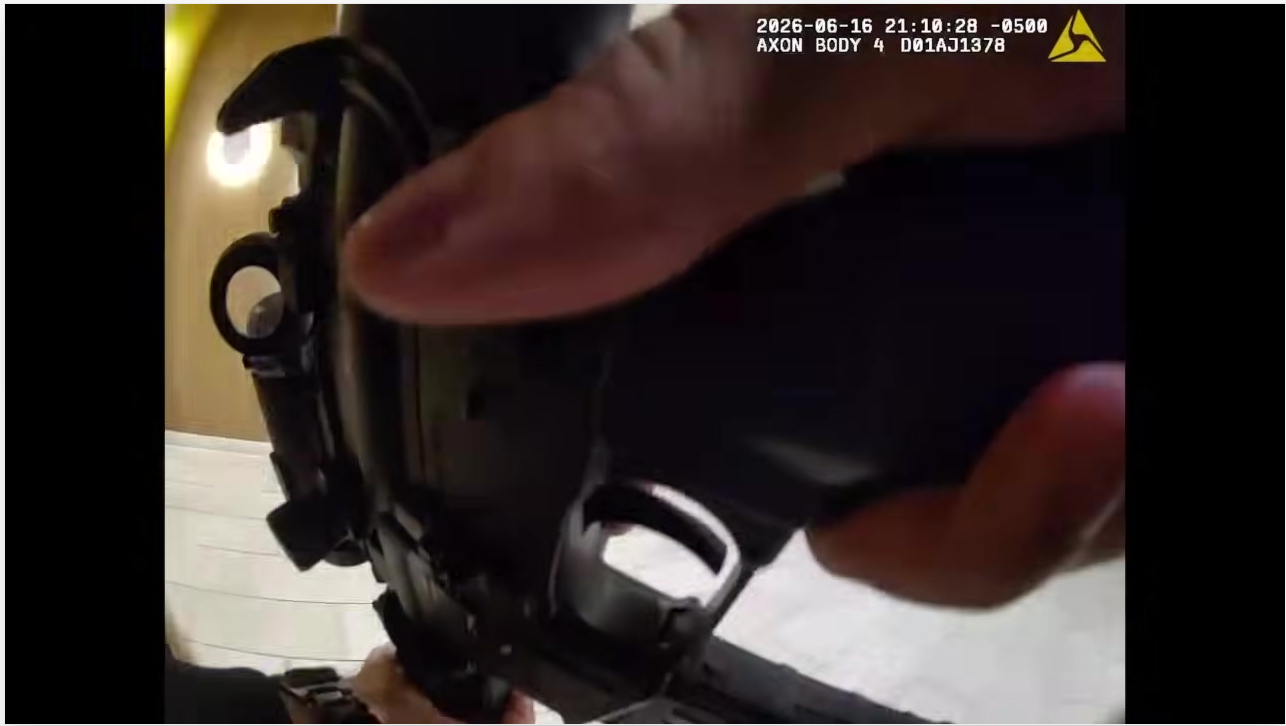
The footage becomes increasingly tense because the viewer's field of vision is essentially the officer's field of vision.
There is no aerial perspective.
There is no camera waiting upstairs to show what is around the corner.
There is only the hallway ahead.
THE STAIRWELL BECOMES THE CRITICAL POINT
Eventually, officers reach the staircase leading toward the second floor.
This is where the geometry of the building becomes particularly important.
A staircase forces officers into a predictable path.
They cannot move several people side by side.
The person above has elevation.
Corners and landings restrict what can be seen.
The bodycam footage captures officers positioning themselves at the bottom while preparing to move upward.
Real frame from the stairwell
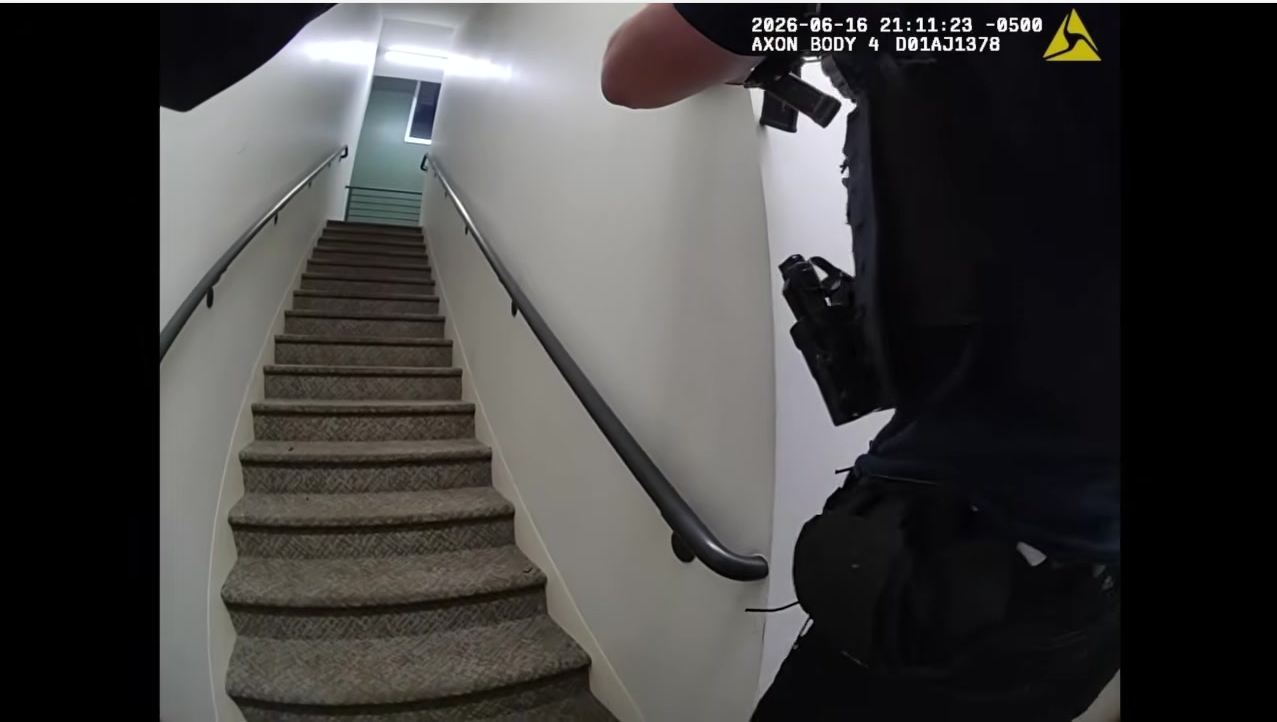
At this stage, officers still have not resolved the central question:
Where is the reported gunman?
According to MPD, officers eventually encountered a person matching the description on the second-floor stairwell.
That person was later identified in court reporting as Deontau J. Ransom, 20.
What happens next takes only seconds.
OFFICERS ENCOUNTER DEONTAU RANSOM
The Milwaukee Journal Sentinel's reporting on the released footage provides additional detail not contained in the initial police statement.
According to that reporting, Ransom appeared around the stairwell with his right hand inside his sweatshirt-jacket pocket. Authorities alleged that he was concealing a firearm there.
The officers had been dispatched for an active shooter.
They believed they had heard gunfire.
They had been given a suspect description.
Now someone matching that description appeared in the confined stairwell.
Two officers fired.
Ransom was struck.
He retreated back upstairs while officers remained below.
That sequence is the pivotal moment of the entire incident.
Everything before it establishes why police are there.
Everything afterward becomes a response to the shooting.
Real frame from the critical stairwell position
Importantly, MPD said an AR-style pistol belonging to the suspect was recovered inside the building.
Police Chief Jeffrey Norman described the firearm as similar to an AR-15-style weapon in a shortened, more concealable configuration, according to the Journal Sentinel report.
But the later reporting also revealed another important detail.
WHAT OFFICERS THOUGHT WERE GUNSHOTS MAY HAVE BEEN SOMETHING ELSE
The initial police account said officers heard what they believed were gunshots as they searched for the suspect.
That belief is also reflected in the urgency captured on the footage.
However, subsequent court records added nuance.
According to the Journal Sentinel, court documents indicated that the sound officers interpreted as continuing gunfire was actually Ransom repeatedly kicking his former girlfriend's apartment door.
That distinction is important.
It does not erase the active-shooter calls.
It does not erase the firearm police say was recovered.
And it does not change what officers believed they were hearing at the time.
But it demonstrates why bodycam incidents need to be reconstructed from more than one source.
A police officer makes decisions based on information available in real time.
Investigators later have the advantage of surveillance video, witness interviews, physical evidence and criminal complaints.
Those two perspectives should not be confused.
The officers reportedly heard information over the radio indicating more shots were being fired shortly before they encountered Ransom. The Journal Sentinel reported that roughly ten seconds later they were moving up the staircase when the confrontation occurred.
THE DIFFERENCE BETWEEN WHAT IS KNOWN LATER AND WHAT AN OFFICER REASONABLY BELIEVES IN THE MOMENT IS ONE OF THE MOST IMPORTANT DETAILS IN ANY BODYCAM ANALYSIS.
THE SHOOTING DOESN'T IMMEDIATELY END THE DANGER
After officers fire, Ransom retreats upstairs.
That creates another difficult problem.
Police know someone has been hit.
But they do not immediately know whether that person is still armed, whether anyone else upstairs is in danger or whether another shooter exists.
The stairwell therefore remains a threat corridor.
Officers maintain their positions.
They communicate.
They wait for information.
Then something changes.
According to reporting on the released footage, officers hear screaming from inside the apartment approximately 90 seconds later.
One officer can be heard recognizing that they have to move.
The situation once again forces them toward the second floor.
Real frame as officers prepare to move again
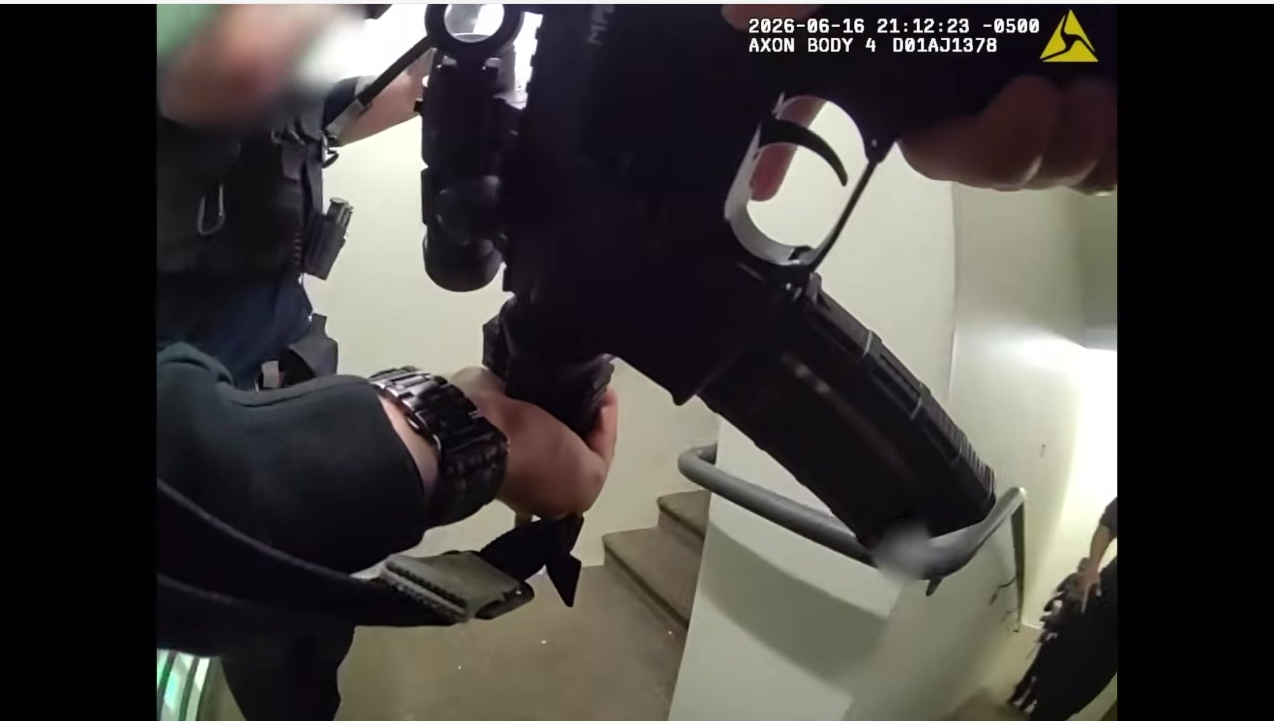
This is an important part of the video because it shows that an officer-involved shooting does not automatically end an active-threat response.
The person who has been shot may still have access to a weapon.
Other victims may need immediate help.
Officers have to determine whether advancing creates more danger than waiting.
Here, the screams from above add urgency.
RANSOM EMERGES AND IS TAKEN INTO CUSTODY
The encounter eventually reaches a different kind of ending.
Ransom comes out injured with his hands raised, according to the released footage described by the Journal Sentinel.
Officers move quickly.
He is taken to the ground and arrested.
The footage reportedly appears to show an injury to his arm from the earlier police gunfire.
Ransom survived.
MPD's July 1 release said he had been transported to a local hospital and was expected to recover.
Real frame from the final movement through the stairwell
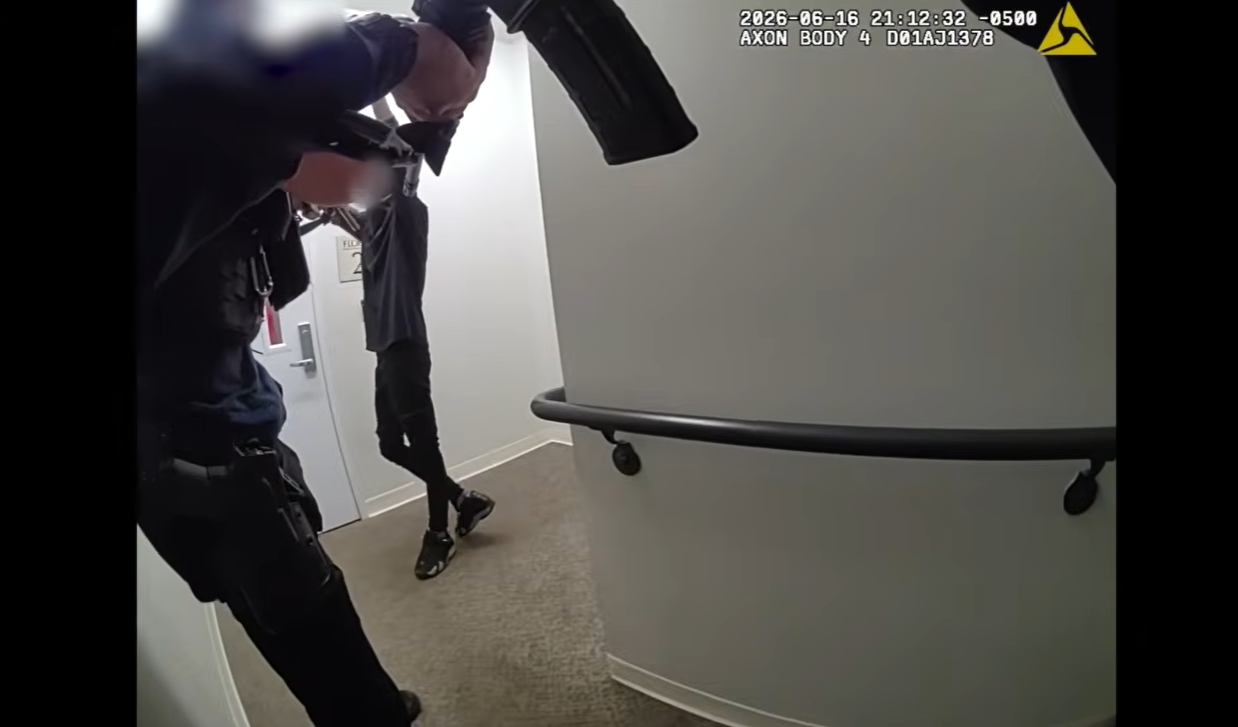 The active confrontation is now effectively over.
But the criminal investigation is only beginning.
And the story behind why police were called turns out to be considerably more complicated than the first dispatch information suggested.
COURT RECORDS REVEAL WHAT ALLEGEDLY HAPPENED BEFORE POLICE ARRIVED
According to the criminal allegations summarized by the Milwaukee Journal Sentinel, the confrontation had roots in a dispute involving Ransom and his former girlfriend.
Prosecutors alleged that police had already been called to the apartment building five days earlier, on June 11.
During that earlier incident, Ransom allegedly threatened to kill his former girlfriend with a firearm and pointed the weapon at her.
He had reportedly left before officers arrived and was not located.
Then, on June 16, prosecutors said Ransom returned with Damarion Williams-Beal, 19.
According to the criminal complaint as summarized in the report, the two had been drinking and Ransom became angry because he believed his former girlfriend was with another man.
The man was actually Ransom's brother.
Prosecutors alleged that Ransom threatened the woman with a firearm and forced her to allow the two men into the apartment building.
Those allegations provide critical context for the calls police received that night.
This was not simply a mysterious armed person appearing in an apartment hallway.
According to prosecutors, there was an escalating interpersonal dispute behind the emergency response.
THE FIREARM RECOVERED INSIDE THE BUILDING
MPD reported recovering an AR-style pistol associated with Ransom inside the building.
That description matters because the term "pistol" can create a misleading mental image.
AR-style pistols can share many characteristics with rifles while using configurations that legally and physically distinguish them from traditional long guns.
According to the Journal Sentinel's report, Chief Norman described the weapon as a shortened AR-style firearm that could be concealed.
The weapon recovery became an important piece of the subsequent criminal case.
It also helps explain why the footage should not be evaluated solely from a single frozen frame of the stairwell encounter.
Investigators have access to evidence beyond what one officer's camera sees.
At the same time, the camera remains important because it records what officers themselves could see as they moved through the building.
THE CHARGES FOLLOWING THE INCIDENT
Ransom survived and was later criminally charged.
According to the Journal Sentinel report, Milwaukee County prosecutors charged him with offenses including stalking involving a dangerous weapon, armed burglary, two counts of possession of a firearm by a felon, endangering safety by use of a dangerous weapon and disorderly conduct.
These are allegations, not convictions.
Williams-Beal was separately charged with armed burglary as party to a crime and possession of a firearm by an adjudicated delinquent, according to the same reporting.
The distinction matters.
Bodycam footage can make an event feel final because viewers see an arrest.
Legally, an arrest is the beginning of another process.
Prosecutors still have to prove charges.
Defense attorneys can challenge evidence.
Courts determine legal outcomes.
And the officers' use of force remains subject to its own review.
TWO OFFICERS FIRED THEIR WEAPONS
MPD said two officers discharged their duty weapons during the stairwell encounter.
One was described as a 25-year-old officer with more than two years of service.
The other was a 30-year-old officer with more than eight years of service.
Both were placed on administrative duty, which MPD described as routine following an officer-involved incident.
Administrative duty by itself should not be interpreted as a finding that an officer acted improperly.
The shooting requires review precisely because police gunfire caused serious injury.
Investigators have to consider what information officers possessed, what they saw, the timing of the encounter, the reported weapon and the totality of the circumstances.
The bodycam becomes one piece of that review.
WHY THIS VIDEO IS SO EFFECTIVE AT SHOWING THE REALITY OF INDOOR POLICE ENCOUNTERS
There are no speeding cars.
No highway chase.
No enormous open crime scene.
Almost everything happens inside a relatively ordinary apartment building.
That is exactly what makes the footage so tense.
An officer cannot simply move sideways twenty feet when confronted on a staircase.
Walls dictate movement.
The suspect can disappear behind a corner almost instantly.
Officers below have limited visibility.
A person above can appear with almost no warning.
And because police were responding to an active-shooter report, waiting indefinitely could potentially expose other people inside the building to danger.
This creates the central tension of the entire video:
THE OFFICERS HAVE TO MOVE TOWARD A POSSIBLE ARMED THREAT WITHOUT KNOWING EXACTLY WHAT IS WAITING ABOVE THEM.
The bodycam makes that limitation visible.
The camera does not show the whole second floor.
It shows the stairs.
That is largely what the officer sees too.
WHY THE LATER EVIDENCE MATTERS
The case also demonstrates why responsible bodycam coverage should distinguish three different categories of information.
First, there is what dispatch tells officers.
Second, there is what officers perceive during the encounter.
Third, there is what investigators establish afterward.
Those categories can overlap without being identical.
Dispatch reportedly tells officers there is an active shooter.
Officers believe they hear additional gunfire.
Later court records reportedly indicate at least some of those sounds were Ransom kicking an apartment door.
Police encounter someone matching the suspect description.
Officers fire.
Investigators subsequently recover an AR-style pistol that MPD attributes to the suspect.
Those facts need to be presented together rather than selectively.
Removing the later information makes the story incomplete.
But using later information to pretend officers knew everything beforehand would also be misleading.
That difference is one of the most important lessons contained in this footage.
FROM A 911 CALL TO A STAIRWELL SHOOTING IN MINUTES
The entire sequence develops with extraordinary speed.
At approximately 9:07 p.m., Milwaukee police are dispatched to reports of an active shooter.
Officers arrive at the West Sheridan Avenue apartment building.
They prepare outside.
They enter.
They move through the hallways.
They believe they hear gunfire.
They advance toward the second floor.
A man matching the reported description appears in the stairwell.
Two officers fire.
The wounded man retreats upstairs.
Police maintain their position.
Screams are heard.
Officers prepare to move again.
Eventually, the wounded suspect emerges with his hands raised.
He is arrested and transported for treatment.
Police recover an AR-style pistol inside the building.
All of that happens within a confined residential environment where officers have very limited visibility.
That is what makes the footage compelling without needing exaggeration.
THE SUSPENSE COMES FROM WHAT THE OFFICERS CANNOT SEE.
And when the suspect finally appears, the time available to react is measured in seconds.
THE VIDEO RELEASE ADDS TRANSPARENCY TO A COMPLICATED CASE
Milwaukee Police released the footage on July 1, exactly 15 days after the incident.
The department's official page includes three videos as well as criminal complaints for Ransom and Williams-Beal.
MPD explained that its SOP 575 creates a framework for releasing video evidence from officer-involved incidents resulting in death or great bodily harm, balancing public transparency, investigative integrity and privacy considerations.
That transparency matters here because the incident contains several perspectives.
There is the initial 911 information.
There is the officers' bodycam.
There is building surveillance footage.
There are criminal complaints.
There is the recovered weapon.
And there are subsequent interviews and investigative findings.
No single one of those sources tells the complete story.
Together, they provide a much stronger reconstruction of what happened inside that Milwaukee apartment building.
THE STAIRCASE IS WHERE EVERYTHING CONVERGES
The most memorable part of this encounter is not the exterior police response.
It is the narrow stairwell.
That space becomes the point where all the information officers have received collides with the person they have been searching for.
An active-shooter call.
A suspect description.
Sounds believed to be gunfire.
An armed suspect allegation.
A concealed AR-style pistol.
And officers moving upward with only a limited view of the landing ahead.
Seconds later, gunfire erupts.
Ransom survives.
No officer is reported injured.
The active incident ends with an arrest rather than a fatality.
But the bodycam leaves viewers with an unusually clear demonstration of how little time can separate searching for a suspect from suddenly confronting one.
ONE CORNER. ONE STAIRCASE. A FEW SECONDS TO REACT.
That is the defining image of the June 16 Milwaukee encounter.
WATCH THE FULL INCIDENT UNFOLD
The official records explain why officers were sent to the building and what investigators discovered afterward, but the bodycam captures something written reports cannot fully reproduce: the uncertainty of moving through a confined apartment building toward a reported armed suspect.
Watch closely as officers move from the exterior into the hallways, position themselves beneath the second-floor stairwell and advance toward the location where they believe an armed threat is waiting.
The critical confrontation happens extremely quickly.
Watch the full footage to see how an active-shooter call developed into a tense stairwell encounter, an officer-involved shooting and the eventual arrest of the wounded suspect.
Click here to watch the full incident unfold from the officers' arrival through the stairwell confrontation and final arrest: https://www.youtube.com/watch?v=w5HdkBoQTgA
Comments (0)
Loading comments...
May You Like

Traffic Stop Turns Deadly After Man Steps Out of Stolen Car

MERIDEN POLICE OFFICER SHOOTS MAN BEATING FATHER WITH A BASEBALL BAT

I CAN’T WALK! — BODYCAM PROVES OTHERWISE DURING ARREST












