
[Bodycam] 100 MPH Police Chase Ends in Devastating Crash
100 MPH Pleasant Prairie Pursuit Ends in Multi-Vehicle Crash on Sheridan Road
A Pursuit That Began With an Earlier Retail-Theft Investigation
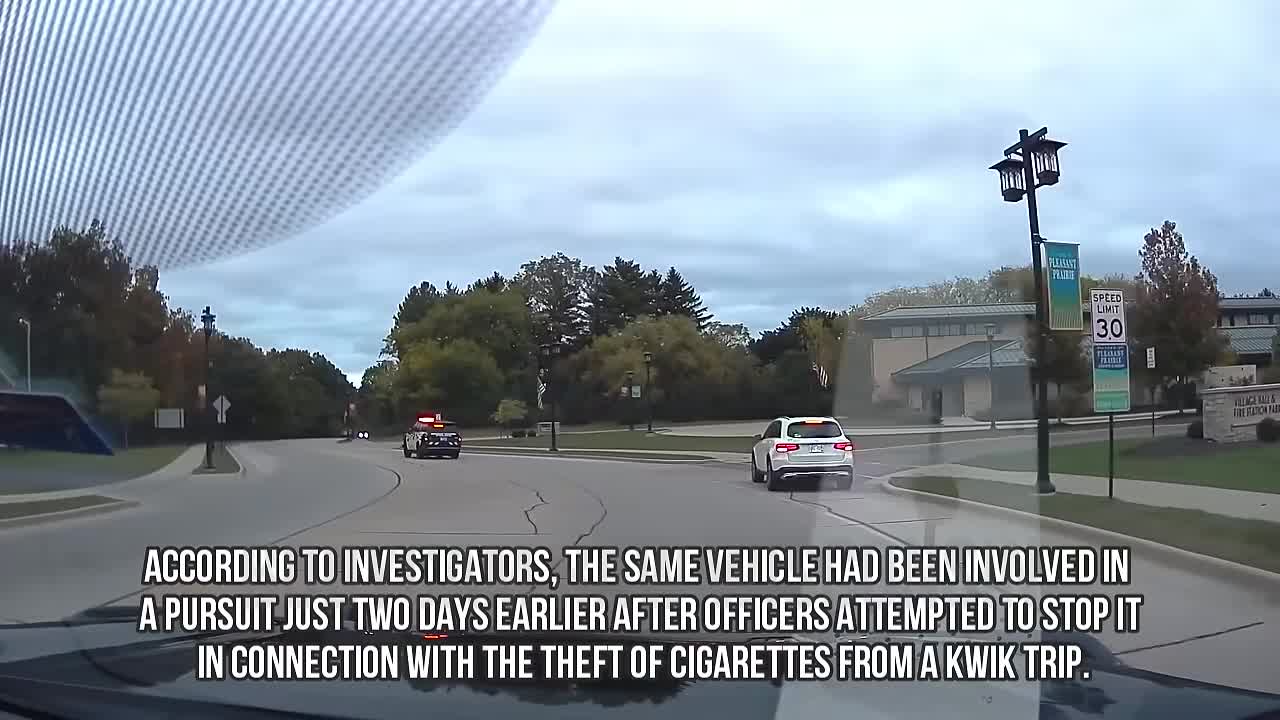
On October 11, 2025, police in southeastern Wisconsin were looking for a vehicle they already knew. Two days earlier, Pleasant Prairie officers had encountered the same vehicle while following up on suspects connected to a retail-theft investigation involving cigarettes from a Kwik Trip. That earlier encounter had also turned into a pursuit.
When officers learned the vehicle was again approaching the Wisconsin state line on Sheridan Road, what followed became a fast-moving sequence spanning Wisconsin and Illinois, involving a pursuit reaching roughly 100 mph, stop sticks, shredded tires and a violent crash involving two other vehicles.
Police identified the driver as 39-year-old Gil Melendez. Contemporary reporting variously described him as being from Kenosha or Waukegan, Illinois. Authorities also said he had an active Wisconsin Department of Corrections warrant connected with a parole violation.
The supplied video, titled “100 MPH Police Chase Ends in Devastating Crash - Bodycam,” matches the Pleasant Prairie Police incident. Its opening sequence identifies Pleasant Prairie, and later graphics describe the earlier Kwik Trip cigarette case, the cocaine and drug paraphernalia recovered from the vehicle, and the criminal charges that followed.
The footage is especially effective because it shows that the story was not one continuous pursuit from beginning to end. Officers first followed the vehicle toward Illinois, terminated that phase after losing sight of it, and then encountered it again traveling north. The second encounter ultimately ended near Sheridan Road and 80th Street in Kenosha.
The final collision left Melendez seriously hurt, though police later said his injuries were not life-threatening. A passenger suffered minor injuries. The fleeing vehicle struck utility poles and two other vehicles, including a Jeep carrying students on their way to homecoming activities. Later court reporting said several of those occupants described head and neck pain after the crash.
Why Police Were Looking for the Vehicle
The October 11 encounter had roots in an incident two days earlier.
Pleasant Prairie Police said officers had pursued the same vehicle on October 9 while conducting follow-up work involving suspects in a retail-theft case. Later court reporting said police had been seeking Melendez after an alleged theft of two cartons of cigarettes from a convenience store.
The supplied video identifies the store as a Kwik Trip.
That earlier pursuit matters because it explains why officers recognized the vehicle and why the October 11 sighting immediately drew police attention.
The second chase did not begin simply because a random motorist happened to be speeding past an officer. Police were already trying to locate a person and vehicle associated with an unresolved investigation.
The Vehicle Approaches Wisconsin From the South
On October 11, Pleasant Prairie police received information that the vehicle was traveling north toward the state line near Sheridan Road.
Sheridan Road is a major north-south corridor connecting communities on both sides of the Wisconsin-Illinois border.
Officers positioned themselves to locate the vehicle.
According to police and the criminal complaint summarized by local media, officers attempted a traffic stop around 116th Street and Sheridan Road in Pleasant Prairie.
The driver did not stop.
Instead, the vehicle accelerated away and the first phase of the pursuit began.
Speeds Reach Roughly 100 MPH
The chase quickly escalated.
WISN reported that police said the pursuit reached speeds of approximately 100 mph.
That speed dramatically changes the danger of a pursuit on an ordinary roadway.
At 100 mph, a vehicle travels nearly 147 feet every second. Intersections, traffic lights, turning vehicles and roadside businesses arrive with very little time for correction.
Police Chief David Smetana later told WISN that the basis for pursuing included the suspect’s “extremely reckless driving” as well as active warrants.
The combination of speed and traffic behavior was therefore central to the department’s assessment of the incident.
Officers Lose Sight of the Vehicle in Illinois
The pursuit moved south into Illinois.
Pleasant Prairie officers eventually lost sight of the fleeing vehicle in Winthrop Harbor and terminated that phase of the chase.
That decision is an important part of the timeline.
Police pursuits are not necessarily continuous until a suspect is captured. Officers can terminate when conditions change, when they lose visual contact or when the risk of continuing outweighs the immediate need to apprehend.
For a period of time, Melendez’s vehicle was no longer directly in front of the Pleasant Prairie squads.
But the encounter was not over.
The Vehicle Reappears Heading North
A short time later, Pleasant Prairie officers located the vehicle again.
This time it was traveling north on Sheridan Road.
The second sighting gave police another opportunity to stop it before it moved farther into Kenosha.
Officers coordinated a tire-deflation strategy rather than relying only on pursuit speed.
That tactical shift would become decisive.
A Pleasant Prairie officer positioned stop sticks near 104th Street and Sheridan Road as the vehicle approached.
Stop Sticks Damage Multiple Tires
The tire-deflation device worked.
Police said multiple tires were punctured.
But the vehicle did not immediately stop.
The driver continued north despite the damage.
WGTD’s account of the criminal complaint said one tire eventually came apart altogether.
Driving at speed on deflated or disintegrating tires makes a vehicle increasingly unstable. Steering response changes, braking becomes less predictable and the exposed wheel can lose traction.
The pursuit was now entering a phase in which the vehicle’s mechanical condition was deteriorating while it continued through an urban corridor.
A Damaged Vehicle Keeps Moving
The supplied footage shows officers continuing north as the pursuit approaches Kenosha.
Traffic lights, businesses and civilian vehicles remain part of the environment.
A driver fleeing on damaged tires has less ability to respond to all of those hazards.
That makes the final outcome increasingly foreseeable even if the precise crash cannot be predicted.
The vehicle is still moving fast enough to create danger, but it no longer has the same stability it had at the start of the chase.
The Crash Near 80th Street and Sheridan Road
The pursuit ended near the intersection of Sheridan Road and 80th Street.
According to the criminal complaint as summarized by WISN, the fleeing vehicle lost control and struck two vehicles along with several utility or telephone poles.
One of the vehicles carried students headed to homecoming activities.
The collision transformed a police pursuit into a major crash scene.
Squads that had been focused on following and stopping the suspect now had to secure the roadway, check occupants for injuries and manage damaged infrastructure.
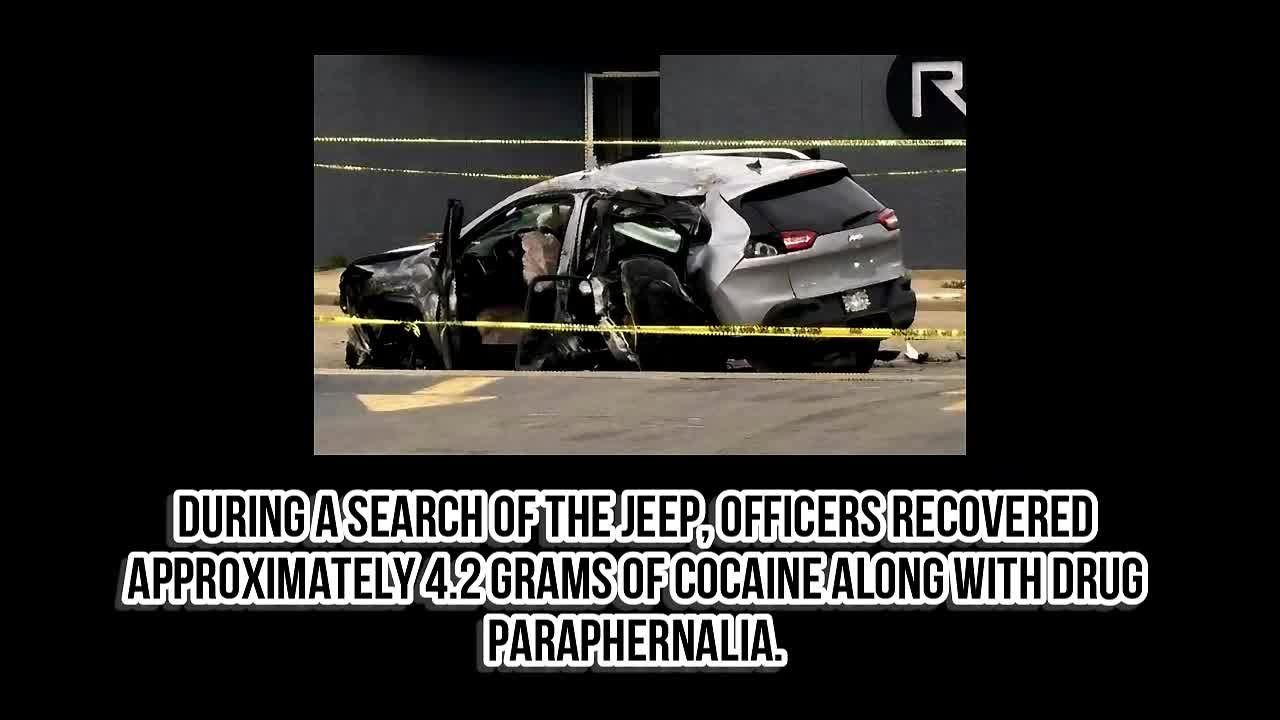
The video’s later imagery shows the severe condition of the suspect vehicle after the impact.
Students Were Inside One of the Struck Vehicles
WGTD reported that one of the vehicles struck was a Jeep carrying five high school students who were on their way to homecoming festivities.
That detail illustrates why high-speed pursuits through populated areas carry risks far beyond the fleeing driver.
The students were not involved in the investigation. They happened to be traveling on the same road at the moment the damaged fleeing vehicle reached them.
The criminal complaint said the occupants later described head and neck pain and spoke about the fear created by the collision.
Their presence turns the abstract phrase “risk to the public” into something much more concrete.
The Suspect Vehicle Also Strikes Utility Poles
The fleeing vehicle did not stop after a simple low-speed contact.
Reports said it struck multiple utility poles.
A collision with a pole can create secondary hazards including downed lines, damaged electrical infrastructure and debris across the roadway.
That means first responders must think about more than the occupants of the crashed vehicles.
They also have to evaluate whether wires are energized, whether traffic needs to be rerouted and whether fire or utility crews need access to the scene.
The crash therefore affected the surrounding roadway even after every vehicle had stopped moving.
Melendez Was Not Wearing a Seat Belt
Pleasant Prairie police said Melendez was not wearing a seat belt at the time of the crash.
First responders initially believed his injuries could be life-threatening.
He was transported by Flight for Life to a Milwaukee-area hospital.
Police later said his injuries were determined to be non-life-threatening and that he was in stable condition.
The distinction matters because early emergency assessments often change after hospital evaluation.
This article therefore uses the later police update rather than describing the initial concern as the final medical outcome.
The Passenger Sustained Minor Injuries
Melendez was not alone in the vehicle.
Police reported that a passenger suffered minor injuries and was also transported to a hospital.
The public sources reviewed for this article do not identify the passenger in detail, and there is no reason to speculate about that person’s role beyond the available evidence.
The driver was the person police accused of fleeing.
The presence of a passenger, however, demonstrates another consequence of the decision to continue at high speed: people inside the fleeing vehicle are exposed to the same violent forces when the chase ends in a collision.
No Officers Were Reported Injured
Pleasant Prairie police said no officers were injured in the incident.
That is notable given the length and complexity of the pursuit.
The chase crossed jurisdictional boundaries.
Officers deployed stop sticks.
The fleeing vehicle continued on damaged tires.
The final collision involved multiple vehicles and utility poles.
Each stage carried a possibility of injury to pursuing officers.
The absence of reported officer injuries does not reduce the seriousness of the event, but it is an important factual part of the outcome.
Police Search the Vehicle
After the crash, the vehicle became both a crash scene and evidence.
Pleasant Prairie police said officers recovered approximately 4.2 grams of cocaine along with drug paraphernalia.
The supplied video repeats those details in its closing case summary.
Those discoveries generated additional allegations separate from the fleeing conduct.
A search after a serious pursuit can reveal evidence relevant to other offenses, but every item still has to be documented and connected to the appropriate person through the criminal process.
A Long List of Charges Followed
The case produced numerous criminal allegations.
WISN reported that charges submitted to prosecutors included criminal damage to property, possession of cocaine, possession of drug paraphernalia, first-degree recklessly endangering safety, fleeing or eluding an officer, reckless driving endangering safety and felony hit-and-run causing injury.
Later reporting on the filed criminal complaint said prosecutors brought a dozen counts.
Some counts changed as the case progressed.
The supplied video’s later summary notes that the cocaine and drug-paraphernalia counts were dismissed but read in for sentencing, while several reckless-endangerment counts had been dismissed earlier.
That is why it is important to distinguish initial charges from the final disposition.
Seven Reckless-Endangerment Counts Reflected the People Put at Risk
The filed case included seven counts of first-degree recklessly endangering safety.
Such multiple-count charging can reflect separate people prosecutors allege were endangered by the same course of conduct.
The public reports describe the students and other motorists caught in the final crash and the dangerous driving that preceded it.
Those charges should not be treated as seven separate chases. They arose from one sequence of conduct involving multiple people allegedly placed in danger.
An Active Parole Warrant Added Context
Police said Melendez was on parole in Kenosha County for burglary and had an active Wisconsin Department of Corrections warrant for a parole violation.
Chief Smetana specifically cited active warrants alongside the extremely reckless driving when explaining why police pursued.
That background helps explain the law-enforcement decision, but it should not be used to imply guilt for unrelated conduct.
A warrant authorizes arrest. It does not change what must be proven about the new October 11 allegations.
The Crash Was Investigated Separately
Wisconsin State Patrol was assigned to investigate the crash.
That outside involvement is significant.
When a police pursuit ends in a serious collision, separating the crash investigation from the pursuing department can provide a more independent reconstruction of what happened.
Investigators can examine vehicle damage, roadway marks, traffic signals, video, speed data and witness statements.
That process is different from the criminal investigation into why the suspect allegedly fled.
Why the Video Matches the Reported Case
Several details in the supplied footage strongly verify the incident.
Pleasant Prairie branding is visible.
The video identifies the earlier Kwik Trip cigarette investigation.
The chase route includes the same Sheridan Road corridor described by police and local news.
The later graphics identify cocaine and drug paraphernalia recovered from the vehicle.
The closing case summary also identifies the reckless-endangerment counts and later sentencing-stage disposition.
Those details collectively make the match to the Gil Melendez case highly specific.
The Chase Was Not Just About a Minor Retail Theft
It would be misleading to describe the entire pursuit as police chasing someone simply over cigarettes.
The earlier retail-theft investigation was part of why police were looking for the vehicle.
By October 11, officers also had information about an active warrant, and Chief Smetana emphasized the driver’s extremely reckless conduct.
Once the vehicle fled at roughly 100 mph, the public-safety issue became the driving itself.
The reason an encounter starts and the reason a pursuit continues can be different questions.
Why Stop Sticks Were a Logical Tool
A tire-deflation device offers officers a way to reduce a fleeing vehicle’s mobility without deliberately striking it with a squad car.
When successful, the tires lose pressure and the driver is forced to slow or eventually stop.
But stop sticks do not guarantee an immediate stop.
This case demonstrates that limitation.
Multiple tires were deflated, yet the vehicle continued.
The resulting loss of stability became part of the chain leading to the final crash.
The Pursuit Crossed a State Line
The Wisconsin-Illinois border adds another layer to the incident.
The first pursuit moved into Winthrop Harbor, Illinois, where Pleasant Prairie officers eventually lost sight of the vehicle.
Later, the vehicle returned north toward Wisconsin.
Cross-border pursuits require communication between agencies and awareness of jurisdictional boundaries.
The road itself does not change at the state line, but police authority, dispatch coordination and available assisting units can.
The Final Crash Shows the Risk of Continuing on Destroyed Tires
Once a tire has been punctured, continued high-speed driving can cause the tire to separate from the wheel.
WGTD reported that one tire came apart altogether.
At that point, a driver may be attempting to steer with drastically reduced traction and an unbalanced vehicle.
The crash near 80th Street therefore occurred after the vehicle had already suffered substantial tire damage.
The stop sticks did not instantly stop the pursuit, but they fundamentally changed the vehicle’s ability to continue.
The Students Had No Role in the Pursuit
The students in the Jeep are among the most important people in the story precisely because they had nothing to do with it.
They were traveling to a school event.
They were not suspects.
They were not following the chase.
They simply happened to be on Sheridan Road.
Their involvement is a reminder that high-speed fleeing can impose consequences on strangers who have no opportunity to choose whether they participate in the risk.
The Footage Keeps the Story Grounded
Police-pursuit videos can easily be edited into spectacle.
The most useful way to read this footage is as evidence of sequence and environment.
The camera shows the roads.
It shows surrounding traffic.
It shows officers moving between jurisdictions.
It shows how quickly distance closes at pursuit speeds.
And the later images show what remains after momentum finally wins.
Those observations make the story compelling without requiring exaggerated language.
What the Camera Cannot Prove
The dashcam cannot independently establish every fact in the criminal complaint.
It does not prove who stole cigarettes two days earlier.
It does not chemically identify the substance later reported as cocaine.
It cannot diagnose the injuries suffered by crash victims.
It cannot determine guilt on the criminal charges.
Those facts come from police statements, court records and news reporting.
Keeping those categories separate is essential when writing about real criminal cases.
The Court Case Continued Long After the Crash
The collision happened in October 2025, but the legal process continued into 2026.
Later reporting indicates that Melendez ultimately received a prison sentence after the case moved through court.
The supplied video also contains a later case-disposition summary, showing that some charges were dismissed or read in at sentencing.
This later outcome demonstrates why early arrest reports should never be written as though every original count became a conviction.
Criminal cases evolve through charging decisions, plea negotiations and sentencing.
A Five-Year Prison Sentence Was Later Reported
In August 2026, later local reporting said Melendez was sentenced to a total of five years of initial confinement, with additional supervision to follow.
That later sentencing provides an endpoint unavailable in the first wave of October 2025 news reports.
The exact legal structure matters more than simply saying he “got five years,” because Wisconsin sentences often distinguish initial confinement from extended supervision.
The supplied video’s closing section likewise makes clear that the final case looked different from the original list of charges.
The Most Reliable Timeline
Two days before October 11, Pleasant Prairie police encountered the same vehicle during follow-up work related to a retail-theft investigation.
On October 11, officers learned the vehicle was heading north toward Wisconsin near Sheridan Road.
Police attempted a stop around 116th Street.
The vehicle fled and reached speeds of roughly 100 mph.
Officers lost sight of it in Winthrop Harbor, Illinois, and terminated that phase of the pursuit.
The vehicle was later spotted traveling north again.
Stop sticks near 104th Street punctured multiple tires.
The driver continued north.
Near 80th Street and Sheridan Road, the vehicle lost control and struck two other vehicles and utility poles.
Melendez and a passenger were hospitalized.
Police recovered approximately 4.2 grams of cocaine and drug paraphernalia from the vehicle.
Criminal charges followed, and the case later proceeded to sentencing.
Why This Pursuit Is More Than Its 100 MPH Headline
The speed is the easiest part of the case to put in a headline, but the full story is about escalation.
A retail-theft follow-up becomes a vehicle search.
A traffic stop becomes a pursuit.
The pursuit crosses into another state and is terminated.
The vehicle reappears.
Stop sticks work, but the driver continues.
The damaged vehicle reaches Kenosha.
Uninvolved motorists are struck.
Students on their way to homecoming suddenly become crash victims.
A suspect is flown to a hospital.
Then the story moves from the roadway into court.
That progression is what gives the incident its real weight.
A Chase With Consequences Far Beyond the Driver
Every major element of the case extends beyond Melendez.
Police officers had to make pursuit decisions at high speed.
A passenger remained inside the fleeing vehicle.
Motorists shared the roadway.
Students were caught in the final collision.
Utility infrastructure was damaged.
Emergency medical crews responded.
Wisconsin State Patrol investigated the crash.
Prosecutors then had to sort the conduct into individual criminal counts.
A decision to flee therefore created a chain of consequences involving people who never participated in the original investigation.
The Ending Was Violent, but Not Fatal
Given the reported speed, damaged tires and multi-vehicle collision, the crash had the potential to produce a fatal outcome.
The sources reviewed for this article do not report a death.
Melendez’s injuries were ultimately described as non-life-threatening.
His passenger suffered minor injuries.
The occupants of the struck vehicles survived, although later reporting described pain among the students in the Jeep.
That outcome should not be confused with the crash being minor. The images of the wrecked vehicle show the amount of energy involved.
Why Accurate Wording Matters
This incident contains allegations, charges, later dismissals and a sentencing outcome.
Those stages should not be collapsed into one another.
An allegation is not a conviction.
A charge can be amended or dismissed.
A count read in for sentencing can still influence the court without resulting in a conviction on that count.
Using precise language may be less dramatic than treating every police allegation as settled fact, but it produces a stronger and more trustworthy account.
The Full Video Connects the Beginning and the Aftermath
The strongest reason to watch the complete footage is that the final wreck makes more sense when seen in context.
The viewer first sees the roads and police response.
The earlier incident is explained.
The pursuit develops.
The vehicle is encountered again.
The stop-stick phase changes the dynamics.
Then the crash turns a fleeing case into an emergency scene.
Finally, the video provides later legal information that a raw dashcam clip alone would never contain.
That combination of footage and documented reporting makes this case especially useful for understanding how a pursuit can evolve from a relatively small investigation into a major public-safety event.
Watch the Full Incident
The complete footage shows the Pleasant Prairie pursuit, the cross-border search, the renewed chase, the tire-deflation effort and the aftermath of the collision near Sheridan Road and 80th Street.
Comments (0)
Loading comments...
May You Like

[DASHCAM] Drunk Driver Leads Trooper on High-Speed Pursuit Through City Streets

MERIDEN POLICE OFFICER SHOOTS MAN BEATING FATHER WITH A BASEBALL BAT














