Birthday Party Crash Leads to a Drunk Driving Murder Conviction in Michigan
Birthday Party Crash Leads to a Drunk Driving Murder Conviction in Michigan
The April 2024 Swan Boat Club crash killed two siblings and injured numerous birthday-party guests. Toxicology evidence, a jury trial and a 2025 sentence ultimately established the driver's criminal responsibility.
A Saturday Birthday Party Turns Into a Mass-Casualty Scene
On April 20, 2024, families gathered at the Swan Boat Club in Berlin Township, Monroe County, Michigan, for a child's birthday party. At about 3 p.m., the celebration was shattered when an SUV crashed through the north wall of the building and traveled roughly 25 feet inside.
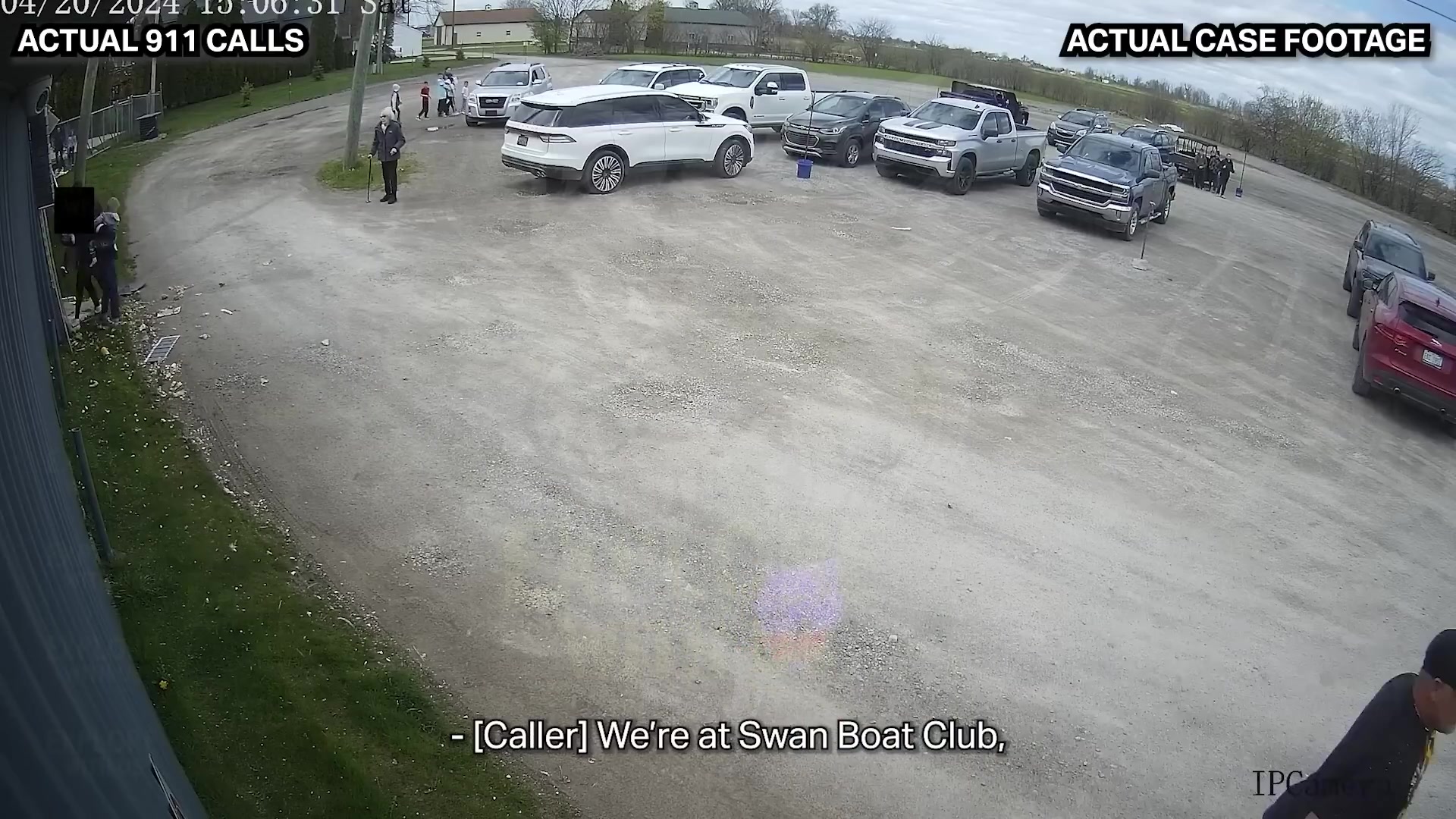
The supplied video combines 911 audio, surveillance footage, law-enforcement recordings and later interview material. A surveillance frame visible in the video is dated April 20, 2024, and identifies the location as the Swan Boat Club. Those details match the extensive public record surrounding the crash.
First responders encountered a devastating scene. Authorities initially reported aid being provided to approximately 15 victims, including adults and children. Two siblings, 8-year-old Alanah Phillips and her younger brother Zayn Phillips, were killed. Their mother and another sibling were among those seriously injured.
The driver was Marshella Chidester, then 66, of Newport. Deputies took her into custody after the crash. What followed was not merely an investigation into an accidental collision. Investigators examined whether alcohol impairment and Chidester's conduct behind the wheel supported some of Michigan's most serious criminal charges.
The original online title says Chidester had “no idea” she had killed two children. The interview footage does show confusion and gaps in her recollection, but that phrase is an interpretation of her state of mind rather than a fact that can be established with certainty. A more accurate account focuses on what investigators, toxicology evidence and ultimately a jury established.
The SUV Travels Through the Clubhouse
Surveillance footage became an important part of reconstructing the crash. Cameras captured the vehicle approaching and entering the building while the birthday party was underway.
The physical consequences were immediate. The SUV did not simply strike the exterior wall and stop. Authorities said it continued approximately 25 feet into the structure. People inside had almost no opportunity to react.
Monroe County Sheriff Troy Goodnough described an emergency response involving numerous victims. Firefighters, paramedics and law-enforcement officers converged on the club while medical crews triaged injured adults and children.
The supplied video pairs the surveillance imagery with actual 911 calls, allowing viewers to hear the confusion in the minutes after impact. Those calls convey something a written crash report cannot: people at the scene were trying to understand the scale of the emergency while simultaneously locating relatives and requesting ambulances.
The investigation soon focused on Chidester's condition before and after the collision. Early in the case, her attorney disputed the prosecution's characterization of her alcohol consumption and pointed to medical issues that the defense said could have affected her driving.
That dispute became a major issue at later court proceedings. Rather than assuming intoxication solely from the circumstances, investigators obtained blood evidence and prosecutors ultimately presented toxicology findings to the court and jury.
Blood Testing Becomes Central to the Criminal Case
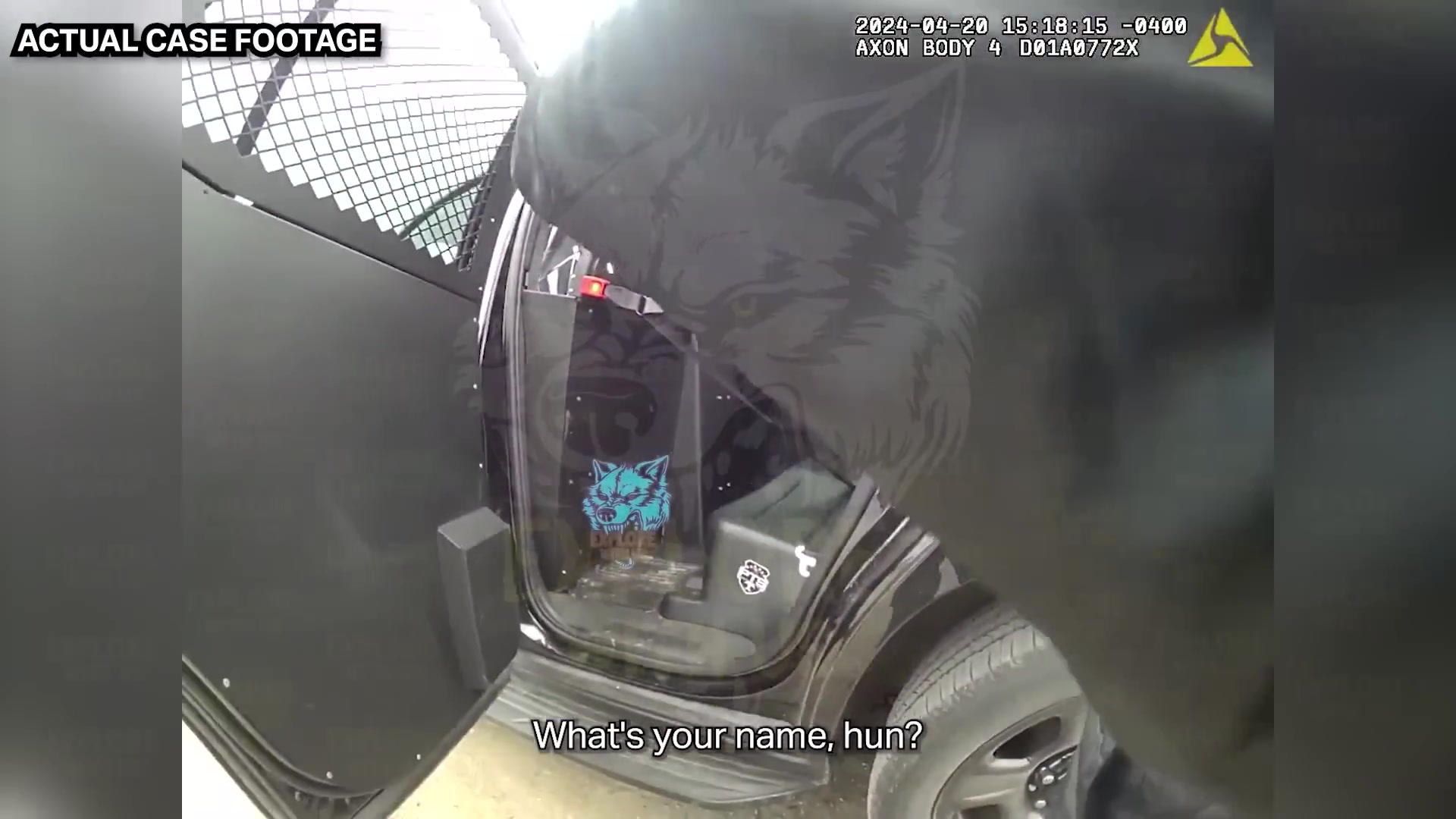
At Chidester's preliminary examination in June 2024, testimony established that her blood alcohol concentration was .18. Michigan's general legal limit for driving is .08, and .17 or higher falls within the state's enhanced high-BAC category.
The .18 result therefore became one of the most important pieces of evidence in the prosecution.
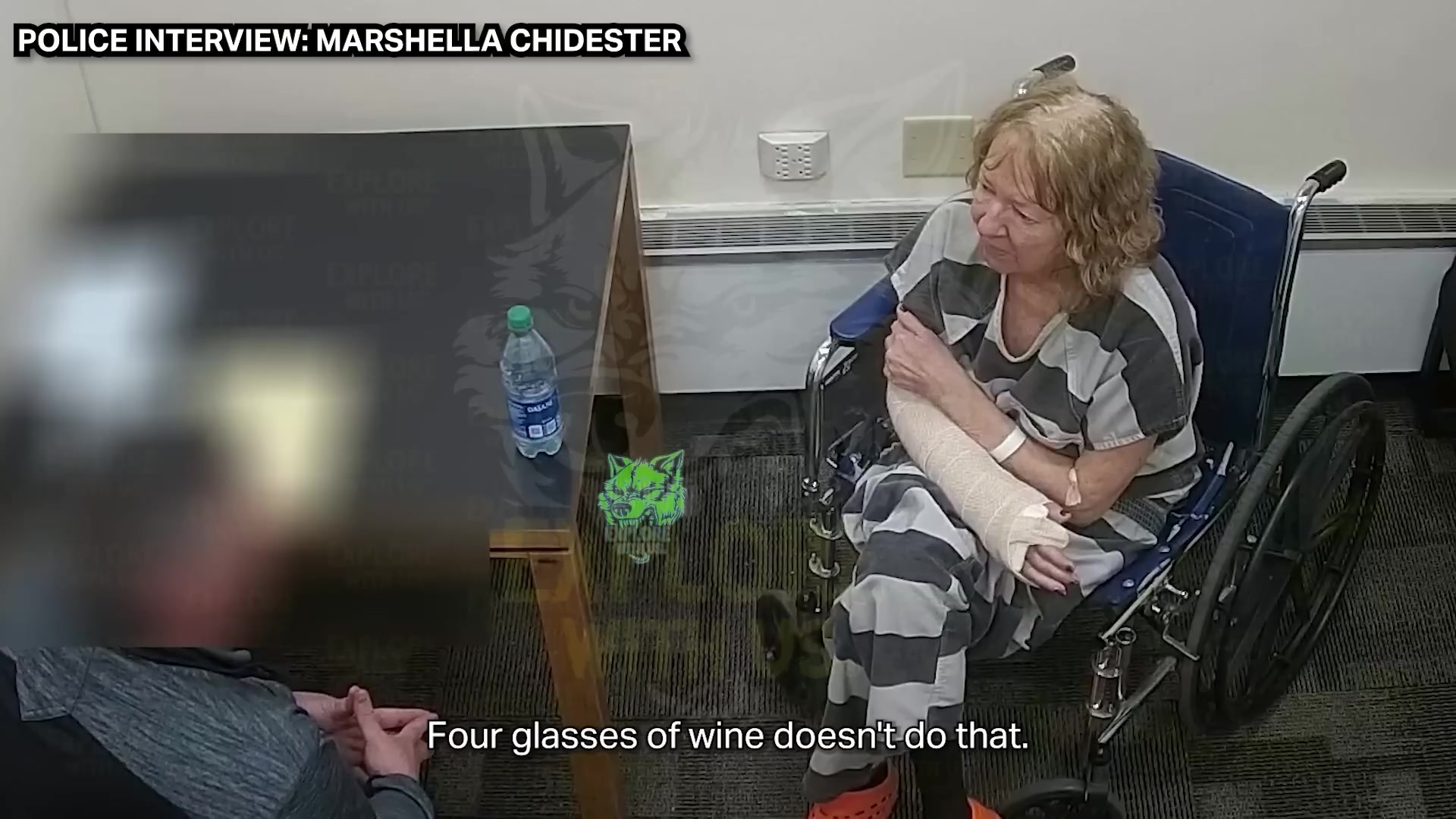
The supplied video includes interview material in which Chidester discusses drinking wine. At points she appears uncertain about the collision and what happened immediately before it. That footage should be interpreted carefully. A police interview can document what a suspect says and how that person appears, but it cannot by itself establish the exact level of impairment. The toxicology evidence supplied the objective measurement.
The defense argued that Chidester had medical problems, including issues that could affect motor control. Earlier court reporting also described the defense's claim that she had consumed only a limited amount of wine well before the crash.
Prosecutors presented a very different theory: Chidester was intoxicated and drove in a manner that demonstrated the level of recklessness required for the charged offenses. The case therefore became a contest not over whether Chidester's SUV entered the Swan Boat Club, which was extensively documented, but over why it happened and what level of criminal responsibility followed.
The judge ultimately found sufficient evidence to send the case to trial. Chidester faced two counts of second-degree murder, two counts of operating while intoxicated causing death and multiple counts of operating while intoxicated causing serious injury.
The Interview Shows Confusion but Does Not Tell the Whole Story
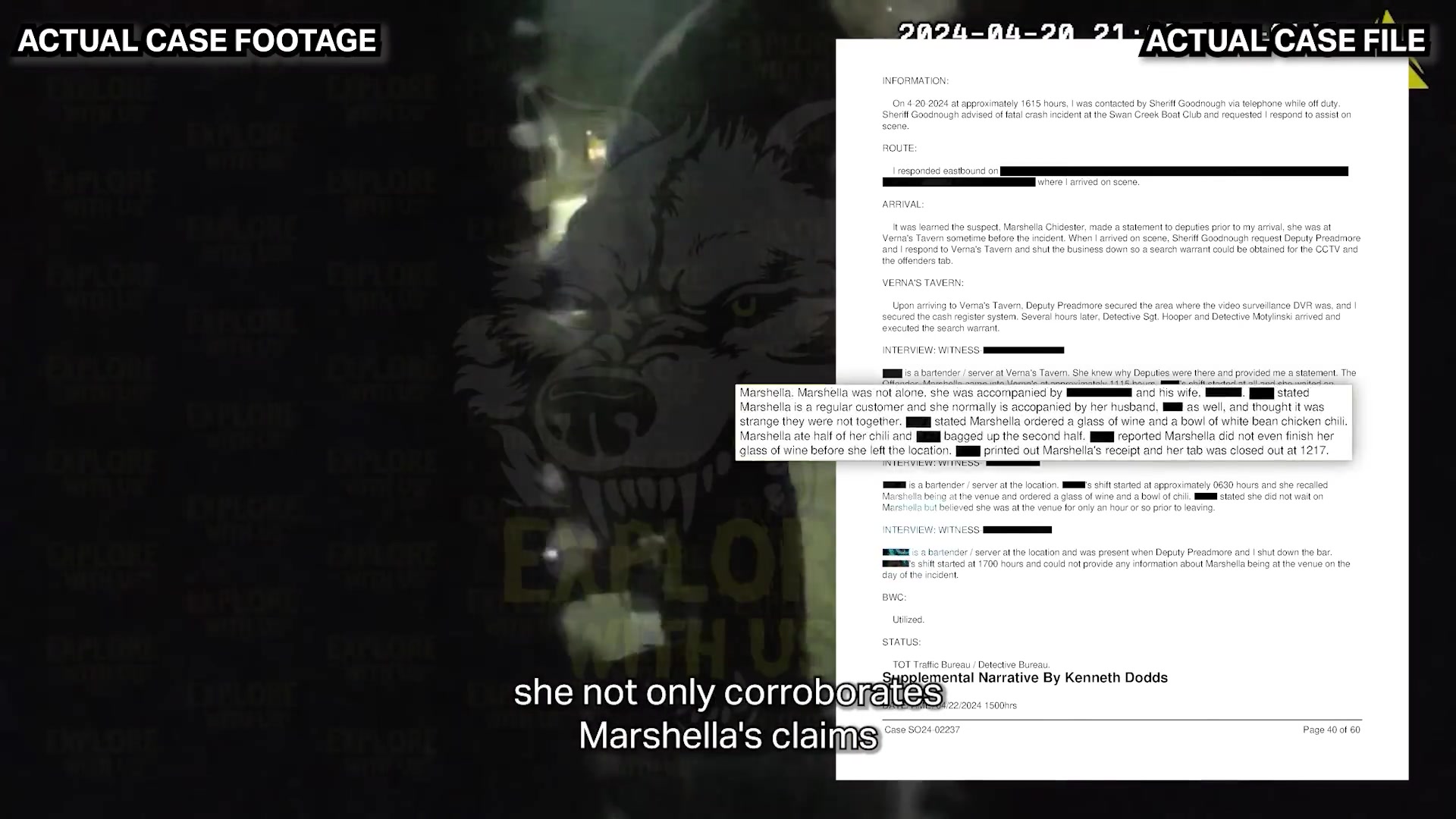
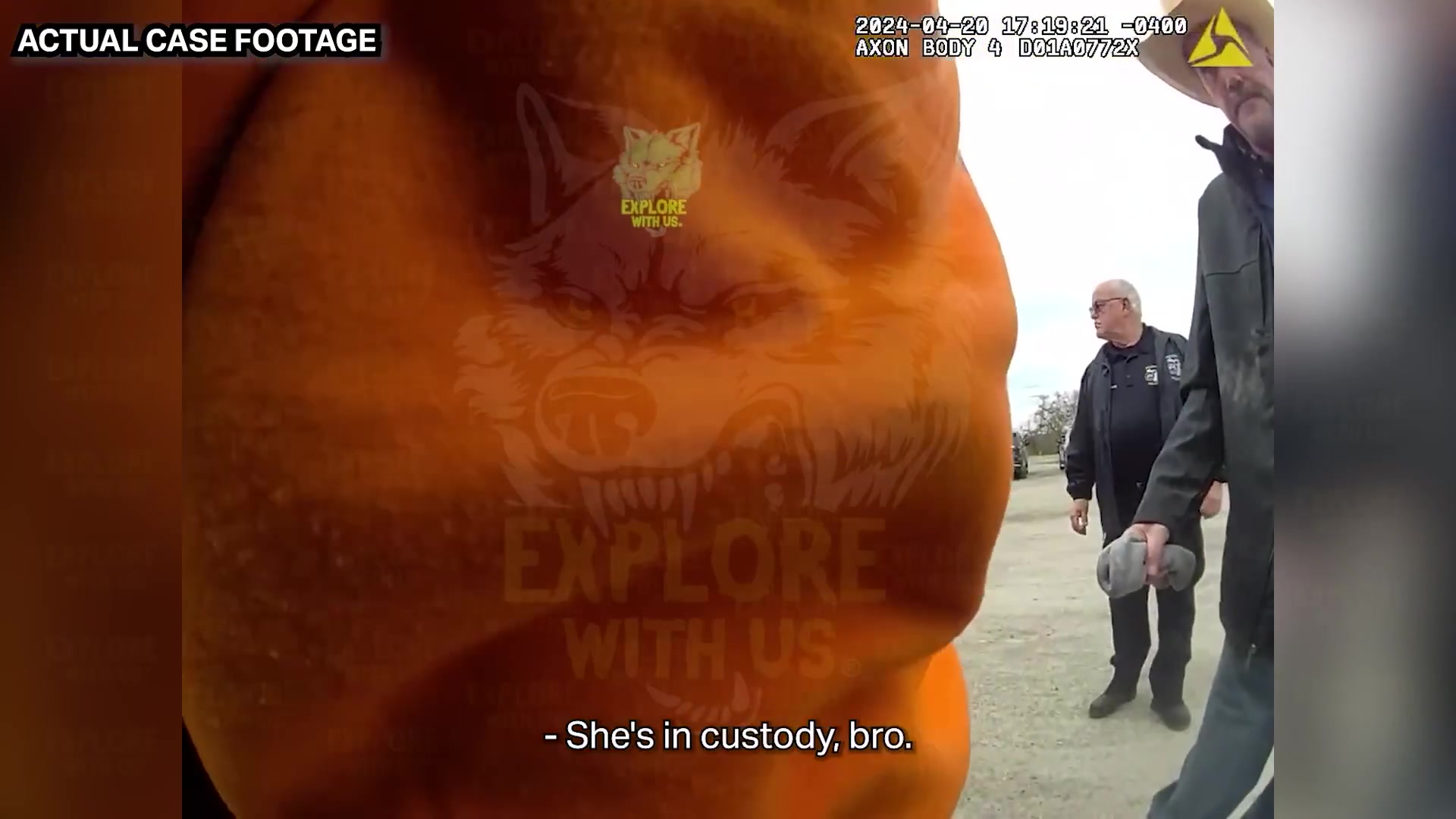
One of the most striking portions of the supplied video is the police interview with Chidester. She is seated in a wheelchair with an injured arm while an investigator asks about the day, her drinking and the collision.
The exchange is likely the source of the original video's provocative title. Chidester appears to have difficulty reconstructing parts of what happened. Reporting from the preliminary examination said body-camera footage showed her telling a deputy that she did not remember the crash itself and believed she had been driving toward the boat club before “evidently” entering the pavilion.
But memory after a traumatic collision is not the same question as criminal responsibility before the collision. Investigators and jurors had to examine evidence from before impact: where Chidester had been, what she consumed, how she drove, her speed, her blood alcohol level and whether medical explanations offered by the defense were supported by the evidence.
This distinction is crucial. A viral video can make a suspect's post-crash demeanor seem like the central evidence. In court, it is only one part of a much larger record.
The interview also demonstrates why exact claims about a person's awareness should be avoided unless the evidence supports them. Chidester's statements show incomplete recollection. They do not allow an outside viewer to know precisely what she understood at every moment after the crash.
The jury eventually had access to evidence far beyond this interview, including surveillance recordings, toxicology results, witness testimony and expert evidence.
A Jury Returns Guilty Verdicts
Chidester's trial began in March 2025 in Monroe County Circuit Court. Prosecutors argued that alcohol impairment and the manner of driving supported the murder and drunk-driving charges. The defense continued to challenge the prosecution's explanation for the sudden acceleration and pointed to Chidester's medical condition.
After hearing the evidence, the jury rejected the defense theory and found Chidester guilty on all nine counts submitted in the case.
The convictions included two counts of second-degree murder, two counts of operating while intoxicated causing death and five counts of operating while intoxicated causing serious injury.
The verdict transformed the language appropriate for describing the case. In 2024, responsible reporting had to describe Chidester as accused or charged because her guilt had not been adjudicated. After the 2025 verdict, it became accurate to say a jury convicted her.
This timeline matters when using older police or court footage. A video created shortly after an incident may speak in the language of allegations because that was all that could legally and factually be established at the time. A later article should incorporate the eventual outcome rather than freezing the story at the arrest stage.
The convictions also confirmed that the case was substantially more serious than a conventional impaired-driving prosecution. Second-degree murder in Michigan carries potentially life-altering consequences and reflects the jury's assessment of the evidence concerning Chidester's conduct.
A 25-to-50-Year Prison Sentence
On May 15, 2025, the court sentenced Chidester to 25 to 50 years in prison.
By then she was 67 years old, making the minimum sentence itself potentially equivalent to spending the rest of her life incarcerated. The sentencing hearing included emotional statements about the loss of Alanah and Zayn and the injuries suffered by other members of the family.
Chidester addressed the court and expressed remorse. The hearing placed the legal outcome alongside the human consequences that had begun more than a year earlier inside the Swan Boat Club.
The victims were not limited to the two fatalities. Numerous people were hurt in the collision, and several sustained serious injuries. The children's mother and another sibling were among those hospitalized after the crash.
Civil litigation also followed. Family members and other injured victims pursued claims connected to Chidester and the establishment where she had consumed alcohol before the crash.
The criminal sentence, however, represented the clearest final answer from the prosecution: the case ended with convictions for second-degree murder and operating while intoxicated offenses, followed by a decades-long prison term.
Why the Later Court Record Changes How the Footage Should Be Viewed
When footage from an old case is recirculated, viewers often encounter it without knowing what happened afterward. That can leave the impression that the story ended with an arrest or an interview.
Here, the later record is essential. The .18 blood alcohol result was presented in court. The case proceeded through a full jury trial. Chidester was convicted on every count presented to the jury and sentenced in 2025.
Those developments also make it unnecessary to exaggerate the story. There is no need to speculate that Chidester was unaware of the deaths or to describe her emotional state with certainty. The established facts are already extraordinary.
A vehicle entered a building hosting a child's birthday party. Two siblings died. Many others were injured. Chidester's BAC was measured at .18. A jury found her guilty of two murders and multiple impaired-driving offenses. A judge sentenced her to between 25 and 50 years.
The video contributes another layer by preserving the immediate aftermath and investigative interviews. It allows viewers to compare the chaotic first hours of the case with what the justice system later established through evidence and trial.
That is the strongest way to use body-camera and interrogation footage: not as a substitute for the court record, but as one piece of a chronology that continues long after the camera stops recording.
A Case Defined by What Happened in Seconds and What Followed for Years
The collision itself took only moments. Its consequences unfolded across emergency rooms, funerals, courtrooms and years of legal proceedings.
For the people attending the birthday party, April 20, 2024 began as an ordinary family celebration. For first responders, it became a mass-casualty emergency. For investigators, it became a complex impaired-driving and homicide case. For the Phillips family, it became an irreversible loss.
The supplied footage captures the earliest phase: the crash scene, the emergency calls, the police response and Chidester's statements afterward. The later reporting completes the chronology with the toxicology result, trial, convictions and sentence.
It is also a reminder that responsible storytelling does not need to rely on assumptions about what a suspect knew or felt. Chidester's memory gaps are visible in the recordings, but her internal awareness cannot be measured from a clip. Her legal responsibility, by contrast, was tested through a jury trial.
The jury found her guilty. The court imposed a 25-to-50-year sentence. Those are verifiable outcomes.
The case remains difficult to watch because the victims were people gathered for a celebration, including children. The strongest account therefore avoids turning their deaths into a sensational hook and instead explains how the collision occurred, what investigators found and how the case ultimately ended.
For viewers who want to understand the progression from the first 911 calls through the police interview and the evidence that later shaped the prosecution, the complete footage provides a fuller picture than any isolated clip.
Comments (0)
Loading comments...
May You Like

West Virginia Man Laughs at Police Officer and Ends Up Arrested
Officer Stops to Help but the Situation Quickly Escalates

Four Suspects Try Killing a Cop After Police Chase