
‘Bad Mom’ Gives Worst Excuses for Drunk Driving with Her Baby3
WORST EXCUSES EVER? WHAT BODYCAM FOOTAGE REVEALS DURING A DUI STOP
A routine traffic stop can change quickly when an officer suspects IMPAIRED DRIVING. A driver may offer explanations about where they were going, why they were driving strangely, or why they believe the officer is mistaken. But once police begin documenting observations and conducting standardized procedures, those explanations become only one part of the investigation.
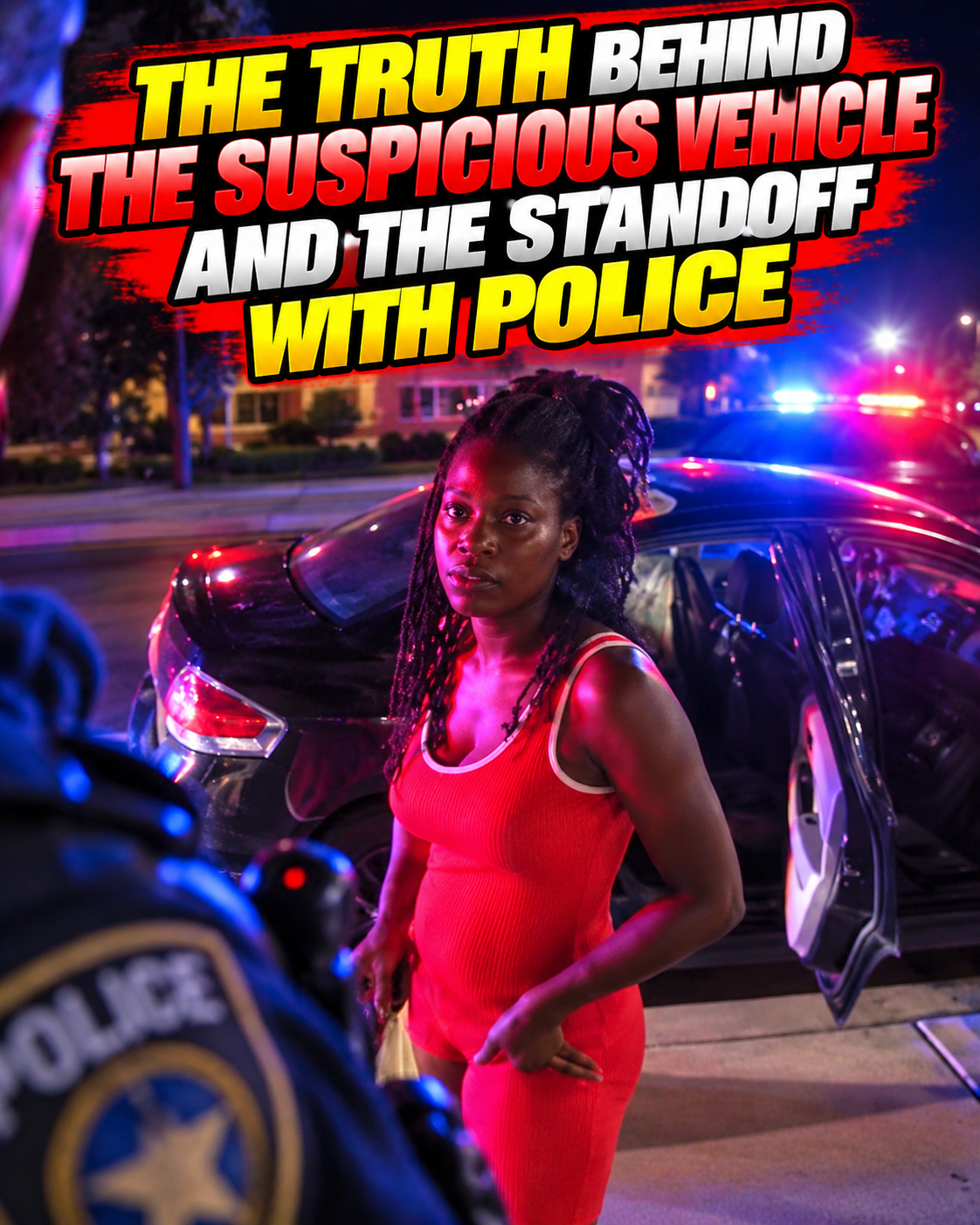
The thumbnail accompanying this article appears to be a DRAMATIZED OR ILLUSTRATIVE IMAGE rather than verified evidence that the woman pictured is a particular person in a real case. However, recent bodycam-related incidents show why DUI STOPS, conflicting explanations, and roadside investigations continue to attract public attention.
WHEN A SIMPLE TRAFFIC STOP CHANGES DIRECTION
A DUI investigation does not necessarily begin with an officer knowing that a driver is intoxicated.
It can begin with something much smaller: an unusual turn, speeding, weaving, a traffic violation, a collision, or another observation that gives an officer a reason to make a stop.
According to the National Highway Traffic Safety Administration (NHTSA), law enforcement uses a combination of observations, standardized field sobriety testing, and chemical testing when investigating alcohol-impaired driving.
That means a driver's explanation is not automatically accepted or rejected. Officers may compare what the driver says with what they observe.
For example, a driver might say they are simply tired, nervous, upset, or unfamiliar with the area. Those explanations can have legitimate causes. But investigators may still continue examining whether there are additional signs of impairment.
THE “EXCUSE” MAY BECOME PART OF THE VIDEO
One reason BODYCAM FOOTAGE has become so prominent in DUI stories is that modern police cameras can preserve conversations that previously depended almost entirely on conflicting memories.
The camera may record the initial traffic violation, the officer's questions, the driver's responses, field sobriety testing, handcuffing, and the later booking process.
A July 2026 report from Inquisitr described a Florida DUI arrest in which a woman reportedly offered several explanations during the investigation, including anxiety and physical limitations during field sobriety testing. The report said she contacted her stepfather, described as a sergeant, while officers continued their investigation. It also reported that the incident resulted in DUI-related consequences. The publication cautioned that it had not independently confirmed every detail.
That limitation matters.
A viral video can show what happened during a particular moment, but BODYCAM VIDEO IS NOT NECESSARILY THE ENTIRE CASE FILE. Police reports, dispatch recordings, witness statements, test results, court records, and later legal proceedings may provide additional context.
FIELD SOBRIETY TESTS ARE ONLY ONE PART OF THE INVESTIGATION
The NHTSA provides resources on STANDARDIZED FIELD SOBRIETY TESTS, commonly known as SFSTs. These tests are designed to help officers evaluate possible impairment through observable physical and divided-attention indicators.
A driver might be asked to follow instructions involving walking, balancing, eye movements, or counting.
But an important point is often lost in viral videos: PERFORMING POORLY DOES NOT BY ITSELF ESTABLISH GUILT.
A person's physical condition, footwear, environment, medical circumstances, anxiety, age, or other factors can potentially affect performance. The significance of the observations depends on the circumstances and applicable law.
Likewise, simply performing a test successfully does not necessarily prove that a person is legally unimpaired.
The investigation is generally based on the TOTALITY OF THE CIRCUMSTANCES.
REFUSING A TEST DOES NOT NECESSARILY END THE INVESTIGATION
Another recurring feature of DUI bodycam videos is a driver refusing testing.
NHTSA explains that all U.S. states have IMPLIED-CONSENT LAWS, although the consequences of refusing a chemical test differ by jurisdiction. Possible consequences can include administrative driver's-license penalties, and in some circumstances refusal can have additional legal consequences.
The exact rules depend on the state and on the type of test involved.
That distinction is important because a roadside field sobriety test, a preliminary breath test, and an evidentiary chemical test are not legally identical in every jurisdiction.
The U.S. Supreme Court has also addressed these issues. In Birchfield v. North Dakota, the Court distinguished between warrantless breath testing and warrantless blood testing following a lawful DUI arrest. U.S. Supreme Court — Birchfield v. North Dakota
So when a bodycam video shows someone saying “I refuse,” the legal consequences cannot be determined simply by watching that moment.
WHEN TALKING MAKES A VIDEO MORE COMPLICATED
People sometimes assume that explaining themselves will immediately resolve a traffic stop.
In reality, statements can become part of the evidence.
A driver might say they have had nothing to drink. Later, they might acknowledge consuming alcohol. They might say they were not driving normally because they were tired, then provide another explanation.
None of these statements automatically establishes guilt. But inconsistencies can become part of what investigators consider.
This is one reason BODYCAM FOOTAGE can be significant. It can preserve the exact sequence of statements instead of relying solely on someone's memory later.
Recent true-crime coverage illustrates how quickly a DUI stop can become a much larger incident. Law&Crime's Inside The Crime reported on a September 2026 Florida case involving driver Jennifer Smith. According to the program description, Smith was stopped over an alleged illegal U-turn, said she was in the wrong city, refused field sobriety testing, and allegedly became increasingly confrontational. The report said the incident later involved allegations of kicking an officer and additional conduct after arrest. These remain reported allegations rather than a finding of guilt.
WHY OFFICERS KEEP ASKING QUESTIONS
A common misconception is that an officer has already decided someone is guilty the moment a DUI investigation begins.
Legally, an investigation and a conviction are very different things.
Police may ask questions because they are attempting to establish what happened. They may examine driving behavior, physical appearance, speech, coordination, odor, admissions, test performance, and other circumstances.
The NHTSA's impaired-driving resources describe multiple enforcement tools rather than a single test that determines every case.
That is why an argument such as “I only had one drink” may not automatically end a DUI investigation. At the same time, it is also incorrect to say that one drink automatically proves legal impairment.
CONTEXT MATTERS.
THE COURTROOM IS DIFFERENT FROM THE BODYCAM
A dramatic arrest video can create the impression that the case has already been decided.
It has not.
An ARREST IS NOT A CONVICTION.
After an arrest, prosecutors must determine whether charges are appropriate and whether the available evidence can support them. Defendants can challenge evidence, contest testing procedures, dispute probable cause, and raise other legal defenses.
A case can also change substantially after the initial arrest.
Charges can be reduced, dismissed, resolved through a plea, or taken to trial. The outcome depends on the jurisdiction and the specific evidence.
This is particularly important when social-media clips remove the beginning or ending of an encounter.
WHY “WORST EXCUSES” VIDEOS GO VIRAL
The phrase “WORST EXCUSES EVER” is designed for entertainment, but real DUI cases are more complicated than a viral caption suggests.
A person who is frightened during a police encounter may speak poorly, contradict themselves, or become emotional. A video may make that behavior look unusual without showing everything that happened before or after the recording.
At the same time, bodycam footage can provide valuable transparency.
It allows courts, attorneys, police departments, journalists, and the public to examine what was actually recorded. The technology can document both POLICE CONDUCT and SUSPECT CONDUCT, rather than presenting only one side of an encounter.
The most responsible way to view these videos is therefore to separate three things: what the camera actually shows, what police allege happened, and what a court ultimately determines.
THE BIGGER LESSON
A DUI investigation can begin with a simple traffic violation and quickly become a detailed examination of a driver's behavior.
EXCUSES, explanations, refusals, field sobriety tests, chemical tests, and bodycam footage may all become pieces of the investigation. None should automatically be treated as a complete answer by itself.
And while viral titles may promise the “WORST EXCUSES EVER,” the legal reality is usually more complicated.
The important question is not simply what someone said on camera.
It is WHAT THE COMPLETE EVIDENCE SHOWS.
Comments (0)
Loading comments...
May You Like

Chrysler 300 Gapped Cops at 150+ MPH | Police Dashcam

Traffic Stop Turns Deadly After Man Steps Out of Stolen Car
The Truth Behind the Suspicious Vehicle and the Standoff with Police













