
Armed Individual Charges at Los Angeles Police – The Outcome
Armed Man Charges Deputies After Less-Lethal Attempts Fail During Los Angeles Confrontation
HOOK: A Weapons Call Turns Into a Deadly Confrontation
It started with an early-morning emergency call about a man allegedly threatening workers with a large blade.
Minutes later, Los Angeles County Sheriff's deputies were standing around a white pickup truck, trying to convince its driver to cooperate.
The situation deteriorated almost immediately.
There was a physical struggle. Deputies backed away. The man reached into the truck and emerged armed with a large hooked blade. Officers repeatedly ordered him to put it down.
Then came attempts to stop him without gunfire.
A TASER was deployed.
Deputies also used 40mm foam baton rounds and a stun-bag shotgun.
But according to investigators, those efforts did not stop the threat. The armed man moved toward deputies, and within moments several officers opened fire.
The man died at the scene.
The confrontation on August 31, 2022, in the Florence-Firestone area of Los Angeles County would later become the subject of an extensive investigation, an official LASD critical-incident release and review by the Los Angeles County District Attorney's Office.
The body-camera footage is difficult to watch, but it also provides an unusually detailed view of how quickly a call involving an armed person can escalate from attempted detention to a deadly-force encounter.
And the full story begins several minutes before the shooting.
OPENING: Deputies Respond to Reports of a Man With a Machete
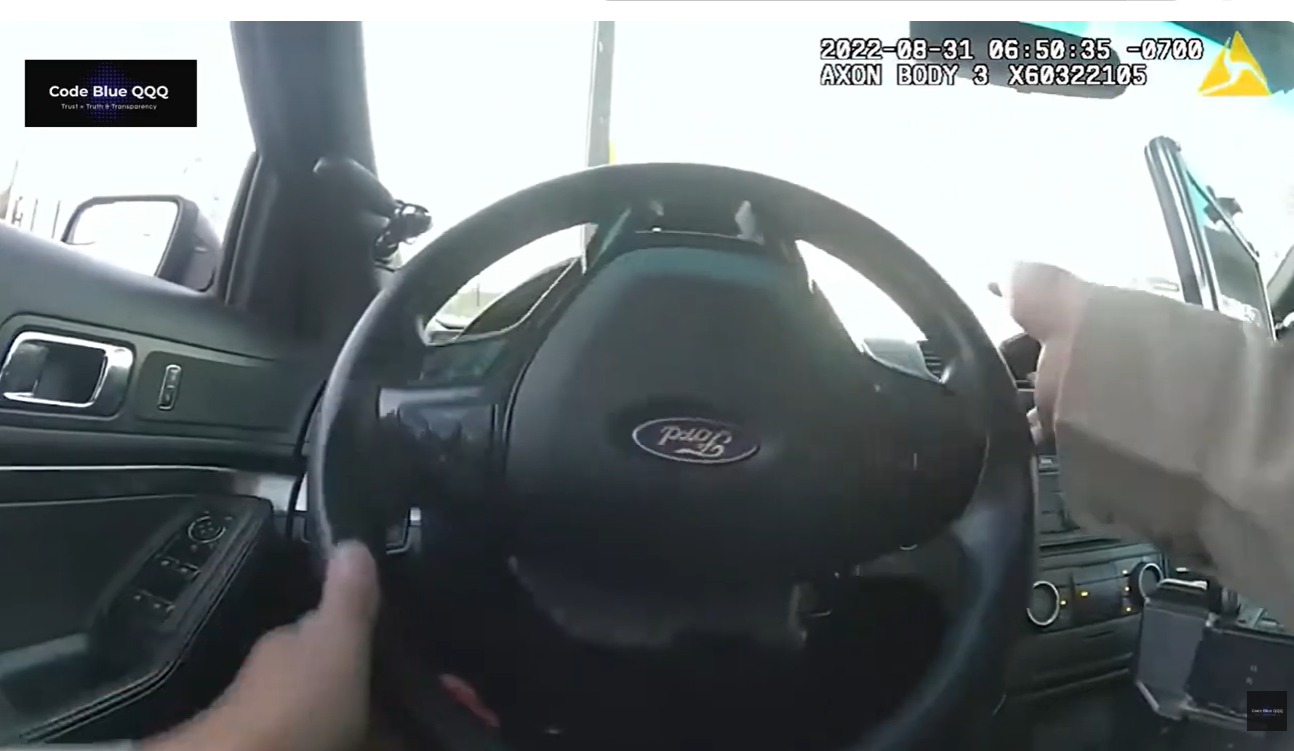
The emergency call concerned a person armed with a knife.
According to LASD's official investigative summary, the caller described a Hispanic man swinging a machete and threatening employees at a business.
Authorities later identified the man as 41-year-old Agustin Flores. The Los Angeles Times' Homicide Report identifies him as Agustin Flores Sanchez and confirms that he died that morning near 9216 Graham Avenue following a law-enforcement shooting.
By the time deputies arrived, Flores reportedly had moved away from the original location.
Investigators were told he had walked south on Graham Avenue and entered a white Nissan pickup truck parked south of 92nd Street.
Deputies located the vehicle.
Flores was sitting in the driver's seat.
At this stage, the confrontation was still primarily about getting him out of the truck safely.
But he refused to exit.
The body-camera footage provides important context here because the eventual shooting can easily overshadow what happened during the minutes preceding it.
Deputies approached the truck and attempted to take Flores into custody.
According to LASD, officers tried to control his hands and upper body.
Flores resisted.
Investigators said he punched and kicked the deputies during the struggle.
The confrontation was now moving in a dangerous direction.
Two deputies would later require medical treatment for injuries sustained during the fight. CBS Los Angeles also reported that the two deputies suffered injuries after being punched and kicked.
But something more serious was about to happen.
Deputies became concerned that Flores might be attempting to arm himself.
They released their grip and moved away from the pickup.
That decision created distance between the deputies and Flores.
It also gave Flores access to the inside of his vehicle.
According to investigators, he reached inside and retrieved a weapon.
DEVELOPMENT: Flores Emerges With a 26-Inch Hook Sword
The weapon recovered at the scene was more specifically described by investigators as a stainless-steel hook sword.
LASD measured it at approximately 26 inches in overall length, with an approximately 15-inch blade.
This detail matters because early news reports commonly described the weapon simply as a machete.
The emergency caller had also used that description.
But the later investigation identified the actual object as a hook sword.
Additional deputies arrived.
The officers now faced a dramatically different situation from the one they had encountered moments earlier.
Flores was no longer simply refusing to exit his truck.
He was armed with a large bladed weapon.
Deputies began issuing commands for him to drop it.
He did not comply, according to LASD.
The bodycam footage captures the growing distance officers try to maintain while weapons are aimed toward the pickup.
Then Flores exits.
He still has the sword.
The officers now have only open roadway and vehicles separating them from an armed person who had already physically fought deputies.
Yet they did not immediately resort to gunfire.
Instead, multiple less-lethal systems were brought into the confrontation.
Deputies Try Several Less-Lethal Options
This part of the incident is particularly important when reconstructing what happened.
LASD's official report states that deputies deployed a TASER, a 40mm Sage Deuce foam baton launcher and a stun-bag shotgun.
Each of those tools is intended to provide officers with an alternative to conventional firearms under appropriate circumstances.
But less-lethal does not mean guaranteed incapacitation.
A TASER can fail to achieve effective neuromuscular incapacitation for many reasons, including probe placement, clothing and movement.
Impact munitions can cause pain and potentially interrupt a person's actions, but they do not guarantee that someone will immediately stop.
In the Flores confrontation, investigators said the combined less-lethal attempts did not bring the incident to an end.
Flores remained armed.
And then, according to authorities, he moved toward the deputies.
That movement changed everything.
The Moment Deputies Switch to Deadly Force
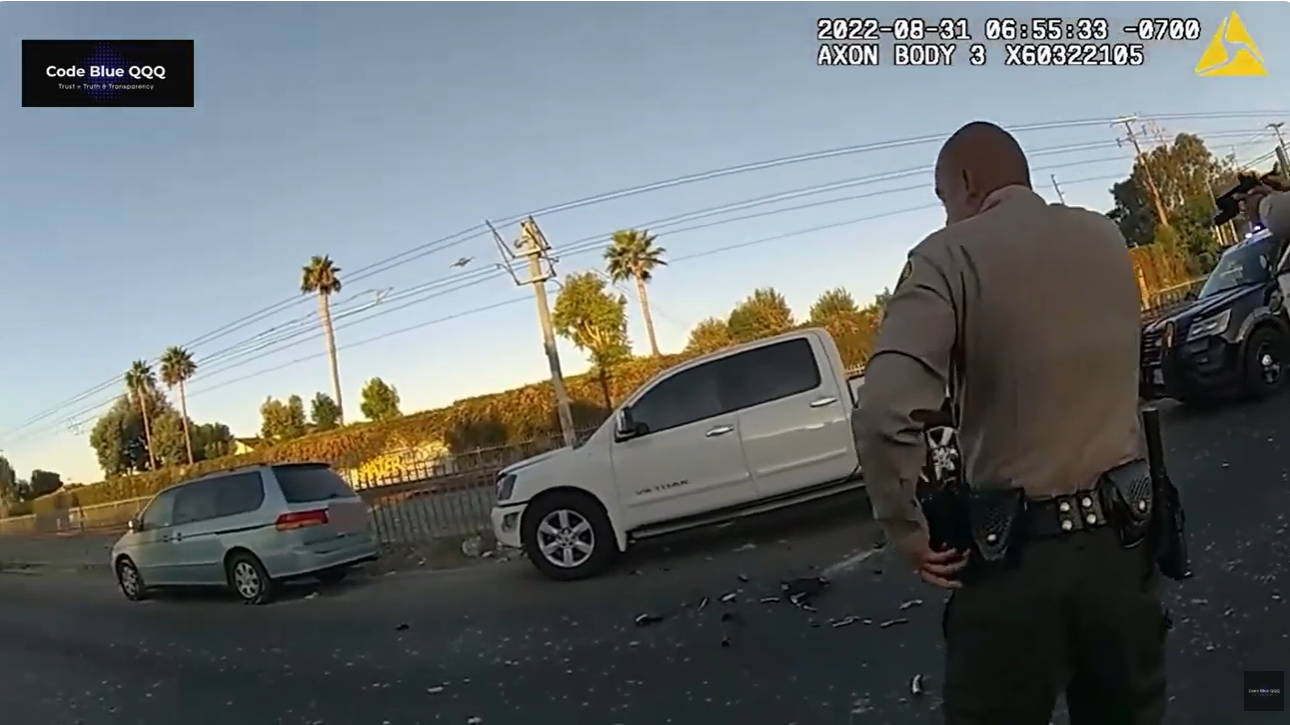
According to LASD, Flores charged toward deputy personnel while still armed with the sword.
A deputy-involved shooting followed.
Flores was struck by gunfire and fell to the ground.
Los Angeles County Fire Department paramedics responded and attempted to provide medical assistance.
Flores was pronounced dead at the scene.
CBS Los Angeles reported the shooting occurred at approximately 6:55 a.m. near 92nd Street and Graham Avenue. The station's reporting similarly described deputies initially attempting to use less-lethal weapons before several deputies fired when Flores continued toward them.
The gunfire had consequences beyond the immediate scene.
The location was close to Metro's A Line, which at the time was still widely referred to by its former Blue Line name.
Rail service in the area was disrupted while authorities conducted their investigation.
CBS reported that trains were turned around at nearby stations and replacement bus transportation was requested.
Meanwhile, the intersection and surrounding roadway became an investigation scene.
The hook sword was recovered.
Homicide investigators arrived.
Representatives from several oversight and investigative agencies also responded.
LASD's official summary says personnel from the Office of the Inspector General, Internal Affairs Bureau and Los Angeles County District Attorney's Office Justice System Integrity Division monitored or participated in the investigation.
That process would continue long after the body-camera footage ended.
Why the Bodycam Footage Matters
Body-camera videos of officer-involved shootings often circulate online as isolated moments.
A viewer may see only the final five or ten seconds.
That can remove crucial context.
In this case, the full sequence contains several distinct stages.
Deputies first responded to a report about an armed person threatening employees.
They found Flores inside a pickup truck.
They attempted to remove him.
A physical struggle followed.
Flores allegedly punched and kicked deputies.
Officers backed away because they feared he was reaching for a weapon.
Flores retrieved the sword.
Deputies repeatedly ordered him to drop it.
Multiple less-lethal systems were deployed.
Only after those efforts failed and investigators say Flores advanced toward deputies did officers fire their conventional weapons.
Understanding that chronology does not require the viewer to automatically agree with every decision made.
Instead, it allows the incident to be evaluated using the sequence of events that investigators themselves examined.
That distinction is important whenever bodycam footage involves deadly force.
The question is not merely what the final frame shows.
The critical question is:
What happened immediately before it?
The Investigation Continued Long After the Shooting
The shooting was not simply declared justified at the scene.
As with other deputy-involved shootings in Los Angeles County, the incident was subjected to additional investigation and legal review.
That later review provides another significant piece of information.
In documentation concerning law-enforcement shootings reviewed by the Los Angeles County District Attorney's Office, the county reported that the DA issued an opinion on May 20, 2024, concerning the August 31, 2022 shooting of Flores.
The document identifies deputies Jasen Tapia, Timothy Garcia, Julio Chavez-Ruiz and Raymond Romero-Soto and states that the District Attorney concluded they acted while reasonably believing deadly force was necessary to defend against an imminent deadly threat.
That finding came almost two years after the encounter itself.
It illustrates an aspect of police shooting investigations that viral videos rarely show.
The bodycam footage may last only minutes.
The investigation can take months or years.
Evidence has to be collected.
Witnesses are interviewed.
Weapons are documented.
Bodycam recordings are synchronized.
Officer statements are examined.
Medical and forensic evidence is reviewed.
And prosecutors ultimately consider whether the available evidence supports criminal liability.
The public-facing video is therefore only one piece of a much larger evidentiary record.
ENDING: A Call at 6:41 A.M. That Was Over Minutes Later
The Los Angeles Times' Homicide Report records Agustin Flores Sanchez as 41 years old, dying on August 31, 2022, near 9216 Graham Avenue, with the death classified as law-enforcement involved.
From beginning to end, the encounter unfolded with extraordinary speed.
At approximately 6:41 a.m., deputies were responding to a weapons call.
Minutes later, they were attempting to remove Flores from his truck.
A struggle followed.
Then came the sword.
Then the warnings.
Then the less-lethal weapons.
Then the gunfire.
By the time paramedics arrived, the confrontation that had begun as a call about a man allegedly threatening workers had become a fatal officer-involved shooting.
The sequence demonstrates one of the central realities visible in body-camera footage: officers and civilians sometimes have only seconds to make decisions that will determine how an encounter ends.
It also demonstrates why the minutes before a shooting matter as much as the shooting itself.
Had the footage begun only when Flores was already standing outside the truck with the sword, viewers would know nothing about the original emergency call.
If it began only when officers fired, viewers would miss the attempted TASER and impact-munition deployments.
If it ended immediately after the gunfire, viewers would know nothing about the investigation that followed or the later District Attorney review.
The complete story requires all of those pieces.
The most striking detail may be the 26-inch hook sword.
But the most important element is the progression.
A weapons complaint became an attempted detention.
The detention became a physical fight.
The fight became an armed standoff.
The standoff moved through several less-lethal attempts.
And finally, according to investigators, Flores advanced toward the deputies.
That was the point at which the encounter became deadly.
CTA: WATCH THE FULL BODYCAM ENCOUNTER
The final shooting lasts only moments, but those moments make far more sense when viewed alongside everything that happened beforehand.
Watch the complete bodycam footage to see how the encounter progressed from the first approach to the physical struggle, the less-lethal attempts and the final confrontation.
Comments (0)
Loading comments...
May You Like

Woman Tries to Stop Police From Arresting “Brother” — He Denies Knowing Her

A Suspicious Vehicle Leads Officers Into an Unexpected Chase

The Truth Behind the Suspicious Vehicle and the Standoff with Police













