
Armed 911 Call Escalates Into a Fatal Police Encounter in Deptford
Armed 911 Call Escalates Into a Fatal Police Encounter in Deptford
A January 2023 911 call about an armed man in Deptford, New Jersey, developed into a rapid police response and a fatal encounter later reviewed by a state grand jury.
A 911 Call Brings Officers to Fox Run Road
On January 22, 2023, officers with the Deptford Township Police Department were sent to a residence on Fox Run Road in Gloucester County, New Jersey. What initially reached police as an emergency call quickly became a high-risk response involving an armed man, frightened people at a home, and officers approaching a scene where the danger was not yet fully visible.
The man at the center of the incident was Daniel Nevius Sr., 55, of Sicklerville. Later information released by the New Jersey Attorney General's Office provided more detail than was available immediately after the shooting. According to the state investigation, the 911 caller reported that Nevius was pointing a rifle at civilians and behaving erratically. The caller's description gave responding officers reason to believe they could be approaching an active firearm threat rather than a routine disturbance.
The supplied video adds important visual context. It combines surveillance footage with body-worn-camera recordings and shows a black Jeep Wrangler near the residence, officers moving toward the area, and the rapid transition from arrival to confrontation. The body-camera overlay displays January 22, 2023, matching the date identified by the Attorney General's Office. The location, vehicles and chronology also match the official Deptford investigation.
One detail in the original video title deserves caution. It describes the weapon as an “AK-47.” The reliable official sources reviewed for this article describe the weapon as a rifle or firearm, but the Attorney General's public findings do not establish in the material reviewed here that it was specifically an AK-47. For that reason, this article does not repeat that model identification as fact.
The same principle applies to the vehicle collision. Later reporting based on the investigation said a motion-activated surveillance camera recorded Nevius driving his Jeep into an SUV outside the residence twice. The footage supplied for this article shows the vehicles and portions of the disturbance, but the broader incident should be described using the findings actually supported by the investigation rather than a more dramatic shorthand.
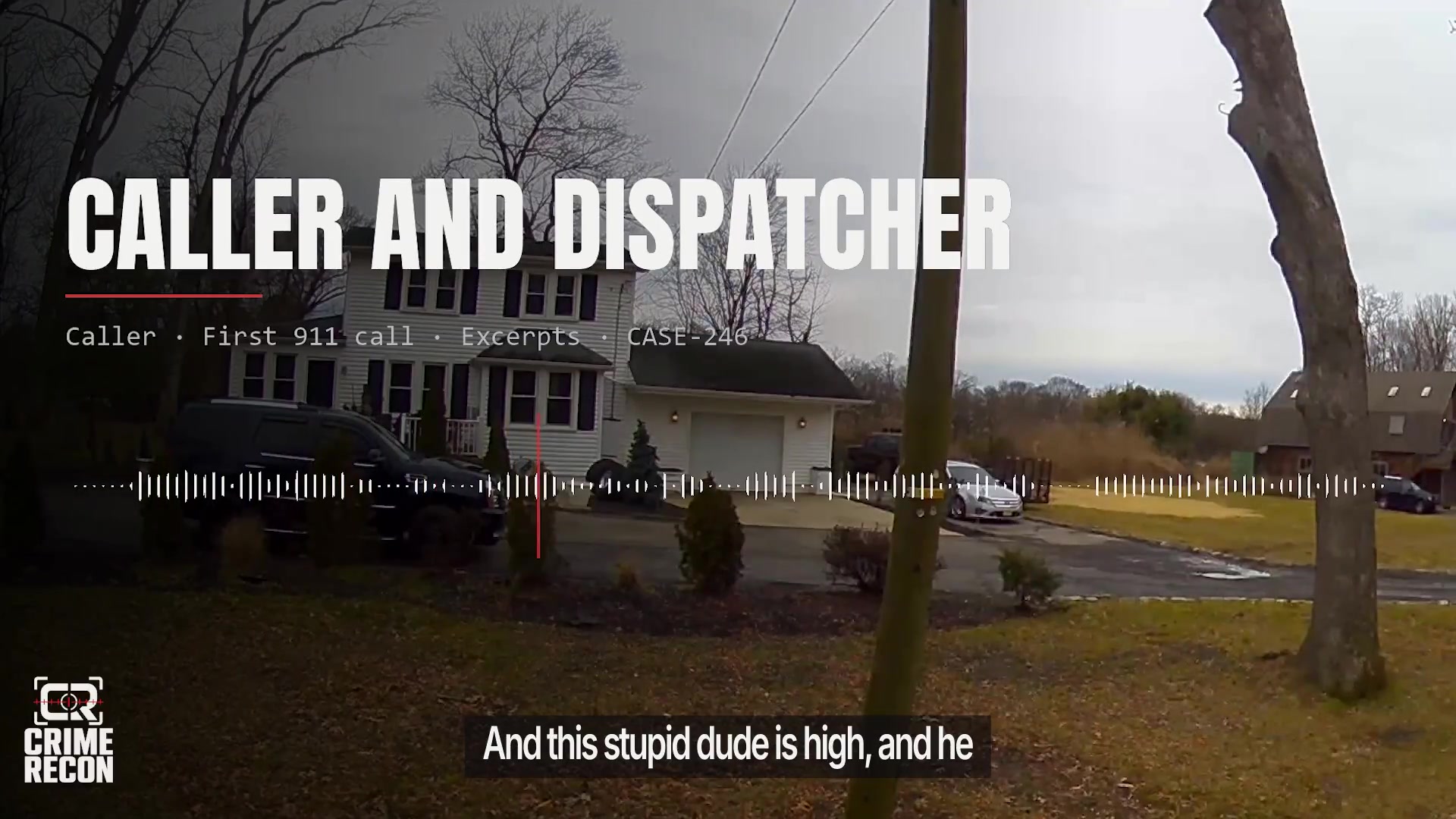
The Disturbance Was Already Escalating Before Police Arrived
The emergency did not begin when the first patrol car appeared. According to the account later presented after the state investigation, the caller described Nevius as armed and threatening. Reporting on the completed investigation also described surveillance footage showing the Jeep striking an SUV parked outside the home.
That sequence matters because officers responding to an armed-person call have to build their approach around information they cannot independently verify until they reach the scene. Dispatch information may be incomplete, emotional or changing by the second. Yet it is often the only warning officers have about what may be waiting for them.
In the supplied footage, the residential setting initially looks ordinary: a detached home, driveway, garage, several vehicles and a wooded backdrop. That normal appearance contrasts sharply with the urgency of the call. There is no obvious barrier separating the officers from the residence. A person with a rifle could potentially engage them from a considerable distance, so officers cannot treat the approach the same way they would a minor property complaint.
The video also captures the uncertainty created by the man's movement around the property. Officers do not arrive to find a controlled scene with everyone waiting in one place. Instead, they have to locate the person identified by the caller, determine whether he still has a weapon, identify where civilians are, and decide how close they can safely move.
This is one reason body-camera footage can be misleading when viewed only as a few isolated seconds. The decisive moment may last almost no time, but the officers' assessment begins before that moment. What dispatch told them, what they saw while approaching, where civilians were located, and whether the reported weapon could be seen all contribute to the situation they were trying to interpret.
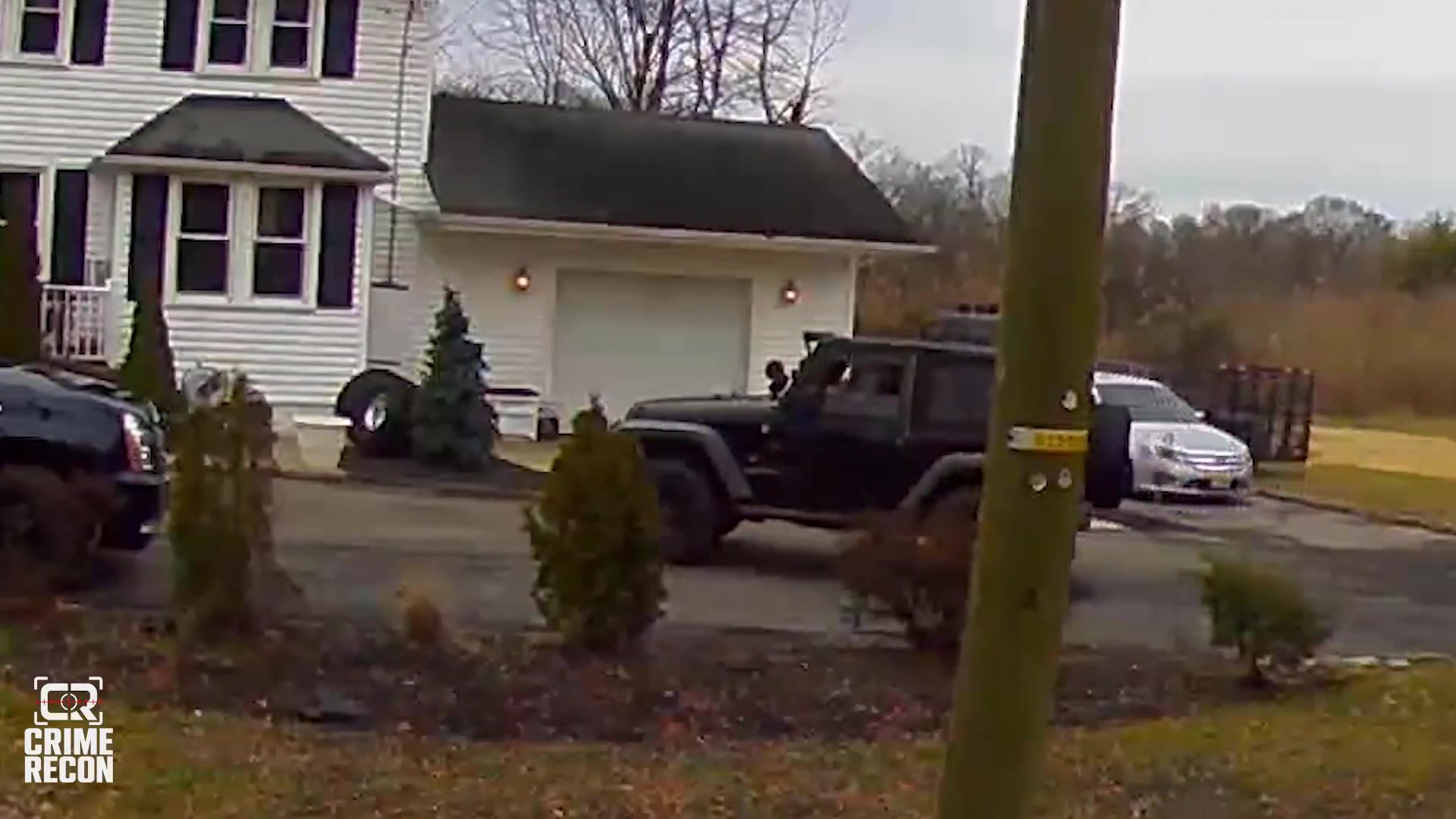
Officers Approach a Scene Reported to Involve a Rifle
The New Jersey Attorney General's Office identified Deptford Police Officer Luke Ivey as the officer who ultimately fired his service weapon. The official investigation later examined body-worn-camera footage, surveillance recordings, witness information, photographs, autopsy evidence and other material before the case was presented to a state grand jury.
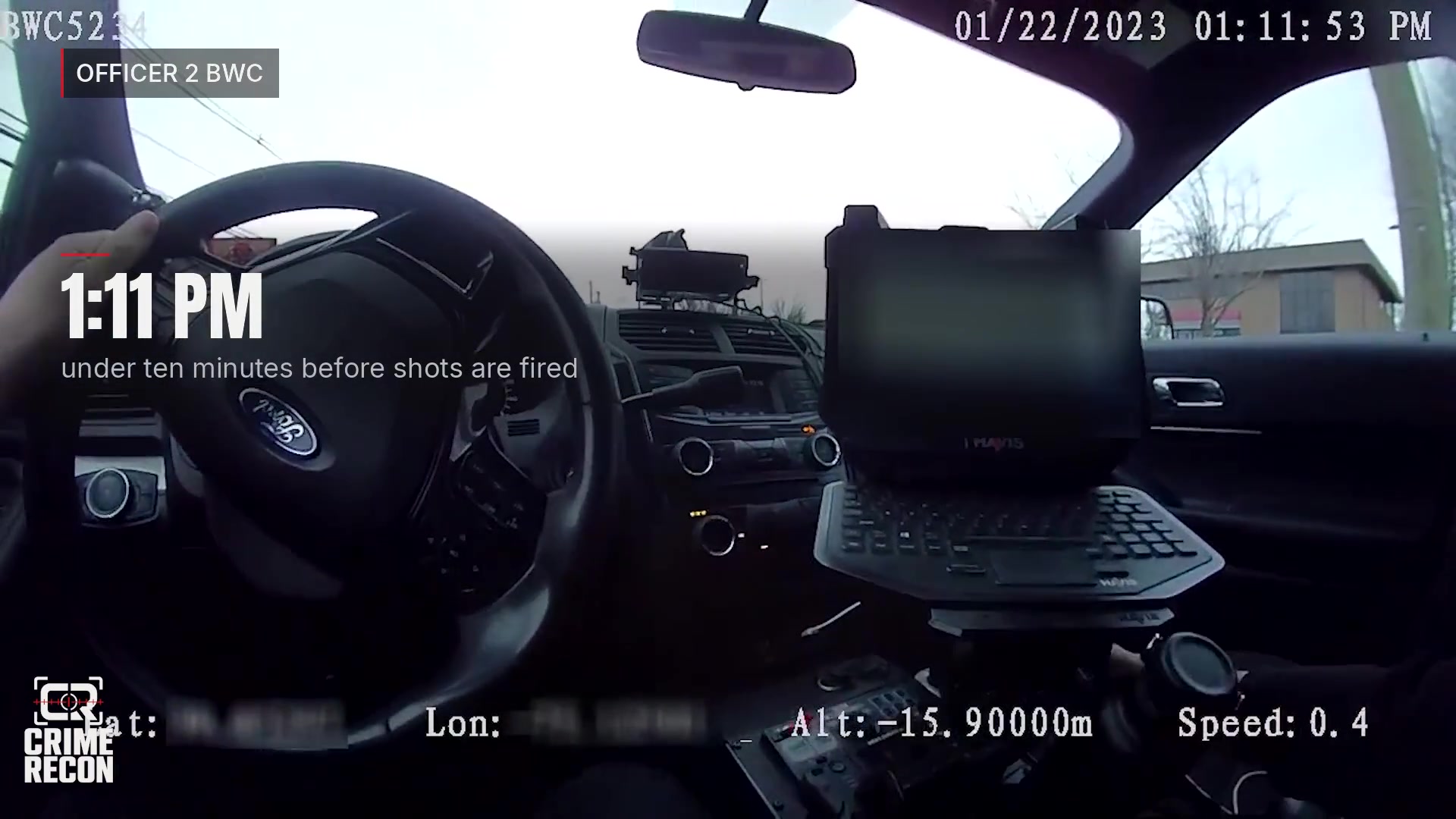
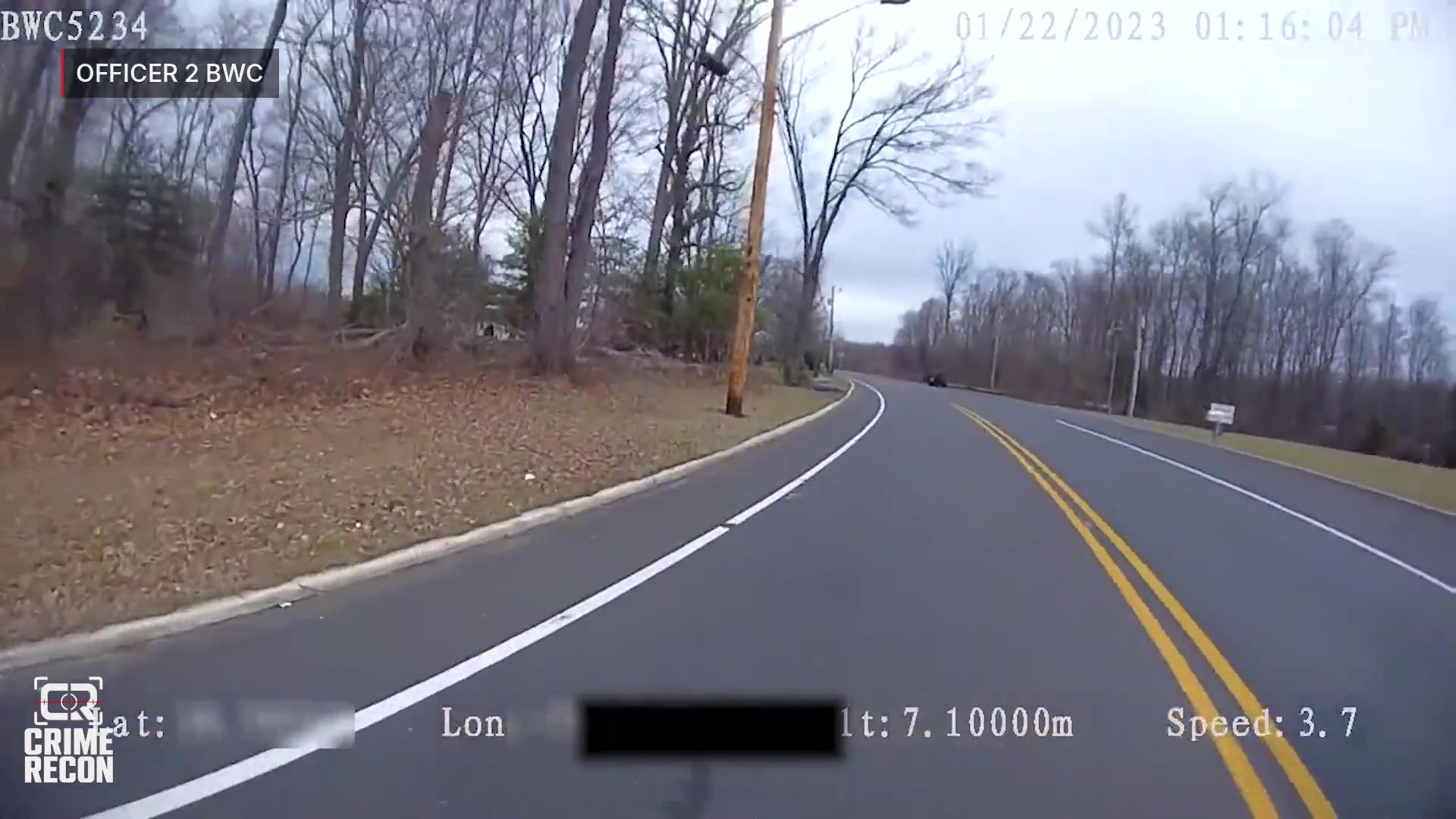
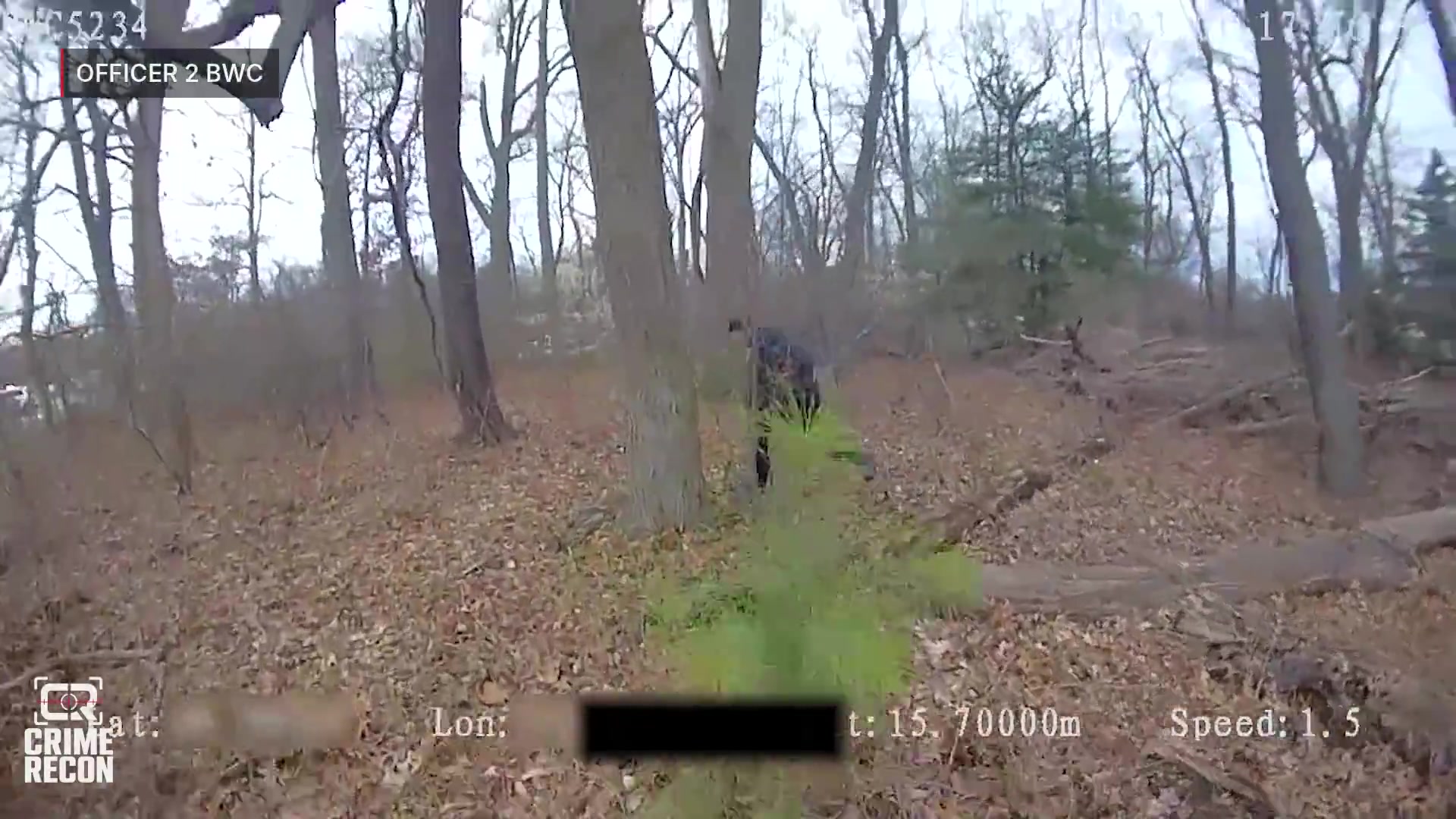
The supplied footage shows officers moving through and around the residential area while trying to establish a position. One body-camera perspective captures the officer inside a patrol vehicle shortly before the shooting. Another perspective follows the movement toward Fox Run Road and the property. The video emphasizes how little time separates routine driving from an armed encounter.
Police procedure in an armed-person call generally places a premium on distance, cover, communication and clear identification of the threat. Those principles sound straightforward in training, but a real residential scene introduces complications. Houses, parked vehicles, trees and other people can obstruct visibility. Officers may arrive from different directions. A rifle, because it can be used at greater distances than many other weapons, can force officers to consider threats before they are close enough to communicate face to face.
The official findings said the 911 caller reported that Nevius was pointing a rifle at people at the scene. By the time officers approached, therefore, they were not simply investigating damage to a vehicle. They had been told that an armed individual was threatening civilians.
That distinction is central to understanding what happens next. The legal and tactical question in an officer-involved shooting is not merely whether a weapon existed somewhere at the scene. Investigators examine what the officer perceived, how the weapon was being handled, the distance and positioning of the people involved, and whether the officer reasonably perceived an imminent threat at the moment force was used.
The Encounter Changes in Seconds
According to the Attorney General's investigation, officers approached the residence on foot. The state later said Nevius pointed his rifle toward the officers. Officer Ivey then fired one round from his service weapon, striking Nevius.
The supplied video captures the confrontation from the body-camera perspective, but the critical moment is fast. That speed is significant. Viewers can pause, replay and enlarge a recording. An officer at the scene cannot. Decisions involving a reported firearm threat may unfold in fractions of the time required to explain them afterward.
Early news reports understandably contained fewer details. In the days immediately following the shooting, authorities confirmed that officers had responded to a 911 call, that Ivey fired his weapon at approximately 1:22 p.m., and that Nevius was struck. The Attorney General's April 2023 release added that a firearm was found near Nevius and released two body-camera recordings and surveillance footage. The fuller description of the reported rifle threat and the final grand-jury outcome came later.
That evolution is a useful reminder about breaking-news coverage of police shootings. Initial reports often answer only the most basic questions: who was involved, where it happened, when shots were fired and whether anyone was injured. More precise information may emerge only after investigators synchronize cameras, interview witnesses and process the physical evidence.
The video compilation gives viewers access to some of those different perspectives. Surveillance footage helps establish activity around the residence and vehicles, while body-camera footage shows what responding officers could see as they moved toward the scene. Neither angle alone contains every relevant fact. Together with the 911 call and investigative evidence, they form a more complete chronology.
Medical Aid Follows the Shooting
After Nevius was struck, the scene shifted from an immediate armed-threat response to emergency medical care and evidence preservation. The Attorney General's Office said emergency medical personnel responded and rendered aid. Nevius was pronounced dead at the scene at 1:55 p.m., roughly half an hour after the shooting.
A firearm was recovered near him, according to the Attorney General's April 2023 release. That physical evidence became part of the investigation conducted by the Office of Public Integrity and Accountability, the unit responsible for investigating deaths that occur during encounters with law-enforcement officers in New Jersey.
The aftermath of an officer-involved shooting has several simultaneous priorities. Officers must confirm there is no continuing threat, summon or provide medical assistance, keep uninvolved people away from dangerous areas, preserve evidence and establish a secure perimeter. The involved officer's weapon and body-camera recording can become evidence, as can cartridge casings, the recovered firearm, surveillance recordings and the positions of vehicles or other objects at the scene.
The supplied footage shows the broader police response after the critical moment. Patrol vehicles move into position and officers coordinate around the roadway and wooded residential environment. That wider view helps explain why the investigation extended beyond the single shot fired by Ivey. Investigators needed to reconstruct what happened before the officers arrived, what the caller reported, what the surveillance camera captured, and what each officer could perceive during the approach.
The original title's emphasis on an AK-47-style shooting can pull attention toward the weapon label. The verified record points to a more important question: whether the rifle was directed toward officers in a manner that created an imminent threat. The Attorney General's completed investigation concluded that evidence of the encounter should be presented to a state grand jury, as required under New Jersey's process for fatal law-enforcement encounters.
Why New Jersey Conducted an Independent Investigation
New Jersey law requires the Attorney General's Office to investigate deaths that occur during encounters with law-enforcement officers acting in their official capacity or while a person is in custody. The purpose is to separate the investigation of the death from the agency whose officer was directly involved.
In this case, the Office of Public Integrity and Accountability conducted the investigation. The state publicly released body-worn-camera and surveillance footage in April 2023 after investigators gave Nevius's family an opportunity to review the recordings. The Attorney General's release noted that the surveillance camera was motion activated, meaning its recordings were not continuous. That limitation is important when interpreting the video: gaps in surveillance footage do not necessarily indicate missing evidence created by investigators; they can result from how the camera itself was designed to record.
The investigative process continued well beyond the public release of the footage. Investigators gathered evidence and ultimately presented the matter to a state grand jury. A grand jury in this setting does not decide civil liability or issue a broad moral judgment about the incident. Its role is to determine whether the evidence supports criminal charges.
In March 2024, the Attorney General's Office announced that the state grand jury had voted not to file criminal charges against Officer Ivey in connection with Nevius's death. The Philadelphia Inquirer and other regional outlets reported the same outcome. The decision followed review of the evidence collected by OPIA.
That result is a verified part of the case and provides important context that was unavailable when the footage first circulated in 2023. It means the criminal review of the officer's use of force ended without an indictment. It does not mean every question a viewer might have about tactics, communication or the events leading up to the confrontation disappears. Those are separate issues from whether the evidence met the standard for a criminal charge.
What the Video Shows and What Must Come From the Investigation
The supplied video can establish several things directly. It shows the residential environment, the black Jeep, responding police vehicles, officers moving toward the scene and body-camera overlays dated January 22, 2023. It also presents surveillance and body-camera perspectives consistent with the recordings the Attorney General's Office said it released.
Other facts require external verification. The video alone cannot reliably establish Nevius's full identity, his age, the exact wording of the 911 call, the legal status of the investigation or the grand jury's later decision. Those details come from the Attorney General's Office and corroborating local reporting.
The distinction is particularly important with the firearm. A viewer may look at a rifle in a low-resolution or fast-moving frame and identify it by appearance, but visual similarity is not enough to establish a specific make or model. The official sources reviewed here consistently support the description “rifle” or “firearm.” Without a reliable official identification of the weapon as an AK-47, calling it one as a factual statement would go beyond the verified record.
The same caution applies to motive. The 911 caller reportedly described Nevius as acting erratically and threatening people. Those observations explain why police were called, but they do not establish a medical diagnosis, intoxication, or a particular motive. Nothing in the available official material reviewed for this article justifies inventing one.
This approach may sound less dramatic than the language often used in viral video titles, but it makes the story stronger. The verified facts are already serious: a reported armed threat at a residence, vehicle impacts captured on surveillance, a rifle pointed toward responding officers according to investigators, a single police shot, a death, and a year-long independent process that ended with a grand jury declining criminal charges.
A Short Encounter With a Long Investigative Aftermath
The confrontation on Fox Run Road unfolded quickly, but the process of establishing what happened took far longer. That contrast is common in critical incidents. Officers may have seconds to act, while investigators have months to collect evidence, compare recordings, interview witnesses and test whether the use of force complied with criminal law.
For viewers, the value of the full footage is in seeing the buildup rather than only the final instant. The surveillance material shows why police were responding to a volatile residential scene. The body-camera footage shows officers approaching with limited visibility and incomplete control of the environment. The later investigative record explains what the caller had reported and what investigators concluded about the rifle.
The timeline also demonstrates why early assumptions should be treated carefully. Immediately after the incident, news outlets knew that a Deptford officer had shot a man after a 911 response. By April, the Attorney General's Office had released recordings and confirmed a firearm was recovered. By March 2024, the completed investigation had been presented to a grand jury, which declined to criminally charge Ivey.
Seen as a complete sequence, the case is not simply a story about a damaged vehicle or a weapon label. It is about how a 911 report of an armed man developed into a fatal encounter within minutes and then entered a formal independent-review process lasting more than a year.
The footage cannot answer every question by itself, and it should not be asked to. Cameras show angles, not omniscience. The most responsible reconstruction comes from combining what is visible in the recordings with the findings released by the agency legally responsible for investigating the death.
For anyone trying to understand why the officers approached the scene as a high-risk call and how quickly the encounter changed once they reached the residence, the complete recording provides far more context than the shooting moment alone.
Follow the video to watch the full sequence and see how the 911 response developed from the disturbance outside the home to the final police encounter.
Comments (0)
Loading comments...
May You Like

Police Chase Ends as Driver Hits Stoplight, Crashes Into West Towne Mall

A Late-Night Escape Attempt Ends With Officers Making an Arrest

I CAN’T WALK! — BODYCAM PROVES OTHERWISE DURING ARREST












