Aggressive Woman Keeps Pushing Officers Until Police Lose Patience
Aggressive Woman Keeps Pushing Officers Until Police Lose Patience
Verification note: The footage confirms Key West Police and an AXON timestamp of May 8, 2026. Public-source research did not produce an arrest report or court record that could be matched to this exact encounter with sufficient confidence, so no identity, charge or court outcome has been invented.
An Early-Morning Encounter in Key West
The supplied footage confirms that the encounter took place in Key West, Florida, and involved marked Key West Police vehicles. The AXON Body 4 overlay dates the sequence to May 8, 2026, beginning shortly before 6:50 a.m. The woman at the center of the encounter is standing in a waterfront commercial area lined with palm trees, storefronts, hydrants and pedestrian space.
At first, the situation is mostly verbal. The woman, wearing a red cap, dark clothing and a large white necklace, speaks forcefully with officers and repeatedly moves toward them. The officer wearing the camera spends part of the encounter seated in or beside a patrol vehicle, making the repeated attempts to close distance especially noticeable.
The original title says the woman keeps pushing officers until police lose patience. That description captures the basic escalation visible in the footage, although “lose patience” is internet shorthand rather than a legal conclusion. What the video actually documents is a long cycle of verbal warnings, repeated approaches, physical boundary-testing and, eventually, a more hands-on police response.
One of the clearest patterns is the struggle over personal space. Officers repeatedly direct the woman to back away or maintain distance. She continues talking and repeatedly steps back toward them. A single accidental step toward an officer might mean very little. Repeatedly closing distance after clear instructions makes the behavior more significant from an officer-safety perspective.
Officers Try to Create Space
Police officers routinely create reactionary distance because close proximity gives them less time to respond if someone suddenly grabs them, strikes them, reaches toward equipment or blocks their movement. The video does not establish that the woman intended to do all of those things, and this article does not claim that she did. It simply shows why officers become increasingly focused on where she stands.
The officer's position matters as well. While partially inside a patrol vehicle, movement is restricted. Someone standing immediately outside an open door can limit the officer's ability to exit or reposition. That helps explain why commands about backing away become a recurring part of the exchange.
For several minutes, officers continue using verbal direction rather than immediately turning the argument into a physical detention. They speak to the woman, try to create space and repeatedly attempt to reset the interaction. She remains engaged and continues returning to their immediate area.
The woman's agitation is plainly visible. Her facial expressions, gestures and volume leave little doubt that she is upset. But anger by itself is not a crime. A careful account therefore focuses on conduct: repeated approaches, ignored distance commands, physical contact and the eventual transition to hands-on control.
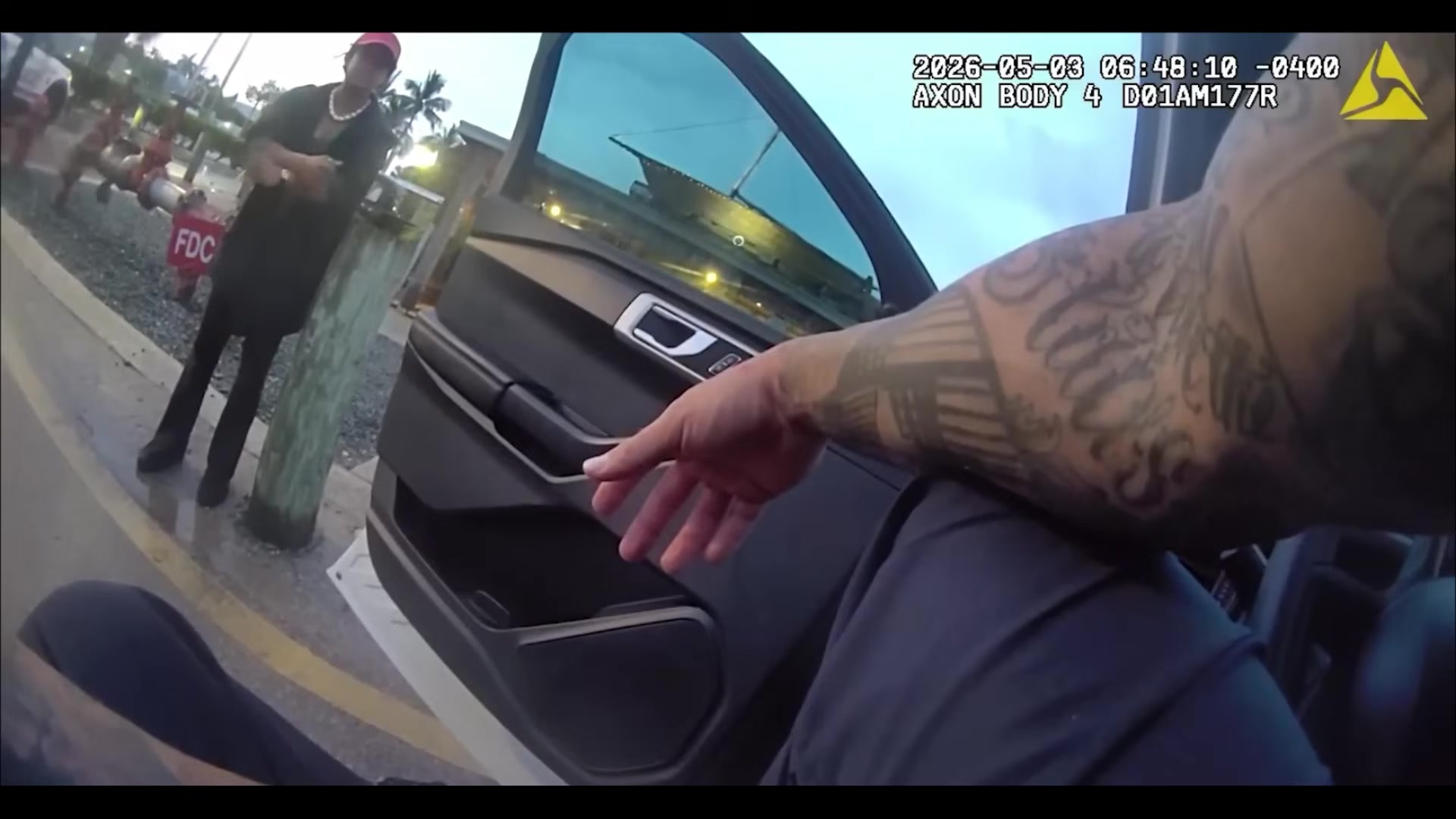
The Argument Refuses to Cool Down
The body camera is useful because it shows what a written report might compress into one sentence. Instead of simply saying that someone repeatedly ignored commands, viewers can see the warnings, pauses and renewed approaches. That context matters when judging why officers eventually change tactics.
The setting adds another complication. The encounter unfolds in a public waterfront area where vehicles, pedestrians and nearby businesses remain part of the environment. Officers must watch the woman while also remaining aware of traffic and other people who may enter the scene.
As the interaction continues, the distinction between verbal disagreement and physical interference becomes increasingly important. The woman repeatedly comes close enough that officers use their hands and bodies to maintain space. The footage contains moments of physical contact during these exchanges.
A push may appear minor compared with dramatic force seen in other police videos, but sudden contact can matter when an officer is near an open vehicle door, curb, traffic lane or duty equipment. More importantly, repeated physical boundary-testing after warnings can change how officers assess the next approach.
From Verbal Warnings to Physical Contact
The footage shows gradual escalation rather than an immediate takedown. Officers continue speaking after earlier confrontational moments. The woman continues arguing as well. This makes the later transition toward physical control easier to understand in context: it follows repeated unsuccessful attempts to establish boundaries verbally.
A marked Key West Police SUV is clearly visible, providing firm confirmation of the agency. The AXON timestamp provides an equally strong date clue. Those two details allow the incident to be placed in Key West on May 8, 2026 without relying on the upload title.
What remains unclear is the underlying reason officers first contacted the woman. The edited footage begins after police are already interacting with her, and public-source research did not uncover an arrest affidavit, police release or court docket that could be matched to this exact encounter with sufficient confidence.
That gap should not be filled with guesses. The footage can be described accurately without inventing a prior call, alleged offense or criminal history. Officers are dealing with a woman who is highly animated, repeatedly approaches them and refuses to let the encounter settle. They issue instructions, she continues arguing, and the cycle repeats.
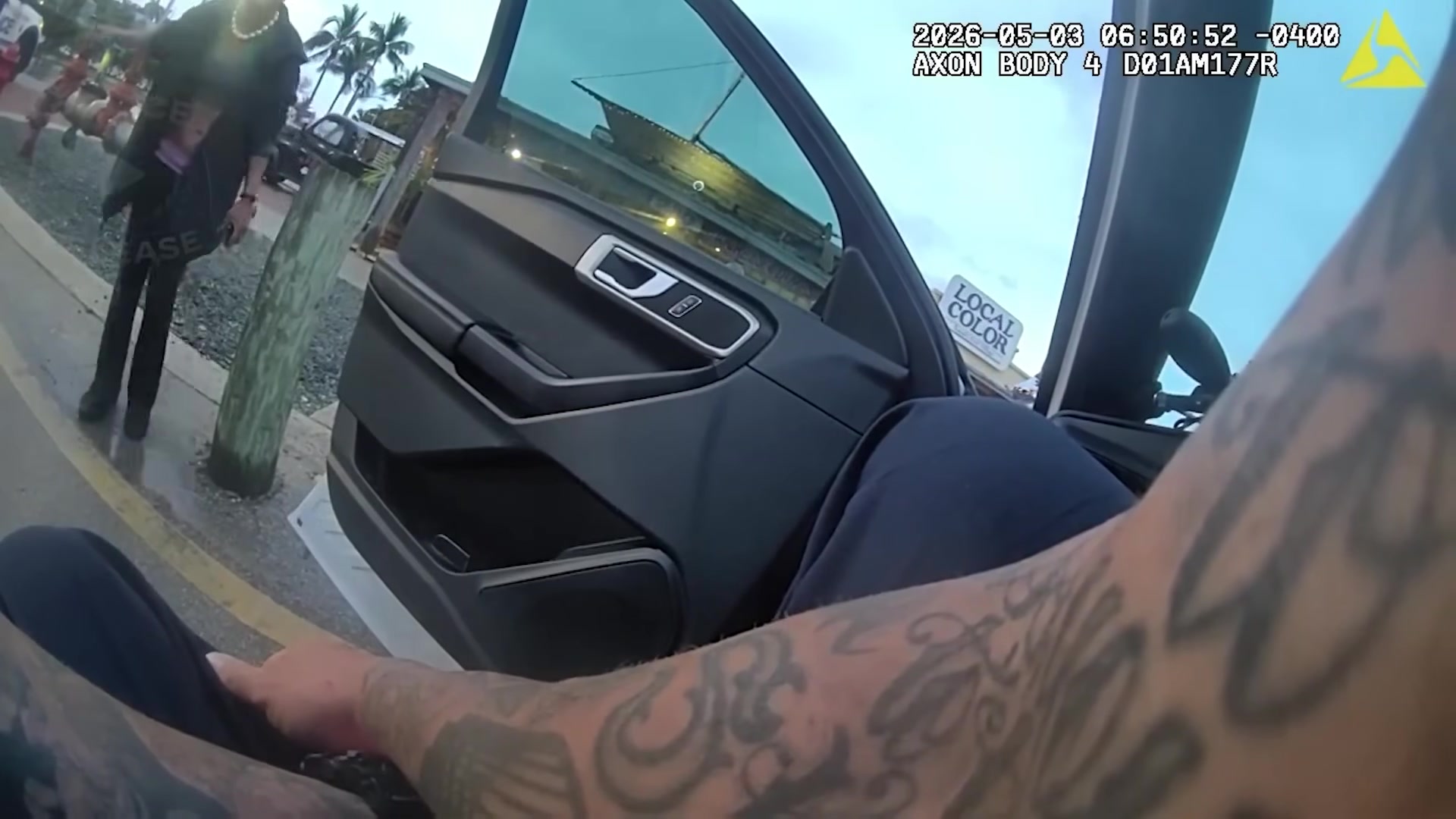
Key West Police Become More Direct
Police encounters often escalate through a series of small decisions rather than one spectacular act. A person is told to stand back and moves forward. An officer creates distance and the person closes it. Another warning follows. The boundary is tested again. Each moment may appear minor in isolation, but together they form a pattern.
That pattern is visible here. The woman appears determined to continue the confrontation on her own terms. Officers are equally determined to control the physical space around them. Neither side simply ends the conversation.
For officers, distance is partly tactical. Their duty belts contain equipment that must be protected, and someone within arm's reach can interfere with movement or control. The video does not show every worst-case possibility, nor should it be described as though it does. The relevant point is that officers do not have to wait for the most dangerous possibility before treating repeated close approaches seriously.
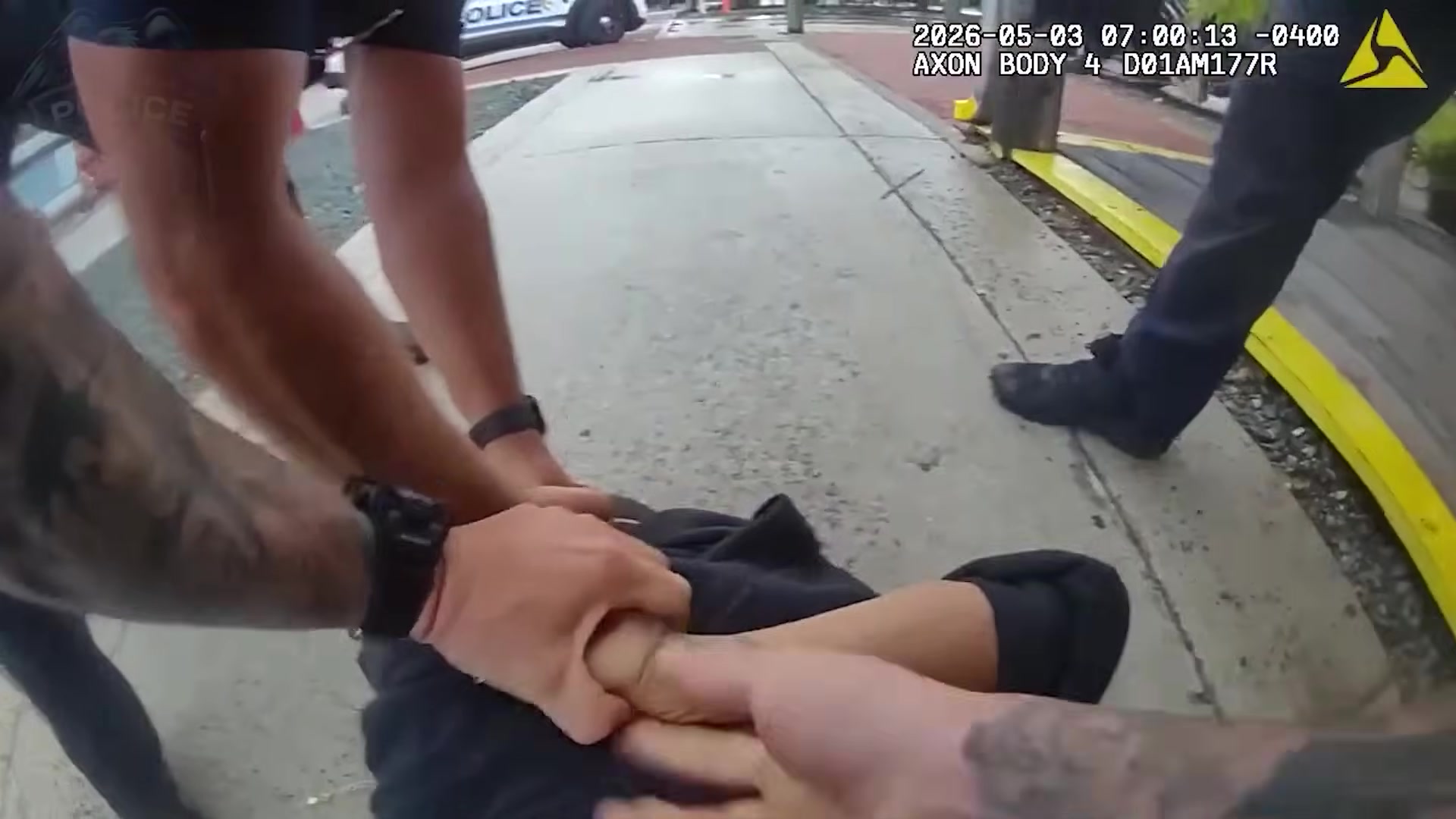
Eventually, the tone changes. Officers stop relying primarily on conversation and begin physically controlling the woman's movement. The transition is clear because the camera perspective tightens and the interaction becomes more hands-on.
Why Repeated Boundary Testing Matters
This is the climax suggested by the original title. Saying police “lose patience” makes for a punchy headline, but the more precise description is that officers decide verbal direction is no longer enough to manage the encounter.
That distinction matters legally. Officers are expected to use physical control for a lawful purpose, not simply because they are annoyed. Whether a detention or arrest was legally justified depends on facts beyond a viral title. Whether force was reasonable also depends on the circumstances confronting officers at the time.
Without the matching arrest affidavit, this article does not assign a specific charge such as battery on a law-enforcement officer, resisting an officer or disorderly conduct. Those are legal conclusions that require verified records.
The footage nevertheless documents a clear progression. Officers tolerate a lengthy verbal confrontation. They repeatedly direct the woman to maintain distance. Physical contact occurs during the close exchanges. Eventually, police use firmer control rather than continuing the same cycle of warnings.
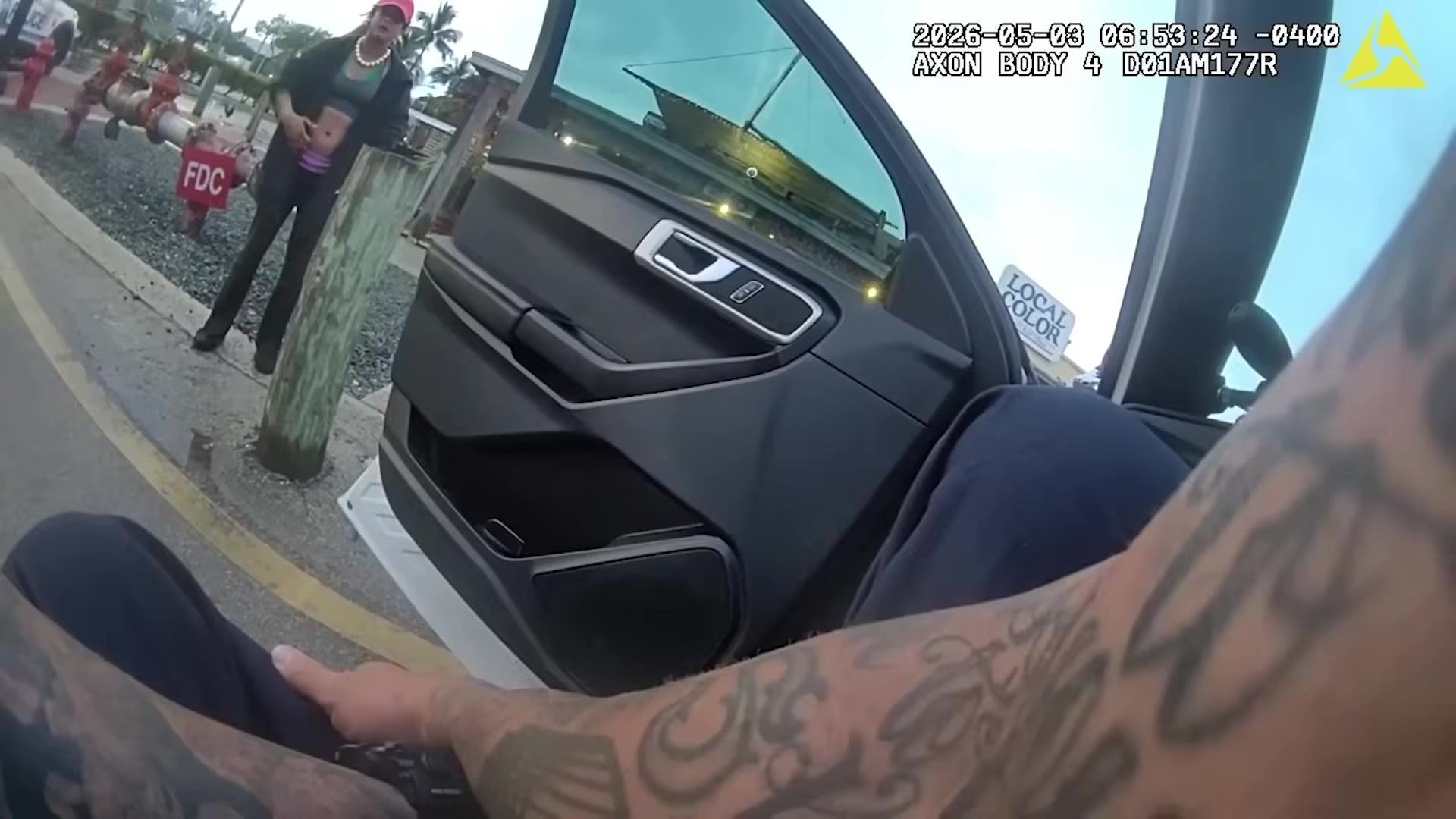
The Moment Patience Gives Way to Control
The temptation with viral footage is to fill every blank. An angry person is assumed to be intoxicated. Someone is handcuffed and viewers assume a felony. A heated exchange occurs and people assume they know why police were called. Those assumptions can quickly become false statements when repeated as fact.
Here, the footage establishes the location, agency and date. It establishes that the woman is visibly agitated, repeatedly approaches officers despite efforts to create space, and engages in physical boundary-testing. It also shows that the encounter eventually becomes more restrictive.
It does not independently establish her name, age, residence, BAC, criminal history, precise original complaint, booking charges, bond, plea, conviction or sentence. Research did not identify a public record that could be confidently tied to this exact video. Those details are therefore intentionally omitted.
The public setting makes the confrontation harder to contain. Palm trees and low-rise businesses frame the encounter while police vehicles occupy part of the roadway. Officers cannot treat the space like a closed interview room. Passing traffic, pedestrians and other potential distractions remain present.
What the Video Does Not Establish
The woman's body language communicates almost as much as her words. She leans forward, gestures and repeatedly moves toward officers. Police hold their ground or reposition to restore distance. The argument is therefore taking place physically as well as verbally.
This is why the footage remains tense even during moments when no one is being restrained. The possibility of escalation remains because the basic issue of distance and compliance is never fully resolved.
A short clip of only the final physical confrontation would create a very different impression. Without the preceding minutes, viewers would miss how often officers try to communicate, how frequently the woman returns to their immediate space and how many times the same argument is repeated.
The opposite is also true. A clip showing only the woman yelling would omit the later physical escalation and make the incident look entirely verbal. Full context changes both interpretations.
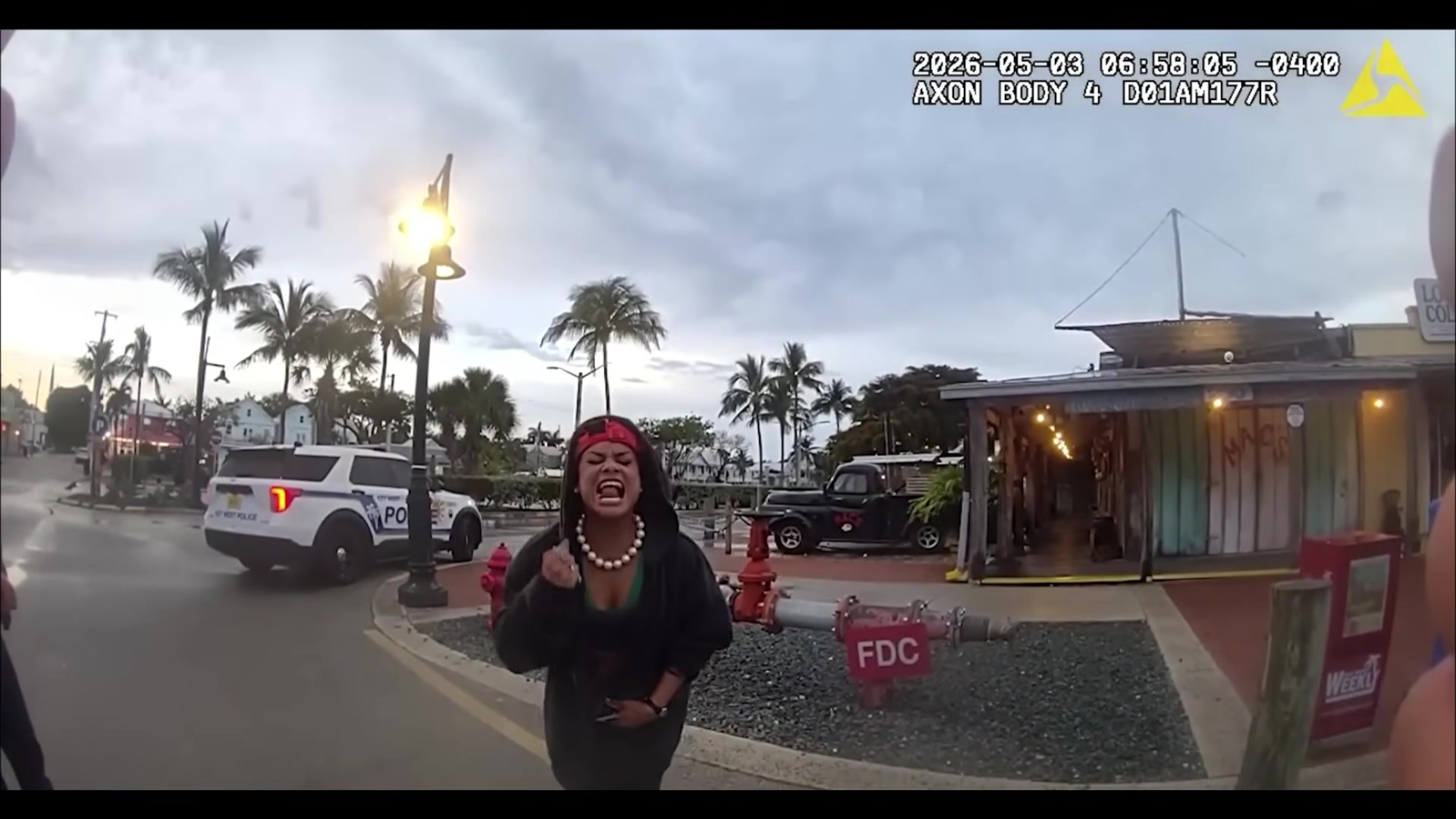
A Public Setting Makes the Confrontation Harder to Contain
The longer sequence shows an incremental process. The woman argues. Officers tell her to back away. She continues. The officer attempts to maintain distance. The woman comes forward again. Contact occurs. Warnings continue. Eventually officers move from repeated verbal management to physical control.
That sequence is the strongest reason not to invent a backstory. The video already contains a complete escalation arc. Its central story is visible in the interaction itself.
The most striking feature of the incident is how repetitive it becomes before reaching its conclusion. The woman has multiple opportunities to create distance. Officers have multiple opportunities to escalate immediately but initially continue talking. Each repetition makes the eventual intervention feel less sudden.
That does not automatically prove every officer decision was correct, nor does it mean every concern expressed by the woman should be dismissed. Body-camera footage is evidence, not the entire investigative record. If an arrest affidavit or court file becomes publicly identifiable, those records could add important context.
Why the Full Footage Matters
For now, the safest account stays close to what is visible. A woman confronts Key West officers early in the morning. She repeatedly pushes into their space and continues arguing despite warnings. Officers try to manage the encounter verbally for an extended period. The situation eventually becomes physical and police take greater control.
This Key West encounter demonstrates that escalation does not always arrive in one explosive moment. Sometimes it is built through dozens of smaller interactions: a step forward, a warning, another step, another argument, a hand used to create space and another refusal to disengage.
The woman is forceful and persistent. Officers repeatedly establish boundaries. Eventually the encounter reaches the point where police rely on physical control rather than another round of verbal warnings.
Because the exact matching arrest record or court outcome could not be verified, the story should end where the reliable evidence ends. The footage identifies the agency, place and date and clearly documents the confrontation. It does not justify inventing the rest.
An Encounter Defined by Repetition
That restraint makes the video more informative, not less. Viewers can watch the progression themselves, hear the repeated exchanges and see how a dispute over personal space and compliance can gradually change the nature of a police encounter.
Comments (0)
Loading comments...
May You Like

Entitled Driver Skips the Line and Gets Instant Karma3

🚨⛽ Man Caught in a Disturbing Incident at a Gas Station | Police Respond US

Police Pull Over Paralyzed Driver With Blind Passenger