
A Night Drive Ends With Police Close Behind
Black Cadillac Keeps Moving as Police Close In Through the Night
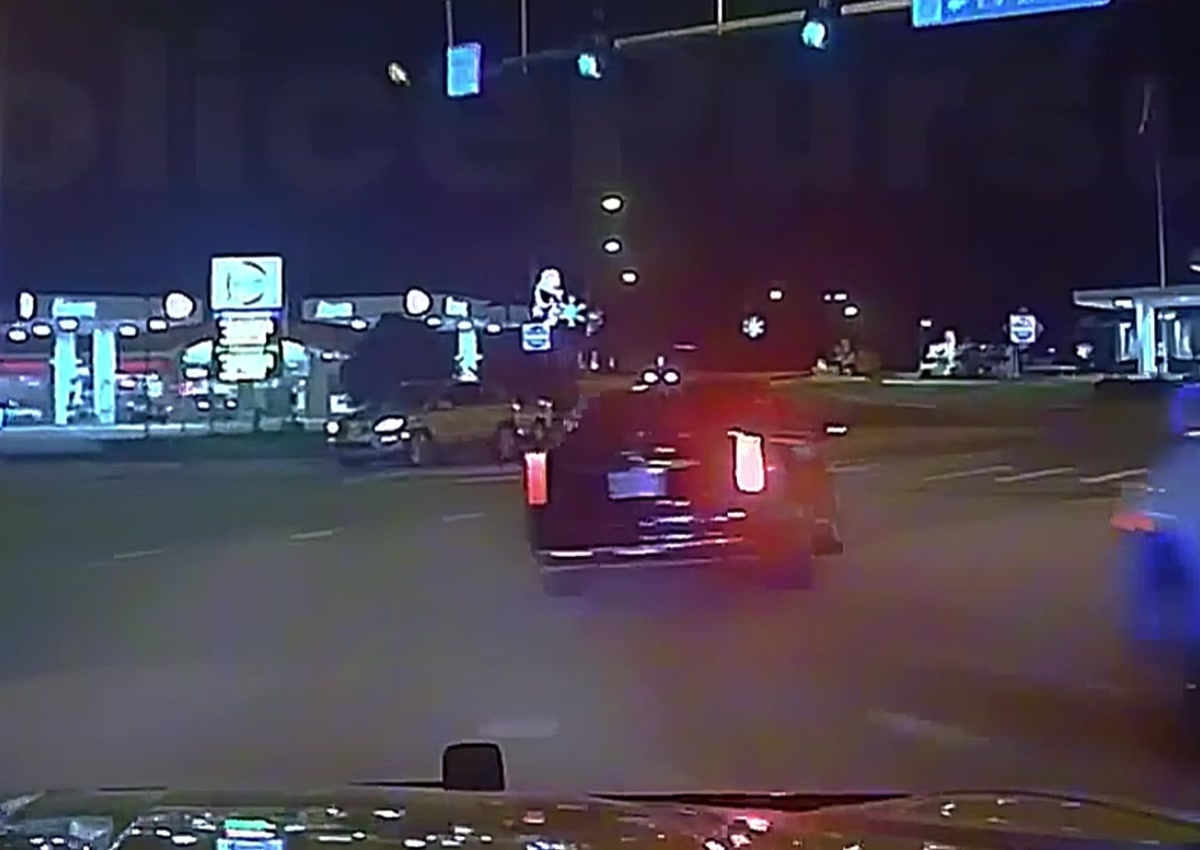
The SUV That Would Not Stop
At first glance, the scene looks almost ordinary: a black Cadillac Escalade moving through a brightly lit commercial corridor after dark, traffic signals hanging above the roadway and businesses glowing on both sides. Then the perspective changes everything. The camera is mounted inside a law-enforcement vehicle, and the distance between the patrol car and the Cadillac keeps shrinking. What could have been a routine night drive becomes a tense rolling encounter in which every turn, every lane change, and every few feet of separation matter.
The most striking thing about the footage is not spectacular speed. It is the persistence. The Cadillac remains in motion while officers stay close behind and, at several points, move alongside it. That slower, more deliberate rhythm makes the video unusually tense. A pursuit at extreme speed announces its danger immediately. Here, the uncertainty develops gradually. The viewer keeps waiting for the moment when the driver will finally stop, when officers will commit to an intervention, or when the vehicle will suddenly accelerate and turn a controlled situation into something far more dangerous.
That visual pattern closely matches reporting published by WSVN 7News in August 2026 about a stolen black Cadillac Escalade pursued in Miami Gardens. According to the station, Miami Gardens Police had flagged the SUV as stolen, Miami-Dade Sheriff's Office deputies later spotted it, and deputies attempted to conduct traffic stops more than once. The driver allegedly continued moving away. WSVN reported that the pursuit eventually involved a Florida Highway Patrol Precision Immobilization Technique, after which the Escalade spun and struck a fence. The driver then allegedly ran and was later captured after hiding in a backyard.
The short supplied clip does not show every stage described in that report, so the safest way to read it is as a window into the rolling phase of the incident rather than a complete record. That distinction matters. Dashcam video can feel definitive because it places the audience in the patrol car, but it still shows only one angle and one segment of a much larger police response. The radio traffic, earlier attempts to stop the vehicle, information known to officers, and later arrest can all sit outside the visible frame.
What the clip does show clearly is a black Escalade, nighttime streets, patrol vehicles maintaining close contact, and a situation that refuses to resolve quickly. That is enough to create the central question that holds the viewer: how does an encounter like this end when the vehicle ahead simply keeps going?
A Routine-Looking Road With a Different Kind of Pressure
Nighttime police footage often compresses the world into a few sources of light. Headlamps, traffic signals, illuminated storefronts, and the red glow of taillights become the visual landmarks. In this video, the Cadillac's vertical rear lamps make the SUV easy to follow even when the surroundings blur. The patrol vehicle remains close enough that the viewer can study the SUV's movements almost as if riding in the pursuing unit.
That proximity changes the character of the encounter. Police are not observing from a distance. They are actively positioning themselves around a moving vehicle. At moments the patrol car draws almost level with the Escalade. The maneuver creates an uncomfortable visual contradiction: the vehicles are traveling through public streets, yet the space between them resembles a controlled tactical zone. There is little room for error.
If the WSVN identification is correct, the reason for that sustained attention was serious. The station reported that the Escalade had been flagged as stolen and that deputies tried to stop it repeatedly. A stolen-vehicle alert does not automatically explain every decision that follows, but it changes the context. Officers approaching a vehicle reported stolen may not know who is inside, whether the driver will comply, or whether the vehicle will be used to escape. At the same time, every decision to continue a pursuit has to be balanced against the risk created for other motorists and pedestrians.
That balancing act is visible even without hearing every radio transmission. Officers appear to remain close while the Cadillac travels through areas with businesses, intersections, and other traffic. The driver does not appear to be isolated on an empty highway. Any sudden acceleration, collision, or evasive turn could involve someone who has nothing to do with the police encounter.
This is one reason the footage holds attention without needing exaggerated narration. The tension is built into the geometry of the scene. The Cadillac is ahead. Police are behind and sometimes beside it. Public roads continue around them. No one watching knows exactly which movement will become the turning point.
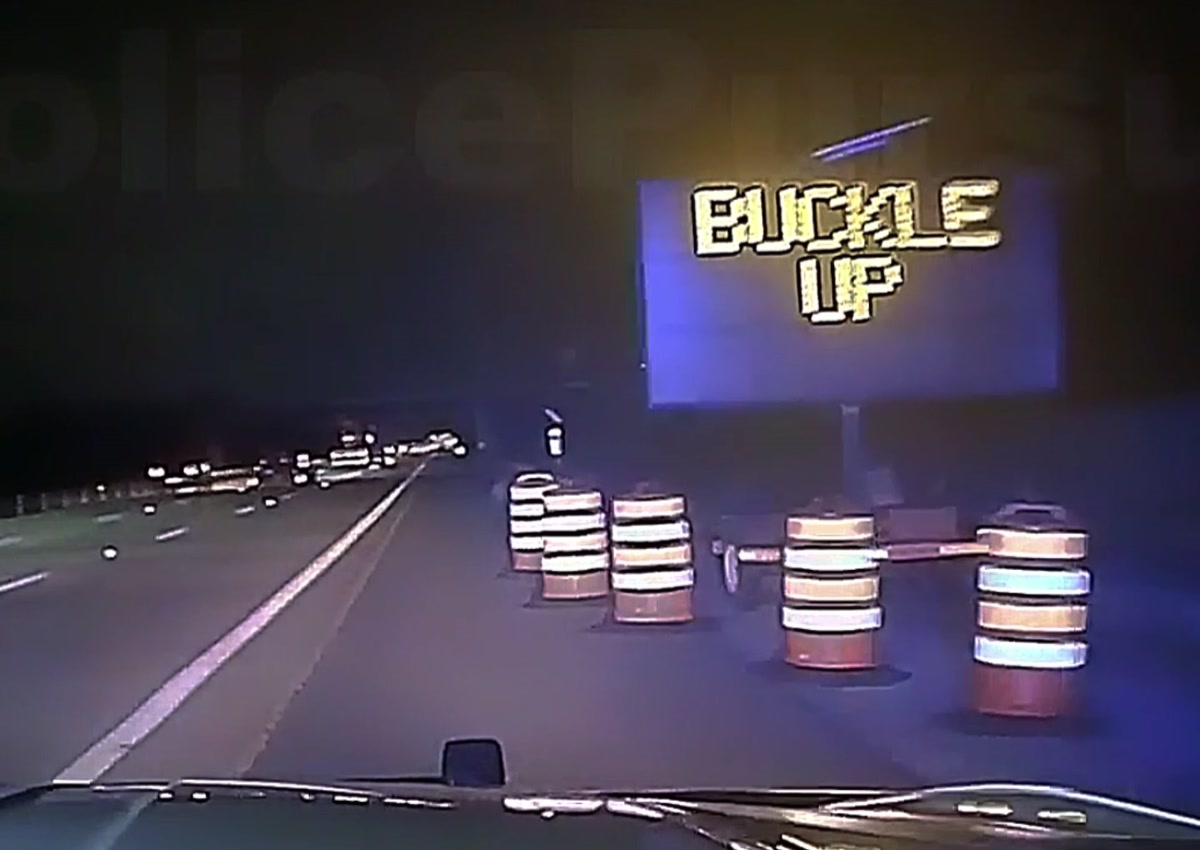
Why Officers May Follow Before Forcing the Issue
To a viewer, the obvious question can be deceptively simple: if police are already that close, why not stop the vehicle immediately? In practice, stopping a moving vehicle is not the same as catching up to it. Officers must consider speed, road width, traffic, pedestrians, nearby structures, the behavior of the driver, the number and position of police vehicles, and what will happen if the targeted vehicle spins, crashes, or suddenly accelerates.
A Precision Immobilization Technique, commonly called a PIT maneuver, is designed to rotate a fleeing vehicle and bring a pursuit to an end. But it is not a magic switch. The environment matters. A maneuver that may be manageable on a clear roadway can become much more dangerous near crowded sidewalks, fixed objects, oncoming traffic, bridges, steep embankments, or groups of bystanders.
The reported Miami Gardens incident illustrates that progression. WSVN said deputies followed the Escalade through streets and neighborhoods and that Florida Highway Patrol troopers eventually performed a PIT. According to the report, the maneuver caused the Cadillac to spin before it hit a fence. That outcome demonstrates why the place and timing of an intervention matter: once a vehicle is intentionally destabilized, officers cannot completely dictate where it will travel.
Before that moment, the footage shows something less dramatic but operationally important: containment pressure. A patrol car stays near the Cadillac, other units can be seen in the area, and the SUV's available space appears to narrow at times. Even when a suspect vehicle is still moving, additional police units can change the driver's options. Officers may be trying to create a safer opportunity to stop it rather than forcing an intervention at the first possible second.
For the audience, that phase can look frustratingly slow. For police, it can be the period in which information and positioning determine whether the next move is controlled or chaotic. The absence of an immediate collision does not mean nothing is happening. It can mean that officers are waiting for the road, traffic, and vehicle positions to line up in a way that reduces the risk of a forced stop.
The Black Cadillac Becomes the Center of the Scene
The Cadillac Escalade is visually dominant throughout the clip. Its size, dark paint, tall body, and distinctive rear lighting make it stand out against the road. That matters because the vehicle itself becomes the organizing point for every other action. Patrol cars adjust around it. Traffic moves around it. The dashcam remains fixed on it. Even when the SUV is not moving particularly fast, the entire scene is shaped by what its driver chooses to do next.
Large SUVs also carry physical consequences in a pursuit. They are heavier and taller than many passenger cars. Their mass can increase the energy involved in a collision, and their higher center of gravity can affect how they behave when abruptly redirected. None of that means a specific crash is inevitable, but it helps explain why officers cannot treat every fleeing vehicle in exactly the same way.
In the supplied footage, the Cadillac at times appears to drift toward spaces that could allow it to continue away from police. The patrol unit responds by staying close. This creates the feeling of a moving chess match. The driver searches for open roadway while officers attempt to prevent the distance from growing.
The reported incident later escalated beyond the vehicle phase. WSVN said that after the Escalade was stopped, the suspect exited and ran. That detail is important because it shows why ending the movement of a car does not necessarily end the encounter. A vehicle pursuit can transform instantly into a foot pursuit, perimeter search, or neighborhood containment operation.
According to WSVN, the suspect was identified as Klauss Anthony Moise, 26. The station reported that he fled across the road and hid in a backyard before being taken into custody. It also reported that he remained in Miami-Dade County pretrial detention facing multiple felony charges connected to the May pursuit. Those are allegations and procedural facts reported by the station; they should not be read as a declaration of guilt beyond what has been adjudicated.
For viewers, however, the dashcam portion is compelling precisely because none of that later information is visible yet. The Escalade is still moving. The officers are still trying to control the encounter. The ending remains unknown.
When a Pursuit Moves From Main Roads Into Neighborhoods
One of the most difficult transitions in any vehicle pursuit occurs when the route leaves a broad commercial roadway and moves toward smaller streets. A major road may offer more lanes and longer sightlines, but it can also contain faster traffic. A neighborhood usually lowers average speeds, yet introduces driveways, parked cars, narrow corners, pedestrians, cyclists, children, and people who may step outside without realizing a police operation is approaching.
The later frames in the supplied video show the environment becoming darker and less commercially illuminated. Streetlights are more isolated. Buildings and roadside features are harder to read. The Cadillac remains ahead while emergency light reflections wash across the pavement. The scene feels more confined even when the roadway itself is open.
WSVN's account said the stolen SUV was driven through neighborhoods and onto sidewalks while deputies followed. That reported behavior would dramatically increase the public-safety problem facing officers. A driver who uses sidewalks or residential spaces to avoid police can create danger even at speeds below those associated with freeway chases. The risk comes from unpredictability and from entering spaces that drivers are not supposed to use.
This is also where the public's perception of a pursuit can diverge from what officers are processing in real time. A viewer sees the vehicle in front of the camera. Officers may be listening to radio updates, coordinating units, watching cross streets, anticipating pedestrians, and trying to predict where the driver will go. Their decision-making environment is wider than the dashcam frame.
The video therefore works best when treated not as a simple spectacle but as evidence of a rapidly changing problem. The central issue is not merely whether police can catch the Cadillac. It is whether they can stop it before the danger expands while avoiding an intervention that creates an even greater danger of its own.
The Moment Police Close the Gap
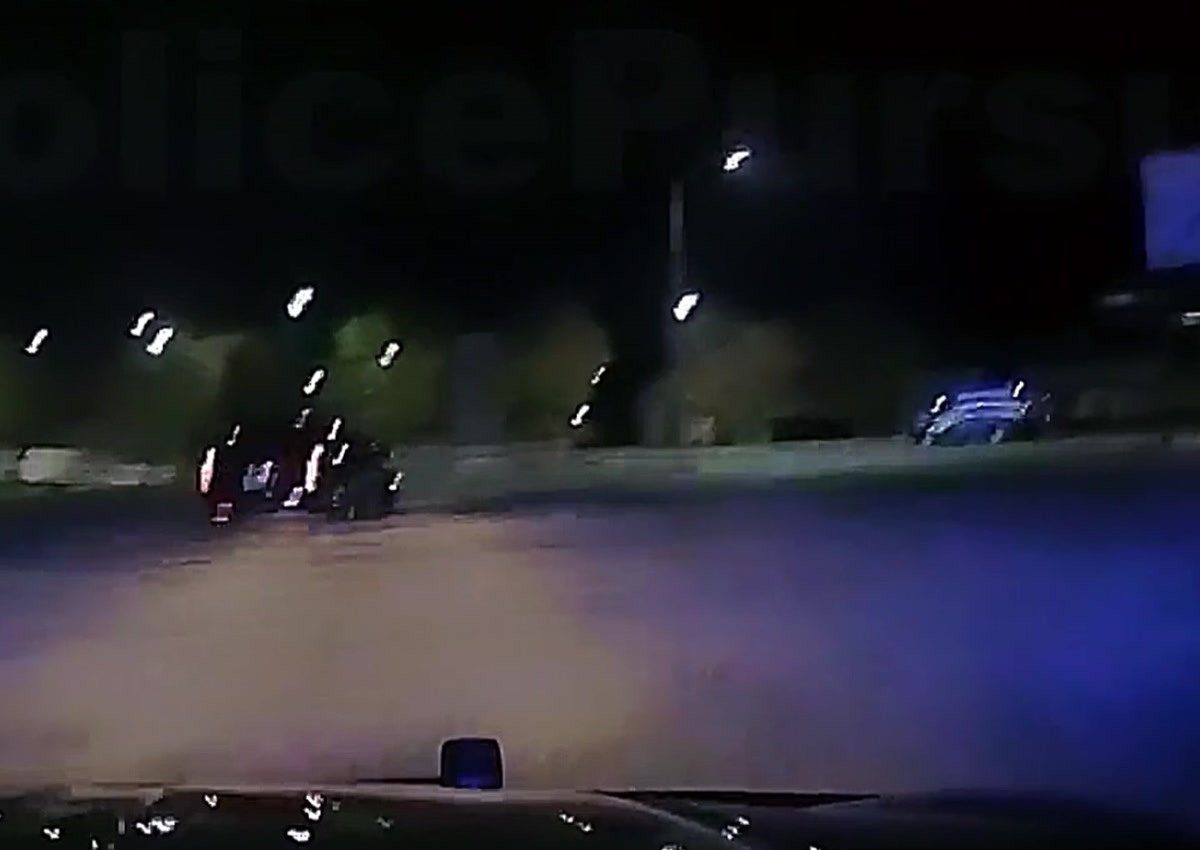
The most gripping images come when a patrol vehicle draws extremely close to the Escalade. The Cadillac fills much of the frame. Reflections from emergency lights ripple across its glossy black body. The separation between the vehicles becomes small enough that the viewer instinctively anticipates contact.
This is the point where a pursuit stops feeling distant. There is no longer a large cushion of road between officer and driver. Small steering inputs matter. A sudden brake application could cause a collision. A sharp turn could force the patrol unit to react instantly. If another police vehicle is positioned nearby, the Cadillac's escape routes may narrow further.
That close-contact phase can serve several purposes. Officers may be preparing for a PIT, trying to box the vehicle in, preventing it from accelerating into open traffic, or simply maintaining visual contact while waiting for a safer location. Without complete radio traffic and agency reports, it would be wrong to claim one precise tactic from the video alone. What can be said is that the officers are no longer merely trailing from a comfortable distance.
The footage also demonstrates why dashcam recordings are so powerful. A written report might say that officers followed a suspect vehicle and moved into position. The camera communicates the physical reality of that sentence: the darkness, the narrow spacing, the passing lights, the speed changes, and the constant possibility that the driver will make a sudden move.
For a blog or documentary audience, this is the natural visual climax before the forced stop. The tension has been building through repeated noncompliance. Police have stayed with the vehicle. The environment has shifted. Now the patrol car is close enough that the next decision can change everything.
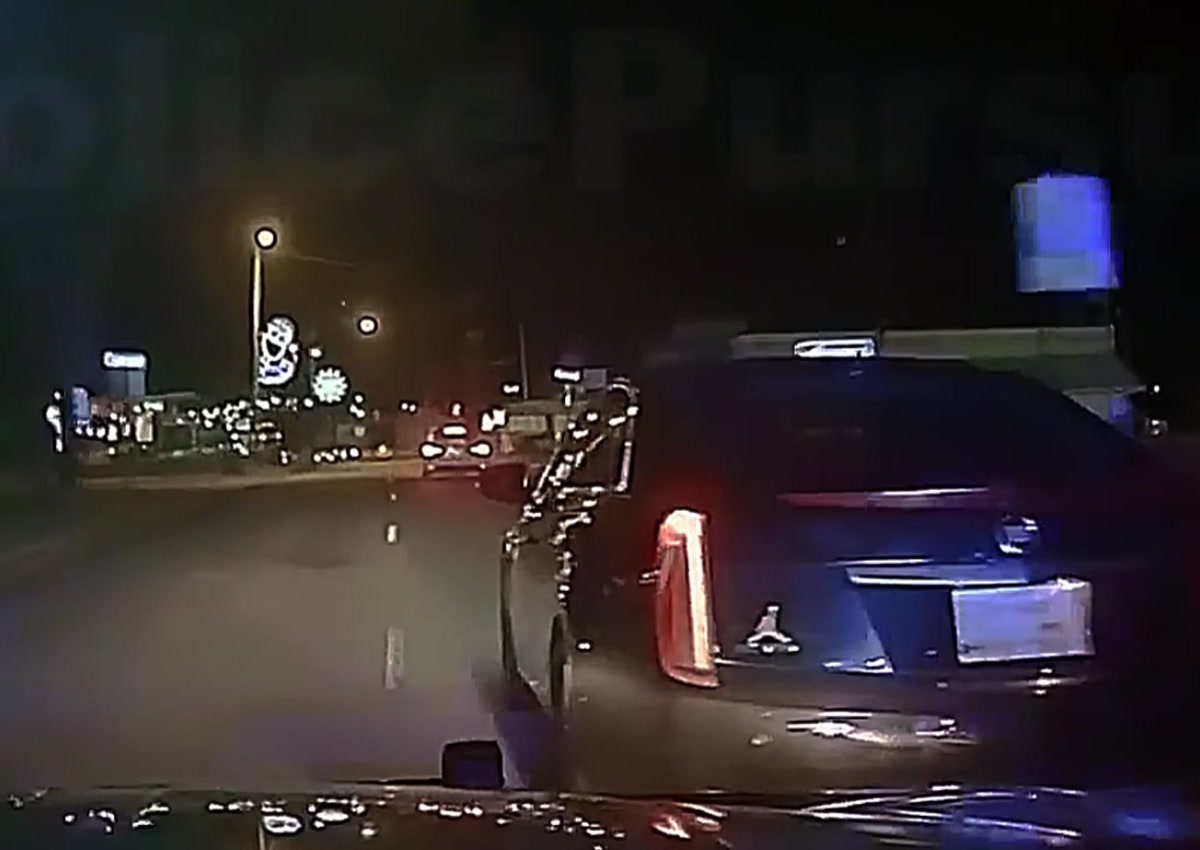
The Reported PIT and the Flight That Followed
The supplied excerpt ends before the entire reported resolution is visible, but the related WSVN report provides the next major step. Florida Highway Patrol troopers, according to the station, used a Precision Immobilization Technique against the Cadillac. The SUV spun out and struck a fence.
A successful PIT ends the vehicle's forward escape, but it creates a brief period of extreme uncertainty. Officers have to assess the crash, determine whether occupants are injured, watch doors and windows, and prepare for the possibility that someone will run. The suspect vehicle may be disabled, but the people inside it still determine what happens next.
WSVN reported that the driver opened the door and fled on foot across the road. That decision extended the incident beyond the roadway. Police then had to transition from vehicle pursuit tactics to searching for a person moving through a populated area. The station said the suspect hid in a backyard before officers located and arrested him.
This sequence explains why the slow-looking earlier portion matters. The encounter is not one isolated maneuver. It is a chain. An attempted stop becomes continued driving. Continued driving becomes a pursuit. The pursuit creates a need for a vehicle intervention. The intervention ends with a crash. The crash becomes a foot pursuit. The foot pursuit becomes a neighborhood search and arrest.
Every link in that chain creates new risks and new decisions. The dramatic moment may be the PIT, but the incident is shaped by everything that happens before and after it.
For the people living nearby, the event would have looked very different from the dashcam perspective. They may have heard sirens, seen emergency lights sweep across houses, or discovered officers searching yards. A pursuit that begins as a traffic encounter can quickly become a neighborhood event involving residents who had no warning that it was coming.
What the Dashcam Shows and What It Cannot Tell Us
Police video encourages certainty. Because the camera is attached to an official vehicle and records events as they happen, it is tempting to believe that everything important is visible. But the most responsible way to use dashcam footage is to separate direct observation from outside reporting.
Directly visible in this clip are a nighttime pursuit or rolling police follow, a black Cadillac Escalade, multiple patrol vehicles, close positioning, intersections, commercial areas, and darker streets. Those details can be described confidently because they are on screen.
Other facts require external verification. The identity of the driver, why the vehicle was wanted, what officers knew before the recording began, what charges were filed, and how the final arrest unfolded are not established by these frames alone. Those details come from reporting, police statements, court records, or other official documentation.
For this article, the strongest public match located is WSVN 7News' August 4, 2026 report on the Miami Gardens stolen-Escalade pursuit. Its description aligns with the central visual features of the supplied clip: a black Cadillac Escalade, deputies attempting traffic stops, the vehicle continuing through Miami Gardens, and law enforcement remaining close before a later PIT and foot pursuit. The clip itself, however, contains no clearly readable agency overlay or case identifier in the cropped dashcam area, so that match should be understood as a researched identification rather than an assertion based on a visible badge or case number.
That careful distinction protects the credibility of the story. It is better to tell readers exactly what is known, what is reported, and what is inferred than to fill gaps with invented certainty. Police footage is compelling enough without adding facts that the evidence cannot support.
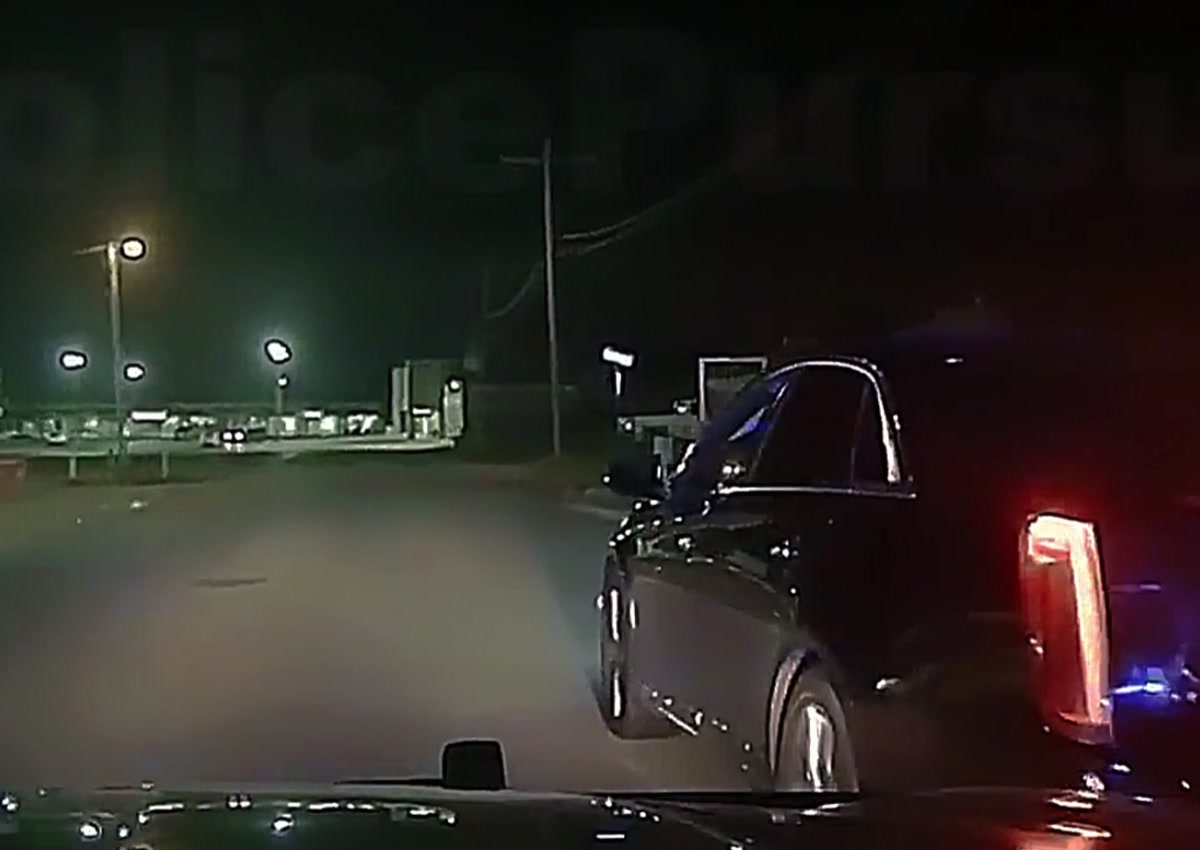
Why This Kind of Video Holds Attention
From a storytelling perspective, the video works because it delays resolution. The viewer understands the conflict almost immediately: police want the Cadillac to stop, and it keeps moving. Everything after that becomes a question of when and how the standoff on wheels will end.
There is also a strong visual anchor. The Escalade remains centered in front of the patrol car for much of the sequence. That consistency makes the footage easy to follow even when the background changes. The viewer does not need a map or complex explanation to understand who is being followed.
The nighttime setting adds another layer. Darkness removes detail from the edges of the frame, forcing attention toward taillights, headlights, and emergency lights. The road ahead becomes a tunnel of limited information. A corner can reveal a new patrol car, a civilian vehicle, or an unexpected obstacle only seconds before the pursuing officer reaches it.
Most importantly, the footage contains escalation without needing sensational language. Police move closer. The Cadillac continues. The surroundings become less predictable. The possibility of a forced stop grows. That progression naturally encourages the audience to keep watching.
For publishers, this is a useful lesson. Retention does not always come from showing the most violent or dramatic second first. Sometimes it comes from presenting a clear unresolved problem and allowing the audience to watch pressure build. The question “Will the driver stop?” is simple, but as long as the answer remains uncertain, it is powerful.
How a Night Drive Became a Multi-Stage Police Operation
Seen as a whole, the encounter demonstrates how quickly a moving vehicle can turn a straightforward police objective into a complicated operation. Officers need the vehicle to stop. The driver continues. More units become involved. The route changes. Tactical options narrow and expand depending on the road. Eventually, according to the related reporting, officers use a maneuver to end the vehicle phase, only for the driver to run.
That progression is the real story behind the flashing lights. Pursuits are not static events. They evolve second by second. A decision that makes sense on one block may be too dangerous on the next. A driver who appears to be slowing may accelerate again. A road that seems empty may suddenly contain cross traffic. A successful vehicle stop may immediately become a foot chase.
The incident also shows why coordination between agencies can matter. WSVN reported involvement from Miami Gardens Police, the Miami-Dade Sheriff's Office, and the Florida Highway Patrol. Different agencies can contribute information, additional units, specialized tactics, or jurisdictional support. From the camera's perspective, viewers may simply see another police vehicle arrive. Operationally, that arrival can change the options available to the officers already involved.
The eventual arrest, as reported, closed the immediate public-safety threat, but it did not erase the questions raised by the chase: how the stolen SUV was located, why the driver allegedly refused repeated attempts to stop him, how officers selected the place for a PIT, and how the suspect was located after fleeing into a backyard.
Those questions are what make police dashcam footage more than a sequence of moving vehicles. The camera captures decisions under pressure. It records the distance between a potentially dangerous situation and the moment officers finally regain control.
After the Lights Stop Moving
Every pursuit eventually reaches a point where the flashing lights stop advancing down the road. That does not necessarily mean the work is over. Officers still have to secure people, request medical assistance if needed, protect a crash scene, search a vehicle when legally authorized, document evidence, interview witnesses, and prepare reports that may later be examined in court.
In the Miami Gardens case reported by WSVN, the driver was eventually captured after the foot pursuit. The station said prosecutors pointed to his criminal history during a bond proceeding and that he faced multiple felony charges related to the pursuit. As with any pending criminal case, charges are allegations, and guilt on individual counts is determined through the legal process.
For the public, the dashcam may become the most memorable part because it offers a direct view from behind the windshield. For investigators and courts, however, the video is one piece of a larger evidentiary record. Dispatch logs, stolen-vehicle records, officer reports, body-worn camera footage, aerial video, crash evidence, and witness accounts can all provide context that a single camera cannot.
That broader perspective is worth keeping in mind when watching a short social-media edit. The supplied video is only about seventy-five seconds long. Real police incidents can involve hours of work before and after the portion that goes viral. A compact clip can show the tension of the chase, but it cannot carry every fact by itself.
What it can do is preserve a remarkable view of the moment when police pressure steadily closes around a vehicle that continues to move. The black Cadillac remains just ahead, the patrol car keeps pace, and the night streets become the stage for a confrontation that is heading toward an unavoidable conclusion.
The Larger Question Behind Police Pursuits
Vehicle pursuits create one of the hardest recurring problems in policing because the danger comes from two directions at once. A fleeing driver can endanger the public by speeding, ignoring signals, crossing lanes, or driving through spaces meant for pedestrians. At the same time, the act of pursuing can increase speed and pressure, potentially extending the danger across a larger area. Agencies therefore develop pursuit policies that weigh the seriousness of the suspected offense, traffic conditions, weather, location, speed, and the availability of alternatives.
There is no single visual cue that tells an officer exactly when a pursuit should continue or end. A vehicle may slow temporarily and then accelerate. A driver may appear to be looking for a safe place to stop or may instead be searching for an escape route. Officers have to interpret behavior while simultaneously driving, communicating by radio, monitoring other vehicles, and planning what to do if the suspect stops suddenly.
Technology can change that calculation. Helicopters, fixed cameras, automatic license-plate readers, GPS tracking devices, and coordinated units can sometimes allow officers to reduce direct pressure while still keeping track of a vehicle. Those options are not available in every incident, and they may not be practical when the vehicle presents an immediate threat.
The supplied footage highlights the importance of distance. When police are several car lengths behind, they have more reaction time but less ability to physically contain the suspect. When they close the gap, they gain tactical options but reduce the margin for error. That tradeoff is visible repeatedly as the patrol car approaches the Escalade.
It also highlights the importance of environment. Commercial roads at night can appear empty while still containing late-night customers, workers, pedestrians, and drivers entering from side streets. Residential roads introduce a different set of hazards. Officers cannot evaluate a pursuit based only on the suspect vehicle; they must constantly read the space around it.
For the driver being pursued, the safest legal choice is to comply with a lawful traffic stop rather than attempt to outdistance police. Flight tends to add risk, complexity, and potential criminal exposure. It can also turn a matter that might have been handled at roadside into an event involving multiple agencies, vehicle intervention, crashes, or foot pursuits.
For officers, the goal is not simply to win a chase. The goal is to resolve the incident while protecting the public, themselves, and the occupants of the fleeing vehicle as far as circumstances allow. That is why pursuit policies, supervisor oversight, radio communication, and tactical training matter.
The visual drama of dashcam footage can obscure that underlying objective. Viewers naturally focus on whether the police car catches the suspect. Professionals have to think about a wider outcome: whether the encounter can be ended without creating an unacceptable risk to everyone else on the road.
This is also why post-incident review matters. Agencies can examine video to determine whether policy was followed, whether communication was effective, whether an intervention occurred at an appropriate location, and what could be improved. The same footage that entertains millions of viewers can become a training record for officers who may face a similar decision later.
For journalists and publishers, the responsibility is different but related. Video should be contextualized rather than treated as self-explanatory. A compelling clip can draw readers into the story, but reporting should separate what the camera proves from what police allege and what courts ultimately determine. That approach makes the article stronger, not weaker, because readers can understand both the immediacy of the footage and the limits of the camera.
In this case, the most responsible conclusion is also the most compelling one. A black Cadillac moves through the night with police close behind. Officers repeatedly position themselves around it. The encounter grows tighter and more difficult to escape. Related reporting describes a later PIT, crash into a fence, foot pursuit, and arrest. The video gives us the pressure of the pursuit; the reporting gives us the wider arc. Together they show how quickly an ordinary-looking road can become the center of a major police response.
Reading the Scene Without Overstating It
A useful way to watch police footage is to ask three separate questions. First, what can be seen directly? Second, what has a reliable outside source reported? Third, what remains unknown? Keeping those categories separate prevents a dramatic video from turning into a story built on assumptions.
In this clip, direct observation is straightforward. The scene takes place at night. A black Cadillac Escalade is traveling on public roads. A law-enforcement vehicle follows at close range. Other police vehicles appear. The route passes through illuminated commercial areas and darker stretches. At several moments, officers move very close to the Cadillac. Those details require no speculation.
The likely case identification comes from comparison with contemporary reporting. WSVN's report describes a black Cadillac Escalade, a Miami Gardens pursuit, repeated attempts to stop the vehicle, deputies following it through streets and neighborhoods, and a later Florida Highway Patrol PIT. That combination is unusually specific and is consistent with what is visible in the supplied excerpt. Still, the short edit does not display a readable case number or a clear agency identifier throughout the dashcam window. That is why this article describes the match transparently rather than pretending the video alone supplies every fact.
What remains unknown from the clip is equally important. We cannot see the initial stolen-vehicle alert. We cannot independently hear every command given to the driver. We cannot see every action that occurred before the first frame or after the edit ends. We cannot determine from the short video alone what evidence prosecutors will rely on for each charge. Those questions belong to police records, court filings, and fuller releases.
This method of separating observation, reporting, and uncertainty is especially important with social-media footage because clips are often shortened, reframed, captioned, mirrored, or stripped of their original audio. A sixty-second edit can make a ten-minute incident appear simpler than it was. Conversely, dramatic captions can make a relatively controlled portion appear more chaotic.
The footage here has clearly been formatted for vertical viewing, with graphic material surrounding the central dashcam image. For this blog, the still images were therefore extracted from the actual dashcam area rather than using the decorative crime-scene graphics as evidence. That keeps the visuals tied to the supplied incident and avoids introducing unrelated stock or AI imagery.
The thumbnail follows the same principle. Instead of generating an artificial chase scene, it uses a real frame in which the black Escalade is clearly visible and the patrol perspective is easy to understand. A reader can see immediately that the story involves a nighttime police follow without being shown something that never happened.
That approach also improves trust. Readers may not know the technical process used to build a blog, but they can sense when an image does not belong to the event. Reusing unrelated police lights, generic handcuffs, or another suspect's vehicle may make a page look busy while weakening its accuracy. Real frames from the supplied footage are less polished than studio images, but they preserve the actual atmosphere of the encounter.
The same standard applies to language. A title should create curiosity without inventing violence or danger that the clip does not show. “Black Cadillac Keeps Moving as Police Close In Through the Night” communicates the core tension without claiming a crash, shooting, or arrest occurs inside the visible excerpt. The later sections can then explain what related reporting says happened next.
For readers, this makes the story easier to follow. They first experience the unresolved visual problem, then receive the context, then learn about the reported resolution. That order mirrors how people naturally process footage and helps maintain attention across a long article without relying on repetitive sensational claims.
Ultimately, the most memorable detail is the simplest one: the distance keeps shrinking. The Cadillac remains ahead, but officers are no longer far behind. Every new frame reduces the feeling that the driver can simply continue indefinitely. The road may still be open, but the encounter is closing in.
Continue Watching the Full Sequence
The short clip captures the pressure building behind the Cadillac, but it does not contain every stage of the reported pursuit and arrest. To show readers what happened beyond the excerpt, place the destination for your full video or continuation page in the button below.
Replace the placeholder URL with your own link before publishing. The button is already formatted inside this HTML file so you can paste the final destination once and keep the call-to-action visually separate from the article.
WATCH THE REST OF THE INCIDENT
Paste your continuation/full-video URL into the button below.
Link placeholder: https://www.youtube.com/watch?v=_moXg38P9uM
Follow the link above to see how the entire nighttime encounter unfolds from pursuit to final resolution.
Sources Used for Verification
WSVN 7News, August 4, 2026: “Dashcam video shows pursuit of stolen SUV, arrest of 26-year-old man in Miami Gardens.” This was the strongest public match found for the supplied footage and was used for the reported context about the stolen Escalade, repeated stop attempts, PIT maneuver, foot pursuit, and arrest.
Comments (0)
Loading comments...
May You Like

The Truth Behind the Suspicious Vehicle and the Standoff with Police

Traffic Stop Turns Deadly After Man Steps Out of Stolen Car

One Driver’s Decision to Flee Brings Police Racing After Him













