A Burn Ban Violation Turns Into a Narcotics Arrest for Two Palm Coast Residents
A Burn Ban Violation Turns Into a Narcotics Arrest for Two Palm Coast Residents
A Glowing Ember Changes the Direction of the Night
A routine drive along Pine Lakes Parkway in Palm Coast became the starting point of a narcotics investigation on Friday evening, February 13, 2026. According to the Flagler County Sheriff’s Office, a detective assigned to the Problem Area Crime Enforcement Unit, commonly known as PACE, was traveling behind a white Toyota Camry when he saw a lit ember thrown from the passenger side of the vehicle. That small act was enough to trigger a traffic stop.
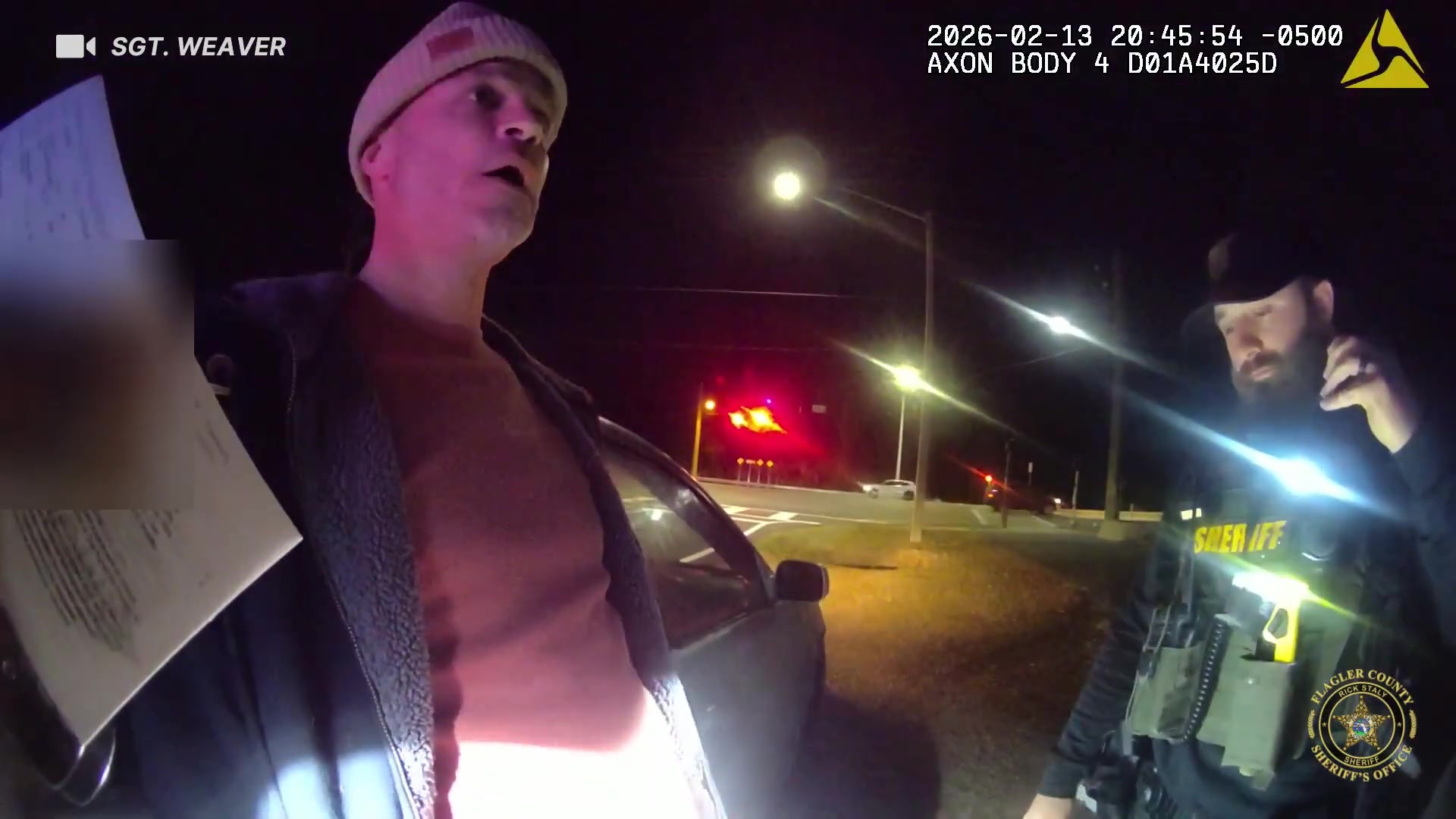
The reason mattered because Flagler County was under a burn ban amid dry conditions and elevated fire danger. Florida law also separately prohibits throwing or disposing of a glowing or flaming substance from a vehicle when it may cause a wildfire. What initially appeared to be a relatively narrow traffic enforcement matter therefore had a legitimate public-safety dimension before narcotics ever entered the picture.
Body-camera footage supplied with this article shows the encounter unfolding at night beside the stopped Camry. Emergency lights wash the roadside in red and blue while detectives speak with the occupants. The video does not need dramatic editing to establish the tension. Officers are working in darkness, near traffic, with limited visibility into the passenger compartment. Those circumstances make hand placement, sudden movement and communication especially important during the first minutes of a stop.
The sheriff’s office identified the driver as Stacey Pringle, 55, of Palm Coast, and the front-seat passenger as Christian Heighley, 47, also of Palm Coast. Those identities, the location and the subsequent arrest details are not guesses based on the footage. They come from the agency’s February 17, 2026 news release describing the same incident.
Why Detectives Focused on the Passenger
FCSO reported that detectives noticed Heighley appeared extremely nervous while they were speaking with the occupants. More importantly from an officer-safety standpoint, the agency said he repeatedly moved around inside the car and brought his hands near his waistband and outside the detective’s view.
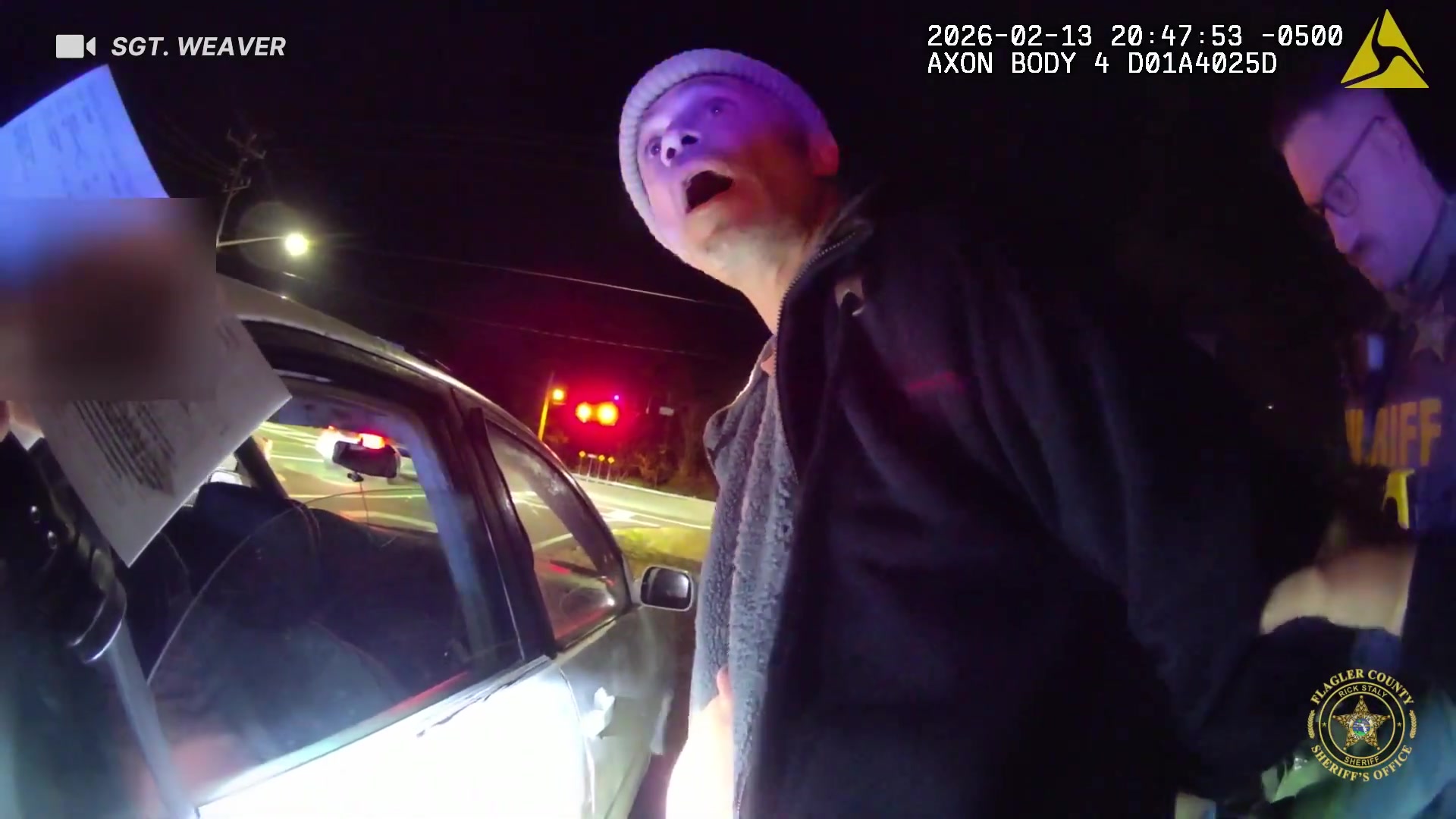
Body-camera footage provides useful context for why those observations can change the tone of a traffic stop. Officers cannot know what an unseen hand is reaching toward. A waistband or pocket can contain something harmless, contraband, or a weapon. The uncertainty itself is what officers must manage. Commands to keep hands visible or to step out of a vehicle are therefore not automatically evidence that police have already concluded someone committed a serious crime.
The video shows detectives keeping close watch as the encounter develops. Heighley is eventually outside the Camry, where the interaction continues under the illumination of patrol lights and flashlights. FCSO said that after exiting, he continued moving erratically and reaching toward his waistband and pockets.
At that stage, investigators also reported smelling a strong odor of marijuana coming from him. Heighley told detectives he had a medical marijuana card, according to the sheriff’s office, but was unsure whether it remained valid. Investigators later said the card they found had expired in 2021.
That detail illustrates an important distinction. A person’s statement about lawful authorization does not necessarily end an investigation when officers have additional observations and can verify the documentation. At the same time, the fact that a person possesses or once possessed a medical marijuana card should not be treated as proof of unrelated criminal conduct. The legal justification for each investigative step depends on the totality of circumstances rather than a single fact viewed in isolation.
The Search Changes the Case
According to FCSO, detectives conducted a probable-cause search of Heighley and found marijuana in a clear plastic bag rather than proper dispensary packaging. They also reported finding a bag containing methamphetamine in his pocket. The sheriff’s office said Heighley denied that the methamphetamine belonged to him despite detectives reporting that it was recovered from his clothing.
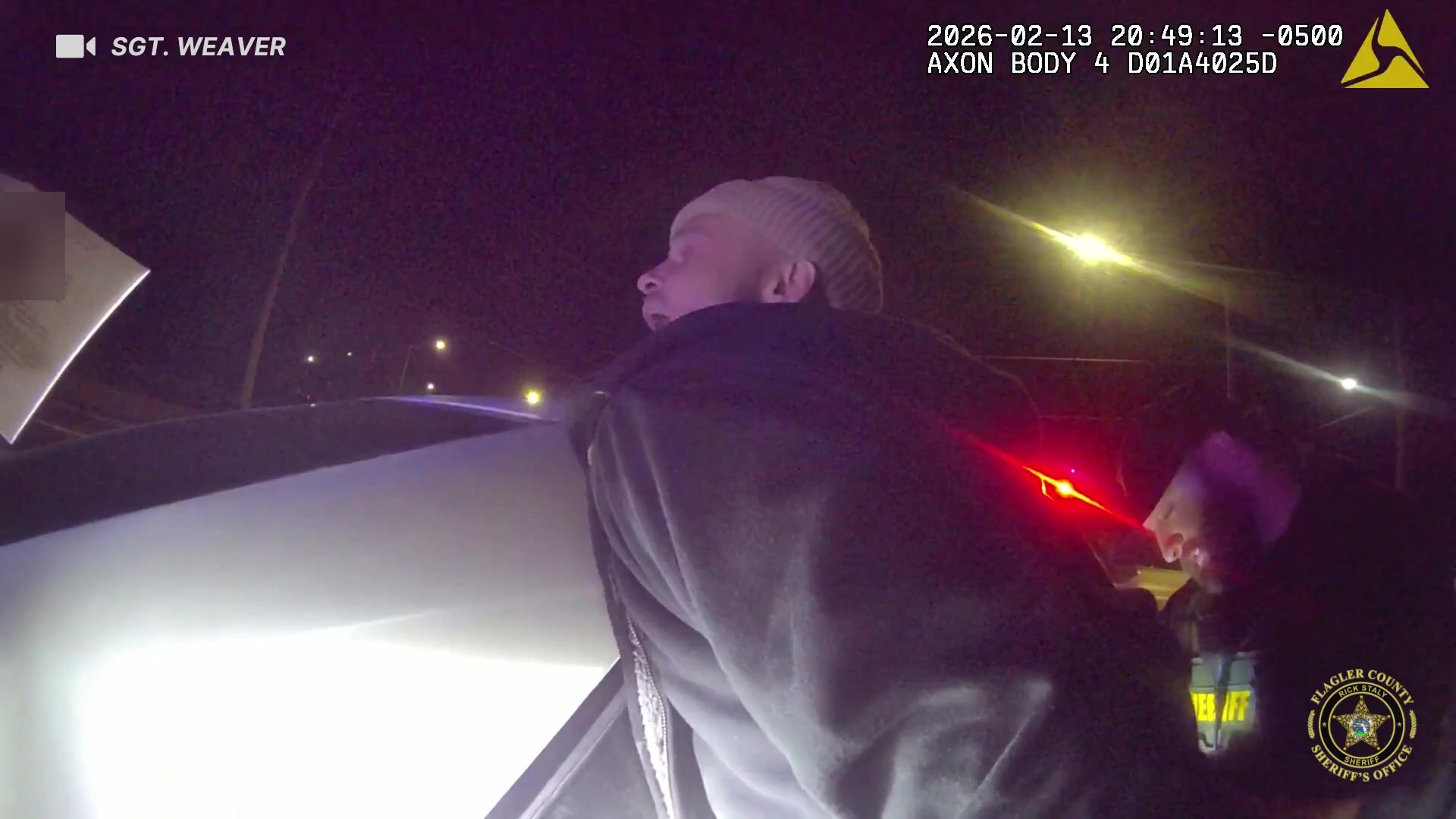
The investigation then extended to Pringle. Detectives reported finding two small plastic bags containing methamphetamine inside a container attached to her keychain. FCSO also said another bag of methamphetamine was located inside her bra.
These discoveries transformed the encounter from enforcement of a burn-ban-related offense into a narcotics case involving both occupants. The transition is visible in the footage through the growing number of investigative steps: occupants are separated from the vehicle, detectives communicate with one another, searches are conducted, and the roadside stop becomes an arrest scene.
It is worth separating what the video can show from what requires official documentation. A body camera can show a detective handling an item, searching clothing or speaking with a detainee, but viewers usually cannot determine the chemical identity or laboratory weight of a substance simply from an image. For that reason, this article relies on the sheriff’s office release for the identification of the substances as methamphetamine and marijuana rather than trying to identify them visually.
The same caution applies to intent. Possession and possession with intent to sell are legally distinct allegations. FCSO reported that Pringle was arrested for possession of methamphetamine with intent to sell and possession of drug paraphernalia. That charging information comes from the agency, not from an inference based on how a bag appears on camera.
Two Arrests and an Additional Discovery at the Jail
Detectives arrested Heighley on allegations of possession of methamphetamine, possession of marijuana of 20 grams or less, and disposing of a lighted substance. Pringle was arrested for possession of methamphetamine with intent to sell and possession of drug paraphernalia, according to FCSO.
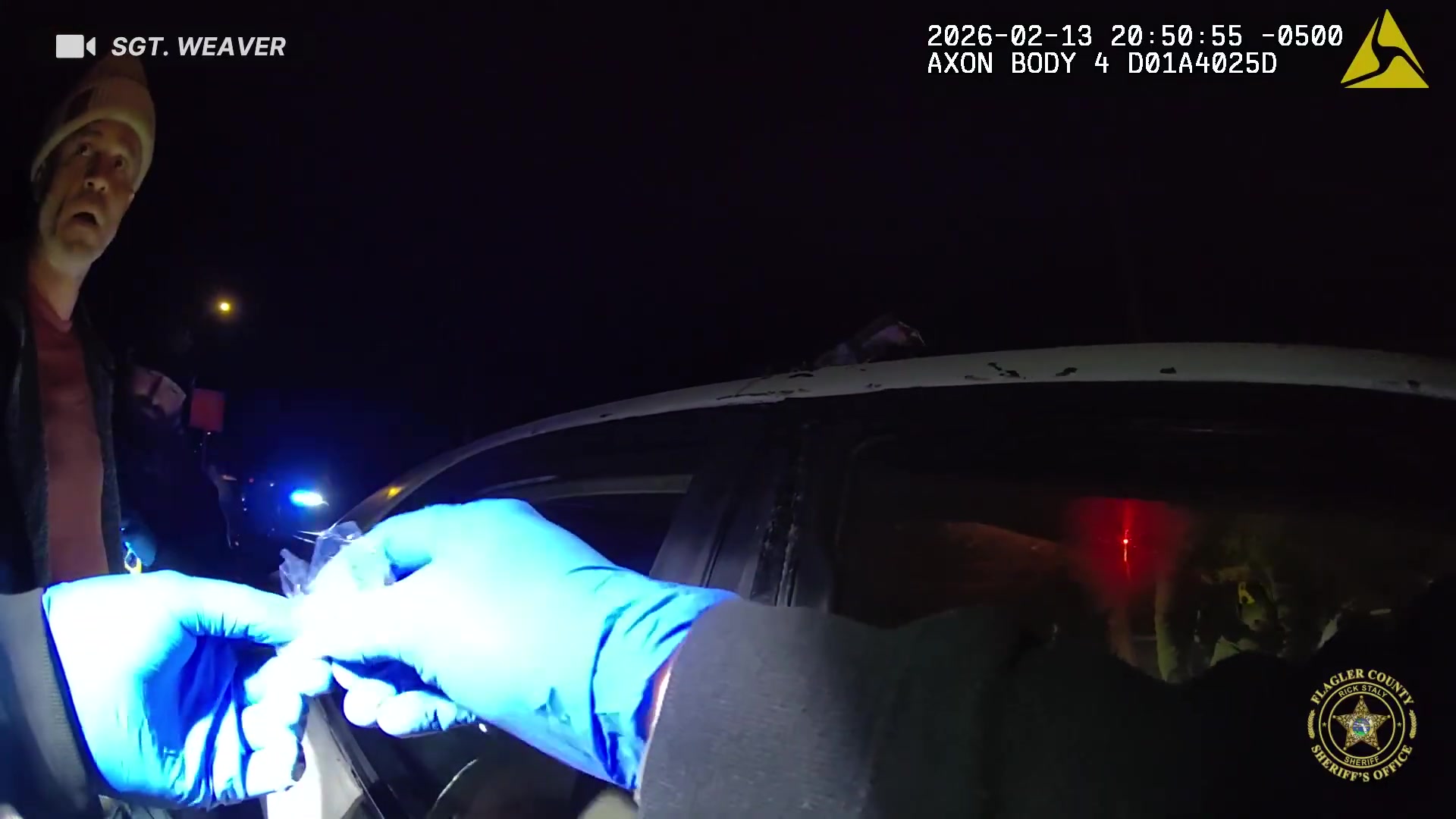
Both were transported to the Sheriff Perry Hall Inmate Detention Facility. The investigation did not end when the traffic stop ended. FCSO said detention deputies conducted a more thorough search at the facility and found another bag of methamphetamine hidden in Pringle’s bra. She was then additionally arrested for introduction of contraband into a county detention facility.
That additional allegation highlights why searches at detention facilities are generally more comprehensive than a roadside pat-down. Correctional facilities tightly control what enters secure areas because contraband can create risks for detainees and staff. An item that reaches a jail can therefore generate an allegation separate from the original possession case.
Sheriff Rick Staly characterized the incident as a simple traffic stop that developed into the arrest of what the agency described as a drug dealer. His statement reflects the sheriff’s office’s enforcement perspective. As with all criminal cases, however, arrest allegations are not the same as a conviction. The defendants retain the ordinary protections of the criminal justice process, and the ultimate disposition of charges depends on later court proceedings.
The sheriff’s office reported that Pringle was released from the detention facility on a $5,500 bond. At the time of the February 17 release, Heighley was being held on a $3,500 bond. Those are the verified custody details published by FCSO; this article does not assume any later court outcome that has not been independently confirmed.
What This Stop Shows About Small Violations and Larger Investigations
The most striking aspect of this incident is not simply that drugs were allegedly found. It is how the investigation began. There was no reported narcotics warrant, high-speed pursuit or preplanned raid. The initiating observation was a glowing ember leaving a vehicle during dangerous fire conditions.
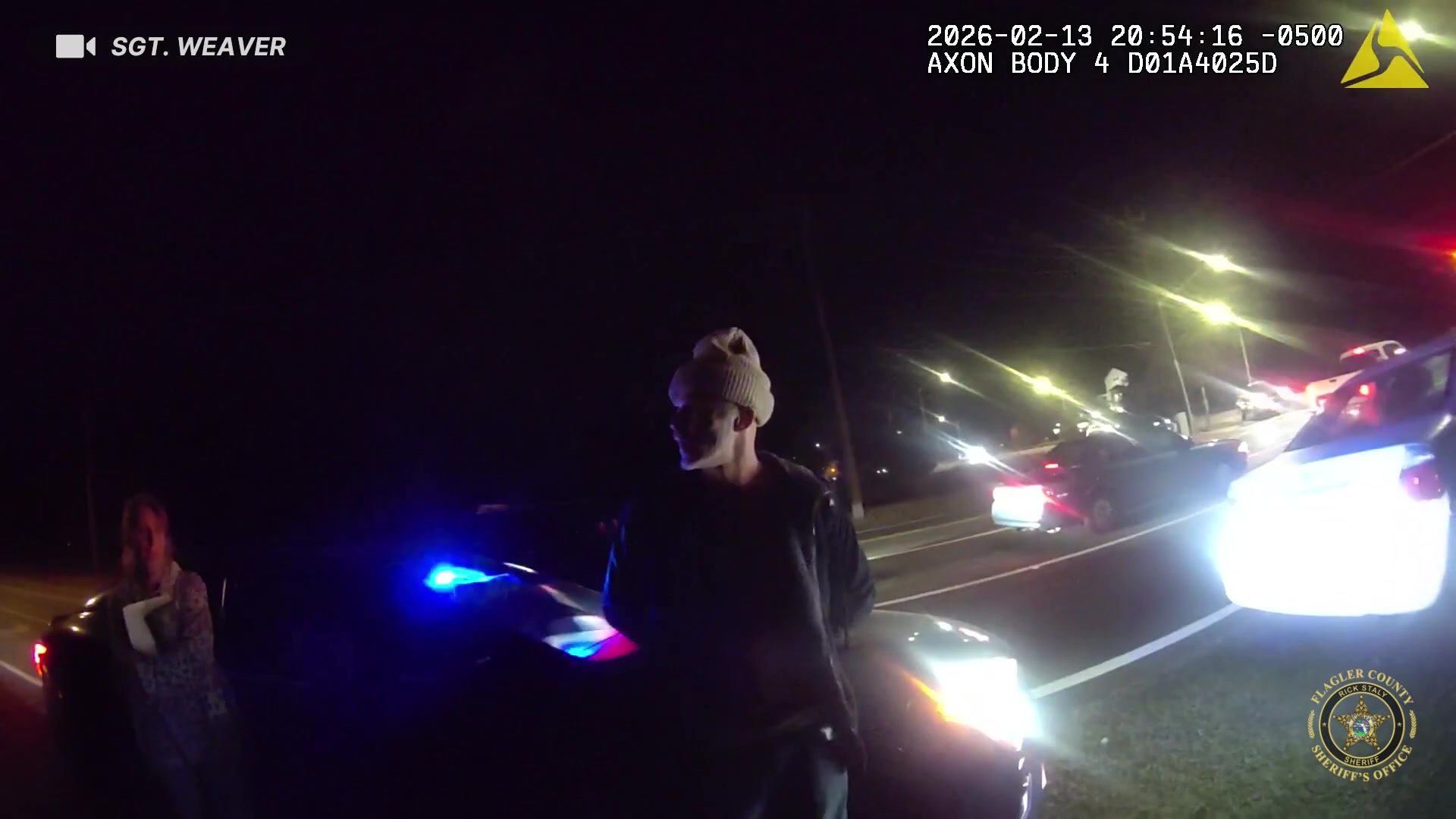
Traffic and public-safety laws routinely create lawful points of contact between officers and motorists. What happens after that contact depends on what officers observe and what legal justification develops. Sometimes the result is only a warning or citation. In other cases, additional facts can expand the scope of an investigation.
Here, the sheriff’s office described a sequence: an observed burn-ban-related violation led to a stop; behavior inside the vehicle raised safety concerns; detectives reported smelling marijuana; searches followed; suspected narcotics were recovered; and two arrests were made. The body-camera footage adds texture to that official timeline by showing the lighting, positioning, communication and uncertainty that written reports compress into a few paragraphs.
PACE itself is an enforcement unit whose name stands for Problem Area Crime Enforcement. Specialized units of this kind commonly focus on recurring crime problems and proactive enforcement. Their presence does not eliminate constitutional requirements. Detectives still need lawful grounds for a stop, detention, search or arrest. In this incident, FCSO publicly explained the progression of observations it says supported the detectives’ actions.
The burn-ban component also deserves attention. Dry weather can turn a discarded ember into a much larger hazard. Florida Statute 590.10 addresses the disposal of lighted matches, cigarettes, ashes and other glowing material that may cause wildfire. FCSO emphasized that the prohibition can apply regardless of whether a local burn ban is currently in effect. During an active ban, however, the surrounding conditions make the public-safety concern especially immediate.
For viewers, the footage is a reminder to avoid judging an entire encounter from a single dramatic frame. The arrest scene is only the end of a chain of decisions. Understanding the case requires looking back to the original observation, the officers’ reported safety concerns, the search and the items the agency says were recovered.
The Roadside Encounter Ends, but the Case Moves Forward
By the end of the footage, the roadside uncertainty has given way to a much clearer outcome: both occupants are in law-enforcement custody and detectives are wrapping up an investigation that began minutes earlier with an ember tossed from a moving car.
The verified public record provides a detailed account of why FCSO says the arrests occurred. It identifies the two people involved, describes the substances detectives reported finding, lists the initial charges and explains the additional contraband allegation made after Pringle arrived at the detention facility. The supplied body-camera footage is consistent with the broad setting and progression described in that release, including the nighttime stop, white sedan, PACE personnel and detention of the occupants.
What should not be added are details the available evidence does not establish. The footage alone cannot prove the chemical composition of a substance, and an arrest does not establish guilt. Likewise, no later conviction or final case disposition should be assumed simply because the sheriff’s office announced the arrests.
That distinction is central to responsible reporting on body-camera footage. Video can make an event feel immediate and complete, but it is still only one form of evidence. Agency reports provide additional facts, while court records ultimately determine how criminal allegations are resolved.
In this case, a seemingly small act on a dry Florida night produced consequences far beyond a traffic warning. A glowing ember brought a white Camry to the roadside. The occupants’ interaction with PACE detectives expanded the investigation. Searches produced substances that the sheriff’s office identified as marijuana and methamphetamine. And two Palm Coast residents left the scene under arrest.
For anyone who wants to understand how quickly the encounter developed, the complete footage provides the missing rhythm that a written account cannot fully reproduce: the initial contact, repeated instructions, officers watching the occupants’ movements, the searches and the moment the traffic stop becomes a narcotics arrest.
See the full footage to watch how a burn-ban traffic stop develops step by step into a two-person narcotics arrest.
Comments (0)
Loading comments...
May You Like
Everything Changed When Cops Asked About Weapons

🚨⛽ Man Caught in a Disturbing Incident at a Gas Station | Police Respond US