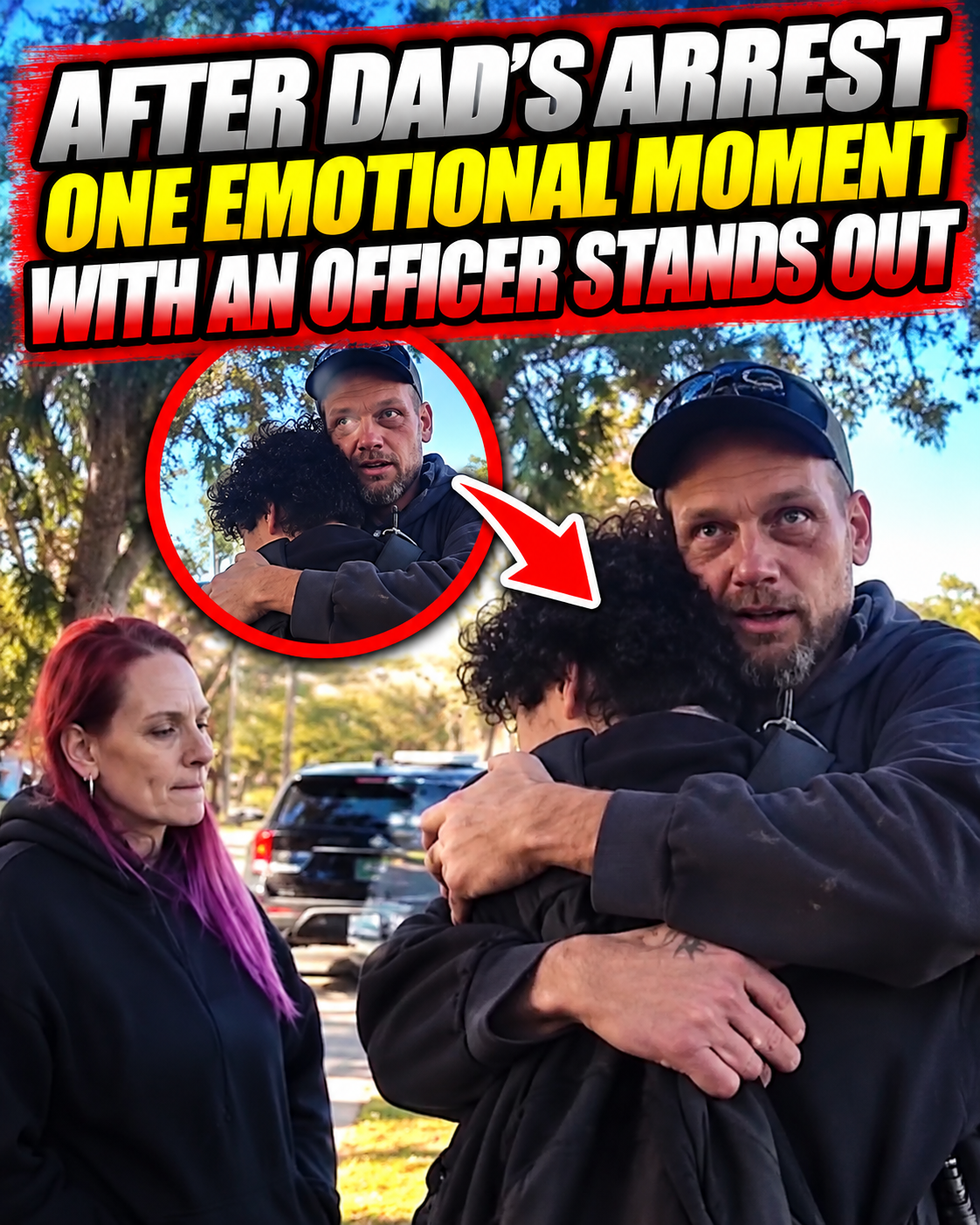
911 Call Leads Police to a Disturbing Family Situation
A Frightened Child Called 911, and What Began as a Domestic Disturbance Ended With an Arrest
The call came in because a child was scared, and that detail stayed with me long after the scene was over. On July 9, 2024, we were dispatched to a residence after a frightened child called 911 asking for help. When we arrived, the first few seconds were almost confusingly ordinary. A woman answered the door and seemed unsure why anyone had called. She said it was probably her kid, that someone had been messing with a phone, and that the children were inside watching a movie. Nothing about the first conversation gave me the full picture. We knew there had been a 911 call, but we didn't yet know what had frightened the child badly enough to make that call. I asked who else was in the house, and she told us Nick was upstairs in a bedroom. When she went to get him, I followed cautiously because I didn't know what we were walking into. Then Nick appeared, and almost immediately I noticed the physical evidence that made the call more serious than a misunderstanding: blood, scratches, and marks that needed to be explained. I introduced myself and asked him to come outside and talk with us. He agreed. He said he was fine and didn't need medical attention, but there was already a tension in the air that didn't match the casual way everyone was talking. He was trying to make the situation sound smaller than it looked. The first explanation was that he and his partner had argued, that their son had become scared, and that somehow the child had ended up calling 911. Then the story shifted. They admitted there had been physical contact. They said they had been pushing each other while arguing, both trying to pull the other away. She had red marks around her neck. She had bruising. Some injuries had explanations unrelated to the argument—eczema, a grease burn from the previous September, and a tendency to bruise easily—but when I asked about the bruising that looked more recent, she started crying and said it was probably because of him. That was the moment the scene changed for me. The house wasn't simply a place where two adults had gotten loud. A child had been frightened enough to call for help, and now we were standing in a home where both adults were giving different pieces of the same story.
Nick gave us his version next. He spoke quickly, jumping between details about where he had been, who he had picked up, how much he had or hadn't been drinking, and what happened after he returned home. He said he had gone to get his girlfriend because she had been drinking. He insisted that he had not been drinking while driving and that he only started drinking after he arrived at the house. He described the argument as something that escalated after he questioned why she had been drinking so much. According to him, she began hitting him, and he was only blocking her. He denied pushing her. He denied hitting her. He kept returning to the same point: he was only trying to stop the fight. But his own story contained details that made the situation more complicated. He admitted there had been an altercation with another woman in his life, referred to as his other child's mother, and he talked about drinking after arriving at the residence. He said he and his current partner had been together on and off for years. He also seemed intensely focused on his children and on what he believed other people had done to them. That concern was genuine in the way he expressed it, but it also revealed how quickly his anger could become physical. He described a previous confrontation involving another family, a brick thrown through a window, and a violent fight that he said happened because he believed someone had touched or mistreated his children. He spoke about striking another man and threatening him. I listened because those statements mattered to understanding the state of mind we were dealing with, but I also knew something important: whatever had happened in the past wasn't the same thing as what had happened tonight. We couldn't simply use his history to decide the current case. We had to establish what happened here, with these people, in this house, on this night. That meant separating everyone and getting an independent account. The witness who had called gave us something neither adult inside the home could provide.
The witness had been walking a dog when she heard children screaming and crying. At first she didn't hear the adults. Then she heard a man and a woman shouting back and forth. She remembered hearing one of them say something like, “You're not leaving,” while the other objected. She moved closer because the children were screaming, and from where she stood, the door was open enough for her to see inside. She told us she had even started recording on her phone, but the phone battery had died. That mattered because she wasn't simply repeating something she'd heard from one of the people involved. She had been outside, watching and listening before we arrived. Her account was careful, too. She didn't pretend to know everything. She said she heard the children first, then the adults. She said the children temporarily stopped screaming while the adults argued, and then the children started again. She described Nick moving in front of the woman, blocking her and shoving her while yelling “No, no, no” in a loud and violent voice. She said she saw the woman hit him back, but only after he had already moved toward her and started shoving. When I asked who hit whom first, she didn't give me an absolute answer. She said it looked like he had struck first, but she couldn't be certain. That distinction mattered. A witness who admits what she cannot see clearly is often more useful than someone who claims certainty about every detail. She had called law enforcement only after seeing the physical confrontation. Before that, she had been trying to figure out what was happening. From our perspective, her account helped connect the injuries, the children's fear, and the argument into one sequence. But there was still another piece of the puzzle: what to do with everyone now that the immediate violence had stopped.
At first, the goal wasn't simply to arrest somebody. It was to separate the people involved and prevent the argument from starting again. Nick repeatedly said the apartment was his. He wanted to stay there. He wanted his son with him. He wanted his mother to come get him. We explained that because alcohol had been involved and because there had been a disturbance with children present, we needed everyone separated for the night. His mother was contacted. Another family member offered to come get him. For a few minutes, it seemed like we might be able to end the night without anyone going to jail. Nick kept asking what was happening and whether he could go inside to get his belongings. We allowed him to gather some things while trying to keep the adults from provoking each other. He wanted his charger. He wanted his son. He wanted to know where his mother was. Underneath all of that was a question he kept circling back to: “Am I going to jail?” I didn't have to answer immediately because we were still trying to resolve the situation peacefully. I told him we were trying to get him somewhere safe for the night. He didn't like that answer. He became increasingly frustrated, and the language became more aggressive. He talked about running if we tried to take him to jail. He talked about how this was his apartment. He said he would stay with his brother if necessary, but he didn't want to leave his home. At the same time, the people around him were becoming more agitated. The children were still part of the equation. Every raised voice had the potential to undo everything we had accomplished since arriving. That's why we kept repeating the same instruction: separate, calm down, wait for the ride, get through the night without another fight. Sometimes police work is not about making a dramatic move. Sometimes it's about trying to keep a bad situation from becoming worse. And for a while, that seemed possible.
The mother of the children became the person I spoke with next, and that conversation showed me what the original 911 call had really changed. She explained that she and Nick had been together for around five years, on and off, with alcohol being one of the recurring problems. I told her something difficult but necessary: her children couldn't keep watching adults fight and expect it to have no consequences. I remembered the difference between the child we had encountered when we arrived and the child we saw later. When we first got there, Xavier was scared. Later, he was calmer. He was no longer carrying the same fear because the adults had been separated and the immediate conflict had stopped. He was nine years old, or about to turn nine, and that mattered. A child that age shouldn't be responsible for calling 911 because the adults in the house cannot control an argument. I told her that the children had to come first, even if she loved Nick, even if the relationship had lasted years, even if separating from him was complicated. I wasn't telling her that walking away from someone she loved was easy. I was telling her that the children were watching. Alcohol might explain why Nick became a certain way, but it couldn't erase what the children experienced. She understood. She admitted that alcohol was a major problem in their relationship. I told her there were people who could help and that asking for help wasn't something she needed to be ashamed of. I've been doing this job long enough to know that some people are embarrassed to admit they need assistance. They think reaching out means they failed. But sometimes reaching out is exactly what prevents a family from reaching a point where the next 911 call is even worse. That conversation could have been the end of the night. Nick could have gone with his family, the woman could have stayed with the children, and everyone could have had time to cool down. But then the temperature outside the house started rising again.
A family member arrived, and instead of quietly leaving, the emotional history between the men began spilling into the street. Nick's anger turned toward another man who approached the scene. They argued about old grievances, football numbers, insults, children, and respect. It was the kind of argument that made it obvious the original disturbance had not happened in isolation. There were layers of resentment underneath it. One man accused another of saying terrible things to his nephew and children. Another person said he had come only to get Nick out of the situation. They were both angry, but we needed everyone to understand that this wasn't the time to settle old scores. We kept telling them to back up and calm down. One person even said that if we hadn't been there, he would have hit Nick. That statement told me exactly why separation mattered. The people around Nick were angry enough to fight him, and Nick was angry enough to fight back. If we allowed those emotions to collide, the original disturbance could have become a much larger scene. Nick continued insisting that he wasn't leaving. He said the house was his. He said he would stay with his brother or in a vehicle if he had to, but he wasn't going anywhere. We gave him multiple opportunities to leave voluntarily. We told him to get some sleep, drink some water, and stay away from the people he had been arguing with. We weren't trying to humiliate him. We were trying to create distance. But then his frustration crossed another line. He began challenging the officers directly, telling us to put hands on him, asking whether we were going to hit him, and stepping into the confrontation instead of backing away. The more we told him to relax, the more he pushed back. Finally, someone said the words that changed the rest of the night: take him to jail.
The arrest didn't happen because everyone had suddenly forgotten what we had been trying to do. It happened because the opportunity to resolve the situation peacefully had been repeatedly offered, and the situation continued escalating. Nick was told he was under arrest. Almost immediately, he wanted to know whether he could call his mother. He didn't want to go. He said he hadn't hit anyone. He said he had pushed someone. The distinction mattered to him, but from our perspective, the physical contact we had witnessed and the statements we had received could not simply be ignored because he described it differently. One officer told him plainly that pushing someone was still physical contact that could constitute a battery under the circumstances. Nick continued arguing. He wanted another chance. He wanted us to stop. He wanted to make the call before getting into the vehicle. But the moment had passed. We had already spent a long time trying to get him out of the environment without an arrest. Now we needed to safely place him in the vehicle. Even after being told repeatedly, he resisted getting in. He said he wasn't there to fight. We told him we weren't there to fight either. That's one of the strangest moments in scenes like this: both sides can say they don't want a confrontation while standing only inches away from creating one. Eventually, Nick was taken into custody. The family member who had come to help was visibly frustrated. He said he had come to get Nick out of trouble, not to watch him go to jail. But he also admitted that without law enforcement there, he probably would have fought him himself. I understood the anger. I also understood why that couldn't be allowed. Once we arrived, our job wasn't to decide who deserved to be punched. Our job was to keep everyone safe and deal with the conduct that had already occurred.
As Nick was taken away, I kept thinking about the beginning of the call. A child had picked up a phone because something inside that house frightened him enough to believe strangers with badges might be safer than the adults around him. That was the detail I couldn't shake. By the end of the night, the adults were still arguing about who started what, who pushed whom, who drank first, who owned the apartment, who had disrespected whose child, and who was going to get the last word. But the child didn't care about any of that. He needed the adults to stop. When we first arrived, he was scared. Later, he was calmer. That change was visible. It was the clearest measure of what separating everyone had accomplished. Nick's arrest didn't solve the family's deeper problems, and nobody pretended it did. The relationship had lasted years. Alcohol had been part of the conflict. There were children caught in the middle. There were old grudges between family members. There were allegations of physical violence from both sides, and the witness's account provided an outside perspective on what she saw. But the most important lesson from that night wasn't about one argument or one arrest. It was about what happens when adults keep treating every confrontation as something they can handle themselves until the children become the ones asking strangers for help. I told the family that help existed, that they didn't have to face everything alone, and that the courts or police could intervene, but lasting change still required the people involved to accept help themselves. We could separate them for one night. We could make an arrest. We could make sure the children were safe in that moment. But we couldn't go home with them. We couldn't control what happened tomorrow.
I remember the last part of the night because there was something almost painfully ordinary about it. Someone was worried about a car seat. Someone else was looking for a charger. A mother was waiting for family to arrive. A man was still angry about being arrested. Another man was still angry about what he believed had been said to his nephew. And somewhere in the middle of all of it was the child whose fear had started the entire chain of events. That's what domestic disturbance calls can hide from the outside. On a report, it can become a few lines: deputies dispatched, parties separated, witness interviewed, suspect arrested. But inside the house, those few lines represent children hearing adults scream, a neighbor hearing crying through an open door, injuries that need explanations, alcohol making tempers shorter, and family members arriving with years of resentment already loaded into every sentence. The 911 call was small. The consequences were not. I don't know what happened to that family after we left, and the transcript doesn't establish the final outcome beyond Nick being taken into custody. But I know what I saw that night. I saw a child who was afraid enough to ask for help. I saw adults who initially tried to minimize what happened, then gradually revealed a much more complicated picture. I saw a witness who stepped forward because she heard children crying. I saw family members who wanted to protect their own but were also close to turning protection into another fight. And I saw how quickly a night that could have ended with everyone simply going their separate ways became an arrest because the conflict wouldn't stay contained. The hardest part of this job is sometimes understanding that you cannot fix a family in one night. You can only create a little space, stop the immediate danger, protect the people who need protection, and hope that the people involved use that space to make different decisions afterward. That night, a child made the first decision. He picked up the phone. And everything that followed began with someone small enough to be frightened, but brave enough to ask for help.
Comments (0)
Loading comments...
May You Like

UCF Student’s Pronoun Dispute With Campus Police Escalates Into an Arrest

West Virginia Man Laughs at Police Officer and Ends Up Arrested

High-Speed CHP Chase Ends When Spike Strips Stop Suspect