
17-Year-Old Flees Police at 120 MPH in a Stolen Audi
17-Year-Old Flees Police at 120 MPH in a Stolen Audi
Verified case: The supplied footage matches a County Durham pursuit involving a 17-year-old driver in a suspected stolen Audi S5. Police radio in the footage reaches approximately 140 mph. Officers use a stinger and coordinated box-in before arresting the teenager. Later reporting says he pleaded guilty to dangerous-driving and burglary-related offences.
A Suspected Stolen Audi Refuses to Stop
A black Audi S5 moving through County Durham turns an ordinary police sighting into a high-speed pursuit almost immediately. The driver is only 17 years old, according to reporting accompanying Durham Constabulary's released footage. Officers believe the Audi is stolen, signal for it to stop, and quickly discover that the teenager has no intention of pulling over.
The supplied video is approximately six minutes and fifty seconds long and combines pursuit dashcam with body-worn footage from the arrest. The opening sequence places viewers directly behind the Audi as officers coordinate over the radio. The yellow rear registration plate, Audi badge and S5 marking are clearly visible. What follows is not a slow attempt to evade police through residential streets. The Audi accelerates hard enough that trained pursuit officers repeatedly call out triple-digit speeds.
The original title says the teenager flees at 120 mph. That is close to the event, but the footage and subsequent reporting indicate the pursuit became even faster. Radio traffic includes speeds around 117 mph before officers report 130 mph and then 140 mph while the Audi continues pulling away.
The chase would eventually cover roughly six miles. Police would use a stinger to damage a tyre, coordinate multiple vehicles around the Audi and finally box it in. The teenage driver would be pulled from the car and arrested. Later reporting says he pleaded guilty to dangerous-driving and burglary-related offences and was remanded in custody pending sentencing.

The Pursuit Builds on the A167
The police radio gives the chase a structure that the camera alone cannot. Officers call out direction, road names, traffic conditions and speed while other units move into position.
The Audi travels northbound on the A167 toward Chilton. At one stage, the pursuit is assessed as medium risk. That description does not mean the driving is safe. It is part of the dynamic risk process used during a pursuit, where police continually consider speed, road conditions, traffic, the suspected offence and the danger created by continuing or abandoning the chase.
The pursuing officer describes the Audi as a high-performance car. An Audi S5 is capable of accelerating rapidly and sustaining speeds far above normal road limits. Police cannot assume a marked patrol car will simply close the gap.
As the teenager accelerates, the pursuing unit has to balance keeping visual contact against creating additional danger. Radio coordination becomes as important as raw speed. Officers further ahead can prepare tactics that do not require the primary pursuit vehicle to catch the Audi by acceleration alone. That is exactly what begins to happen as the radio discussion turns toward placing a stinger in the Audi's path.
117 MPH Is Only the Beginning
The speed calls in the footage make the risk increasingly clear. Police report approximately 117 mph as the Audi approaches a roundabout. The car continues rather than slowing enough to end the pursuit.
A vehicle traveling at 117 mph covers more than 170 feet every second. At those speeds, a driver's available reaction time collapses. A lane change, unexpected vehicle, road debris or misjudged bend can become catastrophic before either the fleeing driver or the pursuing officers have much time to respond.
The teenager is not on a closed track. The dashcam shows ordinary public roads, roundabouts and other traffic. That distinction is why dangerous-driving cases focus not merely on a speed number but on the nature of the driving.
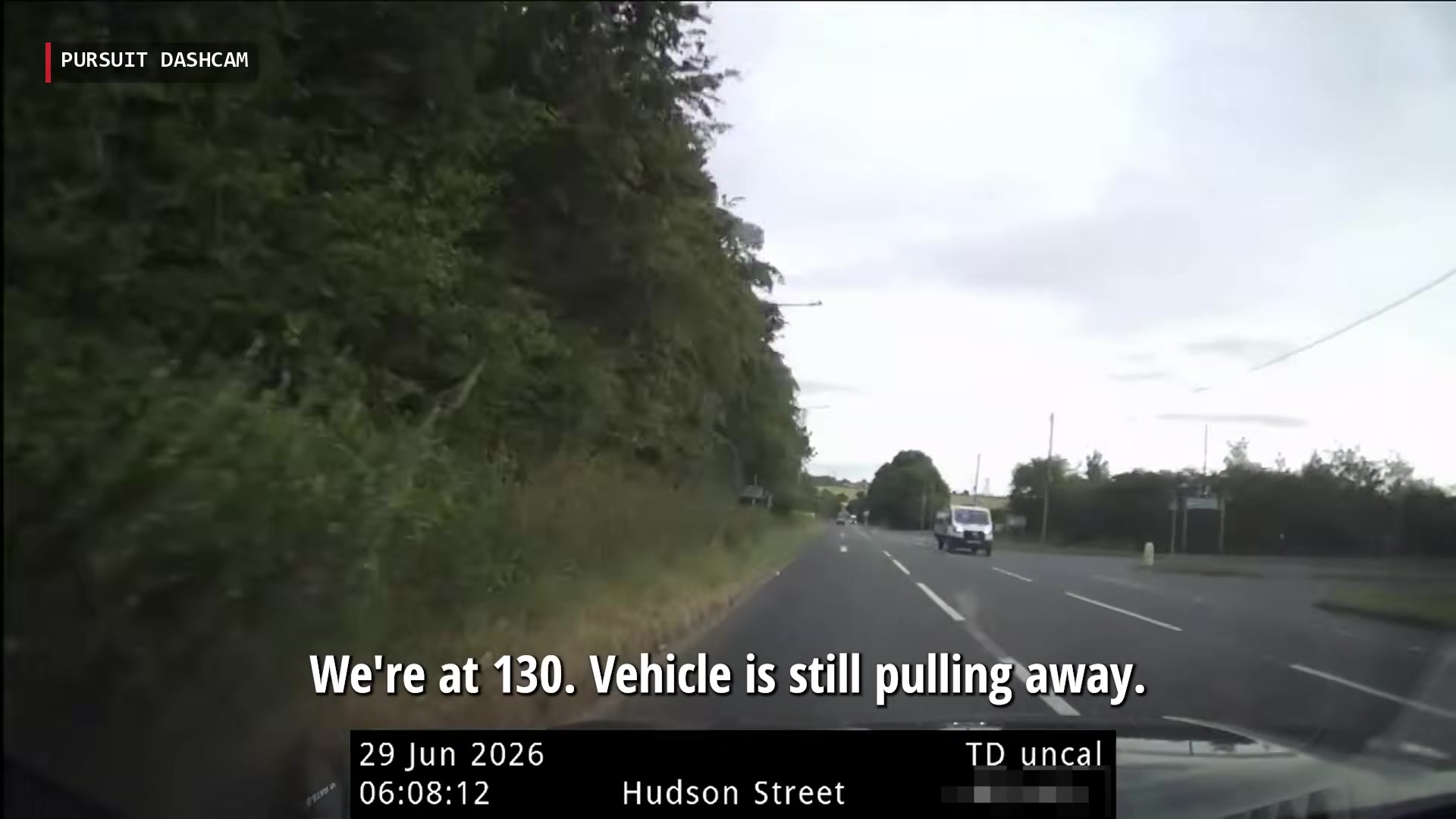
The footage later becomes even more serious. Radio traffic indicates the pursuing vehicle is reaching around 130 mph, then 140 mph, while the Audi is still pulling away. The original 120 mph title therefore understates the peak speed reported during the pursuit rather than exaggerating it.
Police Plan a Stinger Instead of Relying on Speed
With the Audi maintaining extreme speed, officers begin coordinating a tyre-deflation device. In Britain these devices are commonly referred to as stingers. They are designed to puncture tyres in a controlled way so that pressure is lost and the vehicle becomes progressively harder to drive at speed.
Deploying a stinger during a live pursuit requires timing. An officer has to position the device across the suspect vehicle's path and then avoid being exposed to the approaching car. Other police units must know where the deployment is taking place so they do not accidentally drive over it.
The radio traffic shows officers adjusting the plan as the Audi's position changes. Thinford and Metal Bridge are mentioned as units try to anticipate where the car will go. This is one of the clearest examples in the video of a pursuit being managed as a coordinated operation rather than one police driver simply chasing another car.
The Audi Reaches Around 140 MPH
The most startling radio call comes as the pursuit officer reports speeds of roughly 130 mph and then 140 mph while saying the Audi is still pulling away.
That moment changes the scale of the incident. A teenage driver in a suspected stolen performance car is now moving at speeds that leave almost no margin for error on a public road. At 140 mph, a vehicle travels more than 200 feet per second. Even a brief distraction can carry the car the length of a large building.
The pursuit footage shows why police want to end the chase without simply matching every acceleration. The faster both vehicles travel, the greater the potential consequences for uninvolved road users. The stinger plan therefore becomes increasingly important. If officers can damage a tyre and force the Audi to reduce speed, they can move from pursuit to containment.
The Stinger Finally Connects
The planned deployment works. The Audi passes over the stinger and police immediately confirm over the radio that the vehicle has been stung. The effect is visible soon afterward. Smoke begins appearing around the front tyre area as the Audi continues moving.
The driver does not immediately surrender. Even with a damaged tyre, the car continues along the route. Police report the speed falling but remaining high, around 90 mph as the pursuit approaches another roundabout.
This phase is dangerous in a different way. A car with a deflating or damaged tyre can become less predictable. Steering response changes, braking can be affected and the tyre may begin breaking apart. Police now have an advantage, but they still need to stop the Audi without turning the damaged vehicle into a new hazard.
A Damaged Tyre Does Not End the Escape Attempt
The dashcam follows the Audi as the damaged front tyre produces increasingly obvious smoke. The teenager still tries to keep moving.
This is where the pursuit begins shifting from speed to containment. The Audi can no longer exploit its performance as effectively, and multiple police units can close the available space around it.
The driver also moves through road layouts where officers can anticipate the route. Radio calls allow units to coordinate positions instead of reacting independently. The footage demonstrates why the stinger is valuable. Police do not need the Audi to stop instantly. They need its ability to flee to deteriorate enough that containment becomes possible.
Officers Move in for the Box-In
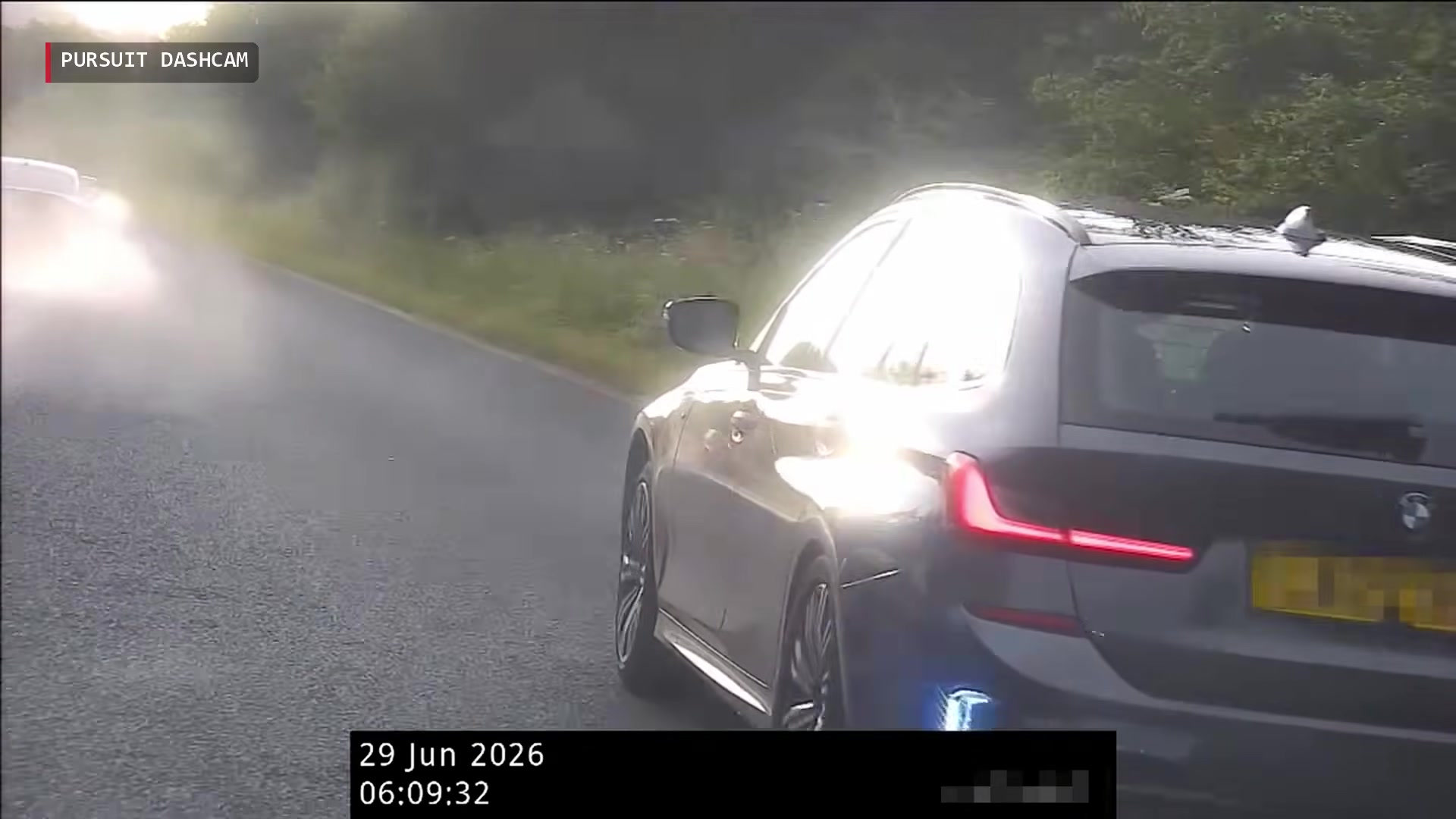
Several police vehicles converge around the Audi. The goal is to remove the open road the teenager has been using to escape.
A box-in uses police vehicles to restrict movement from the front, rear and sides. When successful, it can end a pursuit without waiting for the fleeing driver to lose control or crash.
The supplied footage shows officers closing the gaps around the damaged Audi. The teenager's options disappear quickly. The containment works. The Audi is brought to a stop and the footage changes from pursuit dashcam to the body-worn camera of officers making the arrest.
The Window Is Broken and the Driver Is Pulled Out
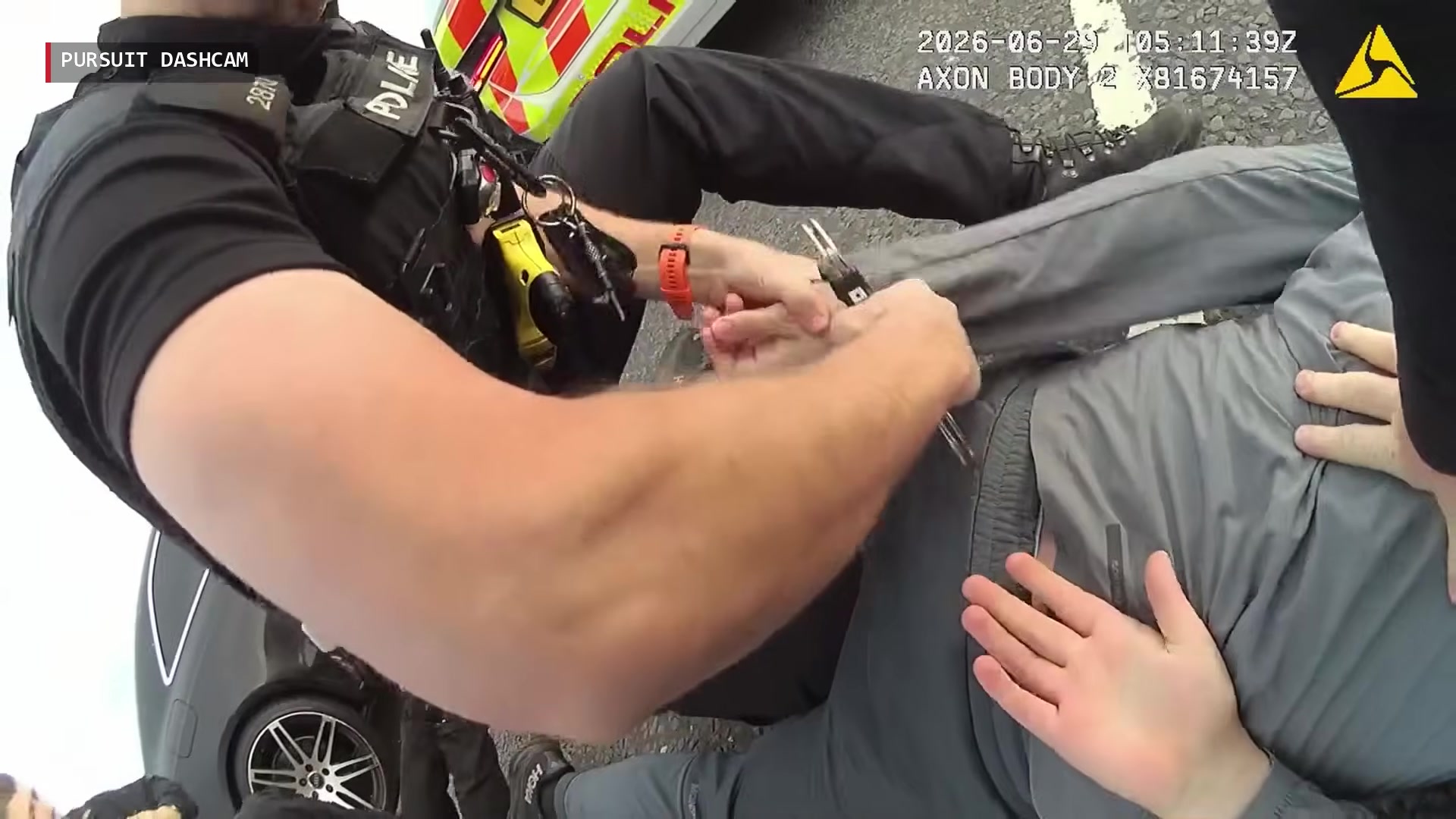
The body-camera sequence is abrupt and physical. Officers surround the Audi and order the driver out. A window is broken to gain access, and the teenager is pulled from the vehicle onto the roadway.
An officer has a Taser ready as the arrest team works to control the driver's hands. Within moments, the teenager is on the ground and being handcuffed.
The speed of the extraction makes sense in context. Officers have just spent miles trying to stop a driver who repeatedly refused to surrender and continued even after a tyre was punctured. Leaving him in control of the Audi would preserve the possibility of another escape attempt.
Because the driver was 17, British reporting appropriately does not publicly identify him, and this article does not attempt to do so.
The Search of the Audi Raises New Questions
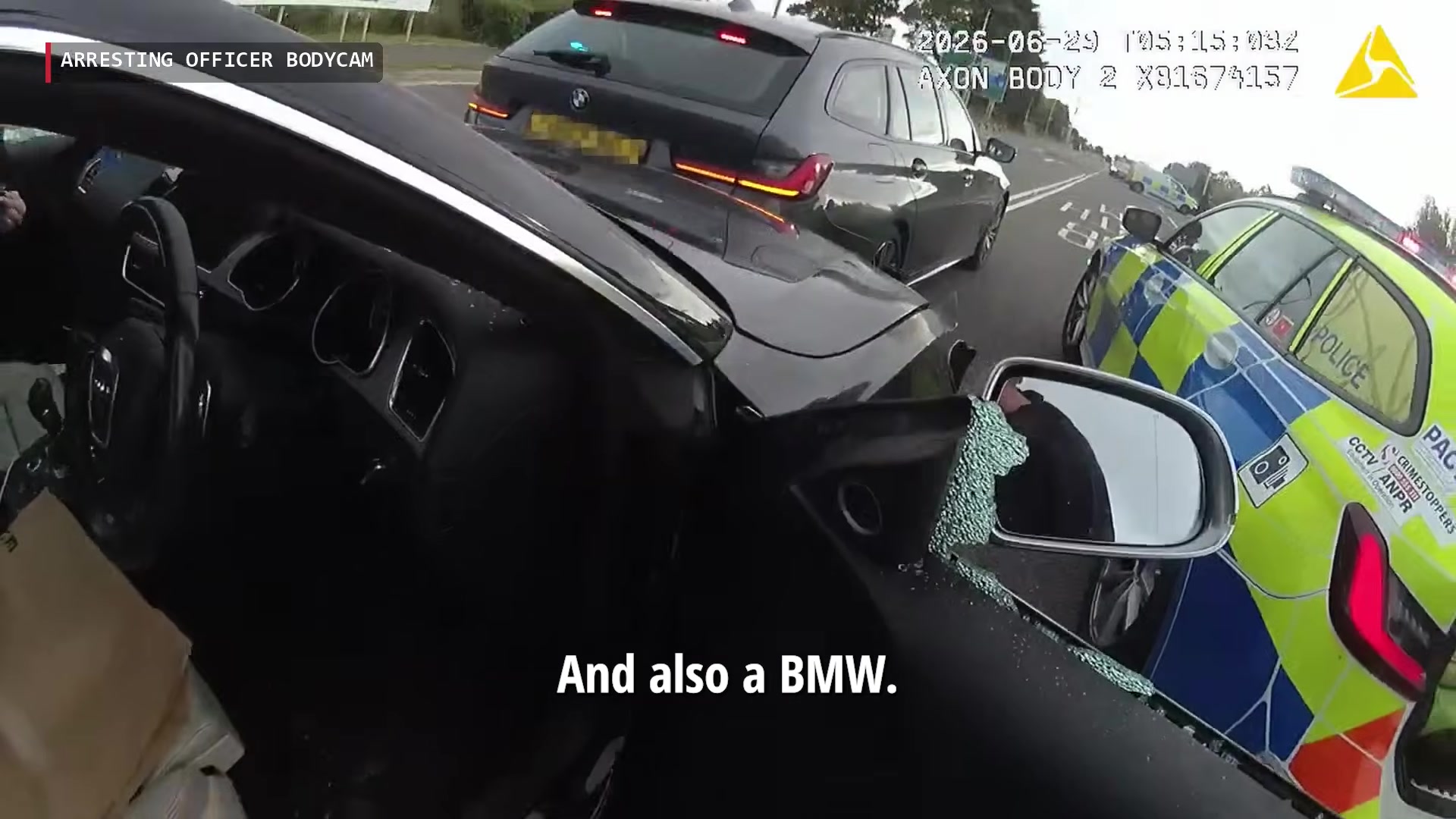
After the arrest, officers begin examining the Audi. The footage focuses on the center-console area and several sets of keys. Reporting accompanying the release says officers found keys associated with multiple vehicle makes, including Ford, Mercedes-Benz, BMW and Audi, along with house keys.
That discovery helps explain why the case did not end as a dangerous-driving prosecution alone. Police connected the teenager to burglary-related offending as well.
Possession of multiple vehicle keys is not automatically proof of theft by itself. Context matters, and prosecutors still need evidence connecting property to specific offences. But the items recovered from a suspected stolen car clearly gave investigators additional lines of inquiry.
The video therefore shifts from a road-policing incident into evidence collection. What looked like a chase story becomes part of a broader criminal case.
Why the Driver’s Age Matters
The driver was reported to be 17 years old. That fact is striking because of the level of driving involved. The teenager was operating a high-performance Audi at speeds well beyond normal limits while being pursued by specialist police units.
His age also affects how the criminal justice system handles his identity. Youth defendants in England and Wales are generally protected by reporting restrictions that prevent routine publication of identifying details.
For that reason, this article does not attempt to identify him from the body camera, social media or speculation. The legal consequences can still be serious, but the sentencing framework for a youth differs from that applied to an adult.
The Later Guilty Plea Changes the Legal Language
Unlike cases where only an arrest is known, later reporting provides an important update here. The teenager was reported to have pleaded guilty to offences including dangerous driving and burglary-related offences. He was remanded in custody and was due to be sentenced in October 2026.
That means it is no longer necessary to describe every aspect of the driving case merely as an allegation. A guilty plea changes the legal status, although the exact sentence remains a separate question until the court imposes it.
As of the latest reporting used for this article, sentencing was still expected later, so no prison term or final driving ban is invented here.
The Chase Was Roughly Six Miles Long
Police said the pursuit covered approximately six miles. That may sound short compared with some long-distance chases, but at the speeds shown in the video six miles can disappear in only a few minutes.
The compressed distance is part of what makes the footage intense. Officers have very little time to make tactical decisions. A stinger location that looks suitable can become useless seconds later if the Audi takes another exit or roundabout.
The radio therefore becomes the backbone of the operation. Pursuit officers describe what they see while units ahead prepare. By the time the Audi is boxed in, several separate police actions have already succeeded: the car has been tracked, the route communicated, the stinger deployed, the damaged vehicle contained and an arrest team positioned.
The Footage Shows the Value of Specialist Roads Policing
High-speed pursuits demand skills beyond ordinary patrol driving. Specialist officers are trained to assess risk, maintain pursuit positioning, communicate clearly and use tactics such as stingers and coordinated containment. The video gives viewers a practical example of those systems working together.
No tactic can make a 140 mph pursuit risk-free. The safest outcome is always for a driver to stop when required. Once the Audi fails to stop, officers have to manage the danger created by the continuing escape attempt.
The pursuit ends without the kind of major collision that could easily have occurred at the reported speeds. The combination of tyre deflation and box-in tactics reduces the need to wait for the Audi to crash on its own.
Why 120 MPH Does Not Tell the Whole Story
The original title is effective because 120 mph already sounds extreme for a 17-year-old in a stolen performance car. The actual footage makes the event even clearer. Police radio reports around 117 mph early in the chase, then approximately 130 mph and 140 mph.
For a rewritten title, keeping 120 mph stays close to the original wording. For the article itself, however, the higher pursuit calls should not be ignored.
The difference illustrates why video analysis matters. A headline can be broadly correct while leaving out the most important detail visible in the footage. Here, the Audi was not merely touching 120 mph for an instant. Officers were reporting extreme speed while the car continued pulling away.
A Stolen Performance Car Is a Difficult Pursuit Target
Performance cars create a specific problem for police. Acceleration can rapidly open a gap, especially when the fleeing driver is willing to take risks that trained police drivers are not.
The black Audi S5 in the footage has enough performance to make that problem obvious. The pursuit vehicle can be heard working hard while officers continue calling out the Audi's speed and direction.
But police do not need to win a race. They need to end the incident. That difference explains the tactical progression in the footage. Officers change the environment around the Audi: units move ahead, a stinger removes tyre performance, and police vehicles close around the car. The teenager's mechanical advantage disappears once the road ahead is controlled.
The Arrest Is Not the End of the Investigation
Once the driver is handcuffed, officers still have work to do. They need to secure the Audi, document its condition, identify its rightful owner and preserve anything inside that may be evidence. The keys recovered from the center console become especially important because of the burglary investigation.
Officers also have to record damage created during the stop, including the broken window and tyre damage caused by the stinger. Body-worn video helps preserve that process. It shows where items were located and what officers were doing immediately after the arrest.
That evidentiary role is easy to miss when viewers focus only on the chase. The same cameras that make the pursuit dramatic also create a record that can later be examined by investigators, lawyers and the court.
What Can Be Verified From the Footage and Reporting
The central facts are unusually well supported. The supplied video shows a black Audi S5 pursued by police in County Durham. Radio traffic places the pursuit on roads including the A167 and references locations such as Chilton, Thinford and Metal Bridge. Speeds rise from around 117 mph to radio calls of 130 and 140 mph. Officers deploy a stinger, the Audi continues with a damaged tyre, police box it in, and a teenage driver is removed and arrested.
Public reporting identifies the driver as 17 and the Audi as suspected stolen. Later reports say he pleaded guilty to dangerous driving and burglary-related offences, was remanded in custody and was due for sentencing in October 2026.
The exact date displayed in the edited camera footage and dates used in some secondary reports are not perfectly consistent, so this article does not rely on a disputed calendar date as a central fact. The route, vehicle, age, pursuit tactics and legal outcome match the released case.
From 140 MPH to Handcuffs in Minutes
The chase begins with a performance car that appears capable of simply outrunning the police vehicle behind it. For a time, that impression is understandable. Officers report 130 mph, then 140 mph, and the Audi is still pulling away.
But a pursuit is not decided only by horsepower. Radio coordination puts officers ahead of the car. A stinger damages a tyre. The Audi's speed falls. Additional police vehicles close the available space. The teenager is boxed in, the window is breached and the driver is removed before he can restart the chase.
Then officers look inside and find multiple sets of vehicle and house keys, widening the investigation beyond the dangerous driving captured on dashcam. Later, the teenager pleads guilty to dangerous-driving and burglary-related offences.
The entire sequence lasts only minutes on camera, yet it moves through nearly every stage of a modern vehicle pursuit: detection, failure to stop, risk assessment, extreme speed, tactical planning, tyre deflation, containment, extraction, arrest and evidence recovery.
The original title says a 17-year-old fled at 120 mph in a stolen Audi. The footage shows an even more remarkable reality: police radio reached roughly 140 mph, and the Audi was still trying to get away.
Comments (0)
Loading comments...
May You Like

Everything Changed When Cops Asked About Weapons

💨 High-Speed Police Pursuits Caught on Dashcam | Intense Moments Across the USA 🇺🇸

Woman Refuses Repeated Orders to Exit Her Car Before Officers Move In














