130 MPH ROLLOVER: Wanted Fugitive Plays Dumb & Trooper Hospitalized after Crash
DRIVER CLOCKED ABOVE 130 MPH — THEN A TROOPER'S CRUISER ROLLS DURING THE PURSUIT
It was late at night on Route 101 in New Hampshire when a state trooper spotted a Toyota Camry moving at an extraordinary speed.
MORE THAN 130 MILES PER HOUR.
At that speed, a vehicle travels almost 200 feet every second.
The trooper moved to stop it.
But instead of slowing down, the driver continued.
What followed would stretch across multiple roads, involve a devastating rollover involving a police cruiser, send a trooper to the hospital and trigger a search for a driver who authorities said still refused to surrender.
Then, approximately 15 minutes after disappearing from the first crash scene, police found the Toyota again.
The pursuit started all over.
This time, it would be the fleeing car that ended up overturned in the woods.
The driver was identified by New Hampshire State Police as 56-year-old Michael Holt of Brentwood.
MORE THAN 130 MPH ON ROUTE 101
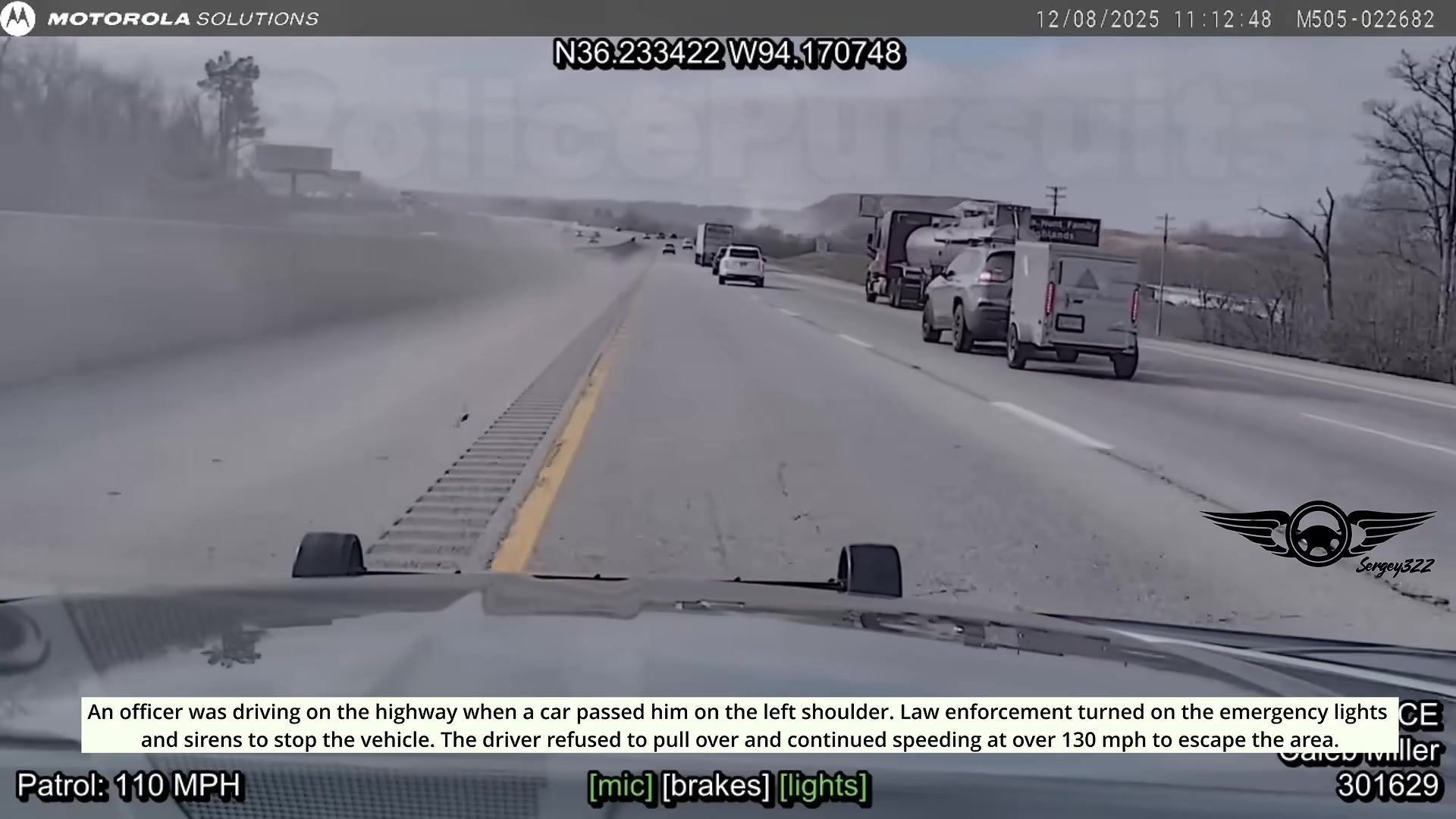
The incident began at approximately 11 p.m. on Friday, January 3, 2025.
According to New Hampshire State Police, a trooper was working in the Exeter area when he observed Holt's Toyota Camry traveling westbound on Route 101 near Exit 11.
Police estimated its speed at more than 130 mph.
That is not simply ordinary speeding.
Route 101 is a major divided highway, and traveling at that speed dramatically reduces the time available to react to other vehicles, curves, exits or unexpected hazards.
The trooper attempted to pursue.
Holt allegedly continued at high speed and eventually left Route 101 for Epping Road in Exeter.
What had begun as an extreme-speed traffic violation had now become a police pursuit.
And within minutes, the consequences became serious.
THE TROOPER'S CRUISER ROLLS OVER
As the pursuit continued through Exeter, the trooper encountered a dangerous section near the intersection of Epping Road and Old Town Farm Road.
The police cruiser left the roadway and rolled.
Suddenly, the officer who had been pursuing Holt needed emergency assistance himself.
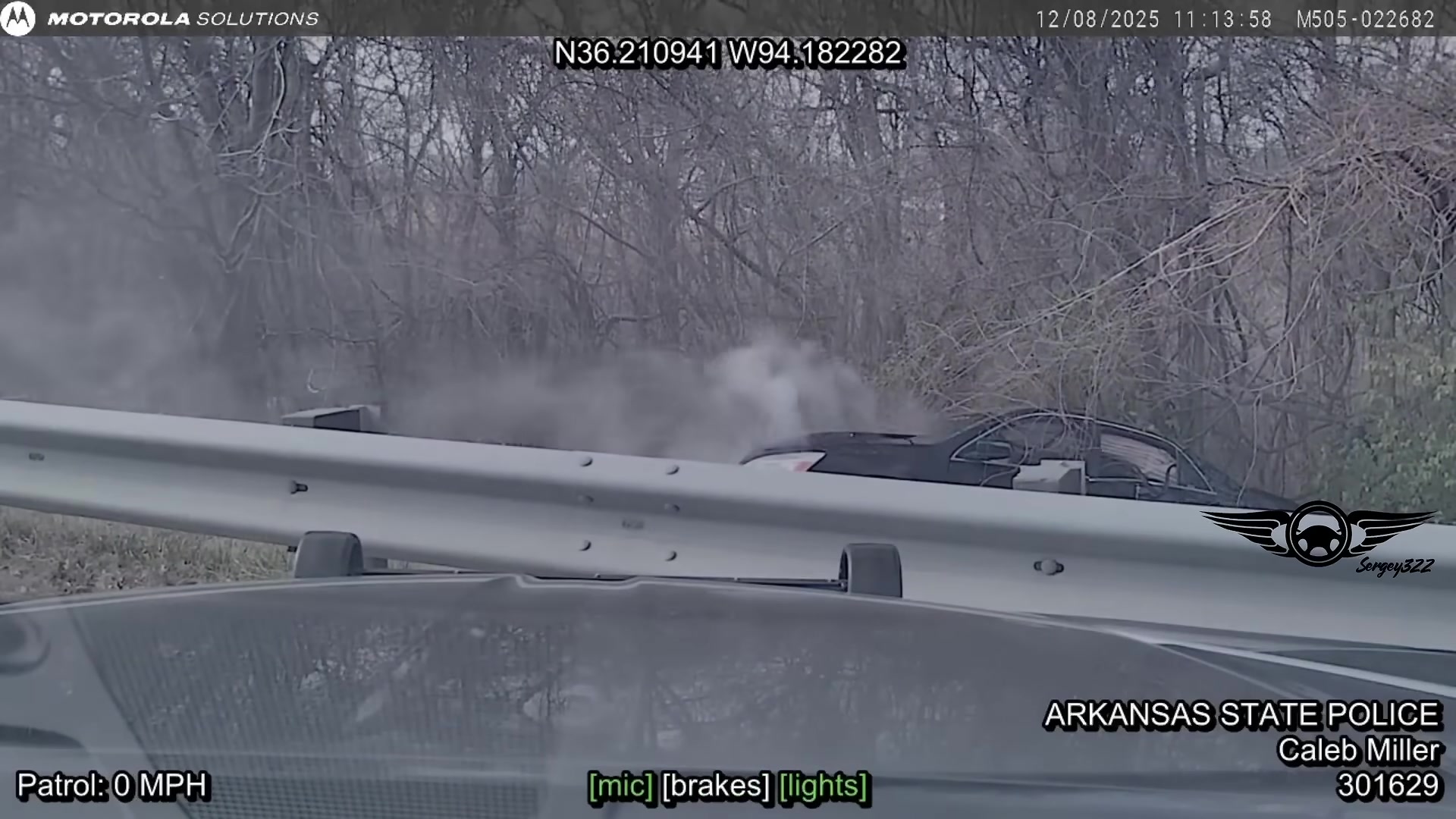
New Hampshire State Police said the trooper was transported to a hospital with minor injuries and was later released.
That moment fundamentally changed the operation.
Other officers now had two responsibilities.
One group needed to respond to the injured trooper and the overturned cruiser.
Others needed to locate the driver who had allegedly caused the pursuit in the first place.
Holt was no longer immediately visible.
For a short period, the chase appeared to be over.
But Holt had not surrendered.
POLICE BEGIN SEARCHING FOR THE CAMRY
Additional law-enforcement officers flooded the area.
The bodycam footage captures the confusion that often follows a pursuit crash.
Emergency lights illuminate otherwise dark roads.
Officers exchange information.
Vehicles arrive and leave.
Attention shifts between the crash scene and the continuing search.
The situation was particularly serious because police believed the driver had already demonstrated a willingness to travel at extreme speeds rather than stop.
At this point, officers could not simply assume he would park the car and walk away.
They needed to find him.
According to state police, that happened approximately 15 minutes later.
Troopers spotted Holt again on Middle Road in Brentwood.
The encounter immediately became another pursuit.
THE CHASE BEGINS AGAIN
Finding the Camry did not mean Holt was ready to surrender.
Police said officers attempted to stop the Toyota again.
Holt allegedly continued fleeing.
Troopers deployed tire-deflation devices, attempting to end the pursuit without another high-speed crash.
But the Camry continued.
Holt eventually returned toward Route 101.
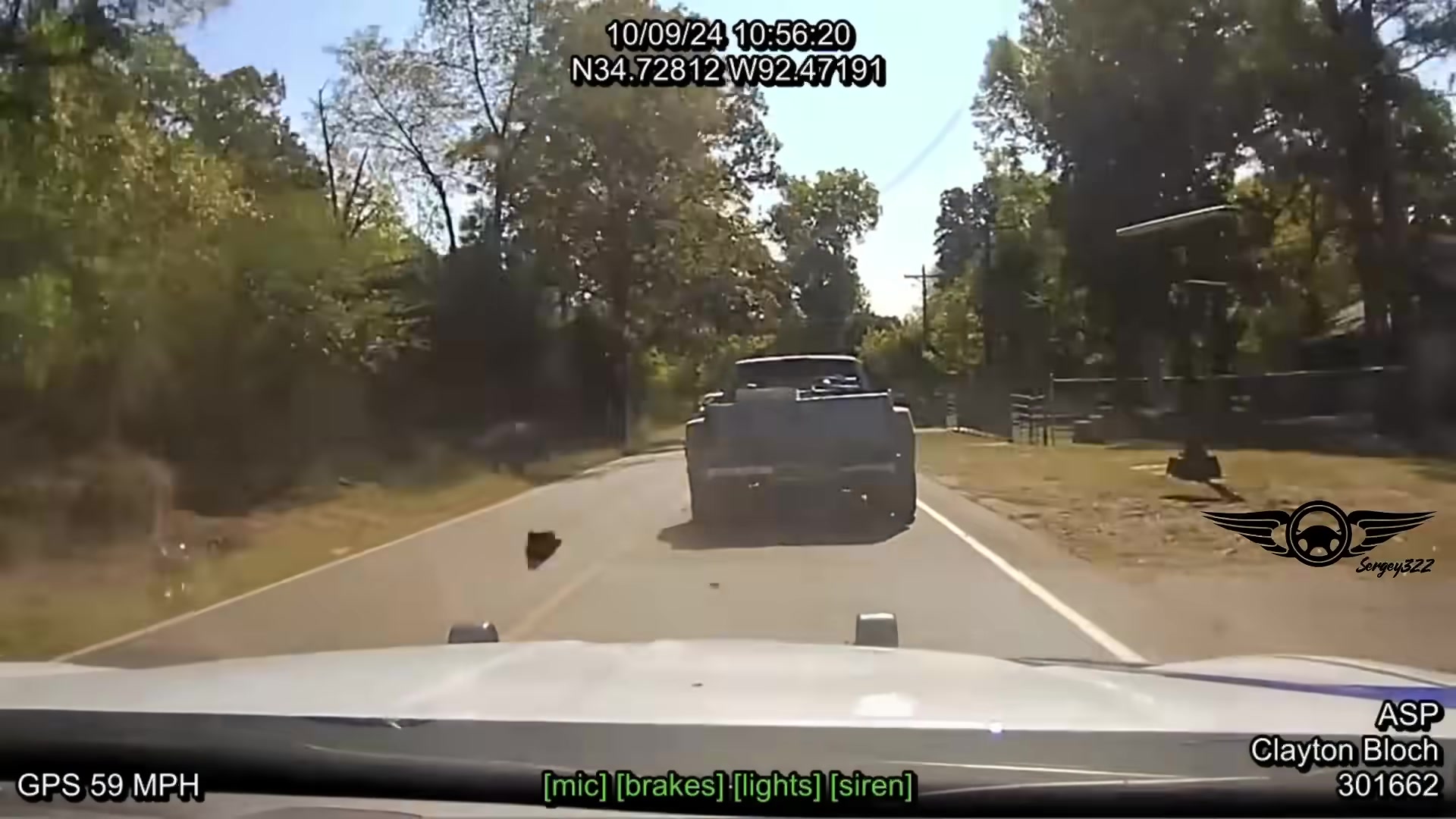
At this point, the pursuit had already resulted in one wrecked police cruiser and an injured trooper.
Yet the driver was still moving.
The situation soon became even more dangerous.
Near Exit 7, state police said Holt made a U-turn and began driving the wrong way toward police.
Wrong-way driving on a divided highway creates one of the most dangerous situations officers can encounter during a pursuit.
Oncoming drivers may have only seconds to understand that another vehicle is traveling directly toward them.
Police vehicles approaching from the opposite direction face the same risk.
According to authorities, Holt then reversed direction again and resumed traveling westbound.
The chase continued.
THE CAMRY FINALLY LEAVES THE ROAD
After surviving the first phase of the pursuit and avoiding police for approximately 15 minutes, Holt's escape attempt finally reached its end.
The Toyota left the roadway.
Then it rolled into the woods.
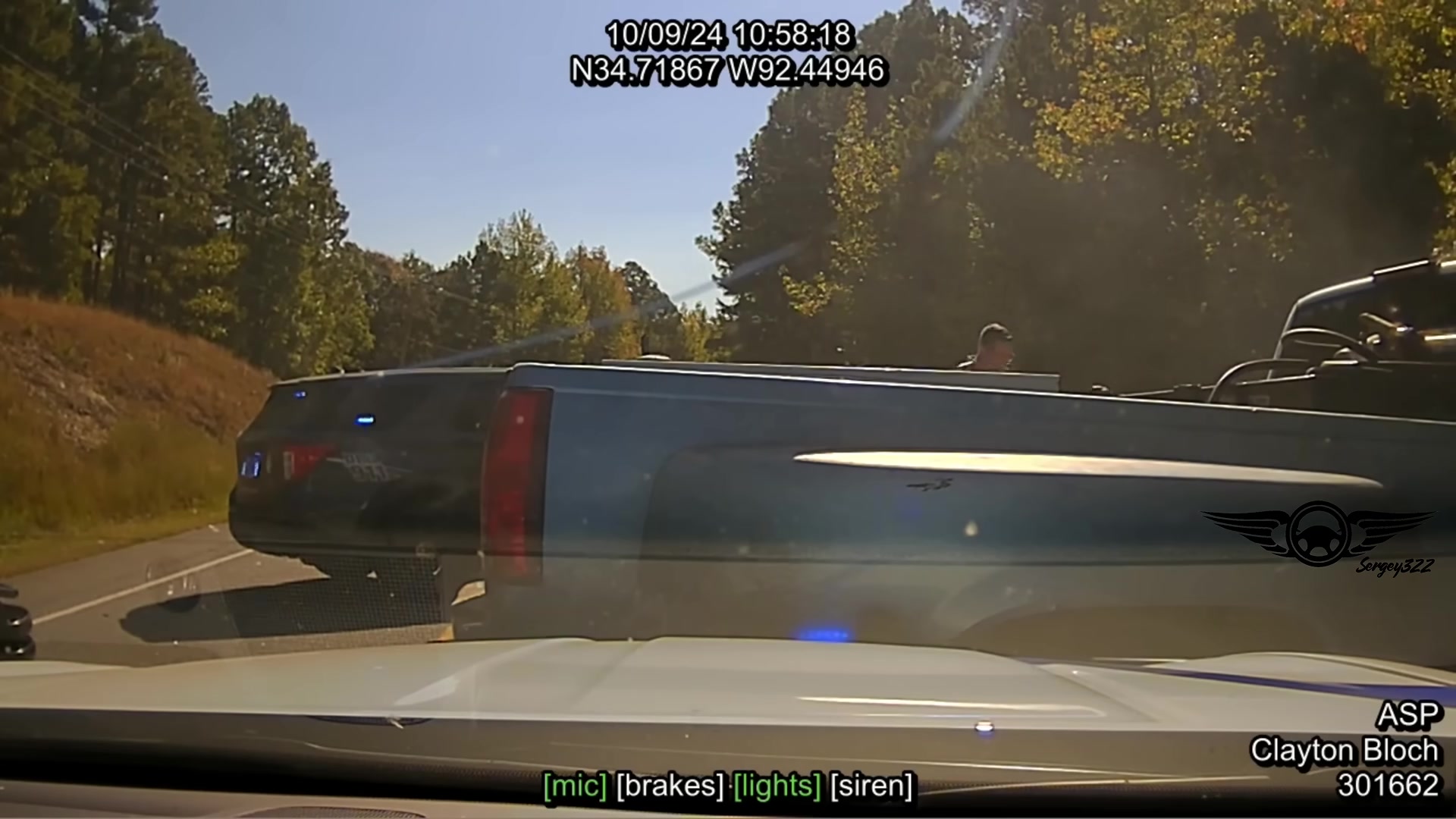
For officers arriving behind him, the priorities changed instantly.
A second earlier, they were pursuing a fleeing vehicle.
Now they were approaching a rollover crash in darkness.
They could not immediately know Holt's condition.
They also had to consider whether he might try to run once he escaped the vehicle.
The footage captures officers moving toward the wreck while giving commands.
Flashlights sweep across the trees.
Emergency lights illuminate the roadside.
The Camry is no longer capable of continuing the pursuit.
AFTER TWO SEPARATE CHASES, THE VEHICLE HAS FINALLY STOPPED.
HOLT IS TAKEN INTO CUSTODY
State police said Holt was arrested shortly after the rollover.
He was transported to a hospital for treatment before being released back into law-enforcement custody.
The bodycam footage becomes particularly interesting at this stage.
The extreme speed is gone.
The pursuit is gone.
The vehicles are no longer moving.
Now the interaction becomes verbal.
That contrast is common in pursuit footage.
A driver can allegedly spend minutes taking enormous risks to escape, only to appear surprisingly calm or confused once the vehicle can no longer move.
But officers arriving at the crash do not experience the encounter only from that final moment.
They know what happened beforehand.
They know another trooper's cruiser has already rolled.
They know the suspect allegedly reached speeds above 130 mph.
They know tire-deflation devices did not immediately stop him.
And they know the Toyota allegedly traveled the wrong way toward police.
Those preceding events shape the way officers approach the final arrest.
THE WRECKAGE SHOWS HOW THE PURSUIT ENDED
The aftermath provides a dramatically different image from the beginning.
At first there was simply a Toyota moving extremely fast on Route 101.
Now there is a damaged vehicle in the woods surrounded by police.
The crash also illustrates a basic reality of extreme-speed driving.
At 130 mph, a vehicle contains enormous kinetic energy.
Once control is lost, guardrails, trees, embankments and other vehicles can turn a traffic violation into a fatal incident within seconds.
In this case, both the trooper and Holt survived their respective rollover crashes.
According to police, the trooper suffered minor injuries and was released from the hospital.
Holt was also treated at a hospital before being taken into custody.
Considering the speeds involved and the fact that two vehicles rolled during the incident, the outcome could easily have been far worse.
THE CHARGES GO FAR BEYOND SPEEDING
After his arrest, Holt faced multiple criminal allegations.
New Hampshire State Police said he was charged with:
THREE COUNTS OF FELONY RECKLESS CONDUCT
along with misdemeanor allegations of:
DISOBEYING AN OFFICER
AGGRAVATED DRIVING UNDER THE INFLUENCE
CONDUCT AFTER AN ACCIDENT
and
CRIMINAL MISCHIEF.
He was subsequently held in preventive detention at the Rockingham County jail pending his initial court proceedings.
As always, charges are allegations rather than convictions unless and until guilt is established through the legal process.
But the list demonstrates how dramatically the legal consequences expanded beyond the original speeding violation.
Had the driver stopped when police first attempted contact, the encounter would have looked completely different.
Instead, authorities allege that the attempt to escape generated a sequence involving extreme-speed driving, a police crash, an injured trooper, a renewed pursuit, wrong-way driving and another rollover.
WHY 130 MPH CHANGES EVERYTHING
The number 130 mph sounds dramatic in a headline.
Its real significance becomes clearer when converted into distance.
At 130 mph, a vehicle travels approximately 191 feet every second.
In three seconds, it covers more than 570 feet.
That means an object that appears comfortably distant can become an immediate hazard almost instantly.
The driver has less time to react.
The pursuing officer has less time to react.
Other motorists have less time to understand what is happening.
Road design also becomes increasingly unforgiving.
A curve that is routine at legal highway speed can become dangerous at twice that speed.
A small steering input can produce a major change in direction.
And when something goes wrong, the energy involved in the crash rises dramatically.
The two rollovers in this case provide a vivid demonstration.
THE INJURED TROOPER CHANGES THE ENTIRE STORY
It would be easy to describe this simply as another high-speed police chase.
But the first rollover makes the incident different.
A trooper was hospitalized.
That means the pursuit had already produced a casualty before Holt was finally captured.
The officer had been attempting to stop an alleged dangerous driver when his own cruiser rolled near Epping Road and Old Town Farm Road.
For the other troopers responding afterward, that fact was not abstract.
One of their colleagues had just been taken away for medical treatment.
Yet the driver they were trying to stop remained somewhere ahead.
This explains some of the urgency visible in the footage.
THE SEARCH WAS NO LONGER ONLY ABOUT A DRIVER WHO REFUSED TO STOP.
It was also about locating the person connected to a pursuit that had already sent an officer to the hospital.
FIFTEEN MINUTES LATER, HE WAS STILL RUNNING
Perhaps the most revealing part of the timeline is the gap between the two pursuits.
After the trooper crashed, Holt had an opportunity to stop.
Police temporarily lost immediate contact with him.
Approximately 15 minutes passed before officers located the Toyota again.
But when they found it, the incident did not end peacefully.
Authorities say Holt fled again.
That second decision is important.
This was not simply a driver who panicked for a few seconds and then reconsidered.
According to the police account, the attempt to evade officers continued even after the first major crash.
The second pursuit included efforts to use tire-deflation devices.
It included a return to Route 101.
And it included the alleged wrong-way maneuver toward police near Exit 7.
Only another crash finally stopped the Toyota.
BODYCAM SHOWS WHAT A SHORT NEWS REPORT CANNOT
A written report can summarize the entire incident in a few sentences:
A man drove more than 130 mph.
Police pursued him.
A trooper crashed.
Police found the suspect again.
Another pursuit occurred.
The suspect crashed and was arrested.
Technically, that tells the story.
But it does not convey the atmosphere.
The darkness.
The flashing emergency lights.
The confusion following the trooper's rollover.
The radio traffic.
The search.
The second pursuit.
The damaged Toyota sitting among the trees.
Or the moment officers finally reach the driver.
That is why bodycam and dashcam footage can add so much context to police incidents.
The camera does not simply document the arrest.
It preserves the transitions.
And in this case, the transitions are the entire story.
TWO ROLLOVERS — AND BOTH DRIVERS SURVIVED
Look at the outcome from a distance.
One vehicle was a police cruiser.
The other was the Toyota officers were attempting to stop.
Both rolled during the same incident.
The trooper went to the hospital.
Holt went to the hospital.
And remarkably, the available police account did not report either man dying from the crashes.
That should not obscure how dangerous the incident was.
It emphasizes it.
A slightly different trajectory could have put another vehicle in the path of either crash.
Wrong-way travel could have produced a head-on collision.
A tree could have struck a different portion of the passenger compartment.
The trooper's injuries could have been much more severe.
The fact that the outcome was not fatal does not make the decisions leading to it less serious.
THE CHASE ENDS WHERE THE CAR CAN GO NO FARTHER
The beginning and ending of this incident could hardly look more different.
At approximately 11 p.m., a Toyota Camry is moving down Route 101 at a speed police estimate at more than 130 mph.
A trooper sees it.
The pursuit begins.
Minutes later, the police cruiser is overturned and the trooper is headed to a hospital.
The Toyota disappears.
Police search.
Fifteen minutes later, they find it.
The chase begins again.
Tire-deflation devices fail to immediately stop the vehicle.
The Toyota returns to Route 101.
The driver allegedly turns the wrong way toward police.
Then he changes direction again.
Finally, the car leaves the roadway and rolls into the woods.
There is nowhere left to go.
Officers close in.
And the man who allegedly spent the night trying to put distance between himself and police is finally standing within a few feet of them.
The extraordinary part isn't simply that the car reached 130 mph.
It is how many opportunities existed for the incident to end before the final rollover.
A traffic stop could have ended it.
The first police crash could have ended it.
Fifteen minutes away from pursuing officers could have ended it.
The tire-deflation attempt could have ended it.
Instead, according to police, the flight continued until physics ended it.
THE CAR DIDN'T FINALLY STOP BECAUSE THE DRIVER CHOSE TO STOP.
IT STOPPED BECAUSE IT COULD NO LONGER STAY ON THE ROAD.
A driver allegedly blasted past 130 mph, a pursuing trooper's cruiser rolled and police temporarily lost the suspect — but that still wasn't the end. Watch the full footage to see how the second pursuit finally ended in another violent rollover.
▶ WATCH THE FULL VIDEO HERE:https://www.youtube.com/watch?v=xNMcto2IIYw
Comments (0)
Loading comments...
May You Like
Cops Arrive for a Medical Emergency and Walk Into Drunken Chaos

West Virginia Man Laughs at Police Officer and Ends Up Arrested
💨 High-Speed Police Pursuits Caught on Dashcam | Intense Moments Across the USA 🇺🇸