
113 MPH Escape Turns Into a Desperate Foot Chase
113 MPH ESCAPE TURNS INTO A DESPERATE FOOT CHASE
At 3:49 in the morning, most of Villa Park, Illinois, was still asleep.
On St. Charles Road, however, a police officer had just spotted a vehicle that officers had reason to watch closely: a 2021 Hyundai Palisade connected to an earlier encounter with police.
Within moments, emergency lights came on.
Instead of stopping, prosecutors allege that the driver hit the accelerator.
What followed was an extraordinarily dangerous pursuit through suburban streets—a chase authorities say reached 113 mph in a 30-mph zone before police deployed stop sticks. Even that did not end the incident. Once the SUV could no longer continue, its occupants allegedly bailed out and scattered through a residential neighborhood.
For the alleged driver, 18-year-old Aizik Davila of Villa Park, the escape attempt continued on foot.
Then came another confrontation.
Prosecutors allege that when an officer caught up with Davila near a fence, the teenager punched the officer twice in the face, broke away and continued running before another officer finally took him into custody.
What began with a police attempt to stop a vehicle had escalated into a high-speed pursuit, a coordinated containment effort, multiple foot chases and felony allegations—all before sunrise on November 2, 2025.
THE SUV HAD ALREADY ATTRACTED POLICE ATTENTION
The encounter did not begin when Villa Park officers first saw the Hyundai.
According to prosecutors, police were investigating a report of vehicles being burglarized earlier that morning when a Hyundai Palisade was seen in connection with the area being investigated. Cicero police later encountered the vehicle, but it allegedly fled from them as well.
That history became important when a Villa Park officer spotted a 2021 Hyundai Palisade on St. Charles Road at approximately 3:49 a.m.
The officer attempted a traffic stop.
Emergency lights and sirens were activated.
But prosecutors say the Hyundai did not pull over.
Instead, the vehicle accelerated.
And it accelerated dramatically.
AUTHORITIES ALLEGE THAT THE SUV EVENTUALLY REACHED 113 MPH—ON A ROAD WITH A 30-MPH SPEED LIMIT.
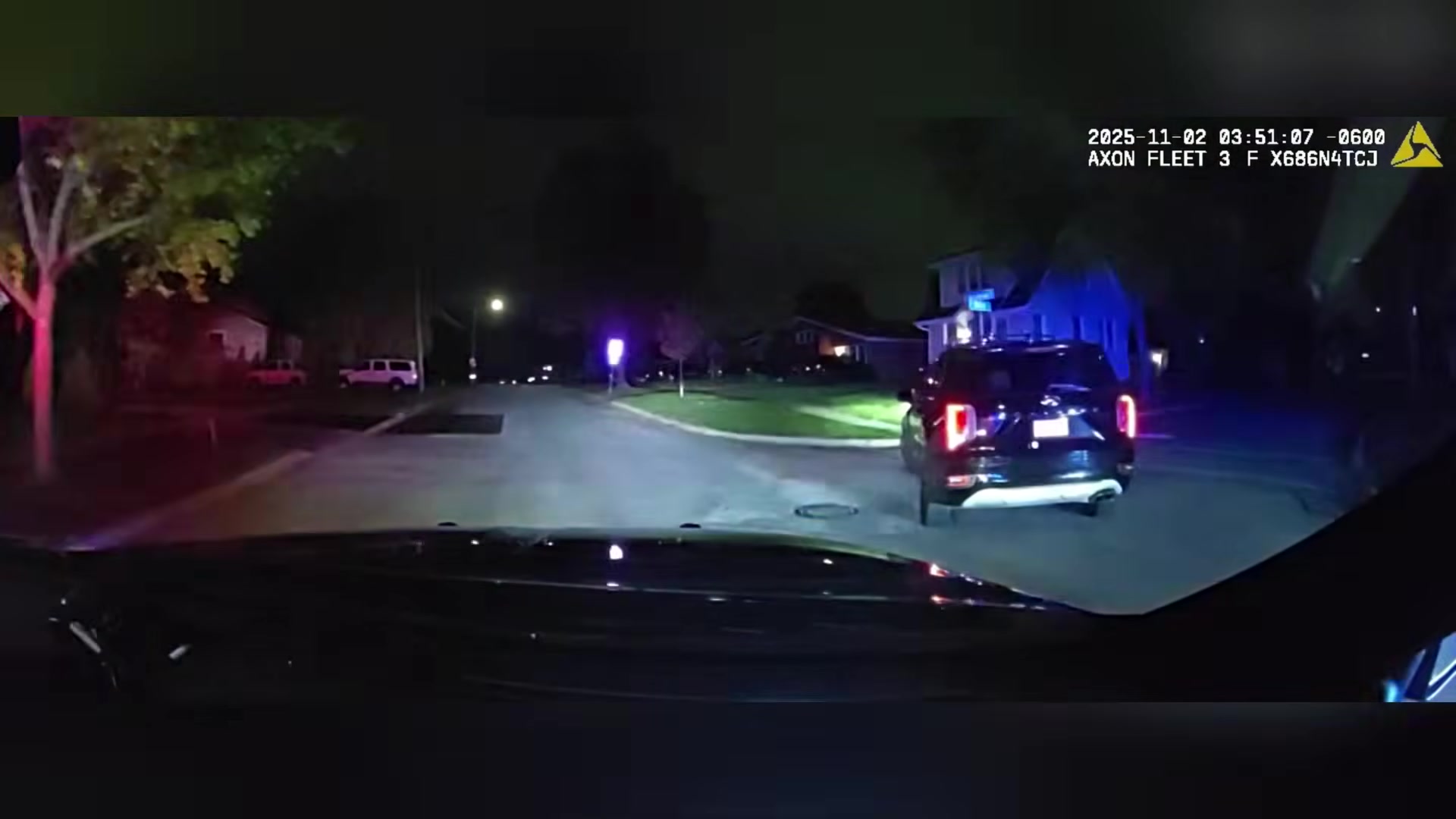
The footage gives those numbers a much more immediate meaning.
Streetlights flash past.
The suspect vehicle remains ahead of the pursuing cruiser.
Residential streets and businesses become part of a rapidly changing scene illuminated by headlights and emergency lights.
At 113 mph, a vehicle is traveling more than 165 feet every second.
That means decisions that would normally take several seconds have to be made almost instantly.
An intersection, another motorist, a curve or an unexpected pedestrian can suddenly become a critical obstacle.
For the pursuing officers, simply following the SUV was therefore only part of the challenge.
They needed a way to stop it.
POLICE PREPARE TO END THE CHASE
High-speed pursuits create an obvious dilemma for law enforcement.
The longer a fleeing driver continues, the longer the public remains exposed to the danger created by the pursuit. But attempts to physically stop a vehicle traveling at extreme speed can introduce their own risks.
Villa Park officers eventually turned to stop sticks, devices designed to puncture or gradually deflate vehicle tires.
Authorities say officers deployed them near Westmore Avenue.
The tactic worked.
The Hyundai's ability to continue fleeing deteriorated, and officers began closing the distance.
The video captures the dramatic change.
For much of the pursuit, officers are trying to catch a vehicle moving at extraordinary speed.
Suddenly, the balance shifts.
The SUV is losing its mobility.
Police vehicles begin converging.
Officers now have an opportunity to prevent the driver from accelerating away again.
One officer maneuvered his squad vehicle into position and blocked the Hyundai's driver's-side door.
It was a logical containment move.
If the driver could not open his door, escaping would become considerably more difficult.
But the people inside the Hyundai apparently had another plan.
THE CAR STOPS—AND THE FOOT CHASE BEGINS
Stopping the SUV did not end the pursuit.
According to prosecutors, Davila and other occupants began climbing out through the passenger side.
Then they ran.
Reports differ slightly on the exact number of other occupants: CBS Chicago and some initial accounts described three other people leaving the vehicle, while later descriptions of portions of the footage refer to multiple occupants scattering from the scene. What is consistent is that several people fled on foot after the vehicle was stopped.
The situation instantly changed.
Officers who had spent the previous minutes coordinating a vehicle pursuit now had multiple people running through a residential neighborhood in darkness.
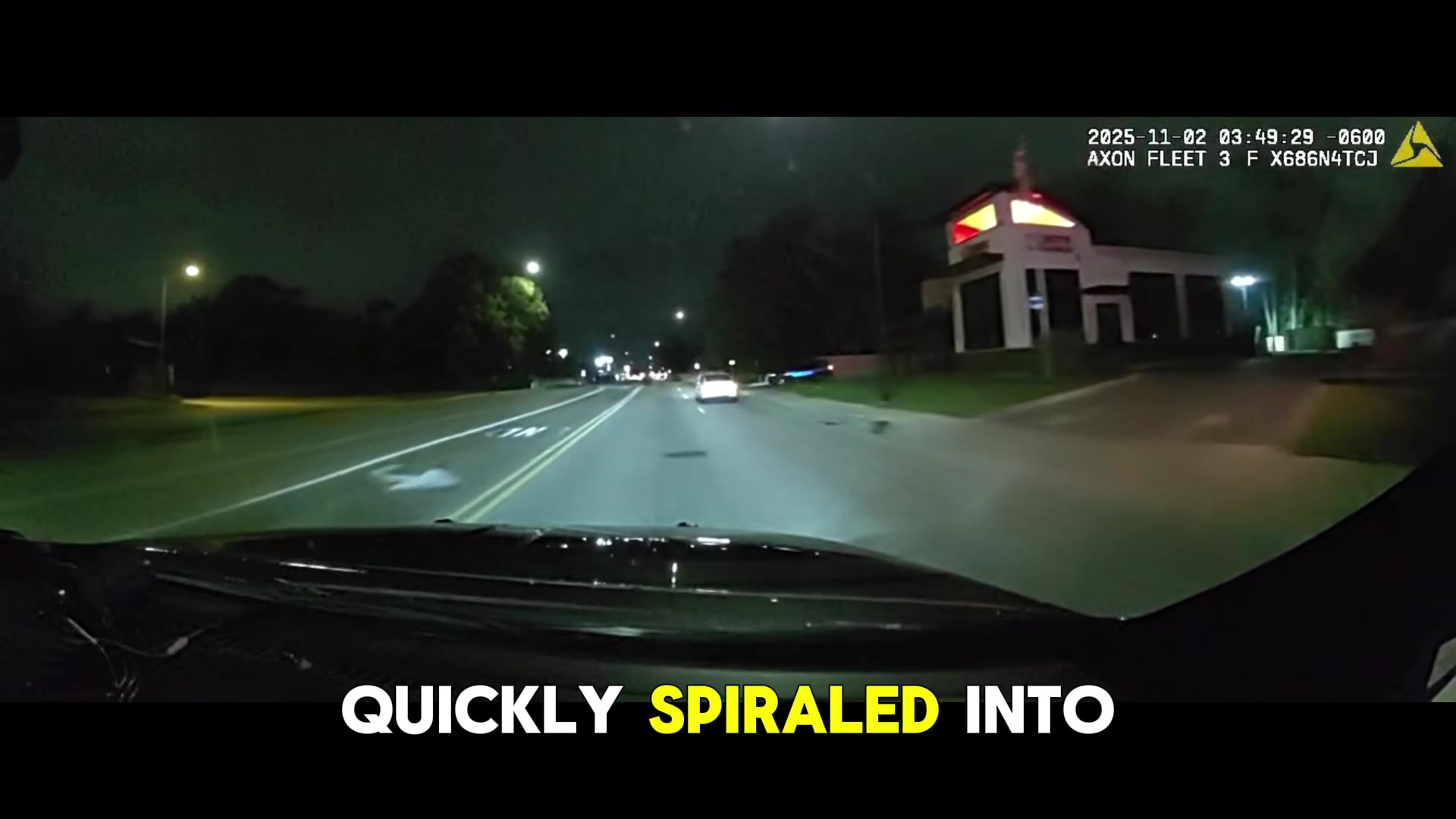
The advantages and risks were completely different.
A fleeing car is comparatively easy to see.
A person running between houses can disappear behind a garage, jump a fence, enter a backyard or hide in a narrow space within seconds.
Officers also have to divide their attention.
One suspect may run east.
Another may head west.
Someone else may hide.
And because the incident is unfolding in a residential area, officers cannot assume that every person they encounter is connected to the fleeing vehicle.
The dashcam and bodycam footage show that transition vividly.
The pursuit becomes more fragmented and chaotic.
Police radios become essential as officers communicate descriptions and directions while searching the neighborhood.
For Davila, however, the most serious confrontation was still ahead.
AN OFFICER CLOSES THE DISTANCE
One officer began pursuing Davila through the residential area.
Police say repeated commands to stop were ignored.
Davila allegedly continued running until he reached a fence and attempted to climb over it.
The officer caught up.
According to prosecutors, the officer grabbed Davila while he was attempting to get over the fence.
Then the encounter allegedly became physical.
PROSECUTORS SAY DAVILA PUNCHED THE OFFICER TWICE IN THE FACE.
The allegation significantly changed the legal stakes.
Fleeing from police was already at the center of the investigation.
But allegedly striking a uniformed officer introduced a separate and more serious felony allegation.
Fox 32 Chicago reported that the officer was not seriously injured.
Davila allegedly managed to continue running after the confrontation.
The first officer had reached him.
The fence had nearly ended the chase.
Even physical contact had not immediately brought the pursuit to a conclusion.
But additional officers were already converging.
THE SECOND ATTEMPT ENDS DIFFERENTLY
Davila did not get far.
Another officer encountered him a short time later.
This time, police managed to take him into custody.
The footage captures the intensity of the arrest from extremely close range—the complete opposite of the earlier high-speed pursuit.
Minutes before, officers were looking through a windshield at a vehicle traveling down St. Charles Road.
Now the confrontation was taking place in the narrow spaces between homes and fences.
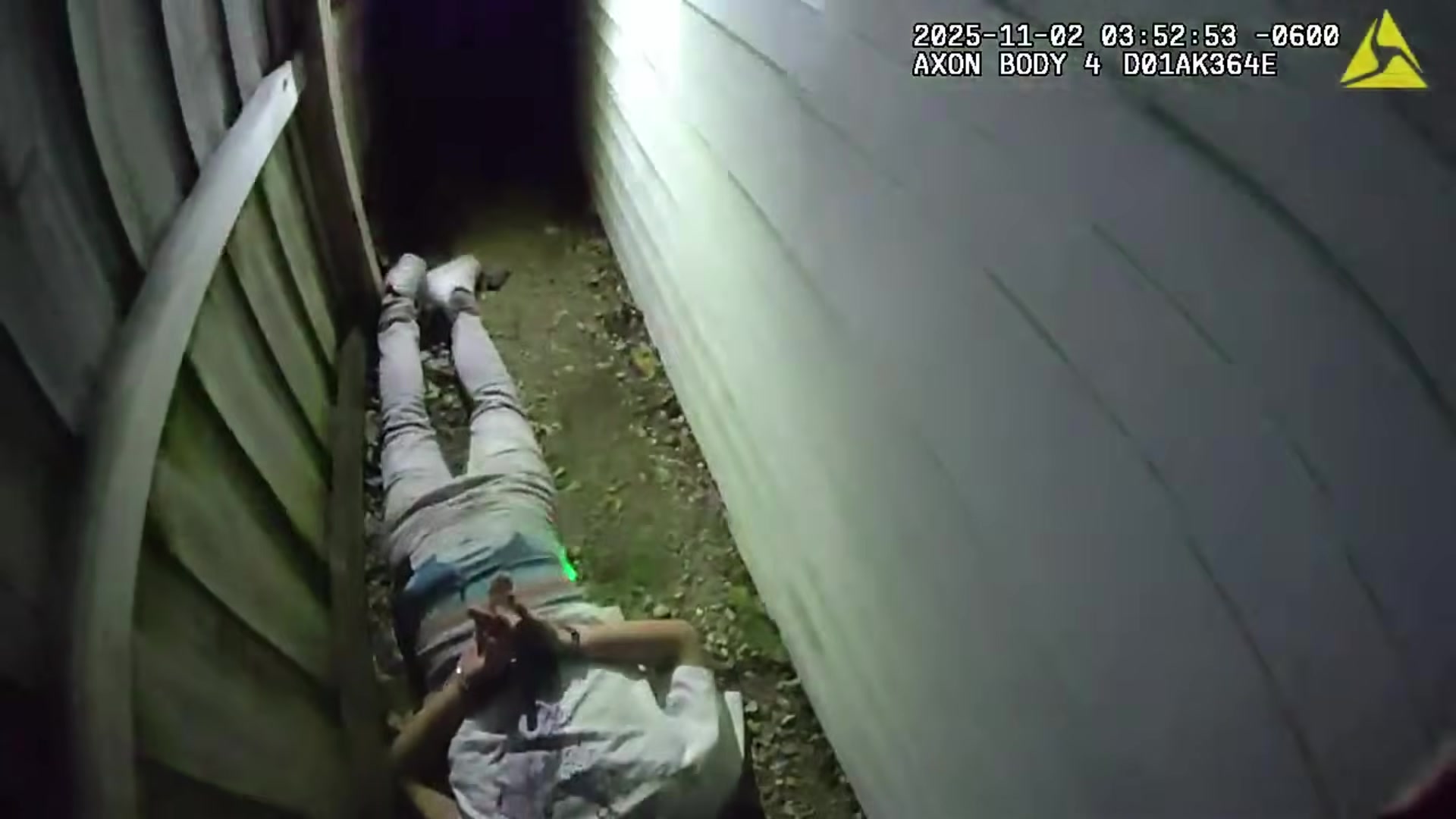
The suspect is on the ground as officers work to secure him.
Flashlights illuminate the confined area.
Radio traffic continues as officers try to determine where the other people from the Hyundai have gone.
The arrest of one suspect therefore does not immediately end the operation.
Police still have a neighborhood to search.
They also have to establish who was driving, who occupied the vehicle, what happened during the pursuit and whether anyone else remains hidden nearby.
For the officer allegedly struck during the chase, there is also the issue of documenting the confrontation.
Every one of these details can later become part of the prosecution.
THE VEHICLE PURSUIT WAS OVER, BUT THE POLICE RESPONSE WAS NOT.
THE SEARCH SPREADS THROUGH THE NEIGHBORHOOD
The footage becomes especially interesting after the most obvious action has ended.
This is the part often removed from short social-media edits.
Officers begin searching.
Backyards, garages, fences and areas around homes all become potential hiding locations.
Police coordinate with one another while trying to reconstruct where the fleeing occupants went.
That work can be slower than the chase, but it is critical.
A suspect hiding only a few houses away can remain invisible if officers search in the wrong direction.
At the same time, police have to remember that they are operating around private homes filled with residents who may have no connection whatsoever to the pursuit.
That creates another challenge: officers need to distinguish suspects from innocent people while working in darkness and under significant pressure.
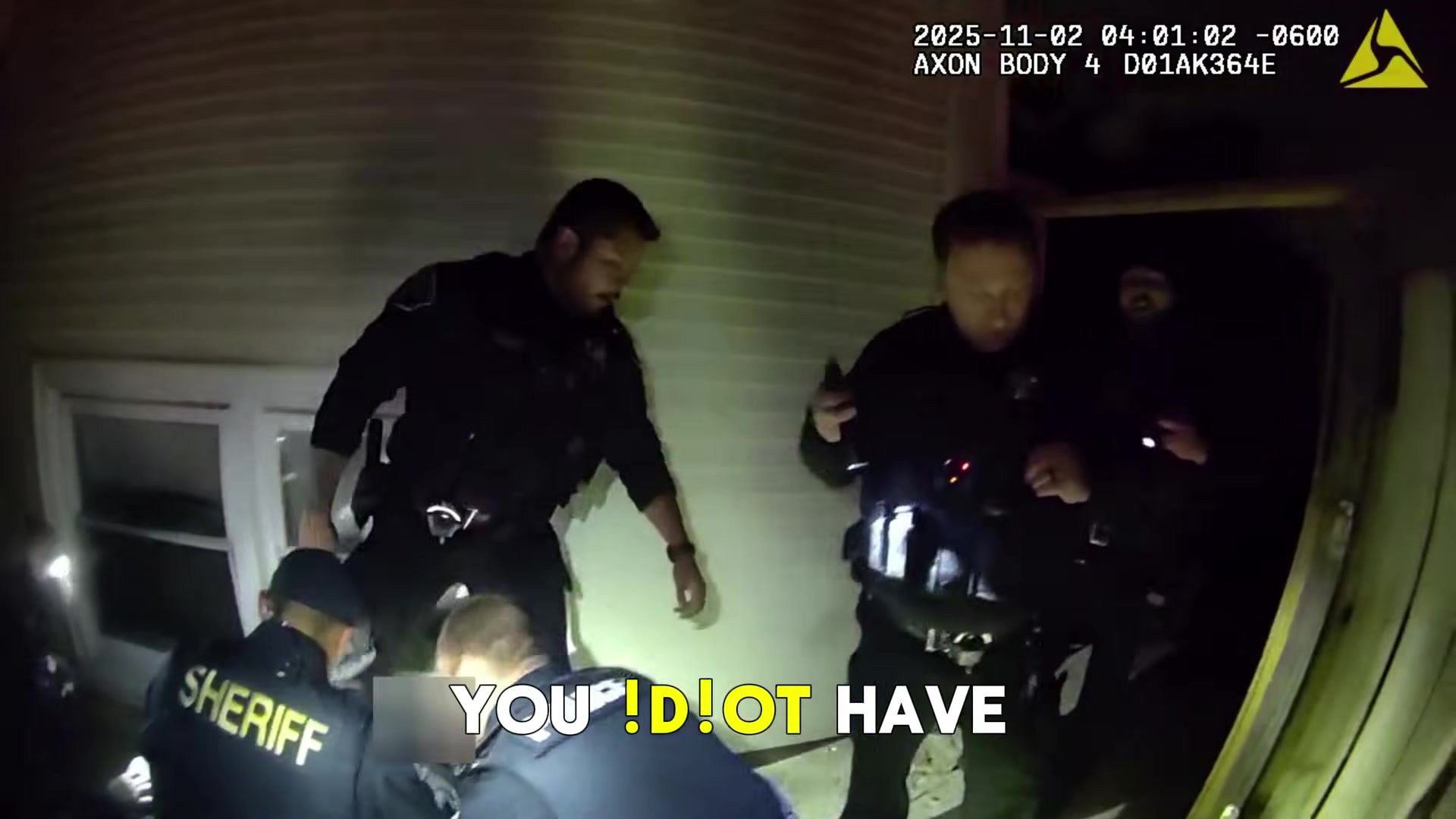
The video shows multiple officers gathered around one property during the search.
Some of the officers visible in the footage appear to come from different agencies, illustrating how quickly a pursuit can expand beyond the department that originally initiated the stop.
The search eventually produced additional detentions connected to the people who had fled from the Hyundai, according to the account accompanying the released footage.
But contemporary reporting focused primarily on Davila because prosecutors identified him as the alleged driver and because of the allegation that he struck an officer.
The identities and legal circumstances of the other occupants were not fully disclosed in the initial news reports. Fox 32 specifically noted that authorities had not publicly identified the other people who ran from the vehicle at the time of its report.
That distinction is important.
Being present in a fleeing vehicle does not automatically mean every occupant faces the same allegations as the driver.
WHY 113 MPH CHANGED EVERYTHING
The number that dominates the case is 113 mph.
It is not simply an impressive figure attached to a police chase.
The location matters.
Prosecutors say the speed was reached in a 30-mph zone.
That means the Hyundai was allegedly traveling almost four times the posted speed limit.
At those speeds, normal suburban roads become extraordinarily unforgiving.
Drivers pulling from side streets are not expecting a vehicle to arrive at more than 100 mph.
Someone checking traffic and seeing a distant set of headlights may reasonably believe there is enough time to enter the roadway.
At ordinary speed, there might be.
At 113 mph, that distance disappears incredibly quickly.
The same problem applies to intersections.
Traffic signals, turning vehicles and road geometry are designed around expected speeds.
A driver dramatically exceeding those speeds reduces the time available for everyone else to react.
That is why prosecutors emphasized the danger allegedly created during the pursuit.
DuPage County State's Attorney Robert Berlin publicly described the accusations as "outrageous" and stressed the danger created by the high-speed flight and alleged attack on an officer.
Villa Park Police Chief Todd Kubish similarly criticized the alleged decision to flee and strike an officer, while praising the officers involved in making the arrest.
THE BODYCAM SHOWS A VERY DIFFERENT SECOND HALF
One of the most compelling aspects of the video is the contrast between its two halves.
The beginning is about speed.
A police cruiser follows a vehicle through dark streets.
Distances change rapidly.
The suspect vehicle is usually seen ahead through the windshield.
Then the vehicle stops.
From that point forward, the footage becomes much more personal.
Officers run.
They search yards.
They squeeze between buildings.
They confront suspects at close range.

That shift is what makes this pursuit particularly compelling as police footage.
A high-speed chase can sometimes feel almost abstract when viewed through a dashcam. The suspect is simply a pair of taillights in the distance.
A foot pursuit removes that distance.
Every fence matters.
Every backyard can hide someone.
Every turn around a building can produce an unexpected confrontation.
And officers no longer have the physical protection of a patrol vehicle around them.
In this case, prosecutors allege that one of those close-range encounters resulted in an officer being punched twice.
The officer was fortunate not to suffer serious injuries.
DAVILA FACED MULTIPLE CHARGES
Following his arrest, authorities identified the alleged driver as Aizik Davila, 18, of Villa Park.
Prosecutors charged him with aggravated battery to a police officer, a Class 2 felony, and aggravated fleeing and eluding, a Class 4 felony.
He also faced a misdemeanor count of resisting a police officer.
Those charges correspond to different parts of the encounter.
The aggravated fleeing allegation concerns the vehicle pursuit.
The aggravated battery allegation stems from prosecutors' claim that Davila punched the pursuing officer.
The resisting charge relates to the alleged conduct during the effort to take him into custody.
Importantly, these were allegations filed against Davila; a criminal charge is not itself a finding of guilt.
At his initial court appearance, DuPage County Judge Joshua Dieden granted prosecutors' request to keep Davila detained before trial.
The Daily Herald also reported another significant piece of context: at the time of this arrest, Davila was already on pretrial release in Cook County in connection with an aggravated unlawful use of a weapon charge.
That existing case was separate from the Villa Park pursuit.
STOP STICKS BECAME THE TURNING POINT
For all the dramatic footage of officers running through yards, the decisive moment may have happened much earlier.
Police needed to remove the Hyundai's greatest advantage: its speed.
As long as the SUV could continue traveling at extreme speed, officers were reacting to the driver's movements.
The stop sticks changed that equation.
Once the tires were compromised, the vehicle could no longer maintain the same escape.
Officers were able to move into containment positions.
A squad car blocked the driver's door.
The occupants were forced to abandon the vehicle if they wanted to continue fleeing.
From that moment onward, the pursuit was no longer dictated by a 2021 Hyundai Palisade capable of traveling more than 100 mph.
It was dictated by how fast people could run.
That dramatically reduced the geographical scale of the incident.
But it also introduced a new set of dangers.
The occupants could split up.
They could hide.
They could enter private property.
And officers could suddenly find themselves in physical confrontations at arm's length.
That is allegedly exactly what happened.
WHAT THE FOOTAGE DOESN'T AUTOMATICALLY PROVE
Bodycam and dashcam footage can be powerful evidence, but it still needs context.
A viewer may see a police vehicle traveling at high speed without knowing exactly how fast the suspect was going.
Official reports and prosecutors provide that number: 113 mph.
A viewer may see officers chasing someone without knowing which person police believe was driving.
Authorities identified Davila as the alleged driver.
A viewer may see an arrest after a foot chase without knowing what happened immediately before the camera reaches the suspect.
Prosecutors allege that Davila punched an officer twice while trying to escape over a fence.
That is why combining the footage with contemporary reporting matters.
CBS Chicago, Fox 32 Chicago and the Daily Herald independently reported the same central sequence based on information released by the DuPage County State's Attorney's Office and Villa Park police: officers attempted a stop, the Hyundai fled at speeds reaching 113 mph, stop sticks ended the vehicle pursuit, occupants ran, and Davila was arrested after an alleged confrontation with an officer.
The video supplies the immediacy.
The reporting supplies the verified context.
FROM A TRAFFIC STOP TO FELONY ALLEGATIONS
The most remarkable feature of the incident is how quickly the consequences accumulated.
Had the driver stopped when officers activated their lights, the encounter would have developed very differently.
Instead, prosecutors allege that the Hyundai accelerated away.
That decision produced a pursuit.
The pursuit allegedly reached 113 mph.
Police deployed stop sticks.
The vehicle became disabled.
The occupants fled.
A foot chase followed.
An officer caught the alleged driver at a fence.
A physical confrontation allegedly occurred.
The suspect continued running.
Another officer finally arrested him.
By the end, what could have been a vehicle stop had produced two felony charges and a misdemeanor charge against the alleged driver, along with a police officer who prosecutors say had been punched twice.
That escalation is the central thread of the entire video.
EVERY ATTEMPT TO ESCAPE APPEARS TO CREATE ANOTHER PROBLEM.
Speed does not end the encounter.
Losing the vehicle does not end it.
Running does not end it.
Reaching a fence does not end it.
Even allegedly striking an officer does not create an escape.
Instead, the available options become progressively narrower until police finally have the suspect in custody.
A CHASE THAT MOVED FROM 113 MPH TO ZERO
Police pursuit videos often end when the fleeing vehicle crashes or stops.
This one keeps going.
That is what makes the footage stand out.
The first stage is a classic high-speed pursuit: emergency lights, dark streets and a suspect vehicle moving dangerously fast.
The second stage becomes a tactical effort to stop the Hyundai using tire-deflation devices.
The third stage begins when the doors open.
From there, officers are no longer pursuing a vehicle.
They are chasing people through a neighborhood.
The final stage is almost claustrophobic: narrow spaces between houses, fences, flashlights and officers working only feet away from the people they are trying to detain.
In less than one incident, the footage moves through nearly every scale of a police pursuit—from a vehicle allegedly traveling 113 mph to a suspect lying handcuffed in a narrow space beside a house.
For Davila, the alleged attempt to escape ultimately ended back in custody.
For police, stopping the Hyundai was only half the job.
And for residents waking up later that Sunday morning, the quiet streets around their homes had been the setting for a police pursuit that began at extraordinary speed and ended one backyard at a time.
THE CAR COULD NO LONGER RUN. THE OCCUPANTS COULD. BUT POLICE WERE ALREADY CLOSING IN.
SEE HOW THE ENTIRE PURSUIT UNFOLDED
The 113-mph chase is only the beginning. Watch the full footage to see the moment stop sticks change everything, the occupants abandon the Hyundai, and the pursuit suddenly turns into a frantic nighttime search through a residential neighborhood.
Click here to watch the full incident unfold from beginning to end:
Comments (0)
Loading comments...
May You Like

Woman Refuses Repeated Orders to Exit Her Car Before Officers Move In
Everything Changed When Cops Asked About Weapons

911 Call Leads Police to a Disturbing Family Situation














